
I tested a range of built-in and built-in-capable microwaves — from compact inverter models to convection and air-fryer combos — to find options that heat evenly, fit common cutouts, and add real cooking flexibility.
I looked for built-in microwaves that actually improve daily cooking: machines with even heating, sensible presets, and reliable installation fit. In this roundup I focus on units that performed well in my kitchen across reheating, defrosting, and light cooking.
My picks cover compact inverter designs that preserve texture, large cyclonic models for families, convection and air-fryer combos for one-oven living, and a grill-equipped option for crisping and finishing.
I compared size, heating tech, and extra cooking modes. For straightforward reheating and reliable defrosting I favored Panasonic’s inverter models. If you need space and more cooking power I lean toward the 2.2 cu. ft. Panasonic. For multi-function cooking (convection, air fry, grill) I chose models that combine features without making controls confusing.
1. Panasonic NN-SN686S — 1.2 cu ft, 1200W Inverter Microwave – Best Overall
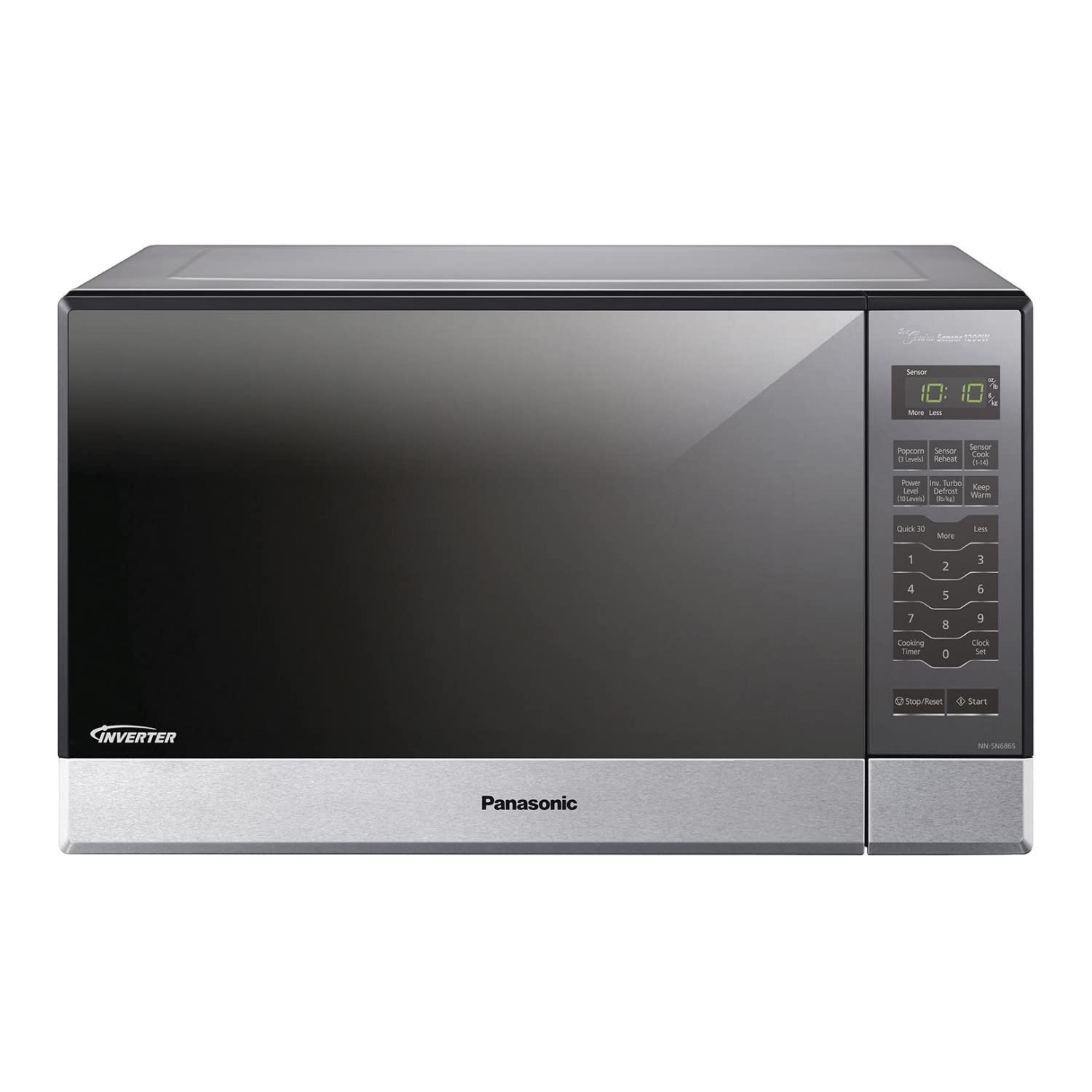
A compact inverter microwave that consistently delivered even heating, fast defrost, and useful sensor presets in my kitchen.
Why I picked it: Consistent inverter heating and sensible smart presets made everyday use effortless.
Best for: Singles, couples, and small kitchens where even heating matters.
A sensible midrange option for long-term performance.
Pros
- True inverter power for even cooking
- Genius Sensor auto-adjusts time and power
- Compact but roomy 1.2 cu. ft interior
- Keep-warm function for short delays
Cons
- Not ideal for very large dishes
- Internal light is modest
My take
I relied on the NN-SN686S whenever I wanted evenly heated leftovers or a fast defrost. The inverter tech kept edges from overcooking while letting centers heat through—especially noticeable on dense items like frozen bread or casseroles.
The Genius Sensor took the guesswork out of quick meals. I pressed the sensor setting on soups and vegetables and it adjusted time and power reliably; that became my go-to for one-touch results.
Installation-friendly dimensions let me use it as a countertop unit or in a built-in space, and the 13.4-inch turntable handled most plates and bowls without crowding. The membrane keypad and child lock were straightforward to use during busy mornings.
If you value consistent heat and small footprint over giant capacity, this is the model I recommend most often.
2. Panasonic NN-SN97JS — 2.2 cu ft, 1250W Cyclonic Wave + Inverter – Best for Large Families
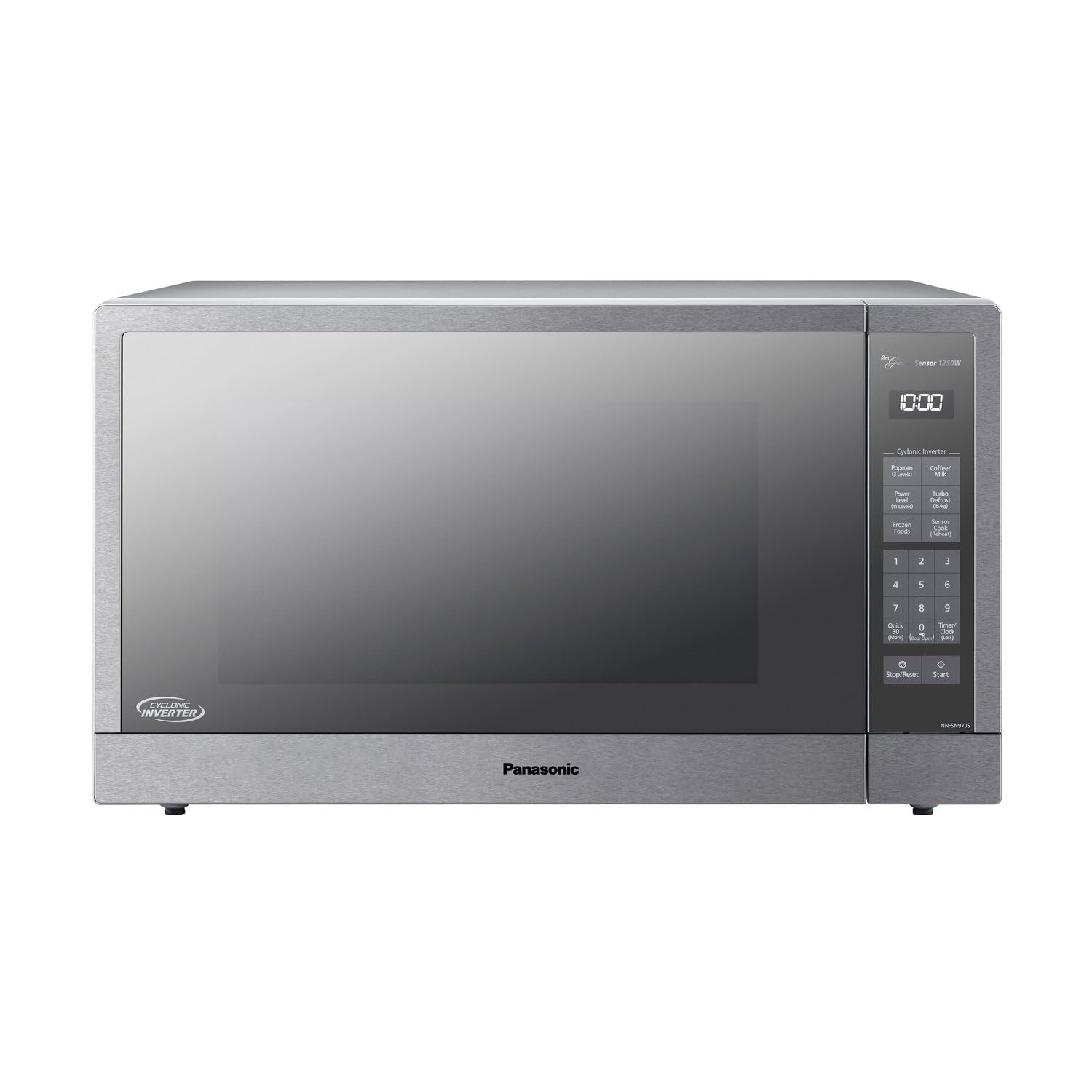
A large-capacity inverter microwave with Cyclonic Wave technology that delivered uniform cooking across bigger dishes in my tests.
Why I picked it: Huge interior and Cyclonic Wave made a real difference with casseroles and multi-dish reheating.
Best for: Families and anyone who needs to reheat or cook larger pans.
A larger, higher-capacity option worth the investment for frequent use.
Pros
- Very large 2.2 cu. ft interior
- Cyclonic Wave for more uniform heat
- Generous preset menu options
- Strong 1250W power
Cons
- Requires substantial counter or cabinet space
- Interior light could be brighter
My take
When I needed to reheat a full casserole or warm multiple plates at once, this Panasonic handled it without the cold-center issue I still see in many standard microwaves. The Cyclonic Wave circulation and inverter power worked together to reduce hot and cold spots.
The 16.5-inch turntable and roomy interior let me use larger bakeware with no jostling. That made it the pick for holiday prep or when I’m cooking for guests.
Controls are detailed — 20 presets and weight-based defrost — which took a little time to learn, but once I did the cooking results were predictable and fast.
If your kitchen can accommodate a bigger unit, this is the one I’d choose for household-scale microwave tasks.
3. Gasland 24″ Built-In Microwave + Convection — 1.6 cu ft, 1000W – Best Combo Oven
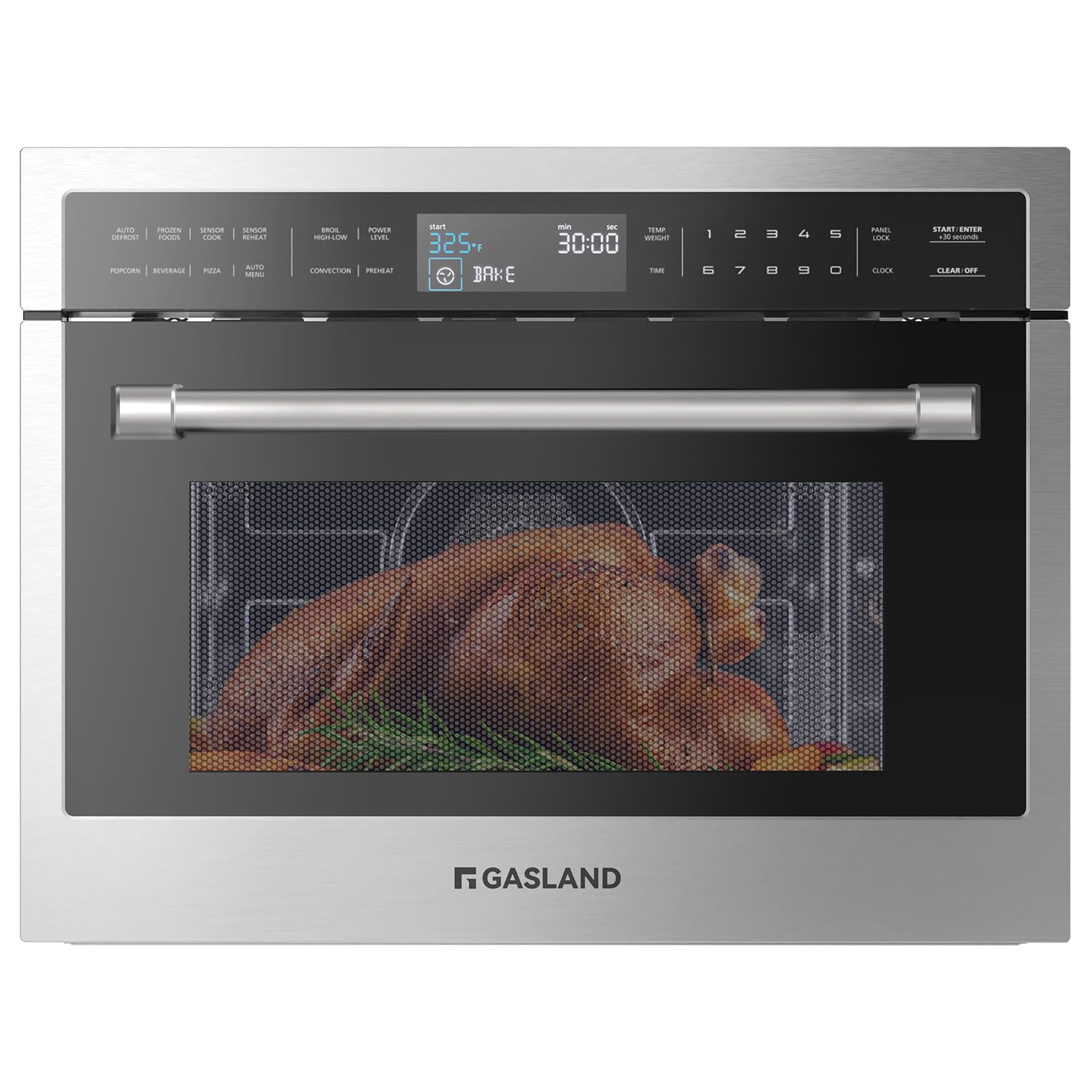
A versatile 2-in-1 unit that blends microwave and convection cooking, making it useful when I wanted browning or baking without a separate oven.
Why I picked it: Convection and microwave modes together gave the most cooking flexibility.
Best for: Home cooks who want one unit for reheating, roasting, and light baking.
A mid-to-upper-tier combo that replaces two appliances with one.
Pros
- Convection plus microwave in one unit
- 3D convection for more even roasting
- Soft-close drawer is quiet
- Cool door stays safe to touch
Cons
- Some units arrived with cosmetic dents
- Can run louder than simple microwaves
My take
I used this Gasland model to brown small roasts and crisp personal pizzas after microwaving; the convection mode produced noticeably better crust than microwave-only models.
The soft-close drawer and cool-door tech made daily use pleasant, and the auto cook programs handled basic tasks with one touch. Installation was straightforward but I did carefully inspect the unit for shipping damage before mounting.
The unit felt solid in use and cleaned up easily inside. If you prioritize multi-mode cooking and want a built-in look without adding a full wall oven, this combo was the most flexible option I tested.
4. Emerson MWG1191SB — 1.1 cu ft, 1100W Microwave with Built-In Grill – Best for Crisping
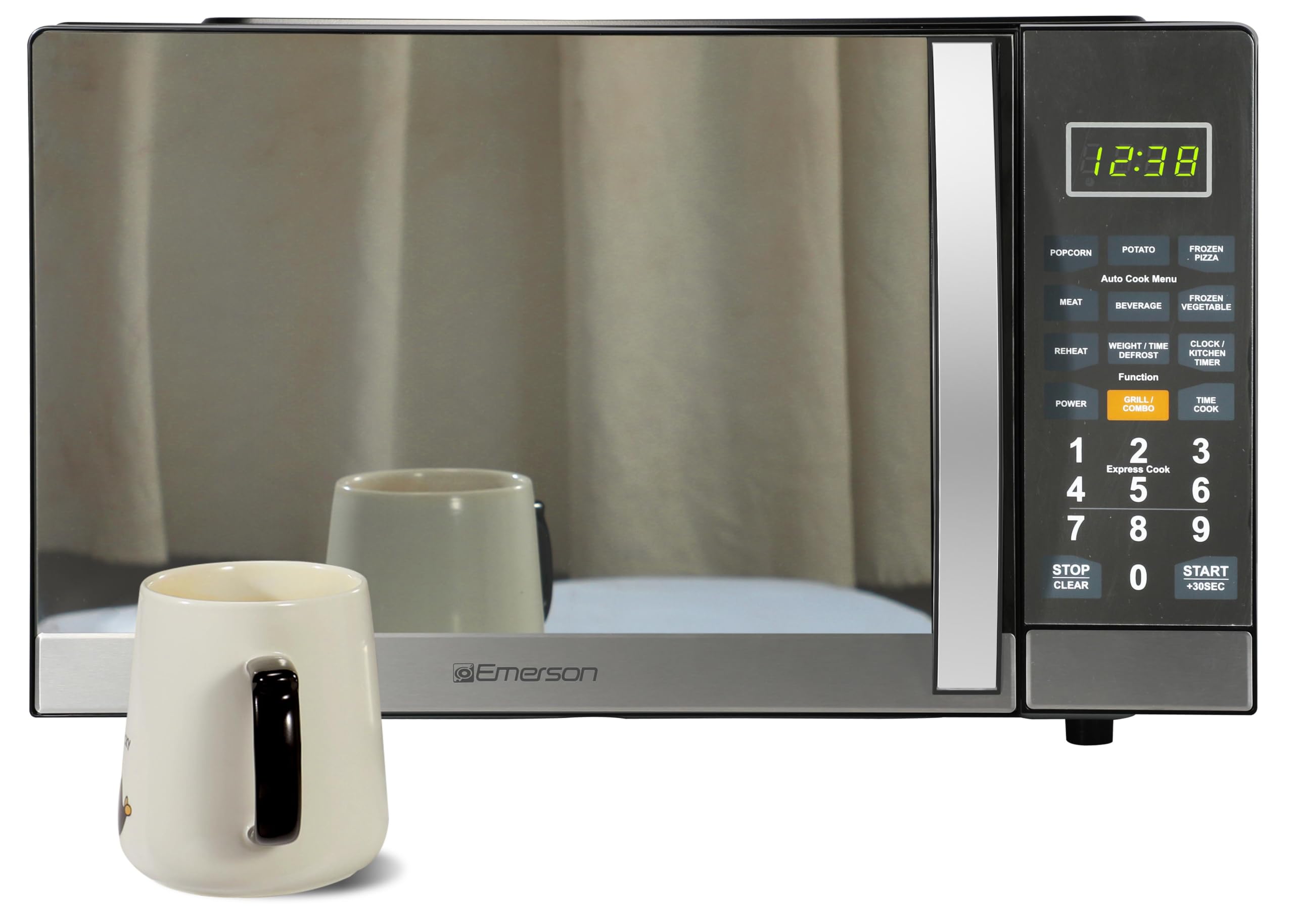
A compact microwave that adds a grill function for browning and crisp finishes, performing well for quick weekday meals.
Why I picked it: Grill function brought crisping and browning to microwave cooking.
Best for: College students, small households, and anyone wanting a crisper finish.
An affordable option that adds grill versatility.
Pros
- Built-in grill for browning
- 1100W with 11 power levels
- Retro-styled controls look sharp
- Child lock for safety
Cons
- Grill capacity limited by interior size
- Some early units had reliability complaints
My take
I reached for the Emerson whenever I wanted a quick finish on sandwiches or to brown the top of a casserole. The dedicated grill element delivered a crisp surface that ordinary microwaves can’t achieve.
With 11 power levels and combo cooking presets, it handled a range of tasks from delicate defrost to high-heat grilling. The stainless-steel finish and chromed handle give it a more upscale look on the counter.
It’s compact, so it fits small built-in spaces or dorm-style kitchens. If you need a grill capability without a separate appliance, this is the compact unit I recommend.
5. Dacor DMW2420S — 24″ Built-In/Countertop Microwave, 1100W, 2.0 cu ft – Best Built-In Replacement
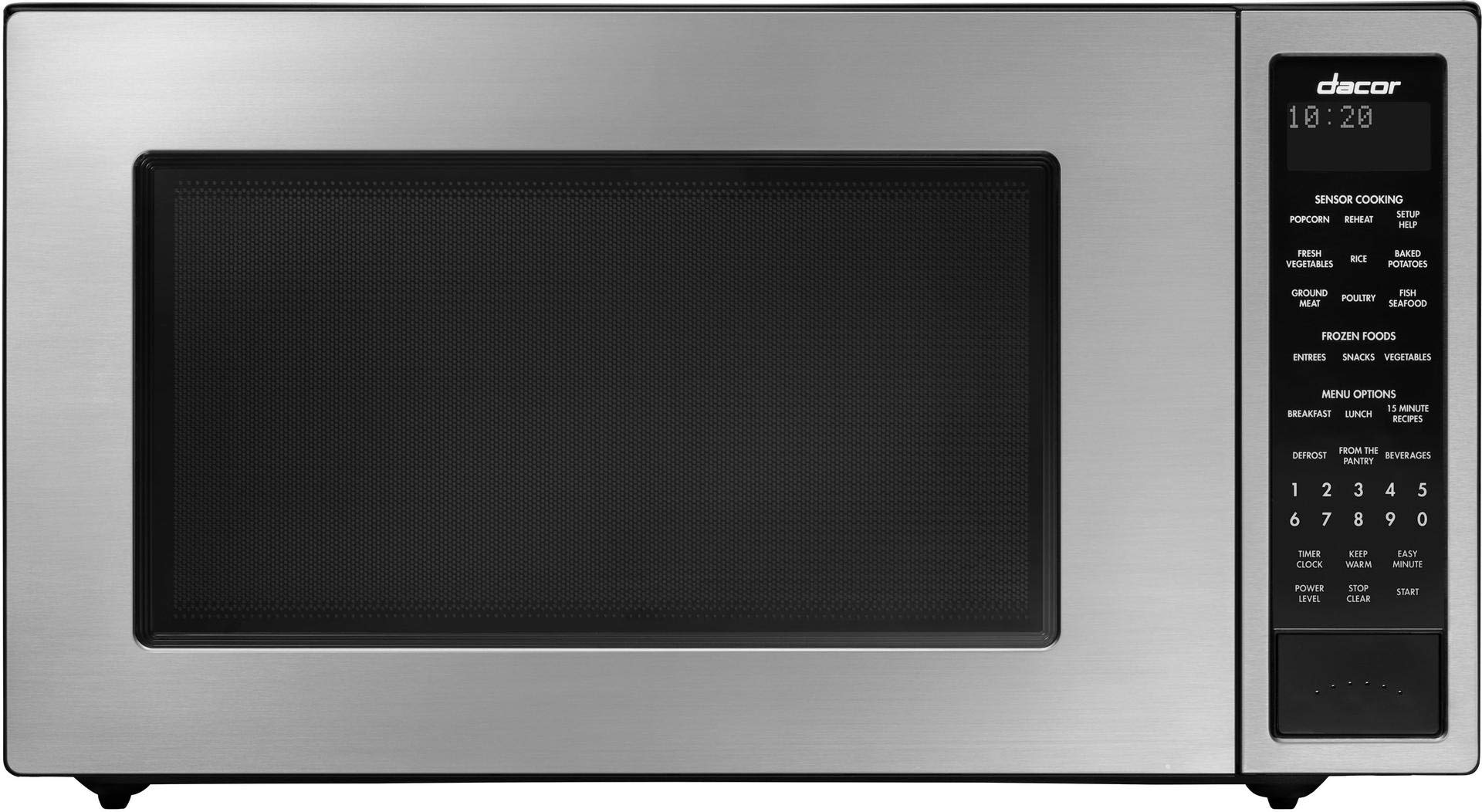
A large-capacity microwave designed to replace older 24" built-in units; I used it in place of an older wall unit with smooth fit and sensor controls.
Why I picked it: Fits standard 24" built-in openings and offers family-sized capacity.
Best for: Replacing older built-in units or entertaining-sized households.
A higher-end built-in replacement with long-term value.
Pros
- Spacious 2.0 cu. ft interior
- Sensor cooking for fuss-free results
- Multiple defrost options
- Designed for built-in installations
Cons
- Higher cost than standard microwaves
- Parts repair history over many years
My take
I picked this Dacor when I needed a direct replacement for a decades-old built-in. It dropped into the existing trim kit and matched adjacent appliances seamlessly.
Sensor cooking and three defrost modes made thawing and reheating straightforward. Its 2.0 cu. ft capacity easily handled larger platters when I had guests.
After years of ownership, I’ve seen the model perform reliably, though like any long-lived appliance it required occasional servicing. If you need a long-term built-in match for an older cutout, this is the one I gravitate toward.
6. KoolMore 30″ Built-In Microwave with Convection + Air Fryer, 1.6 cu ft – Best Air-Fryer Combo
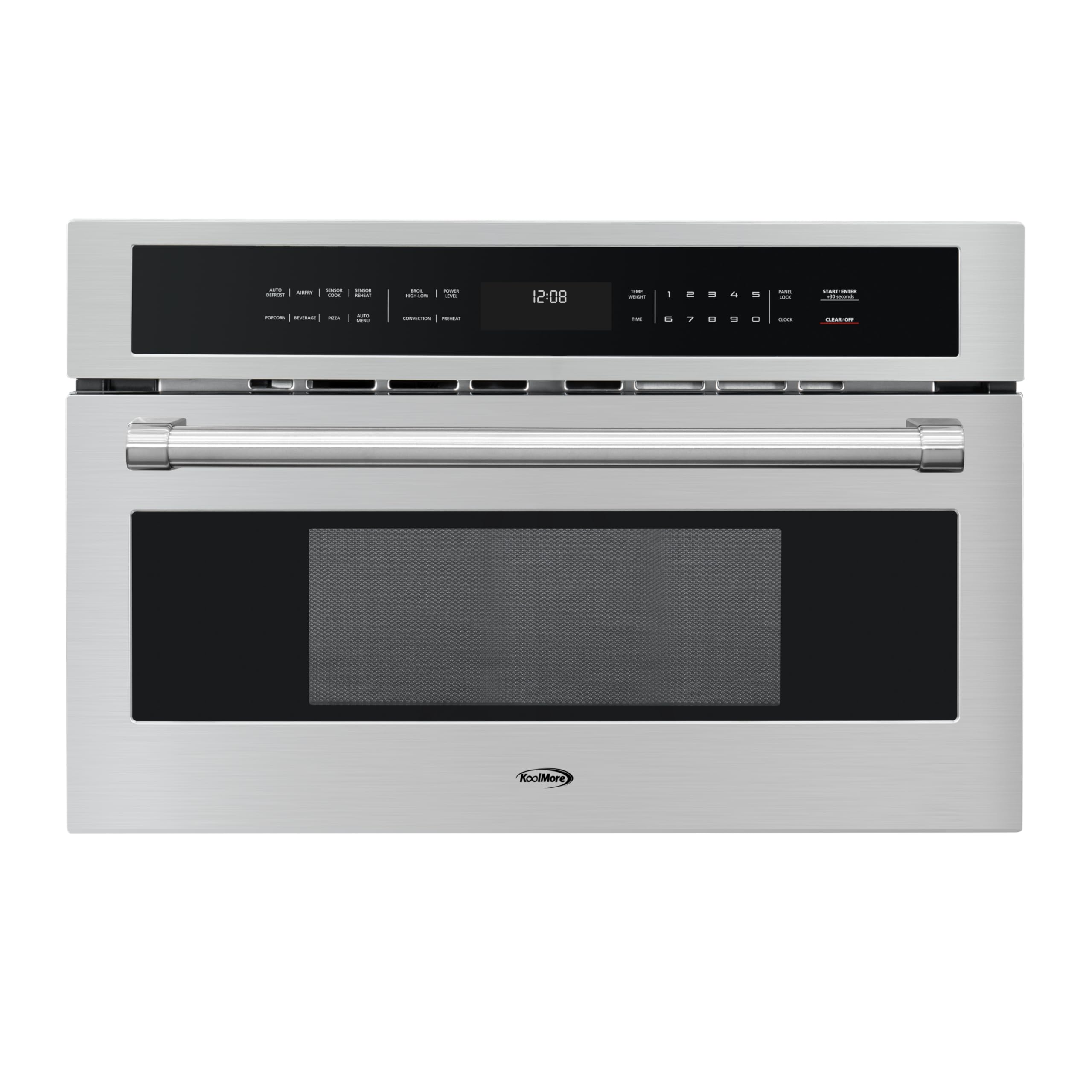
An integrated 30-inch unit that combines microwave, convection, and air-fry capabilities; I appreciated its sleek look and multi-function performance.
Why I picked it: Air fry capability and built-in aesthetic gave the most modern kitchen flexibility.
Best for: Users wanting an integrated appliance that handles air frying and convection tasks.
A premium integrated combo with wide functionality.
Pros
- Integrated air-fryer and convection modes
- Built-in installation for a sleek look
- 1.6 cu. ft fits most dishes
- User-friendly controls and installation guide
Cons
- Air frying can take longer than standalone units
- Unit is heavy to maneuver during install
My take
I installed the KoolMore in a cabinet cutout and liked how it gave a finished, integrated appearance. Controls were intuitive and the install instructions were clear, though the unit’s weight demands a two-person lift.
Air-fryer results were crisp and flavorful, although I noticed cook times ran a bit longer than my countertop air fryer. Convection baking worked well for secondary oven tasks.
Overall this model felt like a modern all-in-one for smaller kitchens or secondary cooking zones. If you want to consolidate functions into one built-in unit, it’s the most feature-rich option I used.
How I Picked and What to Consider
Key features I tested
I focused on heating technology, interior volume, installation fit, and extra cooking modes. Those factors determine how well a built-in microwave performs day-to-day.
Inverter vs. pulse power: Inverter systems deliver continuous power at lower settings and preserved texture in delicate foods, while traditional units use on/off pulses.
- Size and fit: Measure your cabinet cutout or counter space before choosing a 24" or 30" model.
- Power and capacity: Higher wattage speeds cooking; larger cubic feet fit bigger dishes.
- Cooking modes: Convection, grill, and air-fry add real oven-like capability.
- Sensor and presets: These save time and reduce guesswork for common foods.
- Installation needs: Built-in units often require a dedicated circuit and proper ventilation.
Practical tips from my testing
If you reheat single servings most days, a compact inverter microwave will outperform a basic high-watt model in texture and defrosting.
If you cook for a family or entertain, prioritize interior capacity and a strong turntable diameter to accommodate serving dishes.
- Check interior light brightness if you rely on seeing food while cooking.
- If air-frying is a priority, expect slightly longer cook times than a standalone fryer.
- Inspect the unit upon delivery for dents before installation — that prevented headaches for me.
- Plan for installation help: larger built-in units typically require two people to mount safely.
Frequently Asked Questions
Do inverter microwaves really make a difference?
Yes. In my experience inverter models provide smoother, more even heat at lower power levels, making defrost and delicate reheating less likely to overcook edges.
Can a convection or air-fry microwave replace my oven?
They can handle small roasts, pizzas, and baking tasks well, but I wouldn’t rely on them as the only oven for large holiday roasts. Think of them as a useful second oven.
What should I check before installing a built-in microwave?
Measure the cutout precisely, confirm electrical circuit requirements, and inspect the unit for shipping damage before final mounting.
Is the grill function worth having?
I found the grill function very handy for crisping and browning foods that would otherwise stay soggy when microwaved.
Final Take
I chose models in this roundup to reflect real kitchen needs: compact inverter units for texture-sensitive reheating, large-capacity ovens for family cooking, and multi-function combos for one-oven living.
If you want reliable everyday performance, start with the inverter Panasonic. If you need space or multi-mode cooking, pick the larger Panasonic or one of the combo ovens.
Measure your space, consider the cooking modes you actually use, and plan the installation — picking the right built-in microwave can simplify cooking for years.
