
I tested four butcher-block style cutting boards for size, durability, and mess control. These are the boards I keep reaching for when I’m carving meat, prepping dinner, or putting together a charcuterie spread.
I cook regularly and have tried a wide range of wood cutting boards. For this roundup I focused on boards that act like a butcher block: large surface area, juice control, and durable hardwood or bamboo construction.
My testing looked at real-world tasks: carving brisket and turkey, everyday chopping, cleaning and maintenance, and how each board performs as a serving piece. Below I explain which board I use for specific jobs and why.
In my experience, bigger boards give me flexibility but require storage space; bamboo boards are light and budget-friendly; teak is the long-term, low-maintenance choice. I compare these trade-offs in each pick.
1. Greener Chef Organic Extra-Large Cutting Board – Best Overall
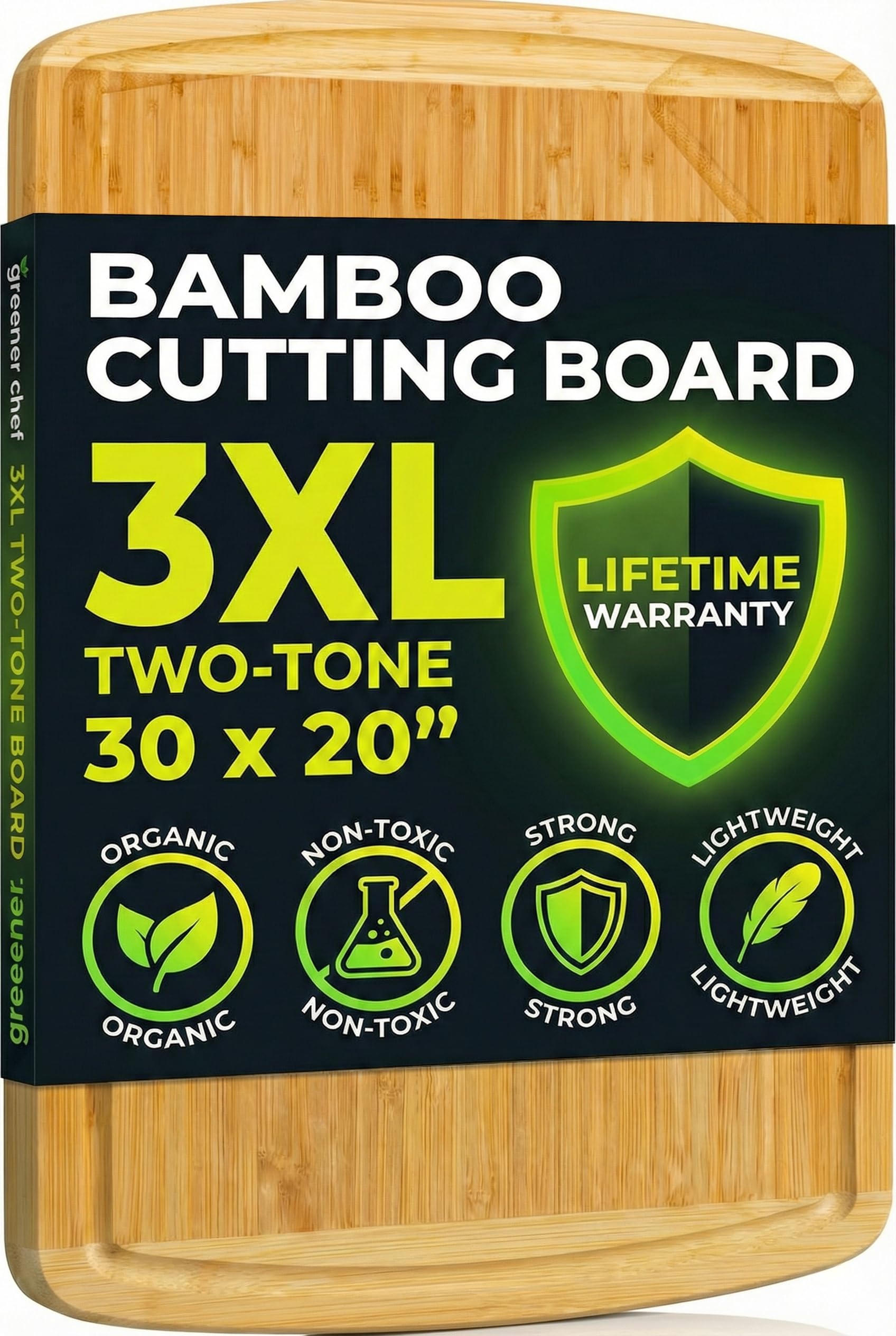
I rely on this oversized organic board when I need maximum work surface, a built-in juice channel, and a replacement warranty that gives me confidence.
Why I picked it: Massive surface and corner juice reservoir that keeps my counters clean.
Best for: Carving large roasts, Thanksgiving turkey, and oversized meal prep.
Midrange to premium value with a lifetime replacement promise.
Pros
- Huge working surface
- Corner juice reservoir with pour spout
- Lightweight for its size
- Lifetime replacement warranty
Cons
- Takes a lot of storage space
- No built-in non-slip feet
My take
This board is the first one I reach for when I need room to butcher a brisket or carve a turkey. The surface feels solid and the deep perimeter channels — plus the corner pour spout — actually catch and direct juices so my counters stay tidy while I work.
Because it’s so large I’ve used it as an instant extension over my sink or stovetop to double prep area. It’s lighter than I expected for its dimensions, but you’ll still want a dedicated spot to store it. I also value the lifetime replacement promise; it gives me peace of mind for heavy seasonal use.
2. Extra-Large Bamboo Reversible Cutting Board – Best Budget
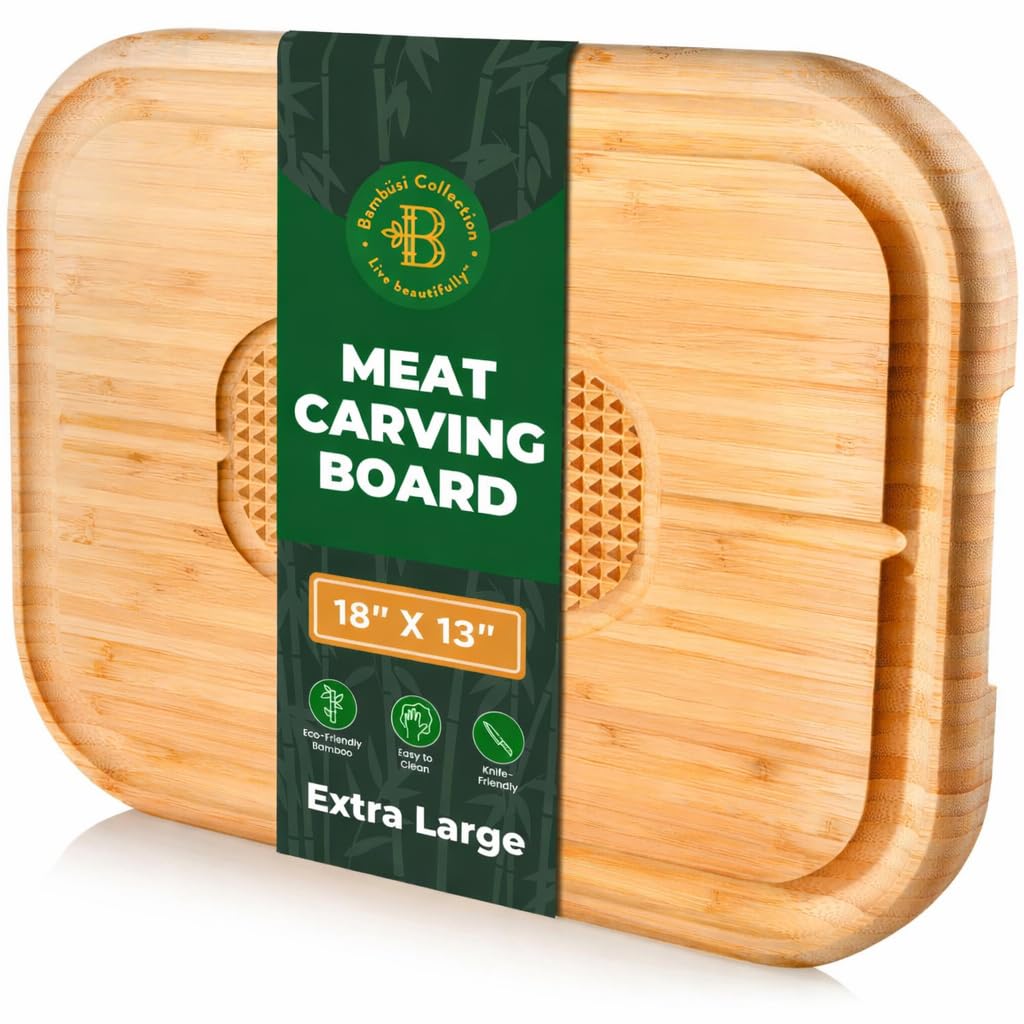
I keep this thick bamboo board on hand when I want a heavy-duty, budget-friendly option with a non-slip center and deep juice groove.
Why I picked it: Durable bamboo build with textured non-slip center and reversible sides.
Best for: Everyday carving, BBQ prep, and serving meat platters.
Affordable option that still feels heavy-duty.
Pros
- Thick, stable profile
- Deep juice groove
- Reversible for two uses
- Built-in side handles
Cons
- Juice grooves can be hard to clean
- Bamboo can show knife marks over time
My take
I liked this board for heavy duty jobs where I wanted something solid without spending a lot. The textured center holds roasts steady while I slice, and flipping it to the smooth side gives me a great prep surface for vegetables or serving.
Cleaning requires attention around the grooves — they trap residue if you’re not careful — but routine oiling keeps the bamboo from drying out. The integrated handles make it easy to carry to the table, which I appreciate when I use it as a serving platter.
3. Acacia Round Cutting Board with Handle – Best for Entertaining
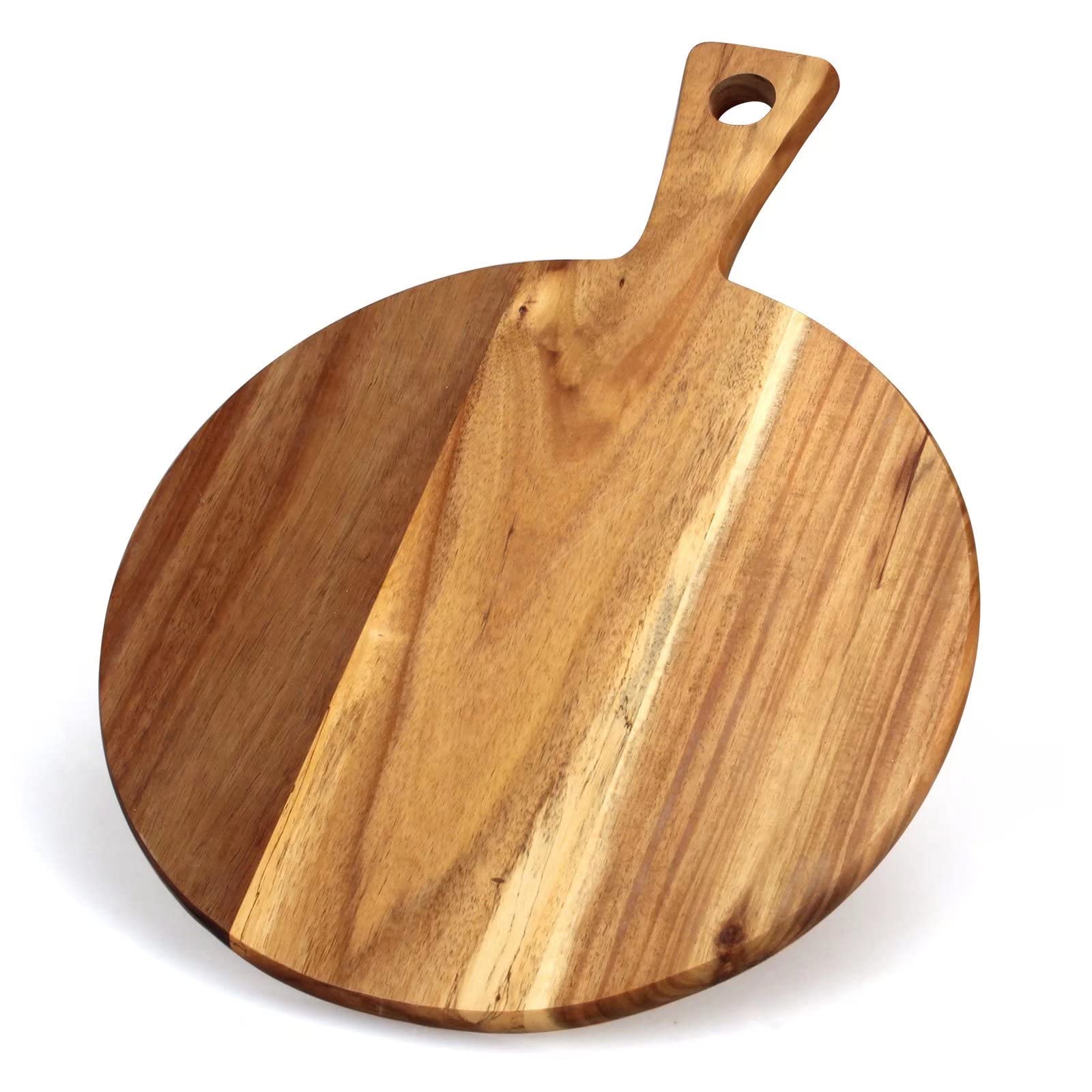
I use this acacia board when I want a multipurpose piece that dresses up my counter and doubles as a charcuterie tray.
Why I picked it: Attractive acacia wood and a handy handle make it perfect for serving.
Best for: Charcuterie, bread, pizza, and countertop display.
Budget-friendly and decorative for casual entertaining.
Pros
- Beautiful acacia grain
- Single-piece construction
- Handy handle with hanging hole
- Lightweight and easy to store
Cons
- Not as thick for very heavy carving
- Finish can show wear with heavy use
My take
This acacia board is my go-to when I want something that looks great on the island. The wood’s warm tones make a lovely backdrop for cheese and charcuterie, and the handle with a hanging hole lets me display it between uses.
It’s sturdy enough for routine slicing and serving, but I wouldn’t choose it as my primary carving board for a huge roast. For entertaining and everyday display it’s perfect — I oil it occasionally and it still looks excellent.
4. Sonder Los Angeles Laurel Teak Edge Grain Cutting Board – Best Premium
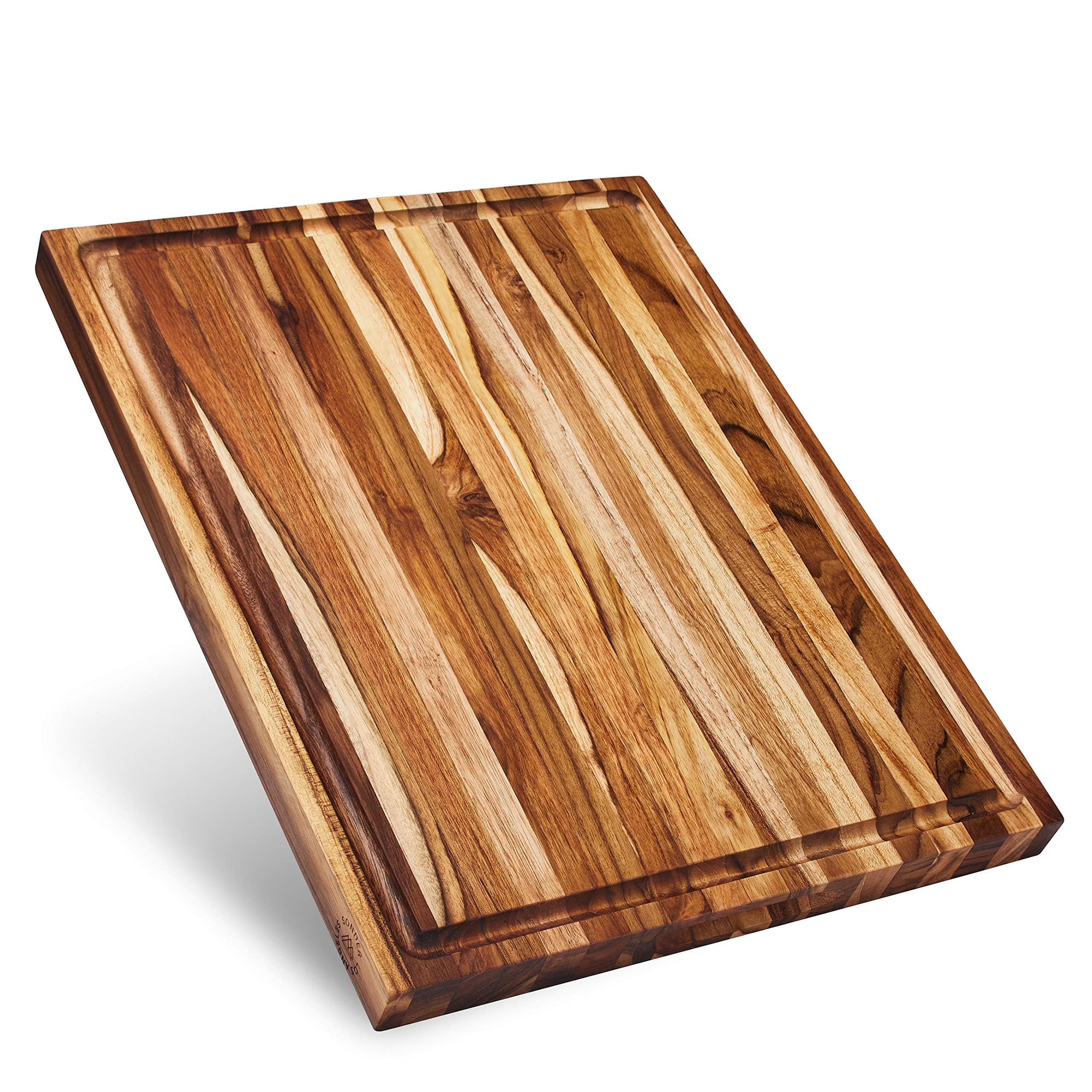
I turn to this teak edge-grain board when I want exceptional water resistance, a refined look, and a deep juice groove that handles heavy slicing without staining counters.
Why I picked it: Premium teak resists water and warping for long-term use.
Best for: Daily heavy use and those who value a long-lasting, attractive board.
Higher-end investment for long-term durability and looks.
Pros
- Premium teak resists water
- Deep juice groove
- Thick, heavy construction
- Attractive gift-ready packaging
Cons
- Heavier to move
- May feel too nice to use often
My take
This teak board earned a permanent spot on my counter because of its resilience and finish. Teak’s natural oils give it water resistance that reduces warping risk, and the edge-grain construction holds up well to daily use while staying relatively stain-free.
I oiled it when it arrived and immediately felt comfortable using it for everything from slicing fruit to carving roasts. It’s heavier than the others, but that weight translates to a confident, solid cutting surface that I expect to keep for years.
How I Choose a Butcher-Style Cutting Board
Size and workspace
I pick a board based on the jobs I do most: big roasts need an oversized surface, while everyday prep benefits from something that fits my sink for easy washing.
If storage is tight, I keep one large board for seasonal carving and a smaller board for daily chopping.
- Choose extra-large boards if you carve turkey or large roasts regularly.
- Select a moderate board for daily meal prep and easier storage.
Wood type and durability
I prefer teak or dense edge-grain hardwoods for long-term water resistance and lower warp risk. Bamboo gives good hardness and value, but can show marks over time.
Acacia and single-piece boards make attractive serving pieces for entertaining.
- Teak: naturally water resistant and durable.
- Edge-grain hardwoods: balanced durability and knife friendliness.
- Bamboo: affordable, hard, and lightweight.
Juice grooves and mess control
I look for a deep juice groove with a practical pour spout when I’m carving wetter cuts. It makes cleanup and countertop protection much easier.
Grooves are useful but add cleaning care — I scrub them after heavy use to prevent residue buildup.
- Deep groove keeps counters clean during carving.
- Corner pour spouts simplify transferring collected juices.
Maintenance and finish
I hand-wash wood boards and dry them immediately. Regular oiling keeps the surface healthy and helps reduce cracking or splitting.
Avoid prolonged soaking and dishwasher cleaning to protect the board’s lifespan.
- Hand wash only, dry flat and oil periodically.
- Store boards standing on edge to improve airflow.
Frequently Asked Questions
How often should I oil a wooden butcher board?
I oil a new board right away and then every few weeks with regular use; for light-use boards I oil monthly. A good sign to oil is when water no longer beads on the surface.
Can I use these boards for raw meat?
I use hardwood and bamboo boards for raw meat and always clean them thoroughly afterward. For strict cross-contamination control I keep a dedicated board for raw proteins.
Which board is easiest to store?
The round acacia board is the easiest to store or hang; the extra-large Greener Chef board requires the most dedicated space but gives unmatched prep area.
Final Take
After testing these boards in real kitchens, I keep at least two on hand: a large, heavy-duty board for carving and a smaller, attractive piece for serving and light prep.
If you want a single all-purpose pick, the Greener Chef oversized board gives unmatched workspace. For long-term durability and low maintenance, I favor the teak option. For entertaining or budget-minded cooks, the acacia and bamboo options are excellent choices.
Whichever board you choose, follow simple care—hand wash, dry, and oil—and you’ll get reliable performance for years.
