
I tested five butcher block boards across sizes and materials so you can pick the right mix of surface area, durability, and features for carving, prep, and serving.
I spent time using large and compact butcher blocks in real kitchens so I could compare how they handle carving, everyday prep, and cleanup. Each board here earned a spot because it solves a specific problem—extra-large carving, compact apartment prep, heavy-duty carving, heirloom durability, or over-the-sink convenience.
In the sections below I break down what I liked, where each board fits best, and the one downside I ran into while using it. If you want a quick recommendation, jump to the label that matches your needs; otherwise read on for the details I relied on during testing.
Short on time? Pick the Greener Chef for the biggest cutting surface and built-in juice management, choose the John Boos if you want an heirloom-quality maple block, or grab the Royal Craft Wood if you need a compact, budget-friendly bamboo board.
1. Greener Chef Organic Extra Large Cutting Board – Best Overall
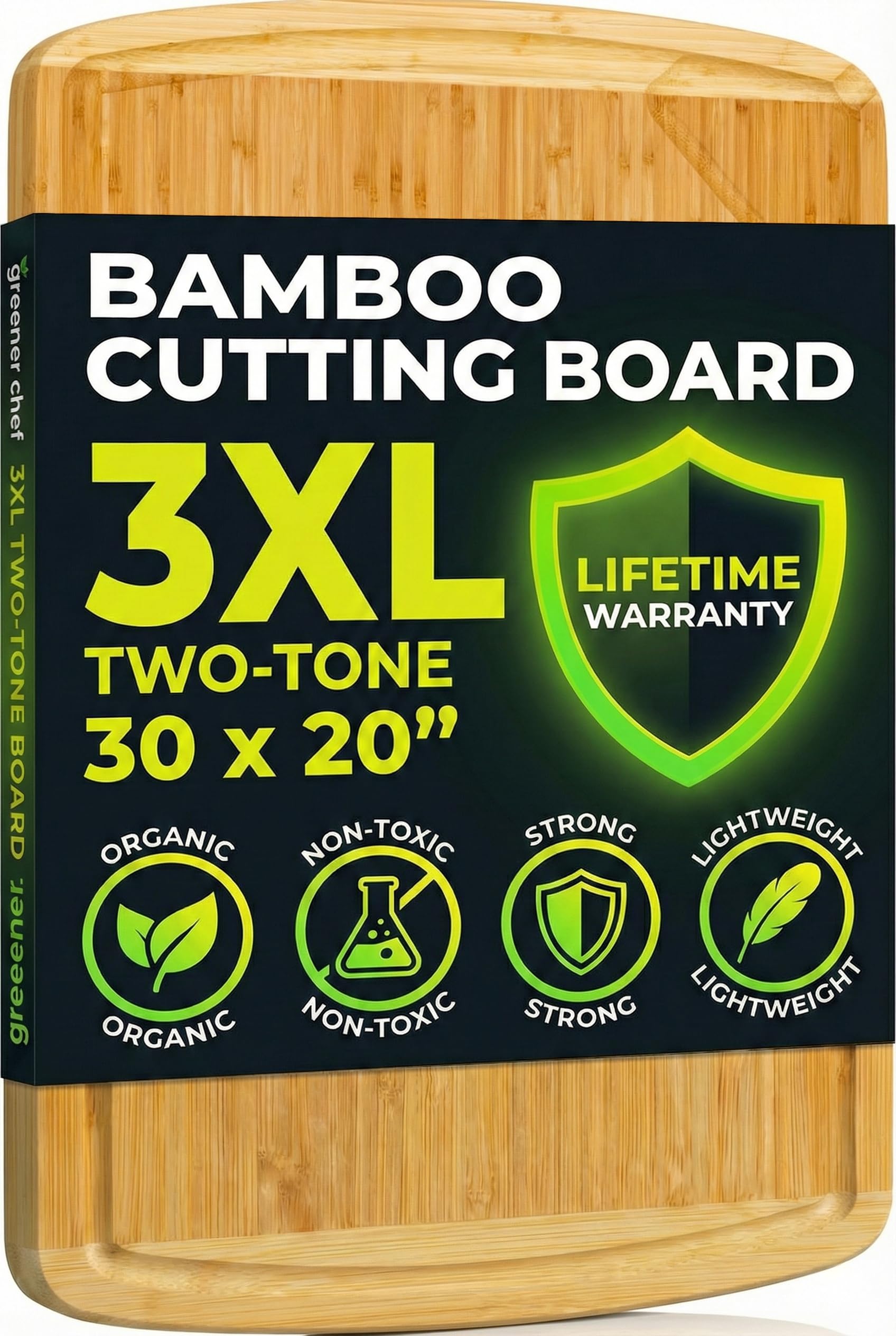
Massive two-tone bamboo board with corner juice reservoir, pour spout, and lifetime replacement warranty—great for carving large roasts and doubling counter space.
Why I picked it: I picked it for its sheer usable surface, built-in juice management, and lifetime replacement promise.
Best for: Carving turkeys, trimming brisket, large charcuterie spreads, and covering sinks or stovetops.
Worth the investment for its size and warranty.
Pros
- Huge usable cutting surface
- Corner juice reservoir with pour spout
- Fits over stove or sink
- Lifetime replacement warranty
Cons
- Takes up significant storage space
- Can retain fish odors after filleting
- No built-in rubber feet for grip
My take
This is the first board I reach for when I need real room. Setting a 15-pound brisket or Thanksgiving turkey on it feels effortless because the surface is that big.
The molded valleys around the edges caught fat and juices reliably, and the corner reservoir with a pour spout made cleanup much neater than on flat boards. I also used it as an impromptu charcuterie platter and it looked great on the table.
It’s surprisingly lightweight for its footprint, but storing it is the real challenge—plan where it will live before buying. I treated the board with oil and cleaned it with lemon and salt when dealing with strong odors; fish can leave a hint of smell unless you scrub and re-oil.
The lifetime replacement policy gave me confidence to use it hard. For anyone who needs a large, multiuse surface, this board delivers.
2. Royal Craft Wood Bamboo Cutting Board – Best Budget
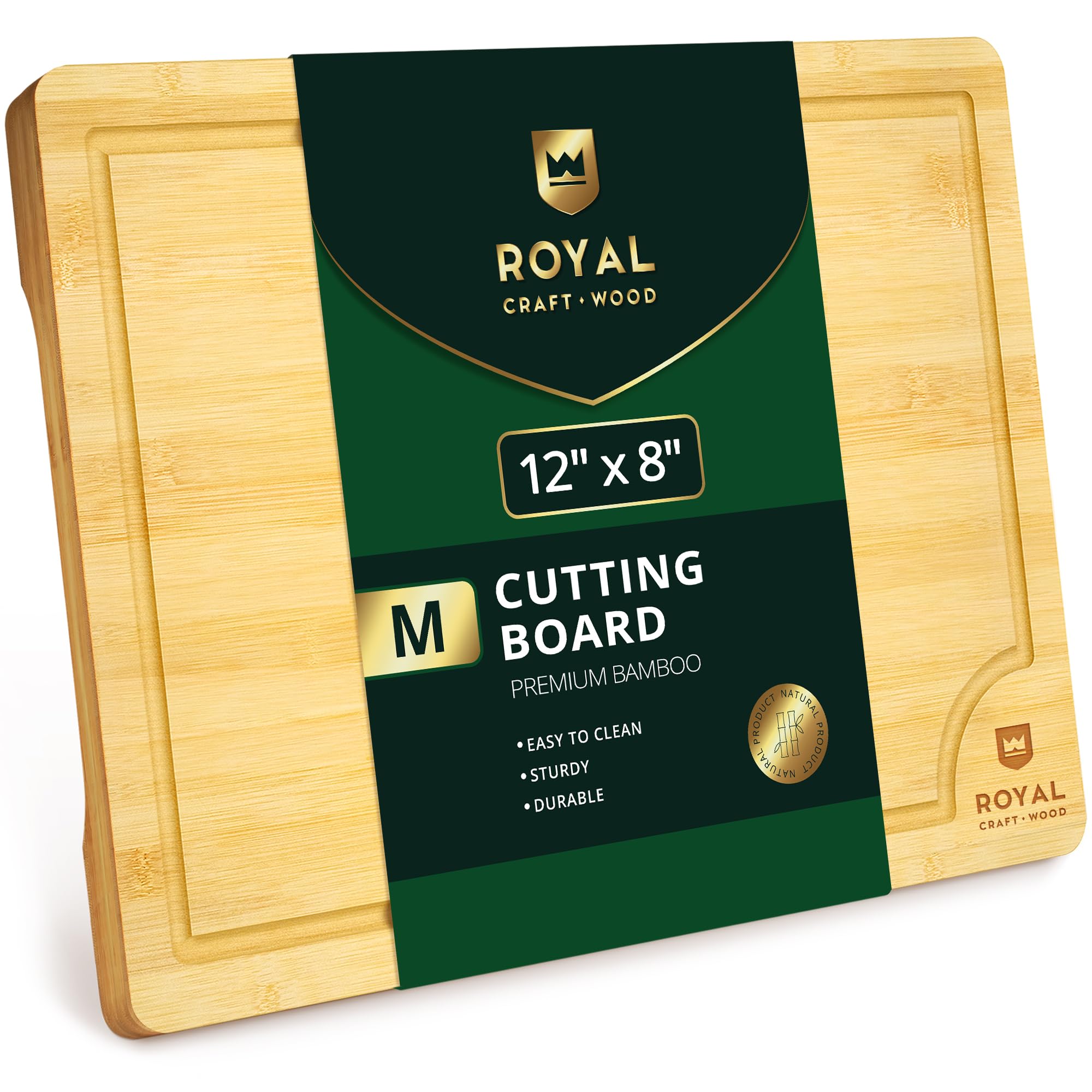
Compact, reversible bamboo board with a deep juice groove and gentle surface that protects knife edges—ideal as a low-cost, space-saving staple.
Why I picked it: I chose it because the size, construction, and juice groove make it a reliable, inexpensive everyday board.
Best for: Small kitchens, appetizers, quick prep, and new renters who need a dependable board.
Very affordable and reliable for everyday use.
Pros
- Gentle on knives
- Reversible cutting surfaces
- Deep juice groove
- Lightweight and easy to store
Cons
- Limited cutting surface
- Needs periodic oiling
- Some listings overstate thickness
My take
This is the board I keep for quick prep and when I’m short on space. The bamboo surface feels forgiving on my knives but still stands up to chopping vegetables and light meat prep.
It arrived smooth with no glue smell, and after a first coat of mineral oil it took on a more finished look. The juice groove prevents drips during small carving jobs and I appreciate that I can flip it to avoid cross-flavoring.
It’s not the thickest board I’ve used, so if you need a heavy-duty butcher block this isn’t that—however for the price and size it’s a solid staple I’ll keep in rotation.
3. Extra Large Bamboo Reversible Butcher Block – Best for Carving
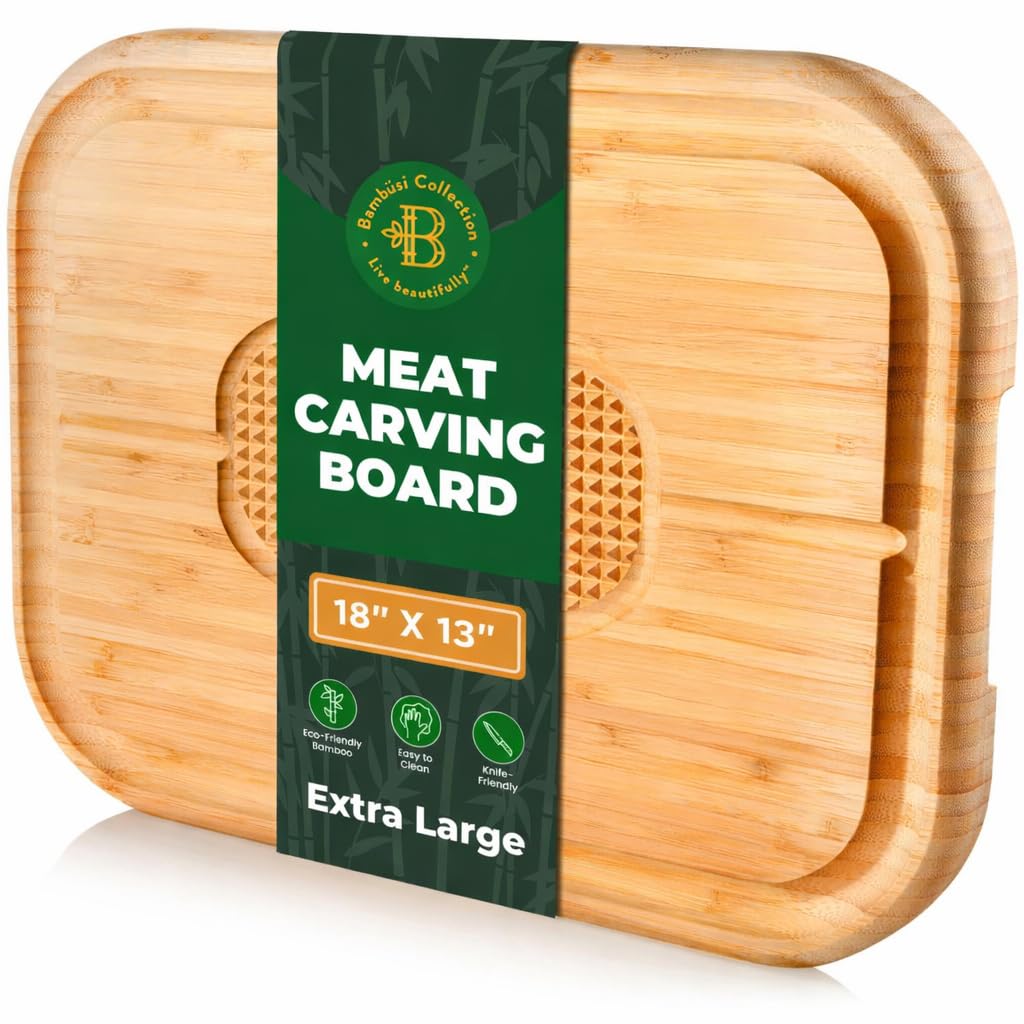
Thick 18×13 bamboo board with a textured non-slip center, deep perimeter juice groove, and built-in handles—designed for stable carving of roast and poultry.
Why I picked it: I relied on its textured center and weight for steady carving and serving.
Best for: Slicing turkey, brisket, steak, and BBQ where a non-slip surface matters.
A practical value for heavy-duty carving tasks.
Pros
- Textured non-slip carving center
- Wide perimeter juice groove
- Reversible surface
- Built-in carrying handles
Cons
- Grooves can be hard to clean
- Heavier than small boards
My take
This board felt reassuringly solid when I carved a roast—the textured center really helps keep meat from sliding during long slices.
The deep juice groove collected drips effectively, keeping counters much cleaner. I also liked the built-in side handles for moving the board to the table.
I followed the care instructions and oiled it before regular use. My only gripe was that the grooves trap food and take a bit of effort to clean thoroughly, but otherwise it’s a dependable workhorse for carving and serving.
4. John Boos RA-Board Maple Cutting Board – Best Premium
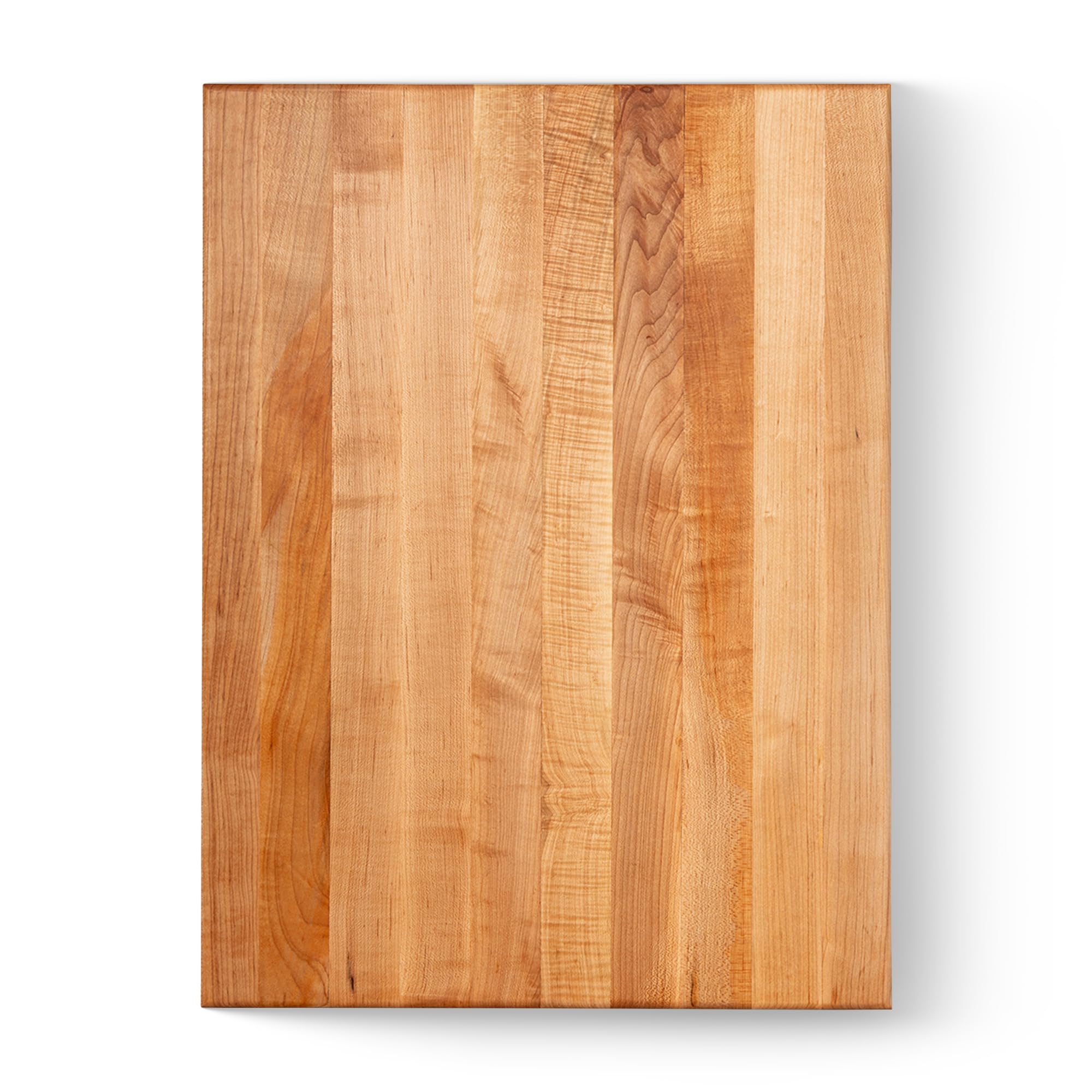
Thick edge-grain maple block made in the USA with recessed finger grips and a level surface—built to last for decades with regular conditioning.
Why I picked it: I picked it for unmatched build quality and long-term durability.
Best for: Chefs and home cooks who want an heirloom-quality block that will last a lifetime.
A high-end investment for serious cooks.
Pros
- Extremely durable edge-grain maple
- Thick 2.25-inch profile
- Reversible with finger grips
- Made in the USA
Cons
- Very heavy to move
- Requires regular oiling and care
My take
This is the board I call the ‘keep forever’ option. Out of the box it felt massive and beautifully finished. It came well packaged and even included a small pouch of oil.
I set it on a high prep surface and it became my go-to for rolling dough, heavy chopping, and carving—there’s real heft to it so it doesn’t move under pressure. The maple surface gives a nice cushion for knife edges.
Maintenance is part of owning it: regular mystery oil and board cream keep it looking pristine. If you want something you won’t replace for years, this is that board.
5. Utoplike Extra Large Bamboo Cutting Board – Best Over-Sink
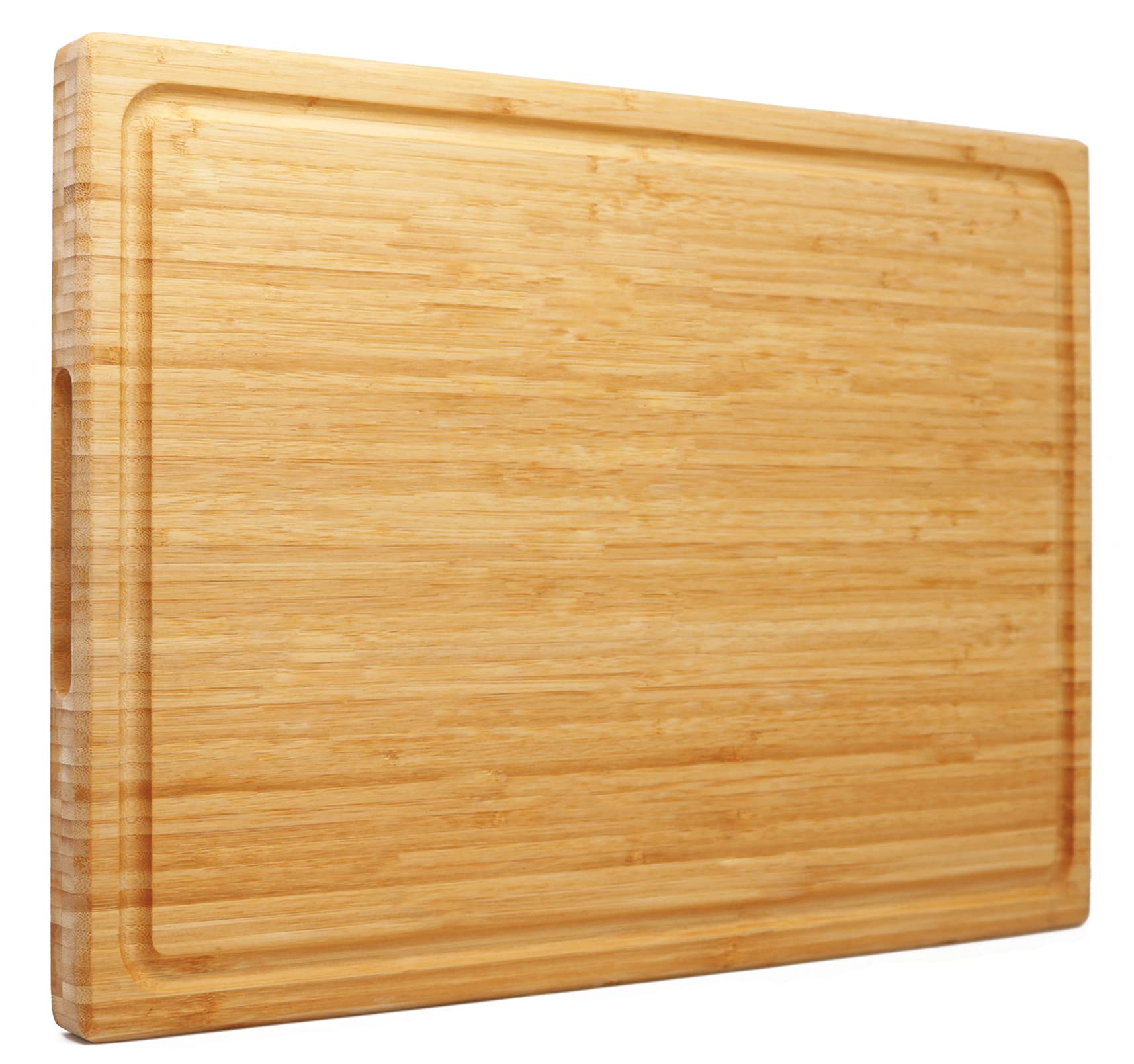
Very large bamboo board with double-sided juice grooves, hidden handles, crisscross grain to resist cracking, and enough surface to cover sinks or stoves.
Why I picked it: I valued the size and the double-side grooves for flexible over-sink or over-stove use.
Best for: Smokers, large roast prep, and cooks who want an over-the-sink workstation.
Large capacity at a reasonable price point.
Pros
- Extra-large surface area
- Double-sided juice grooves
- Hidden side handles
- Crisscross design reduces cracking
Cons
- Can have a slight odor initially
- Quite heavy to lift
My take
I used this to cover my sink and as a work surface for large roasts—the extra surface made prep much faster and more organized.
The double-side juice groove is handy because I can flip it and keep using a grooved surface for messy jobs. The board is solid and smooth; after a day the slight bamboo or adhesive scent faded for me.
It’s heavy, so plan how you’ll lift and store it. I clean it with diluted vinegar and condition monthly with food-grade mineral oil; after several months it still looks and performs like new.
How I Choose a Butcher Block
Material: Maple vs Bamboo
I prefer maple when I want a long-lasting, dense surface that resists deep gouges and provides a bit of cushion for knives. Bamboo is a great middle ground: harder than many hardwoods, kinder to knives than some plastics, and often lighter.
If you plan to use the board daily and want a lifetime piece, I lean toward maple. For large, budget-friendly surfaces that resist warping, bamboo is my go-to.
- Maple: dense, long-lasting, needs regular oiling.
- Bamboo: durable, lighter, often less expensive.
- Avoid end-grain if you want easier maintenance (but know end-grain hides knife marks).
Size & Storage
I measure my prep area and consider where a board will live before buying. Extra-large boards are fantastic for carving and doubling counter space, but they can be awkward to store.
Smaller boards are convenient for daily tasks and apartment kitchens.
- For carving turkeys and briskets choose large boards with juice grooves.
- For small kitchens pick a compact reversible board.
- Plan storage for boards larger than 18 inches.
Features That Matter
Juice grooves, non-slip centers, built-in handles, and pour spouts all make cleanup and serving easier. I look for features that solve the specific problem I have—stable carving, catching drips, or easy transport to the table.
Warranty and replacement policies are another factor; they tell me how confident the maker is in the board’s longevity.
- Juice grooves keep counters clean during carving.
- Textured centers and weight improve stability.
- Handles or hidden grips make serving easier.
Maintenance & Care
I always hand-wash with mild soap, dry immediately, and oil boards regularly to keep them stable and attractive. For lingering odors I use lemon and coarse salt or a diluted vinegar wipe.
Grooves and textured surfaces trap debris, so I pay extra attention to cleaning those areas and re-oiling to prevent drying and cracking.
- Hand wash only; dry immediately.
- Oil periodically with food-grade mineral oil.
- Scrub grooves carefully to avoid trapped debris.
Frequently Asked Questions
How often should I oil a wooden cutting board?
I oil high-use boards every few weeks and less-used boards monthly; frequent oiling prevents drying and keeps the surface more resistant to stains and cracks.
Can I put these boards in the dishwasher?
No—I hand-wash all wooden and bamboo boards. Dishwashers dry and warp wood and can shorten a board’s life.
Which board is best for carving a large turkey?
I reach for extra-large boards with deep juice grooves and a stable surface—those features make carving and cleanup easiest.
Final Take
I’ve tested boards for different kitchens and cooking styles, and each pick here solves a clear problem:Greener Chef for maximum surface and juice control, John Boos for long-term durability, the Royal Craft Wood for compact value, the Extra Large Bamboo board for steady carving, and Utoplike when you need an over-sink work surface.
Decide what matters most—size, maintenance, or longevity—and pick the board that fits that need. If you want my short take: choose the board that matches your prep habits rather than the one that looks best on a shelf.
