
I tested seven butcher block kitchen islands across size, materials, and mobility. Here are the islands I kept coming back to for prep space, storage, and durability.
I wanted extra prep space and smart storage without a full remodel, so I brought seven butcher block kitchen islands into my kitchen and used each one for everyday tasks. Over weeks of chopping, rolling dough, parking appliances, and moving them around, I learned which designs handle heavy use, which save space, and where manufacturers cut corners.
My roundup focuses on real-world fit: countertop material and durability, storage layout, how the wheels behave, and how much work assembly and upkeep demand. If you want a mobile prep station or a compact island to tuck beside your counter, I’ve laid out what worked and what didn’t.
All seven islands give you extra counter and storage, but they differ in top material (bamboo, pine, stainless), mobility (locking casters vs basic wheels), storage layout, and ease of assembly. I highlight which model is best for specific needs—more durable tops, more drawer space, or a narrow footprint for tight kitchens.
1. eHemco Kitchen Island Cart – Best Overall
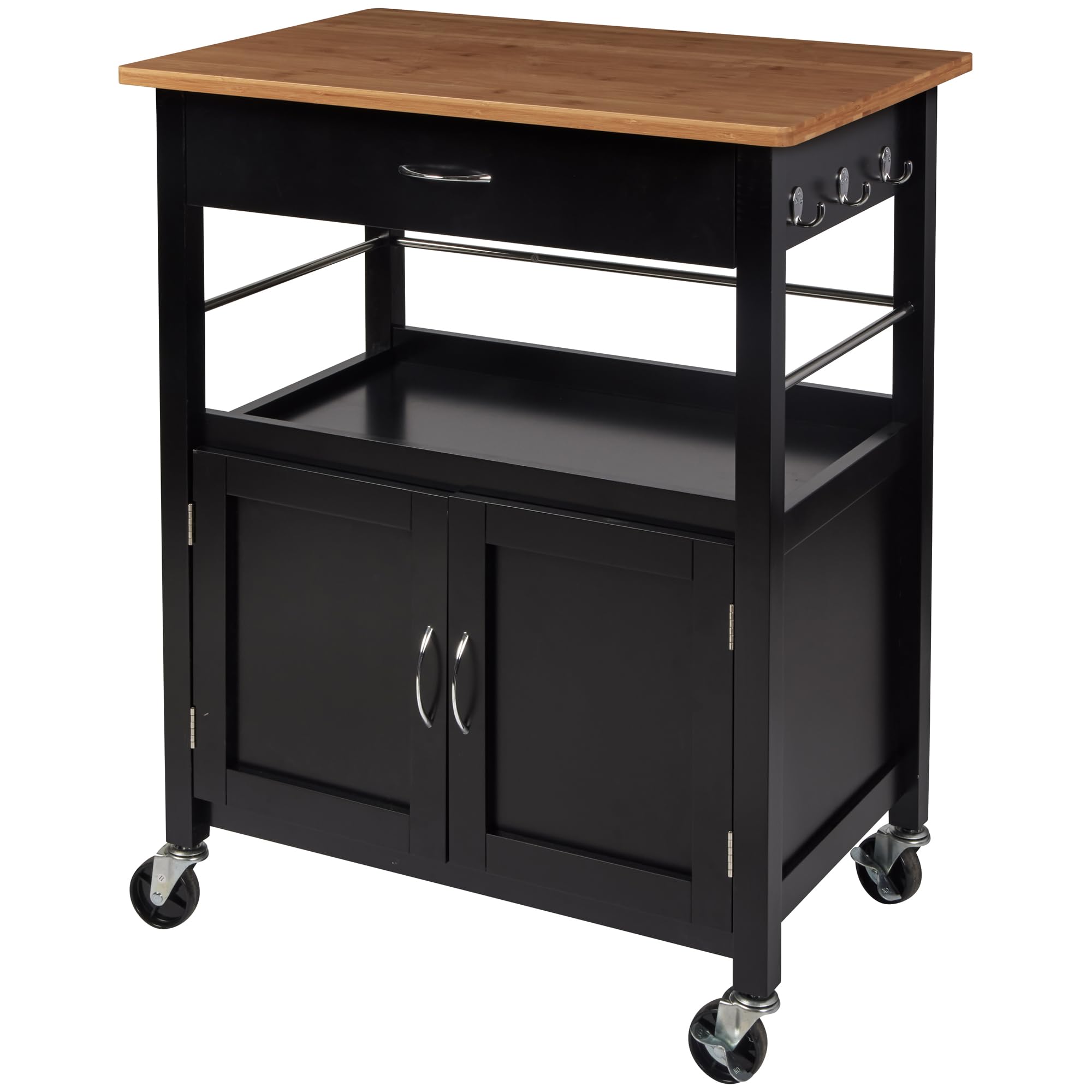
My go-to for a balanced mix of sturdy bamboo top, practical storage, and smooth mobility in a compact footprint.
Why I picked it: Sturdy bamboo top, practical storage, easy assembly for most people.
Best for: Small kitchens that need reliable prep space and storage.
Affordable midrange option for value and utility.
Pros
- Solid bamboo butcher block top
- Good mix of drawer and cabinet storage
- Side hooks and rails for utensils
- Top holds decent weight for appliances
Cons
- Drawer is wood-on-wood
- Handles feel inexpensive
- May require two people to assemble
My take
I used this cart as my everyday prep station and appreciated how substantial the bamboo top feels compared with its price. The top is wide enough for a small appliance and meal prep, and the unit supports a surprising amount of weight for its size.
Assembly is straightforward if you follow the labeled parts and pictorial instructions—everything comes in clearly marked bags. Expect it to take me and a helper around an hour or two; a single installer might take longer. Wheels roll well and two of them lock tightly enough to keep the cart steady while I chop.
Inside storage is thoughtful: a slide-out drawer, an open shelf, and a two-door cabinet hold pantry boxes and small appliances. The drawer slides are basic and the door handles are lightweight, so I avoid hard impacts, but overall the construction felt sturdier than I expected for the price.
2. Home Aesthetics Bamboo Kitchen Cart – Best for Organized Storage
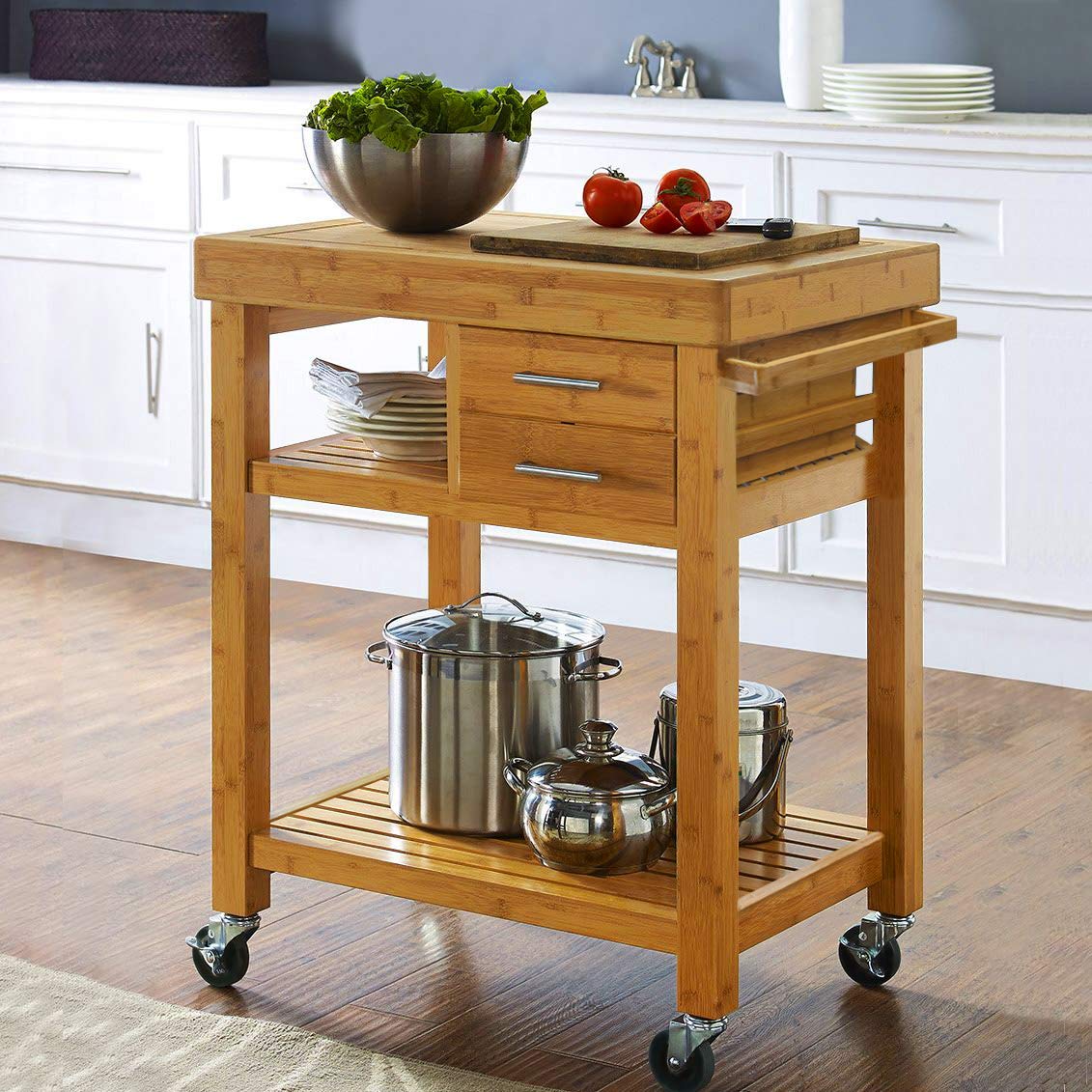
A kiln-dried bamboo cart with dedicated drawers and a towel rack that keeps small kitchens tidy and mobile.
Why I picked it: Kiln-dried bamboo top, purposeful drawer layout, and locking casters.
Best for: Organizing small appliances and utensils while freeing counter space.
Midpriced choice with an emphasis on finish and storage.
Pros
- Kiln-dried, varnished bamboo finish
- Two drawers plus extra shelving
- Lockable casters for stability
- Towel rack keeps linens handy
Cons
- Screw-hole stickers look cheap
- Pilot holes sometimes shallow
- May need minor touch-ups
My take
I relied on this cart when I needed neat storage for appliances and accessories; the two drawers and extra shelf space made it simple to stash mixer attachments and liners. The bamboo finish is warm and resists light spills, so I left it on display.
Mobility is excellent—four swivel casters and two locks let me roll it out to serve or lock it in place for prep. Assembly was doable alone, though I did find a couple of pilot holes needed a pilot drill to seat screws cleanly.
Cosmetic touches like stickers to cover screw holes are an easy fix with a bit of wood filler or a dab of stain, but they were the only real quibble with an otherwise well-put-together cart.
3. HOMCOM Bamboo Kitchen Island – Best for Heavy Prep
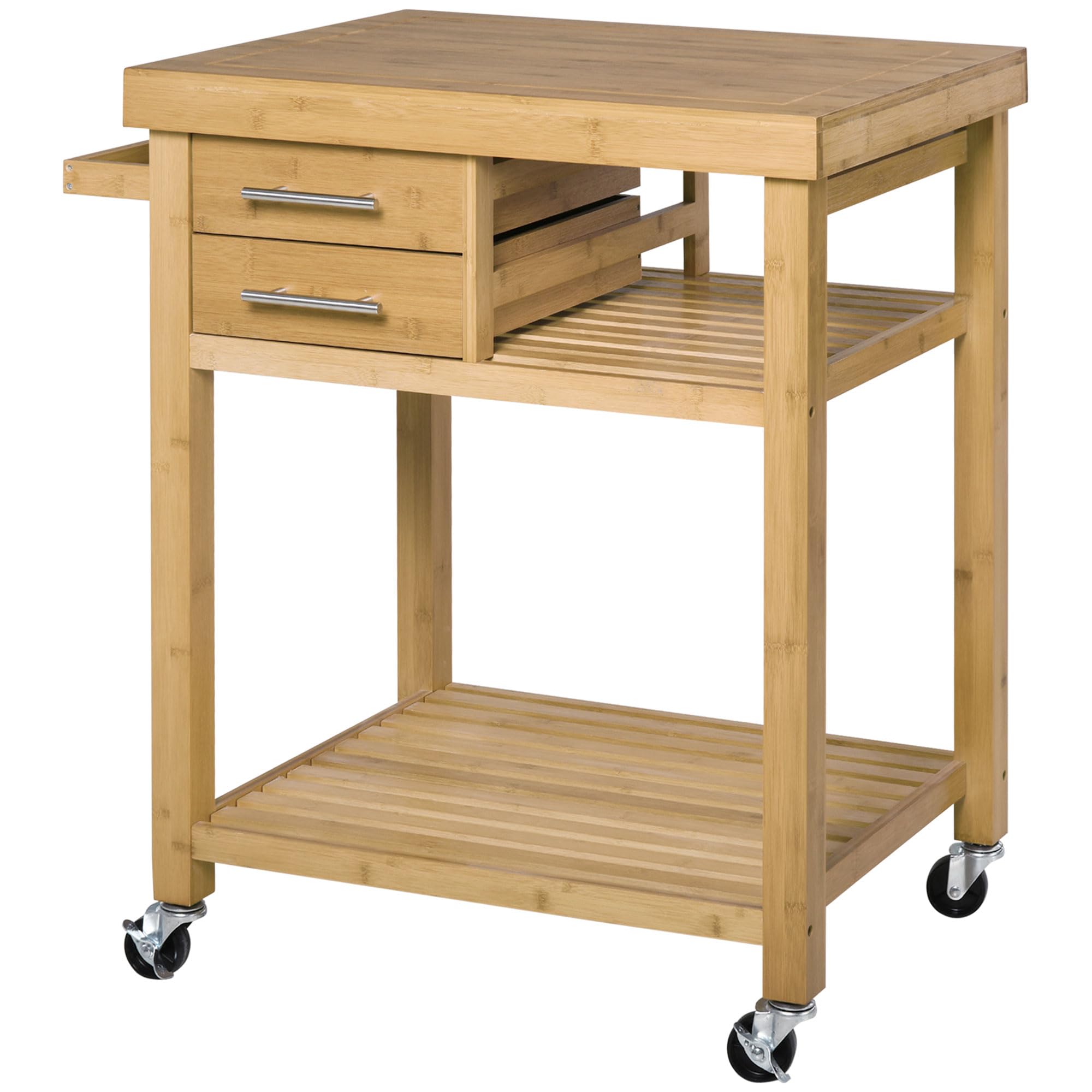
A tall, sturdy butcher block cart with a liquid-collecting groove that’s built for real food prep and larger countertop appliances.
Why I picked it: Tall working height, liquid groove on top, and roomy shelving.
Best for: People who use countertop appliances and want a dedicated prep surface.
Solid midrange pick focused on utility.
Pros
- Built-in liquid-collecting groove
- Tall, comfortable working height
- Plenty of shelving and drawers
- Varnished bamboo for easier cleaning
Cons
- Bamboo edges can be slightly splintery
- Average caster quality
- Drawers can rub without alignment
My take
This island became my preferred spot for heavy prep: the generous height is closer to standard counters, which made kneading dough and using larger machines feel natural. I also liked the small groove around the top that catches juices—handy when I'm working with wet ingredients.
Assembly was straightforward if you lay out parts and sort the hardware first. I did a very light sanding on a few sharp bamboo edges to avoid splinters. Casters roll well enough for repositioning but I treat the locks as essential when the top holds a mixer.
Storage is flexible: two drawers, a small accessory shelf, and a large shelf below keep gadgets and pantry items accessible without crowding my counters.
4. HOMCOM Stainless Top Kitchen Island – Best with Stainless Top
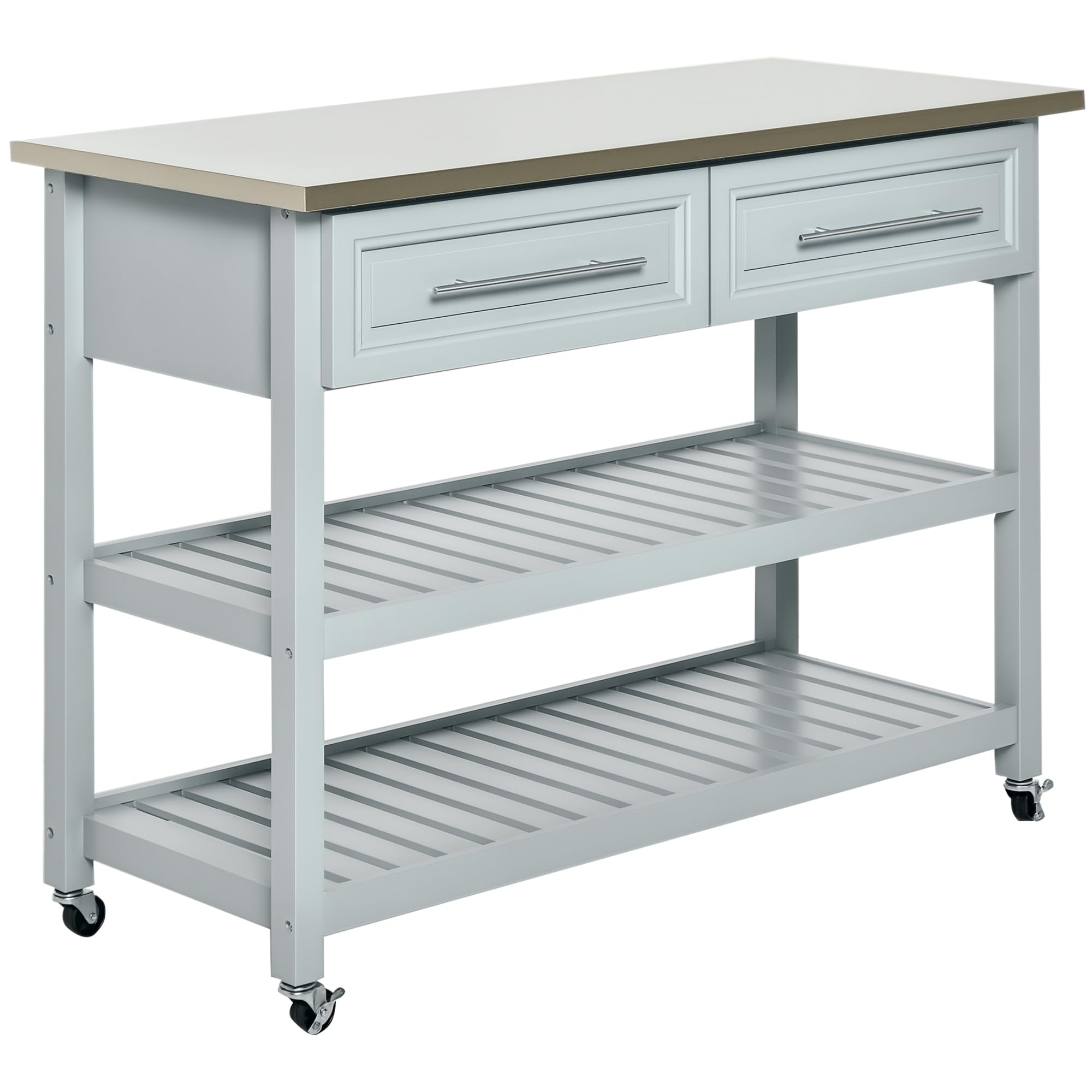
A farmhouse-style island with a stainless steel work surface and plenty of open shelving—great if you prefer a sanitary, easy-to-clean top.
Why I picked it: Durable stainless top and roomy slatted shelving for produce storage.
Best for: Anyone wanting a sanitary prep surface and farmhouse styling.
A bit more due to stainless top and larger size.
Pros
- Stainless steel countertop is easy to clean
- Large three-tier shelving layout
- Lockable casters for stability
- Farmhouse styling suits many kitchens
Cons
- Longer, more complex assembly
- Protective film can be stubborn
- Occasional small dents reported
My take
I kept this island in my kitchen when I needed a very hygienic prep surface—stainless steel wipes clean instantly and won’t stain like raw wood. The open slatted shelves breathe, which is nice for produce or stacked dishes.
Putting it together takes patience; the whole frame is larger than the other carts and I spent a few hours assembling by myself. Be careful removing the protective film on the stainless top—work slowly to avoid small surface marks.
Once set up, the casters make it easy to move for serving or cleaning. I left the wheels off on occasion to use it as a stationary butcher table and appreciated the slightly lower working height for kneading.
5. PETSITE Bamboo Kitchen Island – Best Sturdy Bamboo
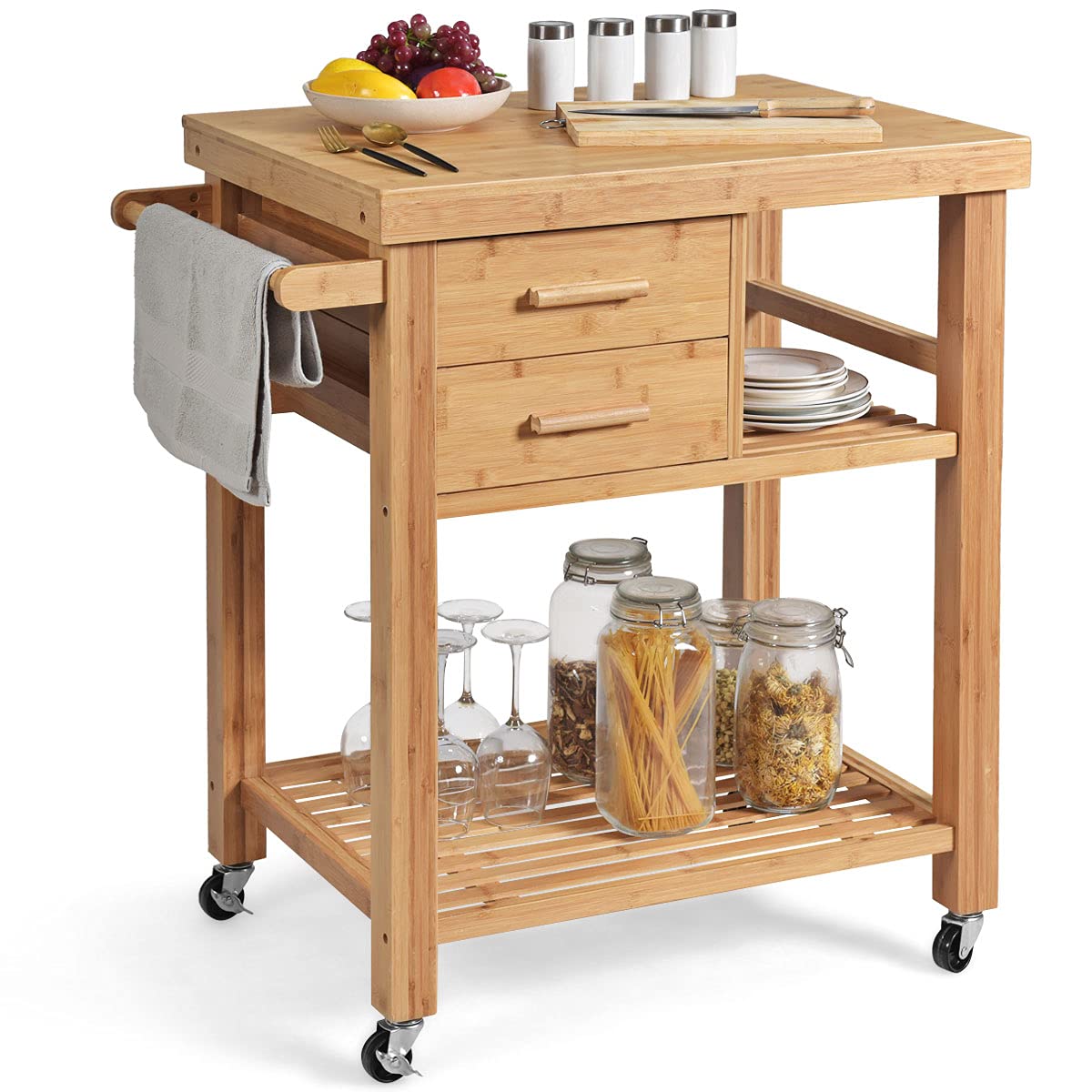
A hefty bamboo cart that feels substantial and waterproofed for everyday kitchen use and heavier loads.
Why I picked it: Waterproof bamboo finish and solid build for heavier duty use.
Best for: Homes that need a durable, display-worthy island with enclosed drawers.
Midpriced with a focus on durability.
Pros
- Waterproof, smooth bamboo surface
- Supports heavier loads up to listed capacity
- Two enclosed drawers for dust-free storage
- Sturdy feel and even roll over transitions
Cons
- Top can arrive with cosmetic scratches
- Drawer assembly can be fussy
- Heavy to move unassisted
My take
This is one of the more substantial carts I used—once assembled it didn’t feel flimsy. The bamboo finish repelled minor spills and cleaned easily with a damp cloth, which I appreciated after heavy chopping sessions.
Drawers provide real enclosed storage versus open shelving, but I found assembly of the drawer boxes needed patience to get them square. When properly aligned they slide smoothly.
The cart rolls well even from carpet to tile; two locking casters hold it steady for prep work. If you want something that looks solid and stays that way, this model is a good fit.
6. SUNLEI Narrow Kitchen Island – Best Narrow Footprint
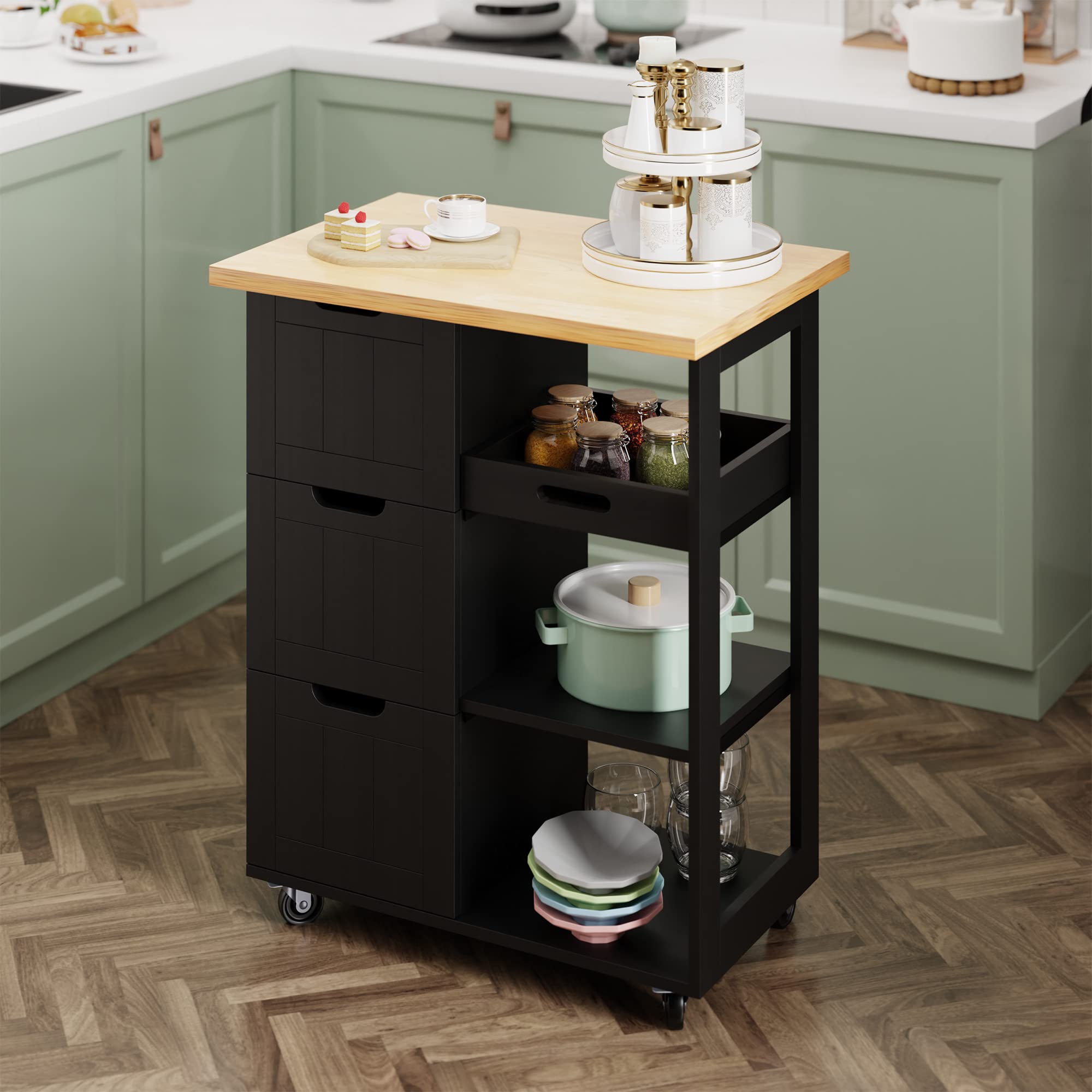
A compact, narrow island with a solid pine top and three drawers—designed to fit tighter spaces while offering surprising capacity.
Why I picked it: Narrow profile with a real pine top and strong load capacity.
Best for: Tight galley kitchens or laundry rooms needing a mobile work surface.
Budget-friendly option with a practical top.
Pros
- Solid pine top for a durable surface
- High listed weight capacity
- Narrow footprint fits small spaces
- Industrial wheels handle heavy loads
Cons
- Box is heavy to move into place
- Some parts require careful alignment
- Finish is engineered rather than full wood
My take
I kept this island in my narrow kitchen and found the pine top to be pleasantly solid—its height matched my counters closely which made it easy to use as an additional workstation.
The three drawers and open shelves organized my baking supplies neatly. Two lockable industrial wheels make it easy to roll into position and secure when I need stability.
Assembly was straightforward with clear instructions, though the packed box is quite heavy and benefits from a second pair of hands when moving into the room.
7. Crosley Oxford Butcher Block Island – Best Traditional Style
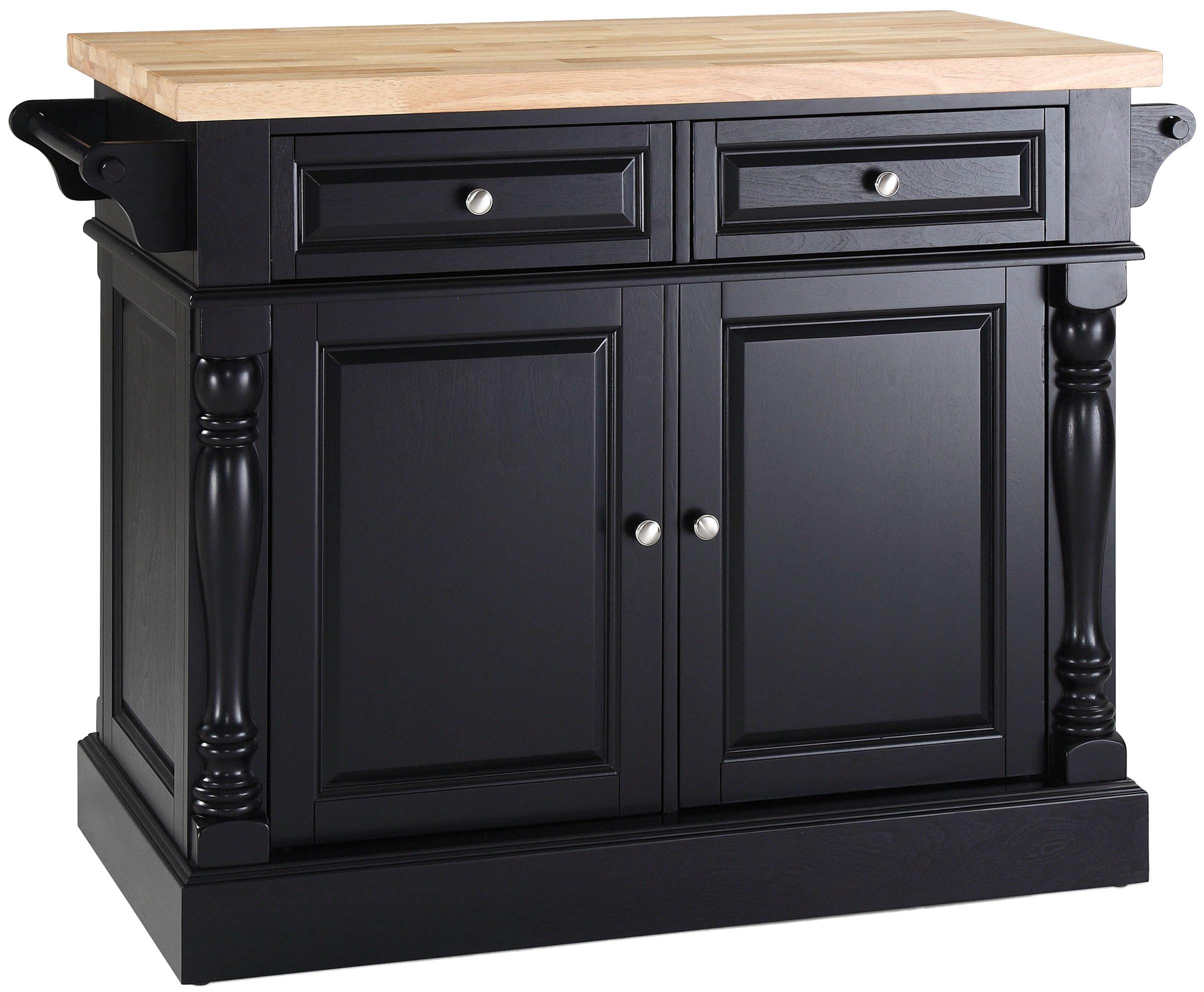
A traditional, solid-wood island with pass-through drawers and a classic look—best if you want furniture-style presence rather than a utility cart.
Why I picked it: Solid hardwood top and classic furniture styling with pass-through drawers.
Best for: Those who want a furniture-grade island that reads as cabinetry.
Higher-end in feel; leans toward classic design buyers.
Pros
- Solid hardwood butcher block top
- Pass-through drawers open from both sides
- Traditional, furniture-like appearance
- Adjustable shelves behind doors
Cons
- Can have strong factory varnish odor
- Butcher block top may warp if not inspected
- Drawers lack metal tracks
My take
I chose this island when I wanted the look and heft of a furniture piece. The butcher block top is real hardwood and gives a classic, substantial presence in the kitchen.
Pass-through drawers are genuinely useful in open-concept layouts—I could access utensils from either side during busy prep. Take time to air the parts before assembly if the varnish smell bothers you; I left mine in a ventilated space for a few days.
Assembly requires patience and a careful eye: some parts may need touch-ups and the drawer hardware isn’t on full metal slides, so I took care to align everything precisely for smooth operation.
How I Choose a Butcher Block Kitchen Island
Top material and finish
I prioritize what I plan to do on the top before choosing a cart. Bamboo and pine give a warm, traditional prep surface. Stainless steel is best for a sanitary, spill-resistant workspace.
A varnished or waterproof finish reduces maintenance and staining, but if you plan to cut directly on the wood, treat it and sand periodically.
- Bamboo: stable, attractive, less prone to swelling.
- Pine/solid wood: durable and authentic, may need sealing.
- Stainless: easiest to sanitize, resists stains and heat.
Storage layout
I match storage to the appliances and tools I use most. If you keep a mixer, look for deeper shelves with strong top capacity. For utensils and linens, enclosed drawers or pass-through drawers reduce clutter.
Open slatted shelves help with produce storage and airflow, while drawers keep dust out.
- Deep shelves: good for mixers and bulky appliances.
- Enclosed drawers: protect items from dust.
- Pass-through drawers: great for island accessed from both sides.
Mobility and casters
I never buy a rolling island without at least two lockable casters. Locks keep the unit steady during chopping or when an appliance is on the top.
Consider the wheel quality if you need to roll across thresholds or different floor types—industrial or larger rubber wheels handle transitions best.
- Two lockable casters minimum for safe prep.
- Larger wheels roll better across carpets and transitions.
- Swivel casters improve maneuverability in tight spaces.
Assembly and durability
I recommend unpacking and sorting hardware before you begin. Most of these islands are flat-packed and easier if you and a friend tackle it together.
Check the top for warping or shipping damage before final assembly so replacements are simpler to request.
- Lay out parts and labeled hardware first.
- Use pilot drilling where holes seem shallow.
- Inspect tops for dents or warping before full assembly.
Care and maintenance
I treat butcher block tops with mineral oil or a recommended food-safe finish periodically to prevent drying and cracking. For stainless tops, regular wiping with a mild cleaner keeps them shiny.
Avoid prolonged standing water on wood tops; wipe spills promptly to reduce staining and warping risk.
- Oil wooden tops several times a year.
- Wipe stainless with non-abrasive cleaners.
- Tighten hardware periodically after use.
Frequently Asked Questions
Can I cut directly on a butcher block top?
Yes—I sometimes cut directly on bamboo or wood tops, but I recommend using a separate cutting board to protect the finish and keep knives sharper. If you do cut on the top, sand and re-oil periodically to maintain the surface.
Will a rolling island hold a mixer or microwave?
Most of the islands I tested support countertop appliances; look at the listed top capacity and choose an island with a sturdy top and good bracing. For heavy mixers or microwaves, prefer models with higher weight capacity and lockable casters.
How hard is assembly?
Assembly varies—smaller carts can be done solo in an hour or two, while larger islands take longer and benefit from a second person. I always sort hardware first, follow pictures step by step, and test-fit pieces before tightening fasteners.
Final Take
I found no single perfect island for every kitchen—size, top material, and storage needs determine the best fit. For a balanced all-rounder I returned to the eHemco; if you want a stainless, HOMCOM’s stainless-top model is my pick; and for a traditional furniture feel the Crosley delivers presence.
Think about how you’ll use it daily—heavy prep, appliance storage, or simply extra counter space—and choose the model above that matches that purpose. All of the options I tested add usable workspace and solve common kitchen storage problems without a remodel.
