
I tested adhesive straps, magnetic systems, and double-lock latches so you can pick the right cabinet locks for your home — from quick peel-and-stick solutions to invisible magnetic sets for a clean kitchen look.
I spent time installing and living with several styles of cabinet locks so I could see what actually works in day-to-day life. I focused on three things: how easy the adult access is, how reliably the lock resists toddlers and pets, and how installation affects cabinets.
In this roundup I cover simple adhesive straps, double-action latches and magnetic locks — each type has trade-offs, and I’ll tell you which situations I used them for and why one made more sense than another.
If you want the fastest install and cheapest option, adhesive straps win. For a discreet, clean look I preferred internal magnetic locks. When I needed tamper-resistant hardware that still opens easily for adults, the dual-button latches were my go-to.
1. SKYLA HOMES Adhesive Strap Cabinet Locks – Best Budget Strap Locks
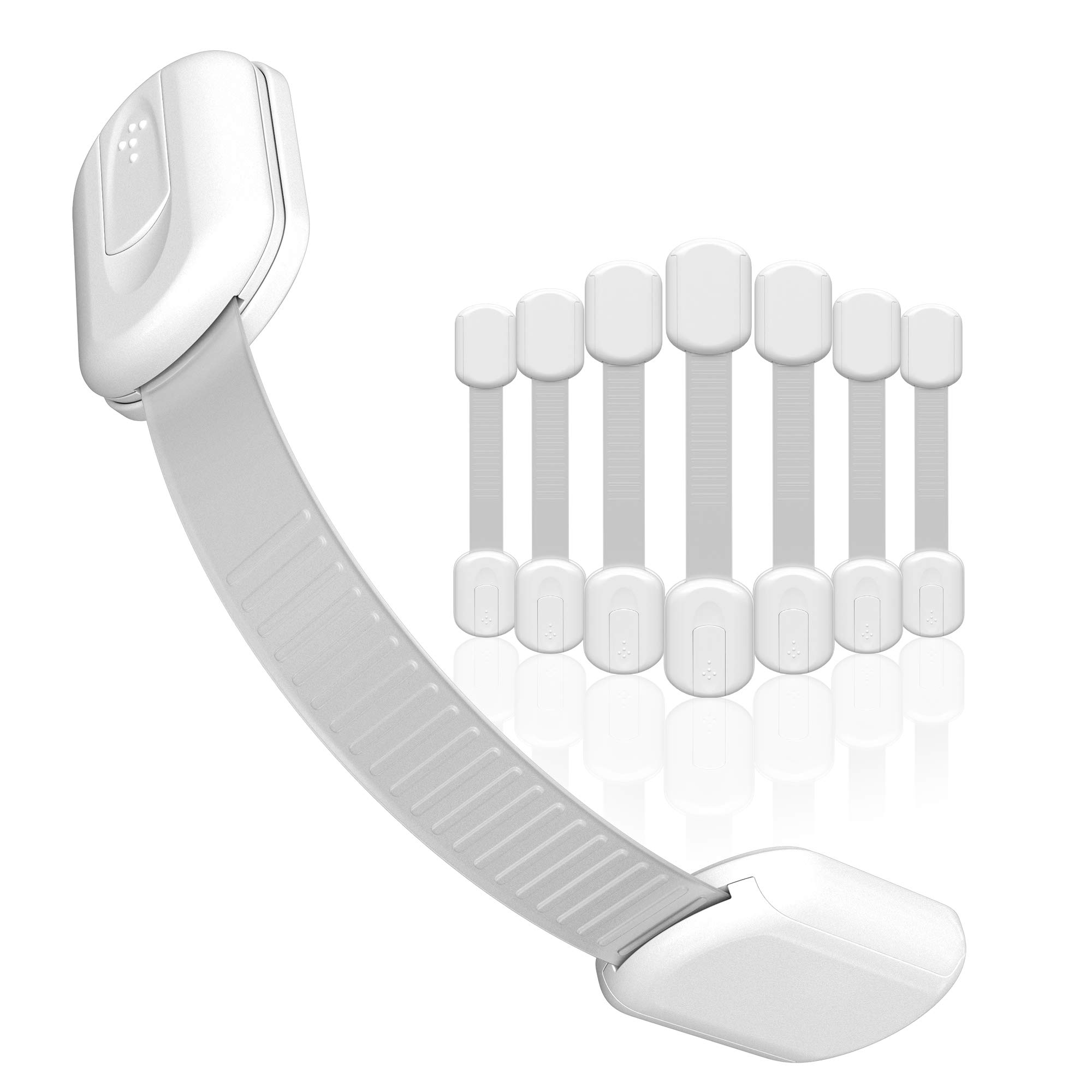
Simple peel-and-stick straps that install in seconds and are easy for adults to open but tough for little hands.
Why I picked it: Fast, tool-free installation and one-handed adult release.
Best for: Temporary proofing, renters, and quick fixes around the house.
Very affordable value pack.
Pros
- Tool-free peel-and-stick installation
- One-handed adult release
- Low-profile plastic design
- Flexible for corners
Cons
- All-plastic build feels basic
- Adhesive longevity varies by surface
My take
I keep a set of these on hand for quick proofing because they take seconds to mount with the included 3M tape. I installed them on cabinet doors, a toilet seat, and an oven drawer; the straps flex enough to work around corners and odd gaps.
Adults can undo the latch with one hand, which I appreciated when I was carrying groceries. Toddlers and my curious cat found them difficult to defeat. The plastic and nylon materials are lightweight — good for temporary needs, less ideal if you want a decades-long solution.
My only caution is about surface prep: I cleaned each mounting area first and gave the tape a day to set. On some painted or textured finishes the adhesive held better than on slick laminate, so I’d test one lock before doing the whole kitchen.
2. SKYLA HOMES Adhesive Strap Cabinet Locks – Best for Quick One-Hand Access
An extra pack of easy-release straps that blend into cabinets and require no tools to fit.
Why I picked it: Easy adult operation without sacrificing child resistance.
Best for: Parents who need fast, repeatable access throughout the day.
Budget-friendly and convenient.
Pros
- Quick to install everywhere
- Discrete white finish
- Easy one-handed open
Cons
- Not as premium-feeling as hard hardware
- May need replacement over years
My take
I used a set on lower cabinets and a few high-traffic drawers. The white straps sit fairly unobtrusively and don’t interfere with drawer function. When I needed cabinet access quickly, I appreciated the single-hand release.
Several people in my house tested them (including a determined cat), and the locks kept most doors shut. Given the low cost and the quick installation, these are the locks I reach for when I need a fast, no-drill solution.
3. Munchkin Xtraguard Double Locking Latches – Best Double-Locking Latches
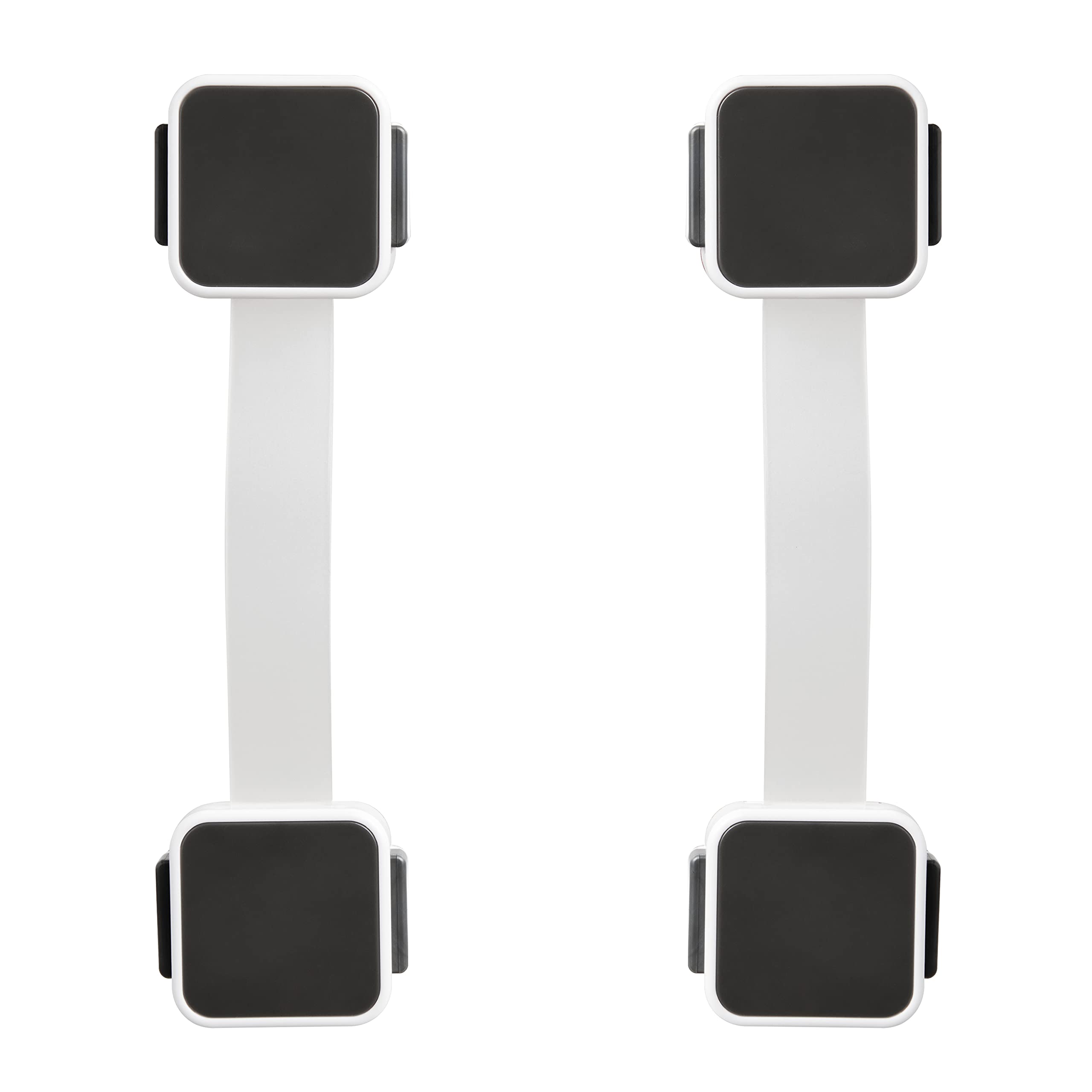
Dual-button latches with a flexible strap that provide an added layer of tamper resistance while remaining user-friendly.
Why I picked it: Double-action release gives stronger tamper resilience without being hard for adults.
Best for: High-risk cabinets with chemicals, appliances, and toilets.
Moderately priced and durable.
Pros
- Dual-button release resists tampering
- Flexible strap fits corners
- Adhesive removes cleanly with care
- Long-lasting strap durability
Cons
- Small 2-count pack
- Placement must be exact for best adhesion
My take
I installed these on the cabinets that hold cleaning supplies and on a utility closet where my toddler was repeatedly reaching. The dual-button mechanism requires a deliberate action that stopped curious hands but feels natural for an adult.
Installation took under two minutes apiece once I chose the correct mounting position. The adhesive held firmly for months and, in my house, one strap lasted several years of use. If you later want to remove them, take your time—the adhesive comes off with a careful prying technique to avoid finish damage.
Because the set is just two latches, I used them selectively where extra security mattered most rather than across every door.
4. Vmaisi Magnetic Cabinet Locks (12 Pack) – Best Invisible Locks
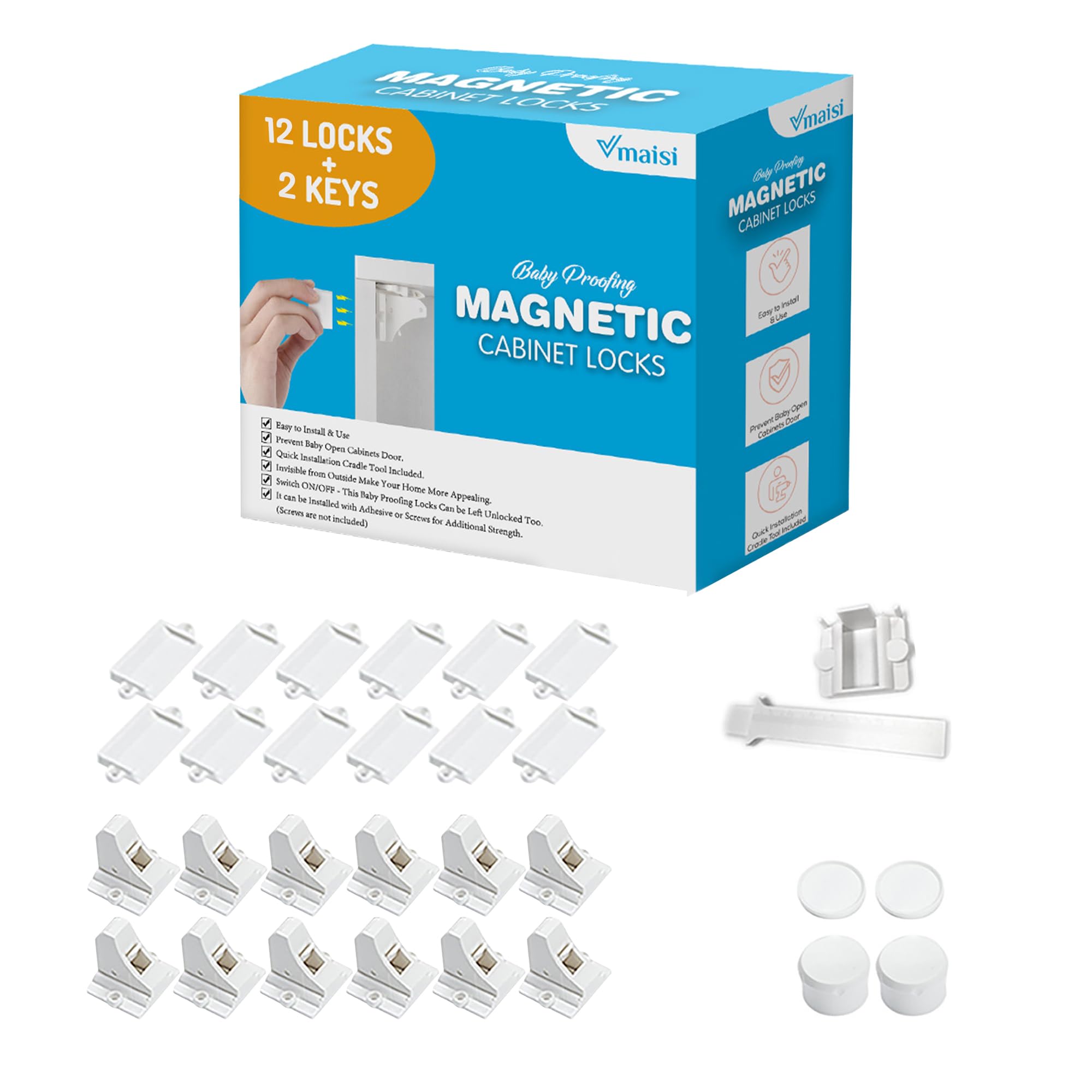
In-cabinet magnetic locks that stay hidden from view and open with a magnetic key for a clean look.
Why I picked it: Concealed installation keeps cabinet exteriors uncluttered.
Best for: Kitchens and rooms where aesthetics matter and you want invisible protection.
Midrange pack with strong magnets and spare keys.
Pros
- Completely hidden inside cabinets
- Includes two magnetic keys
- Quick adhesive install
- Works on most cabinets and drawers
Cons
- Not compatible with metal-front doors
- Adhesive can be inconsistent
My take
I love these for the main kitchen because they preserve the look of the cabinets while keeping dangerous items secure. After a careful surface clean and a full cure time, the adhesive held across multiple cabinets.
The magnetic keys are strong and disengage the lock reliably from outside. In one instance a single lock didn’t stay flipped up, so I moved it to a less critical door. When I needed support the company sent replacements quickly, which made the whole setup less stressful.
Be mindful that magnetic systems won’t behave well on cabinet faces that contain hidden metal; I tested placement before permanently adhering each unit.
5. Vmaisi Magnetic Cabinet Locks (20 Pack) – Best for Whole-Home Proofing
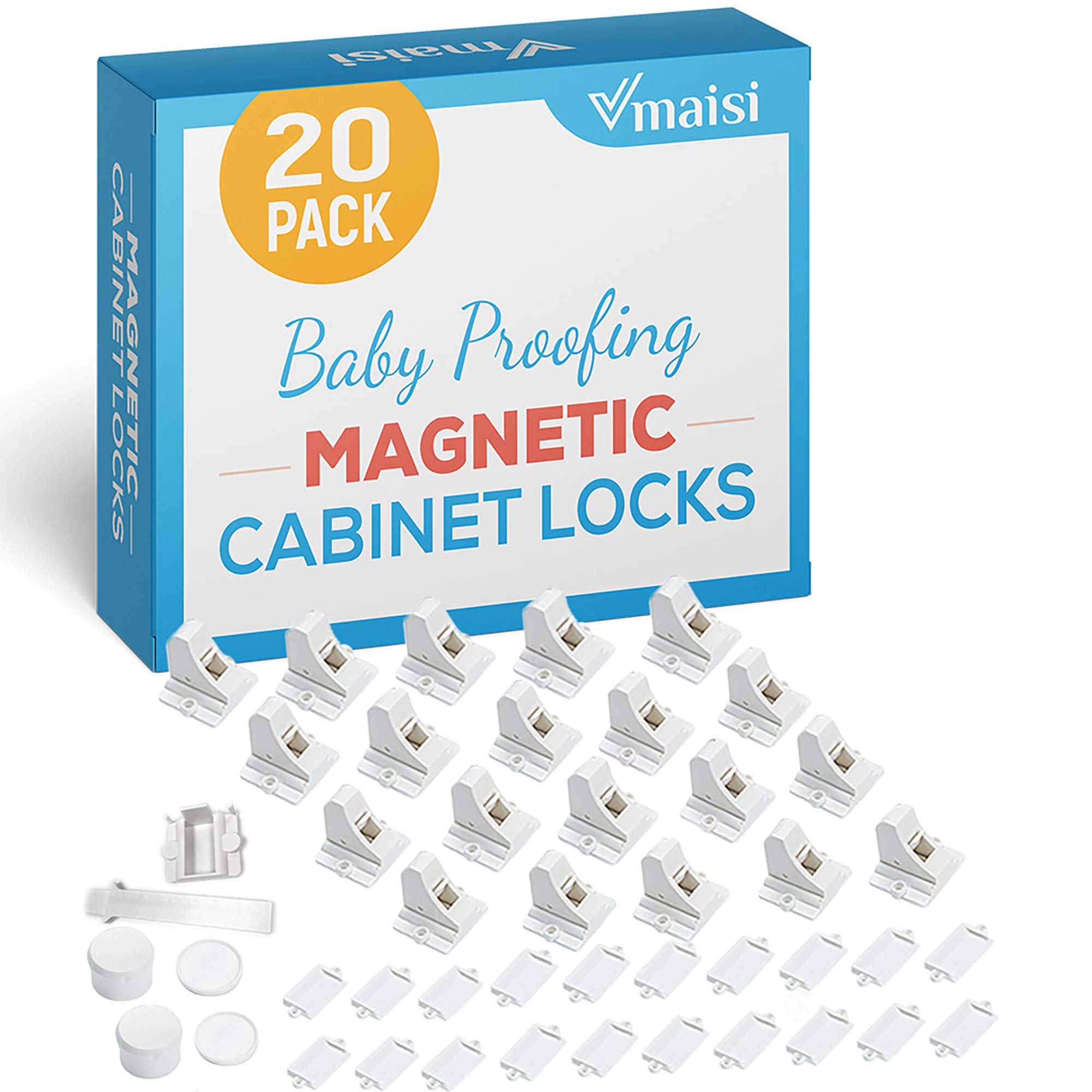
A large pack of internal magnetic locks with extra units for multi-room coverage and stronger magnets for stubborn pets or toddlers.
Why I picked it: Quantity and stronger magnets make it practical to secure an entire home.
Best for: Homes that need many locks — kitchens, bathrooms, nurseries and more.
Higher upfront cost but excellent for full coverage.
Pros
- Twenty locks for comprehensive coverage
- Concealed inside cabinets
- Stronger magnets than basic kits
- Works on many drawers and doors
Cons
- Adhesive may need screws on some surfaces
- Cannot be used with metal-front doors
My take
I installed this 20-pack across my kitchen, laundry room and a couple of bathroom cabinets. The hidden nature of the locks kept my kitchen looking clean while preventing my pets and toddler from getting into trouble.
The included magnetic keys worked well and opened locks from a comfortable distance. I followed the manufacturer’s tip about moving the lock around inside the door to detect hidden metal; that step saved me from a few failed placements.
For cabinets with poor adhesive adhesion I swapped to screws; the units accept both mounting methods, which made them versatile across old and new cabinetry.
6. Adjustable Safety Strap Locks (10 Pack) – Best Multi-Purpose Straps
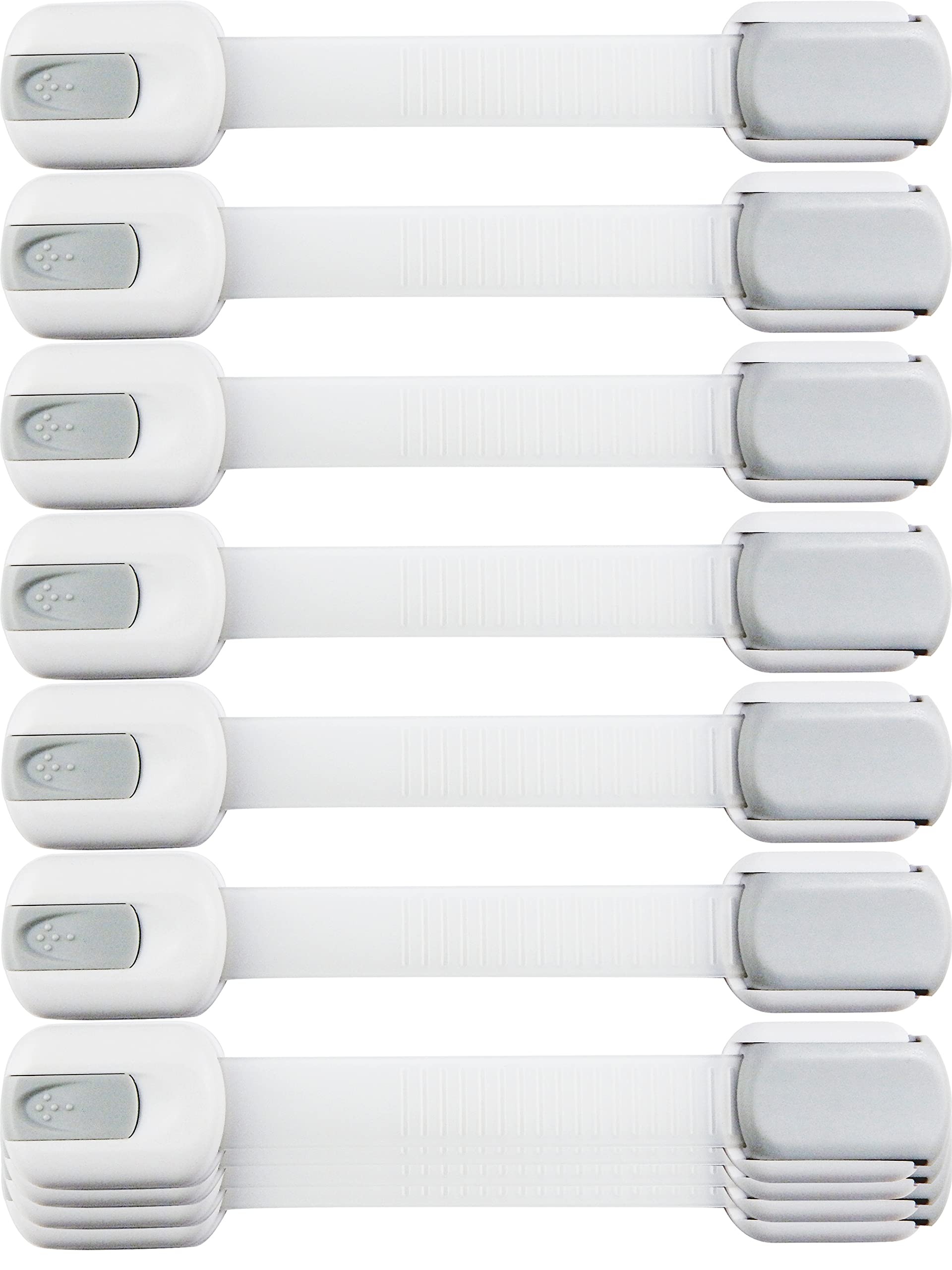
Adjustable-length straps with industrial 3M tape that work on flat and cornered surfaces — versatile for many applications.
Why I picked it: Flexible length and strong adhesive adapt to appliances, sliding doors and odd shapes.
Best for: Fridges, sliding doors, toilets and irregular cabinet setups.
Budget-friendly 10-pack that covers many surfaces.
Pros
- Adjustable length fits many uses
- Strong 3M adhesive
- Works on corners and odd gaps
- Large value pack
Cons
- Removal can leave sticky residue
- May be harder to remove after long-term use
My take
I used these straps on the fridge, a sliding door, and a couple of drawers that intrigued my toddler. The adjustable length let me tighten or loosen them so each application felt secure and neat.
Installation was straightforward and the straps held up against repeated pulls — even when my dad tried to force a latched sliding door, it didn’t budge. That said, after leaving them in place for well over a year, removal required time and effort and did leave some adhesive residue on a few surfaces.
For short- to medium-term proofing they’re excellent; for permanent installations I’d plan on a more heavy-duty hardware option.
How I Choose Cabinet Locks
Types of cabinet locks
I look at three main systems: adhesive straps, magnetic internal locks, and dual-action latches. Each has advantages depending on how permanent, invisible, or tamper-resistant you want the solution to be.
Strap locks are fastest to install and great for renters or temporary needs. Magnetic locks are virtually invisible from the outside and keep a clean aesthetic. Double-locking latches offer extra security where dangerous items are stored.
- Adhesive straps — fastest install, good for temporary setups
- Magnetic locks — hidden inside the cabinet, use a magnetic key
- Double-button latches — extra tamper resistance, easy for adults
What to consider before buying
I always check the mounting surface, door thickness, and whether the cabinet has hidden metal that could interfere with magnets. Think about how often adults will need access — frequent access favors one-handed straps or magnetic systems over fiddly hardware.
Also decide whether you need a pack large enough to cover multiple rooms or just a couple of locks for specific cabinets.
- Surface type (painted, laminate, veneered wood) affects adhesive strength
- Cabinet construction (metal inside doors can block magnets)
- How often adults need to open the cabinet
Installation tips I use
I always clean the mounting area with isopropyl alcohol, let it dry, and give adhesive pads a full 24 hours before heavy use. For magnetic locks, I test placement inside the door to ensure no hidden metal is present.
When an adhesive struggles on a high-use cabinet, I’ll switch to screw mounting if the lock supports it.
- Clean surfaces with alcohol before mounting
- Test magnetic placement before sticking
- Allow adhesive 24 hours to cure for max strength
- Consider screws on older or greasy surfaces
Where I recommend different locks
Use adhesive straps on temporary setups, travel, or rental properties where you can’t drill. I prefer magnetic locks for the main kitchen and finished cabinetry where appearance matters.
Reserve double-button latches for cabinets with chemicals, knives, or frequently opened cleaning supply closets where extra tamper resistance pays off.
- Temporary/rental — adhesive straps
- Aesthetics/entire kitchen — magnetic locks
- High-risk storage — dual-action latches
Maintenance and replacement
I inspect adhesive mounts periodically and replace the tape if a lock starts to loosen. Magnetic keys are easy to store — but if you misplace a key any strong magnet will often operate the lock in a pinch.
If you’re removing locks, heat (hairdryer) and slow prying minimize finish damage. Keep spare adhesive or replacement parts for long-term use.
- Check mounts every few months
- Keep a spare magnet key in a known place
- Use heat and patience to remove adhesives safely
Frequently Asked Questions
Will adhesive cabinet locks damage my cabinets?
In my experience they usually don’t if you remove them carefully. I heat the tape with a hairdryer, pry gently, and clean residue with an adhesive remover. Test one lock first and avoid installing on loosely bonded finishes.
Do magnetic locks work on metal cabinet doors?
No — magnetic locks can detect hidden ferrous metal and fail to pop up. I always test the lock inside the door before final installation and move it if a metal seam interferes.
What should I do if I lose a magnetic key?
I keep a spare magnet in a kitchen drawer. If you lose both, a strong household magnet will usually disengage the locks; otherwise replacement keys are inexpensive or the locks can be opened and then removed.
Can pets open these locks?
Most pets can’t open properly installed magnetic or strap locks. I’ve used the magnetic sets and straps successfully to keep curious cats out of food cabinets; stronger magnets and correct placement are the key.
How long does adhesive need to set before I use the cabinet?
I give adhesives about 24 hours to reach full strength after cleaning the surface with alcohol. That extra cure time makes a noticeable difference in long-term hold.
Final Take
I tested a range of cabinet locks so you can pick the balance of speed, invisibility and security that matters most in your home.
If you want a no-fuss, low-cost option for temporary needs go with adhesive straps. For a clean, permanent look pick magnetic internal locks. When extra tamper resistance is essential, the double-button latches are the best compromise between security and adult usability.
Whichever route you choose, prep the surface, test placement, and keep spare adhesive or keys on hand — that saved me time and hassle more than once.
