
I tested four top cable organizer bags for travel, daily carry, and heavy tech use. Here’s which I reach for and why, from compact pouches to roomy double-layer cases.
I travel with a small bag of chargers, SSDs, adapters, and the odd dongle almost every week, so keeping those items organized has become essential for my workflow. I evaluated four cable organizer bags that cover different needs: compact daily pouches, roomy travel cases, and budget-friendly double-layer organizers.
In this roundup I focus on real-world usability: layout and pockets, build quality and zippers, water resistance, and how each bag fits into my carry system. I used each bag on trips, stuffed them into backpacks, and packed typical tech loads so I could recommend clear winners for different use cases.
I compared these bags side-by-side by filling each with a standard kit (charging bricks, several cables, a pair of earbuds, small adapters, and a portable SSD) to judge capacity, organization, and how easy items were to access while on the go.
1. BAGSMART Electronics Organizer – Best Overall
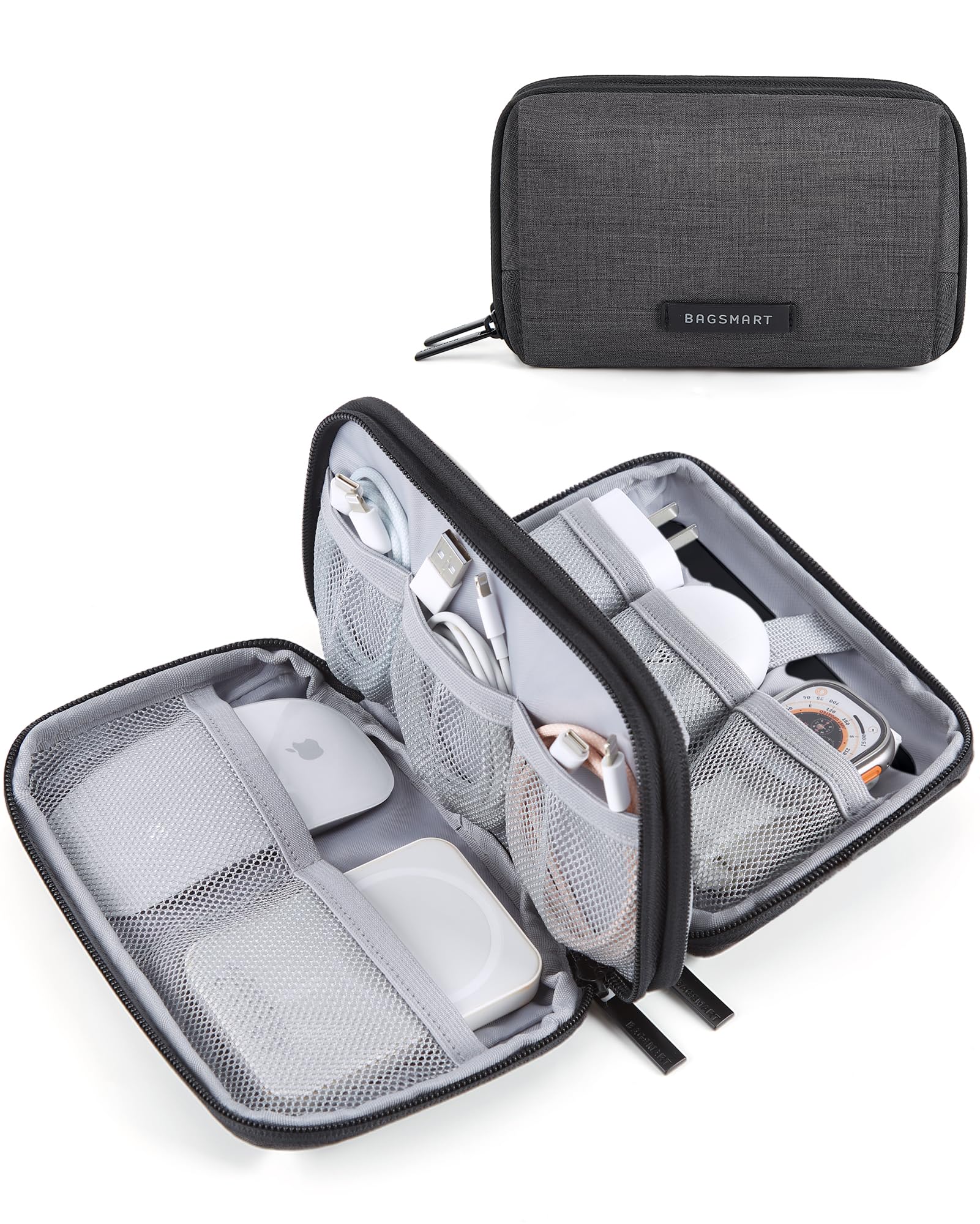
A roomy, well-structured organizer with water-resistant fabric and a layout that keeps cords, adapters, and small drives easy to find.
Why I picked it: I rely on its thoughtful layout and durable build for most travel and office needs.
Best for: Frequent travelers who carry a variety of chargers and accessories.
Affordable yet feels like a step up in durability.
Pros
- Spacious, multi-pocket layout
- Water-resistant, padded fabric
- Smooth, durable zippers
- Keeps cables tangle-free
Cons
- Larger footprint than slim pouches
- Not designed to be pocket-sized
My take
I packed this BAGSMART organizer with my usual travel kit—wall chargers, several cables, a small power bank, SD cards, and a couple of adapters—and the internal elastic loops and mesh pockets kept everything sorted. The structure is sturdy enough that I don’t have to worry about items getting crushed when the bag is in my carry-on.
The water-resistant outer fabric and padded feel add confidence when I stow it near liquids or in a crowded bag. Zippers glide smoothly and the double-ended pull makes opening the main compartment easy even when I’m grabbing things on the move.
This is the bag I reach for when I need both capacity and quick access. It’s not the slimmest solution, but the trade-off for protection and organization is worth it for my travel routines.
2. tomtoc Light-T12 Accessory Pouch – Best Everyday Carry
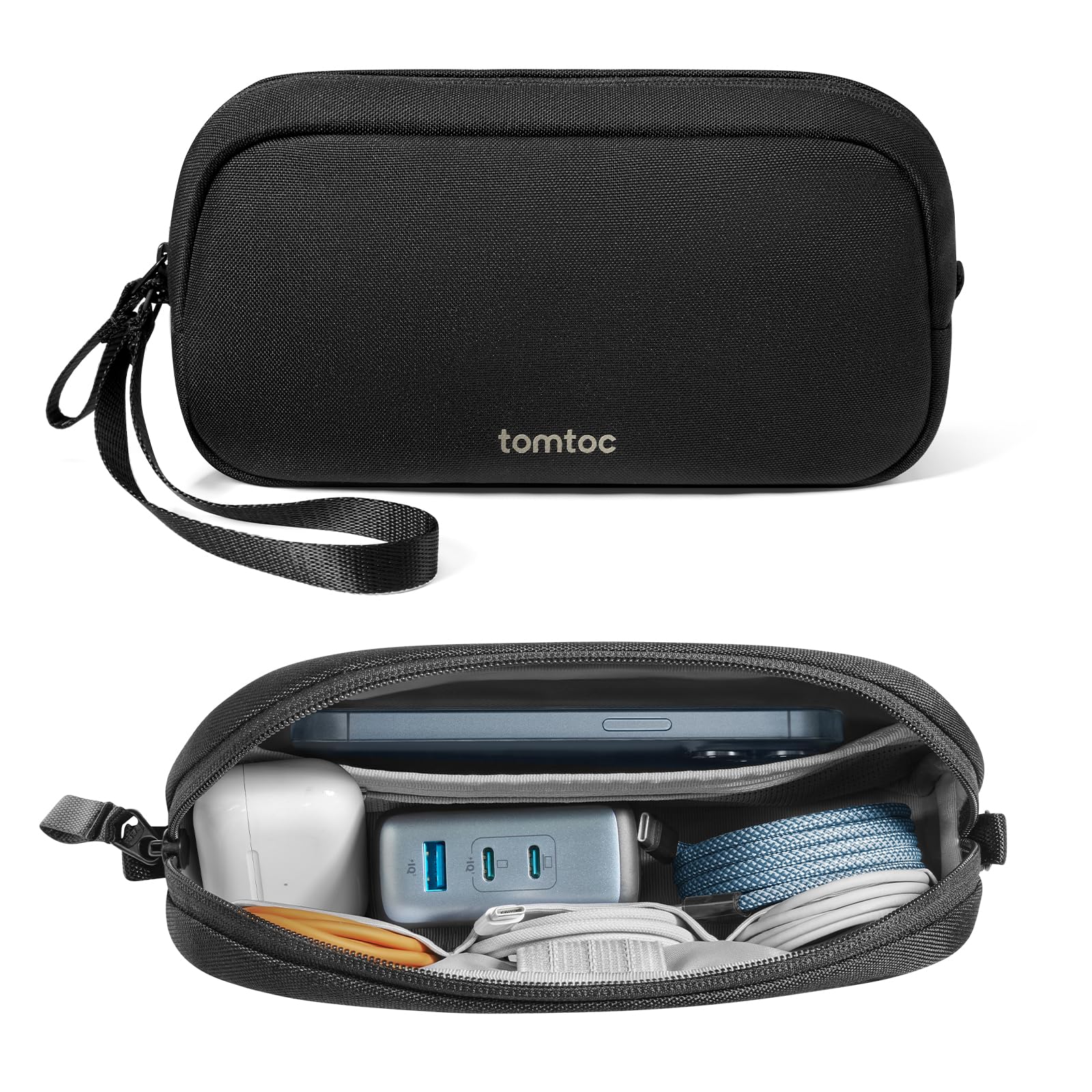
A compact, sustainably made pouch that stands upright and holds essential daily tech without adding bulk to my backpack.
Why I picked it: I use it when I want a slim, eco-conscious pouch that still offers smart organization.
Best for: Daily commuters and minimalists who need a tidy place for a handful of essentials.
Midrange cost with solid materials and practical design.
Pros
- Compact, low-profile footprint
- Sustainable RPET 600D fabric
- Stands upright for easy access
- Enough pockets for daily essentials
Cons
- Not as premium-feeling as higher-end cases
- Limited capacity for large power bricks
My take
I carry this tomtoc pouch when I’m commuting with just a couple of chargers, a pair of cables, AirPods, and a flash drive. It fits neatly into my daypack and lays flat when I don’t need its depth, but stands up on my desk when I’m working.
The material has a rugged feel and the internal slots keep small items from sliding around. I noticed pockets and a simple elastic pen slot that are practical for everyday items. It doesn’t have the luxurious hand-feel of higher-priced options, but it does what I expect reliably.
For everyday use, this is my go-to when I want to travel light but stay organized. It’s an especially good choice if you prefer durable, sustainable fabrics.
3. tomtoc Travel Cable Organizer – Best for Power Users
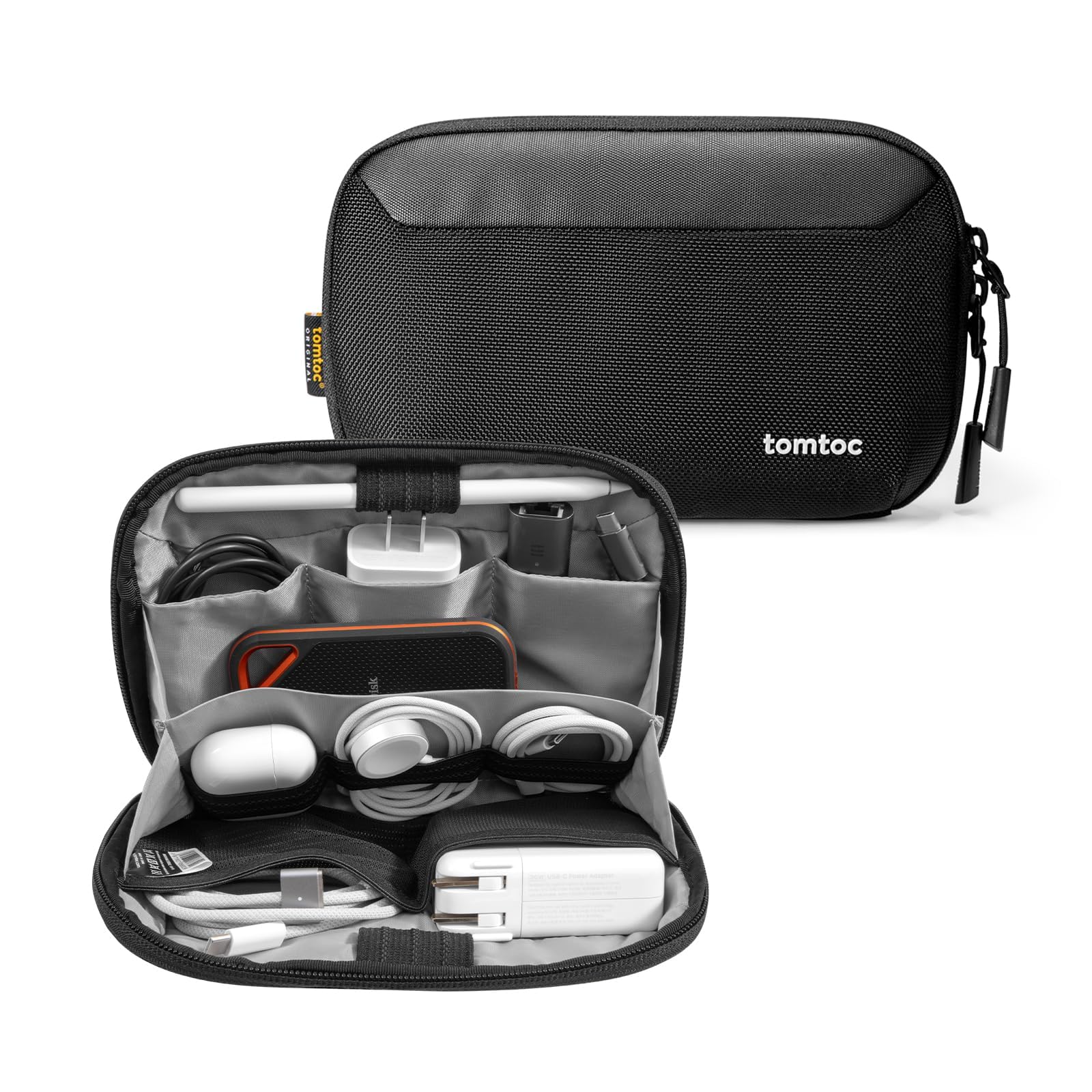
A compact yet highly capable pouch built for heavier tech loads—good structure, water-repellent fabric, and a premium zipper system.
Why I picked it: I keep this one in rotation when I need to carry SSDs, multiple chargers, and adapters together.
Best for: Power users who pack multiple chargers, SSDs, and adapters for work trips.
A more premium option for serious gear organization.
Pros
- Rigid, smart internal layout
- Water-repellent fabric and top handles
- High-quality YKK zipper
- Can hold SSDs and full-size chargers
Cons
- May not fit very large power banks
- Higher cost than simple pouches
My take
When I need to tote a couple of SSDs, a 100W charger, an extra 30W brick, and a handful of cables, this tomtoc pouch is the one I choose. The internal dividers and pockets let me separate storage drives from noisy cables, which protects delicate gear and speeds up access.
The YKK Aquaguard-style zipper glides smoothly and the water-repellent fabric sheds splashes during rainy commutes. Small top handles make it easy to grab this pouch from my backpack without rummaging.
This bag feels engineered for heavier kits—if you regularly travel with power-hungry chargers and storage drives, it’s the organizer that keeps everything compact and secure.
4. NISHEL Travel Cord Organizer – Best Budget
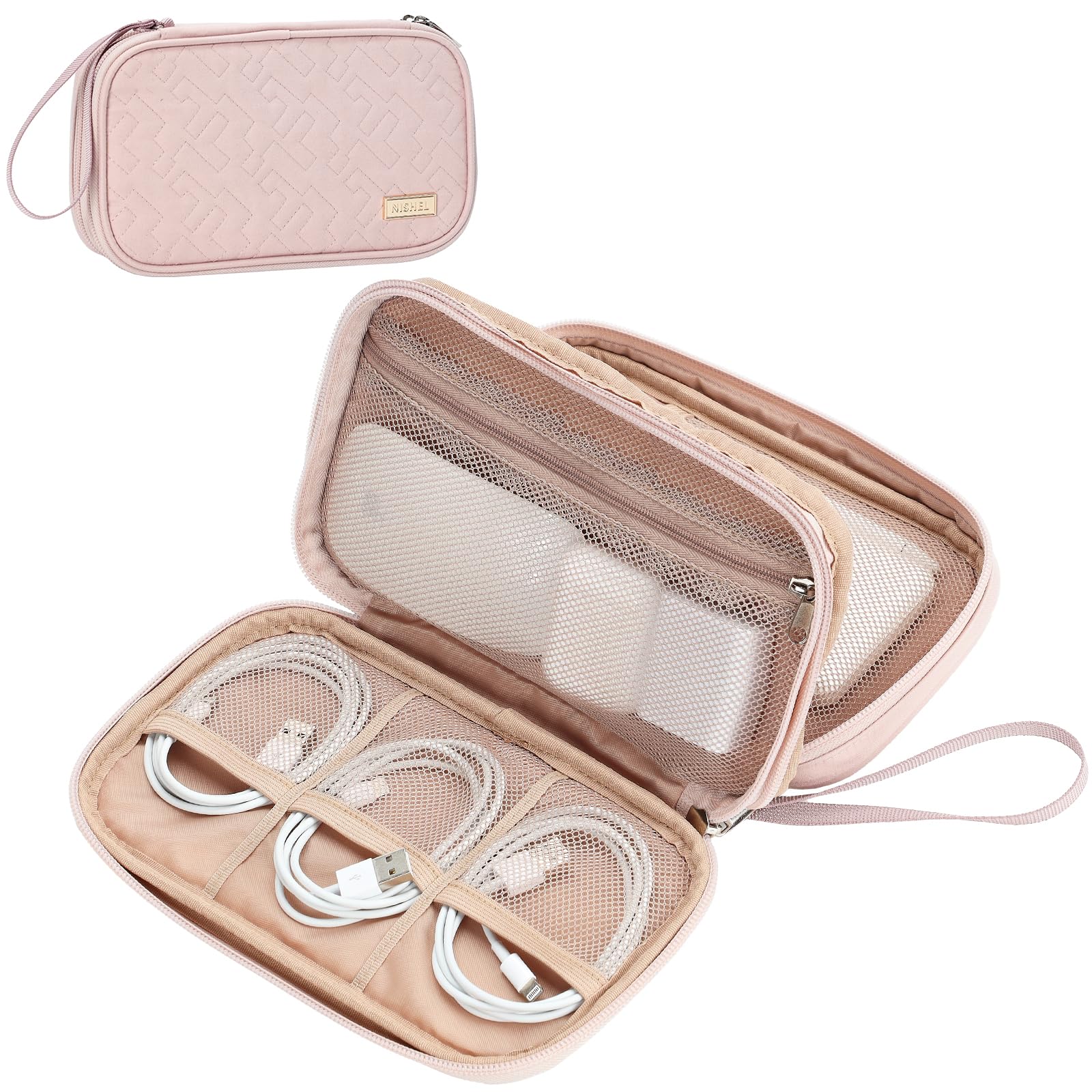
A double-layer organizer with generous capacity and cushioned protection that works great as a wallet-style tech pouch for everyday travel.
Why I picked it: I appreciate the dual-layer layout and the padded protection at a very accessible price point.
Best for: Budget-conscious shoppers who still want roomy, protective organization.
Very affordable with surprising capacity and padding.
Pros
- Double-layer layout increases organization
- Generous internal capacity
- Lightweight and portable
- Cushioned protection for small devices
Cons
- Design is simple compared with premium cases
- May be bulky in small purses
My take
I tested the NISHEL organizer by packing multiple cables, a couple of charging bricks, an Apple Pencil, a Magic Mouse, and a small power bank. The two separate compartments made it easy to distribute items so nothing rubs together.
The wristlet handle is a nice convenience and the cushioning gives me peace of mind when tucking this into a backpack with heavier items. It isn’t a premium design, but it nails the basics: capacity, protection, and pocket-level organization.
If you want a no-nonsense, spacious organizer that doesn’t break the bank, this is the bag I turn to for everyday trips and weekend carry.
How I Choose a Cable Organizer Bag
Capacity and Layout
I decide how much I need to carry before choosing a bag. Slim pouches work great for a daily kit—one charger, a couple of cables, and earbuds. For travel or tech-heavy use I prefer multi-pocket or dual-layer designs so I can separate chargers from SSDs and adapters.
Look for elastic loops, mesh pockets, and zippered compartments. Those give me quick visibility and prevent cables from tangling.
- Slim pouch: ideal for minimal daily essentials
- Single compartment with internal straps: good middle ground
- Double-layer or accordion layout: best for mixed gear
Build Quality and Protection
Durable fabric and a reliable zipper matter more than a fancy finish. I prioritize water-resistant or water-repellent materials and strong YKK-style zippers when I travel.
Padding or structured sides keep fragile items like SSDs and small dongles safe when the organizer gets shoved in luggage.
- Water-resistant fabric for peace of mind
- Padded sides for protecting drives and small devices
- Smooth, durable zippers for frequent use
Form Factor and Portability
I match the organizer size to how I carry it. If it needs to live in a front pocket, choose a flatter profile. If it’s staying in a backpack or carry-on, a slightly bulkier organizer that offers more protection makes sense.
Handles or wrist straps add quick-grab convenience when I’m moving through security lines or switching bags.
- Flat profile for pocket or small bag carry
- Boxy or structured shape for backpacks and suitcases
- Handles or straps for easier retrieval
Sustainability and Materials
Sustainable fabrics like RPET are a nice bonus if you care about materials. I’ve found RPET and recycled polyester to hold up well in daily use.
Ultimately durability and function beat novelty materials, but sustainability can be a tiebreaker for me.
- RPET or recycled polyester for lower environmental impact
- Look for abrasion-resistant weaves and reinforced stitching
Frequently Asked Questions
What should I pack in a cable organizer bag?
I typically pack one or two wall chargers, several charging cables, a pair of earbuds, a portable SSD or flash drive, and a few adapters. Use elastic loops for cables and mesh pockets for smaller items so everything stays visible.
Can these bags protect SSDs and small drives?
Yes. I prefer organizers with padded sides or structured interiors for SSDs. The tomtoc travel organizer and the BAGSMART case both offered the protection I want when I carry storage devices.
Which organizer is best for throwing in a daypack?
For a daypack I reach for the tomtoc Light-T12. It stays slim, stands upright on my desk, and keeps just the essentials handy without taking up much space.
Final Take
After testing these organizers in real travel and daily scenarios, I’ve settled on a simple rule: match the bag to your kit. Choose the BAGSMART if you want the best all-around organizer, the tomtoc Light-T12 for streamlined daily carry, the tomtoc travel organizer for heavier tech loads, and the NISHEL when you want big capacity on a budget.
Whichever one you pick, prioritize layout and durable zippers—those two things make my daily carry and travel setup noticeably less stressful.
