
I tested the top car seat cushions to find models that actually improve visibility, reduce tailbone pressure, and hold up to daily use. These are the cushions I’d pick for driving, office work, travel, and sciatica.
I spent time trying a range of seat cushions in my car, office chair, and on long trips so I could separate gimmicks from genuine relief.
In this roundup I focus on what actually changed posture, reduced pressure on my tailbone, and stayed put during entry and exit — plus options for drivers who need a height boost or a premium cooling surface.
Across these cushions I found three clear categories: gel-enhanced memory foam for balanced comfort and cooling, thick orthopedic foam for pressure relief, and wedge-style boosts for visibility and posture. I call out the best pick in each category below so you can match features to how and where you sit most.
1. ComfiLife Gel & Memory Foam Seat Cushion – Best Overall
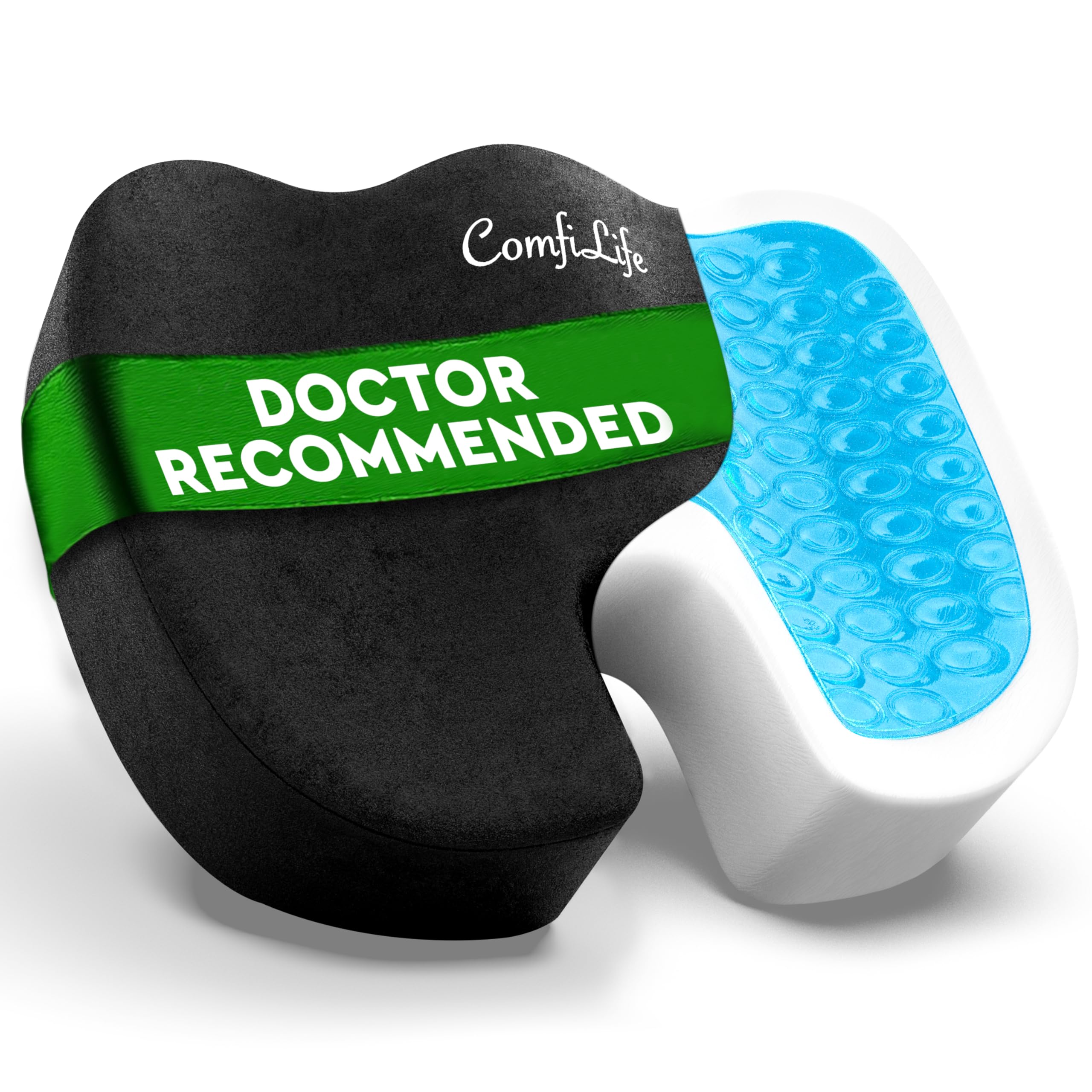
I found the ComfiLife gel + memory foam cushion to be the most versatile — supportive U-shape, gel layer, and a cover that cleans easily.
Why I picked it: Gel-enhanced memory foam, non-slip base, and a washable cover made it the easiest daily pick.
Best for: Long drives, office chairs, and anyone wanting a balance of cooling and support.
Solid midrange option for durable, everyday use.
Pros
- Gel-enhanced memory foam comfort
- U-shaped coccyx cutout for tailbone relief
- Non-slip rubber bottom
- Machine-washable zippered cover
Cons
- Cooling gel not dramatically cold
- A bit bulky for tight bucket seats
My take
I used this cushion in my car and on an old recliner so I could judge both driving and lounge comfort. The gel layer adds a slightly cooler feel compared with plain memory foam, and the foam keeps its shape over extended use.
The U-shaped cutout genuinely takes pressure off my tailbone and encourages a more upright posture, which helped my lower-back stiffness after long sessions behind the wheel.
I appreciated the non-slip bottom and built-in handle for quick moving between seats, and the removable velour cover cleaned easily in the washer. My only complaint is the advertised cooling is mild — it feels only a touch cooler than standard foam.
2. ComfiLife 100% Memory Foam Coccyx Cushion – Best Value
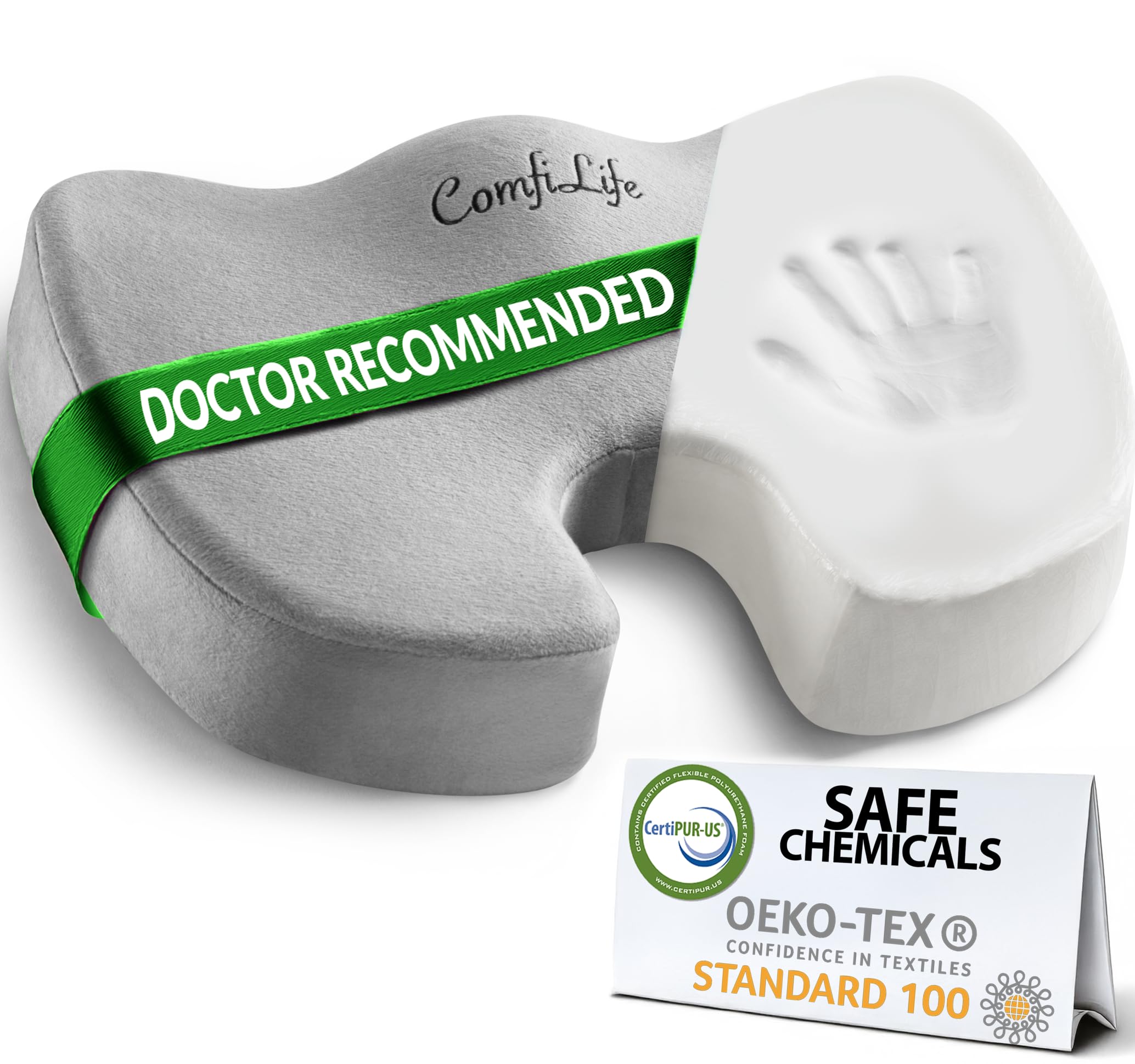
This classic U-shaped memory foam cushion delivered reliable support and instant relief without breaking the bank.
Why I picked it: Ergonomic coccyx cutout and firm memory foam give solid support at an affordable cost.
Best for: Office chairs, travel, and anyone who wants dependable tailbone support.
Affordable and effective for everyday use.
Pros
- Firm, supportive memory foam
- Large U-shaped tailbone cutout
- Portable and lightweight
- Works in cars and office chairs
Cons
- Can move on some slick seats
- No gel cooling layer
My take
I took this cushion on a couple of plane rides and used it daily at my desk. The shape reduces direct pressure on the coccyx immediately and promotes a more natural sitting posture.
It packs small enough for carry-on use and gives noticeable relief on long drives. I did find it can shift on very slick upholstery, so I prefer it where the seat surface has some texture or when using an added strap.
3. Purple Simply Seat Cushion – Best Premium Option
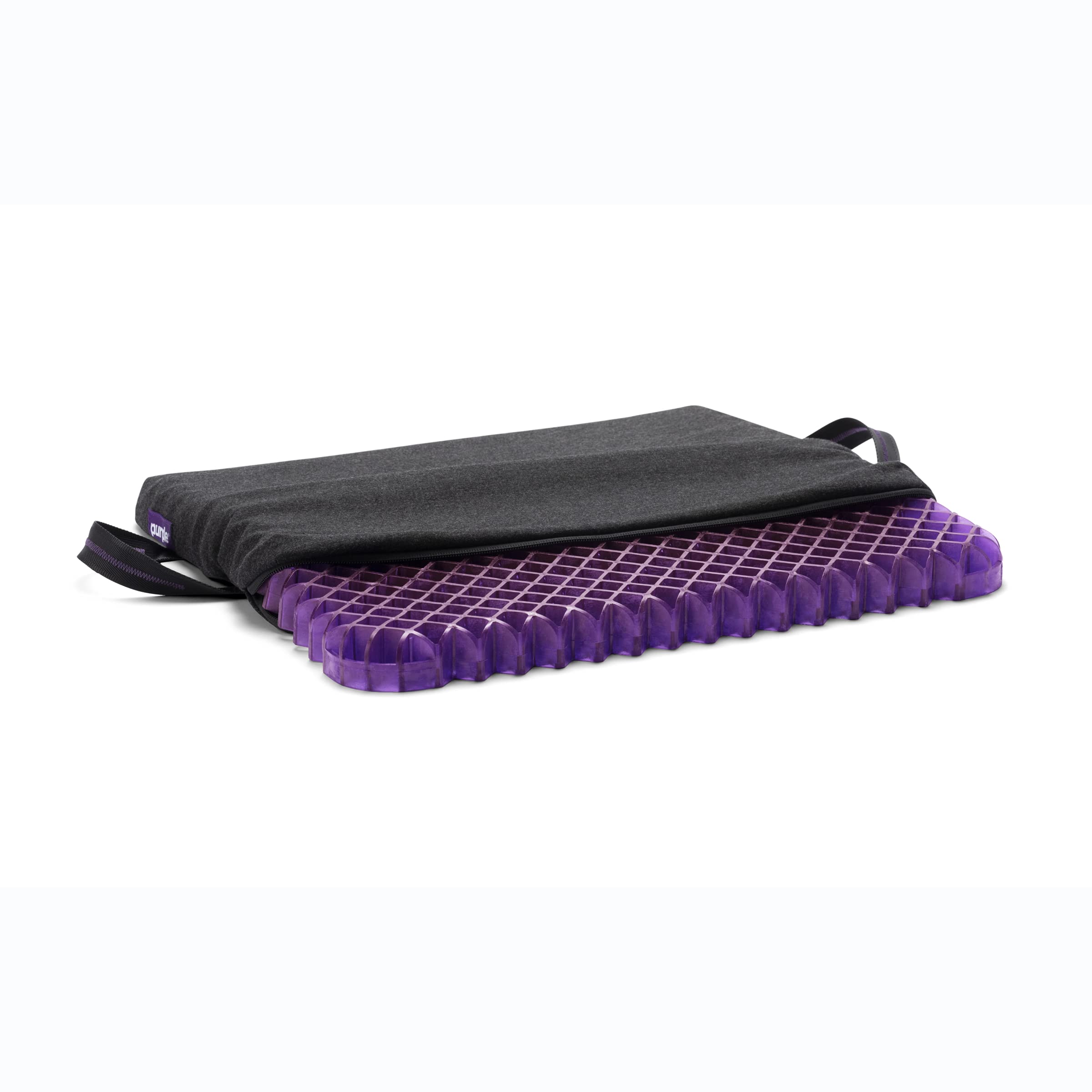
The Purple Simply uses a GelFlex grid that redistributes pressure and stays cool — it’s the most premium-feeling option I tested.
Why I picked it: Unique GelFlex grid and temperature-neutral material for pressure relief and airflow.
Best for: People who want a long-lasting, breathable cushion and don't mind paying more.
Premium-priced choice with durable materials.
Pros
- GelFlex grid for even pressure relief
- Hundreds of air channels for airflow
- Two-sided firmness options
- Easy to clean and durable
Cons
- Higher cost than foam options
- May not stay perfectly in place
My take
Sitting on the Purple Simply feels different from foam — the grid gives a buoyant, responsive support that cradles my tailbone and reduces hotspots.
I noticed much better airflow during longer sessions, which kept me from feeling sweaty like I sometimes do on dense foam cushions.
The cushion is lower profile and travel-friendly, but I did find it slightly small for very wide bucket seats and it didn’t grip perfectly on every surface.
4. Wedge Heightening Car Seat Cushion – Best for Visibility & Posture
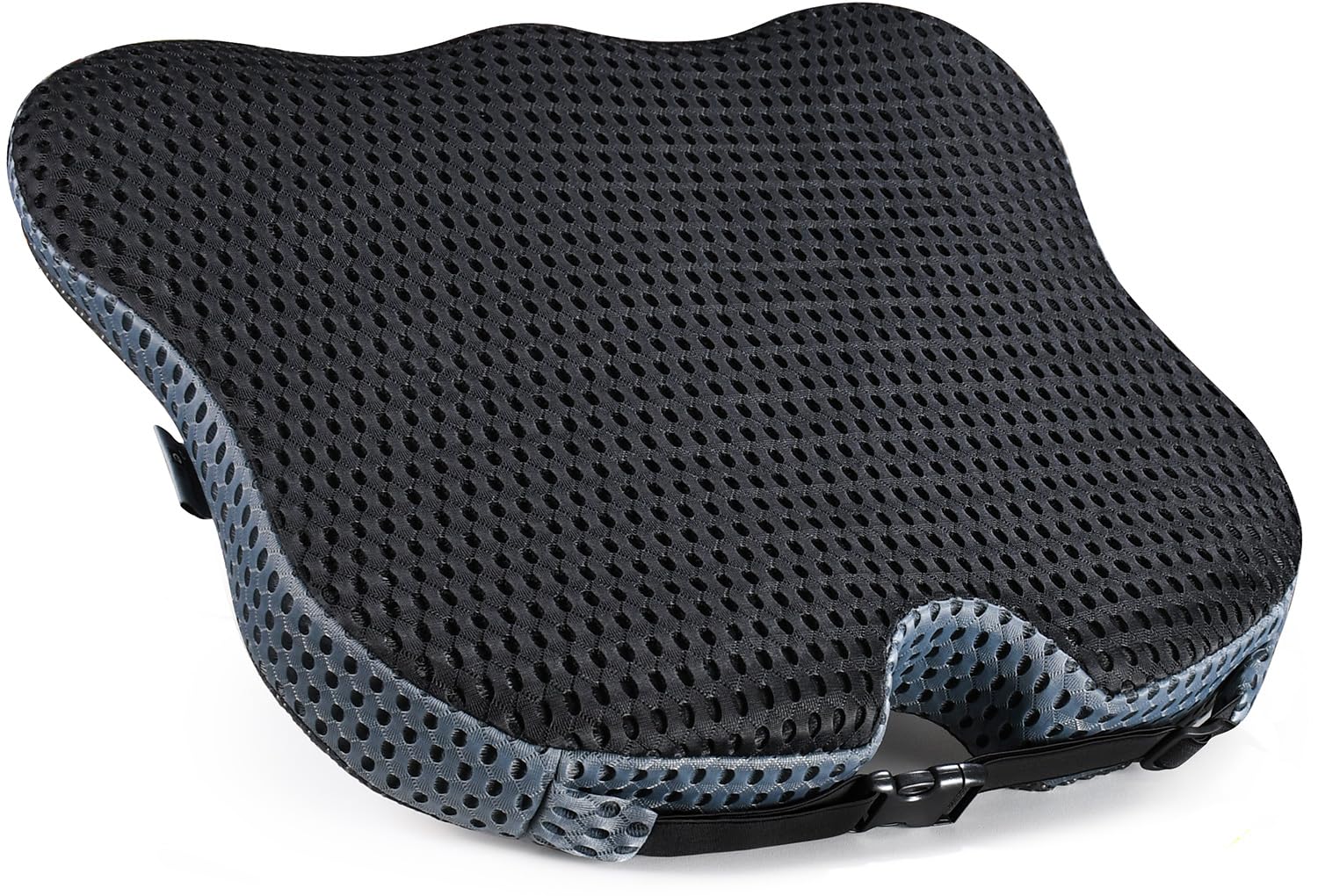
This wedge cushion raised my seating position, improved sightlines, and provided firm support that helped with posture on long drives.
Why I picked it: Height boost plus firm, contoured foam that balances pelvis and reduces slouching.
Best for: Shorter drivers who need improved forward visibility and firmer pelvic support.
Practical, budget-friendly wedge for drivers.
Pros
- Raises seating position for better visibility
- Firm, high-density memory foam
- Adjustable strap and non-slip bottom
- Ergonomic front-thin back-thick shape
Cons
- Alters armrest reach and driving posture
- Can feel too firm for sensitive users
My take
I use this wedge in my truck when I need a couple inches of height — it made a clear difference in how well I could see the road.
The foam is noticeably firm and supportive, so it helped my lower-back discomfort on long commutes. Be mindful that it does change where your arms rest; I had to tweak my seat position to avoid driving with my shoulders hunched.
The strap and non-slip dots kept the pad in place through daily in-and-out use.
5. BlissTrends 4.7in Memory Foam Seat Cushion – Best Thick Cushion
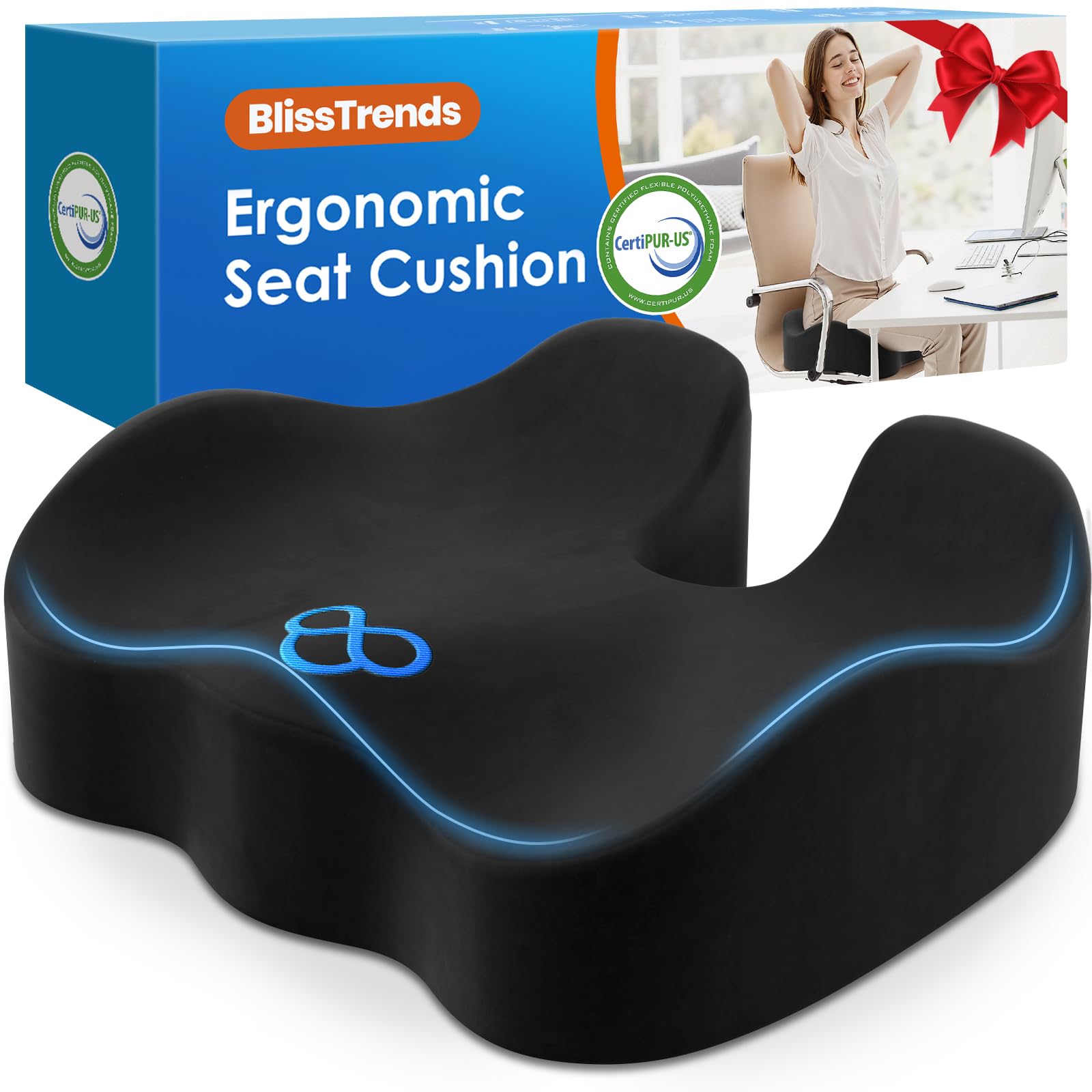
At nearly five inches thick, this cushion felt like the best option when I needed maximum padding and pressure redistribution.
Why I picked it: Deep high-density foam and a large cutout relieve pressure for extended sitting.
Best for: People with tailbone pain or who sit for long stretches at a desk or in a car.
Affordable choice for a very thick memory-foam option.
Pros
- Extra-thick 4.7-inch high-density foam
- Ergonomic tailbone cutout
- Soft, machine-washable velvet cover
- Anti-slip bottom
Cons
- Bulky to move between seats
- May feel firm at first
My take
I kept this cushion at my desk for a few weeks and also tried it on long drives. The thickness provides instant pressure relief, and the foam doesn’t flatten into a pancake like cheaper pads.
The cutout design takes the load off my tailbone and the cover breathes well enough for daily use. It’s a dense pad, so it can feel firm initially but it delivers long-term support.
6. Leather Memory Foam Heightening Cushion – Best-Looking Option
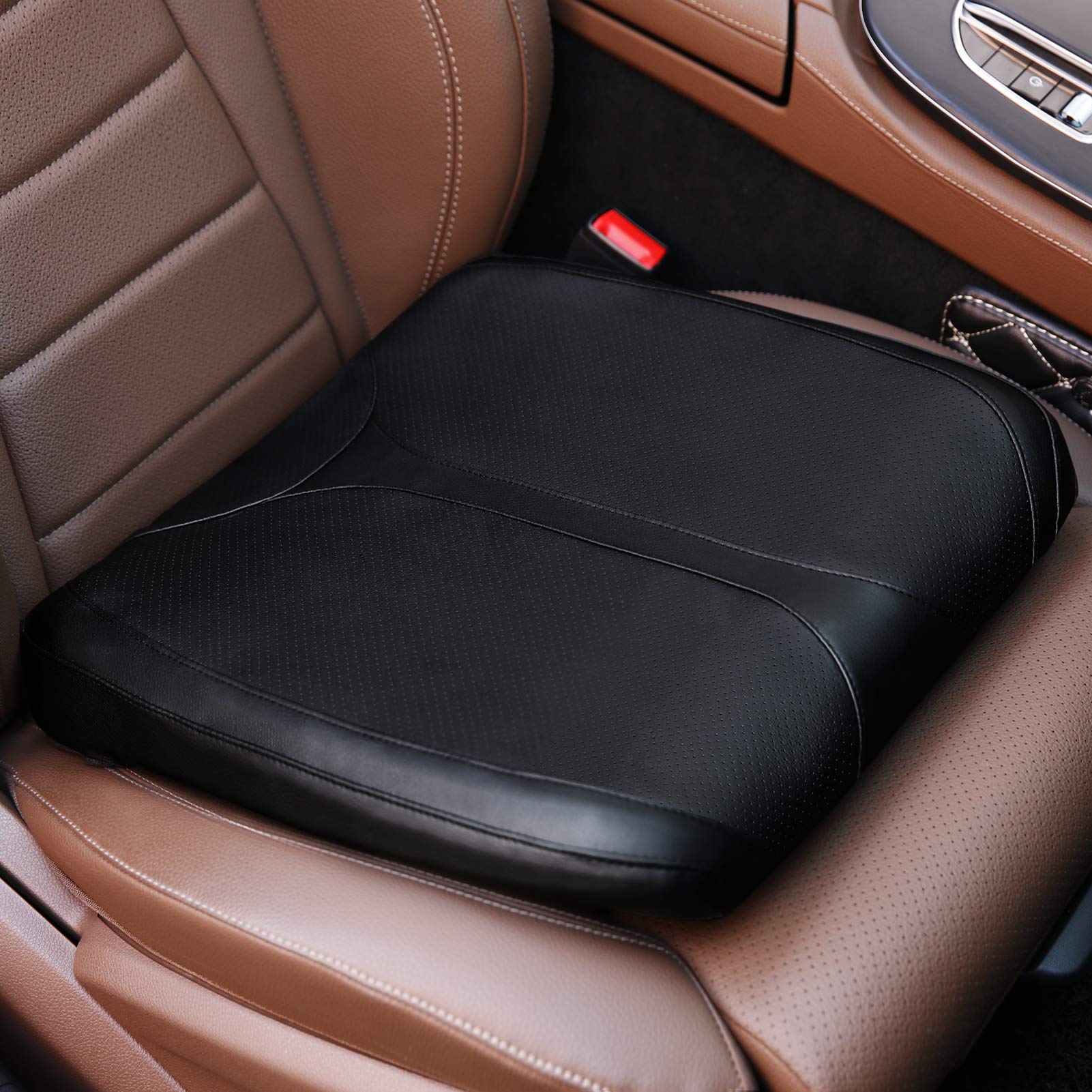
This PU-leather cushion gave me a subtle height boost while blending with car interiors and staying easy to clean.
Why I picked it: Stylish PU leather, built-in handle, and a discreet boost for short drivers.
Best for: Drivers who want a tidy, car-friendly booster that looks factory-installed.
Midpriced option that prioritizes appearance and practicality.
Pros
- PU leather finish looks integrated
- Raises seat for improved sightlines
- Non-slip bottom and carry handle
- Easy to clean
Cons
- Feels firmer in cold temperatures
- Advertised height compresses under weight
My take
I put this on my partner’s Mazda and it matched the interior surprisingly well while giving her the extra height she needed to see over the hood.
The cushion is supportive and comfortable on longer drives, and the leather surface wipes clean without fuss. Note that it compresses a bit under body weight, so the listed thickness feels slightly reduced when seated.
The temperature sensitivity of the foam means it felt firmer after a cold night in the car, but it softened up with use.
7. Comfort Memory Foam Car Seat Cushion – Best Ergonomic Fit
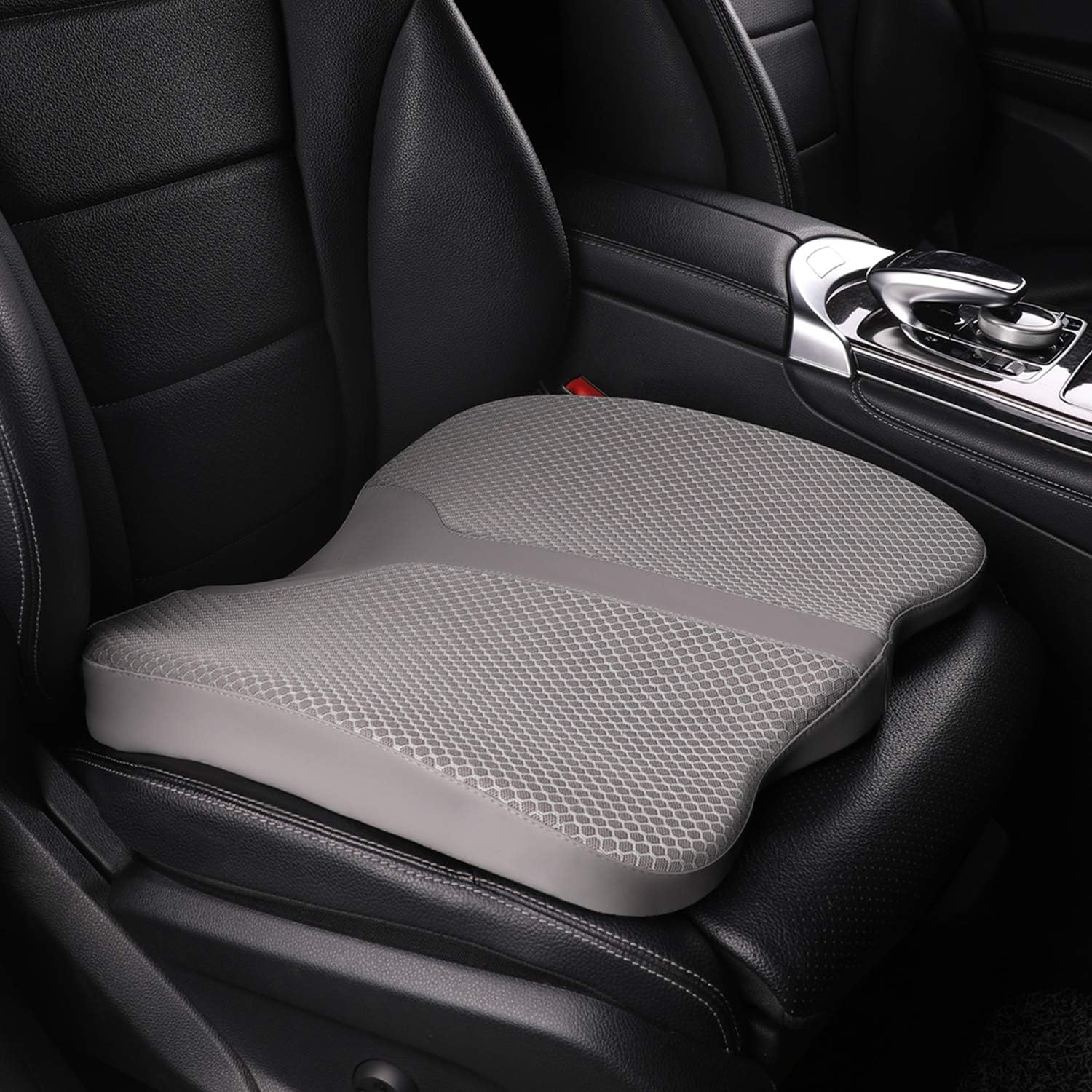
This breathable, contoured memory foam cushion stayed resilient across long drives and delivered wide coverage for larger seats.
Why I picked it: Breathable mesh cover, wide profile, and a shape that holds form on long trips.
Best for: Long road trips, truck drivers, and those who need a wider support area.
A dependable midrange ergonomic option.
Pros
- Breathable mesh cover
- Ergonomic coccyx cutout
- Holds shape on long trips
- Non-slip bottom and strap
Cons
- Only modest height increase
- Strap often unnecessary
My take
I used this cushion for a 1,200-mile round trip and it kept its shape with minimal discomfort. The foam is soft but dense enough that it didn’t pancake after heavy use.
The mesh cover breathed well in hot weather and the wide profile fit my vehicle’s seat better than many narrow pads.
I rarely needed the strap to keep it in place, though the strap can help on very smooth upholstery.
How I Pick Seat Cushions for Driving
Key features I test
I evaluate cushions for pressure relief, how well they stay put, and whether they affect driving posture or visibility.
Material matters: gel-enhanced foam adds surface cooling, high-density foam gives durable support, and grid-based materials trade contouring for airflow.
- Support profile — Look for a coccyx cutout or contoured wedge that matches your pain points.
- Surface grip — Non-slip bottoms or straps prevent the cushion from sliding when you get in or out.
- Breathability — Mesh or air-channel designs reduce heat buildup on long drives.
- Durability and care — Removable, machine-washable covers extend the life of the cushion.
Match the cushion to your need
If you’re short and need better sightlines, pick a wedge-style cushion that raises your seating position without forcing you into an awkward arm reach.
If tailbone or sciatica pain is the issue, prioritize a large U-shaped cutout and thicker high-density foam.
- Frequent travelers — Choose a portable, washable cushion with a handle.
- Hot climates — Favor breathable grids or mesh covers over dense foam.
- Style-sensitive drivers — PU leather options blend into car interiors and are easy to wipe down.
Care tips from my testing
I always allow foam cushions time to decompress after unpacking and follow the manufacturer’s washing instructions for covers.
To keep non-slip layers effective, clean both the cushion base and seat surface periodically so dirt doesn’t reduce friction.
- Air cushions and foam before first use to reach full shape.
- Wash zippered covers on a gentle cycle and air-dry when possible.
- Avoid placing cushions on very slick leather without a strap to reduce sliding.
Frequently Asked Questions
Will a seat cushion raise my driving position enough to improve visibility?
In my experience, wedge-style cushions reliably raise the seat an inch or two and can make a meaningful difference for shorter drivers. Expect a small compression once you sit, so allow for slightly less than the listed thickness.
Do gel cushions actually feel cooler?
Gel layers often feel a touch cooler at first, but the cooling effect is usually mild. If staying cool is a priority, I prefer grid-based materials or breathable covers that promote airflow.
Can a seat cushion help with sciatica and tailbone pain?
Yes — cushions with a generous coccyx cutout and dense, supportive foam reduced pressure on my tailbone and improved comfort during long drives and desk sessions.
Final Take
I recommend the ComfiLife gel + memory foam cushion if you want an all-around performer that balances cooling, support, and ease of care.
Pick a wedge if visibility and posture are your main concerns, or choose a thick memory-foam pad for maximum pressure relief.
Whichever cushion you choose, match the shape and material to how you sit most often and follow simple care steps to keep it working well.
