
I tested foam applicators, grout-style sponges, dual-sided wax pads, and chenille mitts so I could recommend the right sponge for every wash and detailing task.
I spent time using a range of car wash sponges and applicators so I could sort which ones actually make washing and detailing easier. I focused on build quality, how products spread, how gentle each option is on paint, and how well the items hold up to repeated use and washing.
Across multiple vehicles and detailing tasks I used foam pads for wax and sealants, heavy-duty sponges for tough grime, a dual-sided foam pad for precision polishing, and a chenille mitt for general washing. The list below reflects what I reached for most often and why.
If I’m doing a precision wax or sealant I go for a foam microfiber applicator. For heavy scrubbing or grout work I pick a dense cellulose sponge. When I need control for coatings the reinforced dual-sided pad wins. For fast, safe hand washes across large panels I prefer a chenille mitt that holds a lot of suds.
1. Chemical Guys Microfiber Applicator Pads – Best Overall Applicator
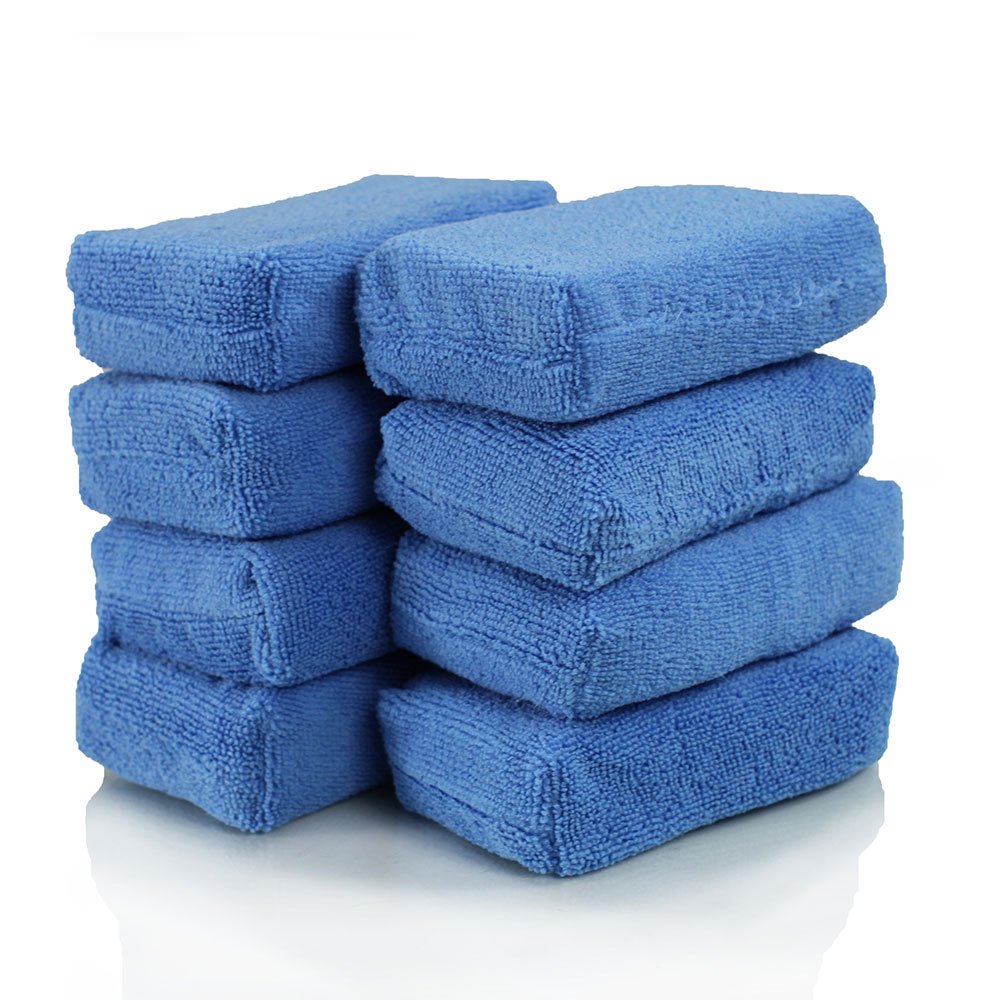
Plush microfiber wrapped around a foam core that spreads waxes and dressings evenly while staying soft on paint.
Why I picked it: The foam core and dense microfiber give me even product distribution without streaking.
Best for: Applying wax, sealants, tire dressing, and interior conditioners with precision.
A midrange investment that lasts through many washes.
Pros
- Ultra-soft microfiber surface
- Foam core for even product spread
- Comfortable ergonomic grip
- Machine washable and reusable
- Safe on paint and wraps
Cons
- Keep pads separate per product to avoid cross-contamination
- Not ideal for heavy scrubbing tasks
My take
I reached for these Chemical Guys pads whenever I wanted precise, streak-free application. The microfiber face is plush enough to hold product without dripping, and the foam core evens out whatever I spread — wax, sealant, or trim dressing — so I don’t end up with thick buildup in corners.
The ergonomic grip is a small detail that matters on longer sessions; I found my wrist less fatigued than when using flat discs. After many machine washes the pads stayed soft and retained shape, which means I feel comfortable reusing them rather than throwing them away after a single job.
Because they’re safe on clear coats, vinyl wraps, and plastics I used the same pads inside and outside the vehicle, but I keep one pad per product to avoid cross-contamination. The eight-pack gives me that flexibility without running out mid-detail.
2. QEP Extra-Large Grout Sponge – Best Heavy-Duty Sponge
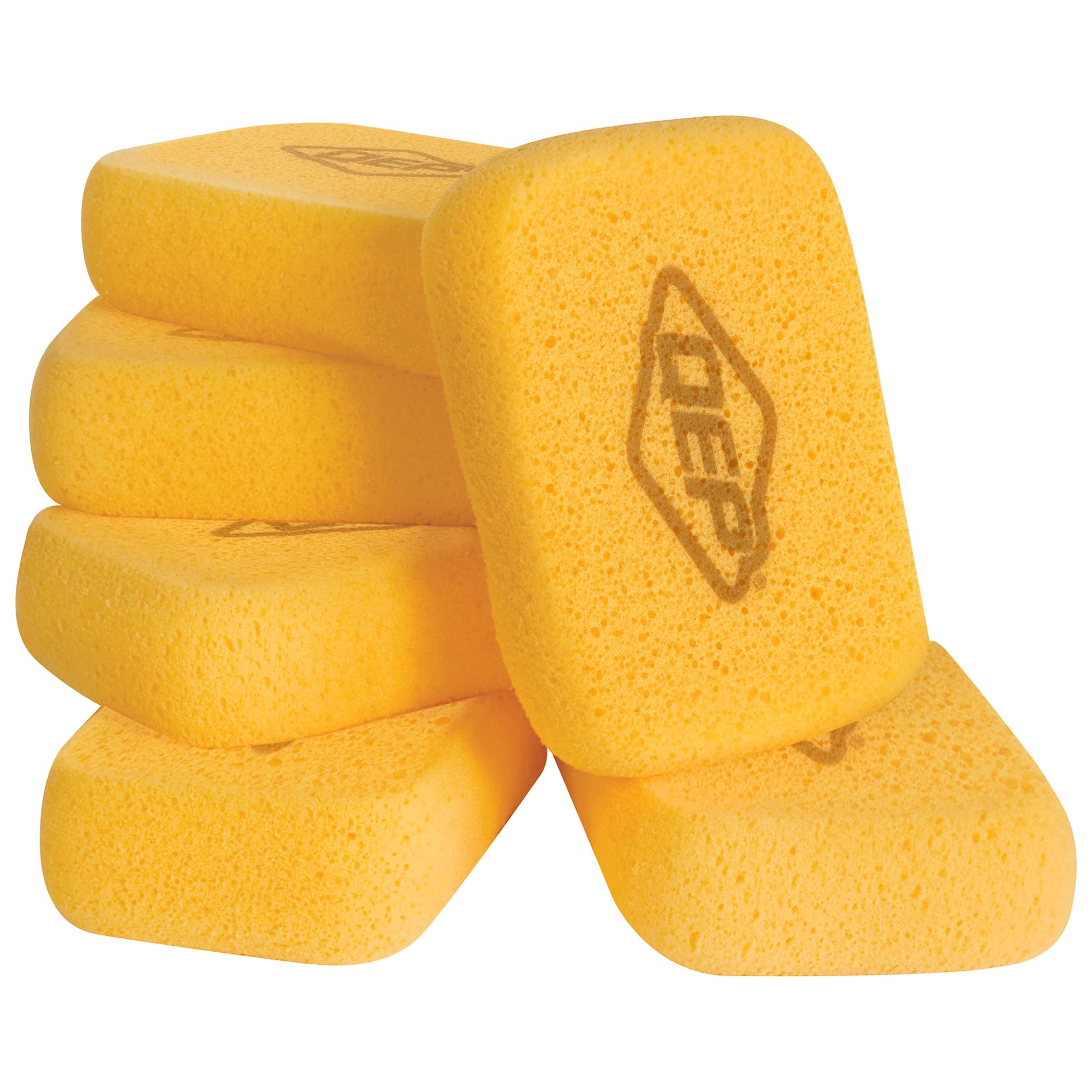
Dense, high-capacity sponge built for grout cleanup that also performs well on heavy exterior dirt.
Why I picked it: Its water-holding capacity and rugged build take on grout and tough exterior grime without falling apart.
Best for: Removing grout residue, cleaning tubs, and tackling very dirty exterior surfaces.
A budget-friendly multipack for heavy-duty jobs.
Pros
- High water-holding capacity
- Durable for rough jobs
- Rounded corners prevent digging
- Large size covers areas fast
Cons
- A bit stiff until broken in
- Too coarse for delicate paint finishes
My take
I used these QEP sponges first on a backsplash grout job and then for scrubbing a tarred lower rocker panel on a work truck. They hold a surprising amount of water and soap, which makes covering large surfaces quick work.
The rounded corners stop you from gouging grout lines, and the sponge rinses clean easily after heavy use. They’re built tough — I didn’t see any flaking or collapse after multiple uses. That said, they’re not microfiber soft, so I reserve them for grout, tubs, and very dirty exteriors rather than delicate clear coat work.
3. SONAX Application Sponge – Best for Waxes & Coatings
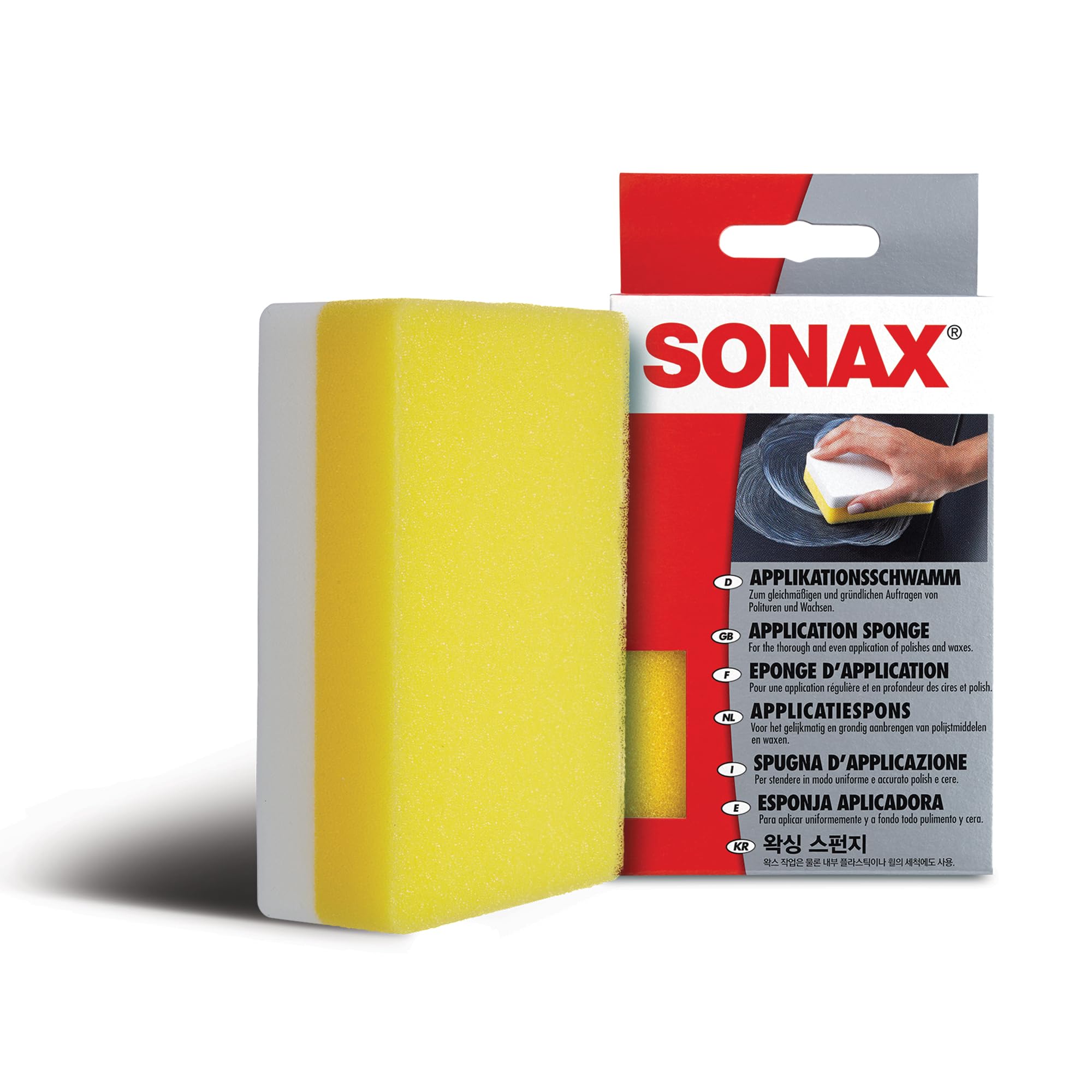
Dual-sided foam pad with a reinforced grip for controlled, even application of waxes, polishes, and coatings.
Why I picked it: The reinforced grip and two-sided design let me apply coatings with precision and confidence.
Best for: Applying wax, sealants, polymer coatings, and targeted exterior work.
Single-unit option worth keeping dedicated to one product.
Pros
- Reinforced ergonomic grip
- Dual-sided for different applications
- Dense, durable foam
- Compact and easy to control
Cons
- Can retain stains from sun-damaged paint
- Smaller size means slower coverage on big panels
My take
This SONAX pad became my go-to when I wanted a clean, even coat of wax or polymer. The white grip side feels solid in hand and keeps the pad stable while the yellow porous side distributes product precisely. For coatings where an even thin layer matters, that control is priceless.
I tend to dedicate one SONAX pad to a single product — paste waxes and polymer shields behave differently and I don’t want cross-contamination. It’s compact, so a little goes a long way on panels, but I’ll use a larger applicator when I’m doing a full-vehicle paste wax.
4. AIDEA Chenille Microfiber Wash Mitt – Best Wash Mitt
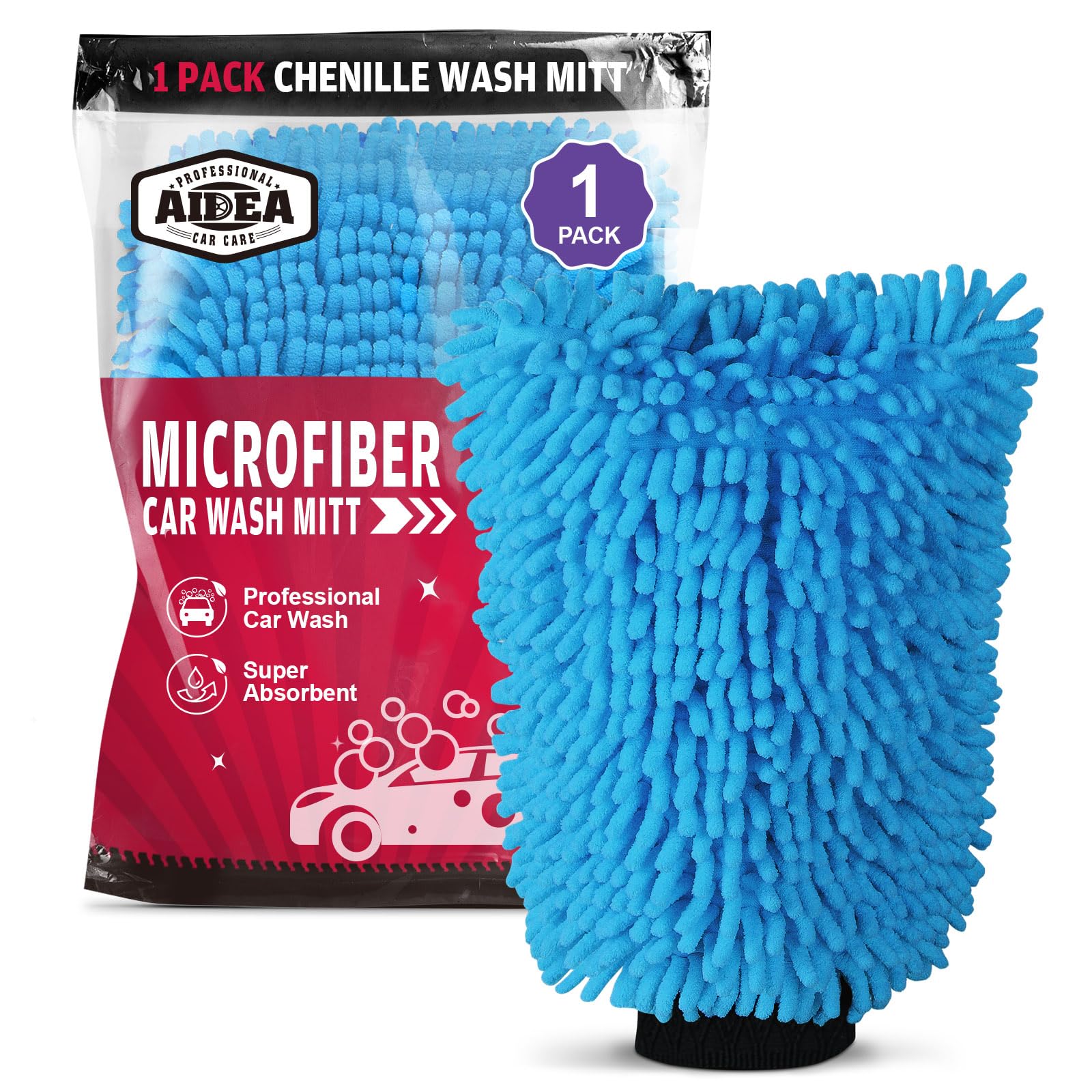
Plush chenille mitt that holds suds, stays gentle on paint, and fits securely with an elastic cuff.
Why I picked it: The chenille strands trap suds and glide over paint without scratching when rinsed regularly.
Best for: Hand washing large panels, quick washes, and general exterior cleaning.
An affordable, reusable wash mitt I use for weekly washes.
Pros
- Very plush and absorbent
- Lint-free, scratch-free fibers
- Secure elastic wrist cuff
- Machine washable and durable
Cons
- Can trap grit if not rinsed frequently
- Single mitt covers one hand only
My take
I prefer a chenille mitt for a fast, safe hand wash and this AIDEA mitt did exactly that. It soaks up a lot of suds and carries the foam to the panel where it slicks across the paint, suspending dirt as I rinse.
The elastic cuff keeps the mitt secure during aggressive washing, and after machine washing it comes back soft and ready. I make a point to rinse the mitt often during a wash to avoid trapping grit between fibers — that’s the only maintenance quirk with a plush mitt like this.
How I Choose Sponges and Applicators
Material and Purpose
I always match material to the job: microfiber or foam applicators for waxes and sealants, chenille mitts for general washing, and dense cellulose sponges for grout and heavy scrubbing. Using the wrong material is how scratches and streaks happen.
I look for lint-free microfiber when I’m working on painted surfaces, and denser, more aggressive sponges for tile or filth that needs scrubbing.
- Microfiber/foam = precision product application
- Chenille mitt = high suds, gentle on paint for washes
- Cellulose sponge = heavy-duty scrubbing and grout cleanup
Durability & Maintenance
I consider washability a must. Machine-washable pads and mitts that keep shape save me time and money. I avoid fabric softener because it kills absorbency.
I rotate pads and keep at least one dedicated applicator per product (wax, sealant, dressing) to prevent cross-contamination.
- Machine wash cold, no fabric softener
- Air-dry or low heat to preserve foam cores
- Replace when fibers flatten or embedded grit remains
Size & Ergonomics
Bigger sponges and mitts cover more area quickly, but smaller applicators give me better control on trim and tight spots. I keep both sizes in my kit.
I prefer a secure cuff or ergonomic grip to reduce hand fatigue during long detailing sessions.
- Large = faster coverage; small = precision
- Look for ergonomic grips or cuffs for control
Frequently Asked Questions
Can I use a grout sponge on my car?
Yes — I use dense grout sponges on very dirty lower panels and for tar removal, but I avoid them on delicate paintwork. They’re great for heavy grime but not for finish-sensitive tasks.
How do I wash microfiber applicators and mitts?
I wash them in cold water on a gentle cycle with a mild detergent, skip fabric softener, and air-dry or tumble on low. That routine keeps absorbency and foam cores intact.
How often should I replace sponges or mitts?
I replace them when fibers flatten, foam collapses, or grit won’t rinse out. With proper care they can last many uses, but I keep backups for product-dedicated tasks.
Final Take
There’s no single sponge that does everything perfectly — that’s why I keep a small kit: a foam microfiber applicator for coatings, a dual-sided pad for precision work, a heavy-duty sponge for grime, and a chenille mitt for general washing.
Each pick here has earned a place in my routine because it performs the tasks I ask of it without falling apart. Pick the one that matches your typical jobs and keep dedicated applicators for different products to protect your finish.
