
I tested six rugs and carpet rolls that work well in basements—focus on low pile, washable options, non-slip backing, and materials that handle moisture and high traffic.
I spend a lot of time fitting rugs into less-than-ideal spaces, so for this roundup I focused on carpets that behave in basements: low profile, easy to clean, and stable on potentially damp floors.
Basement carpeting needs to balance comfort and practicality. I prioritized washable surfaces, synthetic fibers that resist moisture, and backings that stay put without turning into a slip hazard.
Below are my hands-on impressions of six options—from washable round accent rugs to full carpet rolls—organized by the use case I found each one suited for.
If you want something machine-washable and thin for traffic areas, lean toward the Moynesa or Lahome washable options. For large coverage and a stronger, more traditional rug feel, the Rugshop 10'x14' is best. For a waterproof, cut-to-fit solution, the Happybuy marine carpet roll is the practical choice.
1. Moynesa Ultra-Thin Washable 6′ Round Rug — Brick Red – Best Washable Round Rug
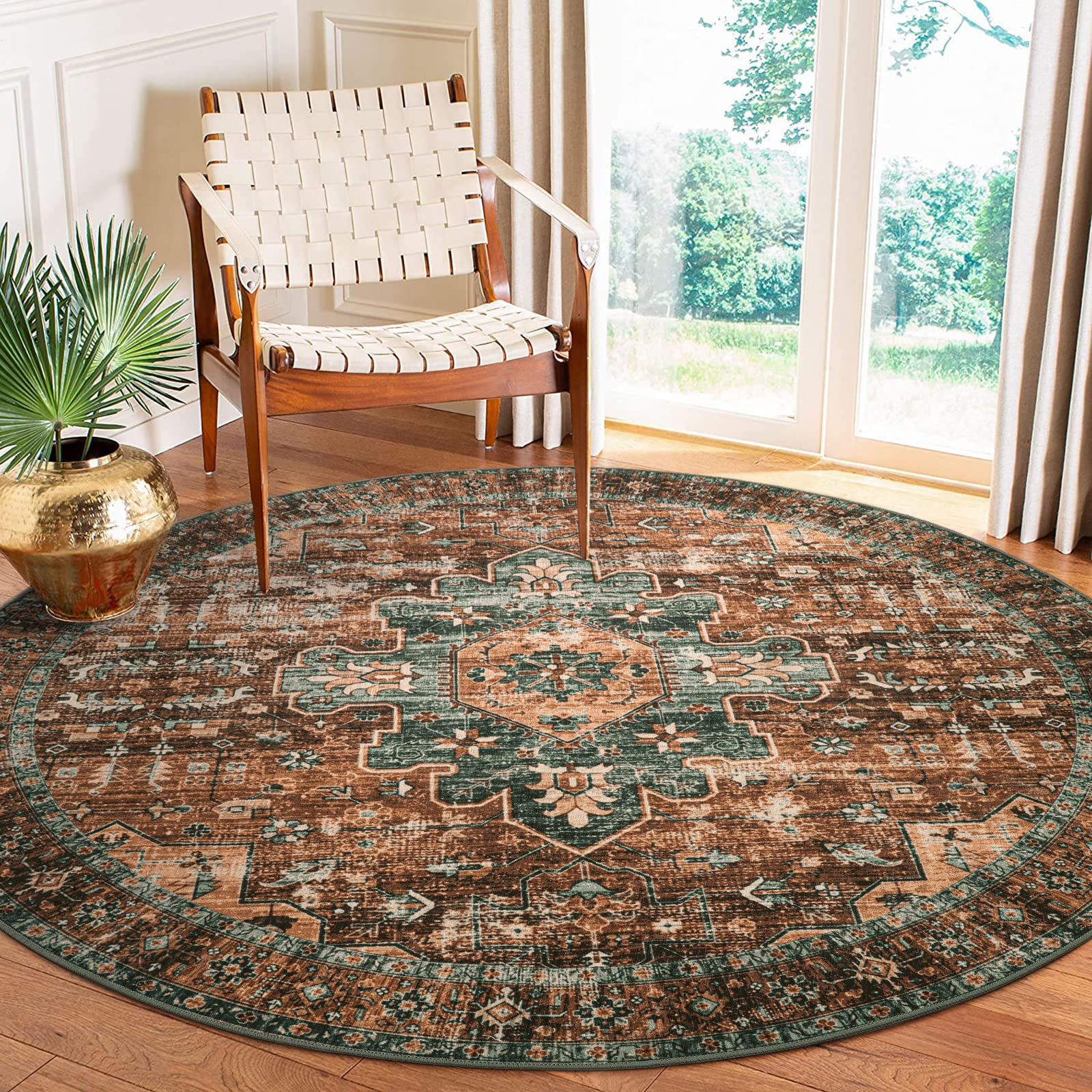
A vintage-patterned, ultra-thin round rug I used in entry and dining areas — machine washable, non-shedding, and hard to trip over.
Why I picked it: Ultra-thin washable construction with non-slip backing and stain-hiding color.
Best for: Entryways, small dining spots, basement doorway or under a round table.
Affordable, excellent value for a washable decorative rug.
Pros
- Machine washable
- TPR non-slip backing
- Ultra-thin, clears doors
- Flat woven, low shedding
- Dark pattern hides dirt
Cons
- Not plush underfoot
- Creases from shipping
- Requires dry floor underlay
My take
I put this 6-foot round rug by a basement entry and in front of a kitchen doorway to stop slipping and add warmth. The ultra-thin 0.16-inch pile means doors never catch and it lies flatter than most rolled washable mats.
The flat-woven recycled polyester feels light but sturdy; it isn’t plush, yet it’s soft enough to walk on barefoot. The brick-red medallion pattern did a good job masking tracked-in dirt in my tests.
TPR backing kept the rug in place during daily foot traffic and pet activity. I kept the underside dry as recommended, and it stayed put without a pad.
Washing is straightforward: cold water, gentle cycle, no bleach, then air dry. I ran a gentle cycle after a couple of weeks of use and the colors and shape held up well. Expect some creases when it arrives folded; they relaxed after a few days under normal use.
2. Rugshop Contemporary Abstract Circles 10′ x 14′ — Red – Best for Large Rooms
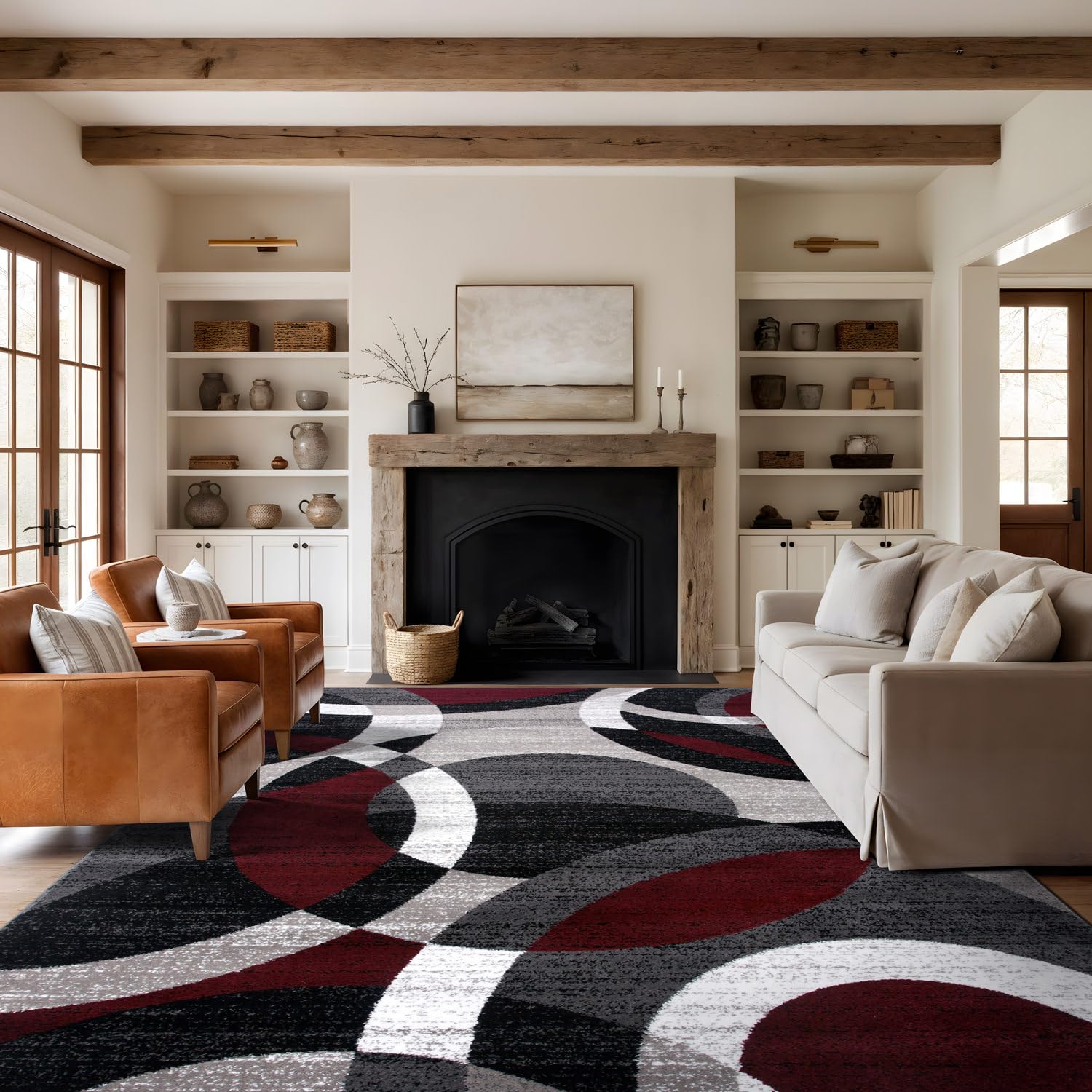
A large power-loomed polypropylene rug with bold pattern and a low, durable pile — built for big basement living rooms and open layouts.
Why I picked it: Large-format coverage with stain-resistant polypropylene and sturdy jute backing.
Best for: Expansive basement living areas where low pile and easy upkeep matter.
A more expensive option for full-room coverage and bold style.
Pros
- Large 10'x14' coverage
- Durable polypropylene surface
- Low 0.39-inch pile
- Bold modern pattern
- Easy to vacuum
Cons
- Thin compared to plush rugs
- May need rug pad
- Edge curling possible
My take
I used the 10'x14' rug in a lower-level living room where I wanted big impact without a thick pile. The overlapping circle pattern pulled the room together and the color palette read true to photos in my lighting.
Power-loomed polypropylene gives the rug a dense, low-profile feel that vacuums easily and resists everyday stains. It fits under furniture without interfering with clearance, which is a practical basement advantage.
The jute backing provides structure, but I still added a full-width rug pad to eliminate shifting and help the rug lie perfectly flat. I recommend a pad both for grip and to reduce any edge curl that showed initially.
I noticed a faint factory smell on opening, which disappeared after airing. Construction feels solid for regular foot traffic, though the low pile means I’d expect a different, softer feel than a deep-pile area rug.
3. Lahome Reine Bohemian Floral Medallion Runner 2′ x 6′ — Fuchsia/Multi – Best Runner
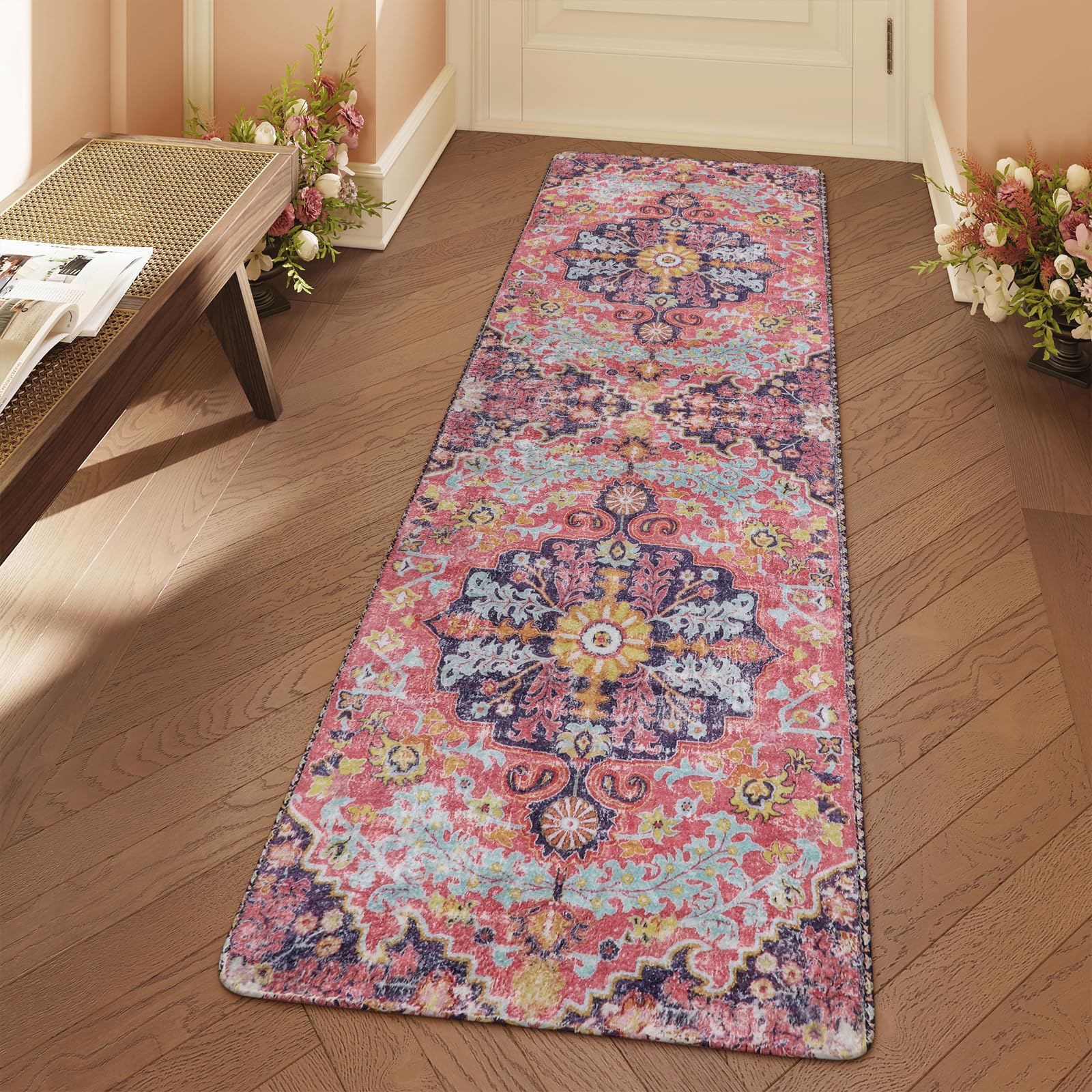
A vibrant, machine-washable runner with faux-wool softness and rubber backing — ideal for narrow basement hallways and bedside areas.
Why I picked it: Soft faux-wool surface, reliable rubber backing, and machine-washable convenience.
Best for: Hallways, narrow walkways, bedside, or in front of a basement sink.
Budget-friendly runner that delivers surprising softness.
Pros
- Very soft underfoot
- Machine washable
- Rubber non-slip backing
- Vibrant boho pattern
Cons
- Color is very pink
- Small coverage area
- Not very thick
My take
I rolled this 2'x6' runner down a narrow basement hallway and immediately appreciated the cushioning: it felt plush for its size thanks to the faux-wool surface.
The rubber backing kept the runner from slipping even with pets and a lot of foot traffic. It also laid flat without tape or a pad right out of the package.
Color expectations matter here — the fuchsia option reads bright and bubble-gum pink in my room, so I’d double-check color choices if you want a muted tone.
Care is straightforward: gentle vacuuming or a cold machine wash on delicate works. Because the surface is soft, I handled vacuuming carefully to avoid the cleaner pulling at the fibers.
4. Lahome Modern Abstract Area Rug 4′ x 6′ — Galaxy – Best Colorful Accent
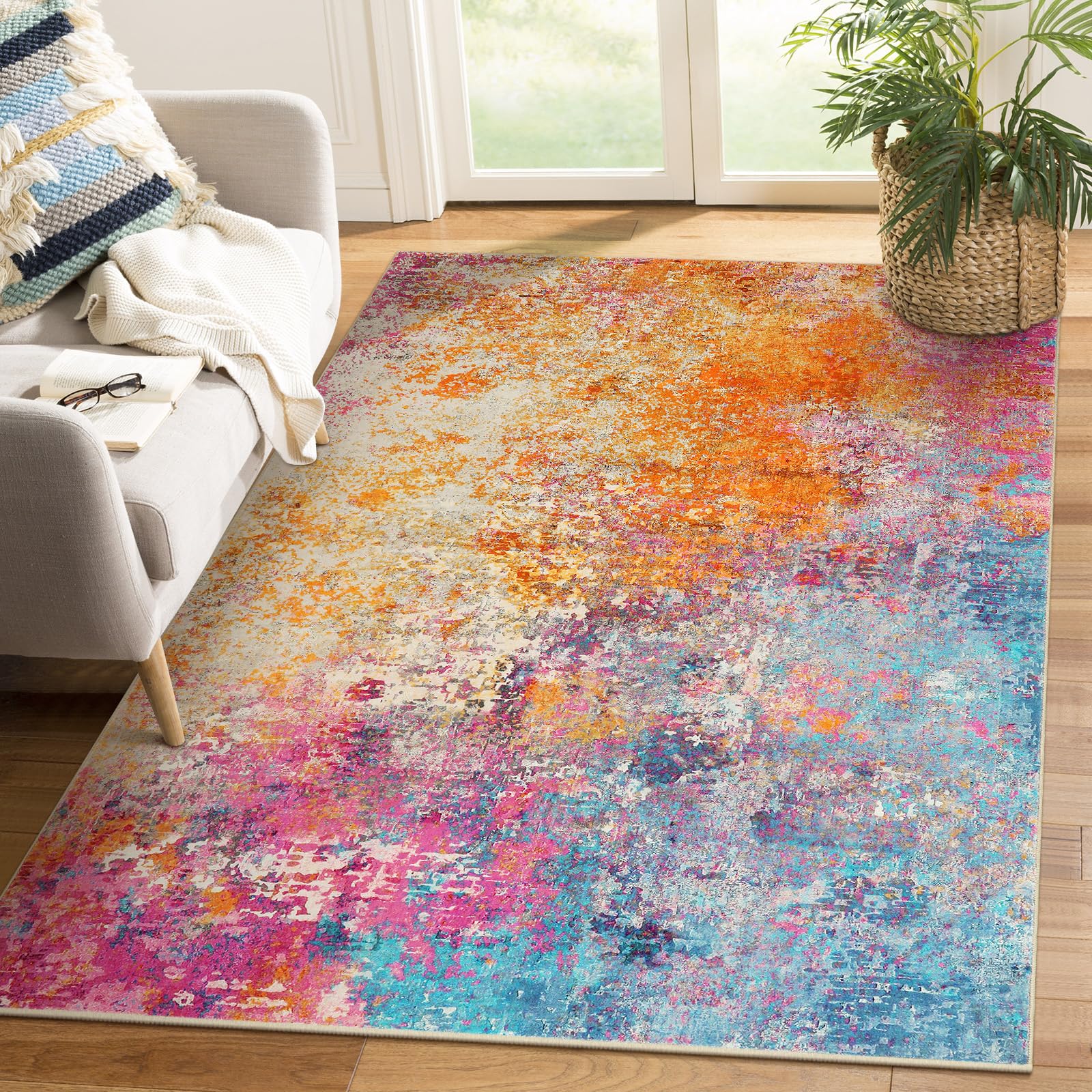
A washable 4×6 with a velvet-like top and bright abstract palette that perks up dark basement corners while remaining low-profile.
Why I picked it: Vibrant abstract print with soft, velvet-like surface and washable construction.
Best for: Entryways, in front of sinks, small seating nooks, or play areas in basements.
Affordable option to add color without a heavy commitment.
Pros
- Vibrant abstract colors
- Soft, velvet-like feel
- Machine washable
- Low 0.3-inch pile
Cons
- Can be slippery
- Vacuum may tug edges
- Yellow accents can resemble dirt
My take
I put a 4'x6' Galaxy rug in front of a basement sink and loved the immediate color lift; the soft, velvet-like surface felt luxurious under bare feet.
Because the pile is low and lightweight, it doesn’t block doors and is easy for a robot vacuum to cross. Be cautious about slipperiness though: I taped the corners and later added a thin pad for traction.
Some patterns include small yellow accents that, in my lighting, can read like spots at a glance. That’s purely an aesthetic quirk—if you want high-contrast accents, this will deliver dramatic pops of color.
Cleaning is easy: spot cleaning or a gentle machine cycle kept it looking fresh. Expect some creases from folding, but they relaxed after a few days.
5. Happybuy Marine Carpet Roll 6′ x 13′ — Grey (Boat Carpet) – Best Waterproof Roll
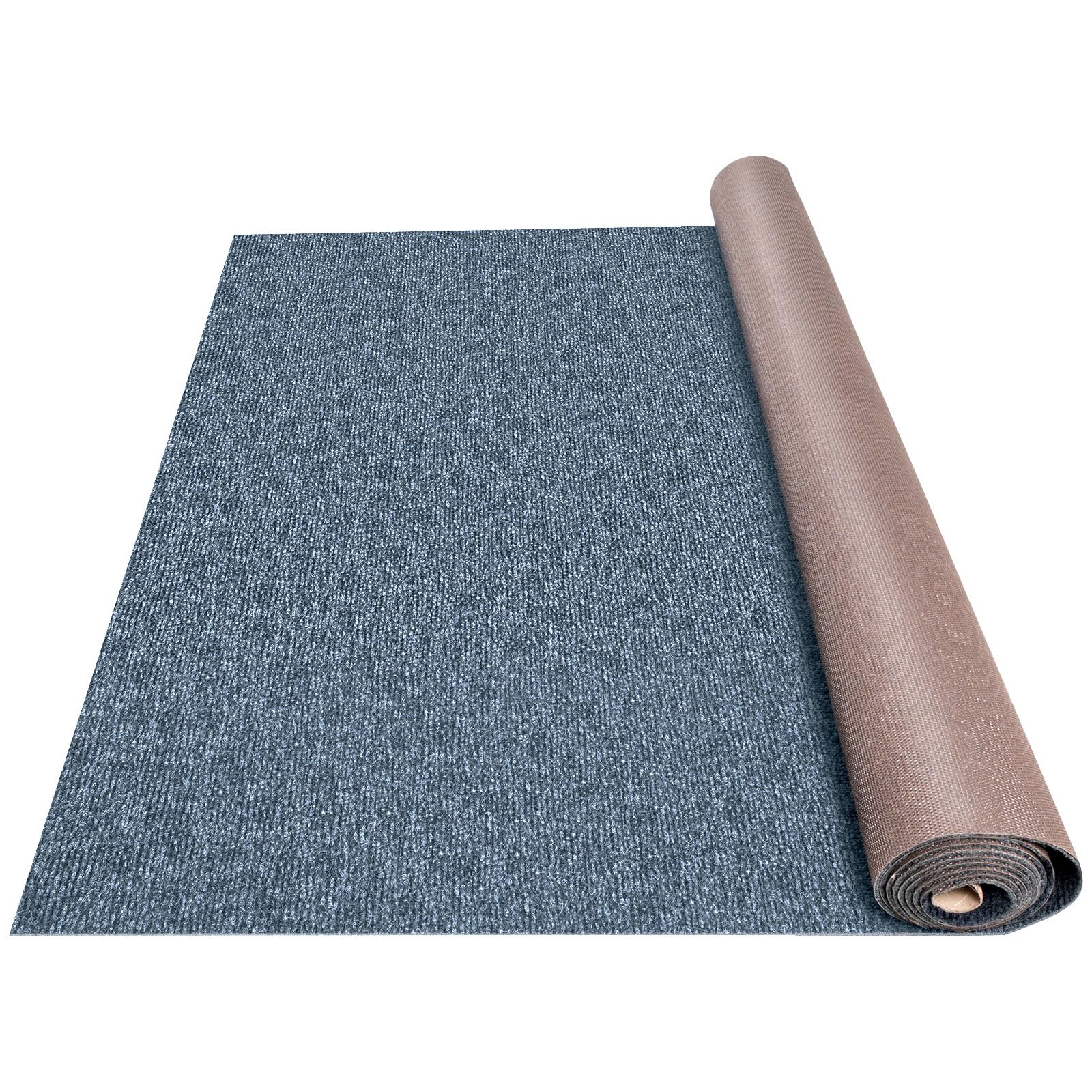
A marine-grade carpet roll that I cut and glued for a basement rug project — waterproof, ribbed texture, and easy to trim to size.
Why I picked it: Waterproof marine construction that’s easy to cut and install for utility use.
Best for: Basement workshops, porches, garages, boat areas, or custom-cut flooring.
Practical, mid-range solution for waterproof flooring needs.
Pros
- Waterproof polyester fibers
- Easy to cut to size
- Ribbed non-slide texture
- Comfortable yet rugged
Cons
- Gray can look bluish in bright light
- Needs glue for permanent install
- Not as plush as home rugs
My take
I used this marine carpet on a basement landing and a covered porch, cutting the roll to fit awkward corners with a utility knife. The material trimmed cleanly without fraying, which made installation painless.
The 0.18-inch thickness is thin but comfortable underfoot, and the ribbed surface added traction where I needed it most. Waterproof performance was excellent—spills dried quickly without staining.
Color shifts under bright light; the grey has a blue tint in direct sun, so I checked samples before committing to large areas. For permanent installation I bonded the edges down with adhesive so seams stayed flat.
This is a utilitarian choice: not a plush living-room carpet, but a smart, durable option when moisture resistance and custom sizing matter most.
6. Lahome Enfys Easy Jute Rug 9′ x 12′ — Nature/Black Rainbow – Best 9×12 Statement Rug
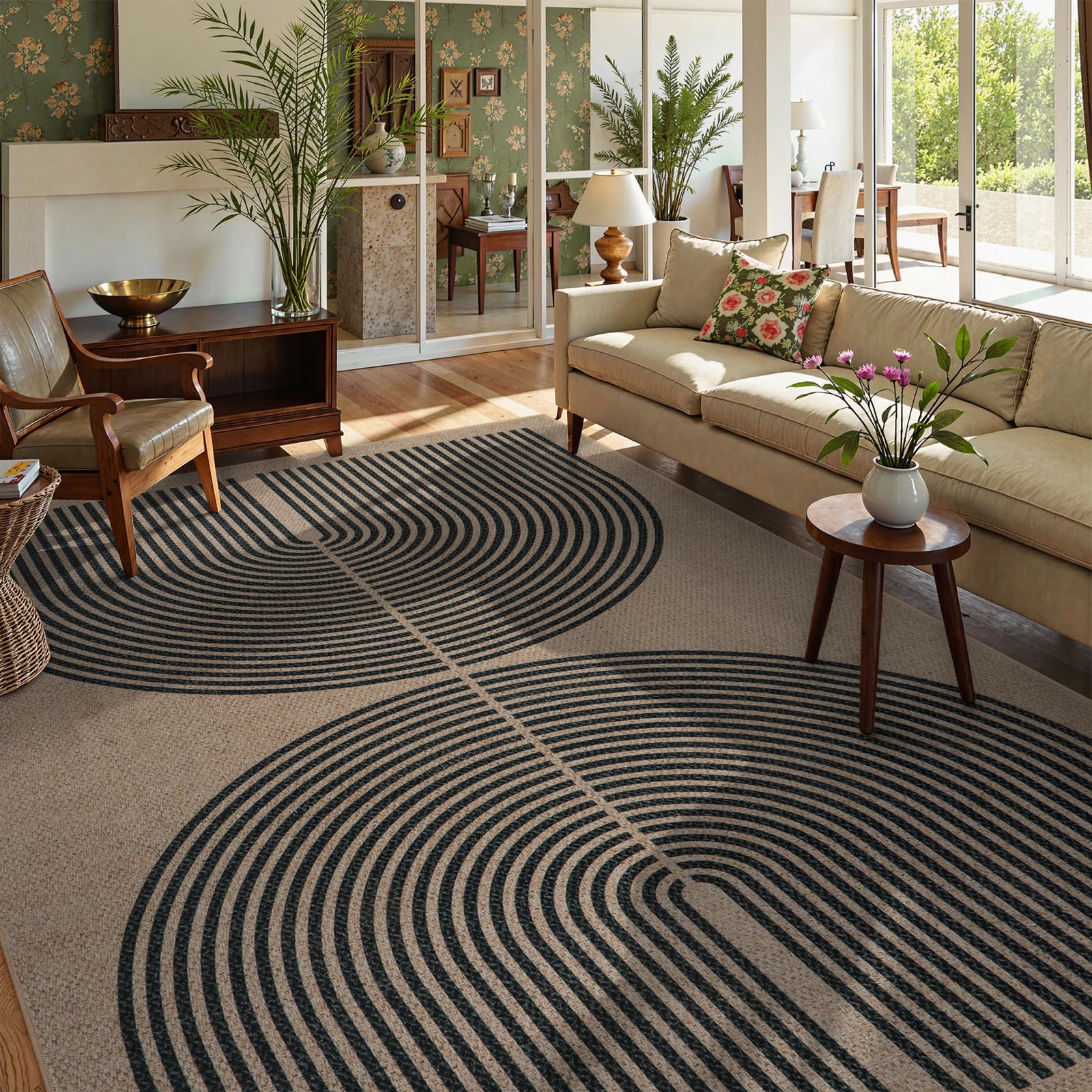
A large jute-look rug (polyester) with a double-rainbow graphic — TPE backing keeps it stable and it's surprisingly lightweight for a 9×12.
Why I picked it: Large-format jute look with contemporary rainbow pattern and slip-resistant TPE backing.
Best for: Main basement living areas, under dining tables, or wide open play spaces.
Higher cost for a statement-size jute-look rug.
Pros
- Generous 9'x12' coverage
- Jute-look, modern pattern
- TPE non-slip backing
- Easy to clean
Cons
- Very thin construction
- Arrives folded with creases
- Pet claws may catch threads
My take
I placed the 9×12 Enfys rug in a lower-level family room to anchor seating. The jute-inspired weave looks expensive and ties modern and boho pieces together without overwhelming the space.
Because it’s thin, doors clear easily and the rug didn’t affect traffic flow. The TPE backing provided enough grip that a full rug pad wasn’t strictly necessary, though I added one for extra cushioning.
It arrived folded and required a couple of days under furniture to smooth the creases; that patience paid off. Cleaning is easy with a hose or vacuum for surface dirt, and the rug tolerated a gentle machine wash when I tested a small area.
If you have playful pets with sharp claws, keep an eye on snags; the woven surface can catch paws more readily than short-pile rugs.
How I Choose Basement-Friendly Carpets
Pile height and profile
I prioritize low-pile and flat-woven rugs for basements because they clear doors, dry faster after spills, and don’t trap damp air.
Even when comfort matters, I look for low-to-medium piles that balance softness with practical maintenance.
- Low pile (under 1/2 inch) resists moisture retention
- Ultra-thin rugs avoid door clearance issues
- Flat-woven options dry and clean faster
Material and moisture resistance
I favor synthetic fibers—polypropylene, recycled polyester, marine polyester—because they resist stains and absorb less moisture than natural fibers.
If the basement has any dampness, choose waterproof or quick-drying materials and keep the floor well-ventilated.
- Polypropylene and polyester for stain resistance
- Marine-grade carpet for waterproof needed areas
- Avoid thick wool in potentially damp basements
Backing and slip resistance
A non-slip backing (TPR, rubber, TPE) is essential on cold concrete floors. I still sometimes add a thin rug pad for extra grip and insulation.
For large rugs, I recommend a rug pad to prevent shifting and to extend rug life.
- TPR/TPE/rubber backings minimize sliding
- Add rug pad for large-area stability
- Tape edges if slipperiness is a concern
Size, layout, and trimming
I measure twice and pick rugs that clear doors and fit furniture legs. For odd spaces, marine carpet rolls are cut-to-fit and ideal.
Think about traffic flows—place runners where people walk most to protect the floor and rug.
- Measure door clearance before buying
- Use rolls for custom-fit areas
- Center large rugs under seating groups
Care and cleaning
Machine-washable rugs make life easier in basements used for hobbies or kids’ play. Follow cold-water cycles and air-dry when recommended.
For non-washable large rugs, regular vacuuming and prompt spot cleaning keep the pile healthy.
- Machine-washable when possible
- Spot-clean spills immediately
- Air out rugs after any moisture exposure
Frequently Asked Questions
Can I use these rugs directly on concrete basement floors?
Yes—most low-pile, synthetic rugs work fine on concrete. I recommend checking for moisture first and using a rug pad or vapor barrier if the floor is damp. Non-slip backing helps prevent sliding on smooth concrete.
Which rugs can I machine wash safely?
The washable models in this roundup (the Moynesa and several Lahome pieces) are designed for machine washing on cold and gentle cycles. I always air-dry to preserve shape and avoid bleach or hot water.
Do I need a rug pad for basements?
I usually add a thin, non-slip rug pad for large or lightweight rugs to improve grip, add insulation, and reduce wear. For marine carpet rolls I glued edges for a permanent install instead of using a pad.
Final Take
Basement carpeting is about choosing the right balance of practicality and style. For washable convenience and low profile, I recommend the Moynesa round or the Lahome washable runners and accents.
If you need full-room coverage with a traditional rug look, the Rugshop 10'x14' delivers scale and durability—just add a pad. For waterproof, cut-to-fit work, the Happybuy marine roll is the most pragmatic choice.
Whichever direction I go, I focus on low pile, good backing, and materials I can clean easily. That approach has kept my basements warm, safe, and low maintenance.
