
I tested a range of cast iron teapots to find options that balance heat retention, build quality, and everyday usability for single cups up to small gatherings.
I spent hands-on time with six cast iron teapots to see how they behave with real tea, from heating and pouring to cleaning and storage.
My testing focused on heat retention, enamel protection against rust, infuser performance, stovetop compatibility, and how each pot feels to use day to day.
Below I outline the strengths of each teapot and which situations I find them best suited for so you can pick the right one for your kitchen ritual.
I compared capacity, interior enamel, infuser quality, and whether each pot is truly stovetop-safe so you know which models I trust for stovetop use versus tabletop brewing.
1. TOPTIER Cast Iron Teapot — Leaf Design – Best Overall
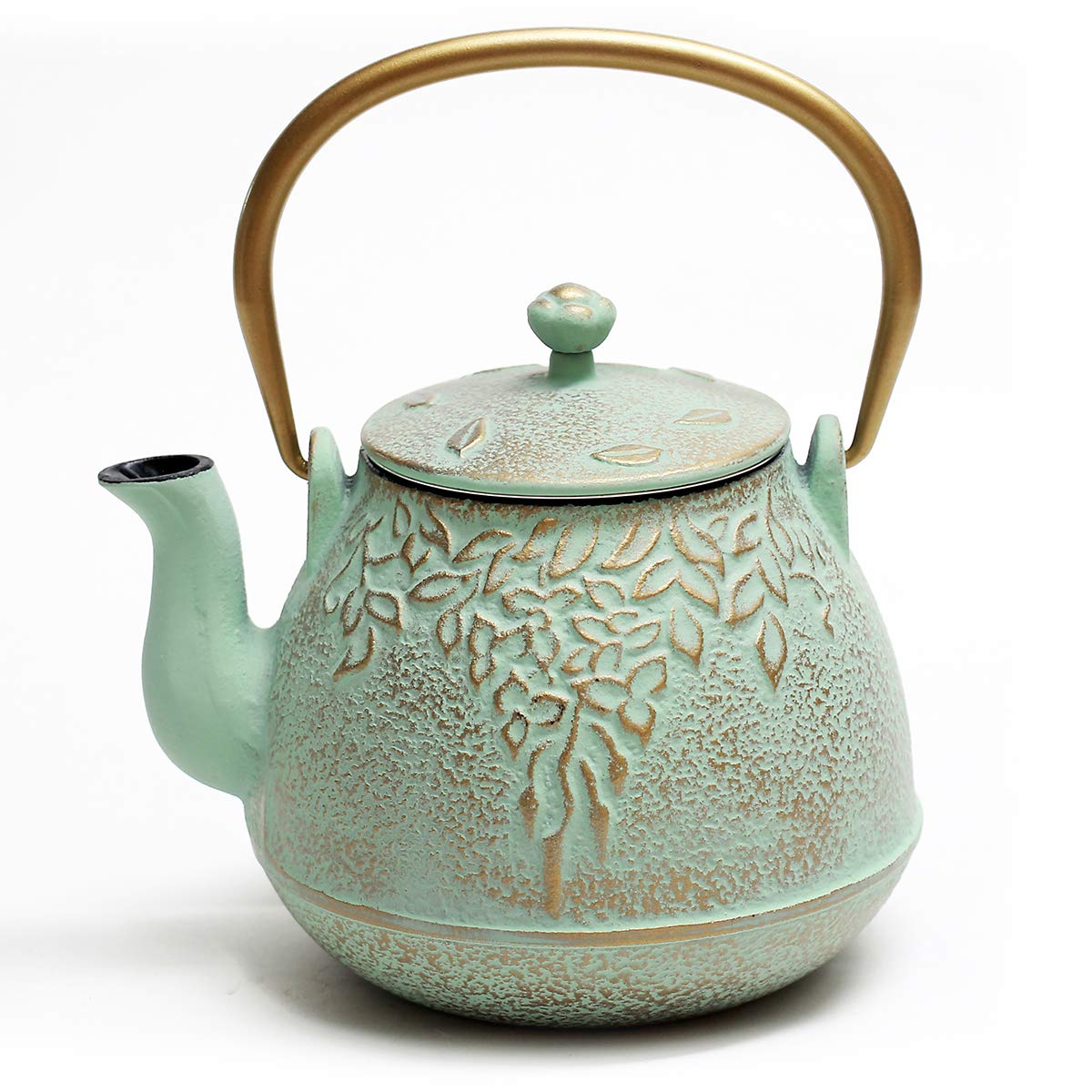
I liked this leaf-patterned TOPTIER for its balance of size, enamel protection, and included stainless-steel infuser—an everyday teapot that doubles as a pretty countertop piece.
Why I picked it: It delivers even heating, an enamel interior that resists rust, and a removable 18/10 infuser in an appealing design.
Best for: I recommend this for small households who want a practical teapot that also looks decorative on the counter.
An affordable pick that feels like good value.
Pros
- Enameled interior resists rust
- Removable stainless-steel infuser
- Solid heat retention
- Attractive leaf pattern
- Fold-down ergonomic handle
Cons
- Smaller than it looks in photos
- Handle gets hot with direct heat
- Not dishwasher-safe
My take
I found the TOPTIER leaf teapot compact but capable—its listed full-load capacity is larger than the amount I actually boil on the stove, so I stick to the recommended lower fill when I heat it directly.
The enameled interior keeps the brewed tea tasting clean and has stayed rust-free in my kitchen as long as I empty and dry it after use.
The 18/10 stainless infuser catches most leaves and removes easily for rinsing, though I’m careful with the mesh if I brew very fine teas.
When I use it on the stove I run a low flame and watch the handle; it heats up, so I use a cloth or oven mitt to pour. For tabletop brewing I simply pour pre-heated water in for a no-fuss routine.
2. TOPTIER Diamond Cast Iron Teapot – Best for Stovetop Use
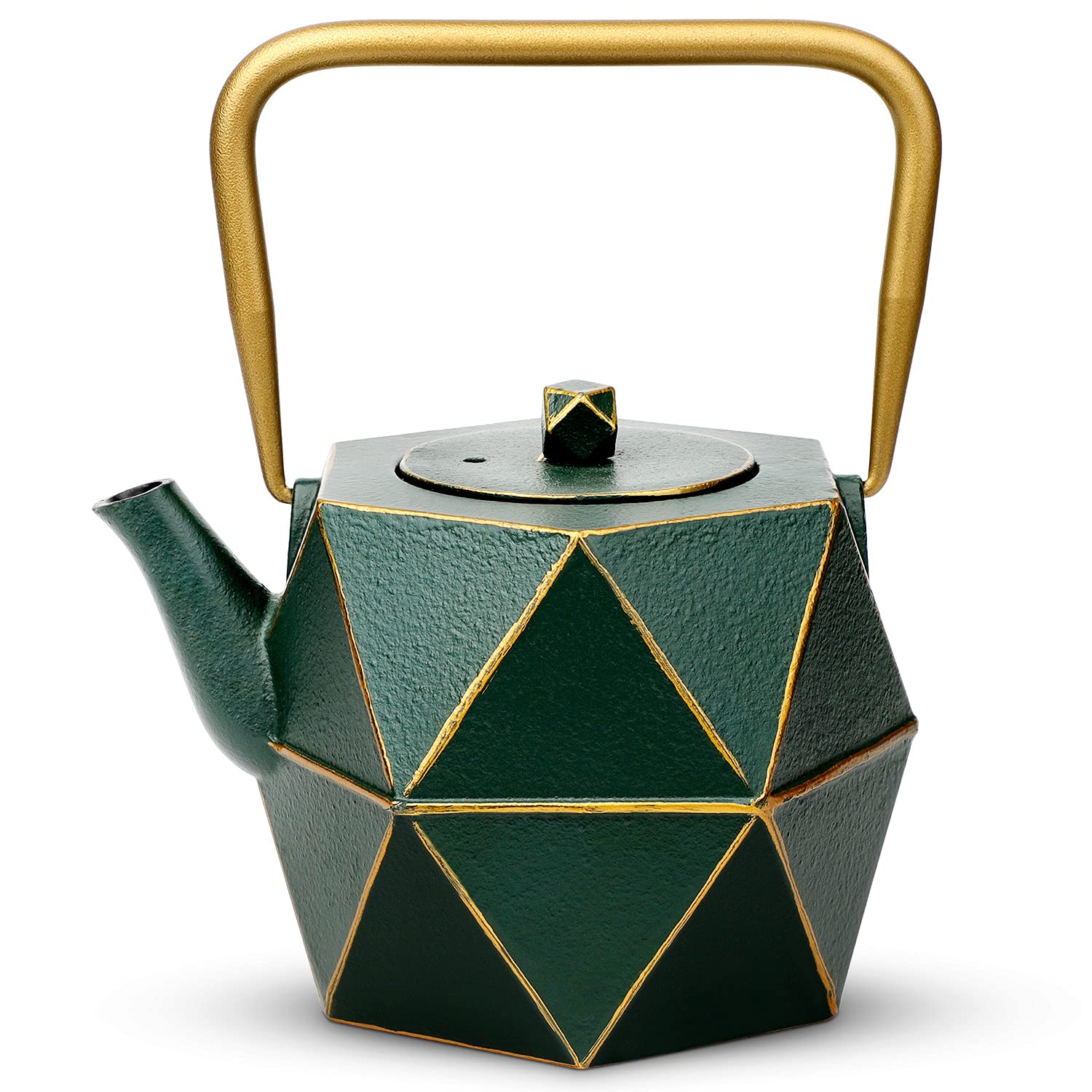
This diamond-shaped TOPTIER feels heavy-duty and is one of the more stove-capable teapots in the group, with a removable infuser and strong heat retention.
Why I picked it: I picked it for its sturdy cast-iron build and stovetop compatibility across multiple heat sources.
Best for: I use this when I want a robust teapot that can handle regular stovetop heating for multiple cups.
Still an affordable option for a stovetop-capable cast iron pot.
Pros
- Durable cast-iron construction
- Works on many stovetops
- Removable infuser included
- Distinctive diamond styling
Cons
- Infuser mesh is flimsy
- Heavy to lift when full
- Instructions vague about boiling
My take
I appreciated the diamond teapot’s heft and the way it holds heat; it warms quickly and keeps tea hot for longer than thin-walled pots.
I use low-to-moderate heat on the stove and follow the guidance to avoid dry burning—this has given me consistent results without damaging the enamel.
The included mesh infuser worked for larger leaves, but I noticed fine leaves passing through; I swapped in a finer stainless infuser for delicate greens.
Overall it’s a solid stovetop choice if you want a heavy-duty teapot with a striking look, just be prepared for the weight when pouring a full pot.
3. Sotya Cast Iron Tetsubin Teapot – Best Large Capacity
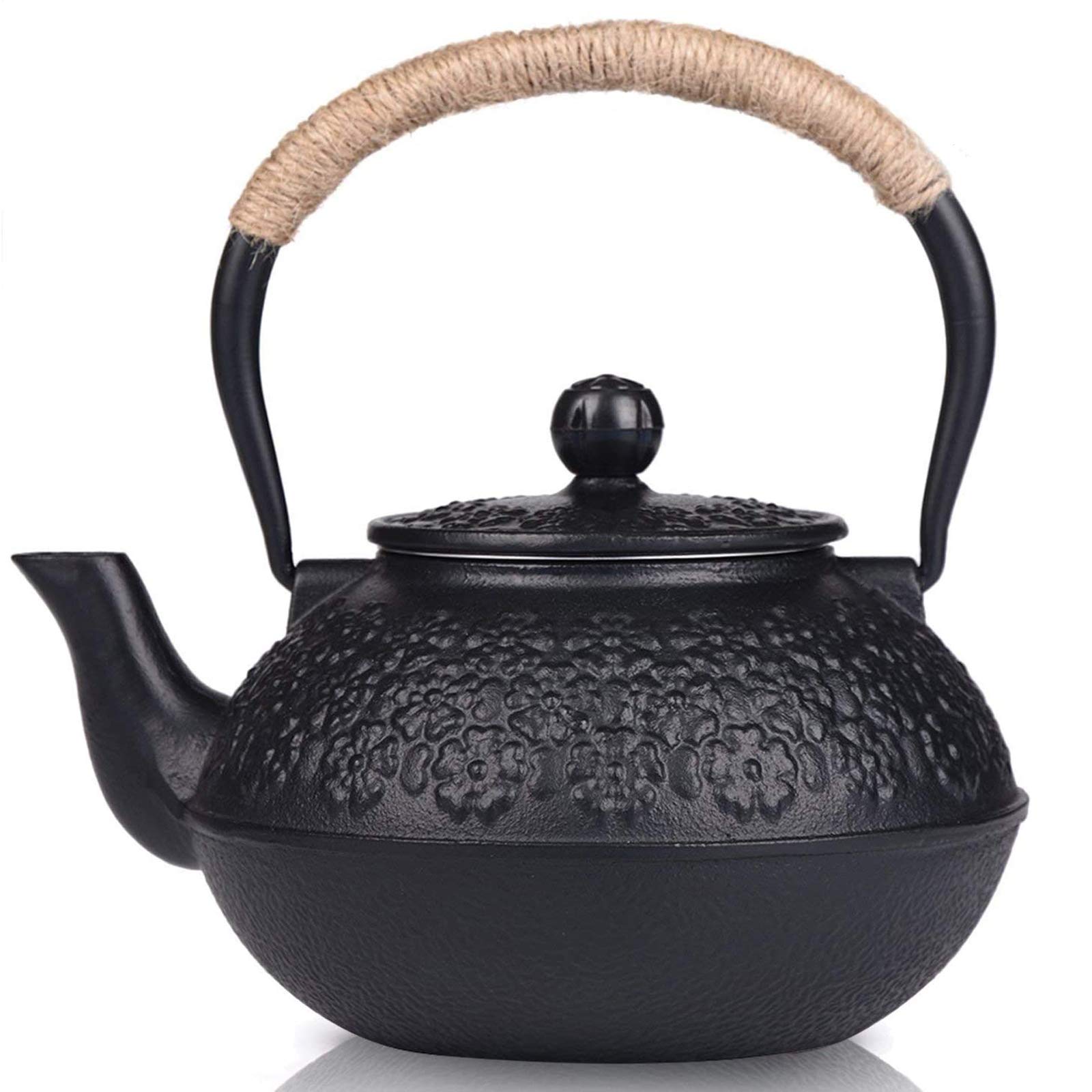
I reached for the Sotya when I needed a larger pot—its roomy interior, enameled finish, and comfortable handle make it my pick for serving several people.
Why I picked it: It offers the largest capacity in this group, a removable stainless infuser, and a twine-wrapped handle for grip comfort.
Best for: I recommend this for small gatherings or anyone who drinks several cups throughout the day.
A mid-range choice for ample capacity and strong presentation.
Pros
- Large 40 oz capacity
- Enameled interior resists rust
- Comfortable twine-wrapped handle
- Attractive cherry blossom design
Cons
- Heavy when full
- May be oversized for single users
- Recommended small flame only
My take
I like the Sotya for times when I need multiple servings—the infuser holds a generous amount of loose leaf and removes easily for cleaning.
Heat retention is excellent; the pot keeps tea warm longer than thinner alternatives and the enamel has held up well with routine rinsing and drying.
The twine-wrapped handle genuinely improves grip, which matters when you’re moving a heavy, full pot.
I treat this as a workhorse teapot for company rather than a daily single-cup vessel because of its size and weight.
4. Ten Cast Iron Teapot — Small – Best Compact
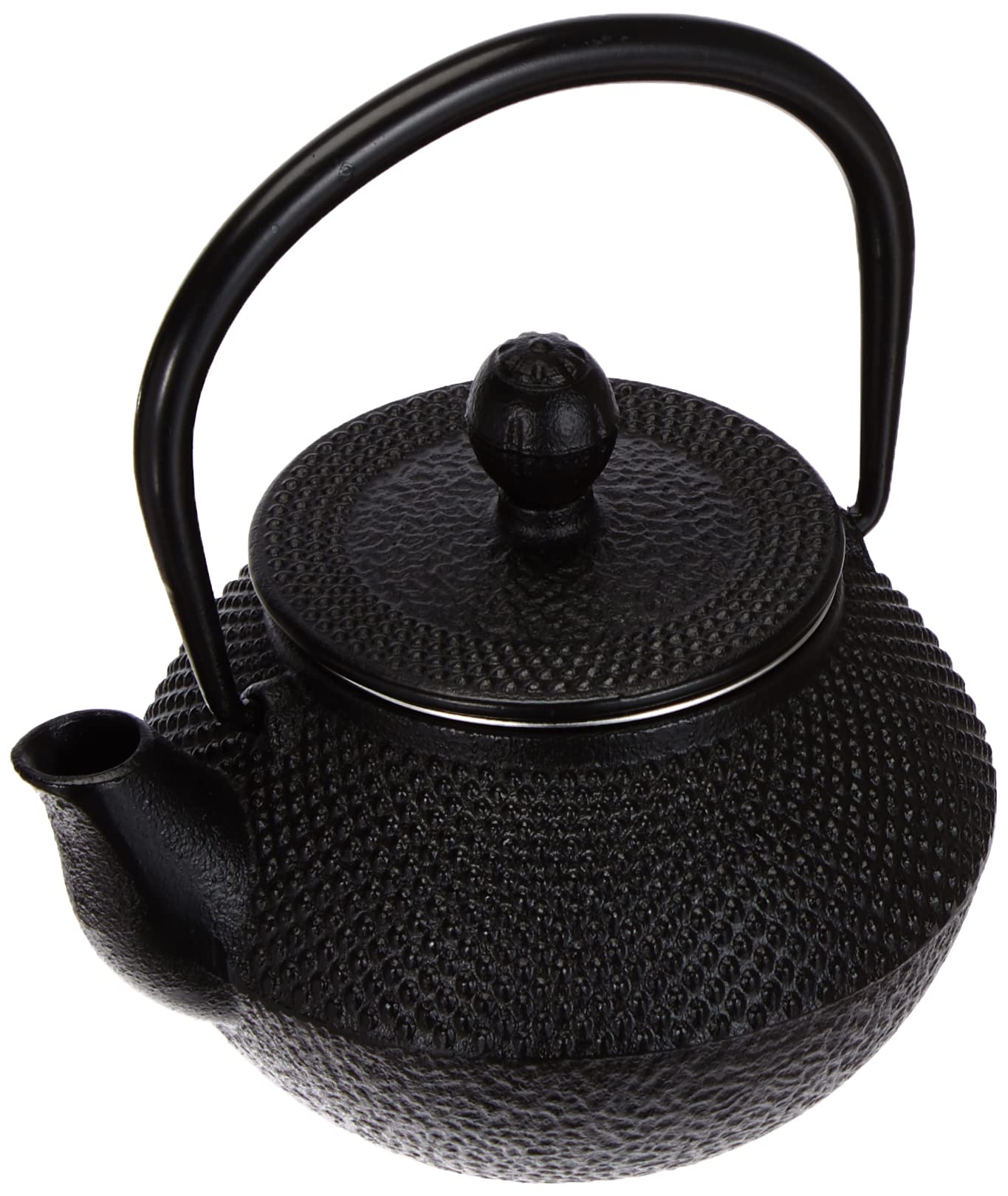
I keep the Ten teapot for single-serve moments and for adding a little humidity to a room—its tiny footprint and enamel interior make it both decorative and practical.
Why I picked it: I valued its compact size, removable stainless filter, and elegant look for small servings.
Best for: I recommend this for solo tea drinkers, small servings, or use as a stovetop humidifier.
A budget-friendly small teapot.
Pros
- Very compact and cute
- Enameled interior
- Removable stainless filter
- Great for one or two small cups
Cons
- Very small capacity
- Limited for larger mugs
- Not ideal for groups
My take
I bought the Ten when I wanted a tiny teapot that still offers enamel protection; it’s perfect for one or two small cups.
I also used it without a lid briefly on a stovetop to add humidity to a room and it worked well when monitored.
The removable stainless filter cleans easily, and the teapot’s elegant look earns compliments on my counter despite its modest size.
If you need more than a couple of cups at a time, I suggest choosing a larger model, but for solo tea rituals this is delightful.
5. Juvale Japanese Cast Iron Teapot – Best Design Set
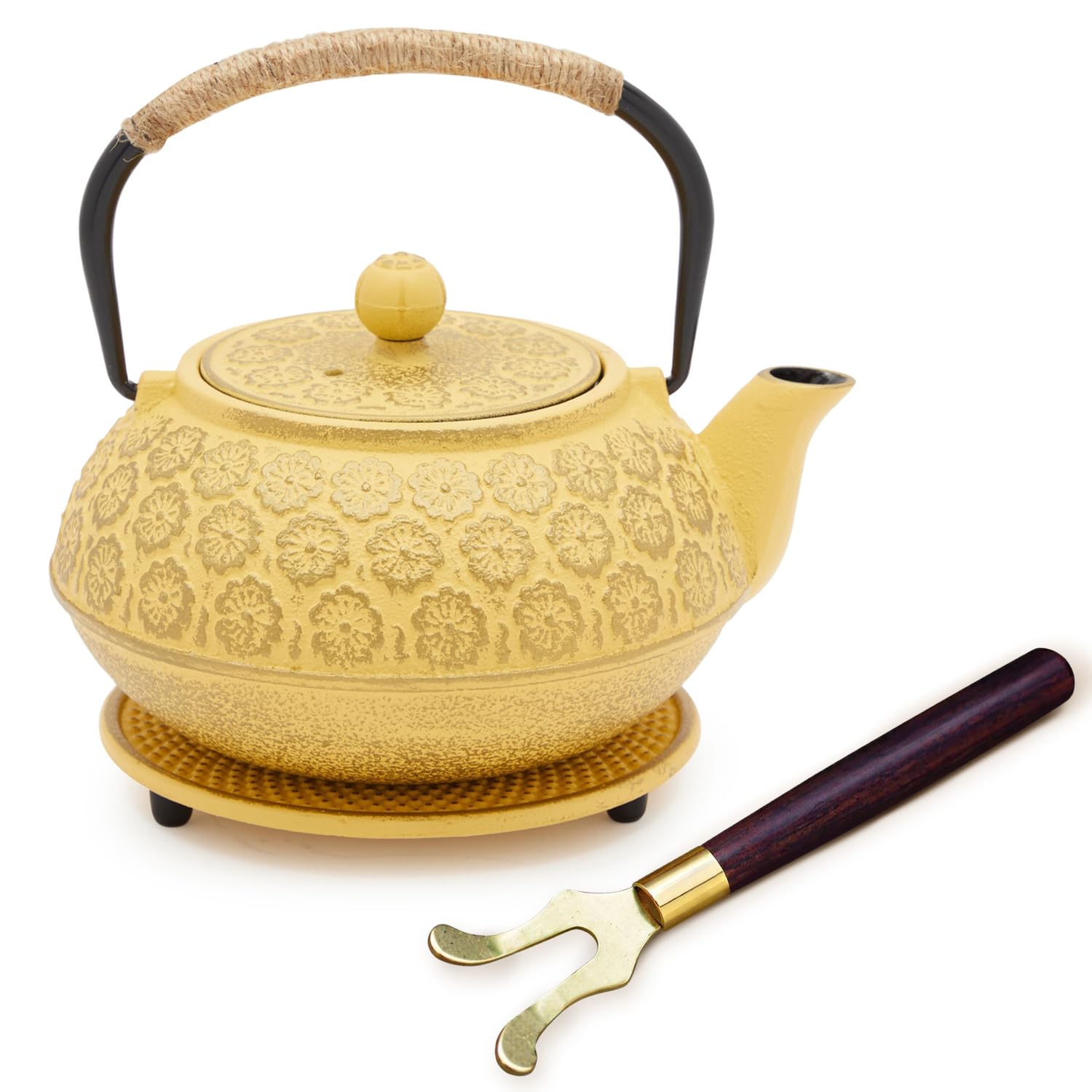
I enjoyed the Juvale set for its coordinated presentation—the teapot, stainless infuser, and floral trivet make serving look intentional and polished.
Why I picked it: It combines solid heat retention with a useful trivet and a cheerful floral finish that suits tabletop service.
Best for: I reach for this when I want a pretty teapot set for serving guests without using the stovetop.
A nicely presented mid-range option.
Pros
- Included floral trivet
- Stainless-steel infuser
- Good heat retention
- Elegant finish
Cons
- Not designed for stovetop boiling
- Heavier than ceramic teapots
- Requires gentle care (no soap)
My take
I treat the Juvale as a tabletop teapot and pour pre-heated water into it rather than placing it on a burner; that approach keeps the enamel in great shape.
The floral trivet is a thoughtful addition that protects surfaces and looks lovely during service.
It keeps tea warm for a generous amount of time and the infuser captures loose leaves effectively for a clean pour.
Cleaning is straightforward—warm water and drying are all I use to preserve the finish and interior enamel.
6. IBILI Nara Cast Iron Teapot – Best Premium
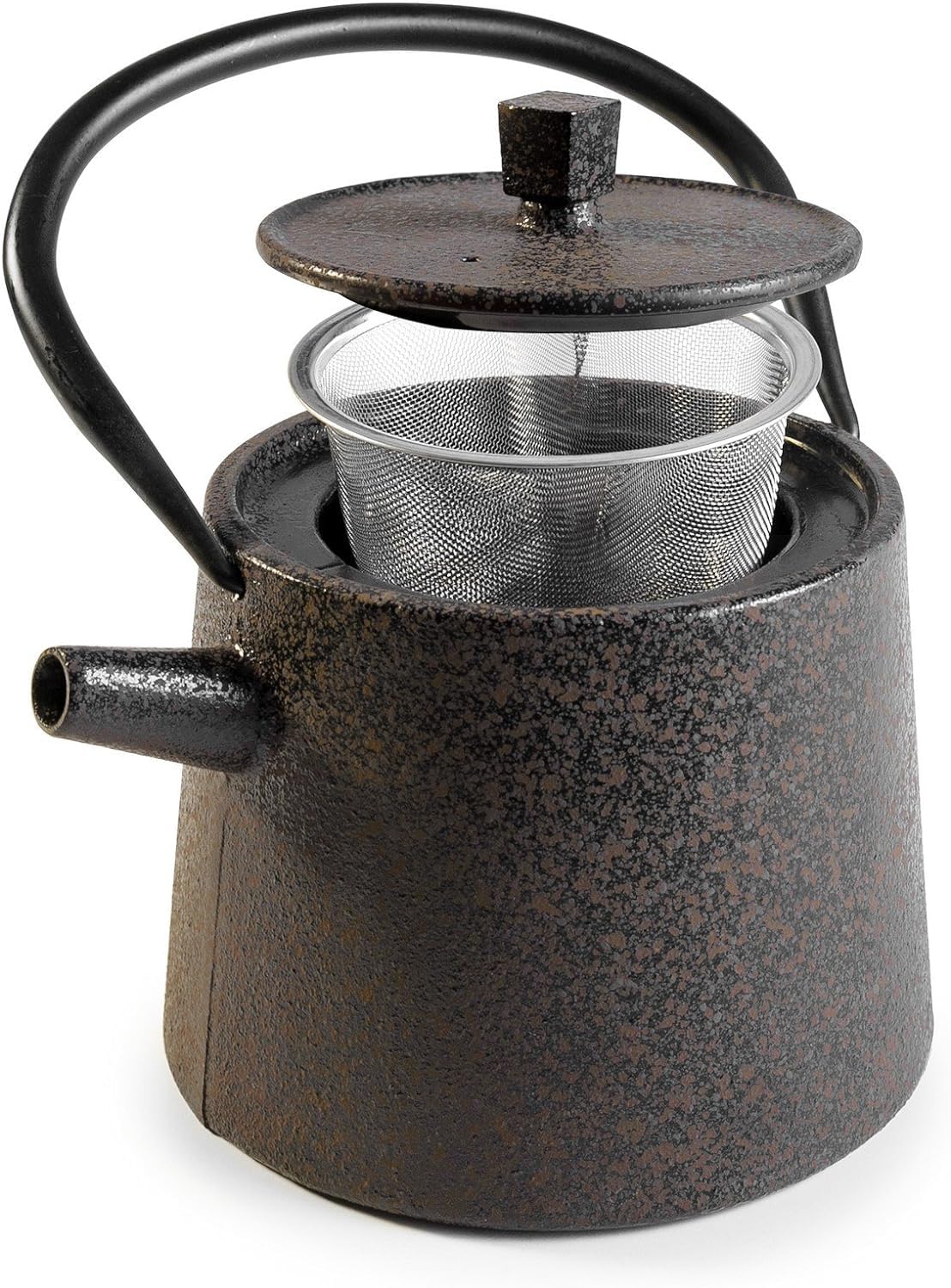
I consider the IBILI Nara the premium option in this group: made in Spain, with a textured wave finish, robust build, and reliable enamel interior for daily use.
Why I picked it: Its craftsmanship, stovetop and induction compatibility, and strong heat retention set it apart.
Best for: I recommend this for anyone who wants a durable, higher-end cast iron teapot for frequent use.
A more expensive option that feels like a long-term investment.
Pros
- Made in Spain craftsmanship
- Large 40 oz capacity
- Stovetop and induction compatible
- Rust-resistant enameled interior
Cons
- Heavier than many alternatives
- Slightly smaller than some expectations
- Requires careful drying after use
My take
I noticed immediate quality differences with the IBILI: the finish is refined and the wave pattern gives it a premium look on my counter.
Heat distribution and retention are excellent; I routinely use it on low heat and it produces flavorful, evenly steeped tea.
The brand’s care instructions matter—after rinsing I dry it thoroughly to protect the enamel, and I avoid dish soap to preserve the coating.
I also appreciate the subtle iron enrichment the water gets from cast iron, which I find smooths the mouthfeel of some teas.
How I Choose a Cast Iron Teapot
What I look for when buying a cast iron teapot
I prioritize an enameled interior because it prevents rust and keeps tea flavors clean.
I prefer a removable stainless-steel infuser so I can adjust leaf quantity and clean easily.
I check whether the maker explicitly allows stovetop use and whether they recommend low or moderate heat.
- Capacity: I match pot size to how many cups I usually serve.
- Interior finish: enameled for low-maintenance brewing.
- Infuser quality: fine mesh for delicate teas, larger holes for big-leaf blends.
- Weight: heavier pots retain heat better but can be cumbersome when full.
- Care: avoid dish soap and dry the pot after rinsing to prevent rust.
Frequently Asked Questions
Can I boil water directly in a cast iron teapot?
I treat this case-by-case: if the manufacturer states stovetop compatibility I use a low flame and never dry-burn. If the listing advises against stovetop use I pour pre-heated water from a kettle instead.
How do I prevent rust in a cast iron teapot?
I rinse and dry my teapots after each use, avoid dish soap on the enamel interior, and store them with the lid off or slightly ajar so moisture can escape.
Is the included infuser always good enough?
I find included infusers work for most loose-leaf blends, but I carry a finer stainless infuser for delicate greens and very small leaves.
Final Take
I chose these six teapots to cover a range of needs: compact single-serve pots, large-capacity brewers, stovetop-capable models, and a premium option.
If I want stovetop brewing I reach for the IBILI or the diamond TOPTIER; for daily tabletop service I prefer the Juvale set or the compact Ten.
No matter which you pick, I recommend following the care tips above so your cast iron teapot stays rust-free and continues to make great tea.
