
I tested a range of ceramic birdbaths — from tabletop bowls to heavy pedestal stoneware — and picked the ones that blend durability, bird access, and garden style.
I spent time placing, filling, and monitoring several ceramic birdbaths in different spots around my yard so I could compare stability, finish, bird appeal, and winter care. Ceramic has a unique look that elevates garden spaces, but it also demands the right choice depending on how I plan to use it.
Below are four ceramic birdbaths I used and recommend for specific needs: a decorative turquoise pedestal, a small tabletop bowl, an engineered stoneware option with a locking top, and a heavy, frost-resistant pedestal. I focused on how easy each was to clean, how birds reacted, and how the pieces held up outdoors.
If you want an eye-catching accent, go decorative; if you prioritize durability and spill resistance, favor the stoneware locking top or the heavy mineral-glazed pedestal.
1. Alpine Corporation Turquoise Ceramic Pedestal Birdbath – Best Charming Accent
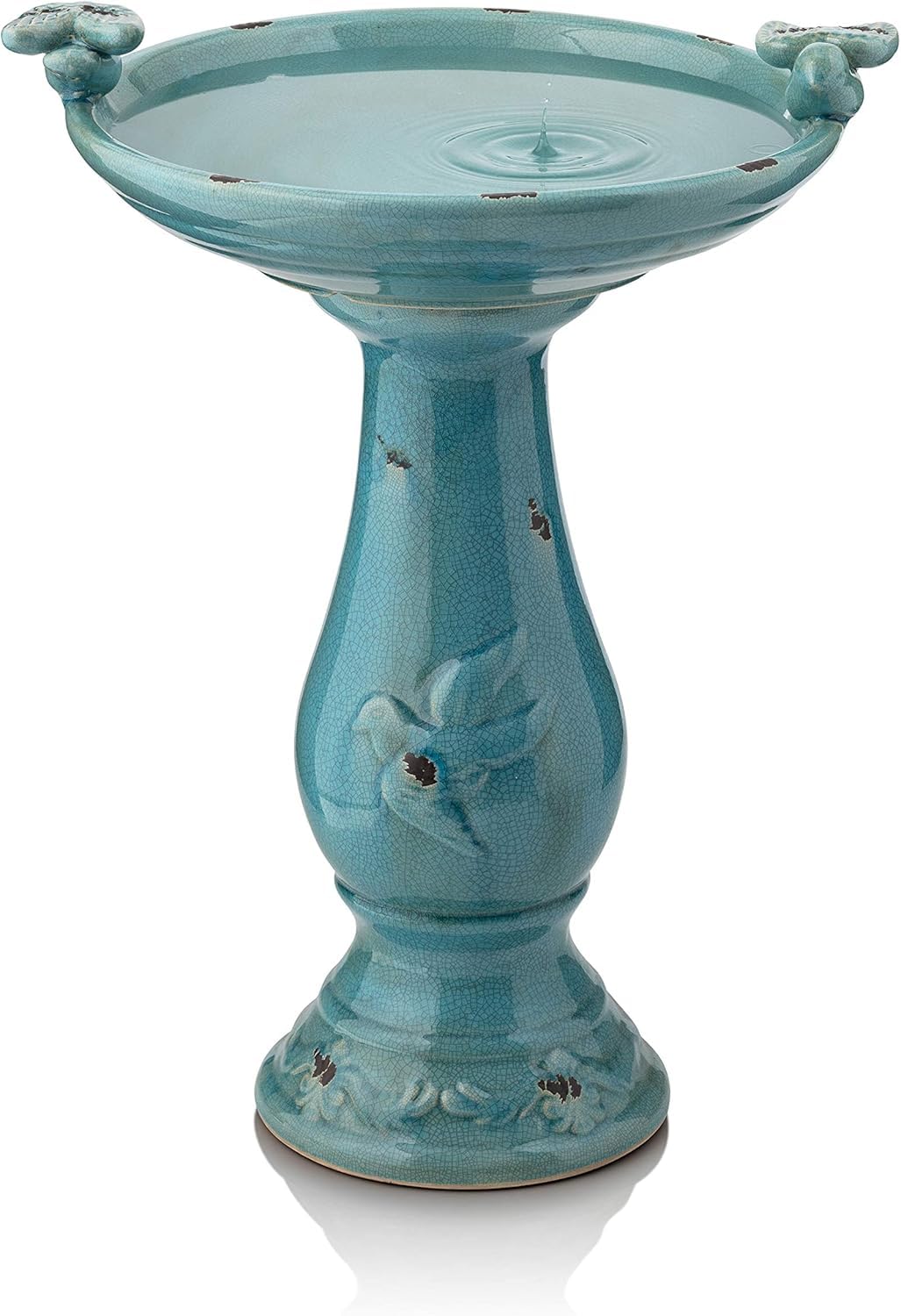
I brought this turquoise pedestal out for looks and quick bird visits. The antique finish and dual bird figurines make it a standout decorative piece.
Why I picked it: Striking antique style and a wide shallow bowl that attracts multiple small birds.
Best for: Garden spaces where style matters as much as function.
Moderately priced for a decorative ceramic pedestal.
Pros
- Vibrant antique turquoise finish
- Wide, shallow bowl for multiple birds
- Included bird figurines add charm
- Pedestal offers decent stability
Cons
- Ceramic can chip in freezing climates
- Feels lighter than expected
- Finish requires gentle cleaning
My take
This Alpine pedestal instantly became a focal point in my flower bed. The weathered turquoise glaze and the two little bird figurines give it personality — guests and I noticed it immediately.
Birds took to the wide, shallow basin quickly; the bowl's shape lets several small birds perch and bathe at once. I liked that it balanced aesthetics and function for casual birdwatching.
Because it's ceramic, I treated it as decorative but usable. I avoided harsh cleaners and wiped the basin regularly. In colder months I empty and store it indoors; I found that helps prevent freeze-related chipping or cracking.
The pedestal feels stable for normal backyard use, but it can feel lighter than heavy stone pieces during storms or high winds. If you live where freezes are common, plan to bring it inside or place it under cover during winter.
2. Topadorn Ceramic Birdbath Bowl – Best Tabletop Bowl
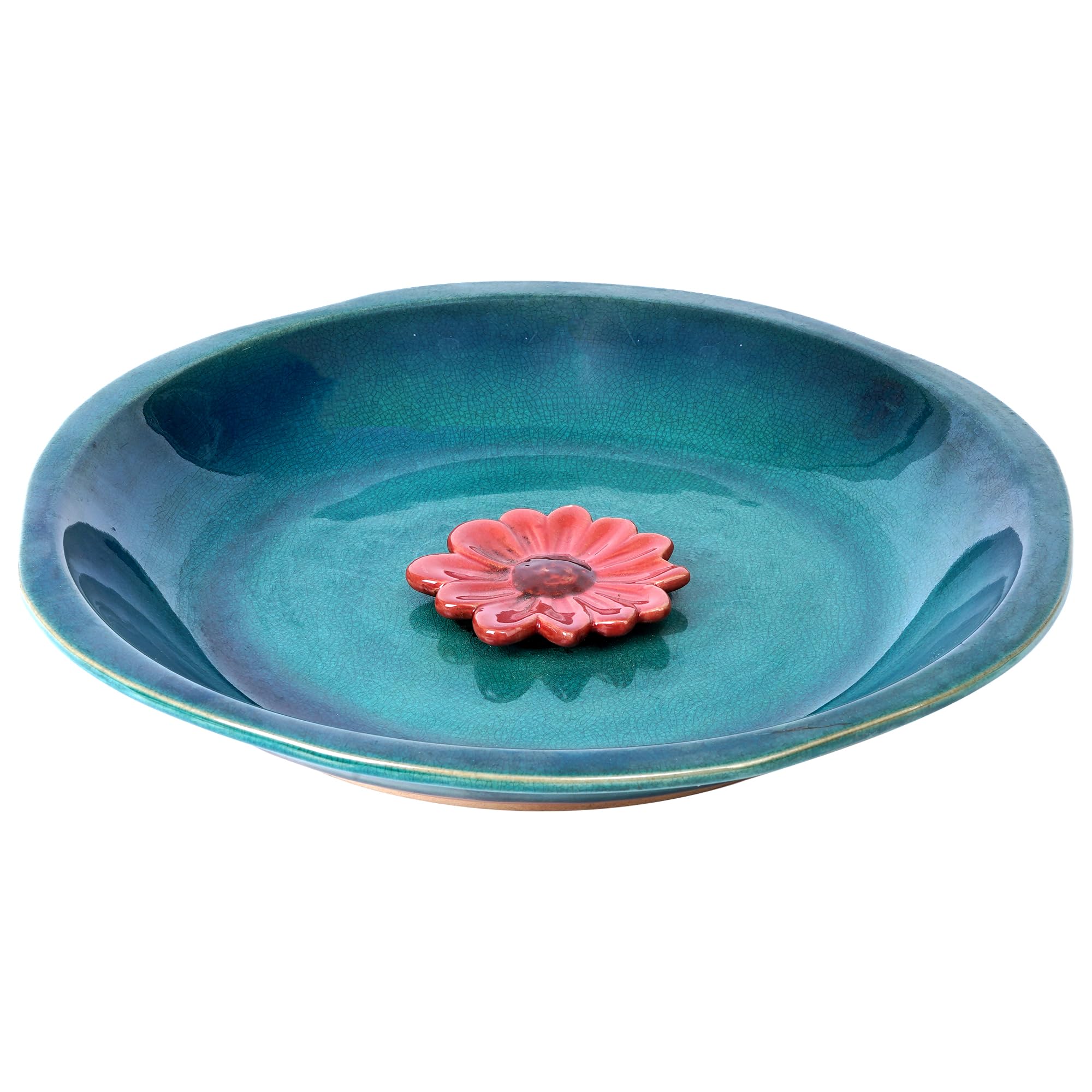
I used this small ceramic bowl on a stump and a tabletop; its flat bottom and central flower perch make it versatile for feeders or baths.
Why I picked it: Compact, multi-function design with a raised flower perch and flat base.
Best for: Patios, tables, or stump-mounted setups where a low pool is preferred.
An affordable, no-frills ceramic top-up option.
Pros
- Flat bottom for tabletop placement
- Raised flower perch for birds
- Glazed finish cleans easily
- Works as feeder or bath
Cons
- Smaller capacity than pedestals
- Some glaze imperfections possible
My take
I appreciated how simple this bowl is to situate — I set one on a cut stump and another on a low table. The flat bottom means no pedestal is required, which gave me placement flexibility.
The little red flower in the center doubles as a perch and gives timid birds a place to balance. I also used the bowl as a feeder at times, and switching between food and water was straightforward.
Cleaning was easy with a quick scrub; the glaze held up to weekly maintenance. Expect modest capacity, though — it’s perfect for close-up patios and small yards rather than as a main garden water source.
I noticed some units have slightly uneven paint or glaze, but that didn't affect functionality. For a light, versatile option that won’t dominate a small space, this bowl is a practical pick.
3. Birds Choice Ohio Stoneware Bird Bath – Best for Stability
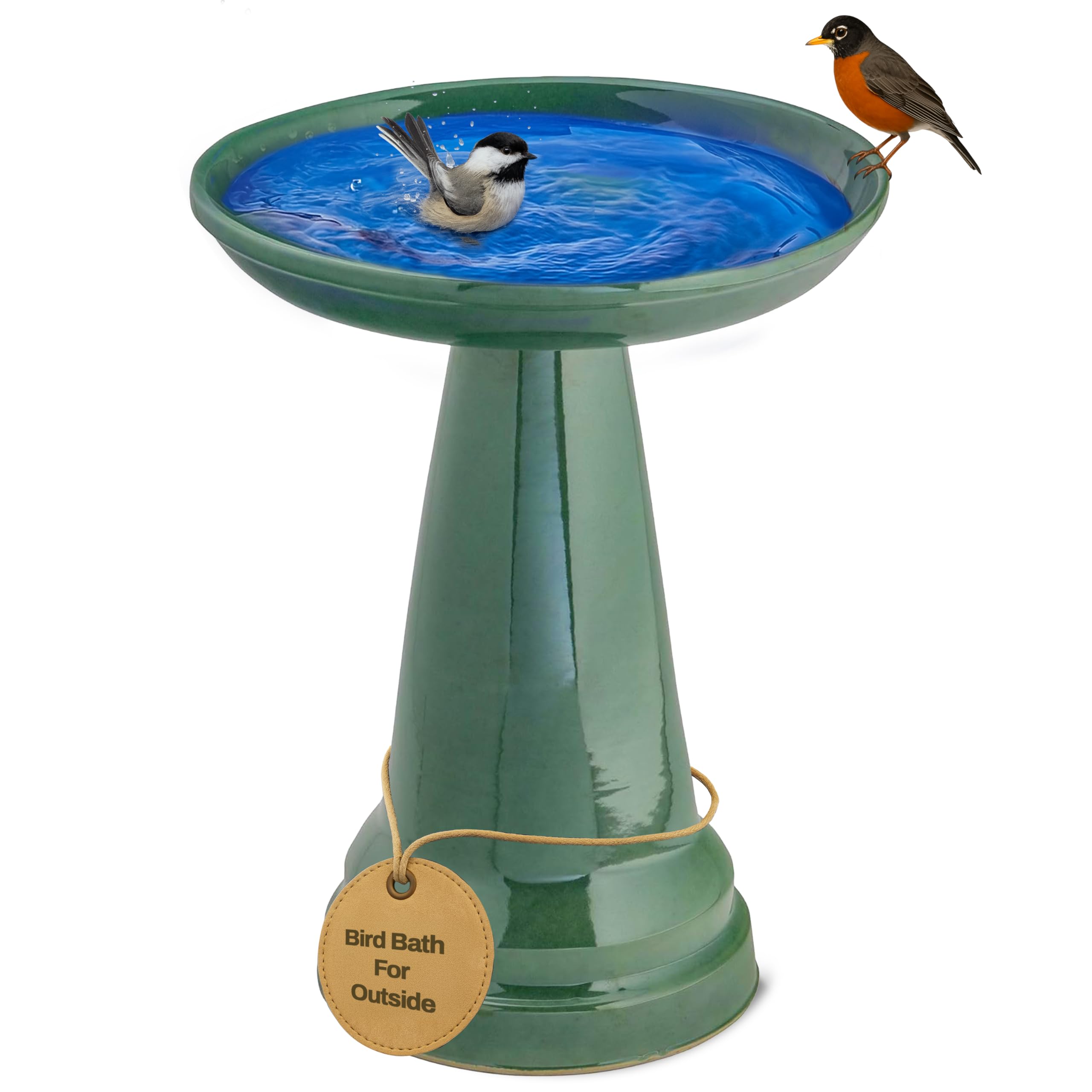
I relied on this stoneware pedestal for a secure, spill-resistant birdbath with a locked bowl and a robust, kiln-fired ceramic construction.
Why I picked it: Locking bowl and thick stoneware construction for long-term outdoor use.
Best for: Owners who need a sturdy, weather-resistant pedestal that resists tipping.
A mid- to higher-range investment for durability.
Pros
- Locking top prevents spills
- Thick, kiln-fired stoneware
- Glazed finish resists weather
- Very stable pedestal base
Cons
- Bowl alignment requires care when removing
- Heavier to move once installed
My take
This Ohio Stoneware piece stood out for its build quality. The bowl locks into the base, which stopped spills from wind and curious wildlife in my yard — that locking feature truly reduced cleanup.
The kiln-fired clay feels substantially thicker than many ceramic options I tried. That mass gives it stability; I didn't feel the need to anchor it to a paver, though I left it on a flat, firm spot.
Glazing made maintenance easy — I wiped it down and the finish shrugged off grime. Removing the bowl requires a little twist-and-align motion, so I marked the underside for quicker alignment when refilling.
Overall it felt like a long-term piece I could leave outside through seasons, with less worry about tipping or light-impact damage compared with thinner ceramic baths.
4. Sunnydaze Galaxy Blue Ceramic Bird Bath – Best for Weather Resistance
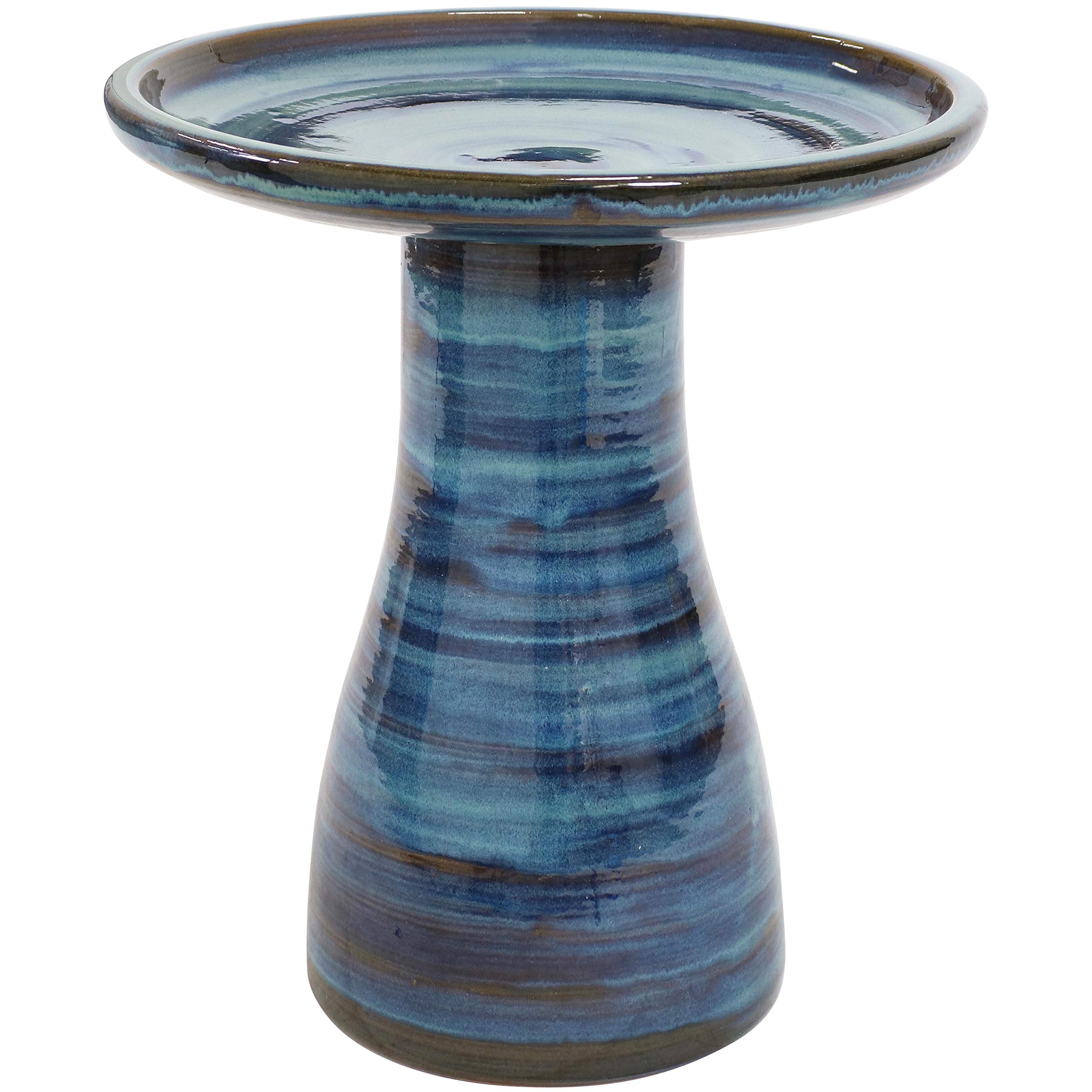
I used the Sunnydaze pedestal where weather is extreme; its mineral glaze, heavy weight, and frost-resistant claims make it a reliable outdoor feature.
Why I picked it: Heavy, mineral-glazed ceramic with UV and frost resistance for exposed yards.
Best for: Open yards subject to sun, wind, and occasional frost.
A higher-end choice for a durable, heavy pedestal.
Pros
- Heavy, sturdy mineral-glazed construction
- Frost- and UV-resistant finish
- Large shallow bowl for many birds
- Simple two-piece twist assembly
Cons
- Very heavy to reposition
- Some units reported bowl wobble without shimming
My take
I placed this Sunnydaze birdbath on an exposed patio where wind is a regular factor; its weight and wide base make it feel anchored even without additional support.
The mineral glaze resisted algae buildup and stayed easy to clean — I used mild dish soap and a soft sponge during weekend maintenance. The shallow bowl is the correct depth for bathing and preening.
Assembly was straightforward: align the grooves and twist to lock. A few installations showed minor wobble between bowl and base, so I kept thin rubber shims on hand to eliminate play when needed.
If you want a showpiece that can handle sun and occasional frost, this one gave me the confidence to leave it out longer than the thinner ceramic options I tried.
How I Choose a Ceramic Birdbath
Material and durability
I prioritize thicker, kiln-fired stoneware or heavily glazed ceramic if I plan to leave a birdbath outdoors year-round. Thinner porcelain pieces look great but can chip or crack if exposed to repeated freezing and thawing.
If you expect high winds or curious wildlife, opt for heavier bases or locking bowls to reduce tipping and spills.
- Kiln-fired stoneware = better resistance to impacts and weather
- Thinner ceramic = more decorative, needs winter storage
- Look for locking tops if pets or strong winds are common
Bowl depth and bird access
I favor wide, shallow bowls (around 1 to 2 inches of usable water depth) because they let small birds bathe safely while accommodating larger species that like to splash.
For tabletop or ground-level placements, choose a bowl with a flat base so you can set it on stumps, tables, or directly on the soil.
- Shallow depth is safer for bathing
- Wide diameter allows multiple birds
- Raised perches help timid birds balance
Maintenance and cleaning
I clean ceramic baths regularly with mild dish soap and a soft brush to prevent algae. Avoid bleach and harsh chemicals that can damage glazes.
Emptying and storing lightweight ceramic pieces during freeze periods prolongs their life; heavier frost-rated pedestals can often stay out longer.
- Weekly rinse and monthly deeper clean
- Avoid bleach; use mild soap and a sponge
- Store vulnerable ceramics during hard freezes
Placement and extras
I place birdbaths near low shrubs for quick cover and within sightlines so I can enjoy visiting birds. Avoid placing them directly under dense trees where droppings create extra cleaning.
Small rocks or sticks in the basin give fledglings safe footing. A solar bubbler can increase attraction by keeping water moving.
- Near shrubs for bird safety
- Add perches or rocks for small birds
- Consider a small fountain pump to deter mosquitoes
Frequently Asked Questions
Will a ceramic birdbath crack in freezing weather?
I treat most ceramic birdbaths as vulnerable to freeze damage. If the piece isn’t specifically frost-rated, I empty and store it indoors during prolonged freezes. Heavier, kiln-fired stoneware with a frost-resistant glaze fares better left outside in milder freezes.
How deep should a birdbath be?
From my experience, shallow water — roughly one to two inches where birds stand — is ideal. A wide, shallow bowl gives birds room to bathe and preen without getting overwhelmed by depth.
Can I use a birdbath as a feeder too?
Yes. I used the Topadorn bowl as both a water source and a temporary feeder. Keep food and water separated when possible and clean more frequently if using the bowl for seed to avoid spoilage.
Final Take
I choose based on how I plan to use the piece: decorative pedestals like the Alpine bring immediate charm, tabletop bowls like the Topadorn add flexible placement, and heavier, glazed pieces from Birds Choice or Sunnydaze deliver long-term stability and weather resistance.
If you want a year-round, low-maintenance solution, go with a kiln-fired, locked, or frost-rated pedestal. For a small patio or quick decorative update, a glazed tabletop bowl is a simple, affordable way to invite birds closer.
