
I tested six chalk paints across furniture, cabinets, and craft projects. These picks balance coverage, finish, and ease of use so you can pick the right product for the job.
I set out to find chalk paints that actually make refinishing furniture faster and less fussy. I painted dressers, cabinets, side tables, and small craft pieces to judge coverage, finish, dry time, and how forgiving each formula is with minimal prep.
Across these six paints I focused on three practical things: how many coats each needs, whether a separate primer or topcoat is required, and which sizes/colors suit specific projects. Below I break down where each paint shines and when I reach for it.
If you want an all-in-one solution for large furniture I lean toward pint-sized formulas with built-in primer and topcoat; for small craft pieces and sampling, the smaller bottles and multi-color sets are more convenient.
1. Country Chic All-in-One Chalk Paint — Sage Advice (Pint) – Best All-in-One
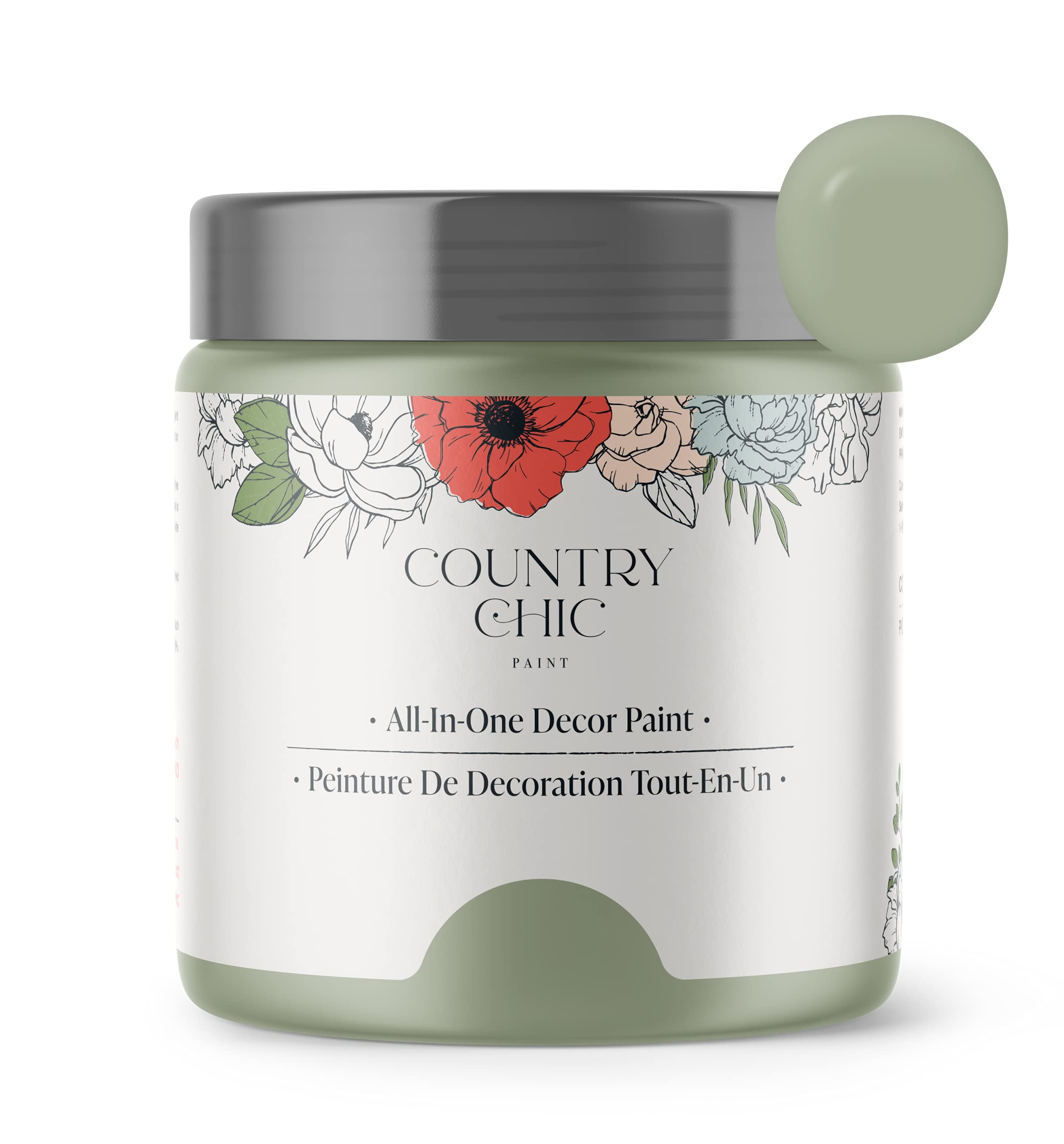
A true all-in-one chalk paint with built-in primer and top coat; quick-drying, low-odor, and easy to distress for a matte, furniture-ready finish.
Why I picked it: Complete built-in primer and top coat saves time on larger furniture pieces.
Best for: I reach for this when I’m doing cabinets or full furniture makeovers.
Mid-range pint that stretches well for full projects.
Pros
- Built-in primer and top coat
- Fast drying—about 30 minutes
- Low odor, eco-friendly formula
- Self-leveling for smooth finish
Cons
- One pint needed for larger pieces
- Color can look different in varied light
My take
This is my go-to when I want to skip primer and sealer steps. The Sage Advice shade went on smoothly over a lightly scuffed dresser with only minimal sanding, and the built-in finish left a cohesive matte surface that resisted brush marks.
Coverage was strong; I often got away with a single thicker coat on primed or previously painted wood, though I used two thin coats on larger cabinet doors for a perfectly even look. Distressing was effortless because the matte dries to a stable but workable surface.
Cleanup and odor were minimal, which let me work indoors with less hassle. If you want a time-saving, shop-friendly all-in-one that still produces a high-end matte finish, this is the paint I use first.
2. Country Chic All-in-One Chalk Paint — Simplicity (4 oz) – Best Small Container
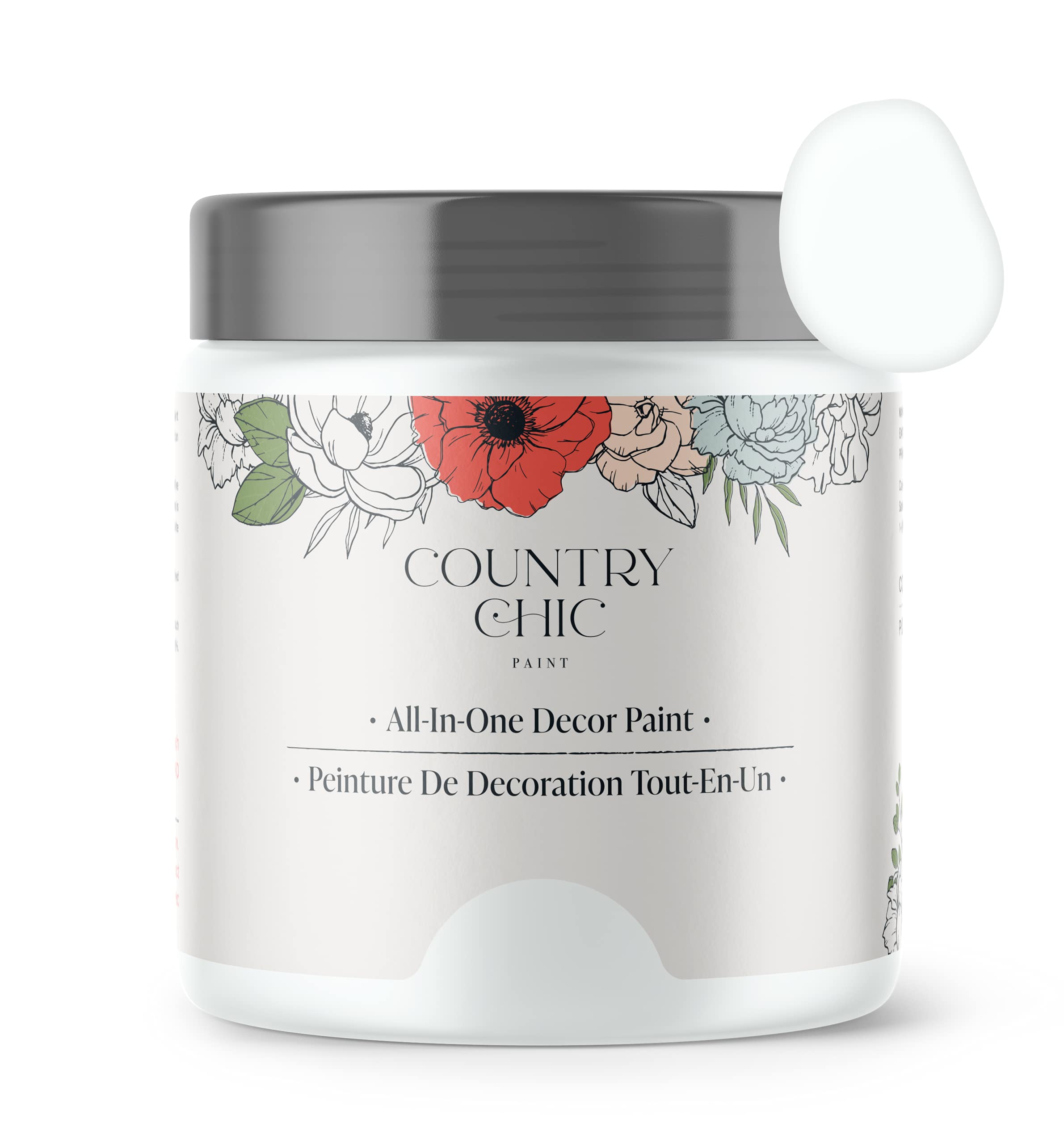
The same all-in-one formula in a small size that’s perfect for touch-ups, sample testing, and small decor projects.
Why I picked it: Compact size for sampling colors and small DIY pieces.
Best for: I use this for sampling, touch-ups, craft accents, and small furniture parts.
Small-format, budget-friendly for testing colors.
Pros
- All-in-one convenience in a small jar
- Great for touch-ups and samples
- Low odor, eco-friendly
- Dries quickly to a chalky matte
Cons
- Not cost-efficient for big projects
- Limited quantity for large furniture
My take
I keep a few of these 4 oz jars on hand for color testing and quick touch-ups. The Simplicity white matched well to my swatches and applied exactly like the pint formula—smooth and self-leveling.
For small craft pieces and hardware or to trial a color on a corner of a dresser, this size is ideal. It saves me from buying a full pint and avoids wasted paint when I’m experimenting.
If you’re doing a full cabinet or dresser, plan to move up to a larger container, but for sampling and accents this little jar is exactly what I reach for.
3. FolkArt Home Décor Chalk Finish Acrylic Paint — Milk Jug (8 oz) – Best for Crafters
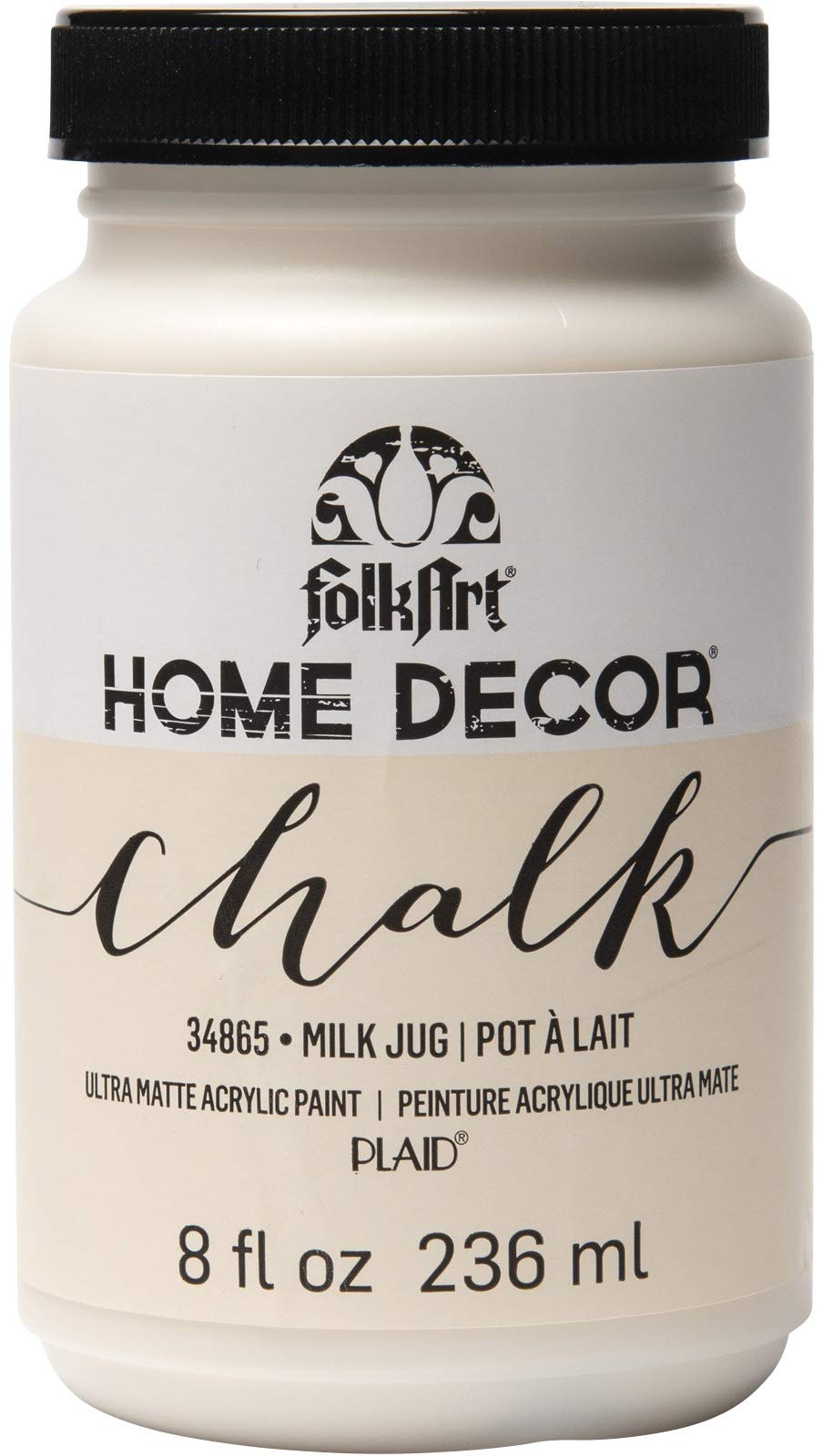
A highly pigmented, ultra-matte acrylic chalk paint that handles crafts, glass, metal, and furniture with minimal prep.
Why I picked it: Creamy, pigmented formula that shines on multi-surface craft work.
Best for: I use it for small furniture, glass projects, and mixed-media crafts.
Affordable 8 oz size built for crafting and small projects.
Pros
- Highly pigmented, creamy consistency
- Very versatile across surfaces
- Fast drying, ultra-matte finish
- Made in the USA
Cons
- May need a topcoat for heavy use
- Color names can be misleading
My take
This FolkArt formula is where I turn for craft-level precision and color payoff. Milk Jug produced a true ultra-matte finish on a side table and blended well when I layered colors to age the piece.
I appreciated the ease of distressing and sanding for a weathered look; the paint sands and blends without gummy edges. It adheres well to wood, laminate, and even metal with only light surface cleaning.
For high-traffic tabletops I still add a protective topcoat or wax, but for decorative pieces and accents this paint gives me the color depth and finish I want without fuss.
4. Dixie Belle Chalk Finish Furniture Paint — Caviar (32 oz) – Best Deep Black
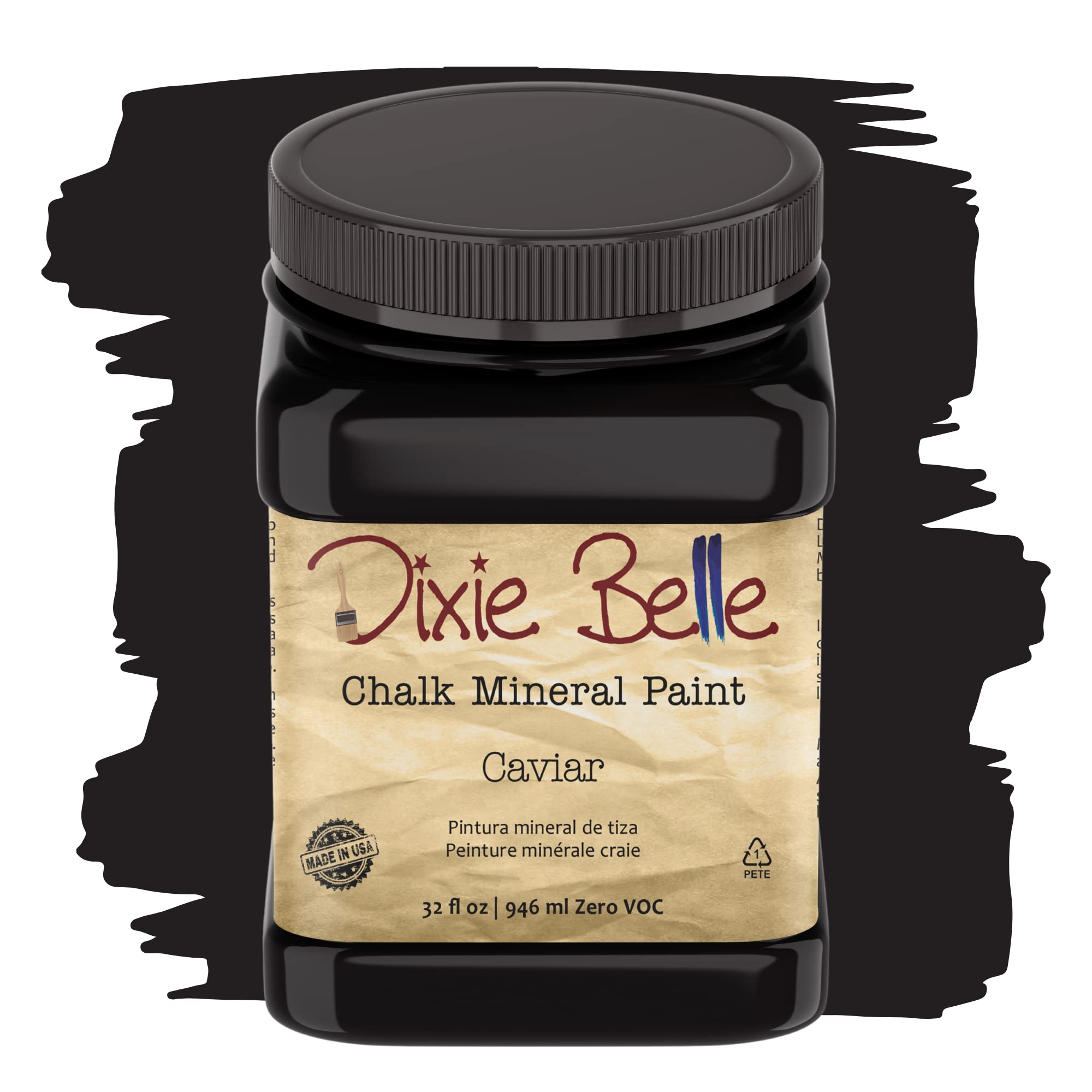
A rich, matte black chalk mineral paint that covers a lot of ground; formulated for many surfaces with strong coverage and easy distressing.
Why I picked it: Exceptional matte black coverage and versatility on many surfaces.
Best for: I pick this for bold, elegant pieces and large projects needing deep black.
Larger container suited for multiple or larger projects.
Pros
- Deep, true matte black
- Excellent coverage—often 1–2 coats
- Works on many surfaces
- No sanding usually required
Cons
- Topcoat sold separately for high-traffic areas
- Heavier jars for storage
My take
Caviar delivers a saturated, sophisticated matte that elevated a console table into a feature piece. The pigment lays down densely, so I often only needed one to two coats—especially on darker underlayers.
I tested it on wood and a few plastic accents; adhesion was excellent with just a light clean beforehand. The finish is easy to distress cleanly and responds well to sanding without flaking.
Because it’s a true mineral chalk paint, I typically follow with a protective topcoat—Dixie Belle’s topcoats work well—if the piece will see heavy use, but for decorative furniture the matte finish alone looks refined and durable.
5. FolkArt Home Décor Chalk Finish Paint Set (9 x 2 oz) – Best Color Variety Set
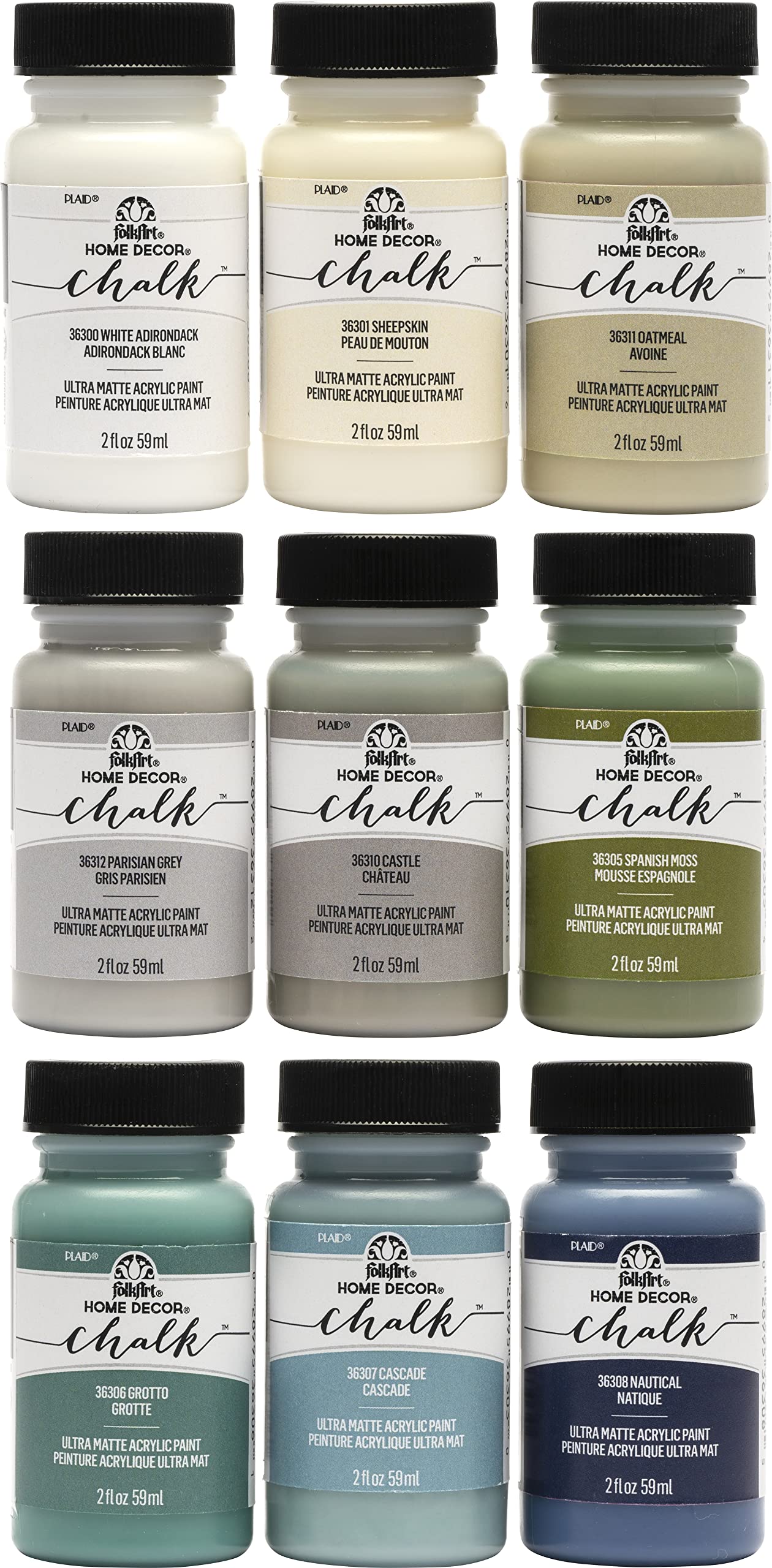
A curated set of neutral tones in small bottles—perfect for layering, sampling, and pulling coordinated palettes for rustic or farmhouse projects.
Why I picked it: Nine coordinated neutrals let me experiment with layered looks without waste.
Best for: I use this set for stenciling, small decor, and when building a neutral palette.
Great value for sampling multiple colors and techniques.
Pros
- Nine useful neutral shades
- Great for layering and distressing
- Compact bottles reduce waste
- Easy cleanup with soap and water
Cons
- Small bottles not for large jobs
- Some shades require multiple coats
My take
This set is my first stop when I’m planning a neutral, layered finish. The small bottles mean I can mix, stencil, and layer without committing to full-size cans.
Coverage and consistency are strong for 2 oz bottles; I used several colors on a thrifted frame and got smooth, even coats that sanded and blended nicely. The range covers warm and cool neutrals that play well together.
If you need a single larger quantity of one hue, the set isn’t ideal—but for testing palettes or finishing dozens of small accents, it saves money and prevents wasted paint.
6. Retique It Chalk Furniture Paint — Ivory Tower (16 oz) – Best Eco-Friendly Option
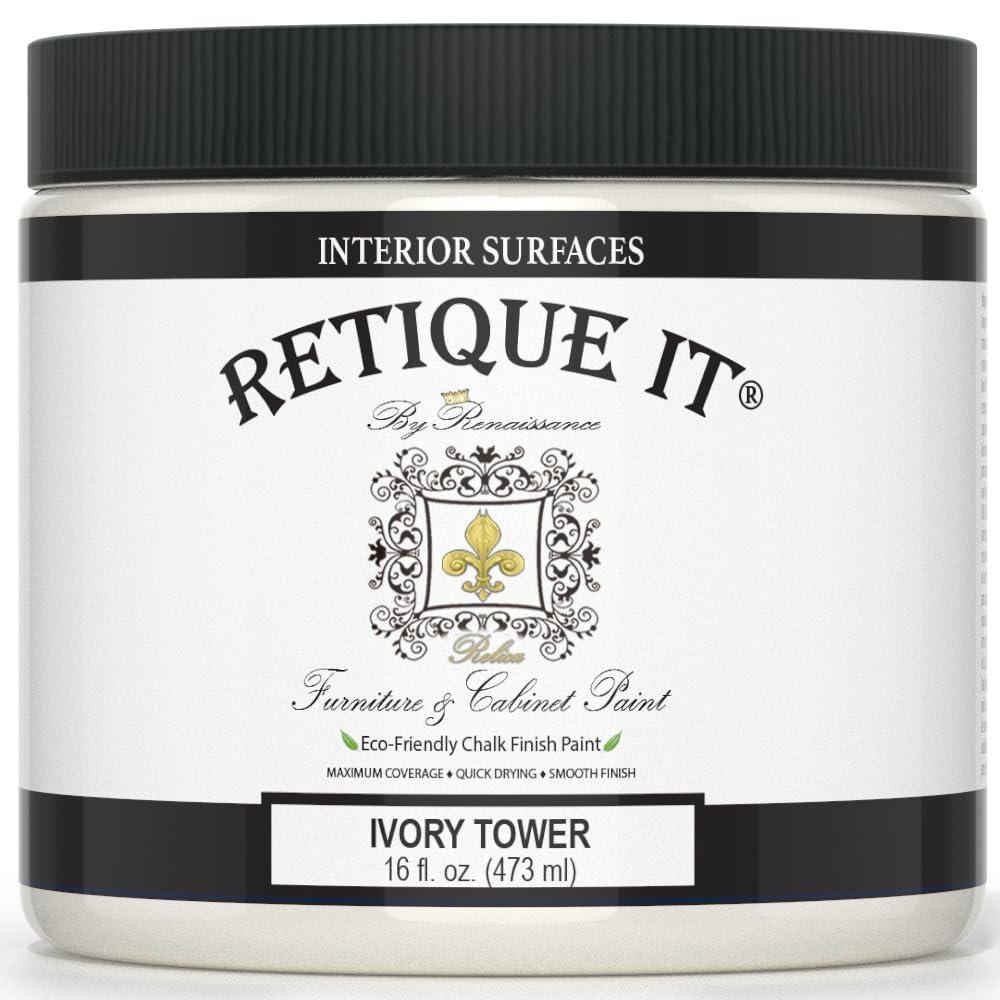
A low-odor, zero-VOC chalk paint with excellent adhesion and a silky matte finish that’s formulated for furniture and both interior and exterior use.
Why I picked it: Zero VOCs and strong coverage make it safe to use indoors.
Best for: I use this when I need low-odor workability and durable finish.
Good mid-size option for eco-conscious furniture projects.
Pros
- Zero VOC formula
- Usually 1–2 coats for full coverage
- Works indoors with little odor
- Durable matte finish
Cons
- Color matching between batches can vary
- May need marine topcoat for exterior use
My take
I appreciate how little smell this paint gives off; I can paint in a living space with minimal disruption. The Ivory Tower shade covered a kitchen cart in two quick coats with a velvety, uniform finish.
Adhesion is excellent across woods and upcycled materials—I rarely had to sand beyond a light scuff. For outdoor use I paired it with a marine-grade topcoat as recommended, but for indoor furniture the finish held up well under normal use.
One caution: when I reordered a matched color later, the second batch required a bit more tweaking to match perfectly. If you're doing a multi-batch project, buy the full quantity you need up front when possible.
How I Choose Chalk Paint
Project Size & Paint Size
I match container size to the job. Small jars and sets are perfect for accents and sampling; pints or larger are smarter for dressers, cabinets, or multiple pieces.
Buying one batch for a single project avoids shade variation later—I've learned this the hard way when matching touch-ups.
- 2–8 oz: samples, crafts, small accents
- Pint/16 oz: single furniture pieces or cabinets
- 32 oz+: multiple pieces or large renovations
Coverage, Coats, and Prep
I look for how many coats a paint needs and whether it includes primer or topcoat. All-in-one formulas can save hours, especially on previously painted surfaces.
Minimal sanding is a real time-saver; if the listing mentions self-leveling and strong adhesion, I usually skimp on heavy sanding and just scuff and clean.
- All-in-one: skip primer and sealer steps
- Two thin coats beat one heavy coat for smooth finish
- Light scuffing + cleaning is often enough
Finish & Protection
A true chalk matte is the goal for most furniture flips, but protection matters. I choose a paint that either has a built-in topcoat or pair it with a compatible wax or topcoat for tabletops and high-use areas.
If the paint recommends a separate topcoat for exterior or high-traffic use, factor that into your plan.
- Matte for furniture style
- Topcoat or wax for durability
- Test distressing before applying universally
Health & Environment
Low odor and low-VOC formulations let me work indoors without clearing a room. For family spaces or long projects I prioritize zero-VOC or certified eco-friendly options.
I still ventilate and wear a mask for long sessions, but low-VOC paints reduce lingering smells and fumes.
- Choose low-VOC for indoor projects
- Certifications help identify safer formulas
- Ventilate even with low-odor paints
Tools & Technique
Brush type matters. I use a good synthetic brush for smooth application and a foam brush or lint-free cloth for wax or topcoat. Rollers speed coverage but can add texture.
For distressing, sand in stages and practice on scrap to get the right age.
- Synthetic bristle brushes for smooth laydown
- Foam brush or cloth for wax/topcoat
- Practice distressing on a sample board
Frequently Asked Questions
Do I always need to sand before using chalk paint?
I usually only do a light scuff and clean. Most modern chalk paints adhere well to previously painted or finished surfaces, so heavy sanding is often unnecessary unless the surface is peeling or very glossy.
Can I use chalk paint outdoors?
I treat exterior projects differently: choose a paint rated for exterior use or apply a marine/UV-resistant topcoat. Several chalk formulas are fine outside if you protect them with the right sealer.
How do I protect a chalk-painted tabletop?
I seal tabletops with a compatible topcoat—polyurethane, satin or gloss topcoats, or a durable furniture wax work depending on the desired look. For heavy use I prefer a clear protective topcoat over wax.
Final Take
I tested these paints across a range of real-world projects and kept returning to the same practical criteria: coverage, finish, and how much finishing work each required.
If you want an all-in-one time-saver for full furniture, the Country Chic pint performed best in my tests. For craft work and sampling, the FolkArt bottles and sets are reliable and economical. When I need a deep, dramatic matte black, Dixie Belle’s Caviar is the one I reach for.
Pick the size and finish that match your project, buy enough to avoid batch mismatches, and plan a protective topcoat if the piece will see heavy use. Happy painting—I can’t wait to see what you create.
