
I tested five cleavers across materials, weight, and price to find the right tool for home cooks, butchers, and campers. Here are the ones I keep reaching for.
I’ve used a lot of cleavers over the years — from thin vegetable cleavers to bone-splitting beasts — and I focused this test on what matters most: steel, edge geometry, balance, and how each knife performs in real tasks like breaking down poultry, chopping bone, and prepping dense vegetables.
In this roundup I’m covering hand-forged high-carbon blades that need a bit of care, stainless workhorses built for low-maintenance use, and a premium forged cleaver that aims for both edge retention and finish. My notes reflect hands-on use in the kitchen and outdoors.
I grouped these cleavers by construction and use. The Dalstrong sits at the premium end with German X50CR steel and a durable G10 handle for long-term performance. Mueller and Juvale are stainless options built for heavy chopping with low maintenance. XYJ and ENOKING use hand-forged high-carbon blanks and come with sheaths for easy carrying — they need routine oiling but reward you with a rugged, long-lasting edge.
1. XYJ Serbian Chef Cleaver 6.7-inch – Best for Camping & Carry
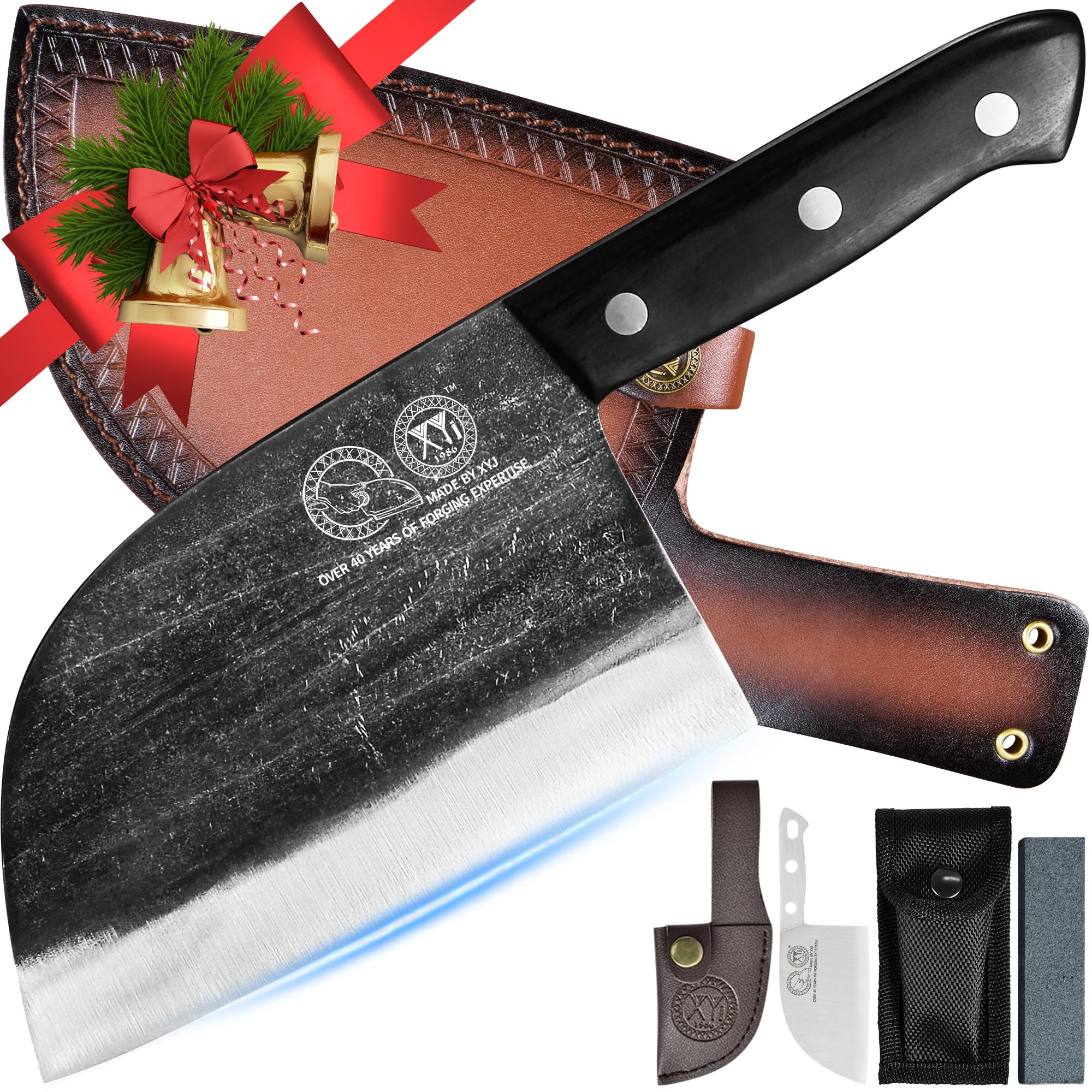
A hand-forged high-carbon cleaver with a full-tang ergonomic handle and leather sheath. Heavy, rustic, and portable for both camp and kitchen.
Why I picked it: I chose it for the hand-forged high-carbon blade and included leather sheath for on-the-go use.
Best for: Camping, outdoor kitchens, and cooks who want a rugged, portable cleaver.
Affordable, strong value for a forged cleaver.
Pros
- Hand-forged high-carbon steel
- Full-tang ergonomic handle
- Includes leather sheath
- Hammered, anti-sticking finish
Cons
- Needs oiling to prevent rust
- Handle edges can feel square
My take
Out of the box this XYJ felt like a tool made for work: substantial weight, a hammered finish that resists sticking, and a sturdy full-tang handle. I appreciated how the hammer texture keeps food from clinging to the blade during repeated chops.
I used this cleaver for breaking down large squash and for some moderate bone work while camping. The weight does a lot of the work for you — you don’t have to force it through dense material — but because it’s high-carbon steel I hand-washed and wiped a thin coat of oil on the blade after each use to prevent surface rust.
Edge retention has been impressive after some initial sharpening on a whetstone. The sheath and belt loop make it easy to bring along on trips, and overall the XYJ is the kind of rustic, no-nonsense tool I’m happy to have around when I want a blade that can handle both kitchen and outdoor chores.
2. Juvale 8-inch Meat Cleaver – Best Heavy-Duty Budget Cleaver
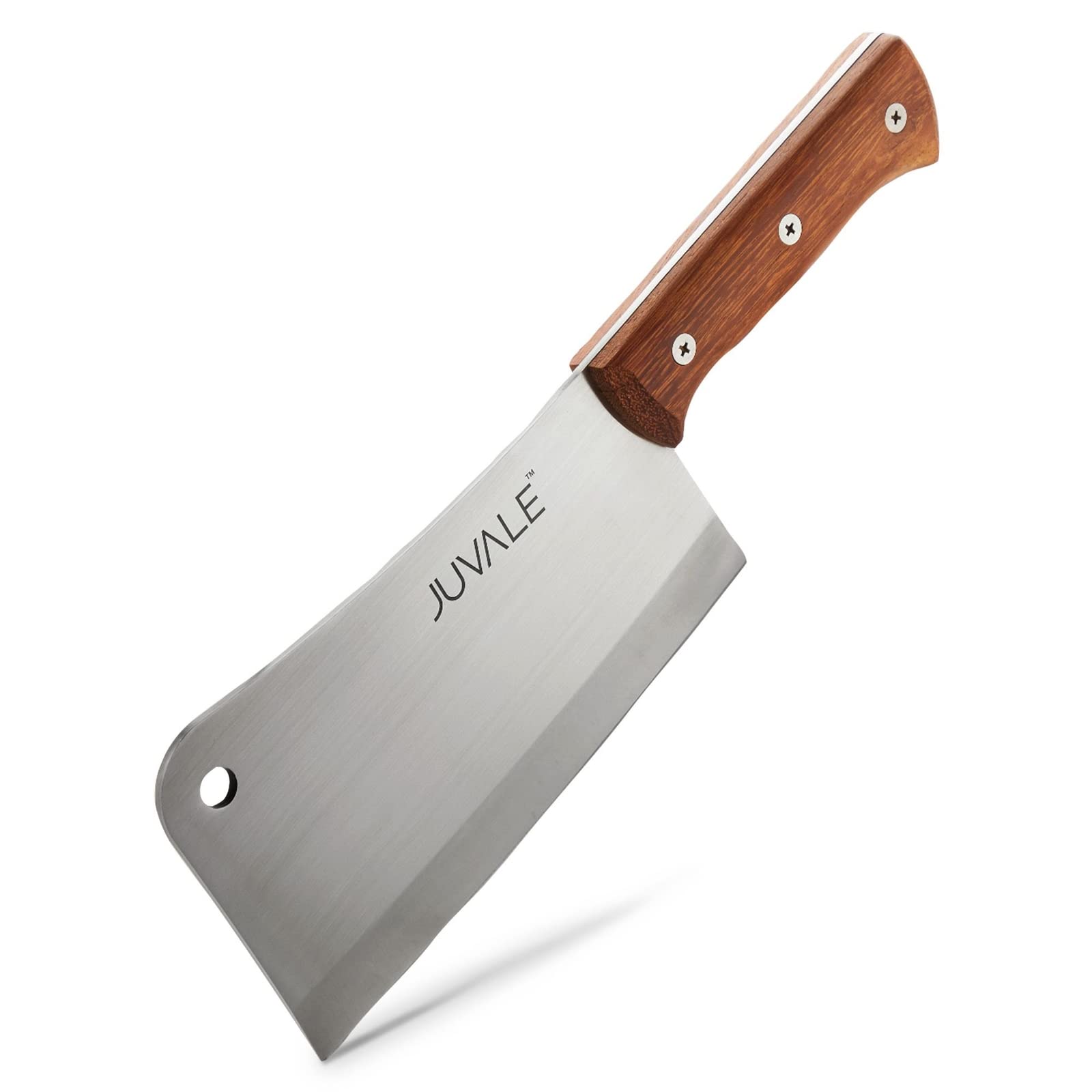
A thick 8-inch stainless blade with a wooden handle that delivers serious chopping power. I found it ideal for heavy bone and large roasts.
Why I picked it: I went for this because the thick stainless blade delivers raw chopping force without fuss.
Best for: Heavy bone work, breaking down roasts, and cooks who want a budget workhorse.
Budget-friendly and built for impact.
Pros
- Thick 8-inch stainless blade
- Strong chopping power
- Ergonomic wood handle
- Hanging hole for storage
Cons
- Heavy for small wrists
- Wood handle can feel rough
My take
This Juvale cleaver is a brute in the best sense — heavy, solid, and ready to split small bones and tackle large cuts of meat. I used it on brisket and big roasts and the blade pushed through without chipping.
It arrived sharp enough to use immediately and the wooden handle has a sealed finish that stood up to wiping and light washing. I will say: you need decent forearm strength for extended use. The weight is part of the power, but that can tire smaller hands quickly.
For the price I found it hard to beat. It’s not a precision slicer, and I wouldn’t use it for delicate work, but for repetitive chopping and bone work this cleaver earned its keep in my prep rotation.
3. Dalstrong Gladiator 7-inch Cleaver – Best Premium Cleaver
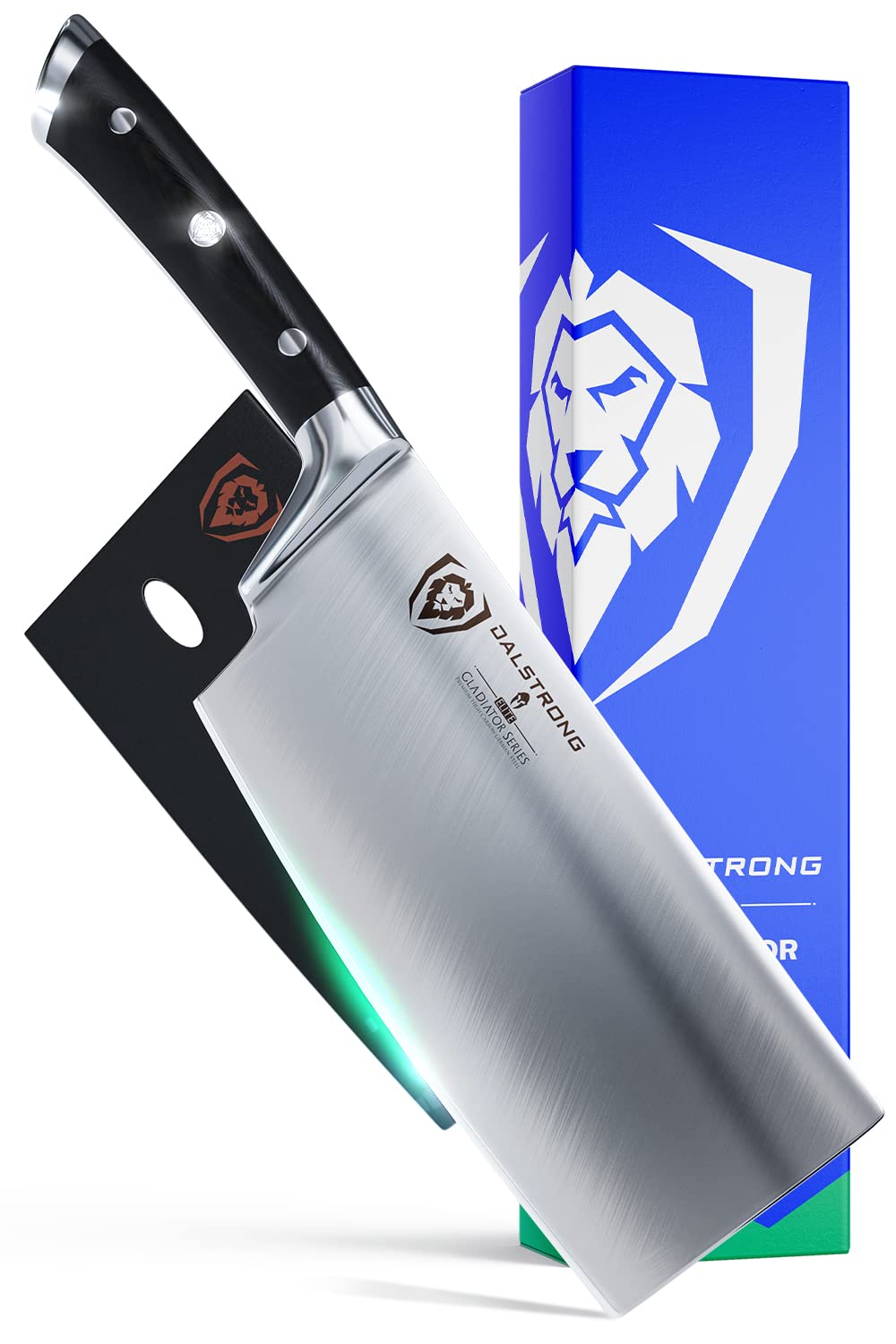
A premium, forged 7-inch cleaver built from high-carbon German steel with a G10 handle and strong edge retention. I kept this for heavy-duty, long-term use.
Why I picked it: I selected it for German X50CR steel, high hardness, and refined fit-and-finish.
Best for: Serious home cooks and gift-worthy, long-term performance.
Higher-end option with premium materials.
Pros
- Premium German X50CR steel
- 56+ Rockwell hardness
- Ergonomic G10 handle
- Comes with protective sheath
Cons
- Bulky for daily light tasks
- Grip can feel large for small hands
My take
The Dalstrong Gladiator is the most refined cleaver in this group. From the packaging to the blade fit, it felt like a step up in finish quality. The edge arrived razor-sharp and the steel has the hardness to hold that edge through repeated butchery tasks.
I used it to break down whole poultry and cube beef. The extra heft helps, but this cleaver is better when I intentionally reach for it — it’s a tool I grab for bigger jobs rather than quick vegetable mincing. The G10 handle is durable and easy to clean, though I did notice the grip feels a touch large for my smaller-handed cooks.
If I want a cleaver that balances longevity, sharpening ease, and presentation (it’s a good gift), this is the one I reach for. It’s a premium feel and built to last.
4. Mueller 7-inch Cleaver – Best Seamless Stainless Cleaver
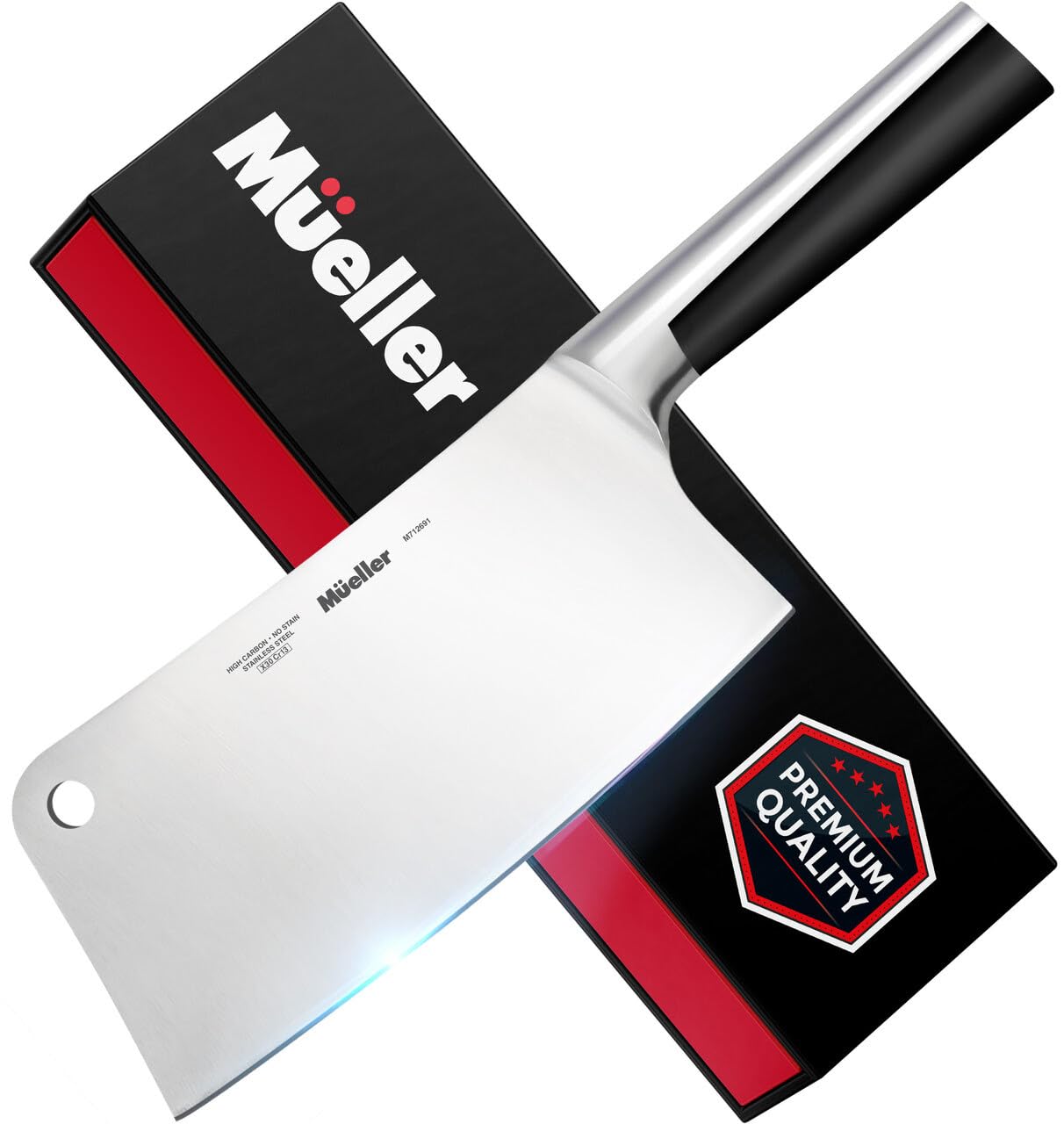
A one-piece German stainless cleaver with a laser-tested 18° edge and seamless stainless handle. I appreciated its hygiene-forward design and municipal kitchen durability.
Why I picked it: I favored the laser-tested 18° edge and the hygienic seamless stainless handle.
Best for: Home and restaurant use where low maintenance and sanitation matter.
Midpriced, pro-grade value.
Pros
- Laser-tested 18° edge
- Seamless stainless steel handle
- Versatile bench-scraper blade
- Dishwasher-safe handle design
Cons
- Extremely sharp—handle caution advised
- Heavier than thin chef knives
My take
Mueller’s one-piece construction is what sold me. No rivets or collar gaps to trap food, so clean-up feels faster and more hygienic. The 18° double-bevel edge cut confidently through root vegetables and poultry joints right away.
I tested it on heavy tasks like splitting coconuts and light bone work; the blade stayed true and didn’t nick. The handle is comfortable and keeps my hand safely away from the blade during forceful chops. Even though the brand mentions dishwasher safety, I still hand-wash to preserve edge life.
This cleaver is my go-to when I want a hard-working tool that’s easy to maintain and built for frequent use in a busy kitchen.
5. ENOKING Serbian Cleaver 6.7-inch – Best Budget Serbian Cleaver
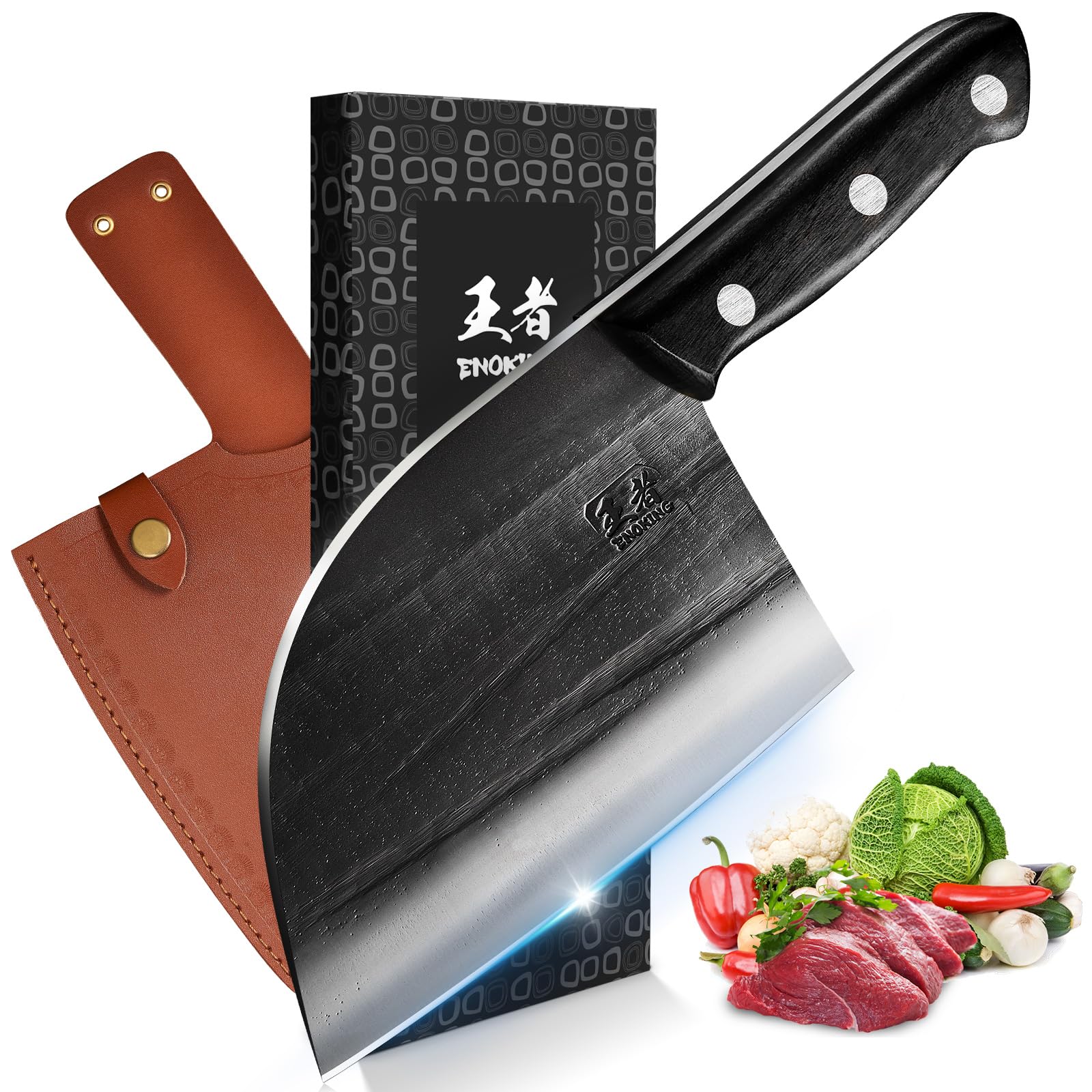
A traditionally forged Serbian-style cleaver with 58 HRC manganese steel, a 15° edge, and a leather sheath. I found it sharp and dependable for everyday chopping.
Why I picked it: I picked it for the traditional forging, 58 HRC blade, and included leather sheath.
Best for: Budget-conscious cooks who want a forged cleaver for BBQ and daily chopping.
Budget-friendly with traditional construction.
Pros
- 58 HRC high-manganese steel
- Sharp 15° edge out of box
- Full tang with rivets
- Includes leather sheath
Cons
- Rivets may be slightly uneven
- Requires hand care to avoid rust
My take
ENOKING’s cleaver arrived oiled and ready. I kept one around for heavier vegetable prep and outdoor BBQ tasks. It’s heavy enough to make chopping effortless and the 15° edge slices cleanly when I use controlled cuts.
Because it’s carbon-rich steel, I treated it like my other forged blades: hand-wash, dry immediately, and oil lightly before storage. After a few months of regular use it held an edge well and felt like a very practical, affordable forged cleaver.
If you want the look and performance of a traditional Serbian cleaver without spending much, this one delivers the essentials and packs conveniently in its leather sheath.
How I Choose a Cleaver
Steel Type and Edge
I decide on a cleaver primarily by the steel. High-carbon forged blades give a great cutting feel and edge retention but need routine oiling to prevent rust. Stainless or high-carbon stainless options are lower maintenance and better for frequent wet environments.
Pay attention to edge angle: a narrower angle slices cleaner but chips easier under impact; a wider angle survives bone work. I prefer 15–18° for general cleaver work.
- High-carbon: superior edge, needs oiling
- Stainless: low maintenance, resists corrosion
- 15°–18°: balance of sharpness and durability
Weight, Balance, and Size
Weight is functional. I use heavier cleavers for bone and squash; lighter, shorter cleavers are better for vegetable work. Choose a weight you can swing repeatedly without fatigue.
Blade height matters for scooping and transfer. A 7-inch blade is my versatile sweet spot; 8-inch cleavers give more chopping force but demand more strength.
- 7-inch: versatile all-purpose choice
- 8-inch: best for big cuts and bone
- Heavier = more chopping power, more fatigue
Handle Comfort and Construction
I always test grip profile and tang construction. Full-tang designs with secure rivets give the most confidence during heavy work. Seamed or one-piece handles are easier to clean in high-volume kitchens.
Materials matter: wood feels warm and traditional, G10 or stainless feels durable and easy to sanitize.
- Full tang for strength
- G10 or stainless for durability
- Wood for comfort, requires care
Maintenance and Storage
I hand-wash forged blades and dry them immediately, then apply a light coat of oil. Stainless blades tolerate more aggressive cleaning, but I still avoid the dishwasher if I want to preserve the edge.
A sheath or blade guard protects the edge and prevents accidents. If you plan to carry a cleaver for outdoor use, choose one that includes a well-made sheath.
- Hand-wash and dry forged steel
- Light oil to prevent rust on carbon steel
- Use a sheath for transport and storage
Frequently Asked Questions
Can I use a cleaver to split bones?
Yes. I use heavier cleavers for small-to-medium bones — the thicker blade and mass help split bones cleanly. For large, dense bones I take a more controlled, deliberate chop or use a purpose-built butcher’s saw.
How do I prevent rust on a high-carbon cleaver?
I wipe the blade dry immediately after washing, then apply a thin layer of food-safe oil before storing. That routine has kept my forged cleavers rust-free even in humid kitchens.
Are one-piece stainless handles better than wood?
For sanitation and low maintenance I favor one-piece or seamless stainless handles. Wood is more comfortable and traditional, but it benefits from careful drying and occasional conditioning.
What size cleaver should I buy first?
I usually recommend starting with a 7-inch cleaver for most home cooks — it’s a good compromise between chopping power and maneuverability.
Final Take
I keep different cleavers for different jobs: a forged carbon blade when I want that traditional feel and edge, a stainless one-piece cleaver for heavy, low-maintenance work, and a premium forged model when I need long-term edge retention and finish.
If you want one recommendation to start with, choose a 7-inch cleaver that matches your preferred steel and handle material. From there, add a specialized 8-inch or a rugged forged piece for camping if your workload requires it.
Whichever you pick, follow the care steps I outlined so the blade stays reliable and sharp for years.
