
I tested terrarium kits and glass containers to find easy-to-build kits and stylish glass homes for succulents, air plants, and small critters. Here are the options I keep reaching for.
I build terrariums regularly and have worked with starter kits, geometric glass planters, and house-style enclosures. Over several projects I learned which kits give me the right materials and which glass cases actually make tending plants simple.
This roundup focuses on closed-terrarium-style setups and the starter kits and containers that make them practical. I include compact kits for beginners and open or semi-sealed glass pieces for decorative displays and small humid microclimates.
Below I explain what I tested, why each pick stood out, and how I use them in my home setups.
I split the list between full starter kits (soil, charcoal, moss and tools) and glass containers (open, no-door, or hinged-lid styles). Kits save time and ensure balanced media; containers determine humidity, access, and visual style.
1. Succulent Terrarium Kit (Medium) – Best Starter Kit
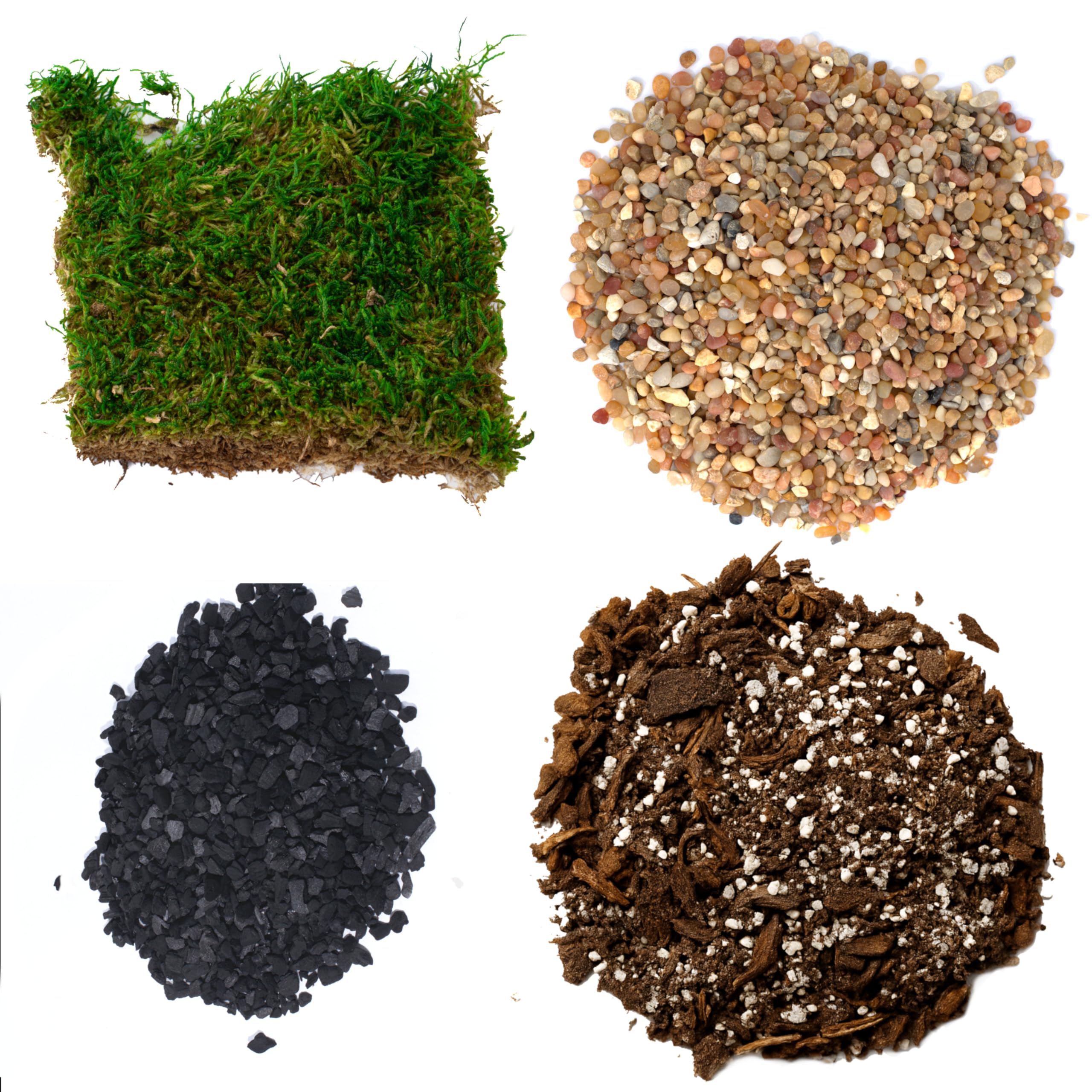
Complete, USA-made kit with bioactive soil, charcoal, gravel, and preserved moss—everything I needed for medium terrariums.
Why I picked it: I rely on the bioactive soil mix and included media when I want a low-fuss starter build.
Best for: Beginners and anyone who wants a ready set of quality terrarium media.
Good value for a ready-to-use, USA-made kit.
Pros
- Bioactive, composted pine-bark soil
- Includes charcoal and preserved moss
- Well portioned—little leftover
- Made in the USA
Cons
- Instructions can be sparse
- Medium kit limits very large builds
My take
When I want to build a succulent terrarium quickly I reach for this kit. The soil is notably different from run-of-the-mill mixes: it’s composted pine bark and feels alive rather than sterilized dust. That made planting and root placement easier.
Everything I needed was in separate zip bags—gravel, activated charcoal, soil, and moss—so assembly was tidy and fast. The portions were sized well for two medium containers I built; I didn’t end up with a lot of fiddly leftovers to store.
The only friction was the lack of detailed step-by-step paper instructions in my box, but I used a short online guide and finished both terrariums without trouble. If you want a no-hunt kit with solid materials, this one consistently gets my builds off the ground.
2. Cute Farms Large Terrarium Starter Kit – Best Kit for Gifting
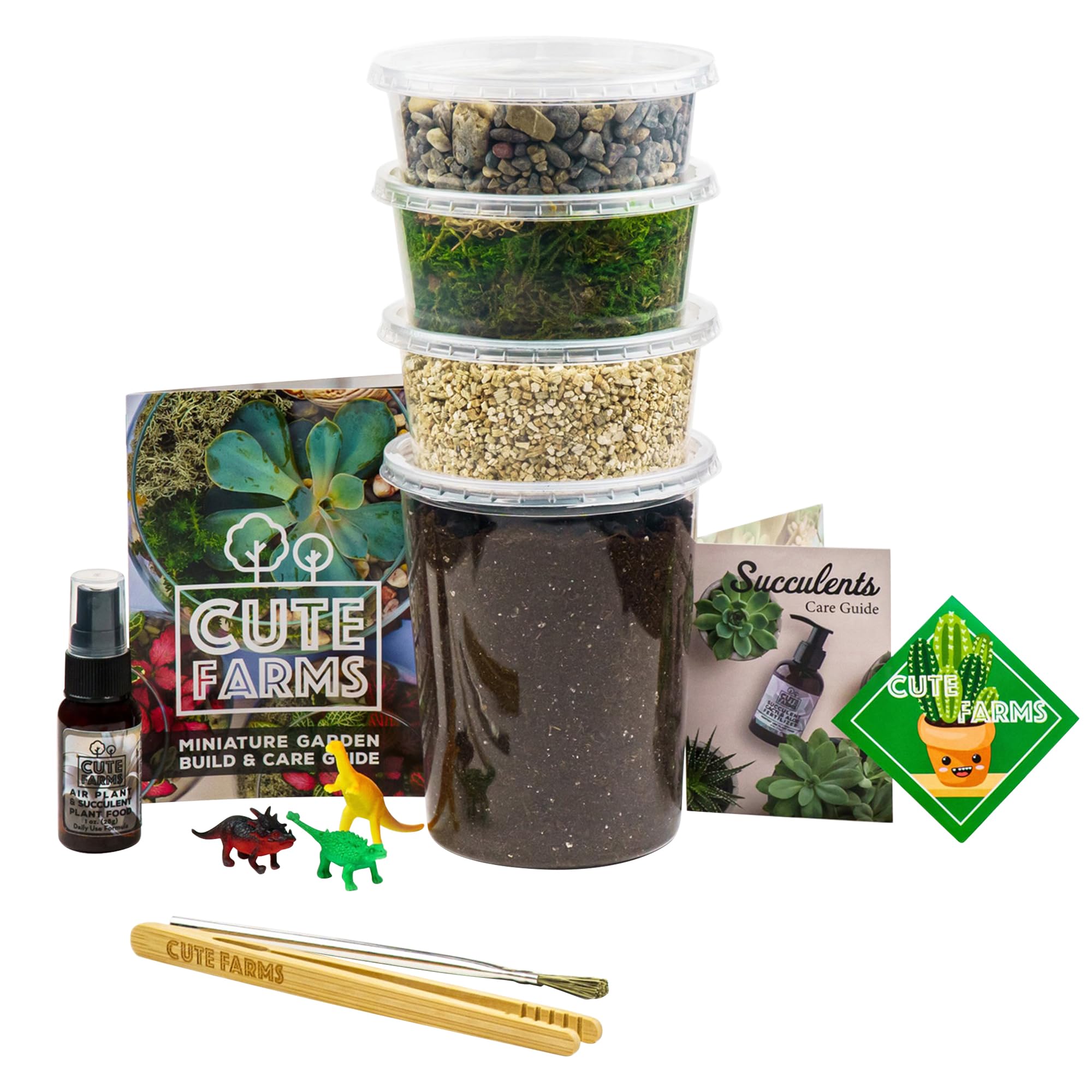
Large kit with preserved moss, vermiculite, plant food and finishing tools—very giftable and family-friendly.
Why I picked it: I chose it for the bright preserved moss and the handy finishing tools it includes.
Best for: Family projects, gifts, and those who want extra decorative touches.
A generous kit that leans toward value and presentation.
Pros
- Preserved moss that stays colorful
- Includes plant food and tools
- Generous media amounts
- Comes with care and build guide
Cons
- Some decorative extras may not suit serious growers
- Large kit requires separate container
My take
I used this large kit when I wanted a shareable project for my family. The preserved moss is vibrant and stays looking finished without maintenance—perfect for decorative terrariums.
I appreciated the vermiculite and charcoal already blended into the soil; that mix gives good drainage and airflow for succulents. The bamboo tongs and brush make placing tiny accents and smoothing moss much less fiddly, especially when kids help.
The kit includes a small bottle of plant food and a clear build-and-care guide, which I found useful for first-time terrarium makers. For gifting or group builds, this kit is the one I grab.
3. Mkono Geometric Glass Terrarium Set (3) – Best Mini Glass Set
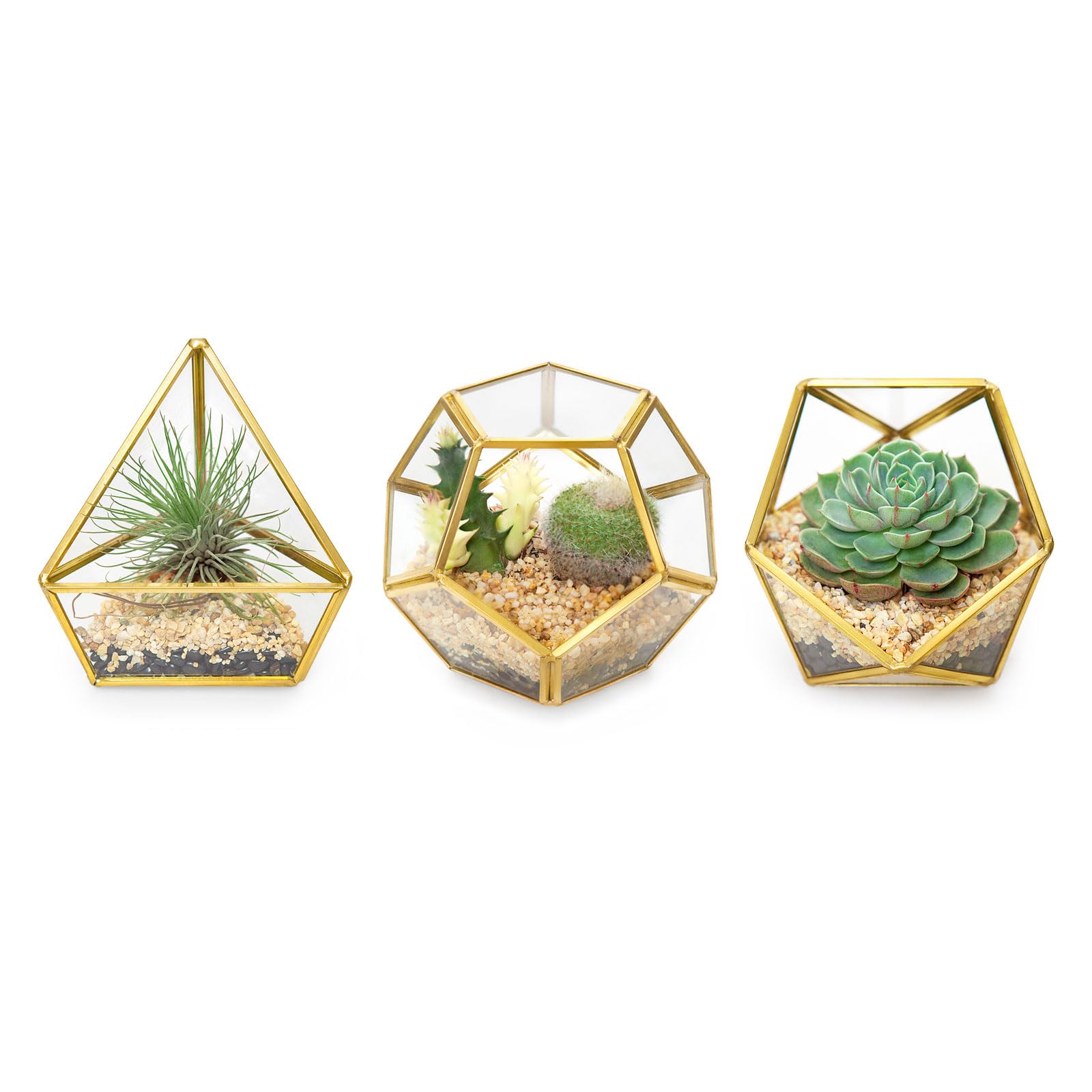
Three small geometric glass planters in different shapes—stylish for air plants and tiny succulents.
Why I picked it: I use the set when I want coordinated, modern display pieces for tiny plants or fairy gardens.
Best for: Decor-forward displays and small air-plant arrangements.
Stylish set that’s more about display value than large planting space.
Pros
- Three distinct geometric shapes
- Good glass thickness for display
- Nice modern aesthetic
Cons
- Not watertight—requires misting
- Gold frame color can look cheap over time
My take
I like these Mkono pieces when I need dainty tabletop accents. The globe, teardrop and bowl shapes give me options for tiny succulents, moss scenes, or air plants.
They aren’t watertight, so I always use a pebble layer and mist rather than pour water. The openings are small, so planting requires tweezers and patience, but the finished look is worth it.
The brass-like frame will patina with time, which I don’t mind for a vintage look; just handle gently because the glass and solder seams are fragile compared with solid-planter pieces.
4. NCYP Pentagon Glass Terrarium (Small) – Best Small No-Door Terrarium
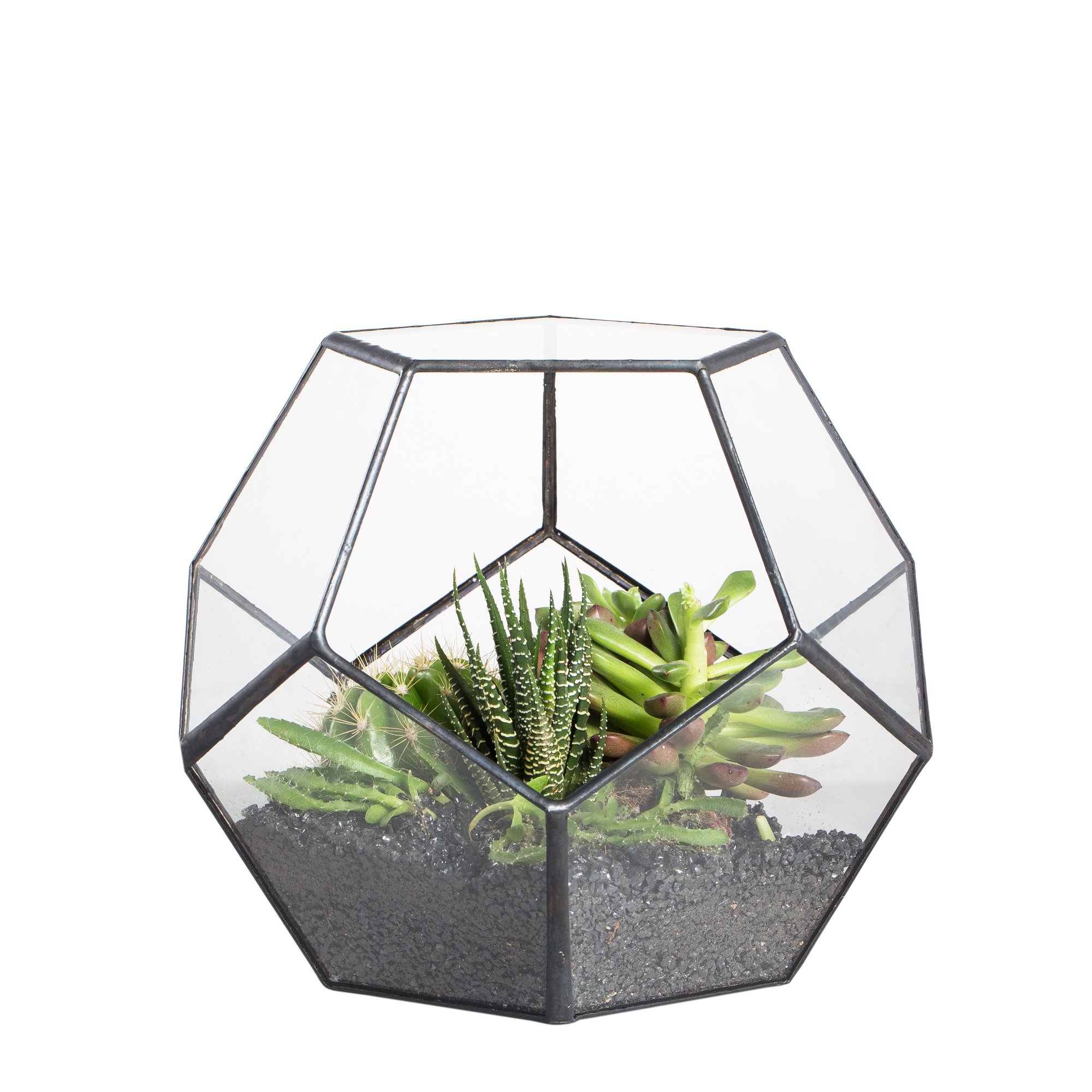
Thicker glass pentagon planter that’s solid-looking and perfect for tabletop succulents and small cactus mixes.
Why I picked it: I picked this for its solid feel and right-sized footprint for multi-plant desktop displays.
Best for: Desktop arrangements that need easy access and good visibility.
A practical no-door terrarium with a sturdy appearance.
Pros
- Thick, clear glass
- Good tabletop size
- Clean modern shape
Cons
- Not sealed—will leak if overwatered
- No front door for tight access
My take
This pentagon terrarium is one I reach for when I want a clean, modern planter that still gives ample room for two or three small succulents. The glass feels weighty and resists fingerprints, so my displays stay photogenic.
Because it has no door and isn’t sealed, I treat it like an open display: pebbles for drainage and a light misting schedule. That approach keeps the plants happy without soggy media.
It arrived well packed and showed up with a pleasant, substantial look that suits shelves and windowsills.
5. NCYP Irregular Geometric Terrarium (Tall) – Best Tall Geometric
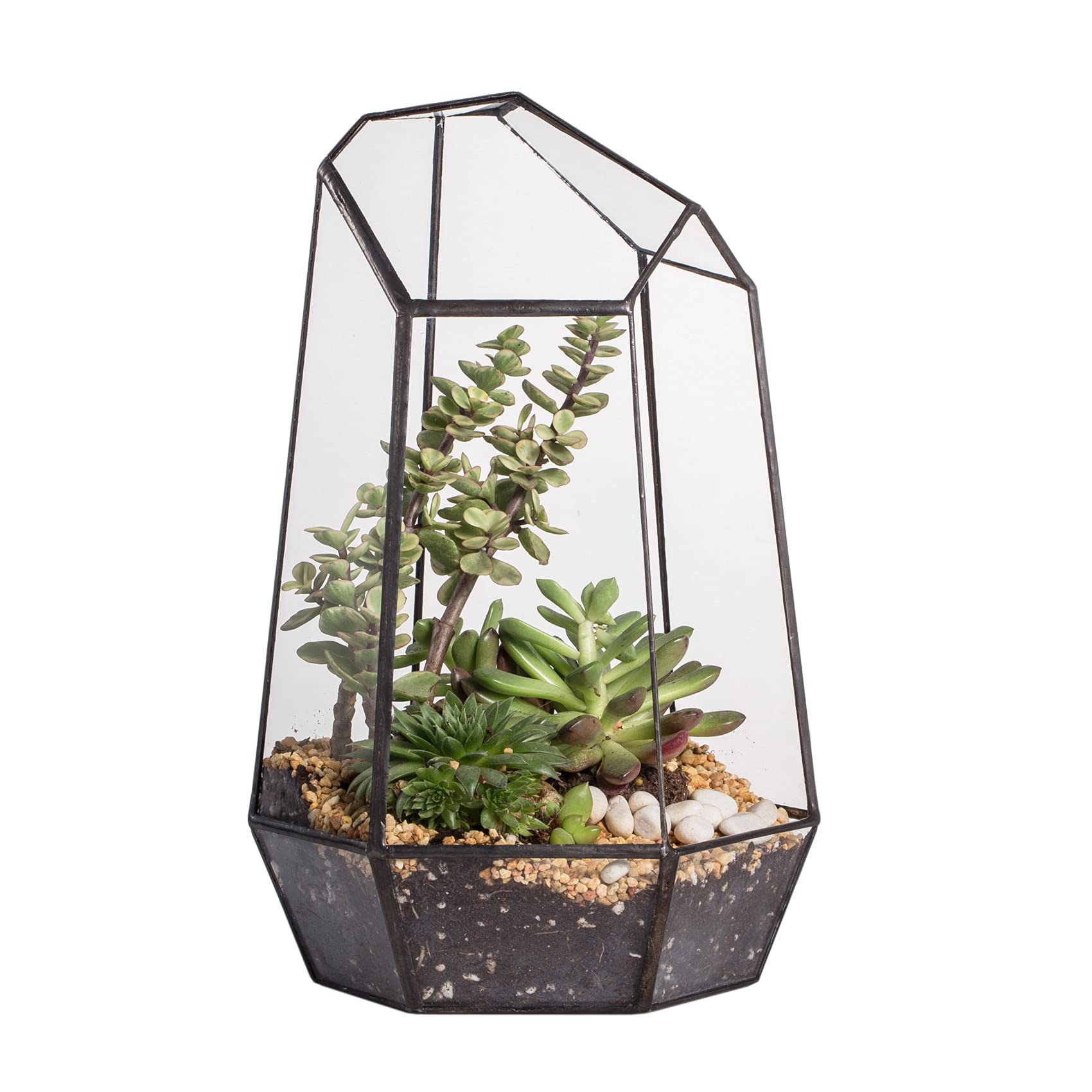
Taller, irregular-shaped glass terrarium that makes a dramatic vertical display for succulents or air plants.
Why I picked it: I use it when I want a standout vertical display or a taller miniature scene.
Best for: Vertical arrangements and unusual tabletop centerpieces.
Stylish, taller option for display-focused builds.
Pros
- Unique vertical silhouette
- Good for taller plants or scenes
- Attractive modern look
Cons
- Opening can feel tight for large hands
- Fragile—handle carefully
My take
When I need height in a tabletop display, this irregular terrarium is my go-to. The taller profile lets me layer substrate, decorative sand, and taller succulents without crowding.
The opening is a bit narrower than I expected, so I work with tweezers and small tools to place plants and decor. The finish looks great on a mantle and gathers compliments from friends who notice the shape.
It’s not sealed and won’t hold standing water, so I treat it as an airy, expressive planter rather than a humid microclimate.
6. NCYP Gold Geometric Terrarium (Pentagon) – Best Gold Accent
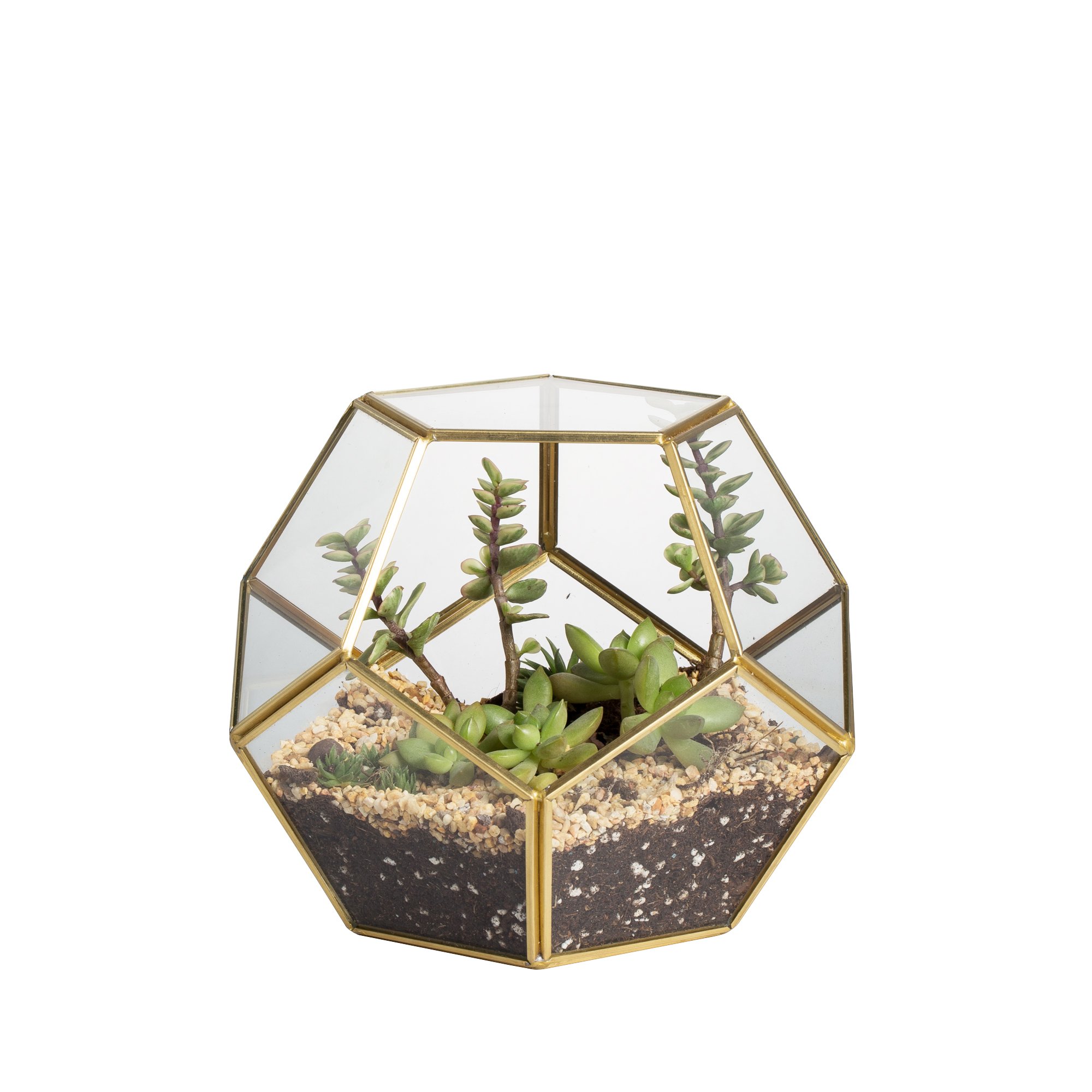
Gold-framed pentagon planter that reads decorative and works well for air plants and low-water setups.
Why I picked it: I picked it for the warm metal accent when I want a decorative focal piece.
Best for: Dry setups, air plants, and low-humidity designs.
Attractive metallic finish; best for dry or lightly misted setups.
Pros
- Warm gold finish
- Good display transparency
- Compact, versatile size
Cons
- Seams allow light airflow
- Can leak when watered directly
My take
The gold pentagon terrarium gives my displays a warmer, more decorative tone than plain clear frames. I use it for air plants and low-water succulents where a little airflow is beneficial.
Because the joints are soldered rather than fused, I always plan for a saucer underneath when I water. For dry displays it’s perfect, but if you expect to pour water you’ll need a different container or to line the bottom.
It’s lightweight and looks delicate, so I treat it as a decorative accent rather than a rugged planter.
7. NCYP House-Shaped Terrarium with Vent Lid – Best for Small Animals
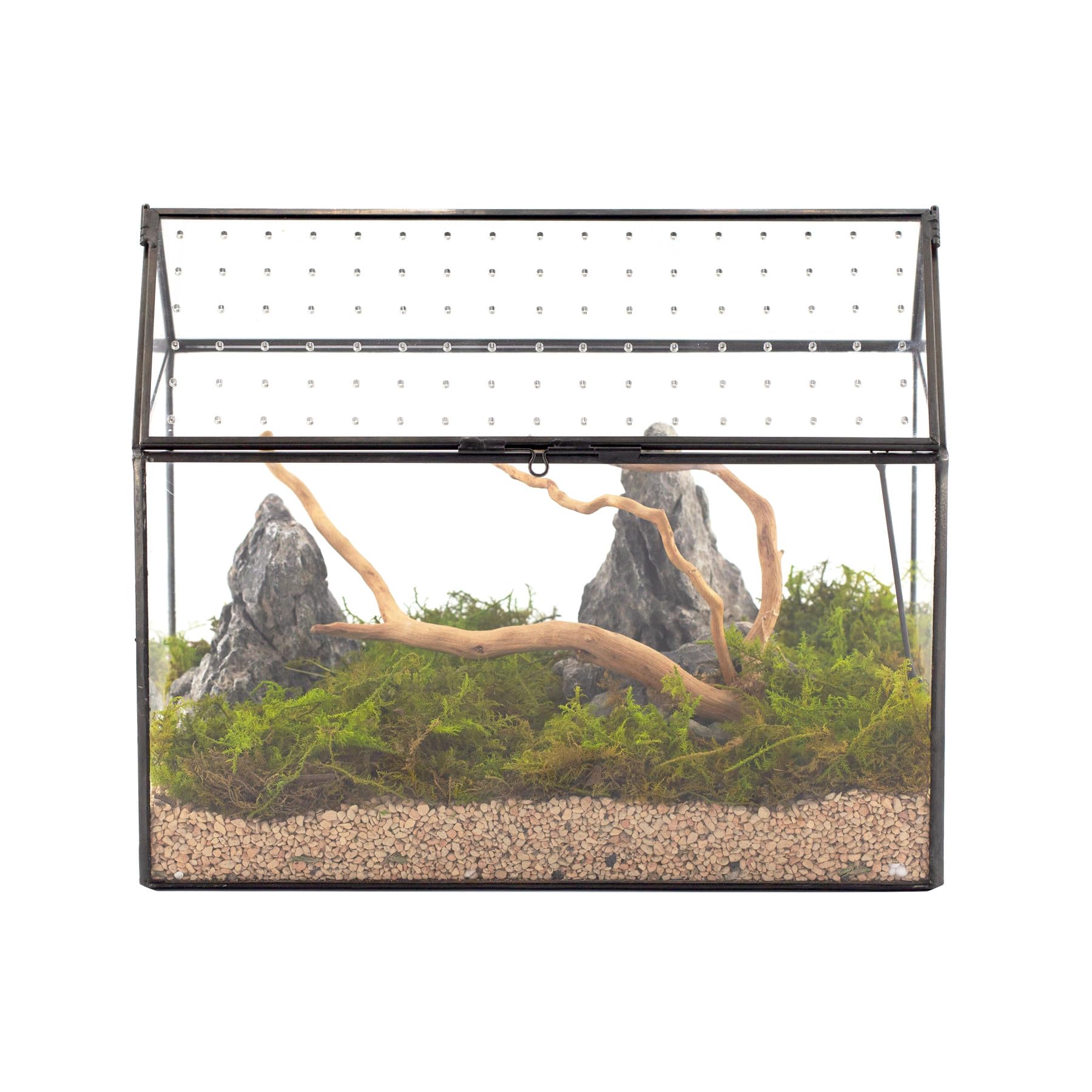
House-shaped glass terrarium with a swing acrylic lid and vents—my pick when I need better ventilation for snails or mini critters.
Why I picked it: I chose it for projects where ventilation and lid access matter, like snails and classroom projects.
Best for: Snail enclosures, insect observations, and ventilated plant propagations.
A practical glass house that balances visibility and airflow.
Pros
- Acrylic vented lid
- Excellent visibility
- Good size for small animals
Cons
- Acrylic lid can warp in humidity
- Fragile—handle with care
My take
I used this house-shaped terrarium for a homeschool caterpillar and later for a rescued snail. The front acrylic swing lid with vents makes it easy to peek in and provides more airflow than sealed glass cases.
It’s large enough to give critters room to move but still compact enough for a table. The glass panels are clear and photo-friendly, though I keep the acrylic lid out of prolonged high-humidity setups to avoid warping.
Packaging was excellent and the terrarium arrived in top condition—when I need a ventilated glass enclosure, this is the one I choose.
8. NCYP Open Bowl Geometric Terrarium – Best Open Bowl
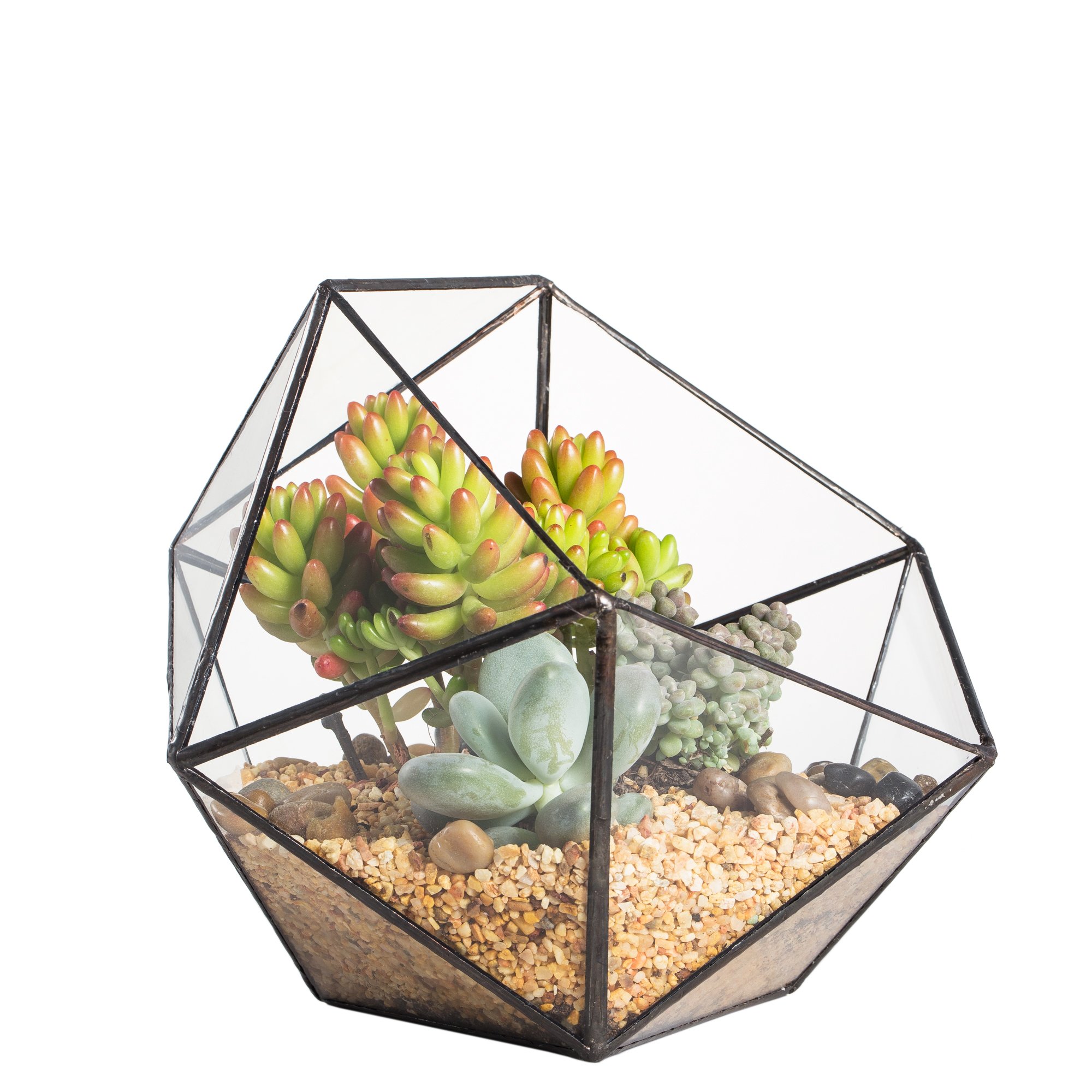
Half-ball bowl planter with a wide opening—my favorite when I want easy planting and handling.
Why I picked it: I reach for this when ease of access matters; the opening makes planting painless.
Best for: Wide planted scenes and multi-plant arrangements.
Solid build and great for centerpieces or test plantings.
Pros
- Large, accessible opening
- Thicker glass feels durable
- Great for centerpieces
Cons
- Smaller than photos may imply
- Not watertight—use saucer
My take
This half-ball geometric planter is my go-to for quick builds because the opening is generous. I can position roots and decorative elements without tools.
It’s solid glass and worked well for two medium cacti and a piece of driftwood; I avoid crowding and it looks balanced. Shipping was careful and the piece arrived without defects.
Because it’s open and not sealed, I treat it like a low-humidity display—pebbles, coarse soil, and careful watering keep plants thriving.
How I Choose Terrarium Kits and Containers
Decide between a Kit and a Container
I start by deciding whether I want a complete materials kit or just a glass container. Kits are time-savers when I want media that already balances drainage, charcoal, and decorative moss. Containers are for people who already have media and want a specific look or humidity profile.
- Choose a kit if you want curated soil, charcoal, and moss.
- Choose a container if you want to control media and drainage choices.
Think about humidity and access
A sealed container holds humidity and suits moisture-loving plants; open or no-door geometric planters need lighter watering and suit succulents and air plants. If I need access for pruning or decorating, I pick a larger opening or a hinged lid.
- Sealed jars = higher humidity, less airflow.
- Open/no-door = better airflow, requires careful watering.
- Hinged or vented lids are ideal for small animals or propagations.
Check build quality and seams
I always inspect how panels are joined. Soldered seams can allow airflow and tiny leaks—fine for dry setups but avoid if you want standing water. Heavier glass and neat seams indicate better durability for long-term displays.
- Soldered seams may not be watertight.
- Thicker glass resists chips and looks premium.
- Metal frames will patina—consider how that ages in your decor.
Tools and extras matter in kits
When a kit includes tongs, a brush, and plant food, I find planting and maintenance quicker. Preserved moss is a big time-saver for decorative finishes that don’t need watering.
- Look for charcoal and well-draining media in kits.
- Preserved moss keeps color without maintenance.
- Tiny tools and a care guide help beginners.
Frequently Asked Questions
Can I use these glass terrariums as sealed closed terrariums?
Many of the glass containers listed are not watertight and have soldered seams or no door, so I treat them as semi-open displays. For a true sealed terrarium I use jars with a fused seam or a dedicated sealed globe.
How do I water terrariums that aren’t watertight?
I always mist or use a small syringe for precise drops. I place a saucer underneath when I water and avoid pouring directly into seams to prevent leaks.
Are preserved moss and live moss interchangeable?
I use preserved moss for decorative, low-maintenance finishes because it keeps color without watering. For live moss and higher humidity builds I choose live materials and a container that can hold moisture.
Final Take
I build terrariums with different goals—some for easy decor, some for humid microclimates, and some for classroom projects. The kits I recommend save setup time, while the glass containers I kept are the ones I trust for access, visibility, and style.
Pick a kit if you want ready-to-go media and tools; pick a container if you want a particular look or ventilation setup. I keep at least one of each on hand for seasonal projects.
