
I tested six colanders and strainers so you don't have to. From rice rinsers to heavy‑duty stainless bowls, these are the tools I keep reaching for in my kitchen.
I spend a lot of time cooking for family and testing kitchen gear, so I picked six colanders that cover the range of tasks I care about: fast draining, fine‑grain rinsing, heat resistance, and everyday durability.
In the sections below I explain what made each model stand out in my tests and which one I reach for depending on the job—pasta, rice, berries, or big batches of veg.
I compared build quality, hole size, stability, handle comfort, and how each unit drained during real cooking—no lab jargon, just kitchen time with hot pots and fresh produce.
1. HiramWare Stainless Steel Colander (5-Quart) – Best Budget Everyday Colander
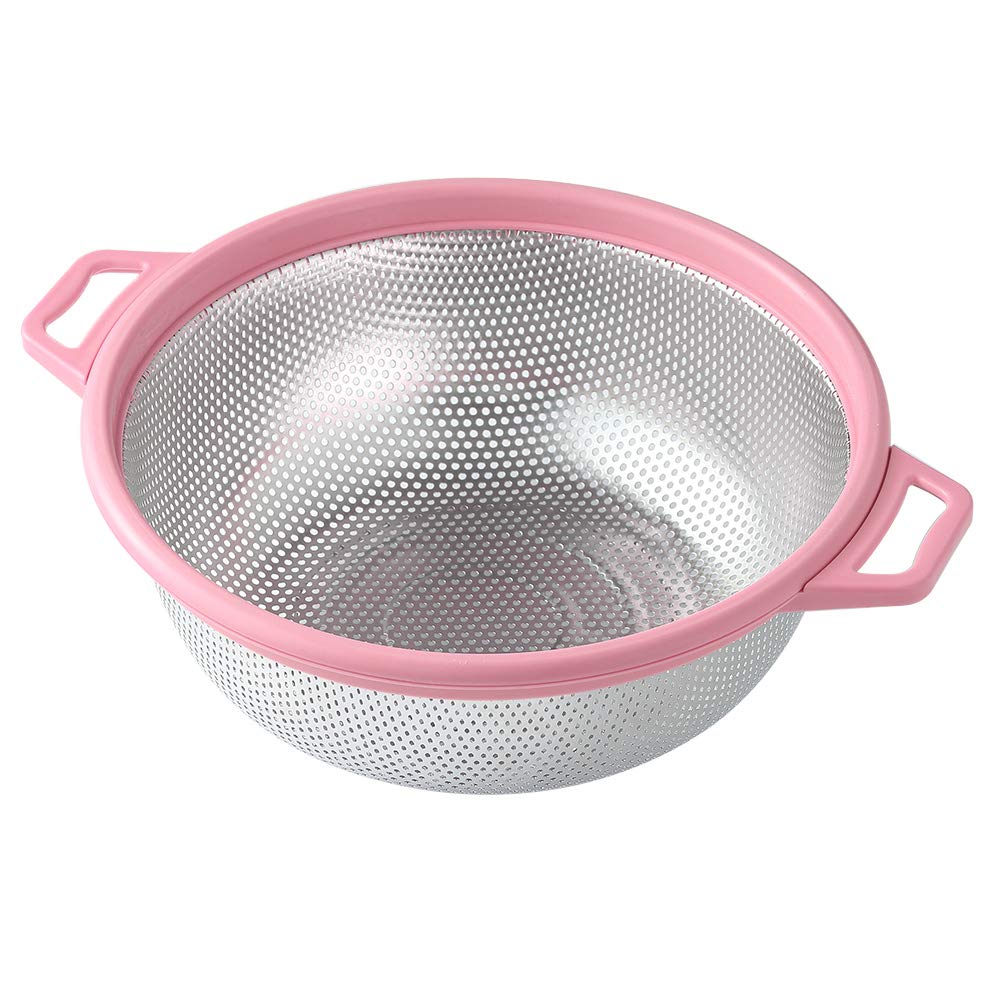
A roomy, lightweight stainless colander with sturdy handle and low-profile feet that drains quickly. I keep this on hand for everyday pasta and produce prep.
Why I picked it: Great capacity, fast drainage, and an affordable all‑around performer.
Best for: Pasta, salads, and washing larger fruit and vegetables.
A very affordable, practical option for everyday use.
Pros
- Large 5‑quart capacity
- Fast draining hole pattern
- Comfortable ergonomic handle
- Dishwasher safe
- Low-profile feet for stability
Cons
- Lightweight—can feel a bit thin
- Not ideal for the tiniest grains
My take
I reached for this HiramWare colander when I needed something roomy but not bulky. The stainless bowl is shiny and feels like a step up from cheap plastic; it drains quickly thanks to a dense hole pattern and the feet keep it steady on my counter while I load it.
The handle is comfortable when I'm scooping pasta or rinsing berries, and the overall shape fits well in my sink. It’s lightweight enough to lift with a full pot inside, which I appreciate on busy weeknights.
This isn't a fine‑grain rinser—if I need to wash rice I choose a different tool—but for spaghetti, greens, and rinsing most vegetables it’s become my go‑to inexpensive workhorse.
2. Joseph Joseph Scoop Plus Colander & Uni-Tool – Best Multi-Tool Strainer
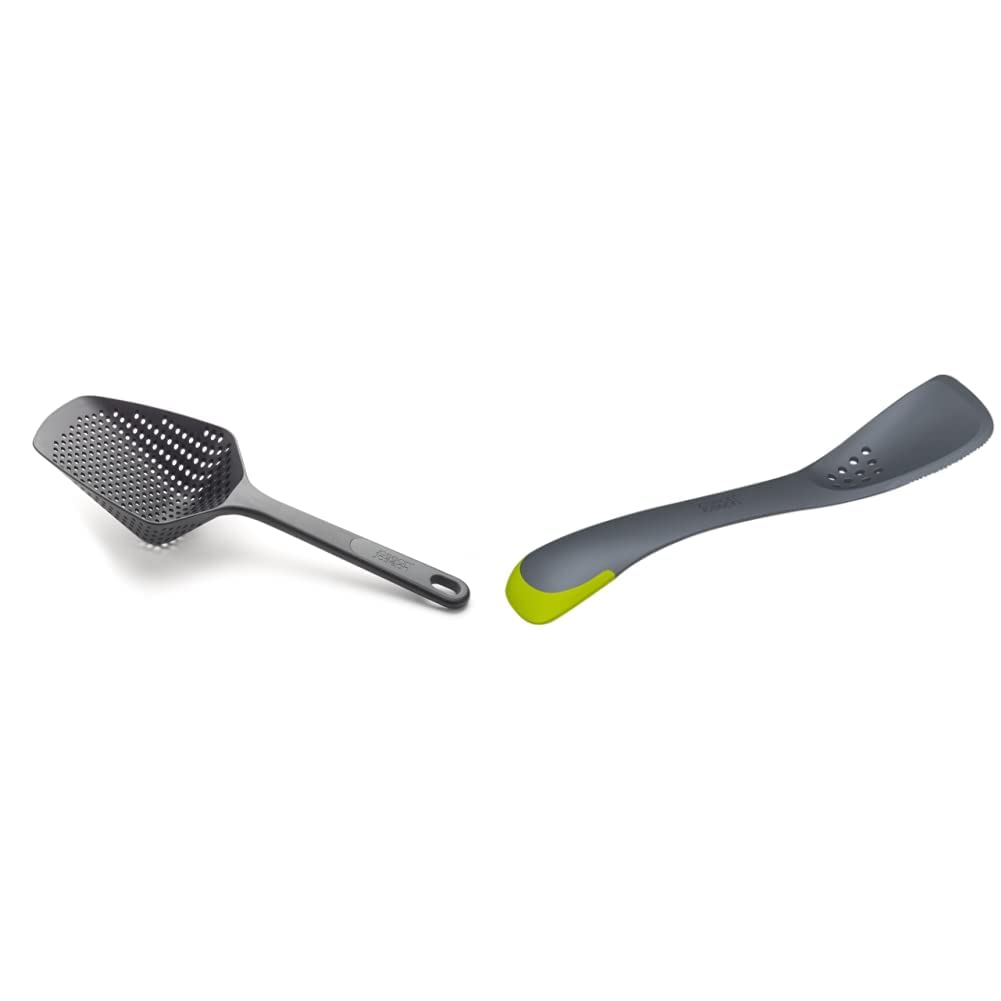
A clever scoop‑and‑drain tool paired with a 5‑in‑1 uni‑tool. I use this when I want to scoop, drain, and serve without hauling a pot to the sink.
Why I picked it: Combines scooping, draining, and serving—great for single portions or stock pots.
Best for: Scooping pasta from pans, draining small batches, and light prep tasks.
A more specialized, space‑saving option with multiuse value.
Pros
- Scoop and drain in one motion
- Pan hooks keep it steady
- Heat resistant to high temperatures
- Uni‑tool replaces several utensils
- Dishwasher safe
Cons
- Too large for small pans
- Not a replacement for big colanders
My take
This Joseph Joseph combo changed how I deal with single servings and stock pots. The Scoop Plus lets me fish pasta or veggies straight from a pot and drain them without moving the whole pot to the sink, and those little pan hooks mean I can rest the scoop on the rim as it drains.
The materials handle high heat—useful when I'm working with boiling water—and the Uni‑tool is surprisingly capable as a slotted spoon, turner, slicer, and spatula. I find myself using the uni‑tool for quick jobs when I don't want to pull out a drawer of utensils.
If I need to strain a full pot quickly I still grab a full‑size colander, but for convenience and space‑saving this set is one of the most useful single‑purpose tools in my kitchen.
3. LiveFresh Micro‑Perforated 5‑Quart Colander – Best for Small Grains
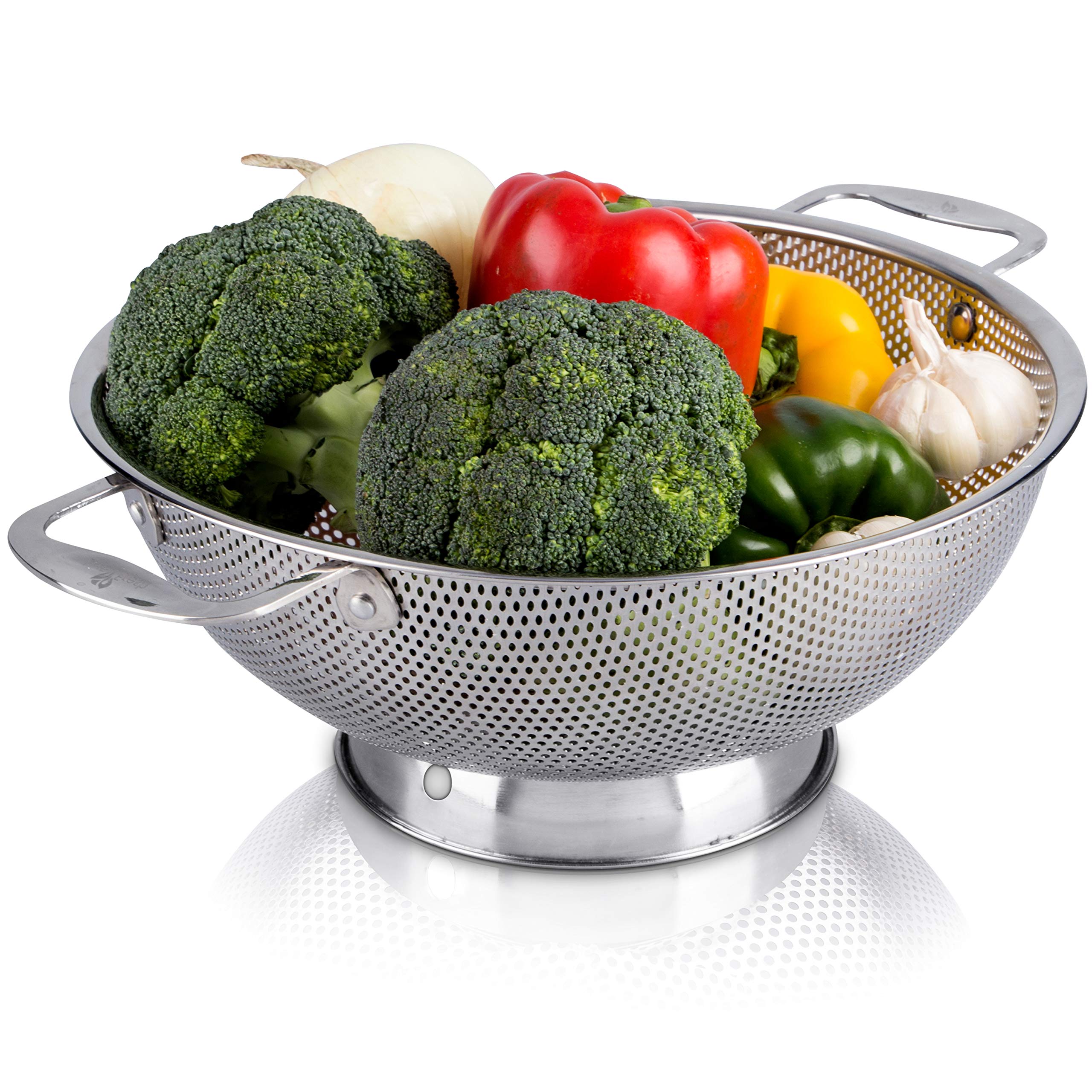
A sturdy stainless colander with very small, closely spaced holes that make rinsing tiny items like quinoa and small produce easy without losing bits down the drain.
Why I picked it: Micro‑perforations that rinse small grains without losing them.
Best for: Rinsing rice, quinoa, bulgur, and delicate produce.
A sensible midrange option when you need fine drainage.
Pros
- Very small, dense holes
- Riveted handles for durability
- Sturdy, long‑lasting construction
- Dishwasher safe
Cons
- Holes may still pass some long grains
- A bit heavier than cheap options
My take
I prefer this LiveFresh colander when I’m rinsing rice or tiny grains—its micro‑perforations let water escape quickly while keeping the grains safely inside. I tested it with several small items and it performed better than a typical perforated bowl.
The handles are riveted rather than spot‑welded, which gives me confidence when I’m handling hot loads. It feels solid and durable, and cleaning is straightforward in the dishwasher.
If you cook a lot of small grains this is a better match than a standard colander; if you mostly do big‑piece produce, a lighter or less dense model will do.
4. Bellemain Stainless Steel 5‑Quart Colander – Best No‑Tip Stainless Colander
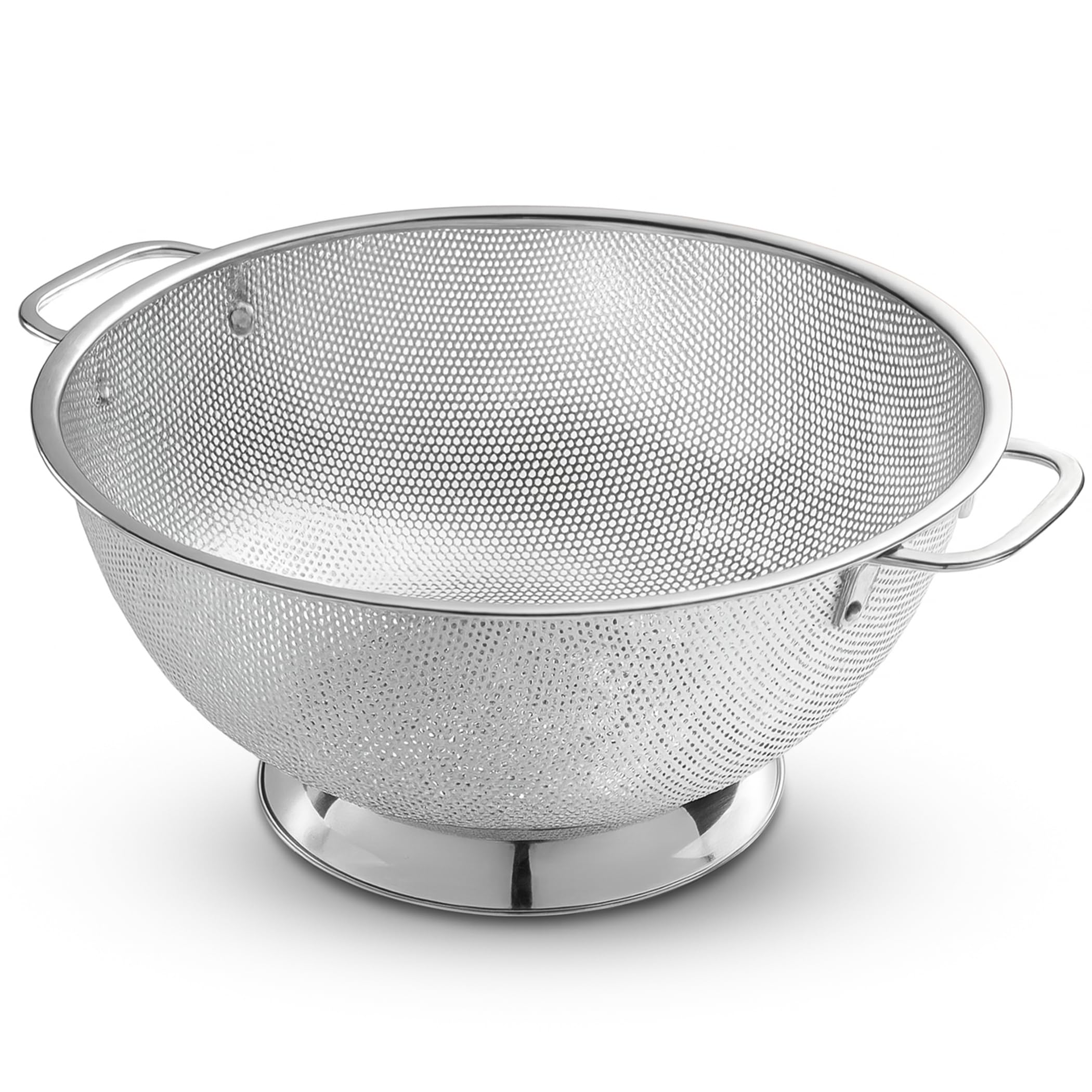
A polished 5‑quart stainless colander with micro‑perforations, a solid ring base, and riveted handles that resist tipping when I multitask at the sink.
Why I picked it: Reliable, professional feel with a stable base and tiny holes.
Best for: Large meal prep, pasta, and produce where stability matters.
A solid midrange stainless option with professional touches.
Pros
- Fine micro‑perforations
- Solid ring base—no tipping
- 18/8 stainless resists rust
- Handles stay cool
Cons
- May not hold very fine grains
- Won't sit on small pans for in‑pot straining
My take
This Bellemain colander feels like the kind of tool I keep in my main prep area. The micro holes drain quickly but are fine enough to handle smaller pasta shapes and most produce without losing bits.
The wide ring base keeps it stable even when I’m juggling multiple tasks, and the riveted, ergonomic handles make lifting and shaking feel secure. I like that it fits easily in my dishwasher and stays shiny after many washes.
For everyday heavy use—pasta night, washing bulk greens, or prepping fruit—this is a dependable, no‑nonsense stainless option that stands up to frequent use.
5. Tiawudi 18/8 Stainless Steel Colander (5‑Quart) – Best Heavy‑Gauge Steel
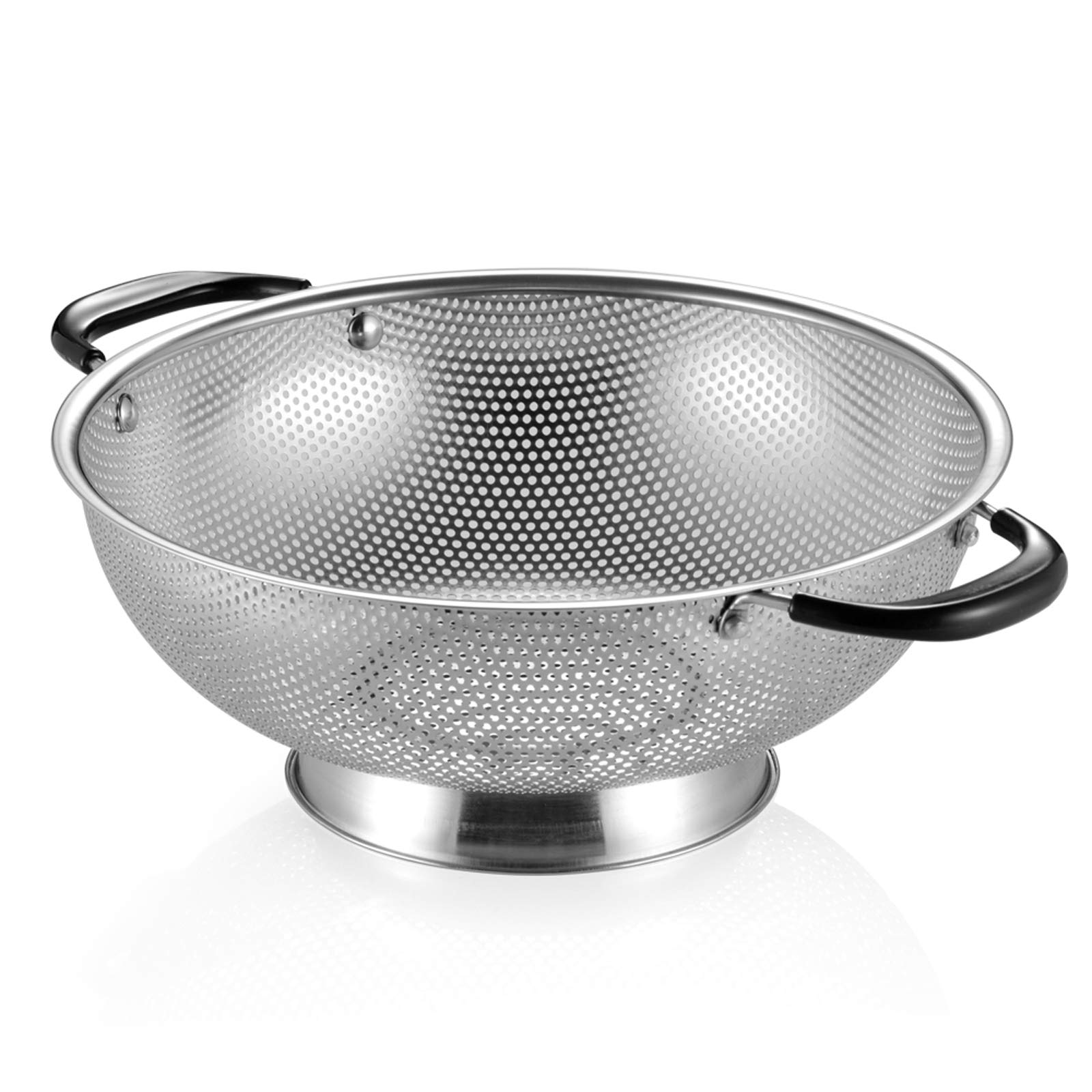
Thicker 18/8 steel with riveted, heat‑resistant handles and a solid ring base. I use this when I want durability and worry‑free handling with hot pasta or large batches.
Why I picked it: Thicker steel and heat‑resistant handles for heavy use.
Best for: Large family meals, pasta, and hot liquids.
A sturdier, slightly more premium stainless choice.
Pros
- 20% thicker steel than typical models
- Riveted, heat‑resistant handles
- Quick draining micro‑perforations
- Stable solid ring base
Cons
- Larger capacity may be unwieldy for singles
- Plastic on handles may age over long term
My take
When I want something that feels built to last, I pull out the Tiawudi. The 18/8 construction is noticeably thicker and more rigid than many budget bowls, so it doesn’t flex when I’m dumping a heavy pot of pasta into it.
The riveted, heat‑resistant handles give me confidence handling hot loads, and the micro‑perforations make draining quick without sacrificing containment of smaller pieces. It’s the one I choose when I’m cooking for a crowd.
It’s roomy—sometimes too roomy for a single portion—but if longevity and stability are what you prioritize, this one pays off in everyday kitchen work.
6. OXO Good Grips Rice & Small Grains Colander – Best for Rice & Small Grains
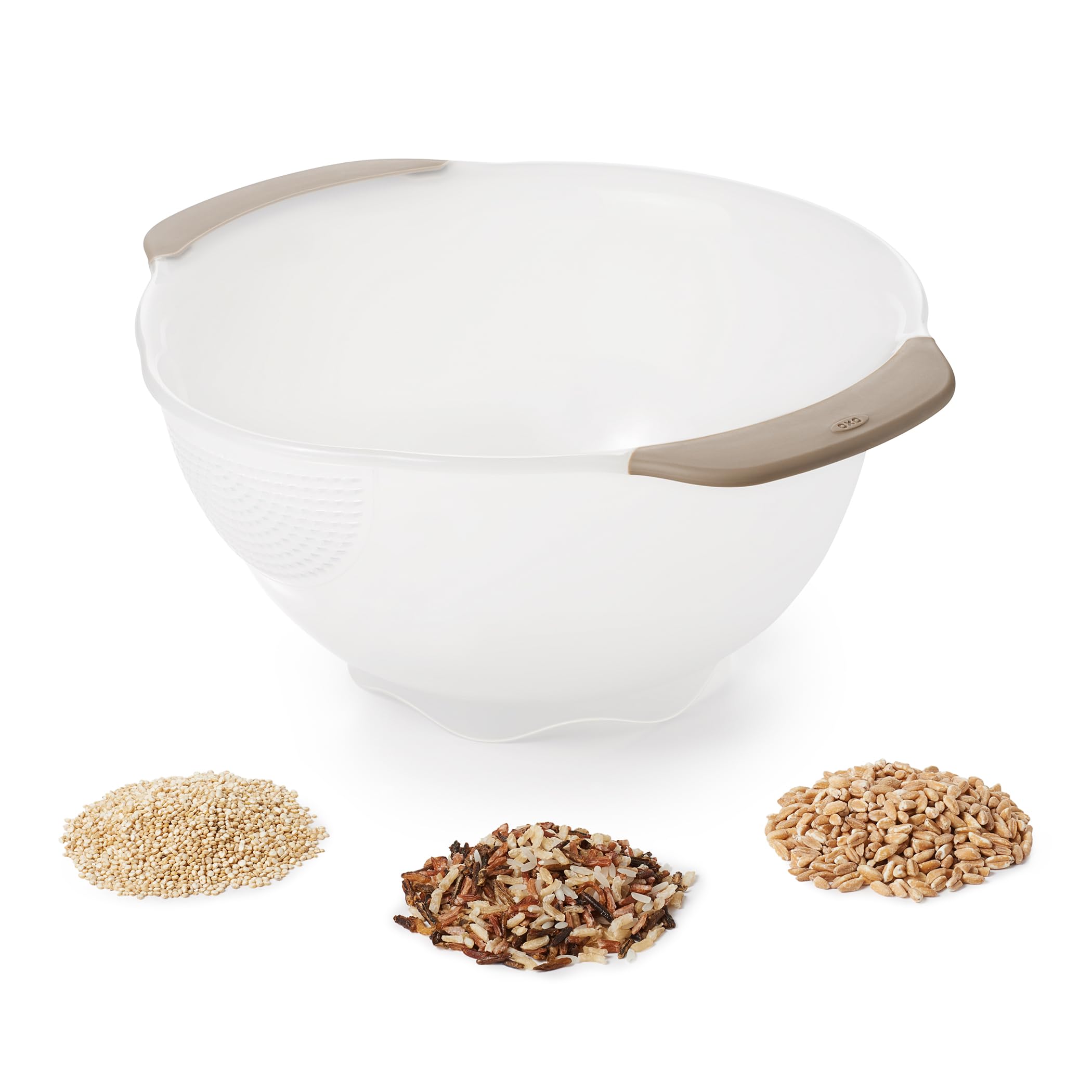
A purpose‑built plastic colander that intentionally pools water so I can see when grains are clean, with tiny square holes that keep rice and quinoa in the bowl while rinsing.
Why I picked it: Engineered drainage and tiny holes make grain rinsing simple and mess‑free.
Best for: Rinsing rice, quinoa, bulgur, and other small grains.
A specialized tool worth the extra spend if you rinse grains often.
Pros
- Holes sized for tiny grains
- Water pools so I can judge clarity
- Comfortable non‑slip handles
- Pour spout with extra drain holes
Cons
- Plastic construction vs. stainless look
- Less versatile for large produce
My take
This OXO is the colander I reach for when I’m rinsing rice or quinoa. The holes are small enough that I don’t lose grains, and the way water pools before it drains actually helps me tell when the rinse water has cleared.
The pour spout drains excess water cleanly and the non‑slip handles make shaking and pouring easy. Cleaning is fast and crumbs don’t get stuck in the holes like they sometimes do on wire mesh.
If your primary need is grains and tiny seeds, this is more effective than a metal colander with larger perforations. For veggies and bulk pasta I still prefer a steel bowl, but for small grains OXO does the job exceptionally well.
How I Choose a Colander
Key features I evaluate
I test colanders the way I actually cook: with boiling pots, wet rice, leafy greens, and full loads of pasta. These are the features I consider essential when I recommend a model.
Choosing the right colander comes down to matching the hole size, material, and stability to your usual cooking tasks.
- Material: I prefer 18/8 stainless for durability and heat resistance; food‑grade plastics work well for grain washers.
- Hole size: Micro‑perforations are essential for rice, quinoa, and tiny pasta; larger holes speed up drainage for bulky veg.
- Base and stability: A solid ring or low feet prevent tipping—important when draining heavy pots.
- Handles: Look for riveted or ergonomic handles and heat resistance so you can lift hot loads safely.
- Capacity: Match the quart size to your typical servings—5 quarts is a versatile family size; go smaller for single cooks.
Care and maintenance
I always check whether a colander is dishwasher safe and how easily trapped starch or bits rinse away. Stainless models often handle dishwasher cycles better, while plastic grain colanders are easier to scrub without trapping residue.
- Rinse soon after use to avoid starchy buildup.
- Dry stainless thoroughly if you won’t be using it daily to preserve the finish.
- Avoid harsh scrubbing pads on polished finishes to keep them shiny.
Frequently Asked Questions
Which colander should I use for rinsing rice?
I use either the LiveFresh micro‑perforated stainless or the OXO rice colander. LiveFresh handles grains while offering stainless durability; OXO is designed specifically to pool and slowly drain water so you can see when grains are clean.
Can I use metal colanders with boiling water?
Yes. I prefer 18/8 stainless models for boiling water because they resist warping and rust. Just use riveted handles and a solid base to avoid accidental tipping.
Are mesh colanders better than perforated metal?
I avoid mesh when I want fast cleanup—mesh traps starch and is harder to dry. Micro‑perforated stainless offers fine drainage and cleans more easily for everyday use.
Final Take
I keep both a micro‑perforated stainless colander and a grain‑specific rinser in my kitchen because they solve different problems: one handles bulk and heat, the other handles tiny grains without loss.
If I had to recommend a single, do‑everything pick for most households it would be a 5‑quart stainless with micro‑perforations and a solid base. For frequent rice and quinoa cooks, add the OXO or similar grain rinser to your toolkit.
