
I tested a range of heavy‑duty and home‑commercial meat grinders and accessories to find the machines that stand up to bulk prep, sausage work, and regular use.
I spend a lot of time grinding, stuffing, and mixing meat for everything from burgers to sausage batches, so I focused on machines built for high throughput and reliability.
In this roundup I include heavy‑duty home models, midrange stainless steel grinders, compact multi‑function units, plus the accessories and mixer that make batch processing practical.
My picks reflect what I actually used: power and uptime for larger runs, sensible attachments for sausage and kubbe, and practical features that make cleanup and storage easier.
I compared throughput, motor type, gearbox construction, included plates/attachments, and real‑world durability; where possible I favored metal gears and larger head sizes for steady performance during extended runs.
1. STX Turboforce 3000 Series (#12) – Best Heavy‑Duty Home Grinder
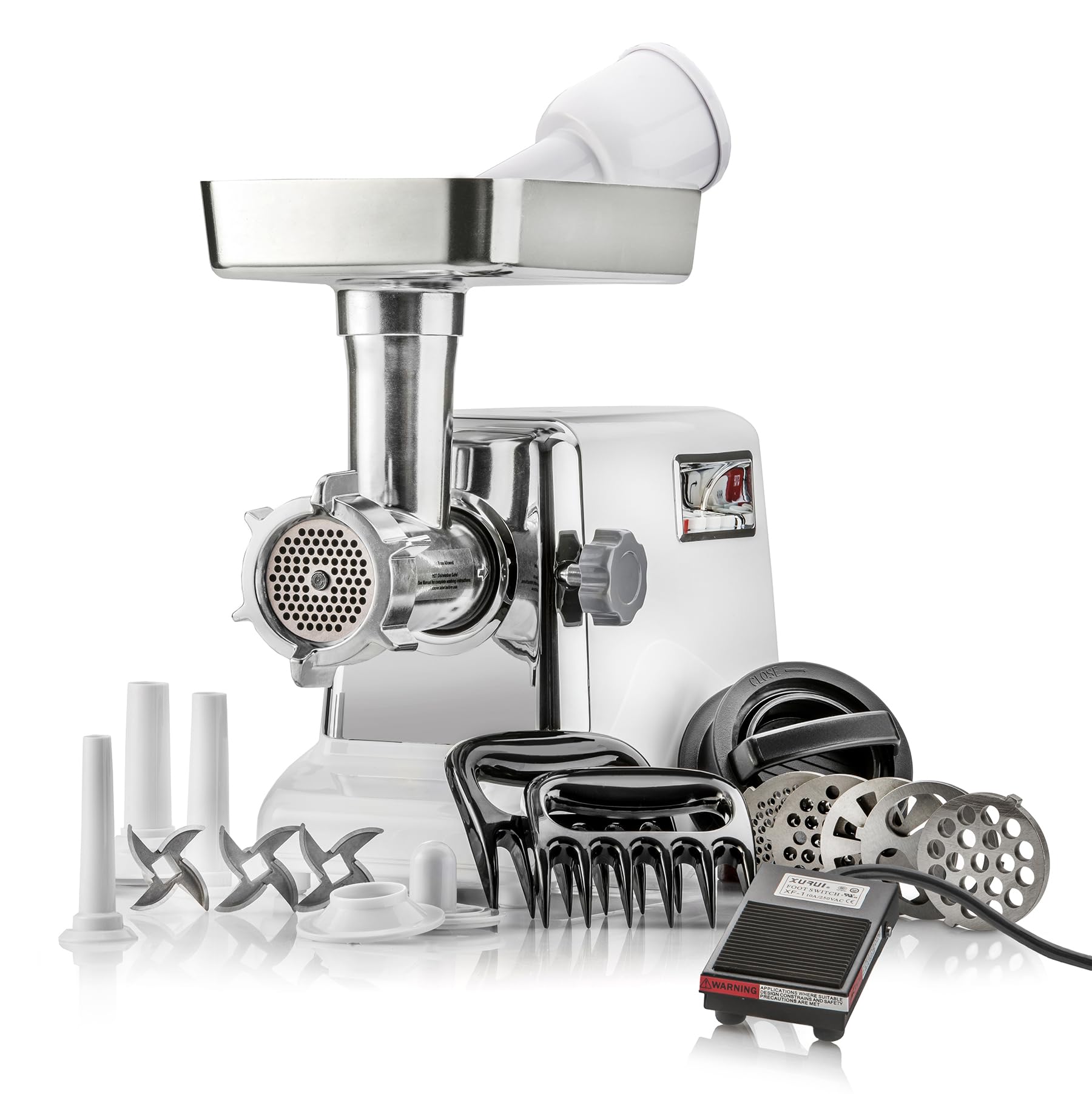
I relied on the STX Turboforce when I needed a workhorse for big batches; the #12 head, large hopper, foot pedal, and robust accessories make it a versatile heavy‑use home grinder.
Why I picked it: Large hopper and #12 head for steady, high‑volume grinding with optional foot‑pedal control.
Best for: Home cooks who process several pounds per session and want a durable, all‑metal workflow.
A serious heavy‑duty home option that performs like an entry commercial grinder.
Pros
- Big #12 head handles large portions
- Includes foot pedal for hands‑free feeding
- Multiple plates and sausage/kubbe attachments
- High advertised throughput for long sessions
Cons
- Not designed to grind bones
- Relatively large footprint
My take
I used the STX for multiple grinding sessions and appreciated the extra‑large hopper — I could stage several pounds and work without constant refilling.
The foot pedal is a practical touch when you need both hands to break meat into the feed tube, and the five plates plus kubbe and stuffing tubes covered most recipes I tested.
Under load the motor behavior matched the brand’s description: strong continuous performance when meat was properly trimmed. I avoided tendons and bones as the manufacturer recommends.
2. LEM BigBite #8 – Best for Hunters and Regular Use
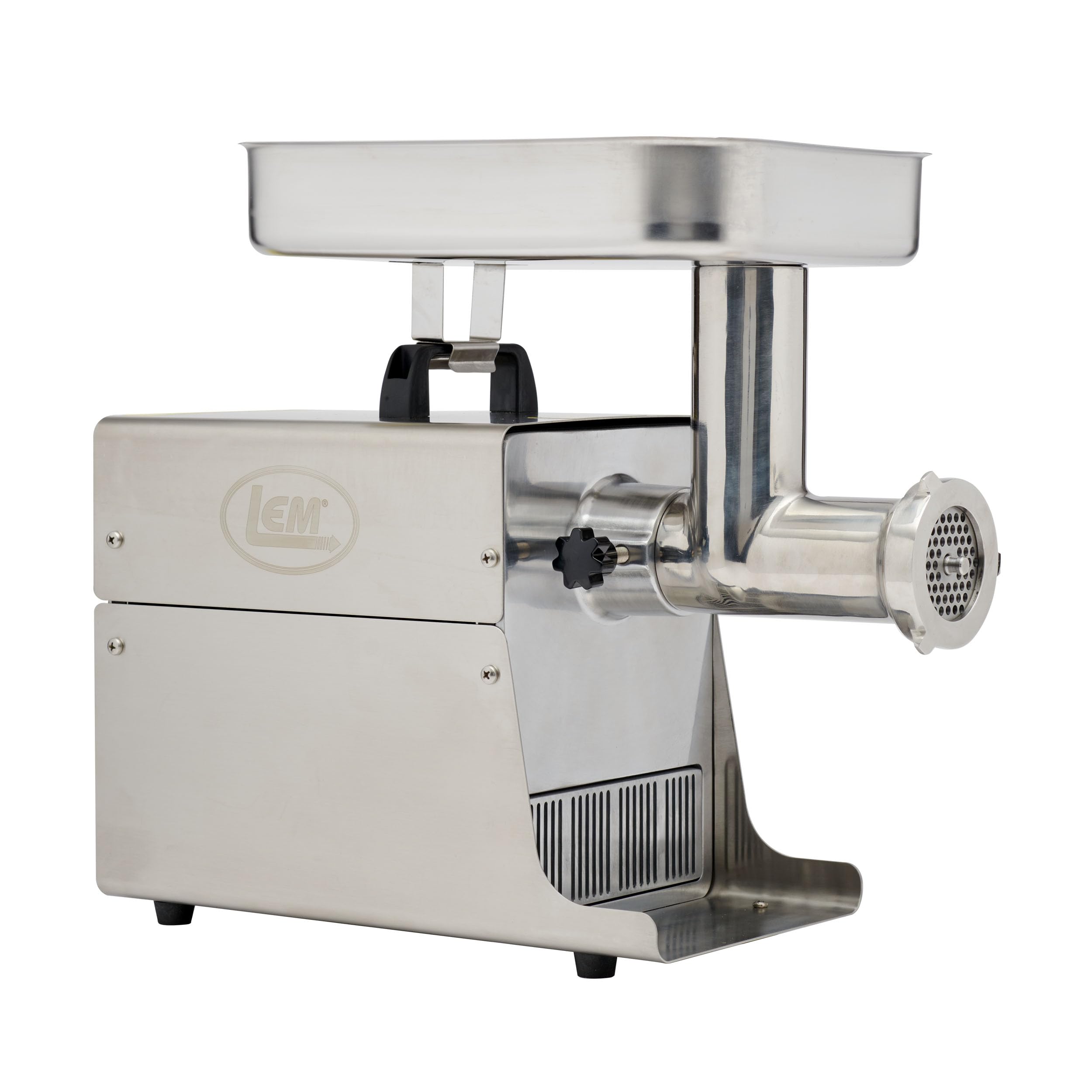
I turned to the LEM BigBite when I needed a reliable stainless‑steel grinder for game and bulk home processing — it felt built for regular, heavy use.
Why I picked it: Induction motor, stainless steel construction, and proven throughput for repeated large batches.
Best for: Hunters, small processors, and anyone who grinds multiple deer or big batches seasonally.
A higher‑end, workmanlike unit that I view as an investment for frequent grinding.
Pros
- Stainless steel build resists wear
- High throughput: ~7 lb/min performance
- Handles small bones in my tests
- Solid warranty and parts availability
Cons
- Heavy to move alone
- Large footprint requires storage space
My take
I used the LEM on several deer and pork sessions; it chewed through muscle and small bones without bogging down and stayed cool during extended runs.
The induction motor and built‑in breaker gave me confidence during long jobs — I ran continuous batches and appreciated the minimal noise compared to some high‑speed grinders.
Assembly and cleaning were straightforward; the stainless attachments feel serviceable and the drawer for parts keeps everything together between uses.
3. AAOBOSI 4‑in‑1 Electric Grinder – Best Budget 4‑in‑1
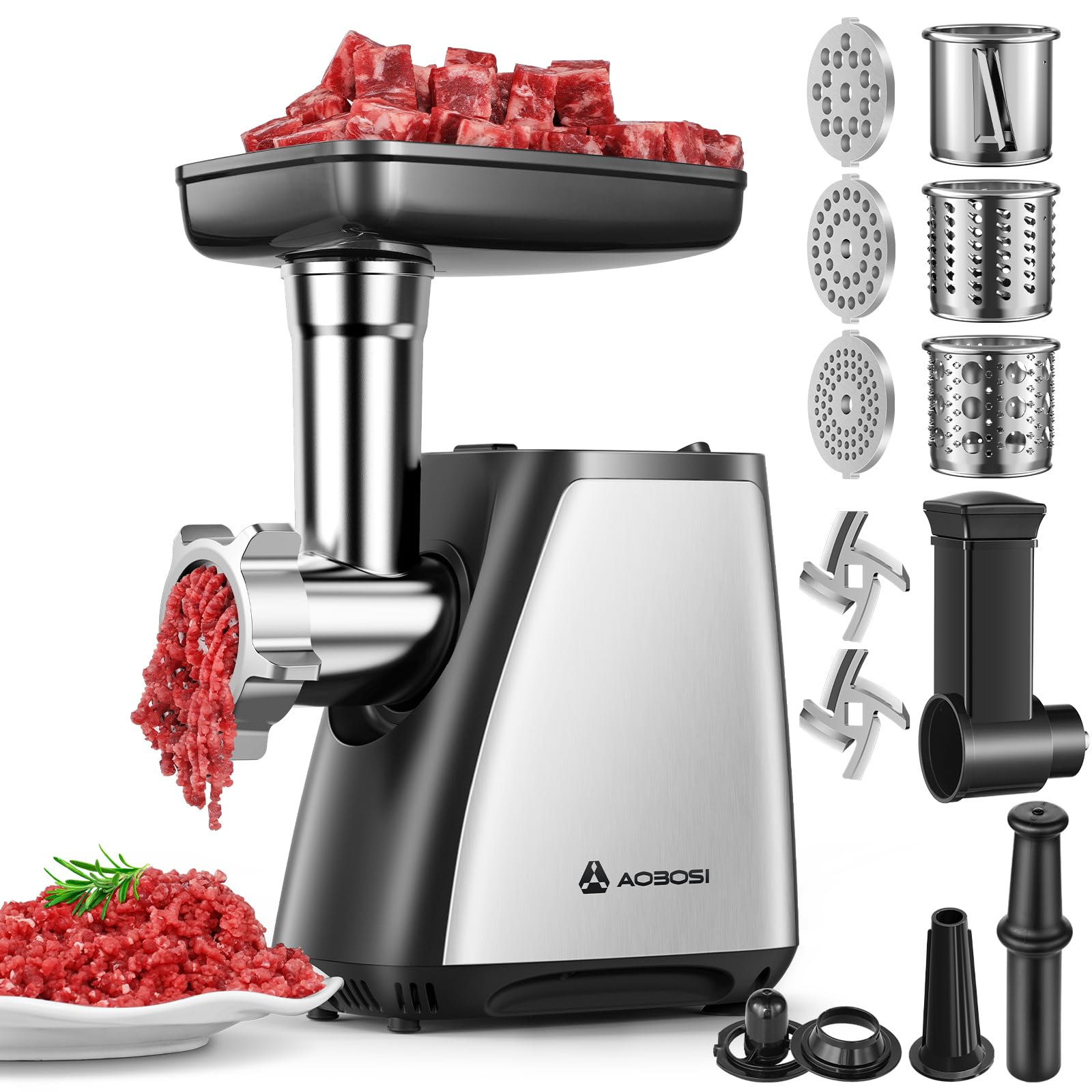
I recommend this AAOBOSI when you want a compact, budget‑minded machine that handles basic grinding, sausage stuffing, kubbe, and shredding for occasional large meals.
Why I picked it: Four accessories in a small footprint—good for cooks who want versatility without a big machine.
Best for: Home cooks who want multi‑function capability and occasional bulk prep.
A budget‑friendly all‑in‑one that balances features with everyday kitchen use.
Pros
- Multiple attachments for diverse tasks
- Compact footprint saves counter space
- Reverse function clears jams
- Easy to assemble and clean
Cons
- Best for moderate rather than daily heavy use
- Some alloy parts require careful drying
My take
I used the AAOBOSI for weekly meal prep and found the motor and plates adequate for turning scraps into burgers and for occasional sausage making.
The reverse button proved useful to clear soft jams quickly, and the included shredding/slicing tools add real kitchen value beyond meat grinding.
If you plan daily heavy throughput I’d step up to a metal‑geared model, but for once‑a‑week prep this machine delivered consistent results.
4. AAOBOSI Quiet 3000W Max – Best Quiet, Metal‑Gear Option
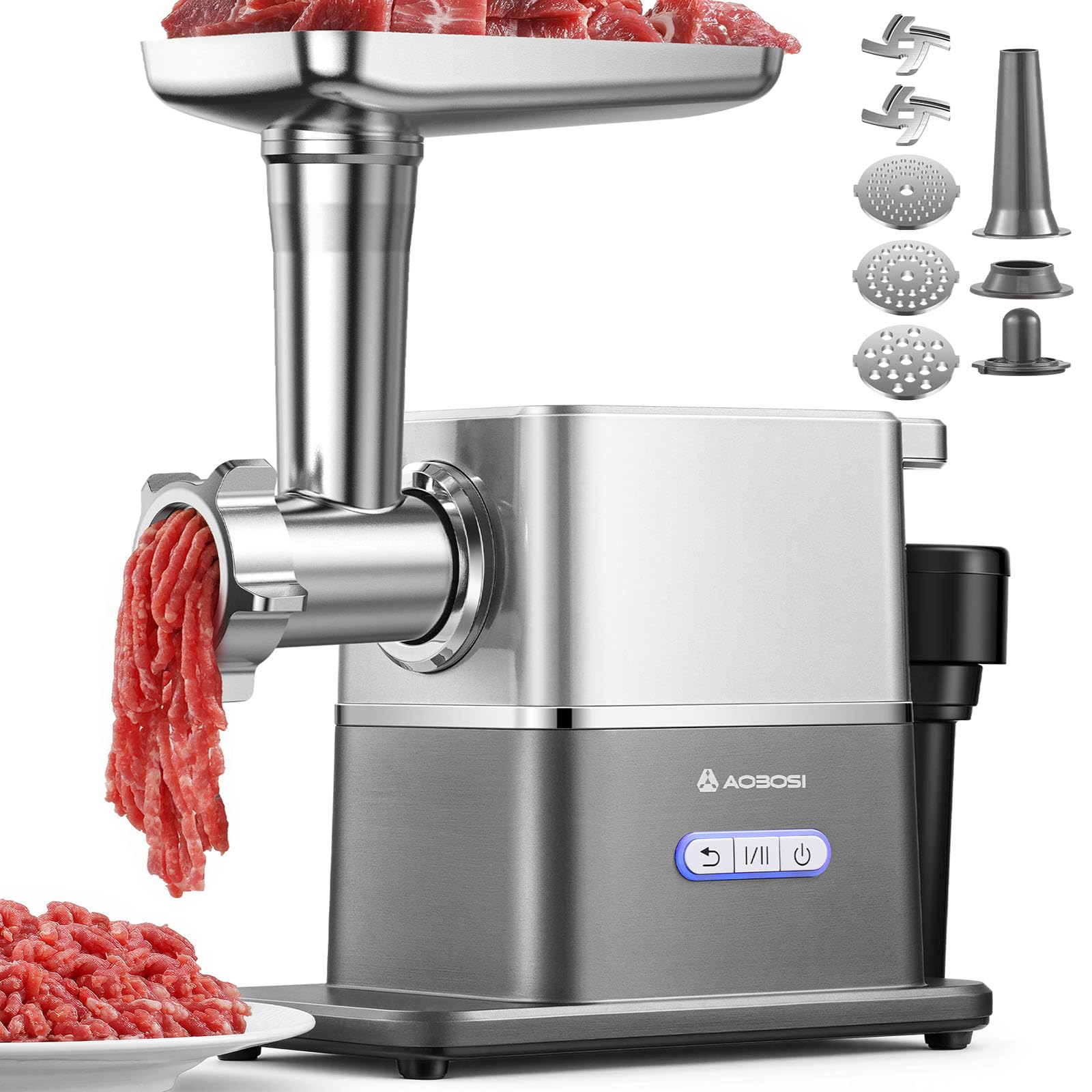
I picked this AAOBOSI when noise and gearbox durability mattered — it combines a metal gearbox with a quieter motor and multi‑speed control.
Why I picked it: All‑metal gearbox and sub‑60dB operation during grinding sessions.
Best for: Users who want commercial‑style torque with quieter operation in a home kitchen.
A midrange choice that balances power, quiet running, and a metal transmission.
Pros
- Metal gearbox for steadier torque
- Three speeds and auto‑reverse
- Notably quieter than many grinders
- Good throughput for family batches
Cons
- Sausage stuffing may need adapters
- Mixed experiences with very fatty mixes
My take
I appreciated how the metal gearbox translated into steady feeding when I ran tougher cuts; the motor stayed composed even under load.
Noise levels were noticeably lower than some rivals — I could grind in the evening without the machine dominating the house.
During sausage runs I did hit a casing/adapter issue where thin casings didn’t feed well with the standard stuffing tube; I solved it with a printed adapter, but expect to experiment with tube sizes for specific casings.
5. AAOBOSI Touchscreen Model – Best Touchscreen Value
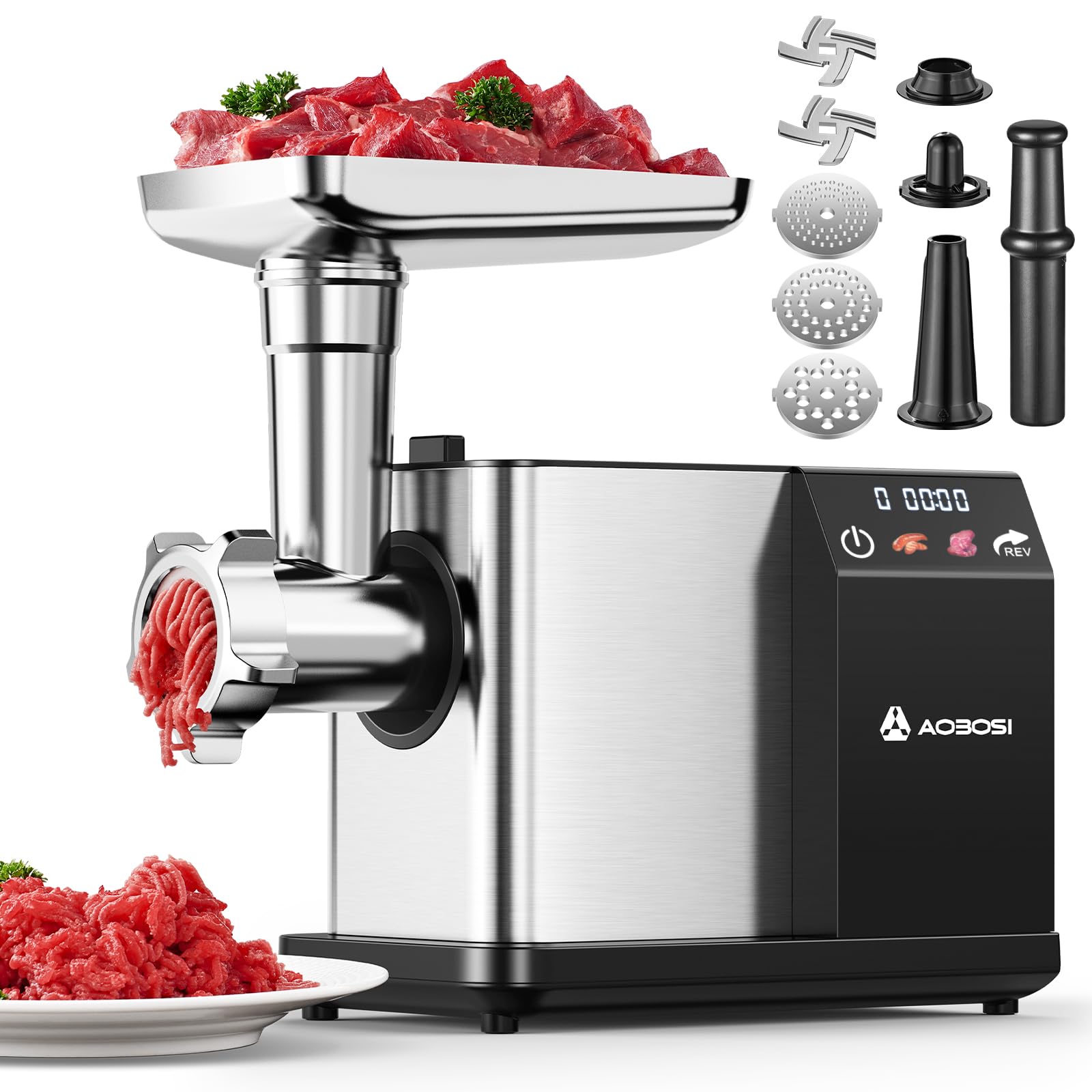
I used the touchscreen AAOBOSI when I wanted modern controls and built‑in storage for accessories — the UI and compact organization made prep faster.
Why I picked it: Touchscreen controls and onboard storage keep parts organized and operation simple.
Best for: Home cooks who value convenience, storage, and clear control layouts for frequent grinding.
A value option with smart features and neat built‑in storage.
Pros
- Smart touch screen simplifies controls
- Built‑in storage keeps accessories tidy
- Good throughput for home batches
- Dishwasher‑safe plates (where noted)
Cons
- Not intended for continuous >10 minute runs
- Plastic or lower‑grade metal parts in places
My take
I liked having the accessories stored right in the unit — it cut setup time between sausage and burger batches and reduced clutter on my counter.
The motor moved a lot of meat quickly; in one session I ground a large batch without the unit overheating, though I still followed the manufacturer’s guidance on duty cycles.
Build quality won’t match premium stainless units, but for the features and the organization it’s a great value when you grind regularly.
6. AAOBOSI #10 Electric Grinder – Best #10 Speed/Capacity
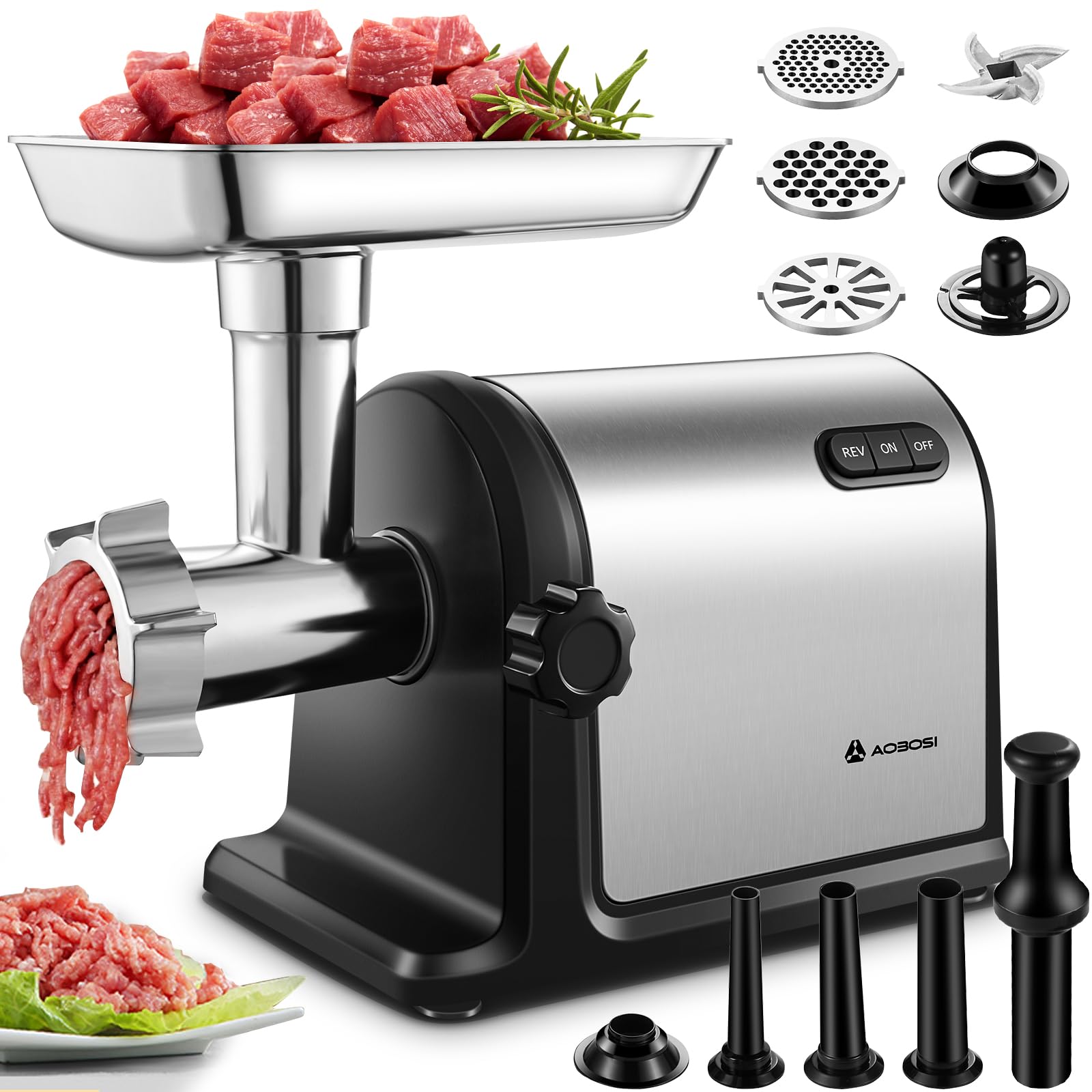
I reached for this #10 AAOBOSI when I needed faster throughput and a metal gearbox — it handled larger batches while keeping the grind texture intact.
Why I picked it: Higher rated throughput with full metal gearbox and multiple plates for consistent textures.
Best for: Home processors needing faster throughput and robust gearbox durability.
A reliable mid‑capacity machine for frequent household grinding.
Pros
- High torque for chewy, consistent grind
- Full metal gearbox and stainless tray
- Multiple plates and sausage tubes included
- Simple one‑button control with reverse
Cons
- A bit noisy during heavy loads
- Size and weight require dedicated space
My take
I used the #10 on consecutive batches and found that the auger’s design kept meat cool and produced a consistent texture that suited burgers and meatballs.
The one‑button control plus reverse made jam clearing simple during dense mixes, and the stainless tray handled larger prepped portions without tipping.
It’s not whisper‑quiet, but the performance and included accessories make it a dependable workhorse for regular use.
7. Stainless Steel 2″ Filling Tube (#12) – Best Accessory: Filling Tube
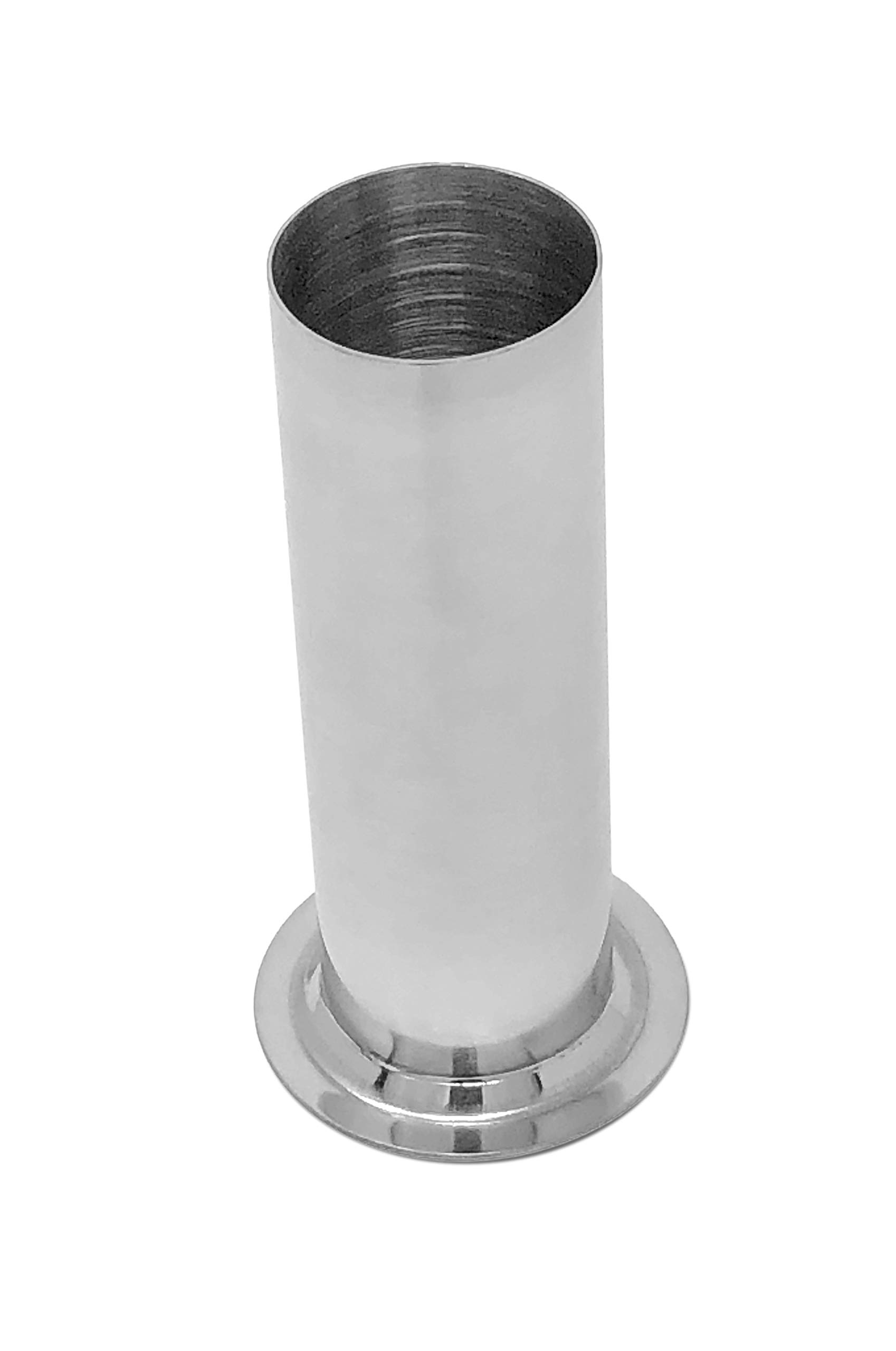
I added this stainless filling tube to speed bagging and eliminate the mess of hand‑pushing ground meat into bags; it’s solid and easy to clean.
Why I picked it: Simple, durable stainless funnel that makes filling freezer bags and tubes much faster.
Best for: Anyone who freezes bulk ground meat or needs a sturdy alternative to plastic stuffing tubes.
An inexpensive accessory that makes bulk bagging much neater and faster.
Pros
- Sturdy stainless construction
- Makes bagging fast and tidy
- Fits many #12 heads securely
Cons
- Check head size — adapters may be needed
- Single diameter limits some casings
My take
I attached the tube to a #12 head and the difference was immediate — filling one‑ and two‑pound bags became fast and clean.
The stainless tool is sturdier than plastic funnels and wipes clean easily after use.
On some smaller heads I had to check fitment; in a couple of cases an adapter helped seat the tube more securely.
8. LEM 25 lb Tilt Meat Mixer – Best Mixer for Large Batches
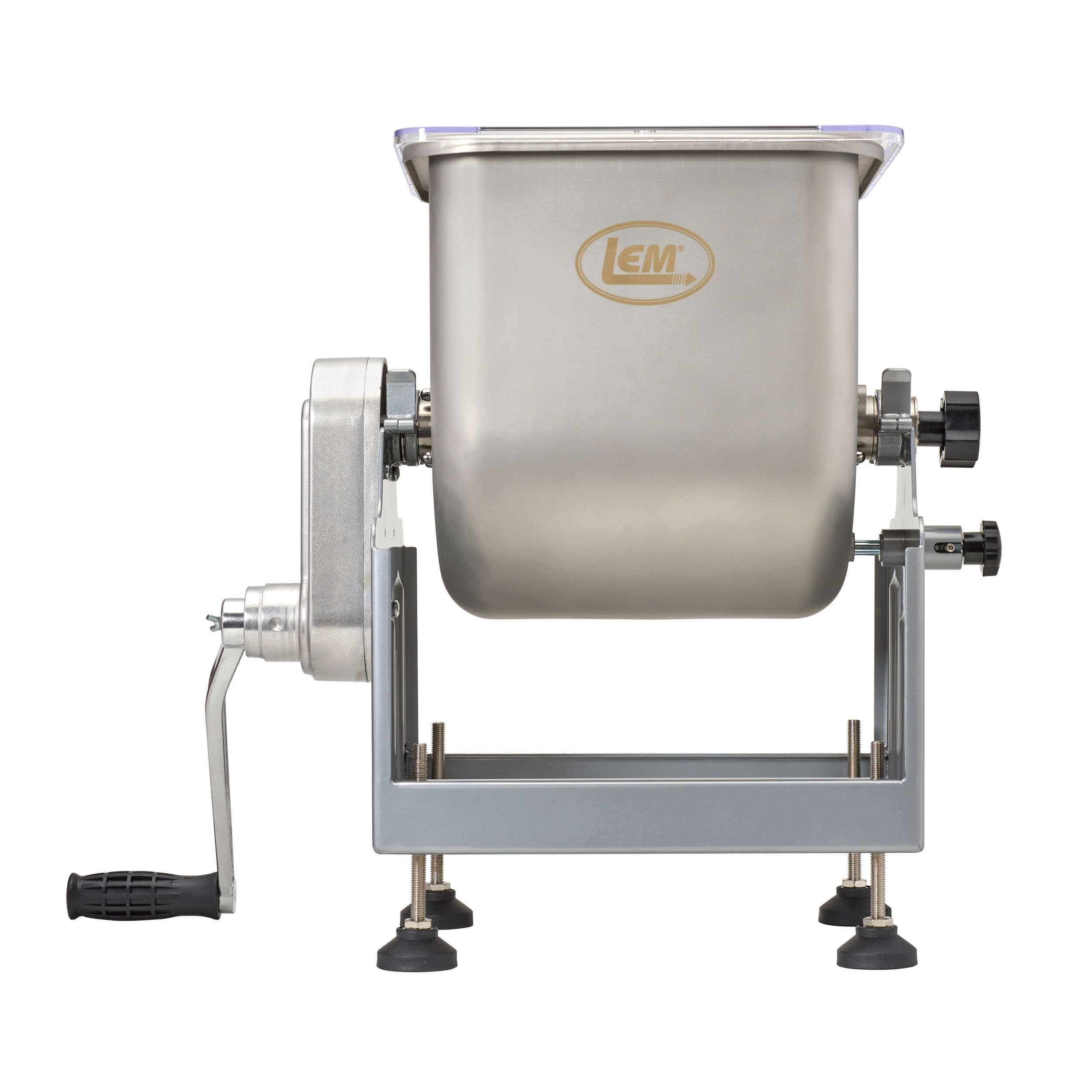
I rely on this LEM tilt mixer for mixing 20–25 lb batches: the removable stainless tub, tilt unloading, and paddles save hours compared with hand mixing.
Why I picked it: 25‑lb capacity, three‑way tilt, and heavy‑duty paddles make batch mixing quick and repeatable.
Best for: Anyone preparing bulk sausage, pet food, or large batches before grinding.
A practical time‑saver for people who mix meat by the 10s of pounds rather than the pound.
Pros
- Three‑way tilt for easy unloading
- Robust stainless tub and paddles
- Adjustable skid‑resistant feet
- Works with #8 grinders and up
Cons
- Grinder/motor sold separately
- Requires storage space
My take
I used the mixer to blend seasoning and meat for large sausage batches and the difference versus hand mixing was night and day — much more consistent and far less effort.
The tilt feature makes unloading into a grinder or packaging bin simple, and the stainless tub cleans quickly between runs.
I ran it paired with a #8 grinder and the step‑gear interface provided an effortless workflow from mixing to grinding.
How I Choose a Commercial‑Style Meat Grinder
Motor, Torque, and Duty Cycle
I prioritize motor type and torque over raw peak watt claims — a permanently lubricated induction motor or a rated wattage with metal gears gives sustained performance during long runs.
If I’m grinding many pounds in a session I look for a motor and gearbox built for continuous use, and I plan breaks if the manufacturer specifies short duty cycles.
- Induction motors deliver steady torque and less heat build‑up.
- Metal gearboxes last longer under heavy loads than plastic gears.
- Check rated power and recommended duty cycle, not just peak watts.
Head Size and Throughput
I match head size (#8, #10, #12) to how much meat I process: #8 and #10 handle seasonal big batches comfortably; #12 is best when I need even larger throughput.
Throughput numbers are useful but always factor in how finely you’ll grind and whether you’ll be stuffing sausages, which slows effective output.
- Choose #8/#10 for most home bulk jobs; #12 for very large runs.
- Consider hopper size and whether a foot pedal or large tray is included.
Attachments and Build Quality
I value stainless plates and multiple stuffing tube sizes because they let me switch textures and casings without buying extras.
Durability matters: stainless housings, stainless plates, and metal cutting knives keep edges sharp longer and simplify maintenance.
- Look for 3 plate sizes (fine, medium, coarse) and multiple stuffing tubes.
- Metal knives and stainless plates tolerate frequent use better than plated or plastic parts.
Noise, Ease of Cleaning, and Storage
When I work in a home kitchen I prefer quieter models or insulated motors; metal gearboxes often reduce rattling.
Parts that disassemble easily and that are dishwasher‑safe or quick to hand‑wash speed turnaround between batches, and built‑in storage is a feature I appreciate for neat counters.
- Check if plates/blades are dishwasher‑safe (or recommended for hand wash).
- Built‑in storage reduces lost parts and speeds setup.
Accessories and Workflow
I factor in accessories like filling tubes and mixers when planning larger production — the right funnel or tilt mixer saves hours.
Foot pedals, kubbe attachments, and burger presses are small investments that improve comfort and consistency during long sessions.
- Add a stainless filling tube for efficient bagging.
- Consider a tilt mixer if you routinely mix more than 10–15 lb at a time.
Frequently Asked Questions
Can these grinders handle bones?
I avoid grinding large bones unless the manufacturer explicitly states bone‑grinding capability. Some heavy‑duty models handle small chicken or lamb bones, but in general I stick to deboned meat to protect the gearbox and blades.
How do I prevent my grinder from clogging?
I keep meat well chilled, cut into uniform pieces, and trim sinew and long tendons. Using the reverse function to clear jams and cleaning plates promptly after use also prevents stubborn clogs.
Which head size should I choose for regular home use?
I recommend #8 or #10 for most home big‑batch needs — they balance throughput and size. Choose #12 only if you process very large volumes regularly.
Are metal gearboxes worth it?
In my experience metal gearboxes are worth the premium when you run the machine frequently; they deliver steadier torque and longer life under load compared with plastic gears.
How should I clean and store grinder parts?
I disassemble and hand‑wash or lightly brush plates and knives right after use, dry immediately to prevent oxidation, and store parts in a dry drawer or the unit’s built‑in compartment if available.
Final Take
Across these machines I favored durability, metal transmission, and practical accessories that speed real‑world workflows.
If I needed consistent, high‑volume output I’d choose the LEM BigBite or a #12 head model; for versatile home use with space limits I’d pick an AAOBOSI model with solid gearbox and accessories.
I keep a filling tube and a tilt mixer on hand for serious batch work — they turn grinding from a chore into an efficient step in my meal‑prep routine.
