
I tested a range of commercial pressure washers — lightweight electrics, high‑power gas rigs, a compact cordless unit, and a stubby gun accessory — and I’m sharing which ones worked best for specific jobs, why they stood
I’ve spent time running each of these machines across decks, driveways, vehicles and heavy grime so I can tell you which makes sense for different jobs. This roundup covers handheld electrics, full‑size electric units with induction motors, commercial gas washers, a compact gun accessory, and a cordless portable washer.
My goal is practical: help you match power, portability and accessories to the work you actually need done — from gentle car washes to surface prep and deep concrete cleaning.
If you want mobility and low maintenance, pick an electric or cordless unit; for heavy surface prep and contractors, I reach for the high‑PSI gas models.
1. Westinghouse ePX3100v Electric Pressure Washer – Best Compact Electric
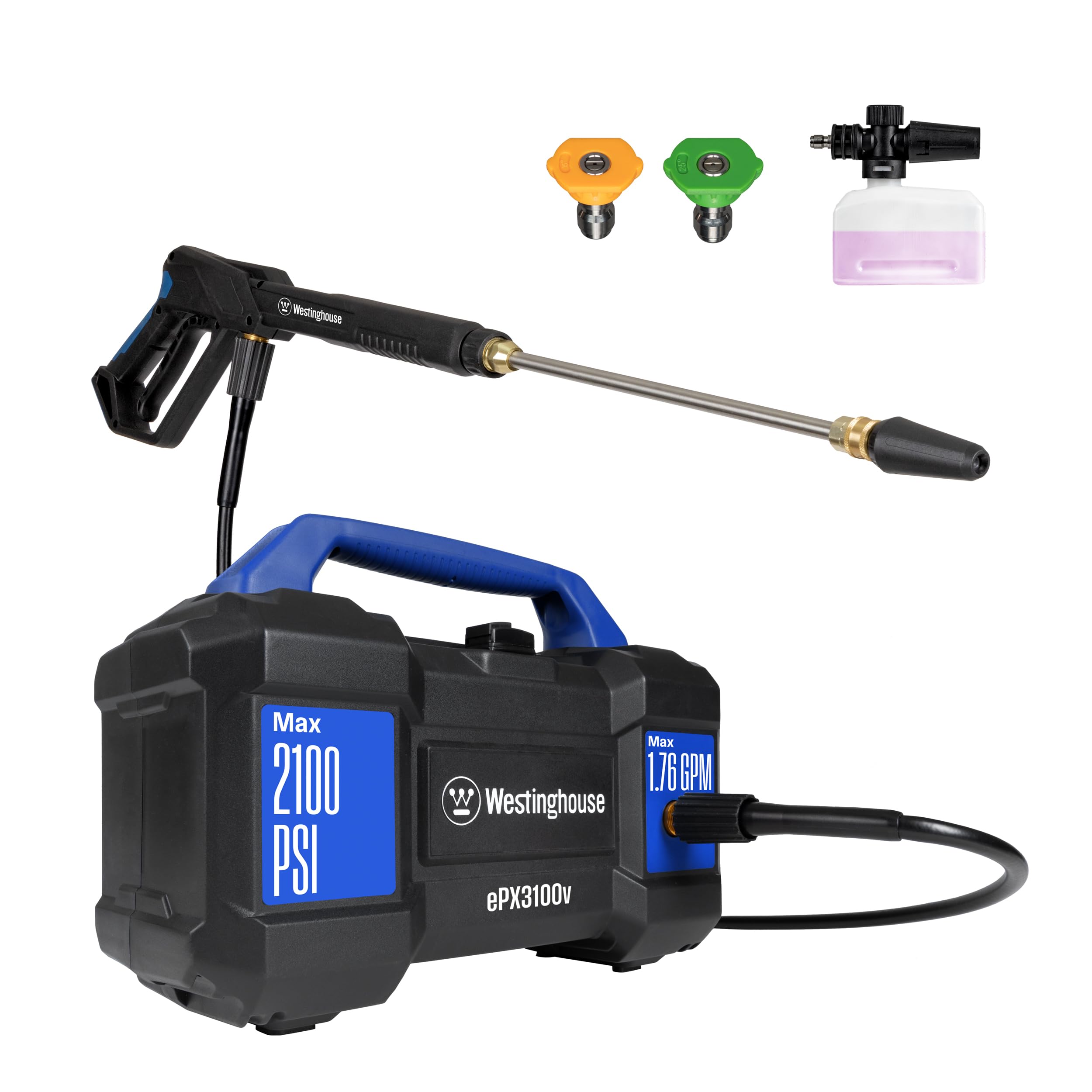
A lightweight, handheld electric washer that packs household-grade power with a detachable foam cannon and TSS pump shutoff.
Why I picked it: I chose it for its portability and surprising cleaning power in a compact package.
Best for: Small properties, vehicles, patio furniture and quick spot cleaning.
An affordable, no‑fuel option with low operating cost and simple storage.
Pros
- Very light and easy to carry
- Detachable foam cannon included
- Total Stop System saves motor and energy
- Compact for tight storage
Cons
- No wheels — must carry while working
- Hose could be longer for vehicle work
- Can tip over during use
My take
This is the smallest machine in the group and I liked that immediately — at roughly 18 pounds I moved it around the yard without breaking stride. The motor delivers up to 2100 PSI (1800 PSI rated) and the trigger gun felt responsive for rinsing decks, washing cars and blowing grime off patio furniture.
The detachable foam cannon makes soap work simple, and the 20' nylon braided hose gives me reach that’s fine for most residential tasks. The Total Stop System (TSS) is a practical touch — the pump stops when I release the trigger, which conserves energy and reduces wear during long jobs.
What I trade for portability is a lack of wheels and a shorter hose: I often have to move the unit when washing a vehicle. Despite that, its compact footprint and quiet operation compared to my old gas units make it my go‑to for quick, recurring cleaning chores.
2. Westinghouse WPX3000e Electric Pressure Washer – Best Heavy-Duty Electric
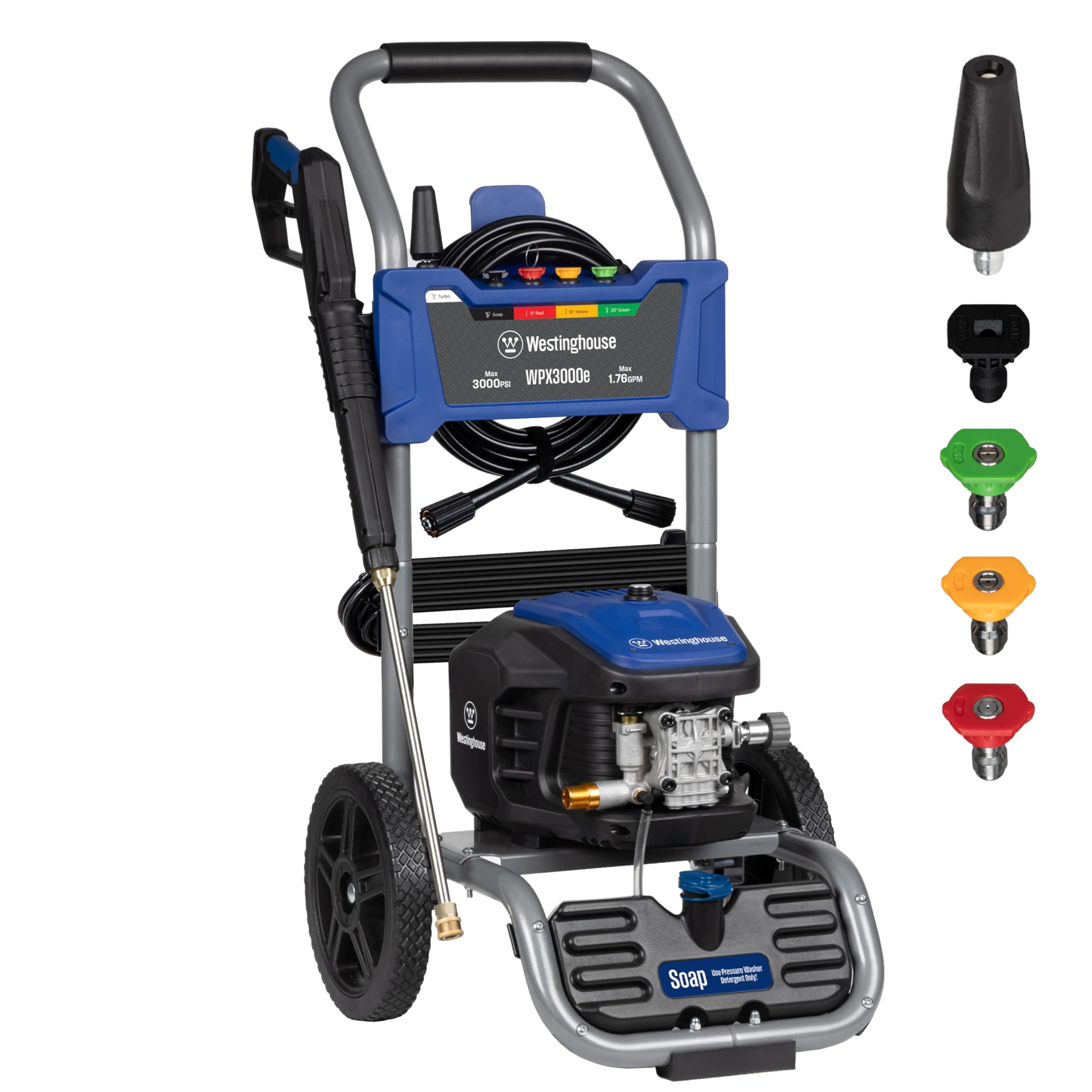
A higher‑power electric with an induction motor, maintenance‑free axial pump, onboard soap tank and never‑flat wheels for longer jobs.
Why I picked it: It hits the sweet spot between electric convenience and near‑commercial pressure for serious home jobs.
Best for: Large patios, fences, home exteriors and users who want electric power without gas maintenance.
A mid‑range electric that offers power close to small gas units with lower ongoing maintenance.
Pros
- Strong electric output for its class
- Built‑in .45 gal soap tank
- Never‑flat 10" wheels for easy transport
- Induction motor and axial pump
Cons
- Heavier than compact electrics
- Power cord can get in the way
My take
When I needed a machine that could clean a whole driveway or strip paint from furniture, this model delivered. It reaches up to 3000 PSI (2600 PSI rated) and the induction motor paired with the maintenance‑free axial cam pump made extended use feel robust and reliable.
I appreciated the included 5 nozzles — the turbo tip and soap setting sped up big jobs — and the .45 gallon soap tank saved trips to the bucket. The 35' GFCI cord and high‑profile wheels made it far easier to position around a house than a handheld unit.
This washer is noticeably heavier, but that bulk is exactly why it handles bigger residential jobs without dealing with gas. For anyone who wants serious cleaning with electric convenience, this is the one I turn to.
3. 4200 PSI 212cc Gas Pressure Washer – Best for Heavy Surface Prep
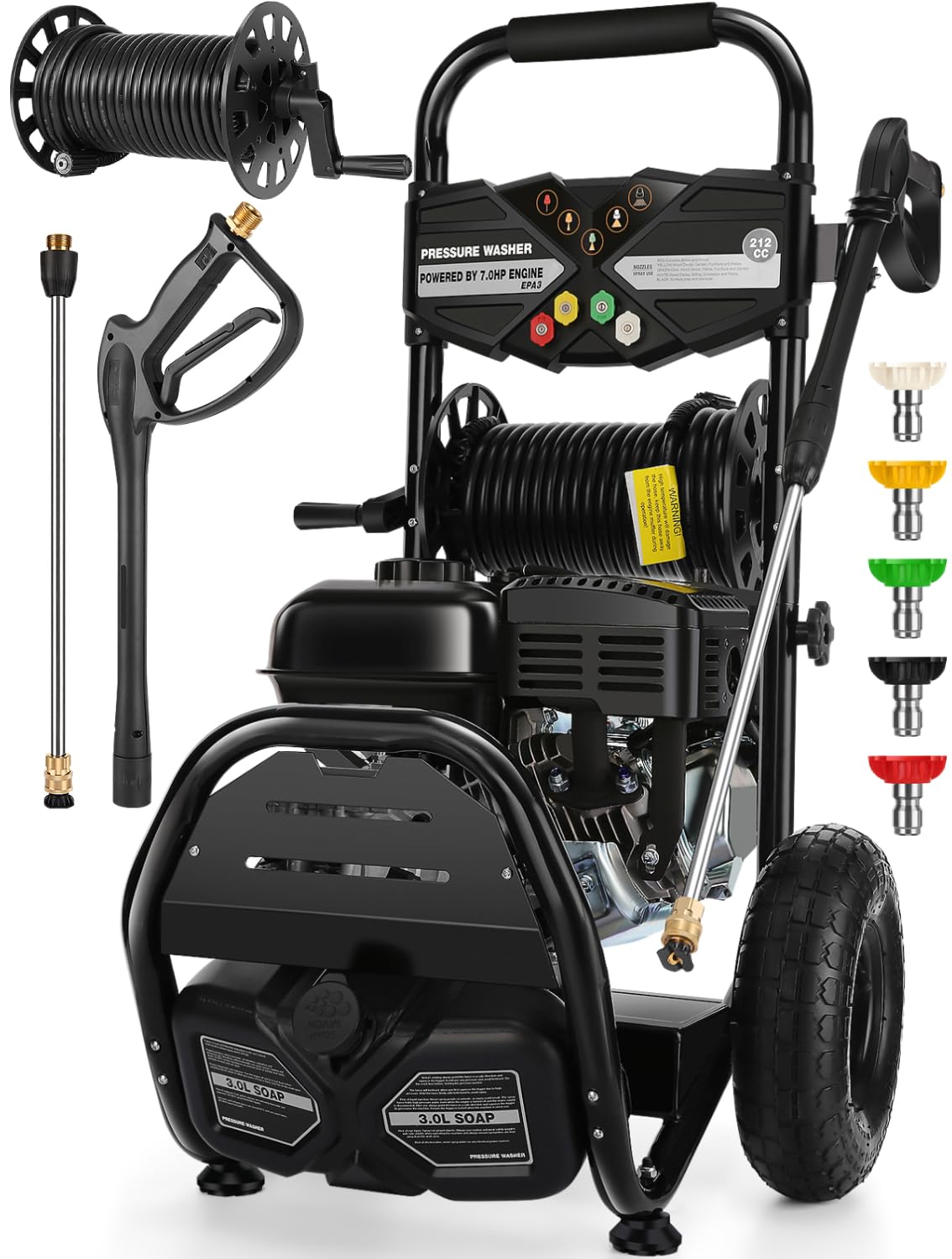
A high‑power gas washer with a 212cc engine, axial cam pump, long hose and multiple quick‑connect nozzles for tough cleaning and prep work.
Why I picked it: I picked this for raw cleaning power when surface prep or heavy grease removal is the job.
Best for: Driveways, paint prep, siding, large patios and commercial cleanup.
A higher initial and operating cost but much greater cleaning capacity than electric models.
Pros
- Very high PSI and GPM
- Robust 212cc gasoline engine
- Long 32' high‑pressure hose
- Multiple quick‑connect nozzles
Cons
- Requires fuel and routine maintenance
- Heavier and less quiet than electrics
My take
This is the most powerful machine I used — the engine and axial cam pump combination pushes up to 4200 PSI and around 4.0 GPM, which makes short work of old concrete stains and heavy grime. For paint prep and deep cleaning I relied on its raw force.
The 32' braided hose and included nozzle set (including a soap bottle) meant I could reach far without constantly moving the cart. It starts with a recoil pull and felt easy to set up; the welded frame and never‑flat wheels made it straightforward to move across rough ground.
The tradeoffs are familiar: gas means oil, fuel and a louder machine, but when I need peak cleaning performance this is the tool I grab.
4. Short Swivel Pressure Washer Gun – Best Accessory Gun
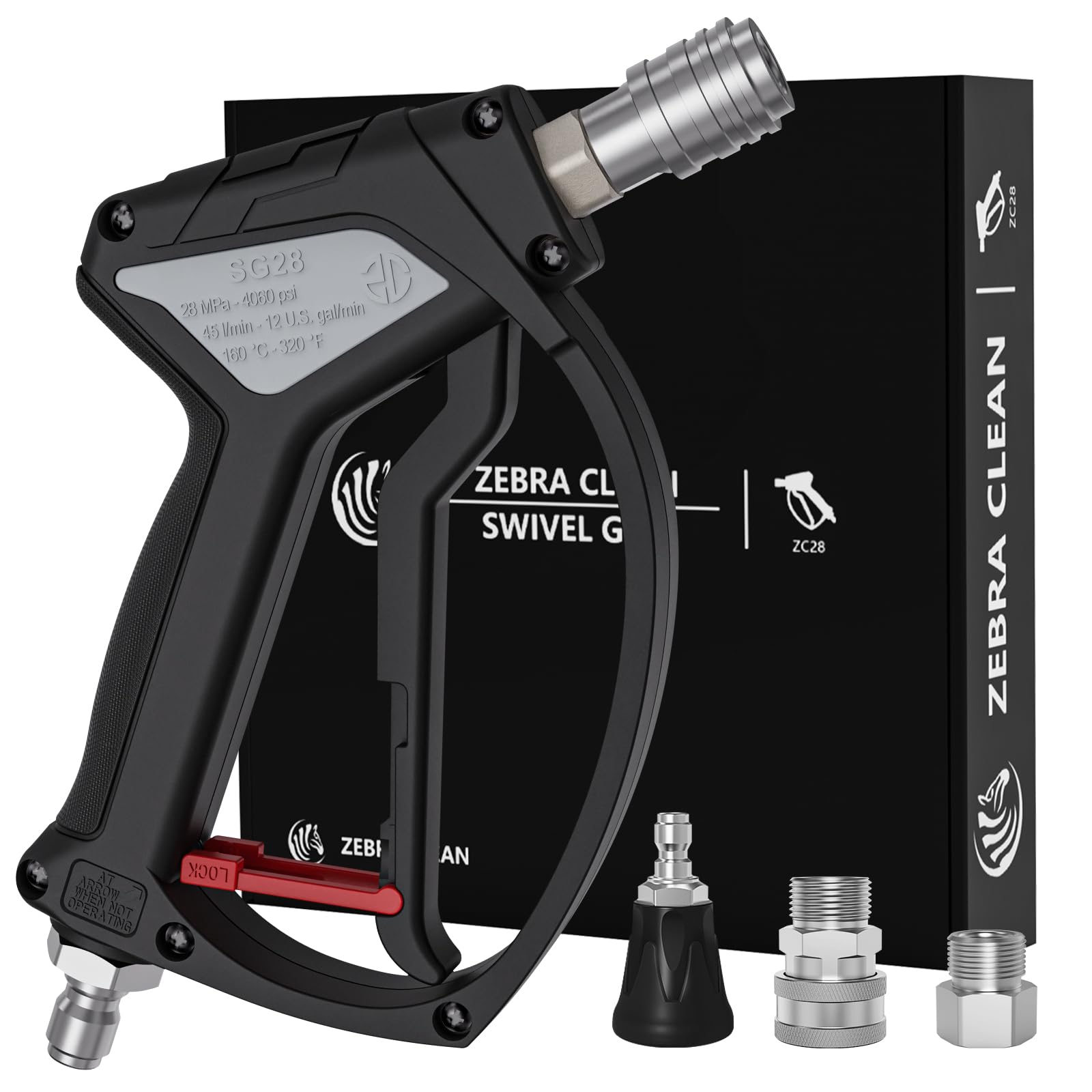
A stubby, one‑hand quick‑connect gun with 360° swivel, brass fittings and a 25° rubber nozzle ideal for tight spots and detail work.
Why I picked it: I wanted a compact, low‑fatigue gun that plays well with foam cannons and tight maneuvering.
Best for: Detailing cars, working around posts, and reaching cramped areas without hose kinks.
An inexpensive, high‑value accessory that upgrades handling and reduces fatigue.
Pros
- One‑hand self‑locking quick connect
- Butter‑smooth 360° swivel
- Light trigger pull to reduce fatigue
- Includes adapters and Teflon tape
Cons
- Push‑lock connector showed early wear for me
- Stubby reach limits leverage on big jobs
My take
I kept this on my gun rotation for detail work: the short body and light trigger made long car‑wash sessions far easier on my hands. The stainless steel quick‑connect tip and 25° rubber nozzle gave a controlled spray that didn’t chatter on painted surfaces.
The swivel inlet is the standout — it really prevents hose kinks and makes maneuvering around wheels and railings effortless. I did experience a push‑lock fitting wear after repeated quick connects on one unit, so I treat that connection with a little extra care and keep the included adapters handy.
Overall this stubby gun made detail work faster and less fiddly, and I brought it along whenever I needed precision rather than reach.
5. 4200 PSI Commercial Gas Pressure Washer (Black) – Best Budget Commercial Gas
A budget‑minded 4200 PSI gas washer with 4.0 GPM, quick‑connect nozzles, foam bottle and long hose suitable for heavy home and light commercial tasks.
Why I picked it: It delivers commercial‑level specs at a value‑oriented proposition for frequent heavy cleaning.
Best for: Driveways, patios, garage floors and fleet cleanup where power and hose reach matter.
A cost‑efficient gas option that balances power and included accessories.
Pros
- High PSI/GPM for deep cleaning
- Long hose for extended reach
- Includes foam bottle and multiple nozzles
- Sturdy frame and functional accessories
Cons
- Gas upkeep required
- Can be bulky for single‑person transport
My take
This model gave me the same core advantage as other 4200 PSI machines: strong, immediate cleaning performance. I used it on driveways, patios and vehicles and the results were dramatic compared with home electrics.
The included nozzles and foam bottle were practical — switching spray angles is quick and the foamer spread soap evenly for real suds during car washes. The unit felt solid and the hose length meant fewer moves during large jobs.
If you want heavy cleaning without stepping up to a pro‑grade brand price, this one hits that middle ground for me.
6. 4200 PSI Premium Gas Pressure Washer – Best Premium Gas
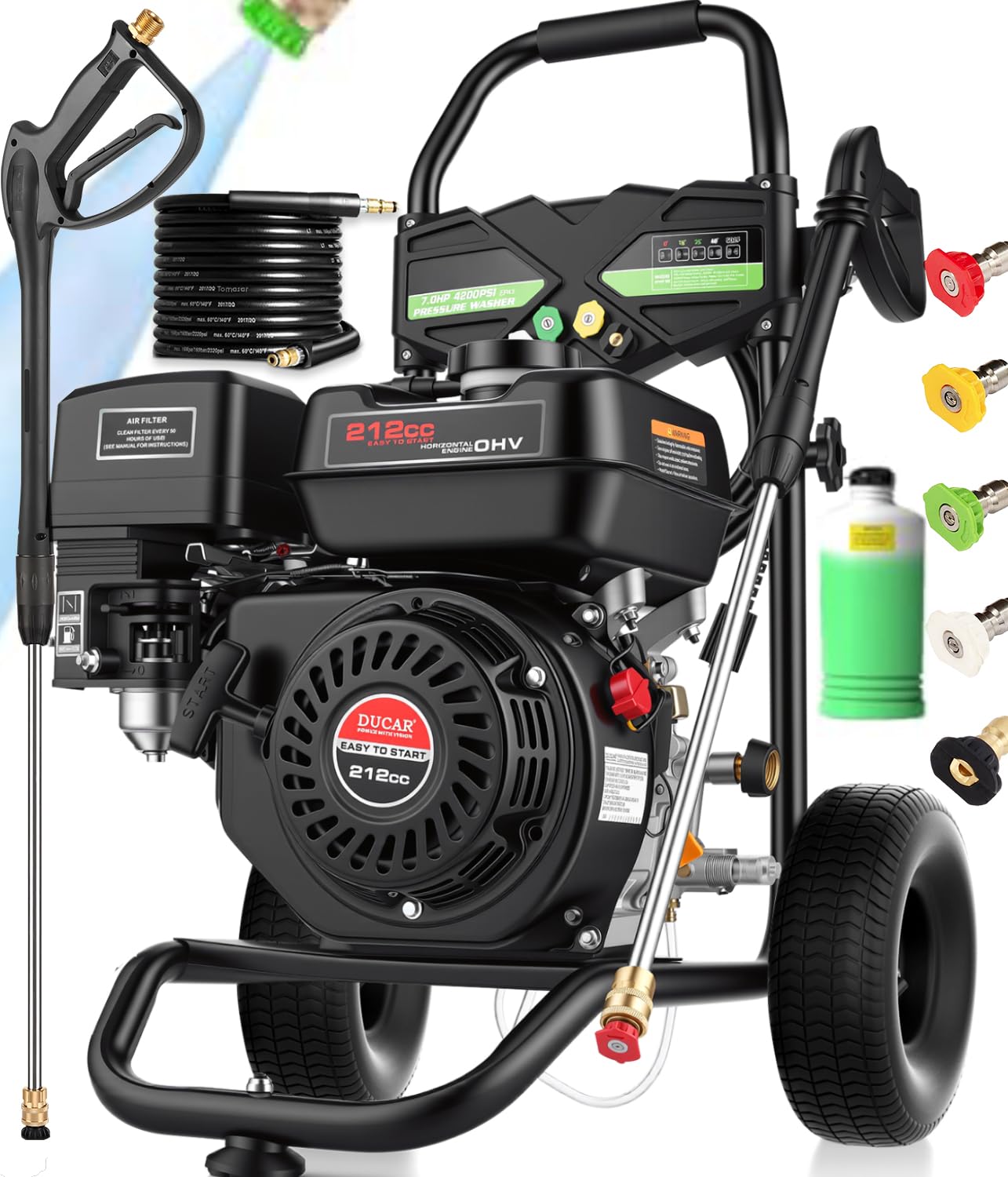
A premium‑built 4200 PSI washer with an axial cam pump, thermal relief valve, welded steel frame and pneumatic tires for easier maneuverability.
Why I picked it: I valued the premium frame, tire setup and thermal protection for longer commercial use.
Best for: Contractors and homeowners who need durable transport and continuous heavy use.
A higher‑spec gas option with features geared toward longevity and mobility.
Pros
- Thermal relief valve for pump protection
- Welded powder‑coated frame
- 10" pneumatic tires for rough terrain
- Maintenance‑free axial pump
Cons
- Heavier footprint to move
- Requires regular engine maintenance
My take
This unit felt built to last: the welded steel frame, powder coat and premium tires made moving it across gravel and grass effortless compared with plastic‑framed carts. The OEM axial cam pump paired with the 212cc engine delivered consistent pressure under load.
I liked the thermal relief valve and the design choices that favor long runs on job sites; the 25–33' hose options gave me flexibility depending on the job. Setup included oil and tools in the box, and it fired up reliably during my sessions.
If your work demands a durable cart and predictable performance, this model proved its value in longer shifts and tougher conditions.
7. Cordless Battery Pressure Washer – Best Cordless Portable
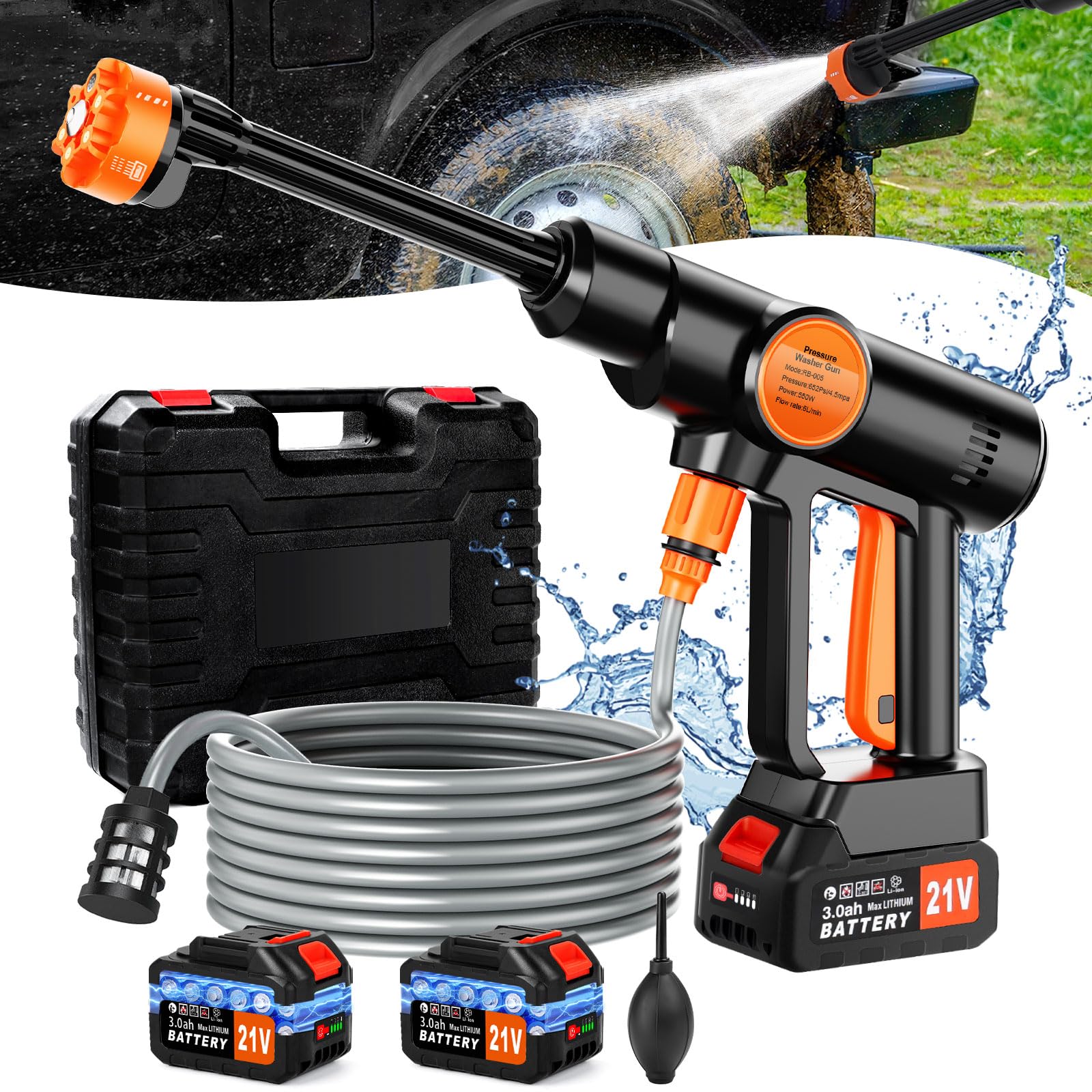
A featherweight, battery‑powered washer with a detachable 3000mAh battery, foamer and 6‑in‑1 nozzle set — ideal for off‑grid or quick spot jobs.
Why I picked it: I relied on it when I needed true portability away from hoses and outlets.
Best for: Car washing in the driveway, camping, boats, balcony cleaning and quick spot jobs.
A low‑operating‑cost, portable option; not a replacement for high‑PSI machines.
Pros
- Truly cordless and lightweight
- Useful foamer for cars
- 20–35 minute runtime per charge
- Bucket‑useable when no hose is available
Cons
- Not as powerful as full‑size washers
- Assembly instructions and part labeling could improve
My take
I brought this cordless unit to jobs where access to an outlet or long hose was impossible. The detachable battery gave me 20–35 minutes of real cleaning time, which is enough for a car or a quick patio refresh.
It’s light — about 4 pounds — and the foamer worked just like a car‑wash foamer to spread soap evenly. The product needs the small squeeze‑ball trick to bleed air after shipping, which I did on first use and then it ran fine.
This won’t replace a 4200 PSI gas washer, but for mobility and convenience I reached for it whenever portability was the priority.
How I Choose a Pressure Washer
Type: Electric, Gas, or Cordless
I start by matching the type to the job. Electric units offer low maintenance and are great for regular homeowner tasks. Gas delivers raw cleaning force and mobility for heavy surface prep. Cordless units win when I need portability and quick setup off‑grid.
- Choose electric for quiet, lower‑maintenance jobs.
- Choose gas for maximum PSI/GPM and commercial jobs.
- Choose cordless for portability and short tasks away from hoses.
Understanding PSI and GPM
I always look at both PSI and GPM: PSI affects how forcefully grime is blasted, GPM affects how quickly you clear a surface. For light vehicle cleaning I use lower PSI with a foam cannon; for driveways and paint prep I use high PSI combined with high GPM.
- Cars and furniture: lower PSI, moderate GPM.
- Concrete and paint prep: higher PSI and higher GPM.
Hose and Cord Length, Wheels and Portability
I pay attention to hose length and whether the unit has useful wheels. A longer hose or cart wheels saves time because I move the machine less. Conversely, a lighter handheld unit is easy to stow and use for spot jobs.
- 35' cord and never‑flat wheels make electric units easier to position.
- 32' braided hoses on gas units reduce the need to relocate the cart.
Accessories and Build
I value foam cannons, onboard soap tanks, and quality quick‑connects. Stainless tips, brass fittings and thermal relief valves extend service life in my experience.
- Foam cannons and soap tanks speed up washing tasks.
- Brass fittings and swiveled inlets reduce hose wear.
Maintenance and Warranty
I factor in maintenance: electrics avoid oil and gas chores, while gas units require regular engine upkeep. Warranties and available parts are useful — I favour models with at least some service coverage.
- Electric: minimal routine maintenance.
- Gas: plan for oil, spark plugs, fuel storage and more.
Frequently Asked Questions
Do I need a gas pressure washer for driveway cleaning?
Not always. I use gas when I need high PSI/GPM for heavy stain and paint prep, but a high‑powered electric (around 2600–3000 max PSI) handled many driveway jobs for me with less fuss.
How important is hose length and a swivel gun?
Very. I avoid constant repositioning by choosing longer hoses and a swivel inlet; the stubby gun I use prevents kinks and reduces fatigue in tight spots.
Can a cordless unit replace a full‑size washer?
I treat cordless as a complement — perfect for portability and small jobs, but it doesn’t match the sustained power of full‑size electric or gas machines.
Final Take
I’ve found that the best choice comes down to the work you do most: go compact electric for frequent light jobs, a heavy‑duty electric if you want power without fuel, and gas when you need commercial‑level cleaning force.
The accessories matter: foamers, quick‑connect nozzles, long hoses and a smooth swivel gun made the biggest difference in my day‑to‑day efficiency. Keep maintenance and mobility in mind and pick the machine that fits your schedule and workload.
