
I tested canned air and rechargeable blowers across keyboards, PCs, cars, and workshop gear. Here are the tools I'd reach for depending on power needs, runtime, and portability.
I spent hands-on time with both disposable canned air and several rechargeable electric dusters to see which actually make routine cleaning faster and safer. I focused on airflow strength, runtime, nozzle versatility, and how each tool handled delicate electronics versus heavy‑duty jobs.
My picks cover budget canned air for quick touchups, rechargeable units for repeated use, and high‑power blowers for workshop or automotive work. Below I explain where each one makes the most sense and what I tested to form these recommendations.
I compared blast strength, run time, nozzle options, build quality, and real-world usefulness—testing on keyboards, PC cases, car vents, robot vacuum bins, and HVAC/AC components to judge which tool performed best for each task.
1. Office Depot Compressed Air Duster (6-pack) – Best Budget Canned Air
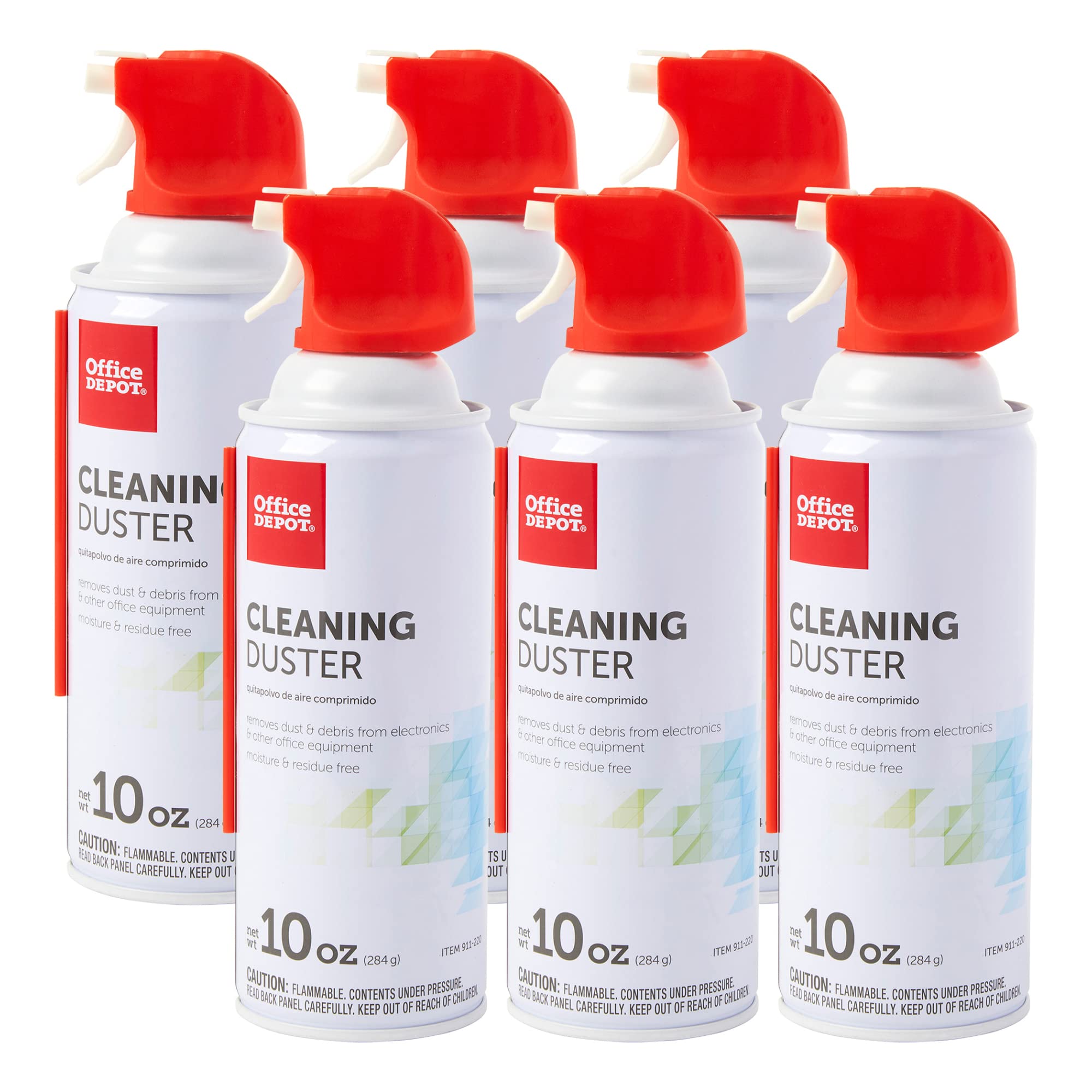
I kept a box of these cans around for quick touchups. They deliver a sharp, moisture‑free blast and come with an extension tube for targeted cleaning.
Why I picked it: Reliable moisture‑free spray, extension tube, and excellent value for routine spot cleaning.
Best for: Quick keyboard and electronics touchups, bookshelf and media dusting.
Most affordable canned‑air option for occasional use.
Pros
- Moisture‑free formula
- Includes extension tube
- Pack of six for value
- Strong, focused blast
Cons
- Must be 21+ to purchase
- Risk of cold spray if misused
My take
I like keeping these canned air cans in a cupboard for rapid, no‑setup cleaning. The cans feel slightly heavier than labeled and deliver a decisive blast that clears keyboards, ports, and tight crevices without leaving residue.
Packaging and the included extension tube make targeted work easy. I used them to blow dust out of keyboards, USB ports, and even the tops of my book and DVD stacks—the cans got the job done fast.
I always respect the frostbite warning: hold the can upright and avoid spraying continuously to prevent liquid discharge. For the price and convenience, these cans are my go‑to when I need a quick, effective burst of air.
2. WOLFBOX MF200 Cordless Air Duster – Best for Continuous Use
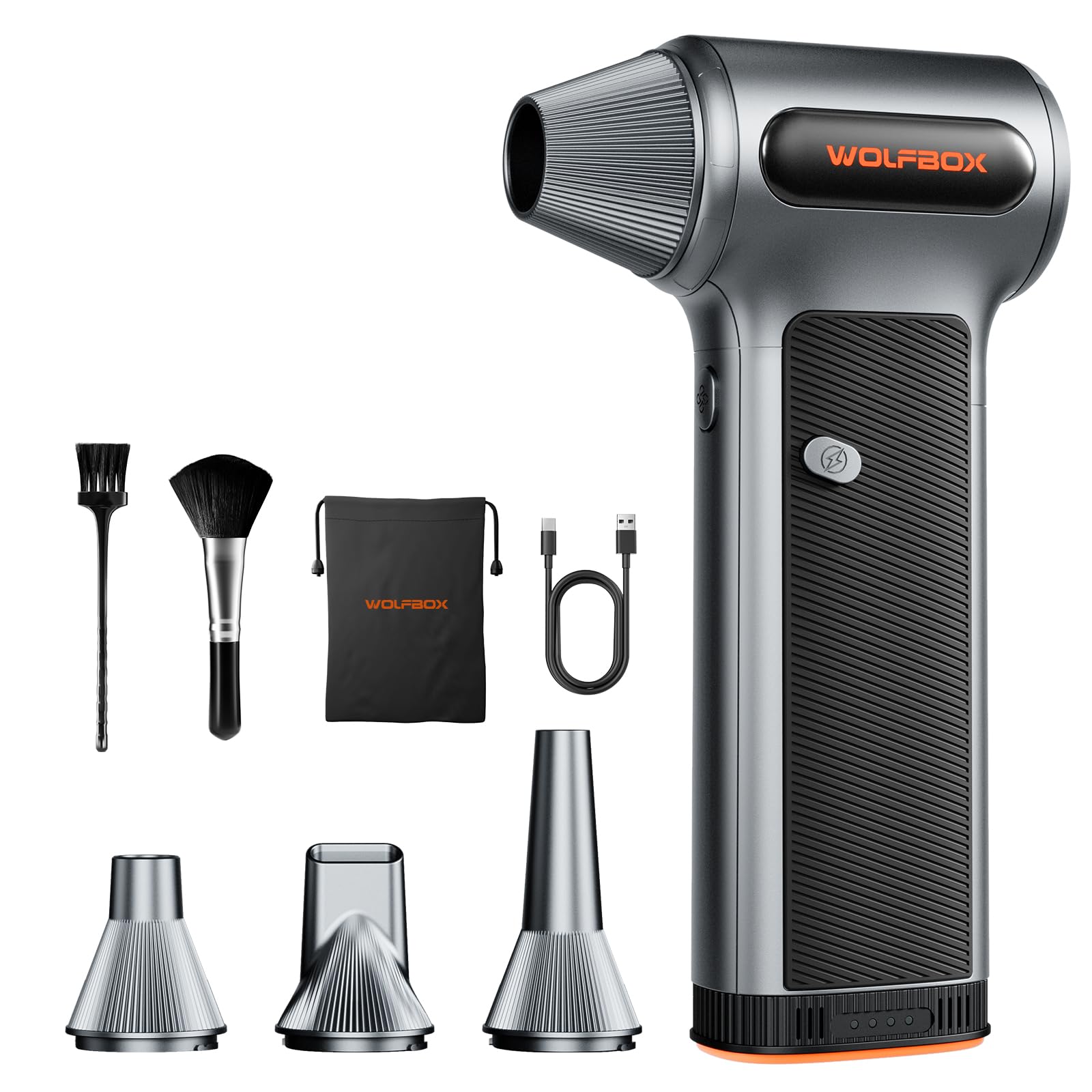
I found this unit excellent when I needed long, uninterrupted cleaning sessions. The swappable battery and powerful brushless motor made sustained jobs simple.
Why I picked it: Swappable battery and high wind pressure make long jobs painless.
Best for: Extended cleaning sessions—trucks, workshops, and heavy household debris.
Higher upfront cost but more economical than buying many cans over time.
Pros
- Swappable battery system
- Powerful brushless motor
- Three speed settings
- Multiple nozzles and brushes
Cons
- Extra batteries sold separately
- Battery drains faster on high
My take
I bought the WOLFBOX to replace canned air for longer sessions and it truly changed how I clean. The unit feels solid and well built, and the airflow on high easily blasts dust from PC cases, camera sensors, and dashboard crevices.
The removable battery is a standout—when one battery runs low I can keep cleaning with a charged spare. On the lowest setting I got very long runtimes, though the high setting chews through that battery much faster.
I used it on my work truck, robot vacuum dust bins, and around the house. The included nozzles and brushes made switching tasks fast, and overall it handled everything more reliably than disposable cans.
3. Fitnac 4‑Gear Turbo Air Blower – Best Turbo Power
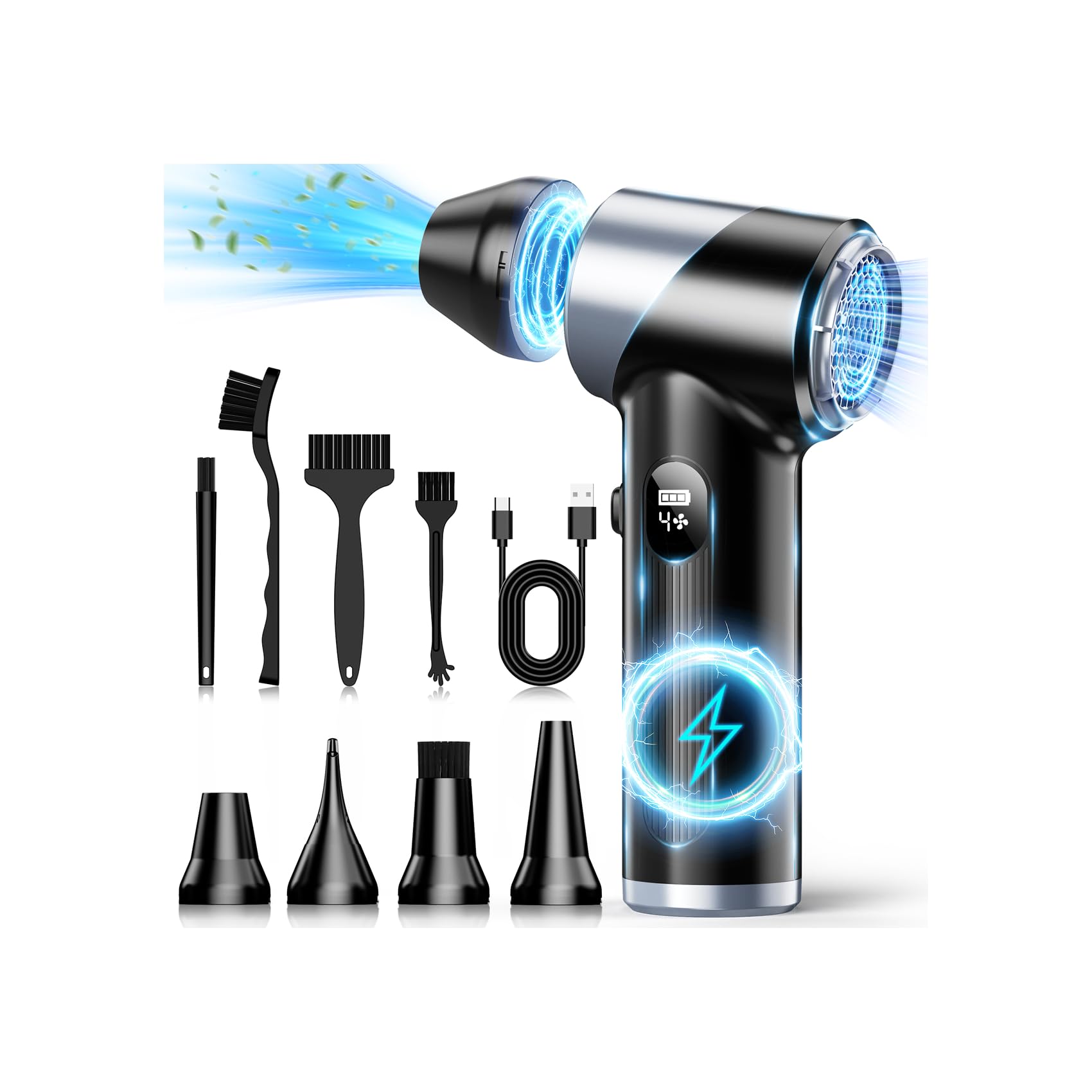
When I need raw power, this 4‑gear blower outperformed other compact options. The turbo mode moved stubborn dust from motors and vents with little effort.
Why I picked it: Highest RPM and distinct gear levels for precision to turbo cleaning.
Best for: Tough jobs—RV AC units, workshop corners, and heavy dust removal.
Mid-range electric option with strong performance.
Pros
- 310,000 RPM turbo motor
- Built‑in LED for visibility
- Multiple nozzles and brushes
- Lightweight and ergonomic
Cons
- No vacuum function
- Accessory case would help
My take
I reached for this blower when routine cleaning turned into heavy‑duty work. The highest gear moves astonishing amounts of air—enough to clear dust from an RV AC motor and deep into filters without fuss.
The LED made it easy to see grime in dark corners while the nozzle set let me focus airflow where I needed it. It charges reasonably quickly and the unit is surprisingly easy to hold during longer tasks.
For anyone who needs turbo power in a compact package, this device feels like the upgrade from canned air. It’s powerful, reusable, and much faster on big jobs.
4. ZARIMI 170,000RPM Cordless Air Duster – Best Value Electric
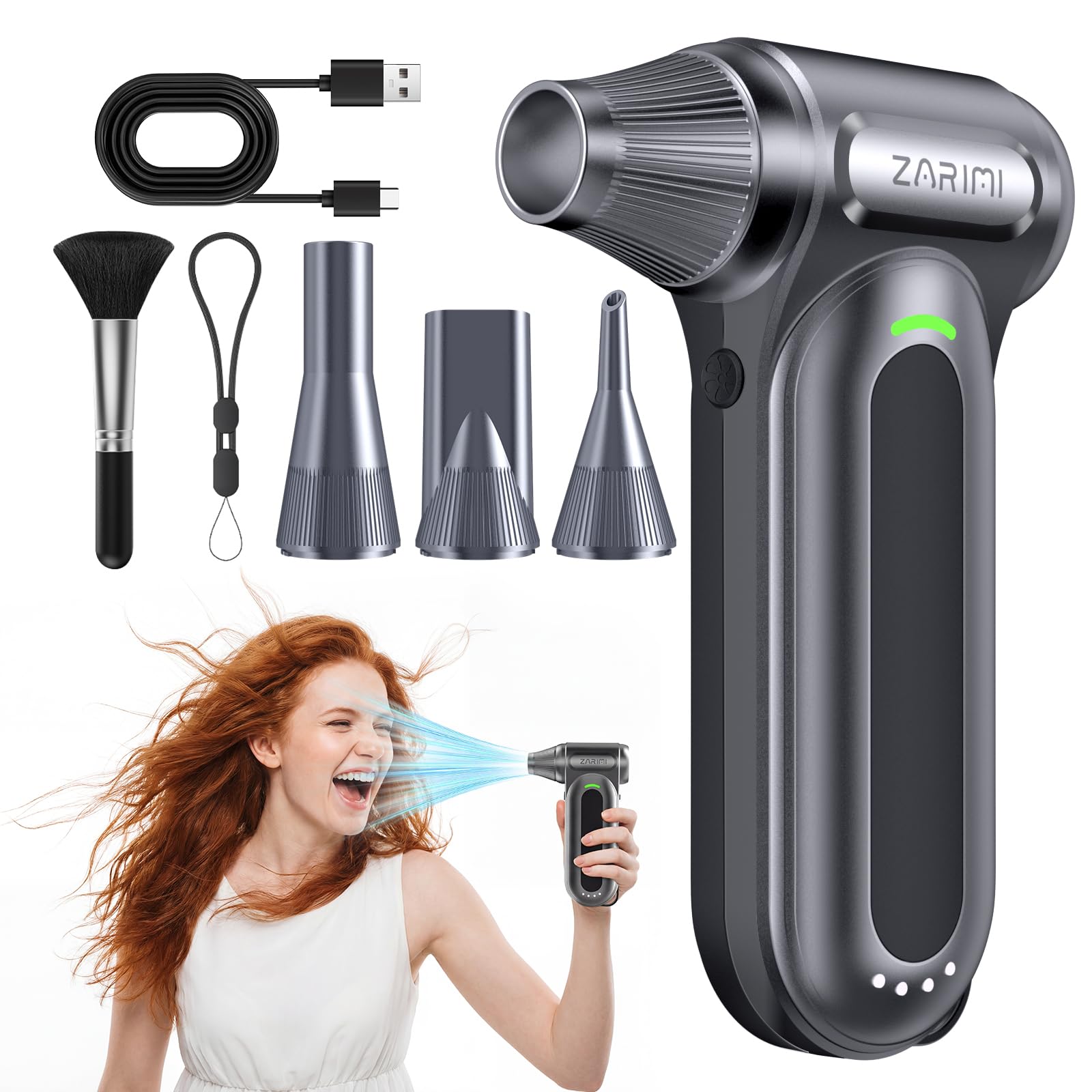
I was impressed by how much airflow this value unit produces for the price. It’s compact, has useful attachments, and replaced several cans for me.
Why I picked it: Strong airflow for its class and solid attachment selection.
Best for: PCs, keyboards, car vents, and quick outdoor tasks.
Great value among rechargeable dusters.
Pros
- Good airflow for size
- Four speed settings
- Lightweight and portable
- Replaces disposable cans
Cons
- Less powerful than top models
- Not ideal for very heavy debris
My take
I bought this to stop buying disposable cans and was pleasantly surprised. The 4‑speed control lets me be gentle on camera lenses or aggressive on vents, and the attachments are useful for different tasks.
I even used it outdoors in my greenhouse and it handled stubborn dirt better than I expected. It’s lightweight, holds a charge through multiple short sessions, and the overall value is hard to beat.
If you want a rechargeable alternative that does the majority of household and electronics cleaning without a big investment, this one is my go‑to.
5. ZARIMI 170,000RPM Cordless Air Duster – Best for Everyday Use
I keep a second unit like this in my utility drawer for daily touchups. It’s the easiest rechargeable duster I’ve used for regular upkeep.
Why I picked it: Portable, quick to use, and powerful enough for day‑to‑day tasks.
Best for: Daily desk cleanup, small electronics, and car interior spot cleaning.
Affordable rechargeable option for routine maintenance.
Pros
- Fast to deploy
- Good battery life for light tasks
- Easy to hold
- Handy nozzle set
Cons
- Not the strongest for big jobs
- Accessories can be misplaced
My take
I find myself grabbing this same model when I need a quick blast of air—no setup, minimal mess, and it clears crumbs and dust from keyboards and cup holders in seconds.
The unit is light and comfortable to use repeatedly, which makes short maintenance sessions painless. For heavier cleaning I switch to the more powerful blowers, but this is my everyday helper.
I appreciate that it removes the need to store and dispose of cans, and the charge time is convenient for regular, short uses.
6. High‑Power 300,000RPM Electric Air Duster – Best Runtime & Control
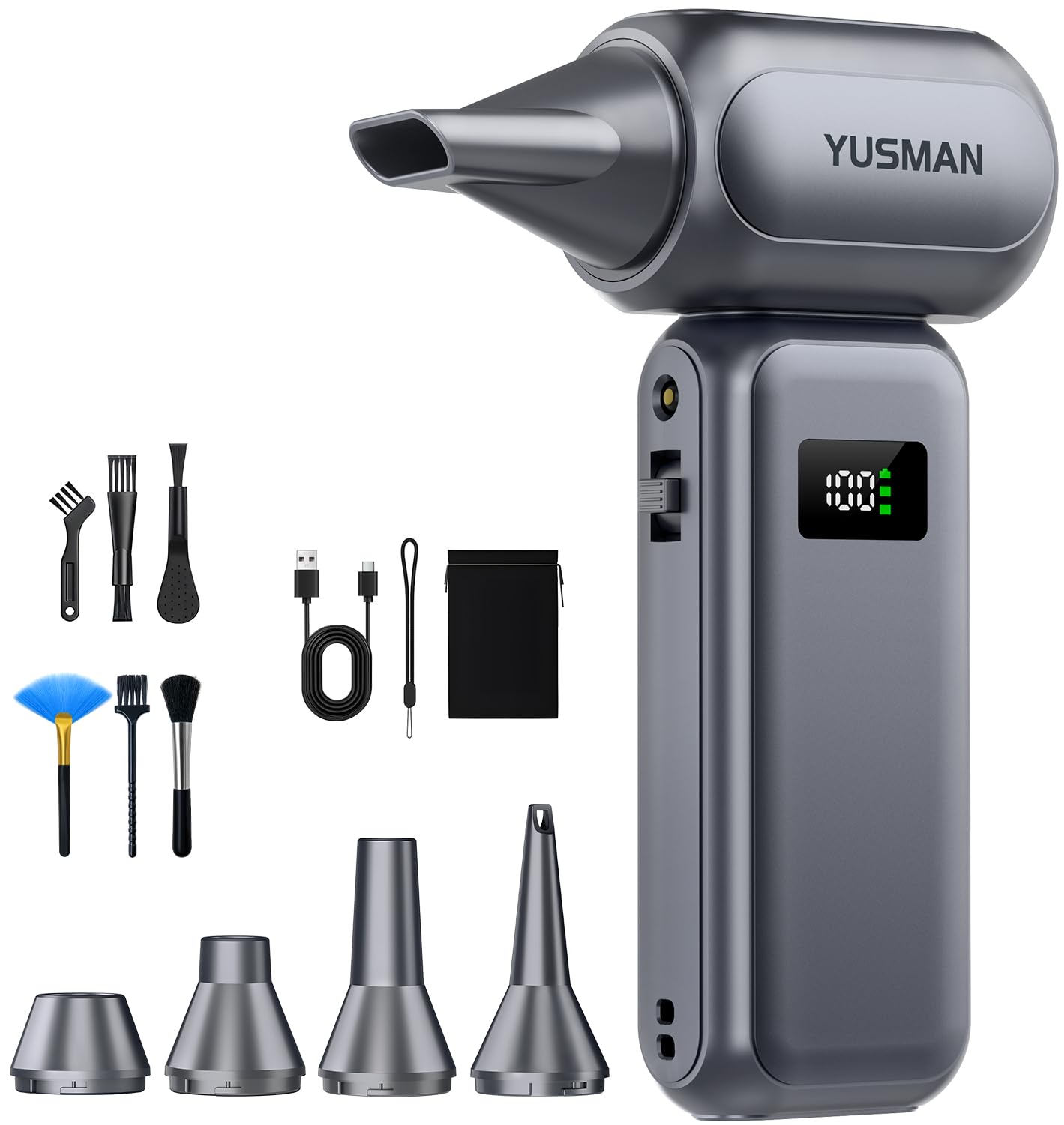
I relied on this model when I needed long runtimes combined with precise control. The stepless speed dial let me tailor airflow from delicate to full blast.
Why I picked it: Stepless 0–100 control plus a large battery for extended sessions.
Best for: Variable tasks from delicate electronics to car interiors and outdoor gear.
Feature‑rich option with long runtime and accessories.
Pros
- Stepless speed control
- Large 12000mAh battery
- Built‑in LED light
- Includes storage bag
Cons
- Higher capacity adds some weight
- May be overkill for tiny tasks
My take
This blower stood out for its flexibility. The 0–100 speed control lets me feather air gently over camera lenses or crank it up for carpet edges and car vents.
Battery life is impressive; I completed long cleaning sessions without needing a recharge. The LED helped me locate dust in dim areas and the storage bag kept all nozzles together.
Overall it’s a capable all‑around tool when you want both runtime and fine control in one device.
How I Picked and What I Look For
Key features I evaluated
I tested each duster on real tasks: keyboards, PC interiors, car vents, HVAC units, and vacuum bins to see how airflow, ergonomics, and accessories hold up.
My priorities were usable airflow (not just a marketing RPM), runtime and charging behavior, nozzle versatility, and how easy the tool was to control in tight spaces.
- Airflow and power: Look for units that move visible dust without forcing components around.
- Runtime and charging: Check runtimes at multiple speeds and realistic charge times.
- Nozzles and brushes: Precision tips matter for electronics, wide nozzles help for upholstery.
- Portability vs power: Smaller units are handier; bigger batteries and motors give sustained performance.
- Safety: Avoid spraying canned air upside down to prevent cold liquid release; for electric units, prefer automatic shutoffs and temperature protections.
Canned air vs rechargeable dusters
I still keep canned air for infrequent, immediate needs because it requires zero charging and is cheap per can. For regular upkeep, rechargeable dusters win on cost, convenience, and environmental impact.
If you clean large areas or do long sessions, choose a model with swappable batteries or long runtime. For delicate optics and electronics, prioritize variable speed control and narrow nozzles.
- Canned air: instant use, good for occasional spot cleaning.
- Rechargeable: better for repeated or heavy use, no cold spray, reusable.
- Choose replacement batteries if you expect extended continuous work.
Frequently Asked Questions
Are electric air dusters safe for electronics?
Yes—when used properly. I keep a safe distance, use lower speeds for fragile components, and avoid directing extreme airflow at loose cables or spinning fans. Electric dusters don’t produce the cold liquid discharge that canned air can, which reduces frostbite risk.
How long do rechargeable dusters run and how fast do they charge?
Runtime varies: many units give minutes on turbo and up to around 100 minutes on low. Charge times in my tests ranged from about 2.5 to 3 hours depending on the model. Removable battery designs let me swap in a fresh cell for non‑stop work.
Can electric dusters fully replace canned air?
For most people they can. I replaced cans for regular cleaning—electric units are faster long‑term, cost‑effective, and avoid disposable waste. I still keep canned air for a quick emergency when a charger isn’t available.
Final Take
I choose canned air when I need a single quick blast without charging, but for regular cleaning I prefer rechargeable dusters for power, runtime, and cost savings.
If you want the simplest, grab the Office Depot cans for spot jobs. For regular or heavy work, the WOLFBOX MF200 and the high‑RPM turbo units are the tools I reach for first. Match the blower’s power and runtime to how often and how intensely you clean.
