
I tested six convertible cribs across style, space, and long-term value. Here are the ones I’d choose for durability, safety certifications, storage, and small rooms.
I compared convertible cribs that actually grow with a child, focusing on safety certifications, build quality, and how easy each unit is to live with. My goal was to find options that work whether you need compact furniture for a small room or a statement piece that converts into a full-size bed.
In this roundup I prioritize certified finishes, solid construction, sensible conversion paths, and real-world conveniences like under-crib storage or included conversion hardware. Each pick reflects hands-on assembly and day-to-day use in my own nursery setups.
I weighed certifications (GREENGUARD Gold, JPMA), conversion flexibility, and practical features like drawers or included kits to separate versatile long-term choices from compact or budget-minded options.
1. Graco Benton 5-in-1 Convertible Crib (White) – Best Overall
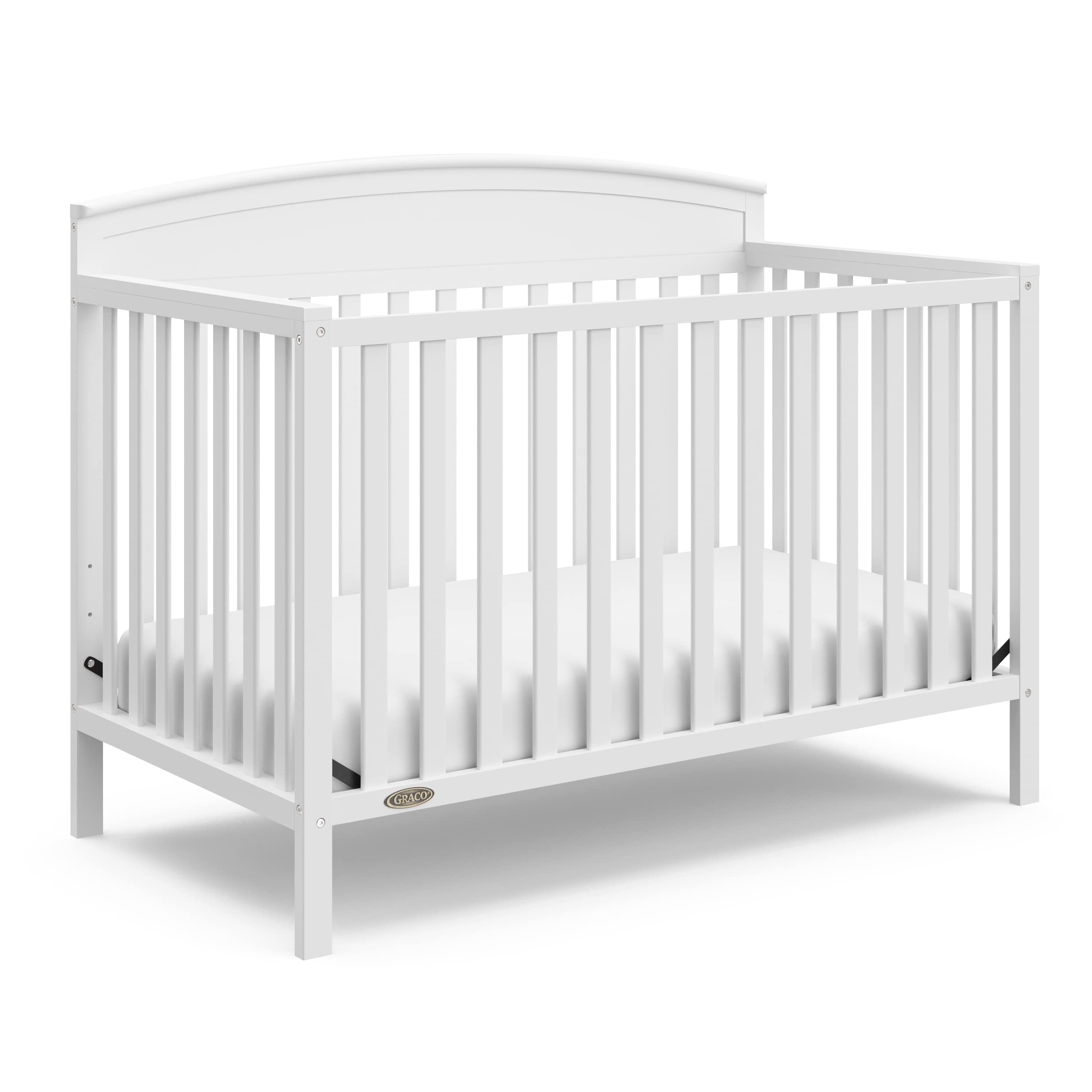
A versatile 5-in-1 crib with GREENGUARD Gold certification and classic styling that adapts from infant crib to full-size bed.
Why I picked it: Reliable 5-in-1 conversions, solid wood construction, and GREENGUARD Gold safety screening.
Best for: Families who want a long-lasting crib that grows through multiple stages.
Affordable mainstream option with solid long-term value.
Pros
- 5-in-1 conversion versatility
- GREENGUARD Gold certified
- Sturdy wood build
- Four mattress heights
- Timeless, simple design
Cons
- Conversion kits sold separately
- Assembly required
- Full-size kit not included
My take
I put the Graco Benton together in my spare room and was impressed by how sturdy the frame felt once tightened. The pine and engineered wood give a substantial, no-nonsense feel that I trusted immediately with newborns and toddlers.
The four mattress heights make nighttime lifting easier when the baby is small, then safer as they grow. I liked the classic lines—it fits multiple nursery styles without looking dated.
Because the toddler guardrail and full-size conversion kit are sold separately, I planned my purchase knowing I’d need add-ons to carry this crib all the way to a full bed. Still, the Benton’s certifications and build quality make it a great core crib I’d recommend when you want long-term value without a designer price.
2. Dream On Me Aden 4-in-1 Convertible Mini Crib (White) – Best for Small Spaces
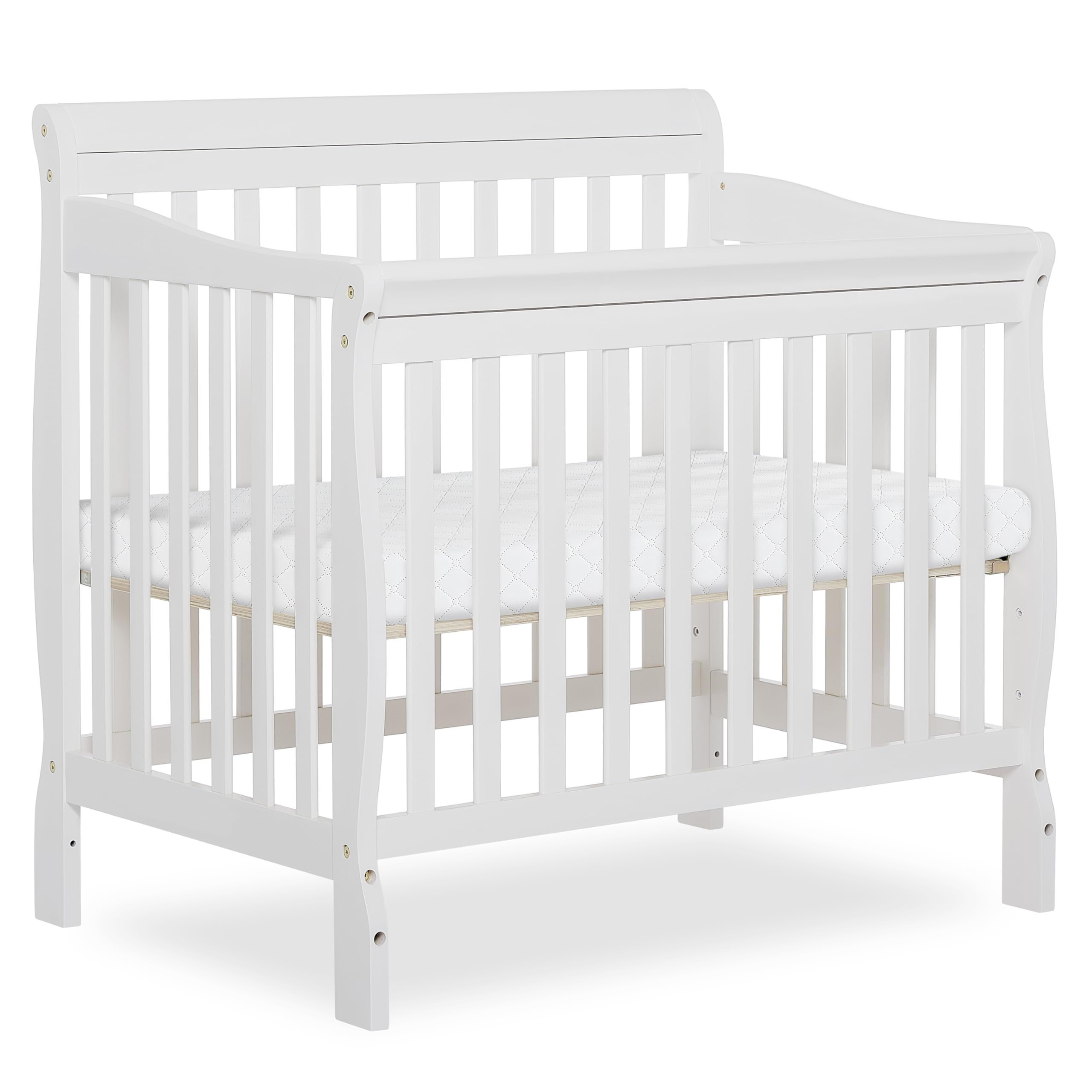
A compact 4-in-1 mini crib built from New Zealand pine that converts to a twin bed and is ideal for apartments or shared rooms.
Why I picked it: Mini footprint with 4-in-1 functionality and included mattress pad for immediate use.
Best for: Parents who need a space-saving crib for small rooms or co-sleeping setups.
Budget-friendly pick that stretches value via compact design.
Pros
- Space-saving footprint
- Greenguard Gold certified
- Sturdy New Zealand pine
- Includes 1" mattress pad
- Three mattress heights
Cons
- Uses mini crib mattress
- Included pad is thin
- Assembly can be fiddly
My take
I assembled the Aden solo while six months pregnant and found it doable though a bit fiddly—take your time with the small pins and panels. Once together it felt solid; I leaned and shook it during setup and everything held tight.
Its compact dimensions made it easy to tuck beside the bed and still leave room for a small dresser. I swapped in a thicker mini mattress soon after; the included 1-inch pad is fine short-term but I preferred something plusher for overnight sleep.
I appreciated that this crib converts to a twin later on, which makes it useful beyond nursery life. For tight spaces, the Aden’s combination of certification and scale is why I’d reach for it again.
3. Delta Children Heartland 4-in-1 Convertible Crib (Bianca White) – Best Value
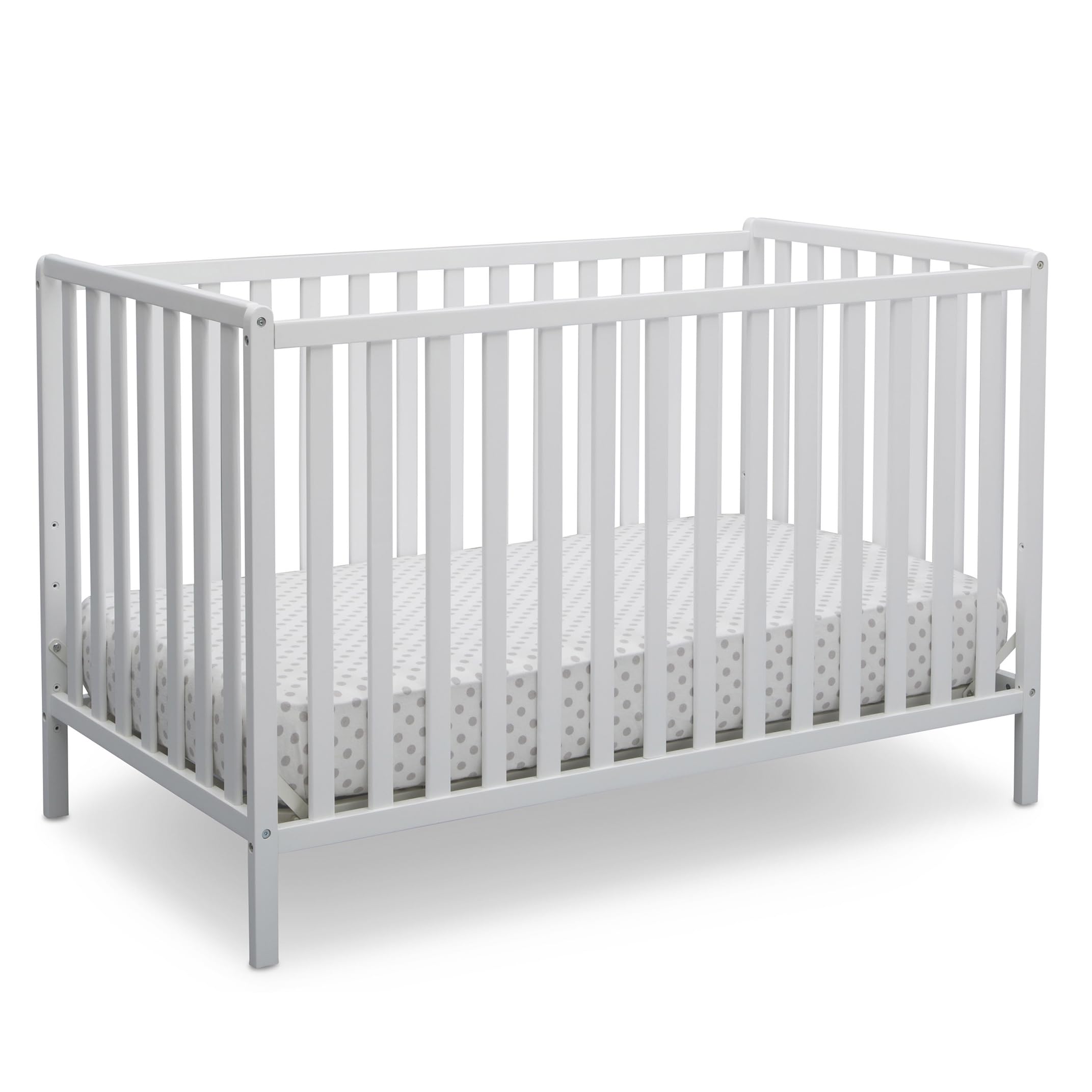
A straightforward, budget-smart convertible crib with three mattress positions and multiple finish options that still meets safety standards.
Why I picked it: Solid construction and JPMA certification at a price that doesn’t sacrifice safety.
Best for: Buyers who want a dependable, no-frills crib that lasts into toddlerhood.
Very budget-friendly option with strong basics.
Pros
- Sturdy wood construction
- Three height adjustments
- Multiple color options
- Converts to larger bed
Cons
- Conversion kits sold separately
- Basic styling
- Standard mattress required
My take
I assembled the Heartland quickly and found the instructions straightforward. The finished crib feels sturdy and stable—it didn’t wobble when I applied pressure to the rails during setup.
The three-position mattress support is enough to keep using the crib as the child learns to sit and stand, and the convertible path to a full-size bed is reassuring for longer-term use.
If you want reliable performance without decorative flourishes, this Delta crib gives me confidence that you’re getting solid safety and function for a conservative budget.
4. Graco Hadley 5-in-1 Convertible Crib with Drawer (Espresso) – Best for Storage
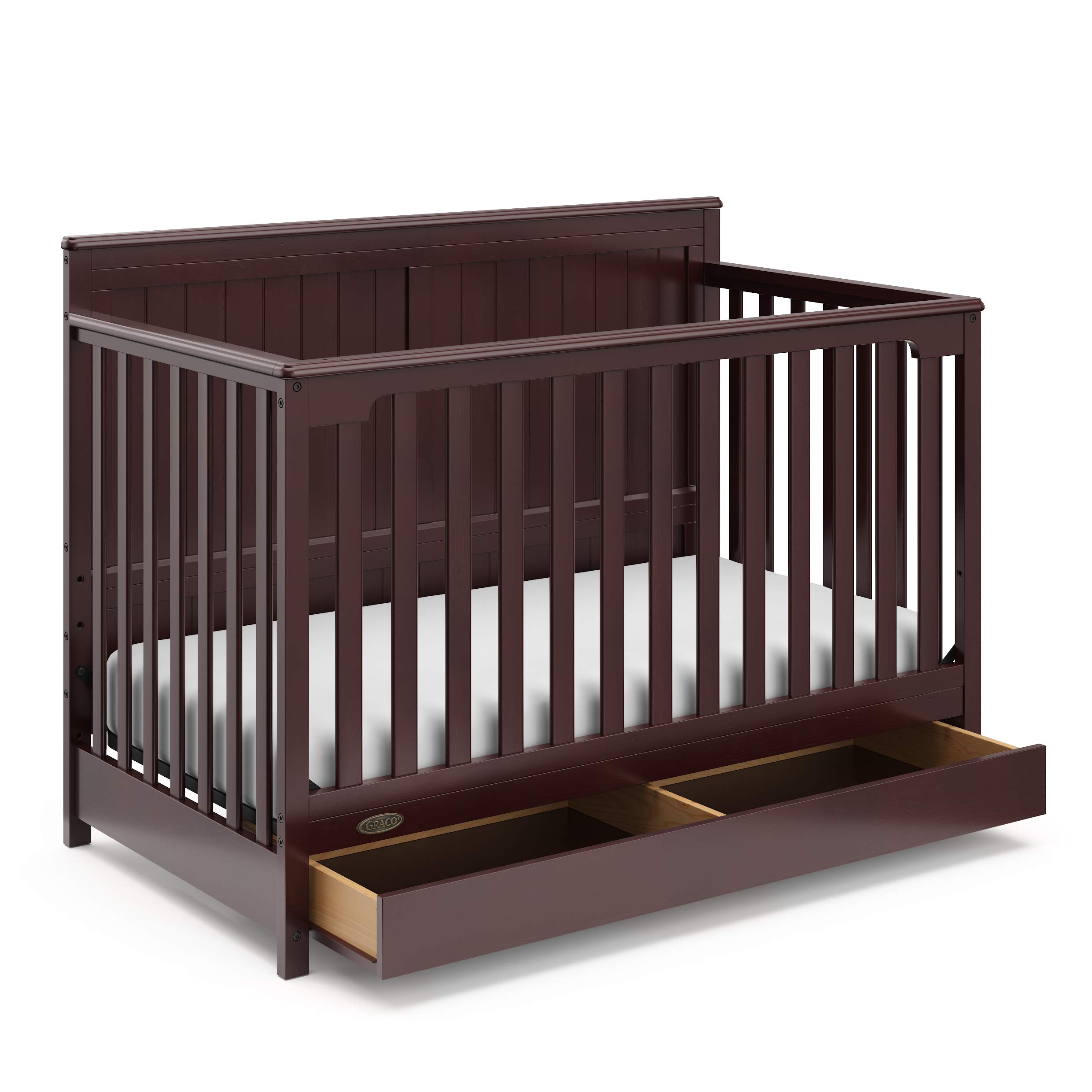
A 5-in-1 crib with a full-size under-crib drawer, solid panel headboard, and Baby Safety Alliance verification for extra reassurance.
Why I picked it: Under-crib drawer adds real everyday convenience without sacrificing safety.
Best for: Nurseries that need built-in storage and a classic furniture look.
Mid-range option with the convenience of integrated storage.
Pros
- Full-size storage drawer
- 5-in-1 conversions
- Euro drawer glides
- Safety tested and verified
Cons
- Conversion kits sold separately
- Lots of pieces to assemble
- Drawer adds footprint
My take
The Hadley’s under-crib drawer was a game changer in my small nursery—I stored extra sheets and swaddles there and cut down on carrying loads to the closet.
Assembly takes time because of the drawer components, but the finished unit looks refined and feels solid. I didn’t notice any strong odors out of the box, and the wood thickness gave me confidence in durability.
Because the toddler guardrail and full-size conversion kit are separate purchases, I budgeted for those future pieces. For me, the storage tradeoff is worth it when a nursery lacks closet or dresser space.
5. Simmons Kids Carter 6-in-1 Convertible Crib (Bianca White) – Most Elegant Design
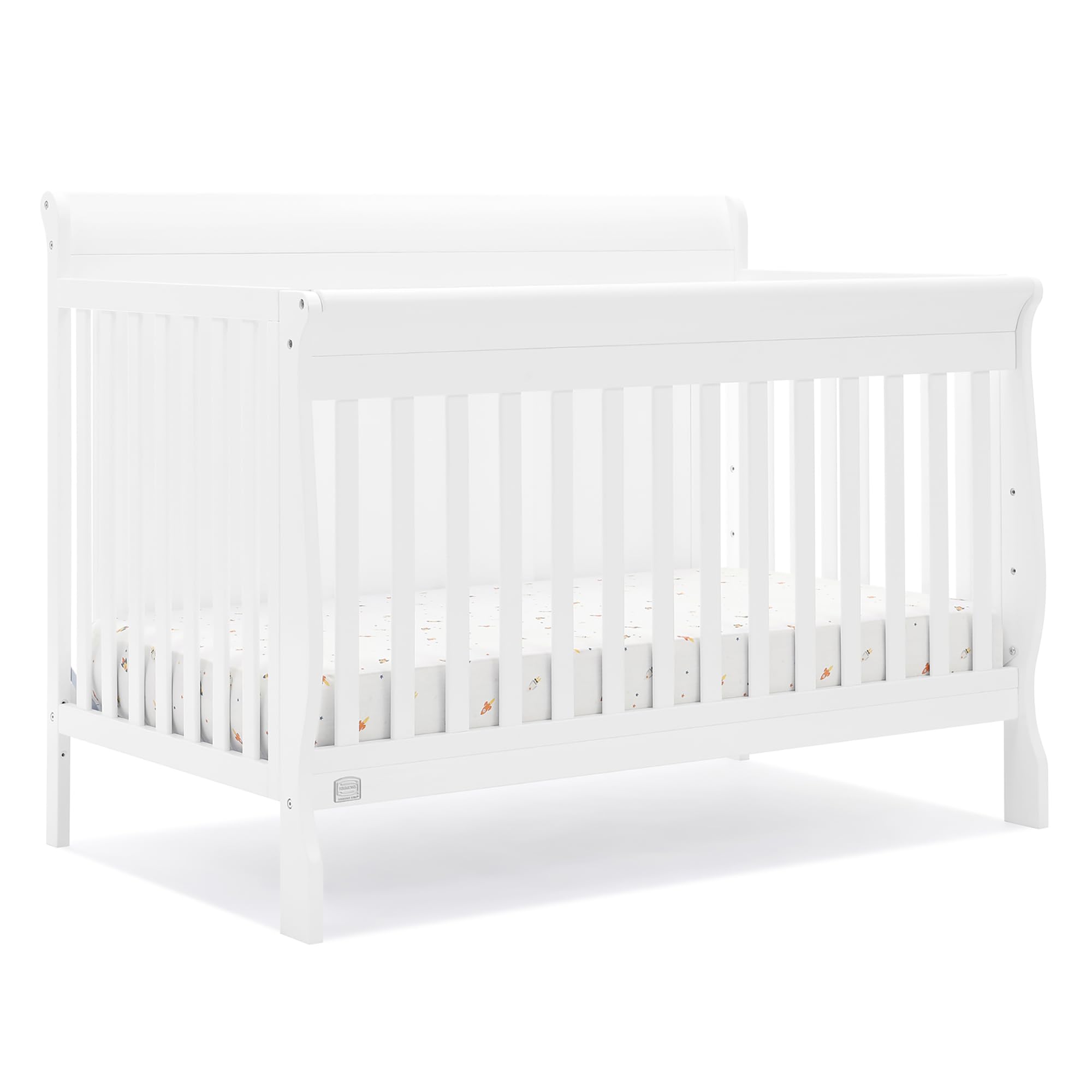
A sleigh-style 6-in-1 crib made from sustainable materials that converts into several bed types and prioritizes a furniture-like look.
Why I picked it: Sophisticated silhouette and maximum conversion options for a furniture-forward nursery.
Best for: Parents who want a dresser-quality crib that becomes long-term bedroom furniture.
Mid-to-higher price tier for a more refined finish.
Pros
- 6-in-1 conversion flexibility
- Elegant sleigh silhouette
- GREENGUARD Gold certified
- Real wood, stainable finish
Cons
- Conversion rails sold separately
- Heavier, bulkier design
- Requires standard mattress
My take
I appreciated the Carter’s real-wood construction; the stained finish feels more durable than laminated options and looks like furniture rather than a baby product.
Assembly was manageable when I followed directions and paid attention to the small pins that hold pieces in place. The mattress support is metal and reassuringly strong once secured.
Because it converts many ways, I see this crib lasting well past toddlerhood. If you want a piece that will age into a kid’s room and eventually an adult bed frame, the Carter’s design and materials are why I’d recommend it.
6. Babyletto Hudson 3-in-1 Convertible Crib (Washed Natural) – Best for Style
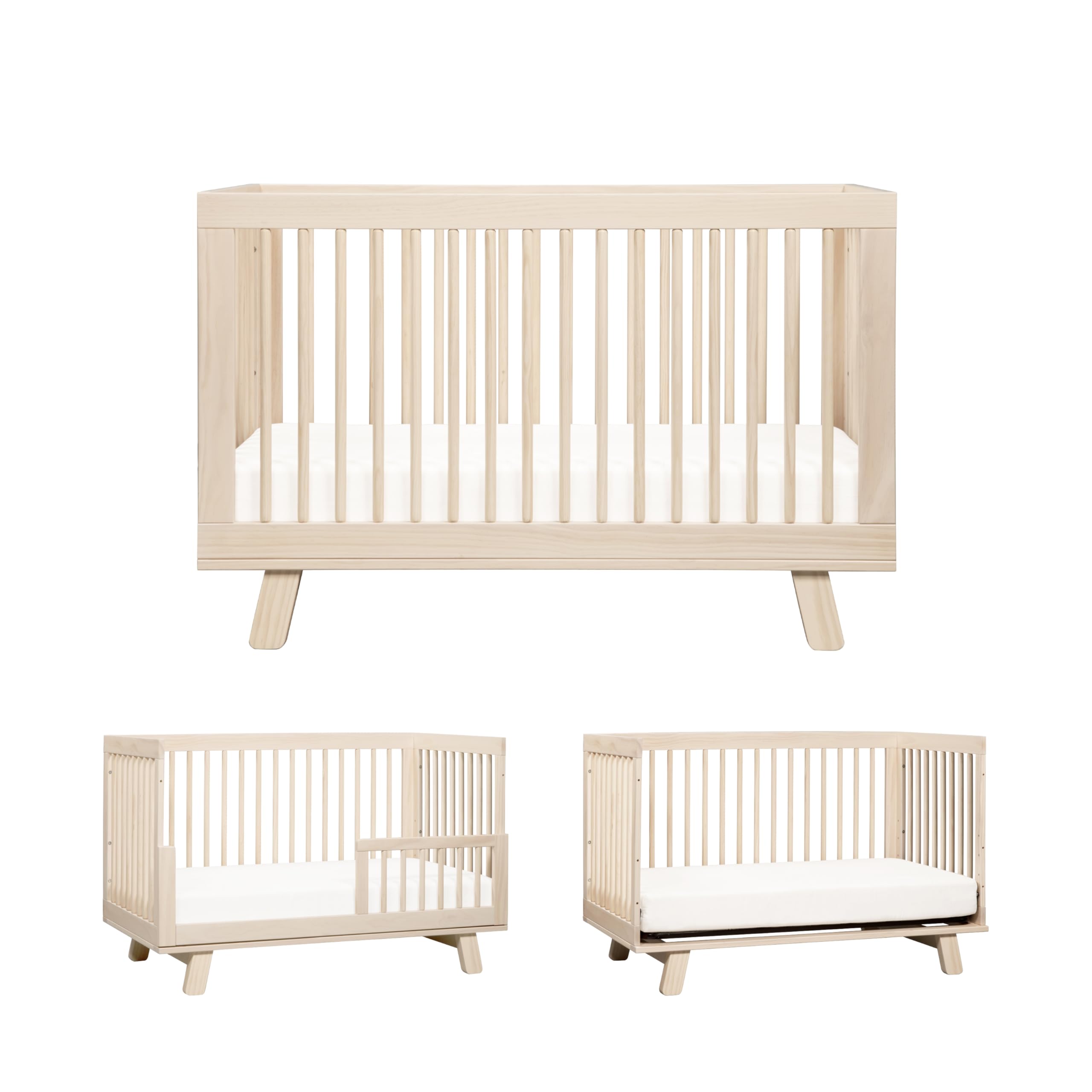
A modern, mid-century inspired crib with hidden hardware, four adjustable heights, and an included conversion kit for toddler use.
Why I picked it: Built-in conversion kit, clean lines, and a contemporary look that still meets GREENGUARD Gold standards.
Best for: Parents who prioritize modern design and included conversion hardware.
Premium option that includes conversion convenience.
Pros
- Included conversion kit
- Four mattress heights
- Hidden hardware for clean look
- GREENGUARD Gold certified
Cons
- Wood can scratch
- Higher price point
My take
I chose the Hudson for its modern look and the fact that the conversion pieces are included—no surprise additional purchases later. The hidden hardware keeps the silhouette sleek and polished.
Assembly required two people at certain steps, but the result is a crib that feels both sturdy and lightweight. The natural finish matched my nursery palette and showed no packaging odor when I opened it.
Because it offers four height positions, I found it comfortable to lift newborns in and then move the mattress down as they grew. For a style-forward nursery where I didn’t want to buy extra conversion parts later, this crib checked the boxes.
How I Chose These Convertible Cribs
Safety certifications matter
I looked for GREENGUARD Gold and JPMA or Baby Safety Alliance verification first. Those certifications mean the finish and construction have been screened for chemicals and that the crib meets safety standards.
Even when a crib looks great, I won’t compromise on third-party screening for VOCs or lab-tested structural safety.
- GREENGUARD Gold: screens for chemical emissions
- JPMA/Baby Safety Alliance: independent safety testing
- CPSC/ASTM compliance: mandatory safety standards
Conversion path and included hardware
I pay attention to what’s included versus sold separately. Some cribs need separate toddler guardrails or full-size conversion kits—plan for that when budgeting.
If you want true long-term value without add-on purchases, prefer cribs that include conversion pieces.
- 3–6 conversion options available across models
- Check whether toddler rail and full-size kit are included
- Included kits save future expense and hassle
Size, mattress compatibility, and room fit
Measure your room and check crib dimensions. Mini cribs work well in apartments or for bedside sleeping; standard cribs suit most nurseries and convert to full-size beds.
Match the crib to the correct mattress type—mini versus standard—and avoid using thicker-than-recommended mattresses.
- Mini versus standard mattress sizes
- Check mattress thickness recommendations
- Confirm crib footprint fits nursery layout
Practical features I value
Storage drawers, drawer glides, and simple assembly add up to daily convenience in my experience. Think about whether you want integrated storage or a sleeker design.
Also consider how many hands assembly will realistically require; some cribs benefit from a second person during key steps.
- Under-crib storage for linens
- Hidden hardware for cleaner aesthetics
- Number of mattress height positions
Frequently Asked Questions
Do conversion kits usually come with the crib?
Some cribs include conversion kits, but many sell toddler guardrails and full-size bed rails separately. I always check the listing details so I can plan for any extra purchases before converting the crib.
What mattress size do I need for a convertible crib?
Mini cribs require mini mattresses; standard cribs use standard full-size crib mattresses. I verify the crib’s recommended mattress dimensions and avoid mattresses that exceed suggested thickness.
How long can I use a convertible crib?
Convertible cribs typically serve from newborn until the child can climb out or reaches the manufacturer’s height limit, then convert to toddler or full-size beds. I plan conversions based on the crib’s stated guidelines and included conversion options.
Final Take
Across these six options I balanced safety certifications, build quality, and real-life conveniences like storage and included conversion hardware.
If you want a single, flexible crib that will last through multiple stages, choose the pick that best matches your space and plans for conversion. I found one for tight spaces, one for storage needs, and others that prioritize design or long-term furniture value.
