
I tested a mix of stainless colanders, collapsible strainers, and copper-finish fine-mesh sets to find versatile kitchen strainers that drain fast, last, and look good on the counter.
I spent time cooking, rinsing, and draining with a range of strainers so I could compare real-world performance. My goal was to surface the practical differences between classic perforated colanders, fine micro-perforated models, collapsible silicone options, and copper-finish mesh strainers.
In my testing I focused on four things: how quickly water clears, whether solids stay put (especially small grains), how stable the strainer is when it sits in the sink, and how easy it is to clean and care for. I also paid attention to finish and feel—some of these are purely utilitarian, while others pull double duty as attractive kitchen tools.
Below I lay out the best picks by role, with concise notes on why each one stood out in the kitchen.
I included full-size stainless colanders for everyday pasta and produce, compact berry-sized perforated strainers, space-saving collapsible silicones, and copper-finish fine-mesh sets for sifting and presentation so you can match style and function.
1. HiramWare Stainless Steel Colander – Best Budget All-Purpose
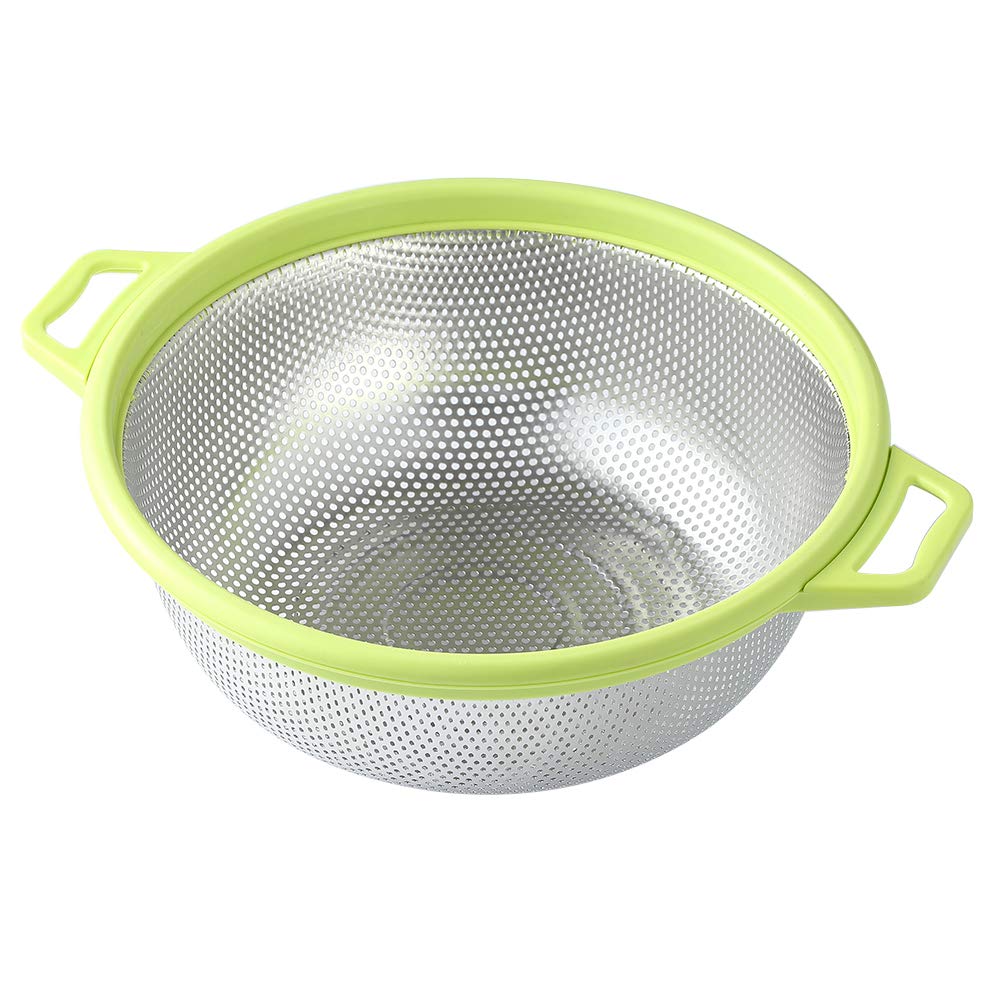
A 5-quart stainless colander with a sturdy handle and feet that drains quickly and cleans easily.
Why I picked it: Simple, roomy, and dependable for everyday pasta and produce.
Best for: Families and anyone who needs a reliable all-purpose colander.
Affordable everyday option.
Pros
- Large 5-quart capacity
- Sturdy ergonomic handle
- Fast draining holes
- Dishwasher safe
- Low-profile feet for stability
Cons
- Basic styling
- May be lightweight for very heavy loads
My take
I reach for this HiramWare colander when I’m cooking for the household because the 5-quart bowl holds a full pot of pasta without crowding. The stainless surface feels solid in hand and the ergonomically shaped handle makes it easy to tip and shake while draining.
The hole pattern drains quickly—liquid clears fast without throwing food back into the sink. The low-profile feet keep the bowl elevated on the counter or in the sink and the smooth rim means nothing gets stuck along the edge, which makes cleanup straightforward.
I’ve run it through the dishwasher and hand-washed it; either way it rinses clean and dries quickly. If you want something flashy this isn’t it, but for everyday draining and rinsing it’s one of the most practical tools I own.
2. Qimh Collapsible Colander Set – Best Space-Saving
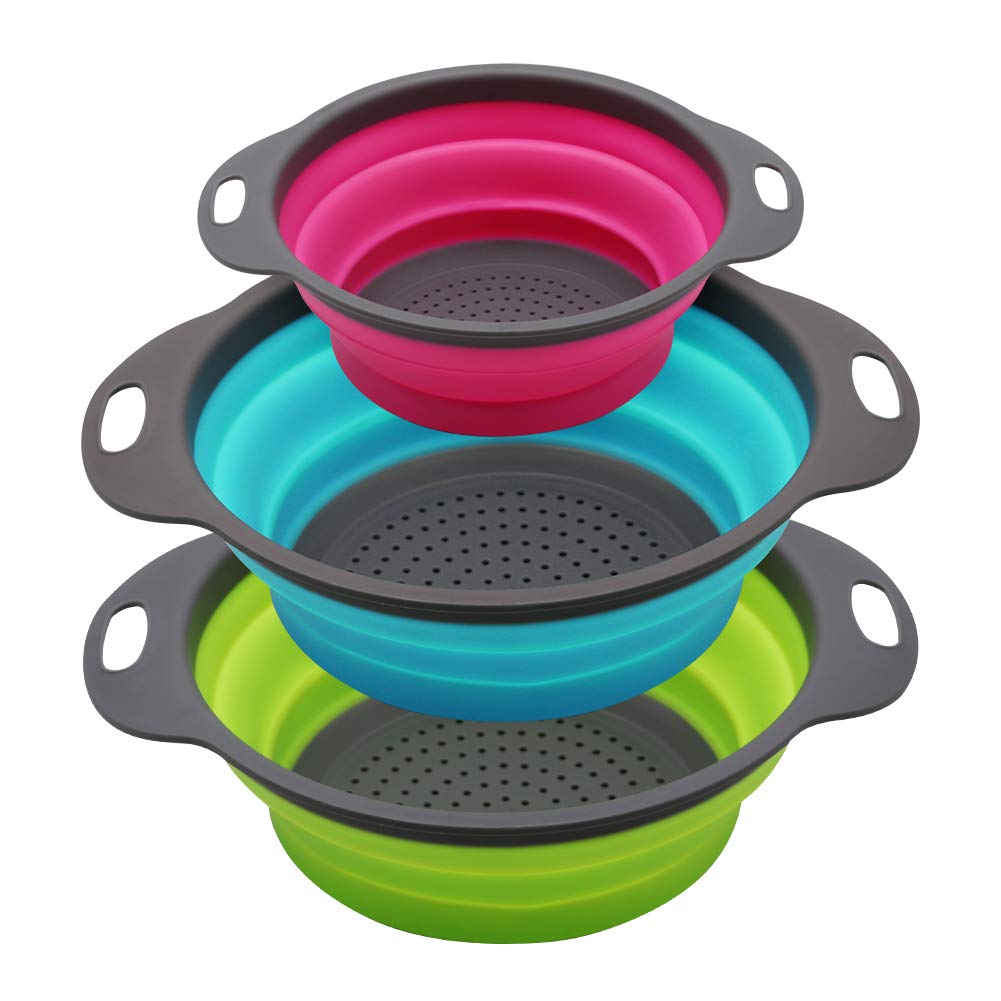
A three-piece collapsible silicone set that saves cabinet space while handling everyday rinsing tasks.
Why I picked it: Folds flat so it actually frees up storage space in a small kitchen.
Best for: Small kitchens, RVs, and anyone short on cabinet room.
Budget-friendly, space-conscious choice.
Pros
- Collapses flat for storage
- Multiple sizes in one set
- Lightweight and odor-free
- Works freestanding or over sink
Cons
- No raised legs on some sizes
- Drainage relies on bottom holes only
My take
I appreciated how these Qimh strainers fold down to practically nothing—finally some cabinet room for other gear. When opened they feel surprisingly stable and sturdy for silicone, and the medium and large sizes handle a pot of pasta or a bag of greens without flopping.
They’re made from materials that don’t carry an off-odor and they clean easily. The only functional limitation I noticed is that most of the drainage is through the bottom rather than the sides, so they’re not as fast-draining as a fully perforated metal colander. For kitchens with limited space, though, that tradeoff is worth it.
3. LiveFresh Micro-Perforated Colander – Best for Fine Straining
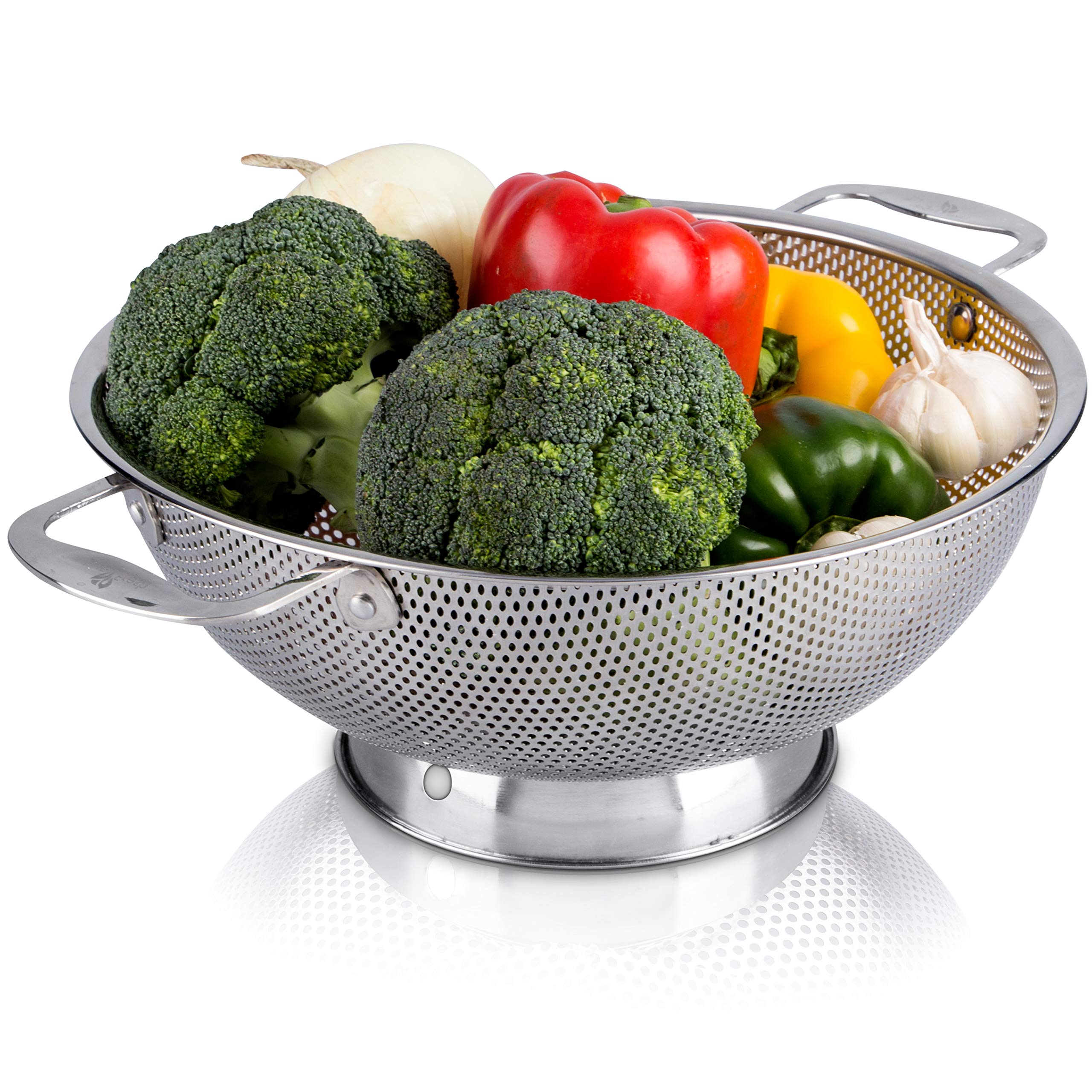
Micro-perforated stainless colander engineered to rinse small grains and delicate produce without losing pieces.
Why I picked it: Tiny, evenly spaced holes that keep rice and quinoa in while letting water go.
Best for: Rinsing small grains, quinoa, and delicate produce.
Solid midrange value.
Pros
- Micro-perforations for fine straining
- Riveted heavy-duty handles
- Solid ring base for stability
- Durable construction
Cons
- Heavier than plastic options
- Some very long-grain rice may still pass
My take
This LiveFresh colander is the one I grab when I’m rinsing rice or quinoa. The micro-perforated pattern drains quickly while holding back tiny grains that would slip through larger holes.
Handles feel robust and are riveted rather than spot-welded, so I’m comfortable using it with hot pasta and heavier loads. The solid ring base keeps it from tipping, which is a small detail that matters when you’re multitasking at the sink.
It’s not featherlight, but the weight is reassuring and signals durability. For fine-straining tasks where mesh would otherwise clog, this strikes a good balance between drainage speed and particle retention.
4. Bellemain 5-Quart Colander – Best Premium Everyday
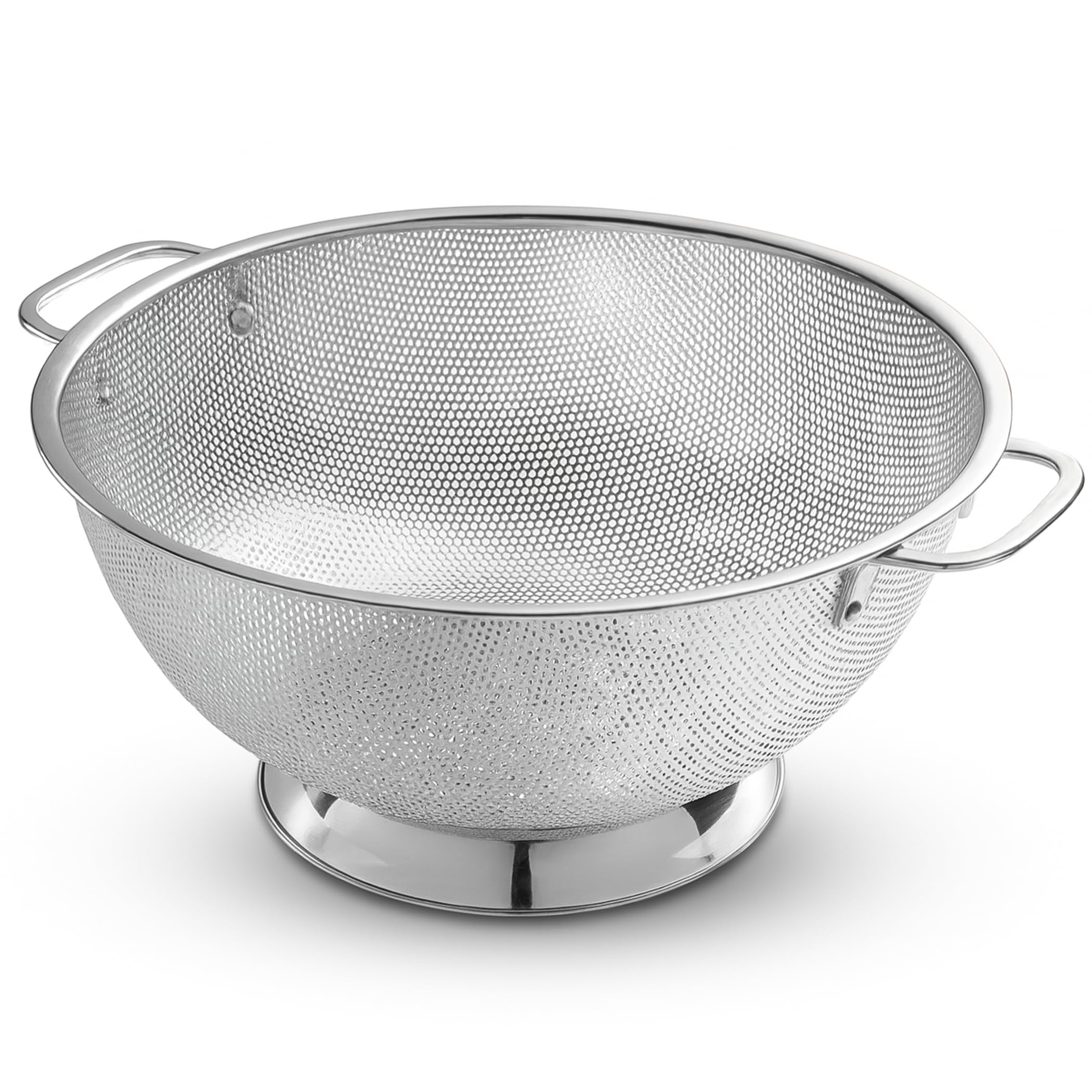
18/8 stainless colander with micro-perforations, stable base, and a polished finish built for frequent use.
Why I picked it: Premium 18/8 steel and a no-tip base that makes rinsing and draining effortless.
Best for: Everyday use for pasta, produce, and small grains.
Great value for a durable stainless option.
Pros
- 18/8 stainless construction
- Fine micro holes
- Stable no-tip base
- Dishwasher safe and easy-clean finish
Cons
- Not ideal for very fine sieving
- Won’t rest on every pan to strain directly
My take
I rely on this Bellemain model for daily kitchen tasks. The 18/8 stainless feels thicker than most budget colanders and the micro-perforations drain quickly without letting quinoa or most rice escape.
The ergonomics are thoughtful: riveted handles feel secure and the solid ring base keeps the bowl steady when I’m pouring. It’s polished enough that food doesn’t cling to the surface and the finish wipes clean easily after a session of starch-heavy pasta.
If you want a colander that will endure regular use and still look clean on the counter, this one delivers.
5. RSVP Endurance Berry Colander – Best for Berries & Small Loads
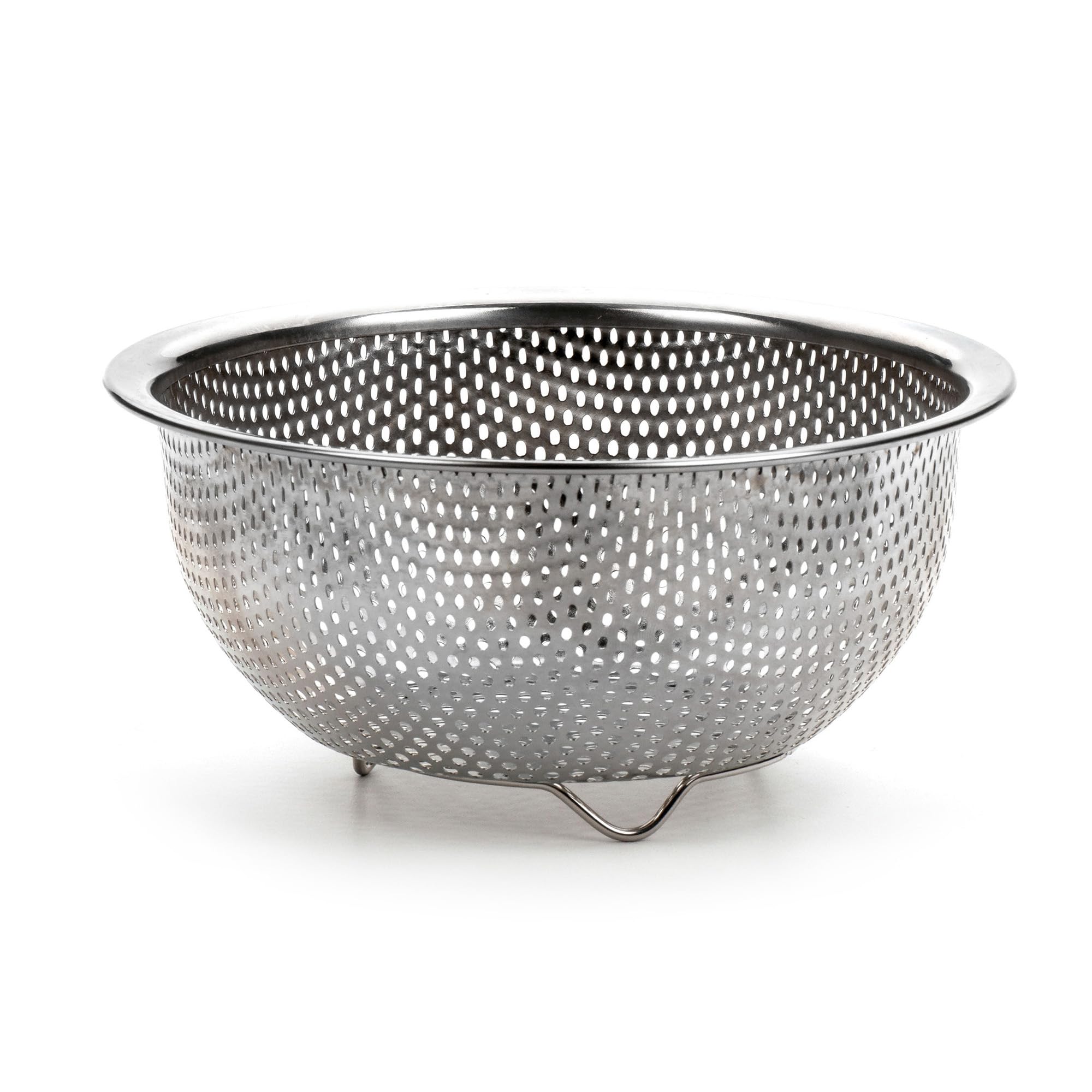
A compact, precision-pierced stainless colander sized for berries, herbs, and small rinsing jobs.
Why I picked it: Perfectly sized for single servings and delicate fruit.
Best for: Rinsing berries, herbs, and small prep tasks.
Affordable specialty piece.
Pros
- Perfect size for berries
- Lots of small holes for fast draining
- Footed base keeps food elevated
- Stiff, easy-to-clean metal
Cons
- Limited capacity
- Base has limited escape slots for sink water
My take
This RSVP berry colander is the tool I use when I want to rinse a pint of raspberries or a bunch of herbs without losing fruit down the drain. The precision piercing provides excellent flow while holding small pieces securely.
It’s surprisingly stiff for its size, which makes cleaning easier than a fine mesh alternative. The pedestal base keeps produce off the bottom of a wet sink, though I wish the base had more side openings to speed water evacuation when the sink has residual standing water.
For small, delicate jobs this little strainer is exactly what I reach for.
6. Proto-Future Copper Rose Strainer Set – Best Copper-Finish Strainers
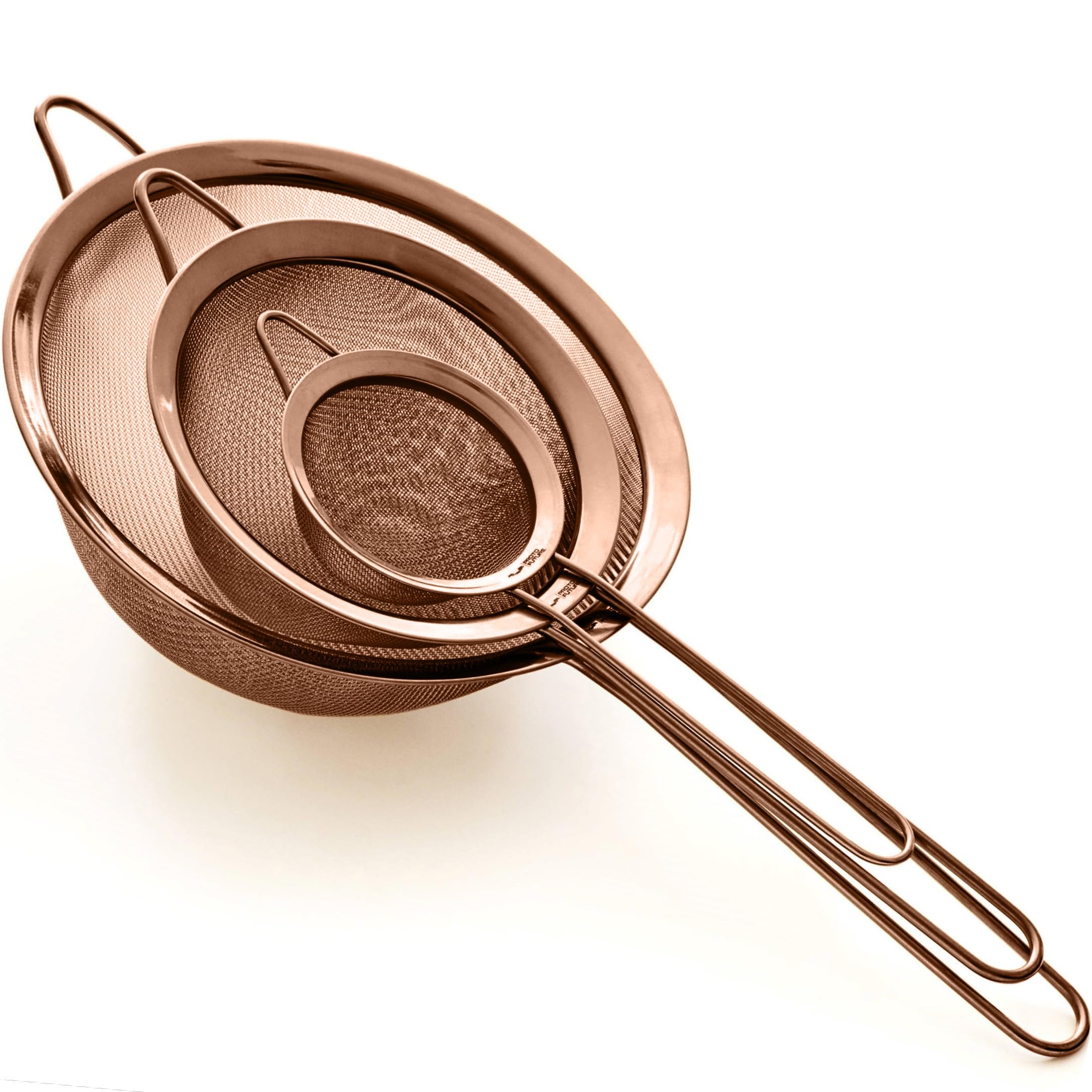
Three fine-twill mesh strainers in a copper rose PVD finish made from 304 stainless steel for performance and presentation.
Why I picked it: Professional 304 stainless mesh with a copper PVD finish that looks as good as it strains.
Best for: Fine sieving, sauces, broths, and serving when appearance matters.
A more premium, stylish option.
Pros
- Fine twill mesh for precise straining
- Professional 304 stainless steel
- Attractive copper PVD finish
- Three versatile sizes
Cons
- Copper finish may wear with heavy dishwasher use
- Feels delicate compared with solid-rim strainers
My take
I like these Proto-Future strainers when I need fine filtration and a polished look on the counter. The twill mesh catches small particles while the larger sizes tackle pasta and grain rinsing without sagging.
The copper-colored PVD finish elevates presentation—great for serving or for a coordinated copper-themed kitchen. The manufacturer tests showed dishwasher compatibility, but I hand-wash mine to preserve the finish over time.
Construction is solid thanks to 304 stainless, and the three sizes cover everything from sieving powdered sugar to draining bone broth.
7. Homquen Copper Fine Mesh Strainer Set – Best for Baking & Sifting
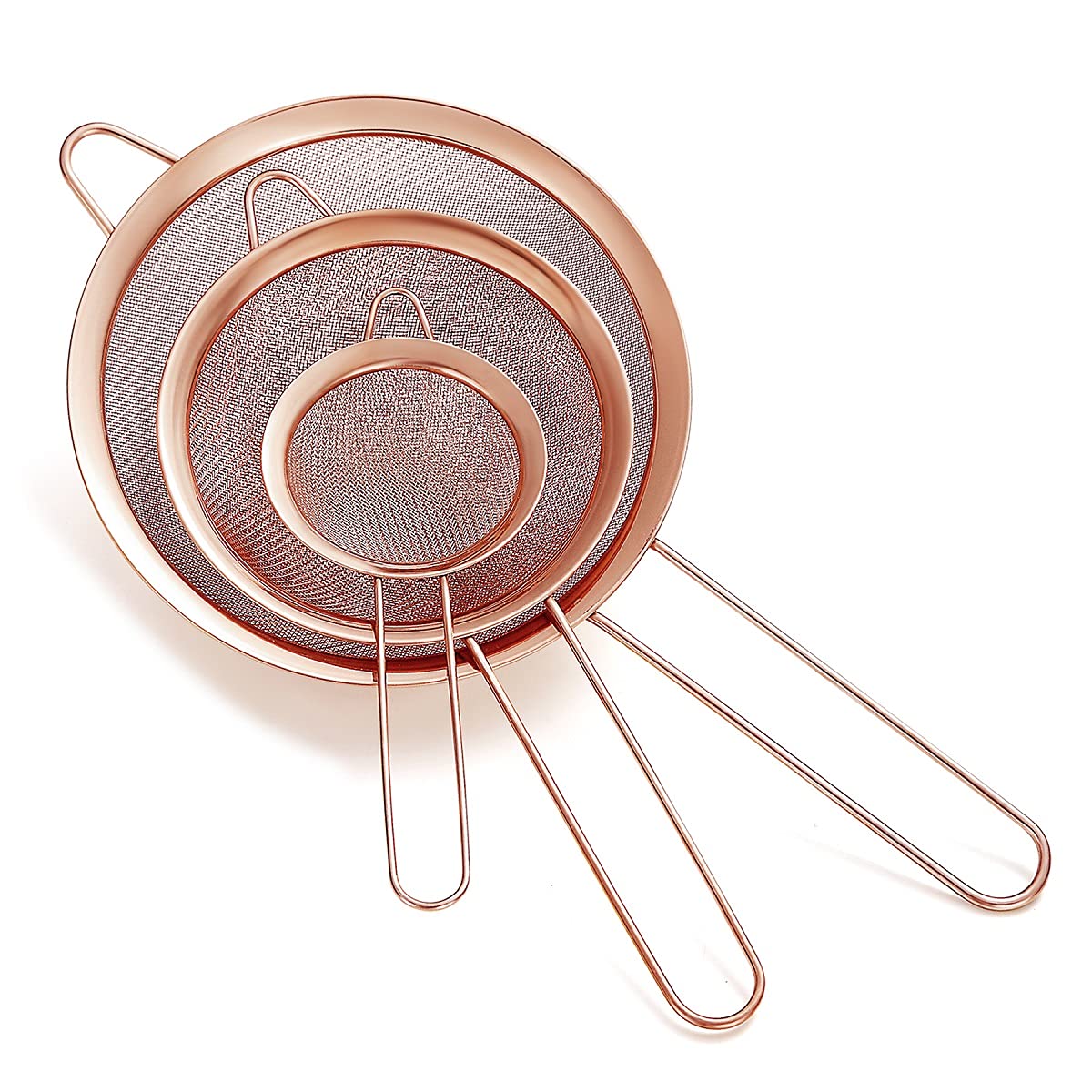
Three fine-mesh strainers plated with a copper-toned finish, ideal for sifting flour, dusting powdered sugar, and delicate tea work.
Why I picked it: Ultra-fine mesh and multiple sizes make it my go-to for baking and powdered finishes.
Best for: Sifting flour, powdered sugar, tea, and small-volume straining.
Reasonably priced for a fine-mesh set.
Pros
- Very fine mesh for baking
- Three useful sizes
- Attractive finish for display
- Dishwasher safe per listing
Cons
- Mesh can be too fine for some liquids
- Finish may be more decorative than heavy-duty
My take
I use the Homquen set for baking tasks where a fine, even sift matters. The smallest size is perfect for dusting powdered sugar and the larger ones make quick work of straining sauces or tea.
They’re visually appealing when hung or displayed in a copper-accented kitchen, and the mesh is fine enough that I don’t waste time recleaning clinging flour. For heavy broth work or tasks that require aggressive scrubbing, I treat them a bit more gently to preserve the plated finish.
How I Choose a Colander or Strainer
Material and Finish
I prioritize stainless steel (18/8 or 304) for longevity and food safety, especially when I’m working with hot liquids. Copper-finish strainers are typically stainless underneath a plated coating; they look great but benefit from gentler handling.
Silicone collapsible options are excellent for storage and light-duty rinsing, but they won’t be as rigid for heavy hot-draining tasks.
- 18/8 or 304 stainless = best durability and heat resistance
- PVD or plated copper = stylish, hand-wash to extend finish life
- Silicone = space-saving and lightweight, not as rigid
Holes, Mesh, and What They Mean
I choose micro-perforated or fine mesh when I’m rinsing rice, quinoa, or small seeds. Larger perforations are faster for draining pasta and vegetables but can let tiny grains slip through.
Mesh catches the smallest particles but is slightly harder to clean after sticky starchy use; perforated metal balances easy-clean with good particle retention.
- Micro-perforations = good for grains and quinoa
- Fine mesh = best for powdered sugar, tea, and sauces
- Large holes = fastest drain for potatoes and pasta
Stability and Ergonomics
I look for a stable base or feet so the colander won’t tip when I pour. Handles should be comfortable and secure—riveted handles are a reliable sign of long-term durability.
If you plan to strain directly from a pot, check whether the rim will rest on pan edges; most colanders are designed for sink use rather than pan-mounting.
- Footed base prevents food contact with sink water
- Riveted handles last longer than spot-welded ones
- Consider rim shape if you want pan-to-colander straining
Care and Longevity
Dishwasher-safe listings are convenient, but I hand-wash plated or finished strainers when appearance matters to me. Stainless models tolerate dishwasher cleaning well and dry fast.
Avoid leaving wet strainers stacked; air-drying preserves finish and prevents trapped moisture from causing discoloration over long periods.
- Hand-wash copper-plated finishes to preserve color
- Dishwasher-safe stainless for convenience
- Dry thoroughly before storing to protect finish
Frequently Asked Questions
Are copper-finish strainers safe for food?
Yes—when they’re made from stainless steel with a copper PVD or plated finish underneath, I consider them food-safe. I treat plated finishes gently and hand-wash when I want the color to last.
Can I put these strainers in the dishwasher?
Many of these items are listed as dishwasher safe and I’ve run stainless pieces in the dishwasher without issue. For plated copper finishes I recommend hand-washing to protect the coating over time.
Which strainer is best for rice and quinoa?
I prefer micro-perforated stainless colanders for rice and quinoa because the tiny holes let water pass while keeping small grains contained. Fine mesh also works but can trap starch and take a bit more scrubbing.
Final Take
I’ve rounded up options that serve distinct kitchen roles: roomy stainless colanders for everyday pasta and produce, collapsible silicone for space-saving convenience, and copper-finish fine-mesh sets for baking and presentation.
If you want a single, do-it-all piece, a 5-quart micro-perforated stainless colander is my go-to. For style and fine sieving, the copper-finish strainers bring both performance and visual appeal. And if space is tight, the collapsible set is a practical compromise.
Pick the shape and material that match the tasks you do most, and you’ll find that a good colander or strainer becomes one of the most frequently used—and appreciated—tools in your kitchen.
