
I tested five countertop blenders across power, versatility, and day-to-day ease. Here’s how the Ninja systems stack up against Vitamix heavyweights and which model I reach for in different kitchens.
I spent time blending smoothies, crushing ice, making sauces, and testing food‑prep capacity across five machines to find the best countertop blenders for real cooking and daily use.
My selections balance raw power, usable controls, accessories, and how each machine feels during routine cleanup and storage.
In my experience the Ninja systems deliver great value with strong blending and convenient to‑go cups or food‑processor bowls, while Vitamix models bring professional build quality, finer texture control, and long-term durability—expect to pay more for that longevity.
1. Ninja BL660 Professional Blender – Best Overall Value
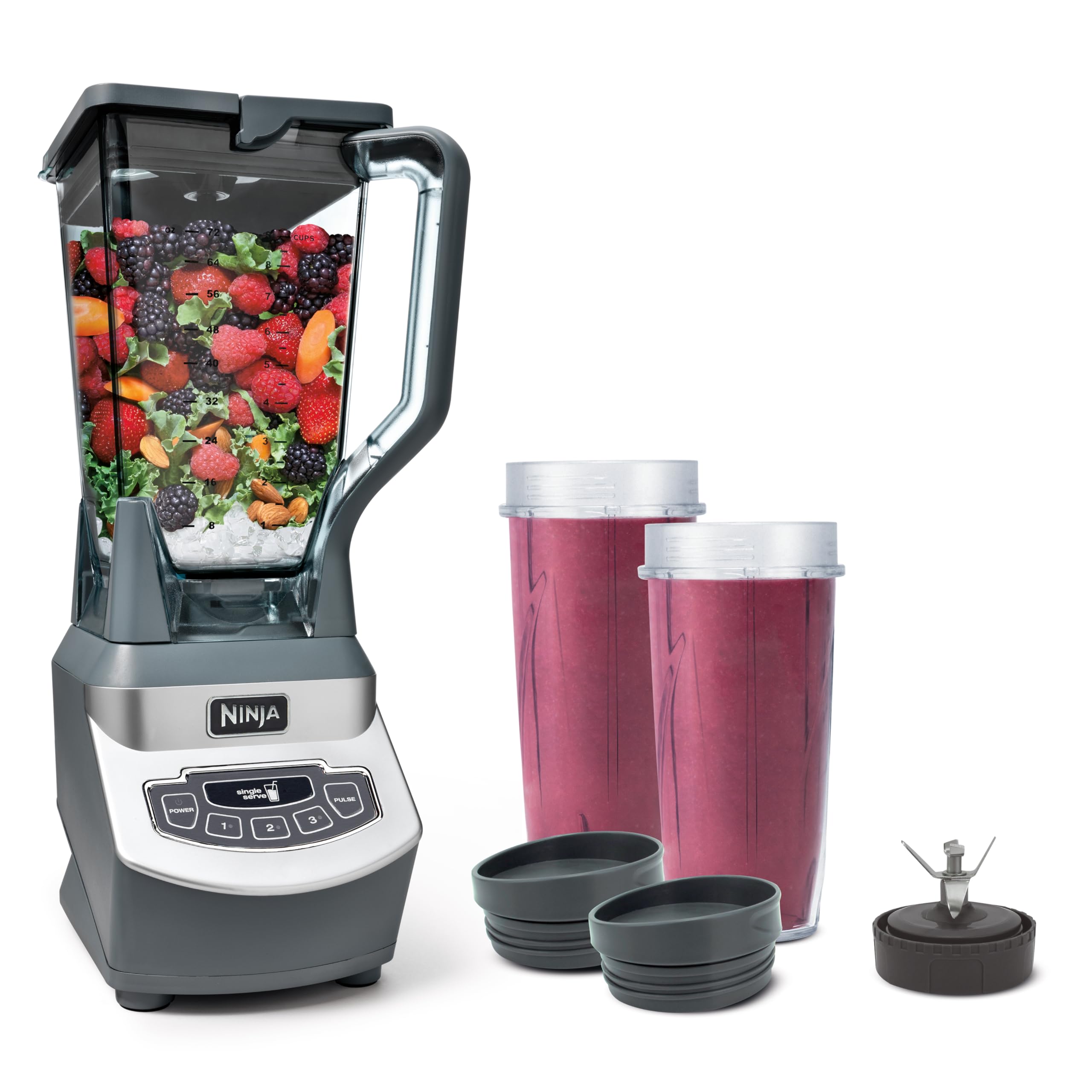
A powerful, no‑frills system that handles large batches and single‑serve cups with consistent crushing power.
Why I picked it: 1100W motor, large pitcher, and included to‑go cups make this a versatile daily driver.
Best for: Families who need big batches and single‑serve convenience.
Affordable value for multi‑function performance.
Pros
- Strong 1100‑watt motor
- Large 72 oz pitcher for batches
- Includes two 16 oz to‑go cups
- Dishwasher‑safe removable parts
- Simple, intuitive controls
Cons
- Can be loud during high‑speed blends
- Bulky footprint on counters
- Blades are very sharp—care in cleaning
My take
I reach for the Ninja BL660 when I want fast, no nonsense blending. The Total Crushing® blade system pulverizes ice and frozen fruit into a smooth texture in seconds, and the XL pitcher lets me make family‑sized batches without crowding the counter.
Using the included 16‑ounce Nutri Ninja cups is a game changer for my weekday routine: I blend straight into the cup, snap on the spout lid, and go. Cleanup is straightforward because most parts are top‑rack dishwasher safe, though I always handle the blades carefully while rinsing.
This is not a precision machine for silky purees like higher‑end commercial models, but for smoothies, frozen drinks, sauces, and quick food prep it delivers reliable power and convenience at a sensible cost.
2. Ninja Compact Kitchen System (Auto‑IQ) – Best with Auto‑IQ
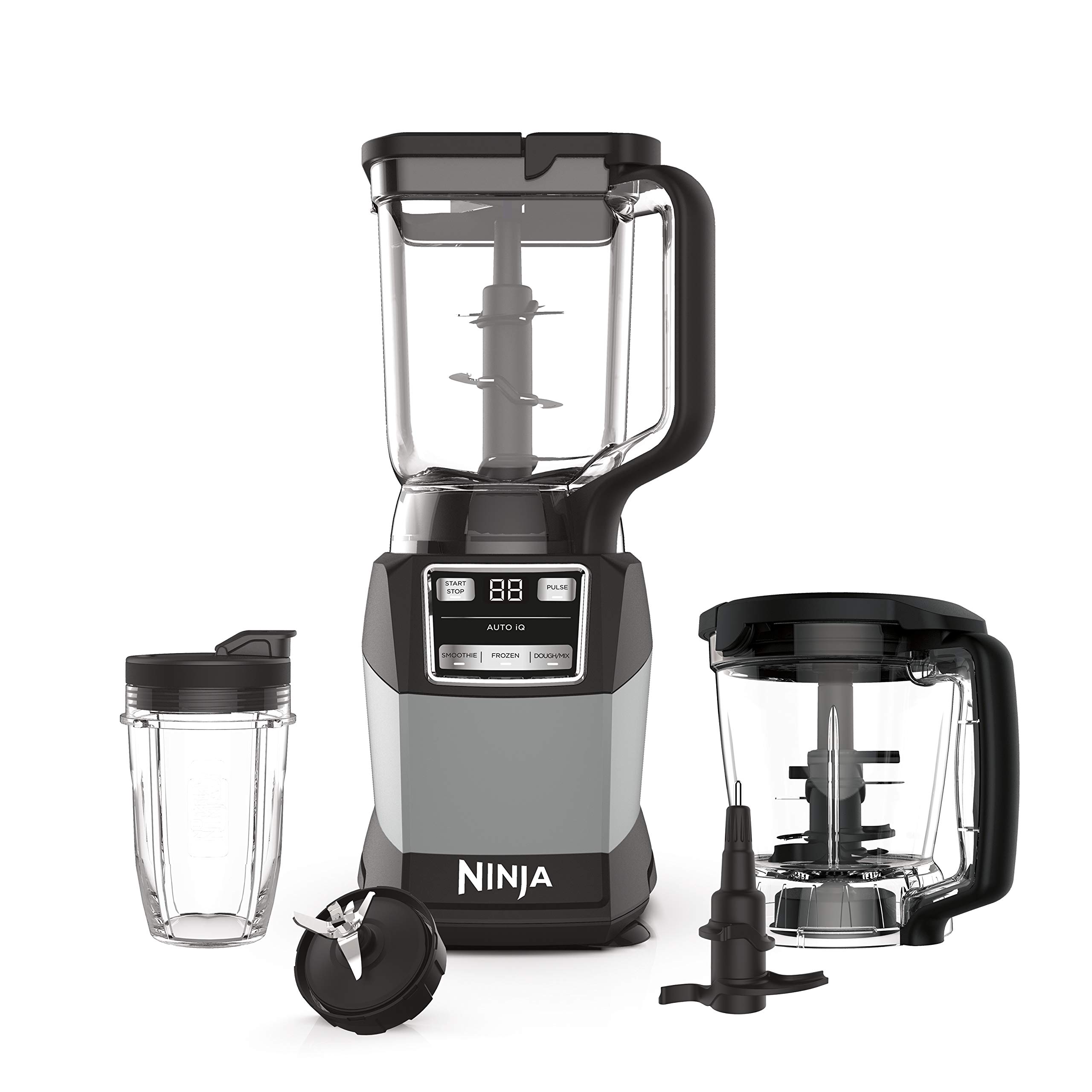
Combines a powerful motor with Auto‑IQ programs and a dedicated food‑processor bowl for more complex prep work.
Why I picked it: Auto‑IQ presets and included processor bowl add convenience and chopping ability.
Best for: People who want intelligent blends plus real food‑processing chops.
Mid‑range option with added presets and accessories.
Pros
- 1200W peak power
- Auto‑IQ timed programs
- 5‑cup processor bowl included
- Single‑serve cup for on‑the‑go
- Multiple blade assemblies
Cons
- Motor and fan can be noisy
- Slight learning curve for presets
- Processor bowl smaller than full sized
My take
I like this Ninja when I want the blender to do more of the work for me. Auto‑IQ programs combine timed pulsing and blending so I can walk away from most smoothie or frozen‑drink routines and get consistent results.
The stacked blade assemblies and the separate dough/chopping blades let me switch between big‑batch blending and precise food processing. I’ve used the 5‑cup processor for salsas and dips and it chops more evenly than I expected for a compact system.
It’s a versatile unit that saves counter space compared with buying separate appliances. The tradeoff is noise—the fan and high‑speed blending are loud—so I avoid using it very early in the morning around sleeping family members.
3. Ninja BL642 Nutri Ninja Duo – Best for Personal & Family Blends
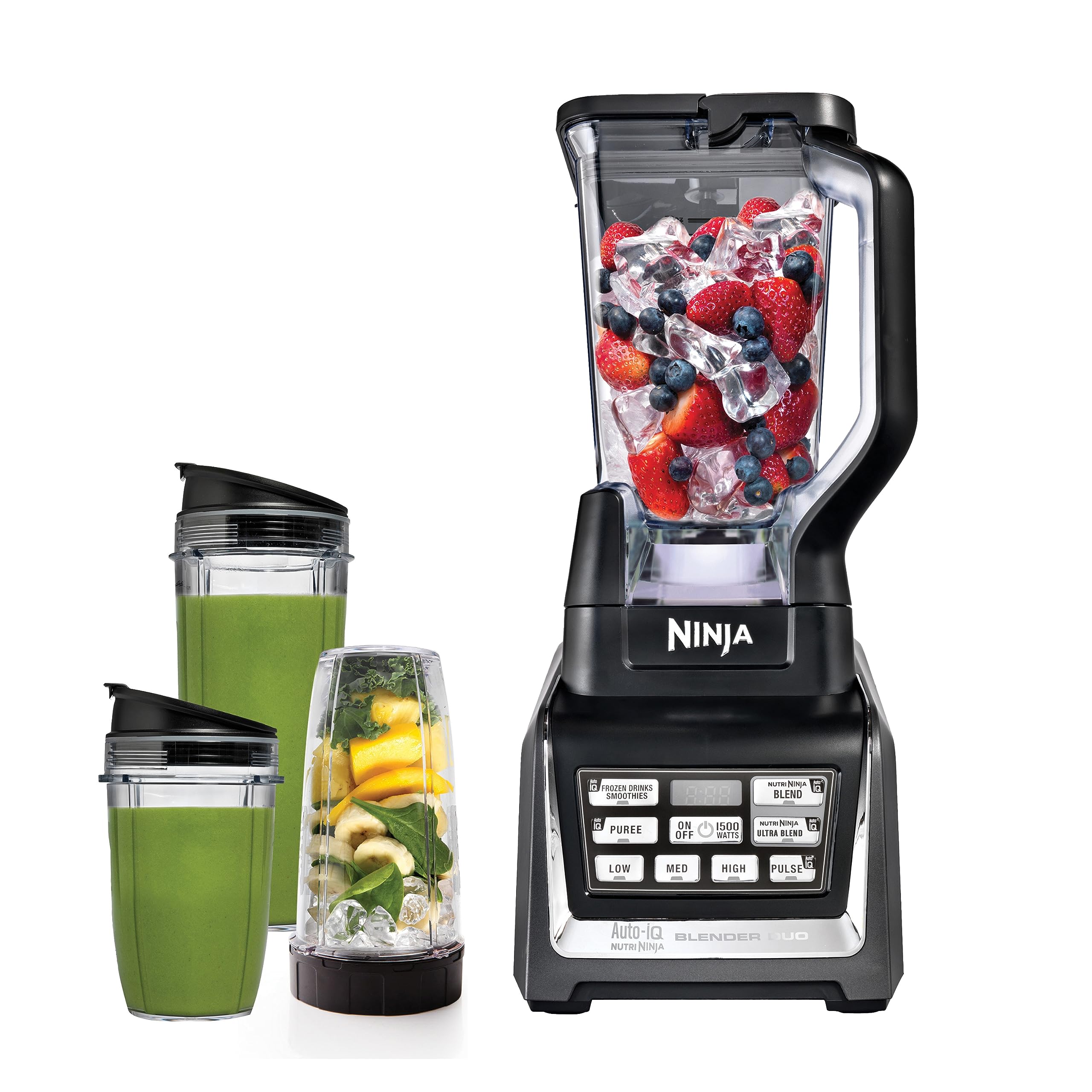
A nutrient‑focused system with strong extraction, multiple cup sizes, and Auto‑IQ programs for tailored blends.
Why I picked it: Total Crushing blades plus three to‑go cup sizes give me flexibility for any portion.
Best for: People who make single‑serve smoothies and family batches interchangeably.
Mid‑range, versatile for daily smoothies and shakes.
Pros
- 1200W motor for tough ingredients
- Total Crushing nutrient extraction
- Three to‑go cup sizes
- Auto‑IQ convenience
- Dishwasher‑safe components
Cons
- Can be loud at top speed
- Pitcher has max liquid limit
- Plastic parts feel less premium
My take
I picked up the BL642 when I wanted better nutrient extraction from whole fruits and veggies. The Pro Extractor blades break down seeds and fibrous greens much better than basic motors, and the result is consistently smooth smoothies with less fibrous grit.
I appreciate having multiple cup sizes—18, 24, and 32 ounces—so I can make a quick single‑serve or larger family portions without swapping machines. Auto‑IQ again simplifies repeatable results for busy mornings.
Overall this Ninja gives me a strong balance of power and portability. If you want a system that handles both on‑the‑go cups and family pitchers, this is one I regularly recommend from hands‑on use.
4. Vitamix Professional Series 750 – Best Professional/High‑End
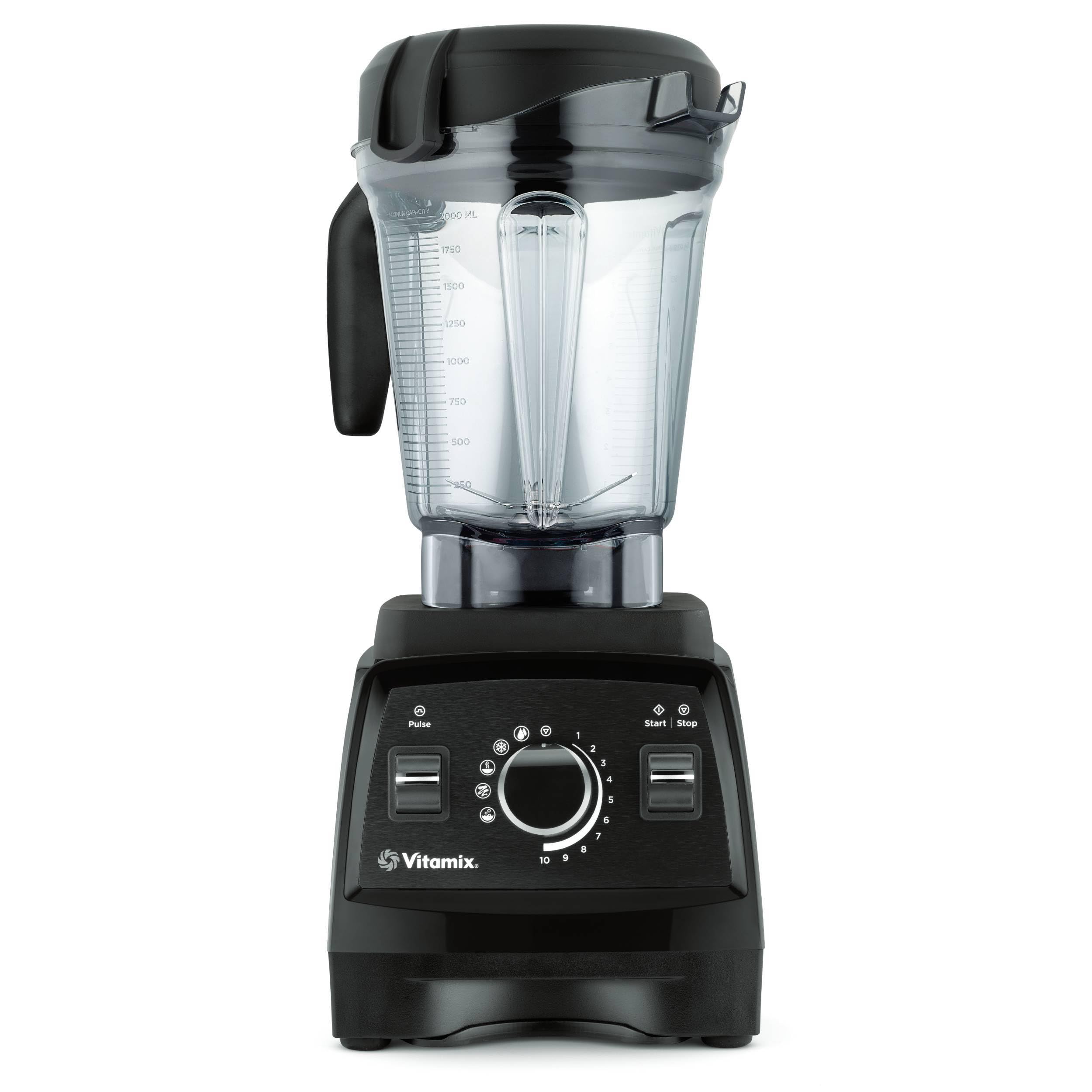
A professional‑grade blender built for longevity, precise control, and heavy everyday use.
Why I picked it: Preprogrammed modes, robust motor, and aircraft‑grade blades deliver restaurant‑quality texture.
Best for: Home cooks ready to invest in a long‑lasting, pro‑level machine.
Premium investment focused on performance and longevity.
Pros
- Five automated blending programs
- Variable speed and pulse control
- Low‑profile 64 oz container
- Aircraft‑grade stainless blades
- Self‑cleaning in under a minute
Cons
- Significant upfront investment
- Heavy and substantial footprint
- Replacement parts can be specialized
My take
I use the Vitamix 750 when I want restaurant‑grade texture and dependability. The preprogrammed settings take the guesswork out of soups, smoothies, frozen desserts, and purées, and the variable speed gives me the control for everything in between.
The build quality is obvious from the moment you lift the base: this is a machine designed to be serviced and used daily for years. Blends that require high torque—nut butters, silky soups, and fine nut flours—come out uniformly smooth without straining the motor.
Cleaning is refreshingly simple: a little warm water and a drop of dish soap on high speed clears most residue in under a minute. If you view a blender as a long‑term kitchen tool rather than a disposable gadget, this is the model I reach for.
5. Vitamix E320 Explorian – Best for Precision Control
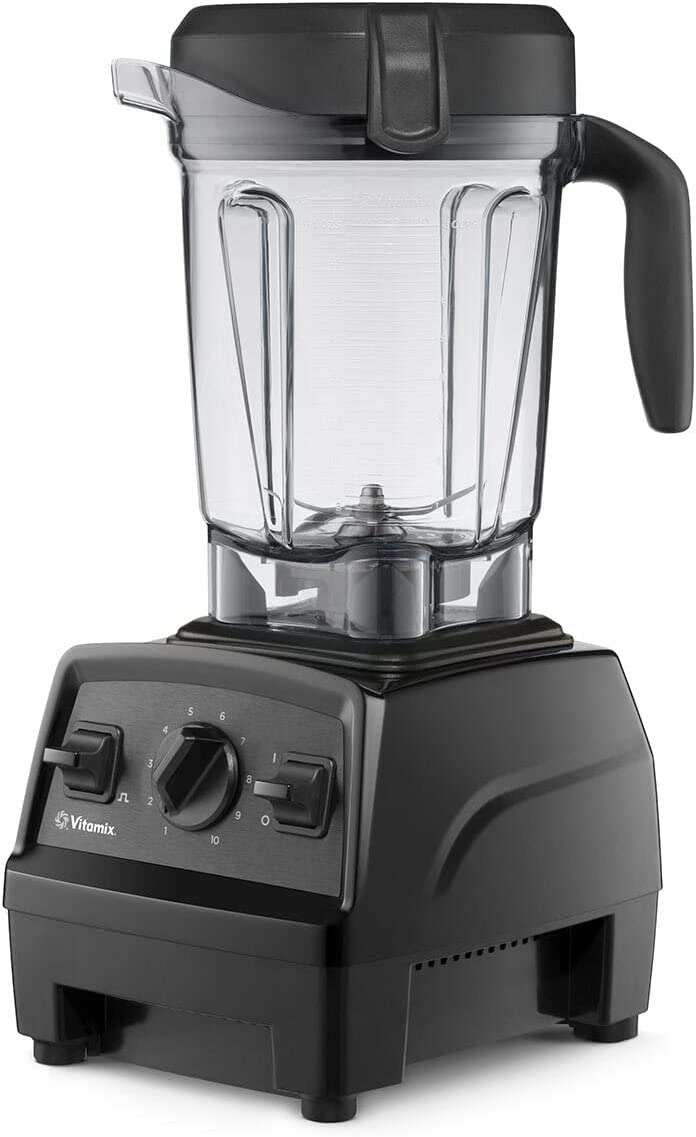
Great balance of power and precise speed control, backed by a strong warranty for long‑term ownership.
Why I picked it: 2.2 HP motor with 10 speeds gives me fine texture control across many recipes.
Best for: Cooks who need precise textures and heavy‑duty power for soups and nut butters.
Premium choice for serious home cooks seeking precision.
Pros
- Powerful 2.2 HP motor
- Ten variable speeds plus pulse
- Low‑profile 64 oz container
- Seven‑year warranty included
- Handles thick mixes and nut butters
Cons
- Heavy to move around
- Higher cost than entry models
- Noise level at full power
My take
When I need precision—silky smoothies, textured salsas, or nut butters—the E320 is my go‑to. The speed dial lets me ramp up gently and find the exact texture I want without overshooting and turning a sauce into liquid.
The motor is stout and handles dense mixtures that make cheaper blenders struggle; the wider low‑profile container also helps prevent food getting trapped at the blade base on thicker recipes.
This is not the lightest appliance to shift around, but its long warranty and consistent performance make it a model I buy once and expect to use daily for years.
How I Choose a Countertop Blender
Power & Motor
I prioritize motor power for crushing ice, blending frozen fruit, and handling dense mixtures like nut butter or dough. Higher‑watt motors or higher peak horsepower translate to smoother results with fewer chunks.
That said, raw wattage isn’t the only indicator: blade design and the whole blending system matter. I look for machines where the blades, jar shape, and motor are designed to work together.
- 1000W+ or 2+ peak HP for frequent heavy use
- Look for extraction or total‑crushing branding for frozen ingredients
- Consider Auto‑IQ or presets if you want hands‑off consistency
Capacity & Accessories
I match container size to how I cook: large pitchers for family batches, and single‑serve cups for solo breakfasts or gym shakes.
Food‑processor bowls are a big plus if I want one appliance to chop, shred, and knead.
- 64–72 oz pitchers handle family portions
- Multiple to‑go cup sizes increase versatility
- Processor bowls add true chopping capability
Controls & Usability
I prefer variable speed plus a pulse because they let me fine‑tune textures. Preset programs are helpful when I want repeatable smoothies or soups without babysitting the blender.
Ease of assembly, part locking, and dishwasher‑safe components save time during cleanup.
- Variable speed + pulse for precision
- Auto programs for repeatable results
- Dishwasher‑safe parts for faster cleanup
Build Quality & Longevity
I view a blender as an investment. Heavier bases, metal‑reinforced blades, and long warranties indicate a machine built to last.
If you use a blender daily, I recommend prioritizing durability over a lower initial cost.
- Stainless or aircraft‑grade blades resist wear
- Long warranties and replaceable parts matter
- Heavier units often mean sturdier construction
Noise & Footprint
Powerful blenders are inevitably loud—plan when and where you’ll use them so noise isn’t an issue.
Also measure counter space: low‑profile containers fit under most cabinets, which is a practical detail I always check.
- Expect noise at high speeds
- Low‑profile containers can fit under cabinets
- Consider a mat to prevent movement on counters
Frequently Asked Questions
Which blender is best for crushed‑ice smoothies?
For consistent crushed‑ice smoothies I reach for high‑torque models with total‑crushing or pro‑extractor blades—the Ninja systems and both Vitamix models all handled ice well in my tests, with Vitamix producing the finest, most uniform texture.
Can these blenders make hot soup?
Yes. I’ve used Vitamix machines to heat soups through friction on high speed using the automated or manual settings; always follow the manufacturer’s guidance about venting and fill levels when blending hot liquids.
Are the removable parts dishwasher safe?
Most of the removable plastic components on the Ninja systems and Vitamix containers are top‑rack or dishwasher safe; I still rinse immediately after use to avoid stuck‑on residue and to protect seals and gaskets.
How loud are these blenders?
All powerful blenders I tested are loud at full speed. Ninjas are punchy and fast; Vitamix models are also noisy but offer finer control so you can sometimes achieve the same texture by blending longer at lower speeds.
Final Take
I recommend the Ninja BL660 if you want the best mix of performance and value for family batches plus to‑go cups.
Choose a Ninja Compact or Nutri Ninja if you want Auto‑IQ convenience and food‑processing versatility without stepping up to premium pricing.
Pick a Vitamix 750 or E320 when you’re ready to invest in pro‑level build quality, long term reliability, and the most precise texture control for soups, nut butters, and restaurant‑quality blends.
