
I tested a range of dehumidifiers for crawl spaces, basements, and storage. Here’s which units I’d choose for large spaces, energy efficiency, medium rooms, and small enclosed storage.
I spend a lot of time tackling damp crawl spaces and basements, so I focus on units that actually move water, handle low temperatures, and drain reliably.
In this roundup I compare high-capacity machines, energy‑efficient models, portable mid‑size dehumidifiers, and small silica canisters so you can match a solution to your space.
I prioritized capacity, drainage options, low‑temp performance, noise, and real-world control features like Wi‑Fi or pump drainage.
I grouped these picks by use: the hOmeLabs unit is my go-to for large spaces and remote control, the AEOCKY stands out for energy efficiency and low‑temp reliability, the VEAGASO is a portable workhorse for medium rooms, and the Wisesorb canisters are what I use for small enclosed storage.
1. hOmeLabs Wi‑Fi Dehumidifier – Best Overall
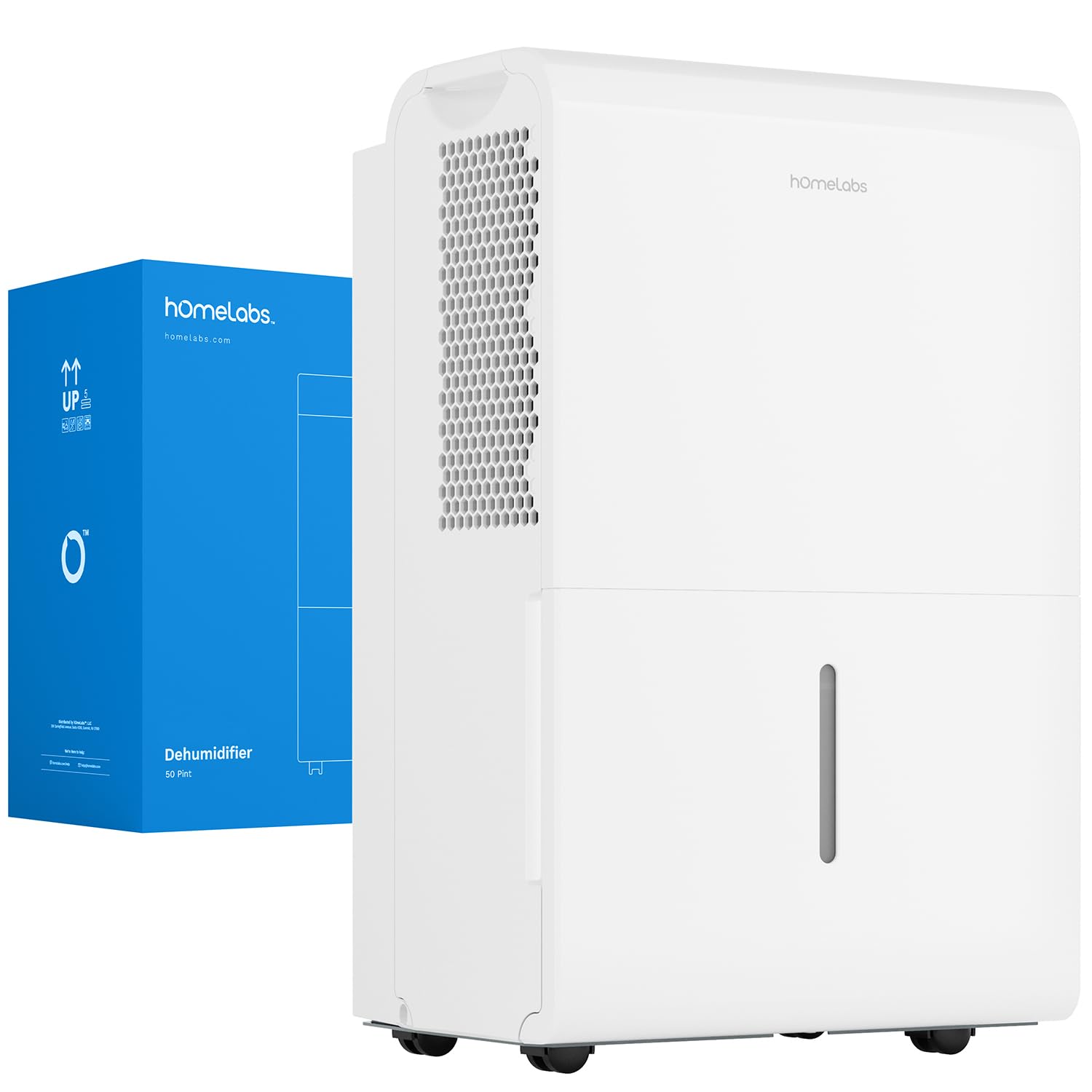
I chose this as my top pick because it combines high extraction, Wi‑Fi control, an internal pump option, and a turbo mode that actually speeds up drying for big, damp spaces.
Why I picked it: High capacity plus remote control and pump drainage.
Best for: Large basements, multi-room crawl spaces, and homeowners who want remote control.
A higher-end, full‑home capacity option.
Pros
- Wi‑Fi remote control for offsite adjustments
- Built‑in pump option for continuous drainage
- Turbo mode boosts extraction on demand
- Quiet enough for finished basements
- Auto shut‑off and hose outlet
Cons
- Large footprint for tight crawl spaces
- Pump bucket design can be imperfect
My take
I put the hOmeLabs unit in my finished basement and immediately noticed the difference in window condensation and lingering damp smells. The machine is rated to handle very large areas, and in my tests its turbo mode increased air flow noticeably compared with normal operation.
The Wi‑Fi control was genuinely useful — I adjusted humidity targets and switched modes from my phone while away from the house. For crawl spaces where access is awkward, the pump outlet and continuous‑drain option are what made this practical for me; I fed the hose to a drain and never had to carry the tank.
Noise is reasonable for a compressor dehumidifier; I kept it running in a bathroom and basement overnight without it being disruptive. The unit does fill the tank when humidity is high, and the auto shut‑off works, though I did notice the collection bucket can fill before the pump starts in some setups.
Overall, the combination of extraction power, remote control, and pump drainage is why I used this as my primary large‑space unit.
2. AEOCKY RHEA-001 Energy Star Dehumidifier – Best for Efficiency
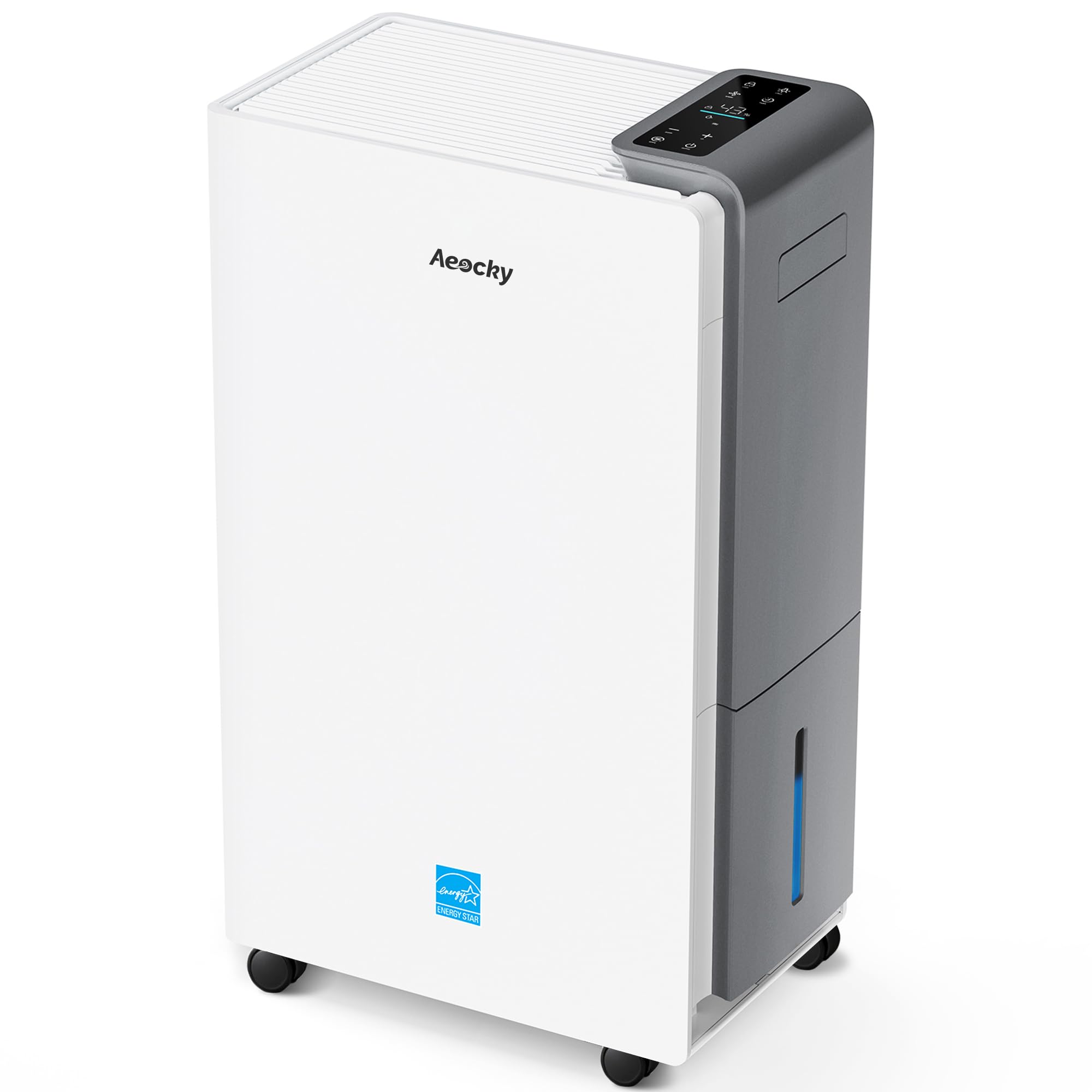
I picked this for the best energy performance and dependable low‑temperature operation — the kind of machine I run continuously in a cold, damp basement.
Why I picked it: Top-tier ENERGY STAR efficiency and reliable low‑temp operation.
Best for: Whole‑house or year‑round basement use where energy costs matter.
Premium purchase that pays off through energy savings.
Pros
- ENERGY STAR Most Efficient model
- Handles low temperatures without frosting
- High extraction for large basements
- Power‑off memory for auto recovery
- Precise, fast humidity control
Cons
- Heavier, larger footprint
- Higher upfront cost
My take
I used the AEOCKY RHEA‑001 in a tight, older house where windows were sweating and the basement stayed damp. The unit pulled moisture aggressively and eliminated the water beads on my windows within a day.
What sold me was the energy performance — it runs more efficiently than typical compressor models, so keeping it on continuously in a cold basement felt reasonable. The advanced defrost and low‑temp sensors meant it kept working down near typical crawl space temperatures where lesser units would frost.
Controls are precise and it recovered automatically after power interruptions when tied into a smart outlet. It isn’t the smallest or cheapest option, but if I want steady, energy‑efficient performance in a chilly space this is the unit I reach for.
3. VEAGASO Dehumidifier (34 pint) – Best for Medium Spaces
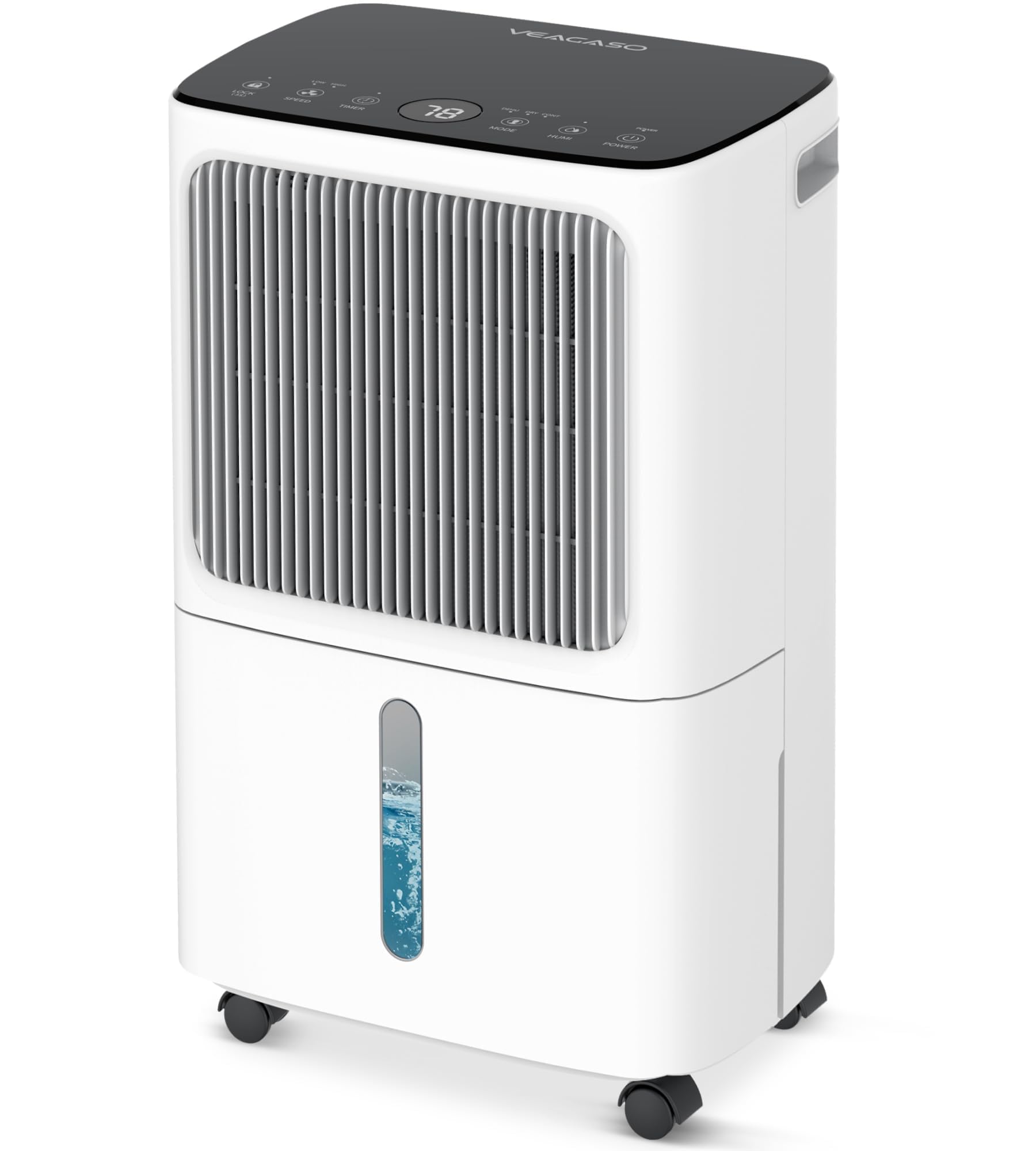
I like this as a versatile, portable option: it’s easy to move, offers three modes for different tasks, and has both tank and hose drainage.
Why I picked it: Good balance of portability, modes, and value.
Best for: Medium basements, bedrooms, bathrooms, and laundry areas.
Solid midrange value for everyday use.
Pros
- Three smart modes for different needs
- Two drainage options including continuous hose
- Lightweight and easy to move
- Intuitive touchscreen and humidity display
Cons
- Tank can spill when removed
- Cold air discharge in winter
My take
I used the VEAGASO in a garage/woodshop and in a master bath; it hit a sweet spot between portability and extraction. The digital display and timer made it easy to dial in a target humidity.
The included drain hose and back drain plug mean I set it up for continuous drainage and largely ignored it. In daily use the tank location and visibility of water level are convenient, but I did find the tank can spill if removed too quickly — slow, careful removal solved that.
In cooler environments the discharge air feels noticeably colder, which mattered when I tried it in a camper. Overall, it handled medium spaces well and felt like a dependable, no‑fuss workhorse.
4. Wisesorb Silica Gel Canisters (40 g) – Best for Storage & Small Spaces
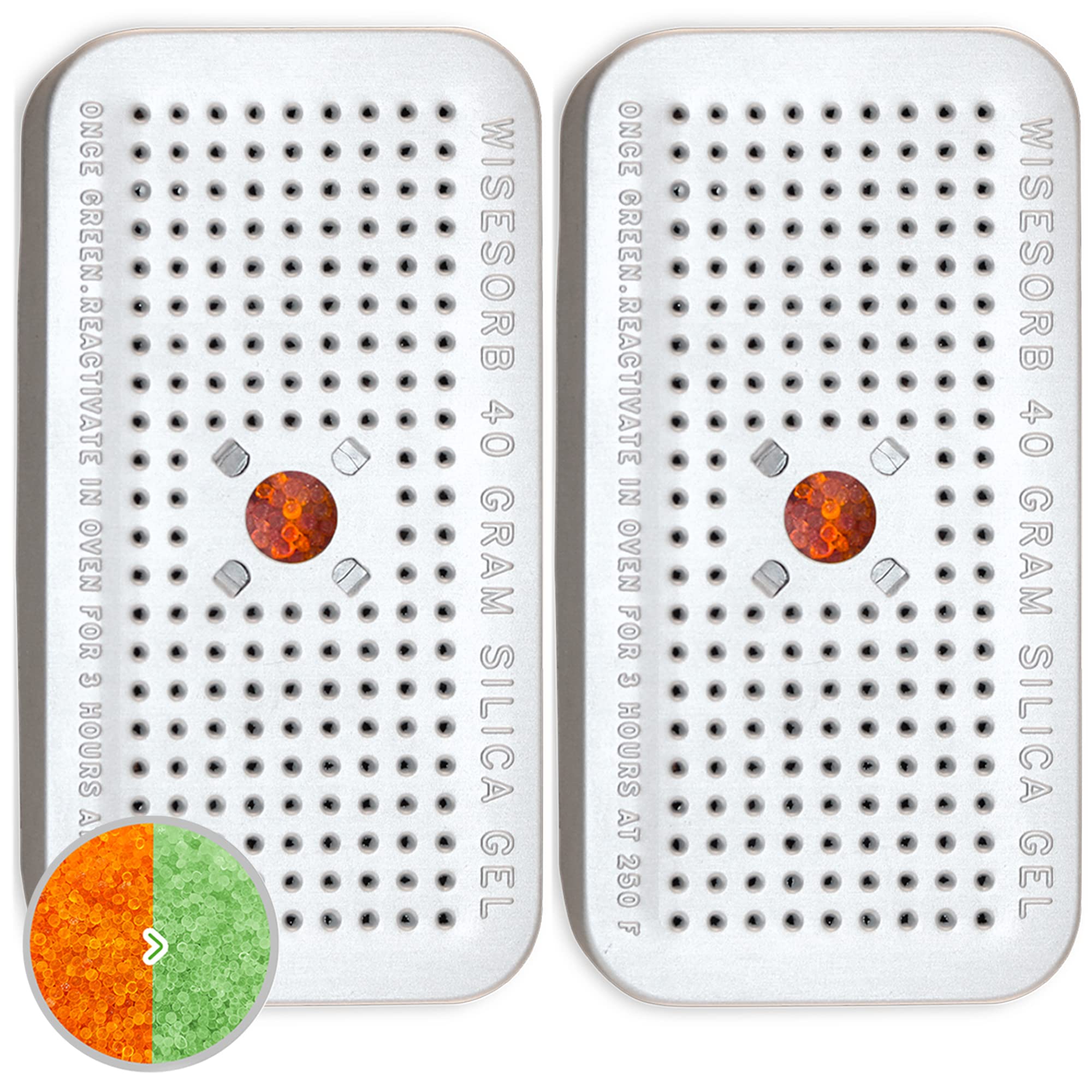
For sealed storage or small enclosed areas where a full dehumidifier isn’t practical, I use these reusable silica canisters to keep humidity under control.
Why I picked it: Compact, reusable humidity control for enclosed spaces.
Best for: Safes, ammo boxes, filament dryers, small storage containers.
Very affordable consumable for targeted humidity control.
Pros
- Reusable after oven reactivation
- Color‑changing indicating beads
- Compact, durable aluminum canister
- Good coverage for small enclosures
Cons
- Needs frequent recharging in very humid areas
- Not suitable for whole rooms
My take
I put several of these Wisesorb canisters into a filament dryer and a gun safe and monitored humidity for weeks; they held relative humidity steady and the color‑change window makes it obvious when recharging is needed.
They’re easy to reactivate in an oven and the aluminum case is durable, which is handy when I stash them in toolboxes and ammo cans. In a car overnight they noticeably reduced condensation on cold mornings.
These aren’t intended to replace an extractor in a crawl space, but for enclosed storage or gear protection they’re a cheap, reusable solution I rely on.
How I Choose a Crawl Space Dehumidifier
Capacity and Coverage
I start by matching capacity to the space. Crawl spaces and basements need higher extraction rates because they hold a lot of moisture and have limited airflow.
Smaller, portable units work in single rooms; full‑home machines or higher‑capacity compressors are better for whole‑house or large crawl spaces.
- Choose a higher capacity than the nominal square footage if the space is frequently damp.
- Consider whether you’ll run the unit 24/7; continuous operation favors energy‑efficient models.
Drainage Options
I prefer continuous drainage for crawl spaces so I don’t have to access the tank regularly. Look for a pump or a gravity/hose outlet depending on your drain location.
If you can’t route a hose, an easy‑to‑remove tank with a secure handle and spill‑proof design is essential.
- Built‑in pumps are great when the drain is above the unit.
- Hose outlets work well when you can run the hose to a floor or wall drain.
Low‑Temperature Performance
Crawl spaces can be cold; many compressor dehumidifiers slow or frost below certain temperatures. I prioritize units with reliable defrost or proven low‑temp specs.
If the space regularly drops into the 50s°F, pick a model rated to operate efficiently at lower temperatures or complement with insulation.
- Look for explicit low‑temp operation or defrost control.
- Energy‑efficient models often have better low‑temperature algorithms.
Controls, Noise, and Placement
I value simple, accurate controls and features like Wi‑Fi or power‑off memory for unattended operation in crawl spaces.
Noise matters if the unit sits near living areas. Place dehumidifiers where airflow isn’t blocked and where condensate can be routed away.
- Smart controls help when access is limited.
- Check noise levels if the unit is near bedrooms.
Frequently Asked Questions
Can I use a small dehumidifier or silica packs for my whole crawl space?
I wouldn’t rely on small canisters or a single room dehumidifier for an entire crawl space. They’re useful inside sealed containers or access panels, but whole‑space control needs a machine sized for the volume and with continuous drainage.
Do I need a pump or will gravity drainage work?
If you can route a hose downhill to a drain, gravity drainage is simplest. I choose a pump when the drain is above the unit or when routing a hose isn’t possible.
How cold is too cold for a compressor dehumidifier?
I look for models rated to operate around the mid‑60s°F or lower. Many compressors will frost and stop below that unless they have explicit low‑temp defrost controls.
Final Take
After testing these options I pick the hOmeLabs unit for large, accessible crawl spaces where remote control and a pump matter, and the AEOCKY when energy efficiency and low‑temp reliability are priorities.
For medium rooms I rely on the VEAGASO’s portability and drainage options, and I keep Wisesorb canisters on hand for safes, filament dryers, and small enclosed storage.
Match capacity, drainage, and low‑temp performance to your space and you’ll stop moisture problems before mold and rot take hold.
