
I tested a mix of granules, hose-end weed-and-feed liquids, ready-to-spray lawn formulas, and non-toxic refills to find reliable ways to get dandelions under control across lawns, beds, and walkways.
I’ve spent seasons battling dandelions in different areas of my yard—front lawn, mulched beds, and driveway cracks—so I focused on products that match each use case. Some treatments need spreaders and target the lawn while feeding it; others are spray-on solutions for beds and hardscapes.
In this roundup I explain when I reach for a granular weed-and-feed, a hose-end sprayer, a targeted ready-to-use wand, or a pet-friendly, essential-oil refill. I also compare speed, convenience, and where each product shouldn’t be used.
I group products by how I use them: granular weed-and-feeds for whole lawns and turf health, hose-attached liquids for fast broadcast coverage, ready-to-use wands for precise landscape work, and non-toxic refills when I need a safer spot treatment around people and pets.
1. Scotts Turf Builder Weed and Feed5 – Best Overall
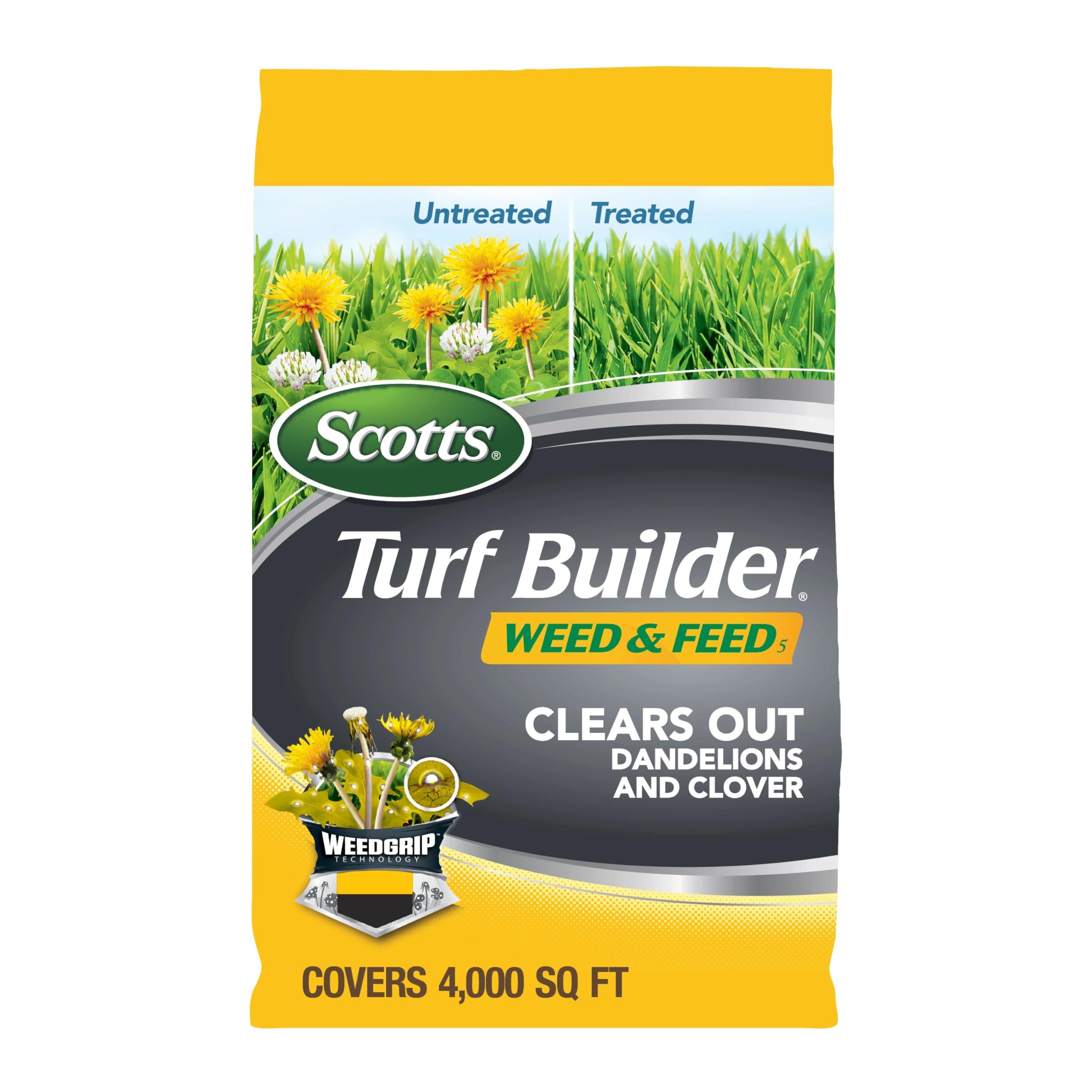
A granular weed-and-feed that kills dandelions and clover while feeding and thickening compatible lawns; one bag covers up to 4,000 sq. ft.
Why I picked it: It combines broad-spectrum weed control with fertilizer to thicken turf and crowd out future weeds.
Best for: Treating whole lawns that match the listed grass types and need both weed control and nutrition.
A solid all-in-one granular option for regular lawn maintenance.
Pros
- Kills dandelions and many broadleaf weeds
- Feeds lawn to encourage thicker turf
- Good coverage per bag
- Works with Scotts spreaders for even application
Cons
- Not for certain grass types
- Apply only when temps 60–90°F
- Don’t water for 24 hours after
- Limited to twice per year
My take
I use Scotts Turf Builder when I want a single step that both tackles visible weeds and gives the lawn a nutritional boost. The granules stick best when the grass is wet from dew or a light watering, and I follow the spreader settings for even coverage.
After application I keep people and pets off the treated area until the dust settles and avoid watering for 24 hours. Over a few weeks the dandelions and clover in my patch browned and shrank as the grass filled in, which is exactly what I expect from a weed-and-feed approach.
The important caveats: don’t use this on the excluded grass types listed on the label, and I limit applications to the recommended frequency. For established lawns that match Scotts’ grass list, this has been my go-to when I want both control and turf improvement.
2. Spectracide Weed & Feed 20-0-0 (3 Count) QuickFlip Sprayer – Best for Easy Spray
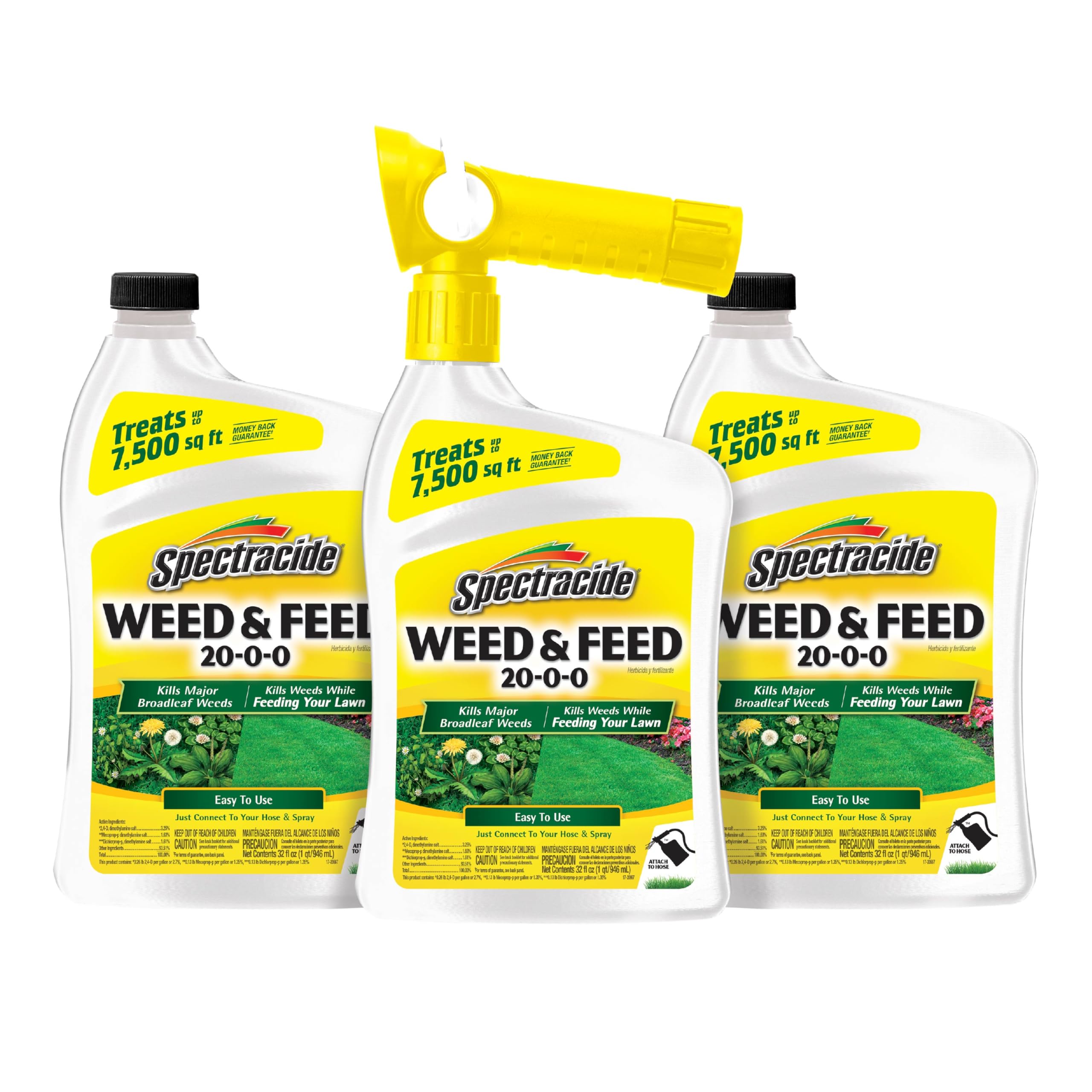
A hose-attach liquid that feeds with 20% nitrogen while killing broadleaf weeds like dandelions; three bottles with one QuickFlip nozzle for repeated treatments.
Why I picked it: The hose-connected QuickFlip sprayer makes fast, no-mix broadcast applications simple across large areas.
Best for: Large lawns or anyone who prefers spraying from a hose rather than broadcasting granules.
Three bottles plus one nozzle make this a convenient multi-application pack.
Pros
- No mixing—hose attachment ready
- Feeds lawn while killing weeds
- Covers a lot per bottle
- Easy, fast application
Cons
- May need repeat applications
- Avoid use above 85°F
- One nozzle for three bottles
My take
When I need to treat a big yard quickly, I reach for Spectracide’s QuickFlip bottles. Hooking the nozzle to the hose and following a steady spray pattern gets the job done without hauling a spreader.
I water the lawn a day or two before application, then avoid watering for 24 hours after. The weeds in my lawn began to pale and die back over a few weeks; however, I’ve found stubborn patches sometimes require a second pass.
If you want a straightforward, time-saving broadcast treatment that feeds and controls common broadleaf weeds, this has been my practical solution—especially when I don’t want to handle granular spreaders.
3. Ortho GroundClear Weed & Grass Killer with Comfort Wand – Best for Precision
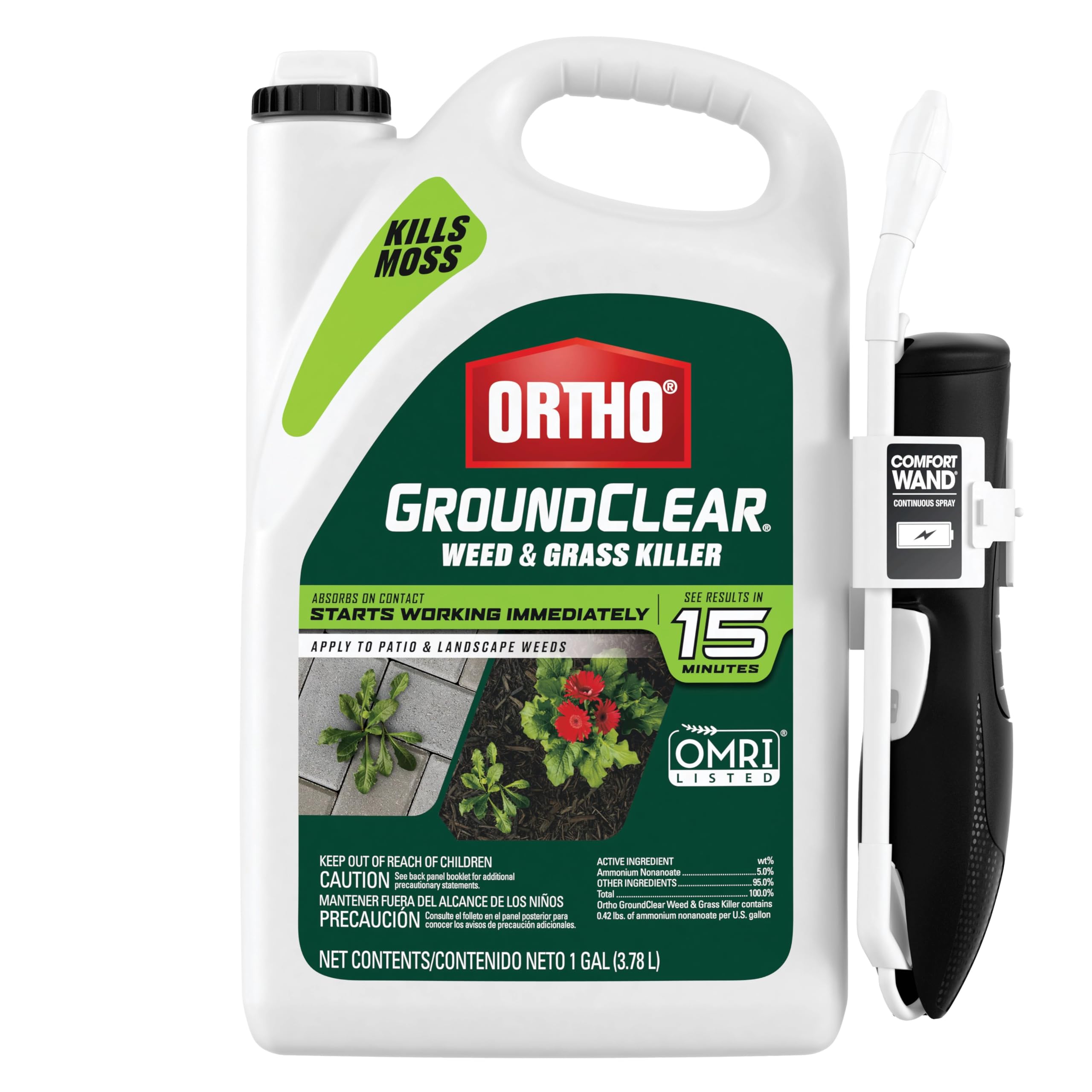
Ready-to-use spray with a Comfort Wand that kills dandelions, chickweed, crabgrass and moss; fast visible results and rainproof in two hours—designed for landscapes, not lawns.
Why I picked it: I like the fast contact kill and the ergonomic wand for targeting weeds without overspray.
Best for: Targeted work on beds, walkways, driveways, and around plants you don’t want to hit.
A ready-to-use wand system for quick, precise spot treatments.
Pros
- Fast visible results
- Rainproof quickly
- Comfort Wand for accurate spraying
- OMRI listed
Cons
- Not labeled for lawn broadcast
- Perennials may need repeat sprays
- Avoid contact with desired plants
My take
I pull out Ortho GroundClear when I’m dealing with weeds in beds, along fences, or in cracks where a broad broadcast would be risky. The wand makes it easy to aim and avoid desirable plants.
Results show quickly—leaves discolor within hours and die back over days—and the formula becomes rainproof in about two hours, which is handy if weather is uncertain. For very established perennials I plan on follow-up applications.
Because it’s ready-to-use and precise, this is the product I trust for landscape and hardscape spots where I can’t afford collateral damage to nearby plants.
4. Spruce Weed Killer Refill (64 Oz) – Best Non‑Toxic Option
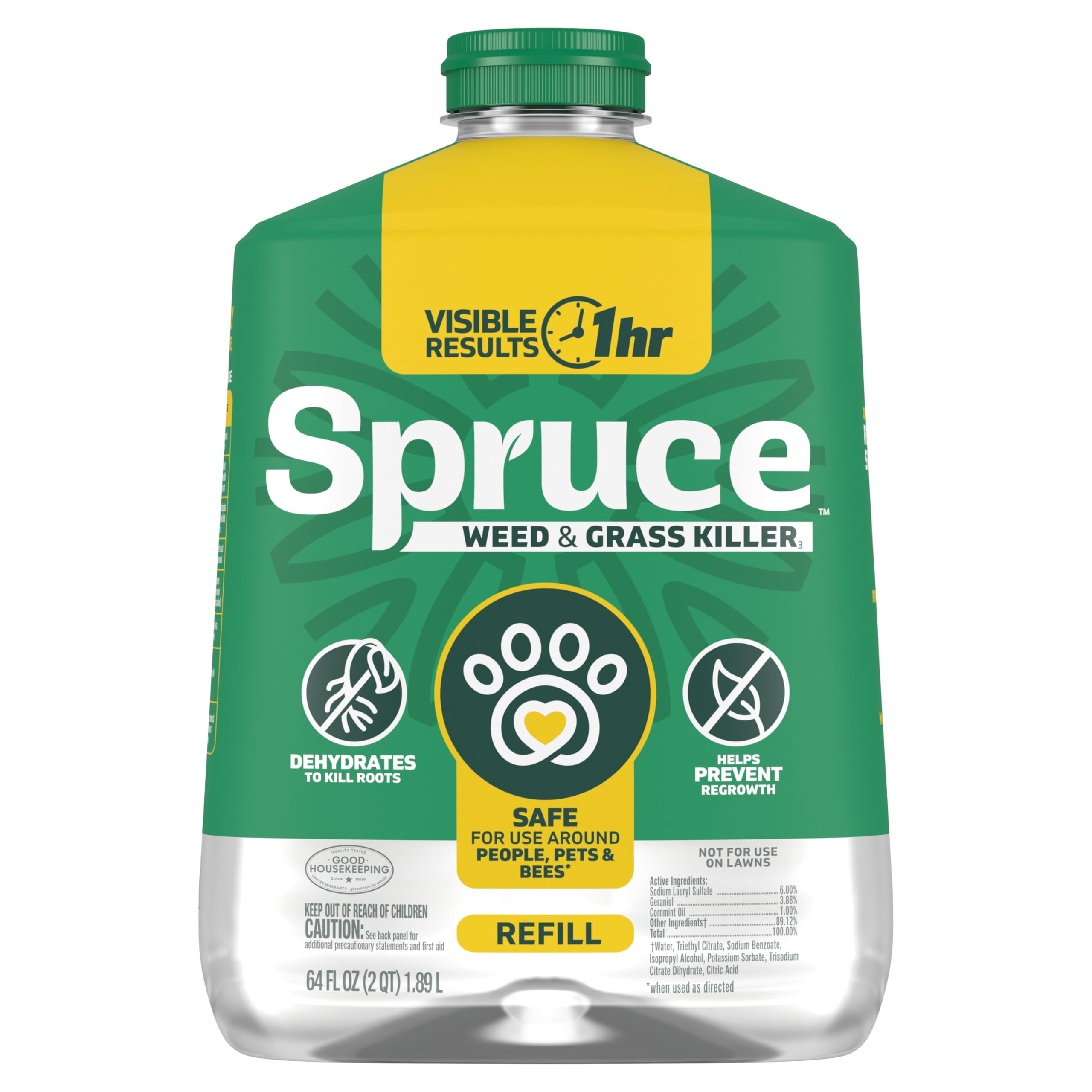
An essential-oil-based refill designed for the Snap & Spray kit; claims fast dehydration of plant cells and safety for people and pets when used as directed.
Why I picked it: I reach for Spruce when I want a gentler, non-toxic spot treatment around people and pets.
Best for: Mulch beds, driveways, pavers, and spot-treating weeds near kids or animals.
Refill format makes topping off your Snap & Spray kit convenient.
Pros
- Non-toxic, essential-oil formula
- Visible results quickly
- Snap-on refill is easy
- Pleasant scent
Cons
- Less effective on tough grasses
- Short-lived control in some cases
- May require more product for large areas
My take
I like Spruce for areas where I’m cautious about chemical exposure—around patios, play areas, and garden edges. The refill snaps into my existing sprayer and the battery-powered pump makes application effortless.
I saw many broadleaf weeds wilt within a day, but tougher grasses and deeply rooted weeds sometimes survived or reappeared quickly, so I reserve this for spot treatments rather than whole-yard solutions.
If you want a safer, easy-to-use product for targeted weed removal, Spruce fits that niche. Just be prepared to reapply for persistent weeds and to use more product if you have a large infestation.
5. Spectracide Weed Stop For Lawns Plus Crabgrass Killer (1 Gal) – Best for Tough Lawn Weeds
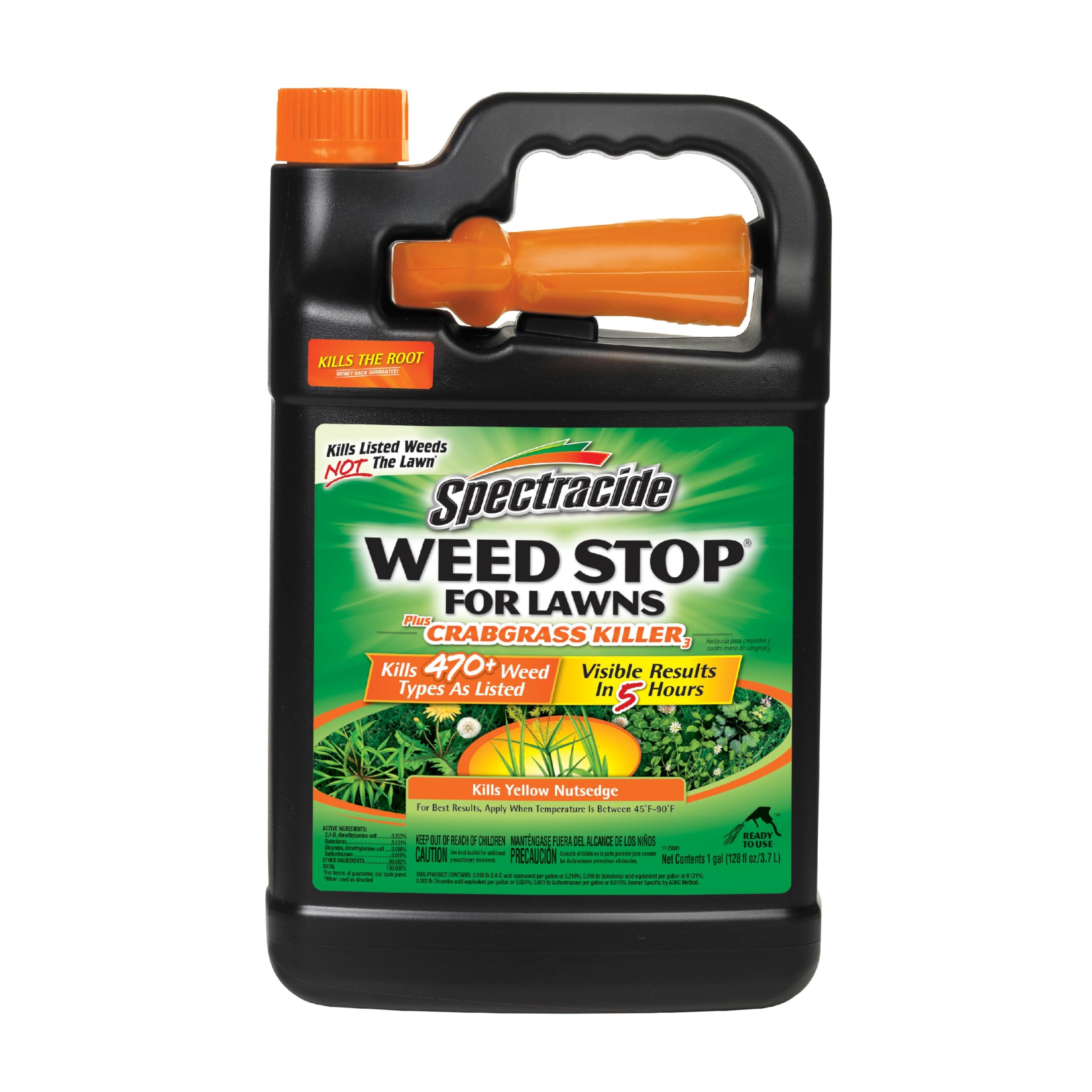
A ready-to-use lawn formula that kills more than 470 listed weeds (including dandelions and crabgrass), works down to the root, and shows visible results in about five hours.
Why I picked it: I rely on this when I need a ready-to-use lawn treatment that targets broadleaf and grassy weeds without killing turf.
Best for: Home lawns that need aggressive control of broadleaf weeds and crabgrass.
A convenient one-gallon ready-to-use option for spot or whole-lawn treatments.
Pros
- Kills roots for longer control
- Visible results in hours
- Ready-to-use—no mixing
- Targets many weed types
Cons
- May need multiple applications
- Some batches vary in effectiveness
- Best with a sprayer, not a hose-end
My take
I pour this into my sprayer and walk the yard, targeting patches of dandelions and crabgrass. It’s designed to kill contact and root, and I often see the treated weeds discolor and die within hours.
For heavy infestations I plan on two or more treatments; a single pass handled most of the broadleaf weeds but stubborn or mature weeds sometimes required follow-ups.
This is my practical choice when I want a ready-to-use gallon that I can apply where needed while keeping my grass intact.
6. Roundup For Lawns Ready-To-Spray (Northern) – Best for Northern Lawns
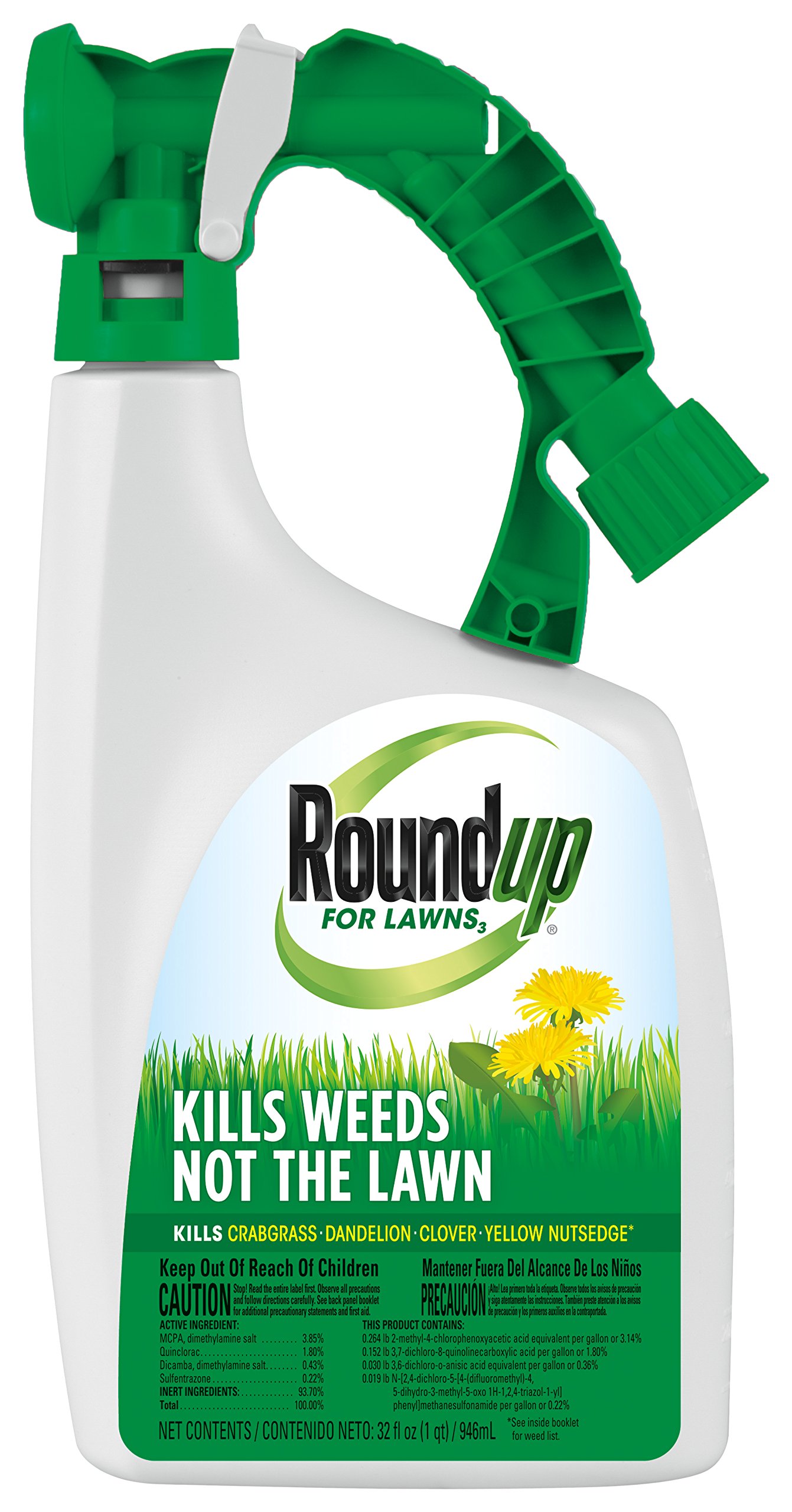
A ready-to-spray formula formulated for northern grass types; starts working on contact, rainproof in three hours, and designed to kill weeds without harming the lawn.
Why I picked it: The Northern formulation is tailored to common cool-season grasses I use and the RTS applicator lets me treat up to 5,000 sq. ft. quickly.
Best for: Cool-season lawns like Kentucky bluegrass, ryegrass, and fescue.
Ready-to-spray convenience for northern turf varieties.
Pros
- Ready-to-spray—fast coverage
- Works on many common lawn weeds
- Rainproof quickly
- Designed for northern grasses
Cons
- May require repeat applications
- Not for off-lawn areas
- Some weeds need precise timing
My take
When I need a broadcast treatment for my northern lawn mix, Roundup For Lawns RTS is my pick. The hose-end applicator makes it easy to cover thousands of square feet without mixing chemicals.
Weeds start showing stress within days and continue to decline over a few weeks; I’ve had the most success with timed applications and occasional follow-ups on stubborn growth.
I avoid using this off-lawn—on driveways or garden beds—because it’s formulated specifically to be lawn-safe on northern grasses and I stick to the label’s timing guidance for best results.
How I Choose a Dandelion Killer
Match product form to the job
I pick granules (weed-and-feed) when I want to treat and feed the entire lawn. They’re great for thickening turf and crowding out future weeds.
I prefer hose-attached or ready-to-use sprays when I need speed or precision—hose bottles for broadcast coverage, wands for targeted spots.
- Granules = whole-lawn nutrition + weed control
- Hose sprays = fast coverage for large areas
- Wand/ready-to-use = precision around plants and hardscapes
- Non-toxic refills = safer spot treatments near people and pets
Consider timing and weather
I only treat when weeds are actively growing and daytime temps fall inside the product’s recommended range. Timing affects uptake and results.
I water as directed—often a day or two before application for liquids, and I avoid watering for the specified window after treatment to let products work.
- Apply when weeds are actively growing
- Avoid treatment if rain is expected within the post-application window
- Follow temperature limits on the label
Check turf compatibility and safety
I never use a lawn product on grass types the label excludes. Wrong matches can injure turf.
I also follow label restrictions for people and pets—some granular treatments require waiting until dust settles, and sprays usually require drying before re-entry.
- Confirm your grass type is listed
- Observe re-entry and pet-safety guidance
- Use OMRI or non-toxic options where exposure is a concern
Be realistic about persistence
I plan for follow-up treatments when dealing with mature perennials or deep-rooted weeds. No single product is always a permanent fix.
For heavy infestations I combine cultural practices—thickening turf, overseeding, and proper mowing—with chemical or natural treatments.
- Expect repeat applications for established weeds
- Combine control with turf-improvement practices
- Use targeted spot treatments for isolated patches
Frequently Asked Questions
Can I use weed-and-feed on newly seeded lawns?
I avoid weed-and-feed on newly seeded areas until the grass is well established. I follow label guidance—many granular products recommend waiting after seeding to prevent harm to young seedlings.
Are non-toxic sprays like Spruce effective against dandelions?
I’ve seen Spruce quickly wilt many broadleaf weeds, including dandelions, but tougher grasses and very mature roots sometimes survive. I treat early and follow up if needed when choosing a non-toxic option.
How long after treatment can pets and people re-enter the lawn?
I keep people and pets off granular-treated lawns until the dust settles and I follow the spray product’s drying guidance. Labels vary, so I always use the waiting times printed on the product.
When should I expect to see results?
From my experience, contact sprays can show discoloration within hours, many ready-to-spray lawn formulas show visible effects in a few days to weeks, and weed-and-feed granules take a couple of weeks as the chemicals and fertilizer work together.
Final Take
I choose products based on the area I’m treating: granular weed-and-feeds for whole lawns, hose bottles for fast broadcast coverage, wands for precise landscape work, and non-toxic refills for spots near people and pets.
If you want a single, general-purpose solution for a compatible lawn, the Scotts granular option is my top pick. For fast broadcast spraying I favor the Spectracide hose bottles, and for precise or pet-sensitive work I keep the Ortho wand and Spruce refill on hand.
Whichever route I take, I always follow label instructions, match the product to my grass type, and plan for follow-ups on stubborn dandelions.
