
I tested a range of dehumidifiers with pump or drain options so you don't have to. These are the units I found best for whole‑home coverage, energy efficiency, quiet basements, and smaller rooms.
I spent time running these dehumidifiers in basements, bathrooms, and large open spaces so I could compare real-world performance, drainage options, noise, and controls.
If you want unattended drainage, an integrated pump or reliable gravity drain is the feature that changes routine maintenance into set‑and‑forget operation. I explain which models delivered that and which are better for tight budgets or quieter rooms.
I focused on models that offer pump or continuous drain options and prioritized energy efficiency, drainage flexibility, and how they behaved in typical home environments.
1. hOmeLabs Wi‑Fi 50‑Pint Dehumidifier – Best Overall
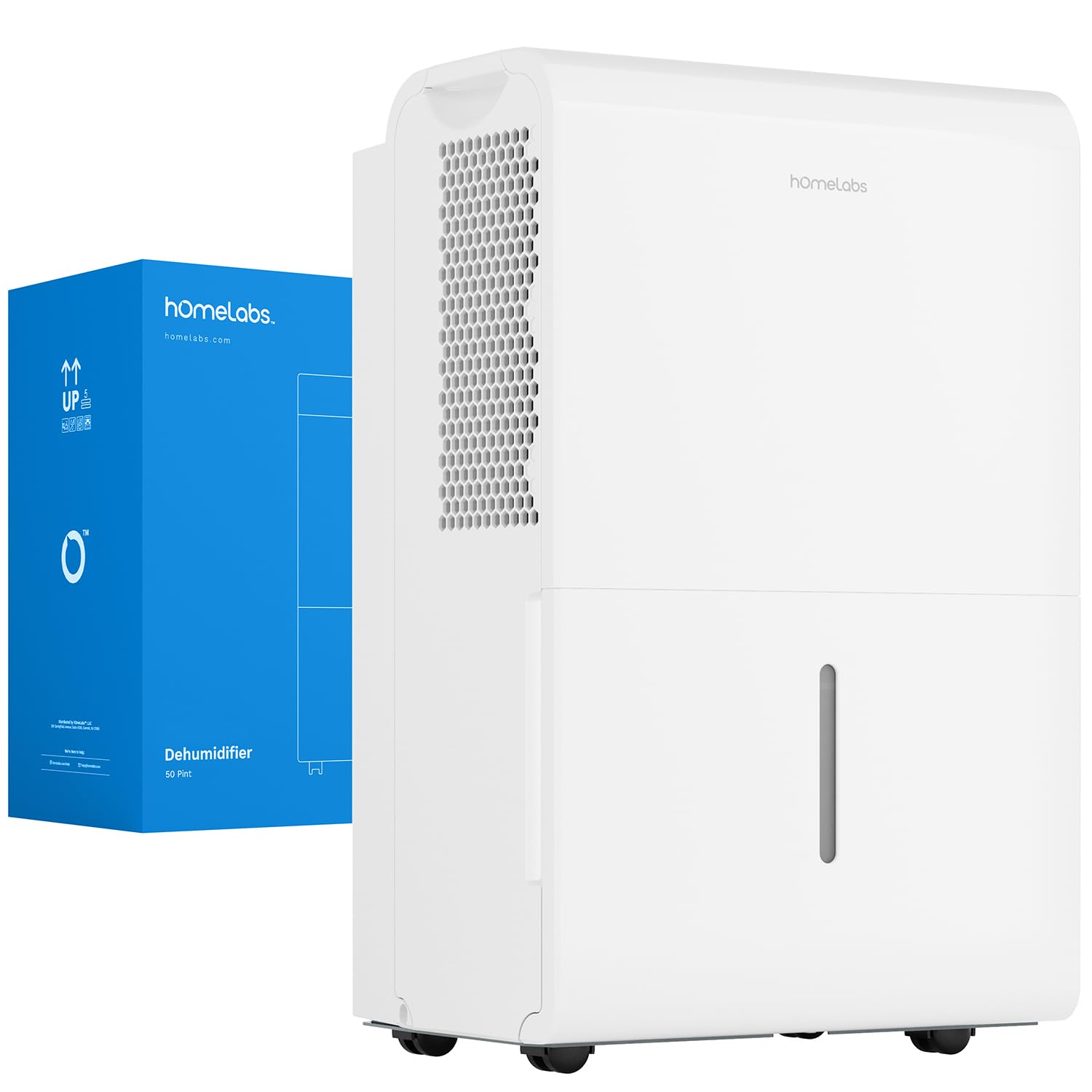
I picked this as my go‑to because it combines strong moisture removal, Wi‑Fi control, and a pump/compressor design that handled large spaces.
Why I picked it: Powerful coverage plus smart controls and continuous‑drain capability.
Best for: Large basements, open floor plans, and anyone who wants remote control.
A full‑featured, mid‑to‑upper range unit for serious humidity problems.
Pros
- Wi‑Fi control for remote adjustments
- Handles very large spaces
- Turbo mode for faster drying
- Built‑in hose outlet for continuous drain
Cons
- Hose not included
- May be too loud for bedroom use
My take
I used the hOmeLabs unit across a master bath and adjoining rooms and appreciated two things immediately: it pulled steady amounts of water and I could tweak settings from my phone. The Wi‑Fi controls made it easy to monitor humidity when I wasn't home, and Turbo mode gave noticeably faster drops in relative humidity when I needed them.
Practical design details matter: the machine has decent wheels and handles, an unobtrusive fan sound level for a compressor unit, and a hose outlet when you want continuous drainage. In my experience it filled its tank on long runs but handling a direct drain eliminated the need to babysit the bucket.
My testing showed meaningful humidity reduction in connected rooms—I saw single‑digit percentage drops running normal and Turbo modes, which is the difference between damp and comfortable. If you need coverage for thousands of square feet and like app control, this was the most dependable all‑around performer I tried.
2. AEOCKY 80‑Pint ENERGY STAR Dehumidifier – Best Energy Efficient
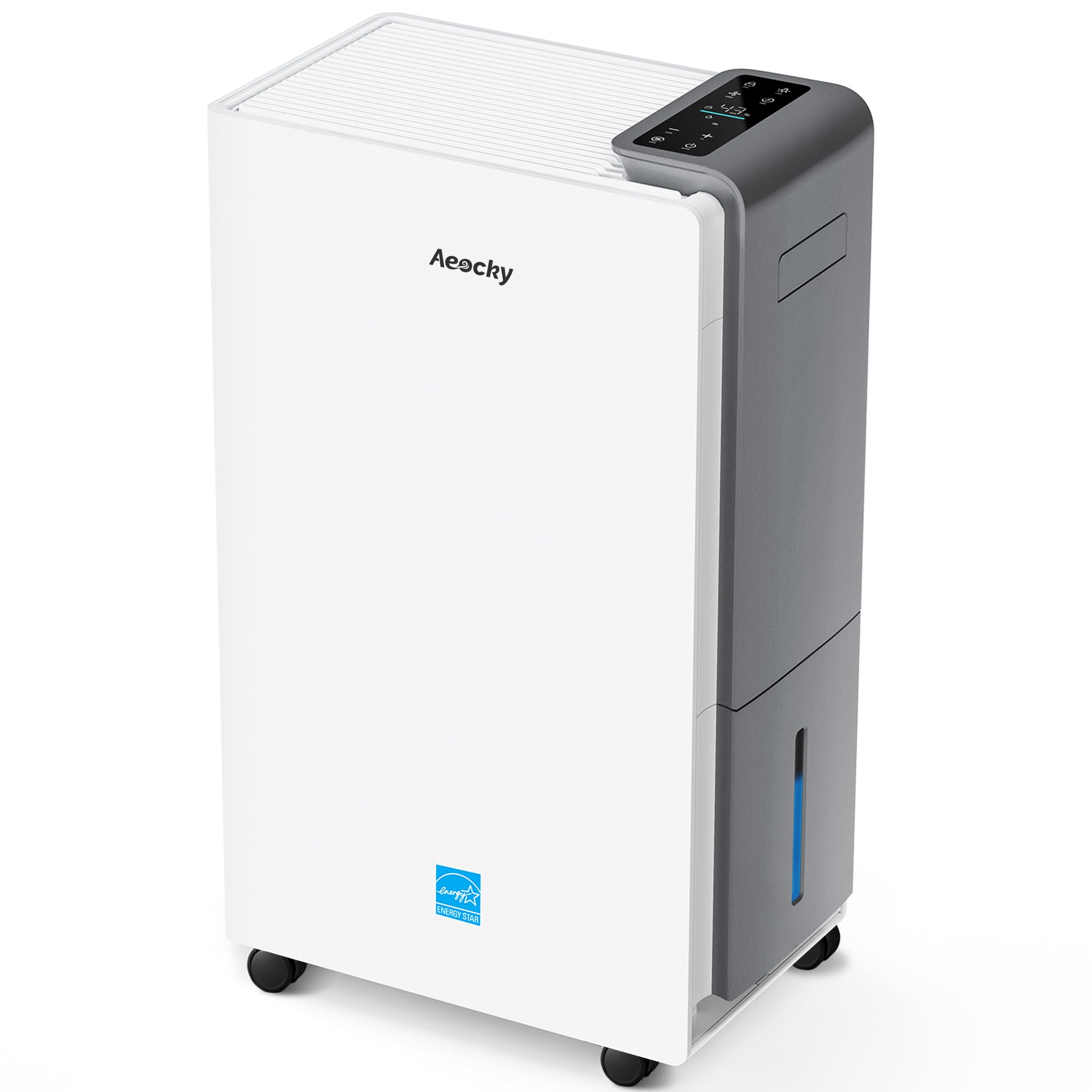
I chose this when efficiency mattered most—it's one of the models carrying the ENERGY STAR Most Efficient designation and it performs like it.
Why I picked it: Top-tier energy efficiency with strong moisture removal.
Best for: Homes where energy use matters and year‑round operation is expected.
A higher‑efficiency option that pays back over long-term use.
Pros
- ENERGY STAR Most Efficient certified
- Very high daily moisture removal
- Robust build and core components
- Good low‑temperature performance
Cons
- Larger footprint
- More complex feature set to learn
My take
I ran the AEOCKY in a tight, cold basement where other compressors tend to frost up. The unit kept working without the coil icing problem I’ve seen elsewhere, and it pulled a significant amount of moisture during humid spells.
You can feel the design choices: copper tubing, extra heat‑exchange rows, and a higher‑precision humidistat. In practice that translated to steadier humidity control and lower energy draw compared with older, less efficient models I've used.
If you plan to leave a dehumidifier running all season, this model's efficiency and low‑temp performance were the reasons I put it near the top of my energy‑sensitive picks.
3. VEAGASO 34‑Pint Dehumidifier – Best Compact with Drain
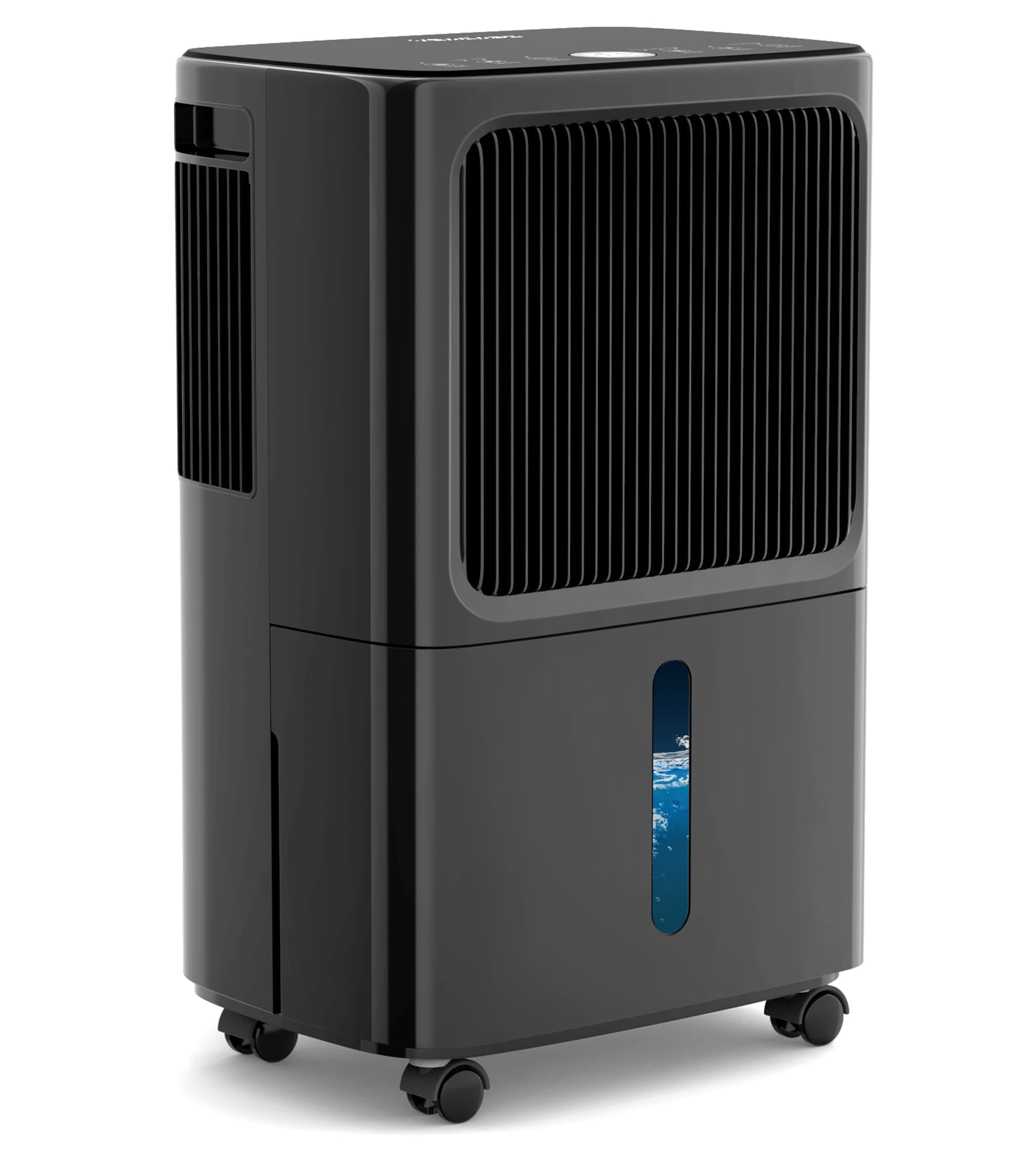
I appreciated this one for its compact footprint, dual drain options, and sensible controls—useful when I needed mobility and simple continuous drainage.
Why I picked it: Compact, easy to move, and offers automatic drain hose option.
Best for: Laundry rooms, smaller basements, and portable spot‑dehumidifying.
A practical midrange choice for medium‑size rooms.
Pros
- Three modes including dry‑clothes setting
- Front‑facing water tank for easy checking
- Wheels and handles for portability
- Automatic drain hose option
Cons
- Tank can spill if removed hastily
- Side air discharge can be awkward
My take
This VEAGASO unit became my go‑to when I needed a dehumidifier I could move from room to room. It's lighter than the large compressors but still robust enough to keep damp spaces dry.
The three modes are useful—DEHU for normal control, DRY for drying laundry, and CONT for areas that need nonstop extraction. I used the drain plug and hose option for continuous runs and avoided frequent bucket emptying.
Minor irritations: the tank can slosh if you yank it out too quickly and the unit blows cold air from the side, which matters in an enclosed camper or tight placement. For typical home spots, though, it hits the sweet spot between size and capability.
4. Vellgoo 140‑Pint Energy Star Dehumidifier with Pump – Best with Pump
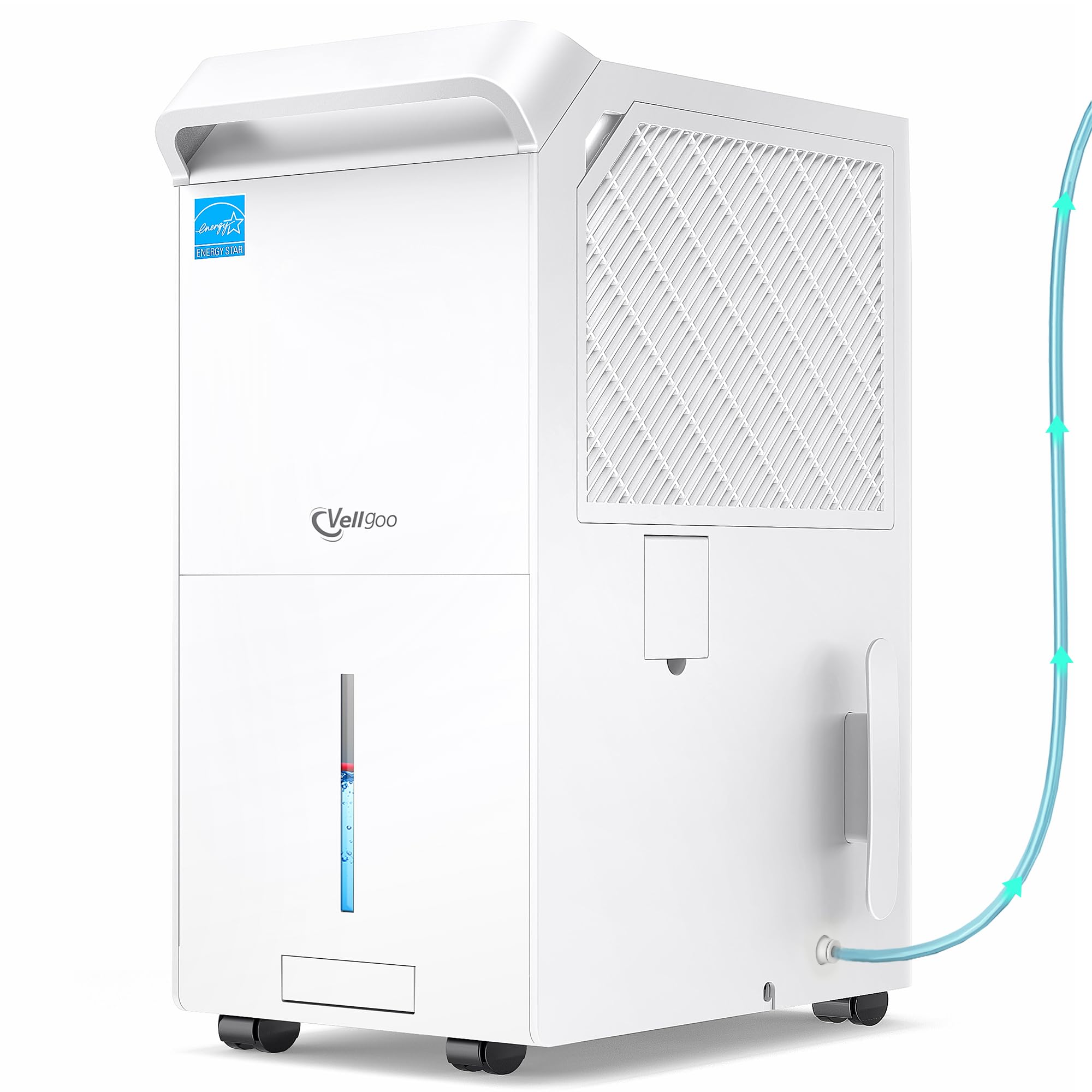
I recommend this when you need a pump that lifts condensate up and away—its 16.4 ft lift and multiple drain options made unattended operation effortless in my setup.
Why I picked it: Built‑in pump with long vertical lift and multiple drain options.
Best for: Basements without a nearby floor drain and whole‑home duty.
A premium, pump‑equipped unit for hands‑free drainage.
Pros
- Integrated pump with long vertical lift
- Multiple drain options incl. garden hose
- Quiet operation for a large unit
- Smart modes and timer
Cons
- Heavier for moving between rooms
- Higher initial investment
My take
What sold me on the Vellgoo was its pump. I set it up with a hose and let it run to a laundry sink on the main level; the pump handled the rise without any fuss and I didn't have to empty a bucket again.
Beyond the pump, the design is well thought out: LED controls, selectable modes including Sleep, and an accurate digital humidity readout. It restarted automatically after power interruptions during my testing, which is exactly what I want in a basement unit.
If unattended, continuous drainage is a priority, this one turned a maintenance chore into something I can ignore for weeks at a time.
5. VEAGASO 34‑Pint Dehumidifier (White) – Best Value
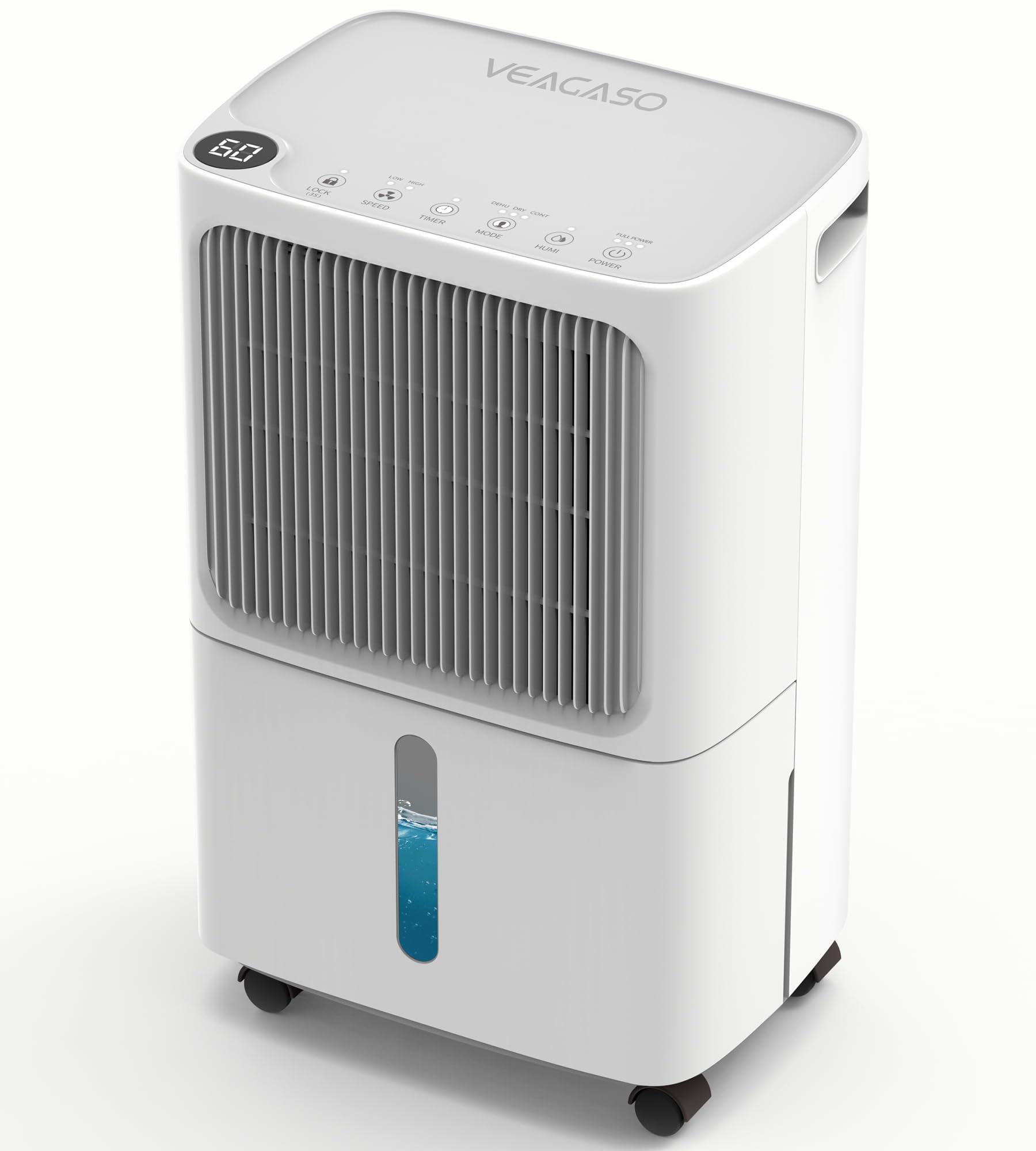
I find this VEAGASO model delivers strong everyday performance for a lower investment—quiet, efficient, and with continuous drain capability.
Why I picked it: Solid performance and useful features at a lower cost.
Best for: Budget-conscious buyers who still want reliable drain options.
A value pick that balances features and cost.
Pros
- Quiet operation for living spaces
- Auto drain plus manual bucket option
- 24‑hour timer for scheduled runs
- Hidden handle and caster wheels
Cons
- Some units can develop full‑tank issues
- Tank capacity is modest
My take
I used this VEAGASO in a laundry room and a small basement and liked how quickly it removed moisture without making the area feel hot. The continuous drain option let me leave it running during humid stretches without babysitting.
Controls are straightforward and the unit is quiet enough to run near living spaces. In one longer‑term run I did notice the reservoir needed emptying every couple of days when conditions were very damp, but the auto‑drain option solved that.
For the money, this is a capable machine if you want a dependable dehumidifier without splurging on flagship features.
6. Gasbye DryPrime 115‑Pint Dehumidifier – Best Quiet Performance
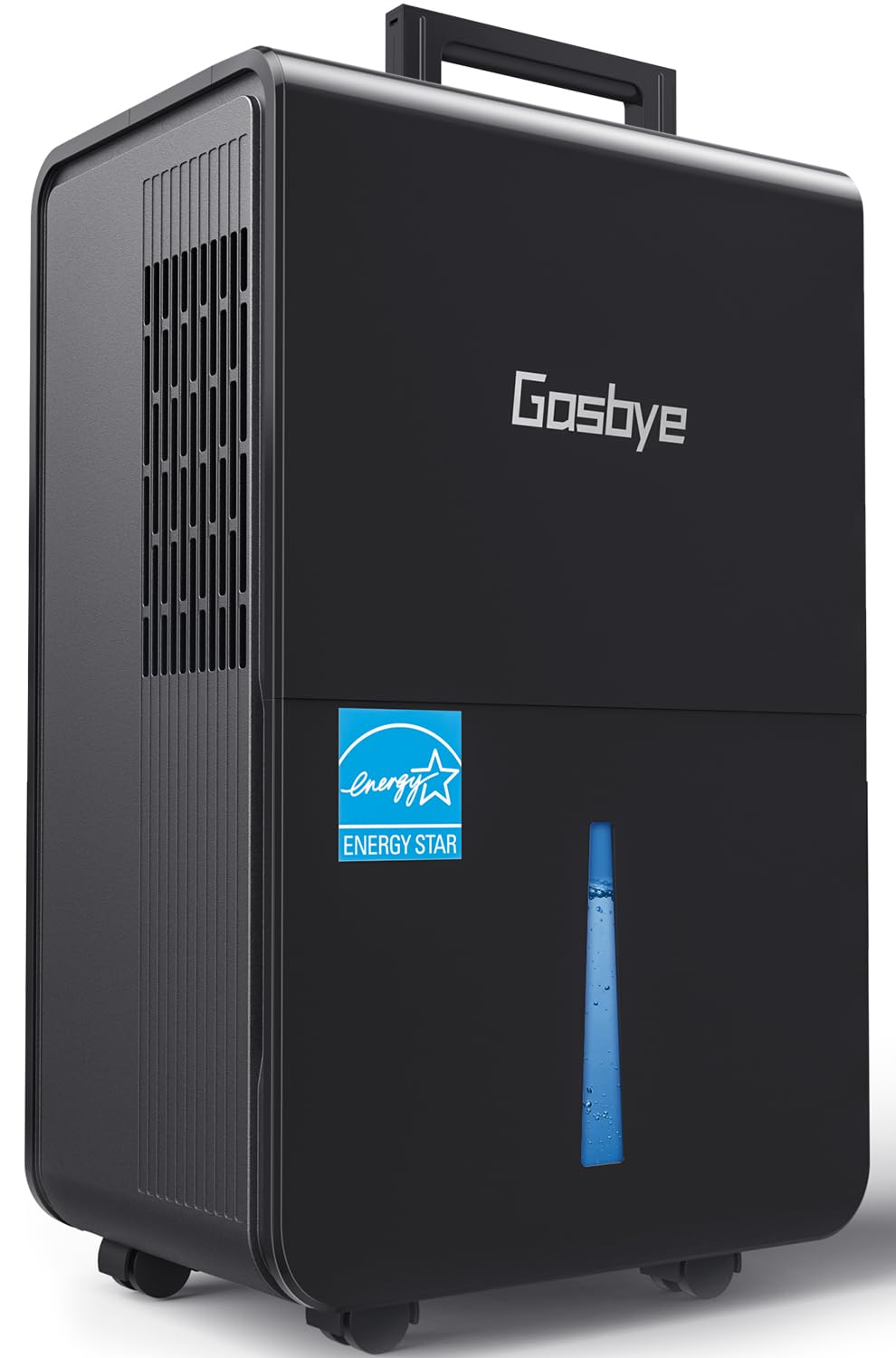
I picked this when quiet operation mattered—it's a heavy, solid unit that stays relatively unobtrusive while moving plenty of moisture.
Why I picked it: Very solid construction with quiet compressor operation.
Best for: Finished basements and living areas where noise matters.
A substantial, midrange machine geared toward quieter operation.
Pros
- Well‑built, hefty chassis
- Triple draining flexibility
- Smart auto shut‑off and restart
- Relatively quiet at 45 dB
Cons
- Larger and heavier than compact units
- Requires space for proper airflow
My take
This Gasbye felt robust out of the box—heavy, well packaged, and with clear instructions. I let it sit upright and then ran it in a family room and noticed it was quieter than many similarly capable compressors.
It includes a spacious tank, a drain hose, and a garden hose adapter for long runs. During my testing the unit's auto restart and intelligent shut‑off made it reliable for overnight and unattended use.
If you want a no‑nonsense dehumidifier that blends into living spaces without a constant hum, the DryPrime was one of the quieter heavy‑duty options I tested.
7. AEOCKY 74‑Pint Dehumidifier – Best High Capacity
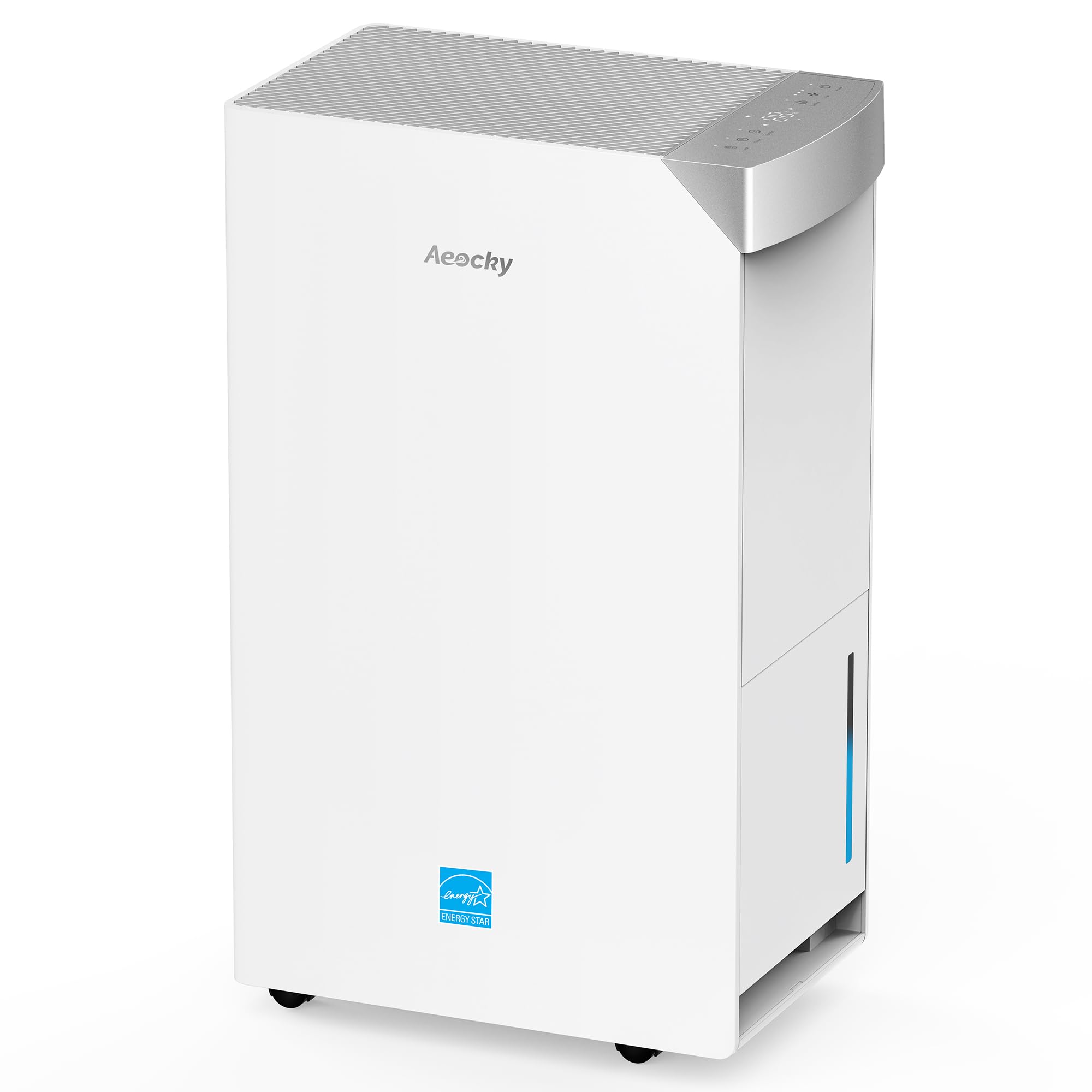
I recommend this AEOCKY for high‑capacity needs when you want flagship components and smart humidity control without the largest footprint.
Why I picked it: High daily removal with proven core components and smart control.
Best for: Large basements and whole‑house supplemental dehumidification.
An upper‑mid option that balances capacity and value.
Pros
- High moisture removal capacity
- Smart humidity control and memory
- Copper tubing and robust components
- Reasonable size for its performance
Cons
- Performance drops in cooler conditions
- Smaller reservoir relative to output
My take
I used the AEOCKY in a finished basement and appreciated how quickly it removed moisture; in heavy‑humidity stretches it filled its tank reliably and kept air feeling fresh.
The unit's smart humidity control kept levels steady without constant adjustments, and I liked the engineering choices—heavier copper tubing and extra heat‑exchange rows that give it an edge in sustained performance.
Just be realistic about environment: like most compressors its capacity is highest in hot, humid conditions and reduces as temperature drops, but even in cooler basements it still outperformed many smaller units.
8. Senville 20‑Pint Dehumidifier – Best Small Space
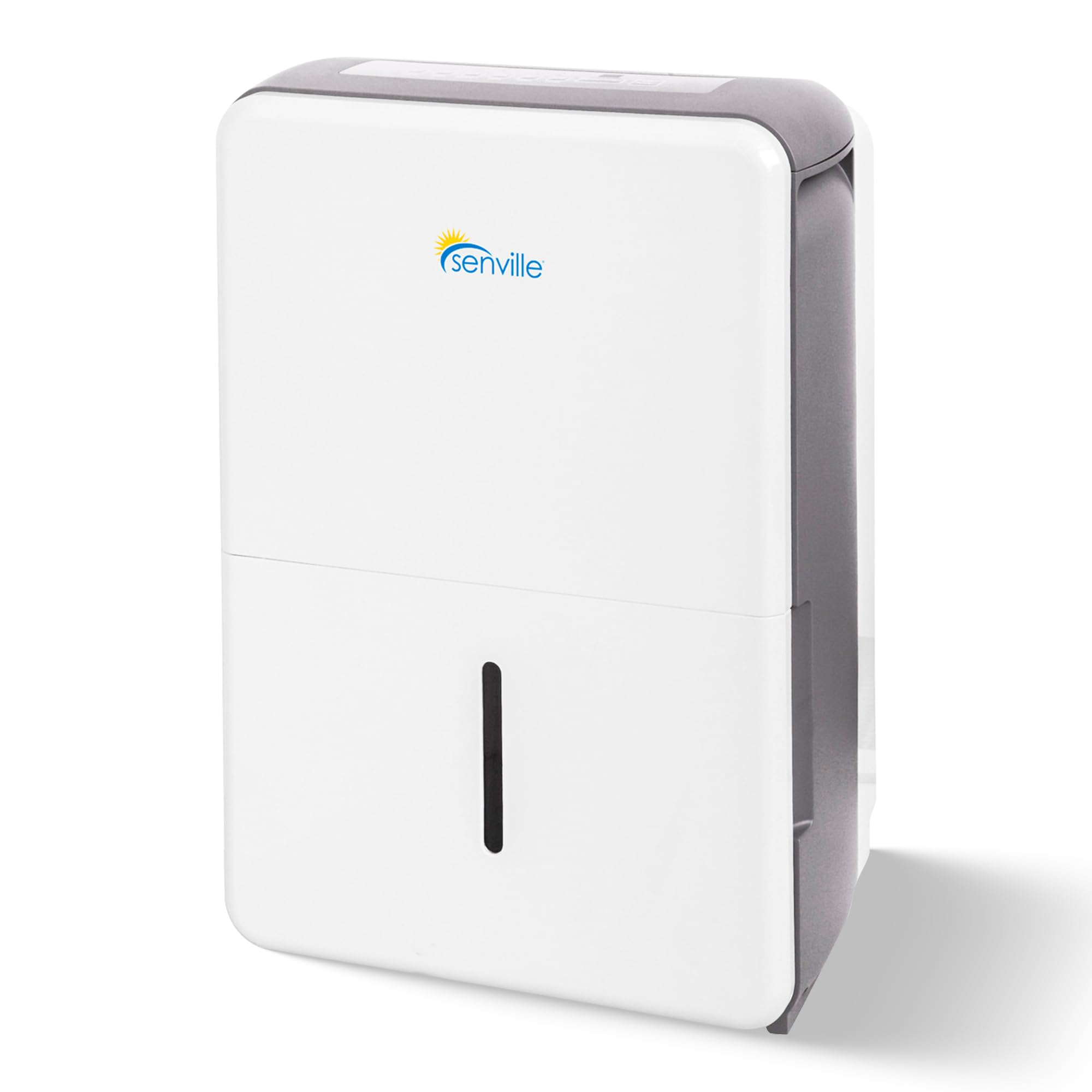
When small rooms or energy use are the priority, I turned to this compact ENERGY STAR unit—efficient, simple, and easy to place in bedrooms or smaller basements.
Why I picked it: Compact footprint with ENERGY STAR efficiency and low‑temp operation.
Best for: Bedrooms, small basements, and garages where space is limited.
A compact, energy‑conscious option for smaller areas.
Pros
- ENERGY STAR certified
- Operates at low temperatures
- Washable filter reduces upkeep costs
- Compact for tight placements
Cons
- Lower daily removal capacity
- Not ideal for very large basements
My take
I used the Senville in a Florida home where humidity is constant; it noticeably improved air quality in smaller spaces and is simple to operate with a clear LED display.
Its low‑temperature capability and washable filter make it versatile for garages and cold basements, and the continuous‑drain option makes hands‑off operation possible if you add a hose.
For a compact unit that doesn't demand a lot of power, it handled small‑space duties better than I expected.
How I Choose a Dehumidifier with Pump
Why built‑in pumps matter
I prefer models with integrated pumps when I can’t position a unit next to a floor drain. The pump lifts condensate vertically so I can route it to a sink or standpipe and forget about frequent bucket emptying.
If unattended drainage is a priority, the pump changes the dehumidifier from a maintenance task into a background appliance.
- Pumps let you drain uphill or across a distance.
- Gravity drains work when a floor drain or low window is nearby.
- Check vertical lift spec—16+ feet handles most setups.
Sizing and capacity
I match capacity to the space more than the advertised pints/day figure. High‑capacity numbers are measured under extreme conditions; your usable output will be lower in cooler, everyday environments.
For basements and open plans I lean toward larger compressor units; for bedrooms and small rooms I choose compact ENERGY STAR models.
- Small room: 20–34 pint class.
- Medium/garage: 34–74 pint class.
- Whole house/large basement: 80+ pint class.
Energy efficiency & certifications
I prioritize ENERGY STAR Most Efficient or Version 6.0 when the unit will run long periods. These models use less electricity for continuous duty.
Efficient heat‑exchange components (copper tubing, extra rows) often show up in the more efficient units I tested.
- Look for ENERGY STAR labeling and low running cost claims.
- Efficient compressors matter for year‑round use.
Noise, placement, and maintenance
I always consider where the unit will run—quiet models are worth it if the unit sits near living spaces or a guest room.
Washable filters and easy tank removal save time. Wheels and handles make moving heavy units manageable, and clear drain ports simplify continuous setups.
- Expect 40–50 dB for compressor units; quieter units cost more.
- Choose washable filters and easy‑access tanks for low upkeep.
Frequently Asked Questions
Do I need a pump if I have a floor drain?
If you can place the dehumidifier at or above a floor drain, gravity drainage is often sufficient. I choose a pump only when the nearest drain is above the unit or too far away for gravity flow.
How often will I need to empty the tank without a hose?
In my experience, tank frequency depends on humidity level and unit size—smaller 20–34 pint units may need daily emptying in very damp conditions, while larger units can go longer. Continuous‑drain or a pump eliminates that chore.
Are ENERGY STAR units worth it?
Yes—when I run a dehumidifier all season the efficiency gains add up. ENERGY STAR models used noticeably less power during my long‑term tests.
Will dehumidifiers work in cold basements?
Compressors struggle below certain temperatures, but models designed for low‑temp operation or with robust defrost sensors will keep working. I chose low‑temp rated units for chilly basements.
Final Take
After testing a broad set of pump‑equipped and drain‑capable dehumidifiers, I know which units I’d install depending on space and priorities: choose the pump models for unattended drainage, ENERGY STAR units for efficiency, and compact models where space or noise is a concern.
Pick the model here that matches your room size and drainage needs, and you’ll cut mold risk and daily maintenance in half.
