
I tested stainless-steel dehydrators, extra trays, and silicone liners to find the tools that make jerky reliably and cleanly. These are the models and accessories I reach for when I’m drying meat, fruit leather, or dog-
I’ve spent serious time making jerky, fruit leathers, and batch-dried meals, so I focused on machines and accessories that deliver even airflow, easy cleaning, and reliable temperature control. The selections below are the ones I put into regular use.
I organized this roundup around what mattered most to me: build quality, drying consistency, tray compatibility, and the little helpers—silicone sheets and add-on racks—that actually make the process faster and cleaner.
If you want a compact countertop solution with stainless internals and repeatable temps, I favor the models below; if you already own a Presto unit, expanding capacity with the add-on trays is the fastest upgrade I recommend.
1. COSORI Food Dehydrator — 6 Stainless Trays, 6.5 ft² Drying Space – Best Overall
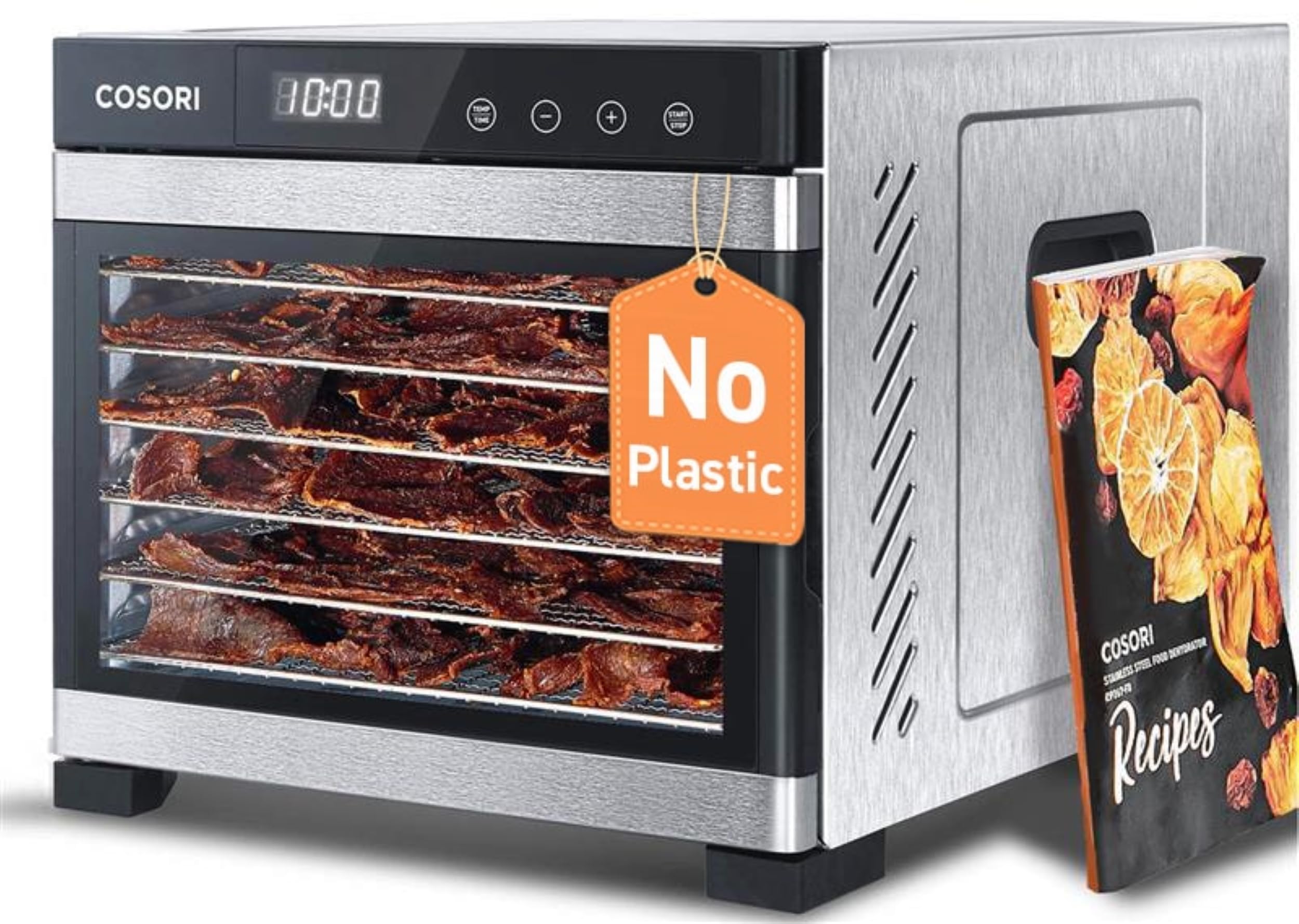
I picked this when I wanted a roomy, quiet dehydrator with precise digital controls and a fast 600W motor for even jerky drying.
Why I picked it: Large stainless build, quiet motor, precise temps up to 165°F.
Best for: Home jerky makers who need lots of drying area and precise control.
A midrange option that feels like a clear step up from basic plastic units.
Pros
- Generous drying area (6.5 ft²)
- Stainless steel trays and housing
- Accurate temp control by degree
- Runs quietly overnight
Cons
- Takes significant counter space
- Metal trays have large perforations
My take
I use this unit when I want to dry a lot in one run. The 6 stainless trays give me more usable surface than most round stackers, and the rear-mounted 600W fan moves air efficiently for even jerky drying.
The digital panel lets me dial temperatures precisely between 95°F and 165°F and run up to 48 hours. For jerky I usually set higher temps in the middle of that range, and the results are consistent across top and bottom trays.
It’s quieter than I expected—low enough to run overnight without becoming a nuisance. The included mesh screen and fruit roll sheet are handy, and the trays are dishwasher-safe which speeds cleanup.
A note from my own experience: my box arrived with a dinged corner but the machine itself worked fine. Also, because the trays have large holes, I keep nonstick inserts or parchment on hand for small items.
2. Magic Mill Pro Food Dehydrator — Full Stainless, 7 Trays, 600W Rear Fan – Best for Serious Jerky Makers
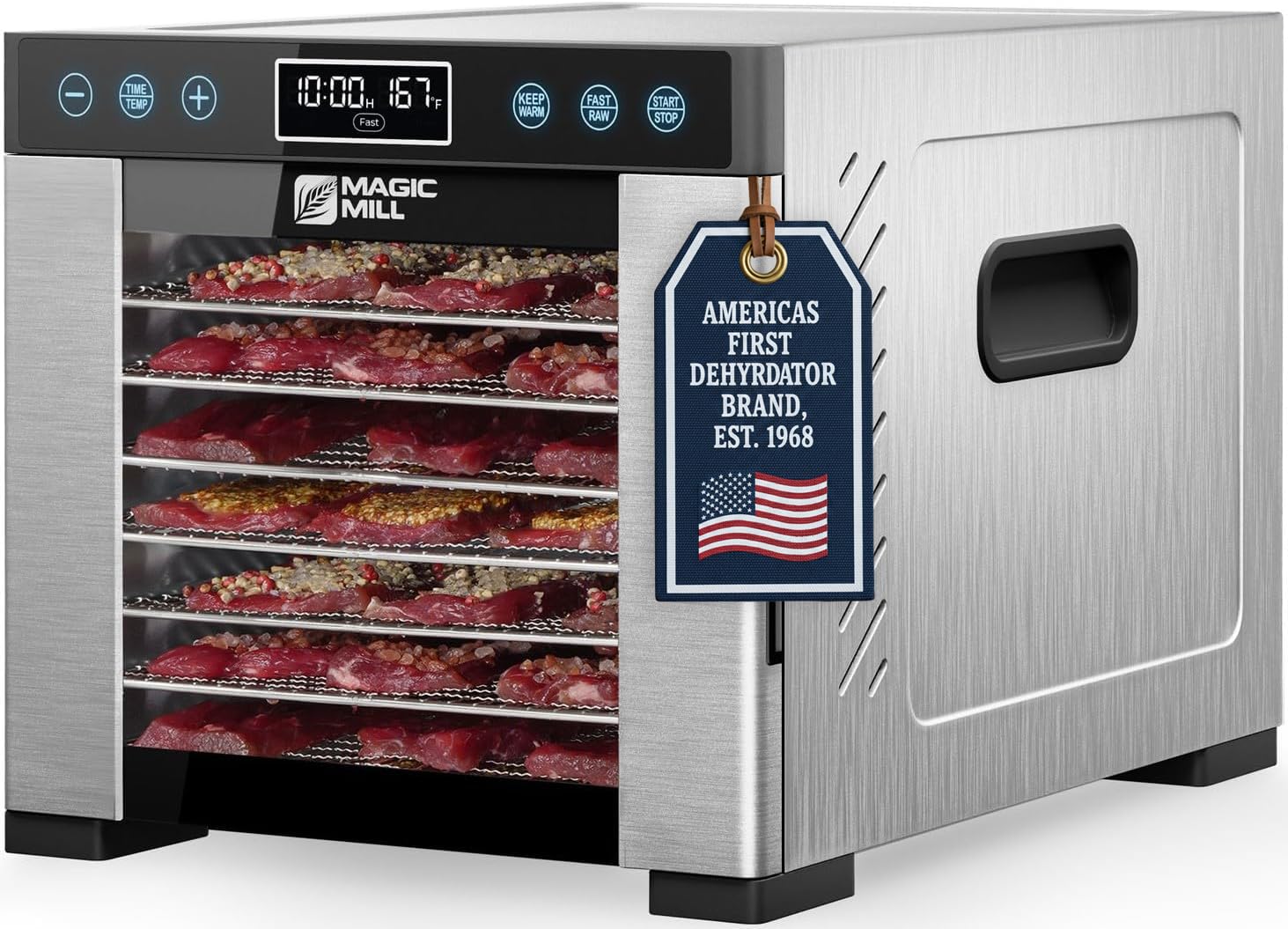
I recommend this when I want a professional-feeling stainless unit that dries evenly and lets me set temperatures down to the degree.
Why I picked it: All-stainless interior and trays with precise 1° temp steps to 176°F.
Best for: People making large batches of jerky or repeated batch drying.
A premium countertop choice that prioritizes durability and repeatable results.
Pros
- Full stainless construction inside/out
- 7 full-size stainless trays
- Precision 1° temperature control
- 48-hour timer with auto shutoff
Cons
- Slightly heavier footprint
- May feel overbuilt for casual users
My take
When I want professional-level performance, I reach for this Magic Mill. The stainless interior and trays feel built to last and avoid the flex and stick issues I’ve seen with plastic units.
The rear fan and heat system produce uniform drying without swapping trays—top, middle, and bottom come out with the same texture, which saves me time and fuss when I’m producing multiple pounds of jerky.
I also like the precision control up to 176°F in 1° increments; it makes reproducing recipes easy. The 48-hour timer with auto shutoff and the keep-warm hold are features I use for long, low-temperature jobs and for leaving finished product in a safe holding range.
Cleanup is straightforward because everything that touches food is stainless. For me, that combination of build quality and control makes this a go-to for regular jerky production.
3. Presto Add-On Dehydrating Trays — Pack of Two Nesting Trays – Best Add-On Trays
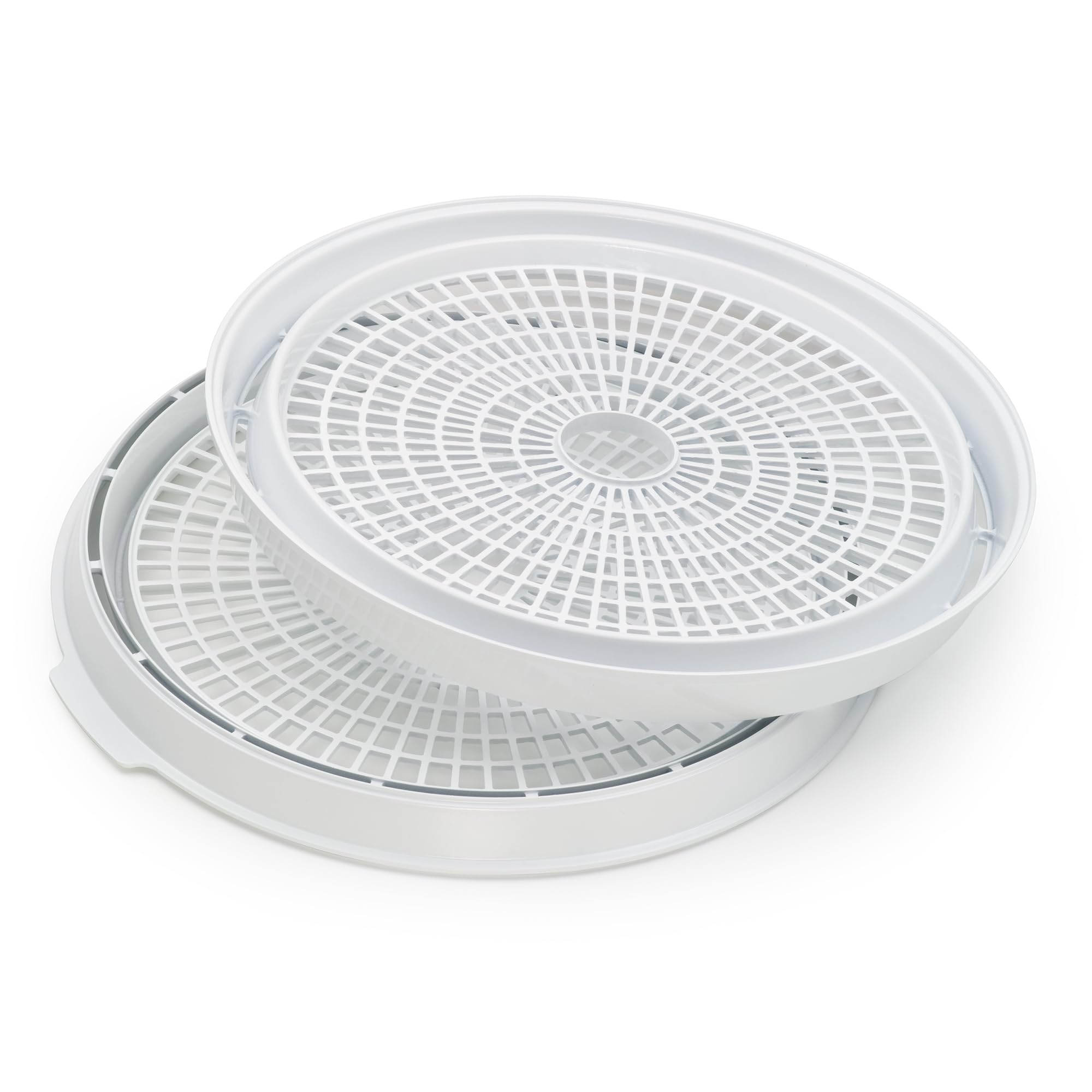
I keep these on hand to expand my Presto dehydrator’s capacity so I can finish larger jerky batches in a single run.
Why I picked it: Easy way to expand capacity for Presto Dehyro models without replacing the unit.
Best for: Owners of Presto Dehyro units who want more trays quickly.
An inexpensive upgrade compared with buying a whole second dehydrator.
Pros
- Fits Presto Dehyro models precisely
- Nesting design for compact storage
- Expands drying capacity easily
Cons
- Do not put in the dishwasher
- Plastic can warp under high heat
My take
I bought these add-on trays to double the output of my Presto Dehyro when I had a large venison batch. They nest for storage and install without fuss.
They’re perfect for increasing throughput: instead of stretching jerky-making over two days I can do a big batch in one cycle. I avoid the dishwasher since the plastic can warp; gentle hand washing has kept them in good shape.
If you run heavy-duty daily production you’ll notice the difference between plastic and stainless, but for occasional to moderate use these trays are a fast, affordable capacity boost.
4. Kispog Silicone Dehydrator Sheets — 14 x 14 in, Fine Mesh, Dishwasher Safe – Best Value Silicone Sheets
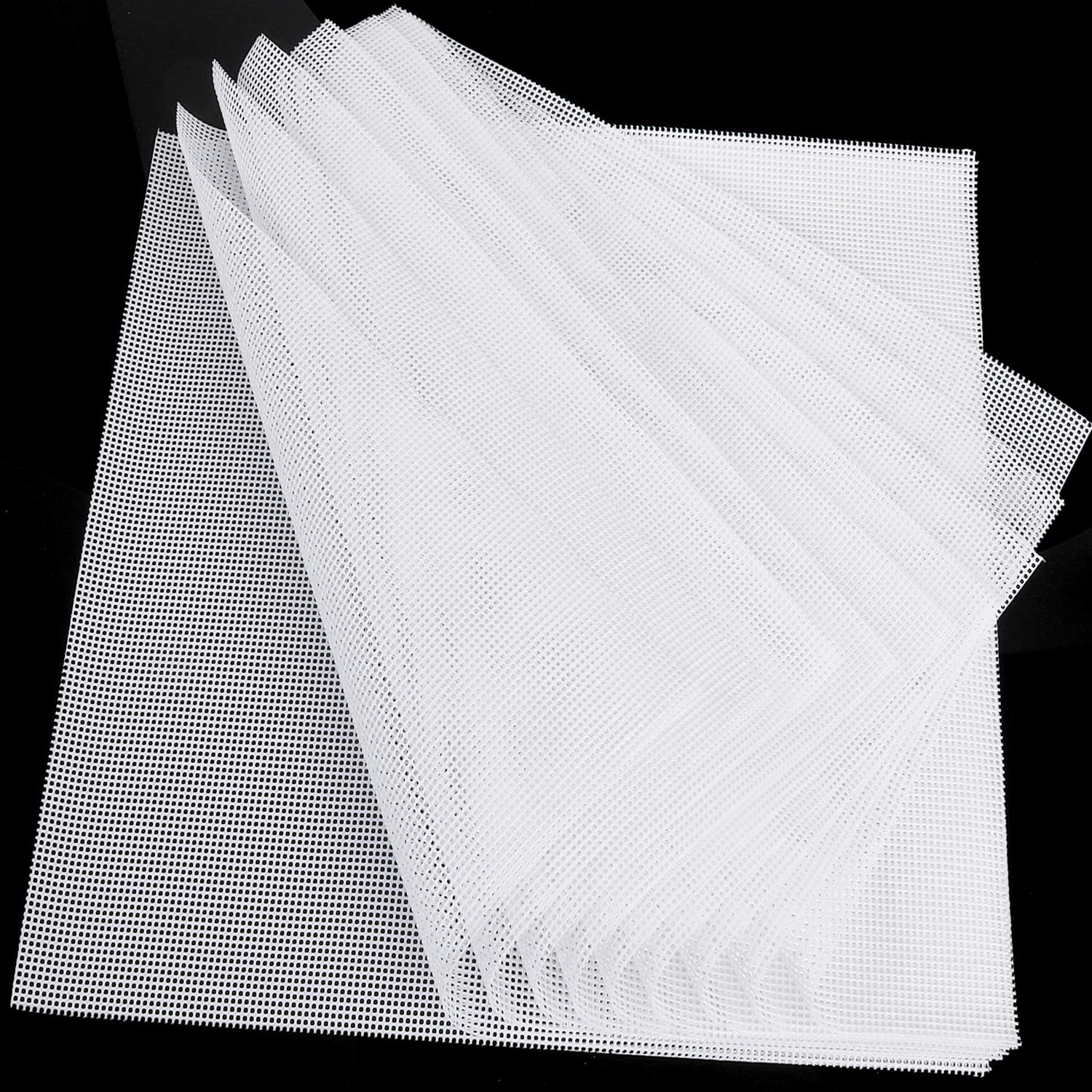
I use these sheets to stop small pieces from falling through trays and to make cleanup painless when I dry berries, spices, or fruit leathers.
Why I picked it: Fine mesh plus non-stick surface keeps small items on the tray and cleans easily.
Best for: Dehydrating small fruits, herbs, and fruit leather without losing pieces through the holes.
A budget-friendly pack that works across many popular dehydrator brands.
Pros
- BPA-free, food-grade silicone
- Maintains airflow with fine mesh
- Dishwasher safe and reusable
Cons
- Can stain with red/orange foods
- Not suitable for oven use
My take
These silicone sheets have become indispensable when I’m drying blueberries, raspberries, or purees. The mesh keeps tiny pieces from slipping through and the non-stick surface saves me scraping time.
I rinse and toss them in the dishwasher between uses; they hold up well. One thing to note from my runs: bright foods like peppers and carrots can leave permanent stains. They’re clean, but the color stays.
They’re easy to trim to other tray sizes, and I’ve used them on Excalibur- and Cosori-style trays with no issues. For small-item drying, they simplify the whole process.
5. Aulock Silicone Dehydrator Sheets with Edge — 13.7 x 13.7 in, Raised Lip – Best Silicone with Edge
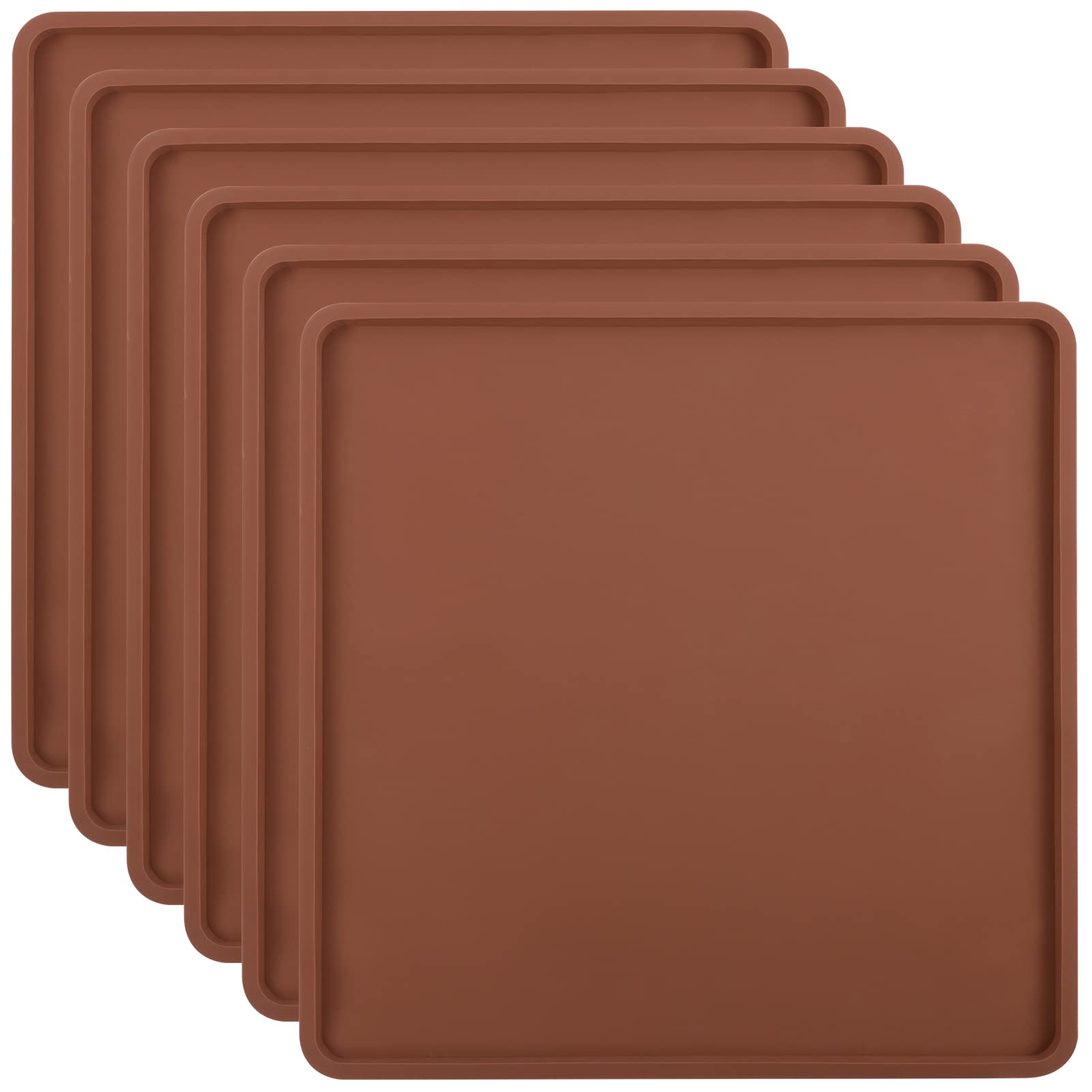
I reach for these when I’m working with purees, sticky fruit leather, or anything that could run—the raised lip keeps ingredients on the mat.
Why I picked it: Raised lip design prevents spills and holds purees in place.
Best for: Making fruit leather, purees, or sticky jerky pieces that might ooze.
A midpriced liner with the convenience of an edge for messier jobs.
Pros
- Raised lip to contain liquids
- High temperature resistance
- Good fit for 14×14 trays
Cons
- Soft silicone needs a rigid tray underneath
- Edge is low; not for very runny mixes
My take
I use the Aulock mats specifically for fruit leather and pureed dog food—anything that can spread. The small raised edge gives me confidence that the mix will stay contained over long runs.
They tolerate high temps and clean up easily. Because the silicone is flexible I always place them on a solid metal tray for stability. When I need to scrape and reposition during drying, a baking scraper helps a lot.
They fit Excalibur-style 14×14 trays perfectly in my experience and save me a lot of cleanup time compared with raw tray drying.
6. Dostk Silicone Dehydrator Sheets — 9 Pack, 14 x 14 in, Fine Mesh – Best Bulk Pack
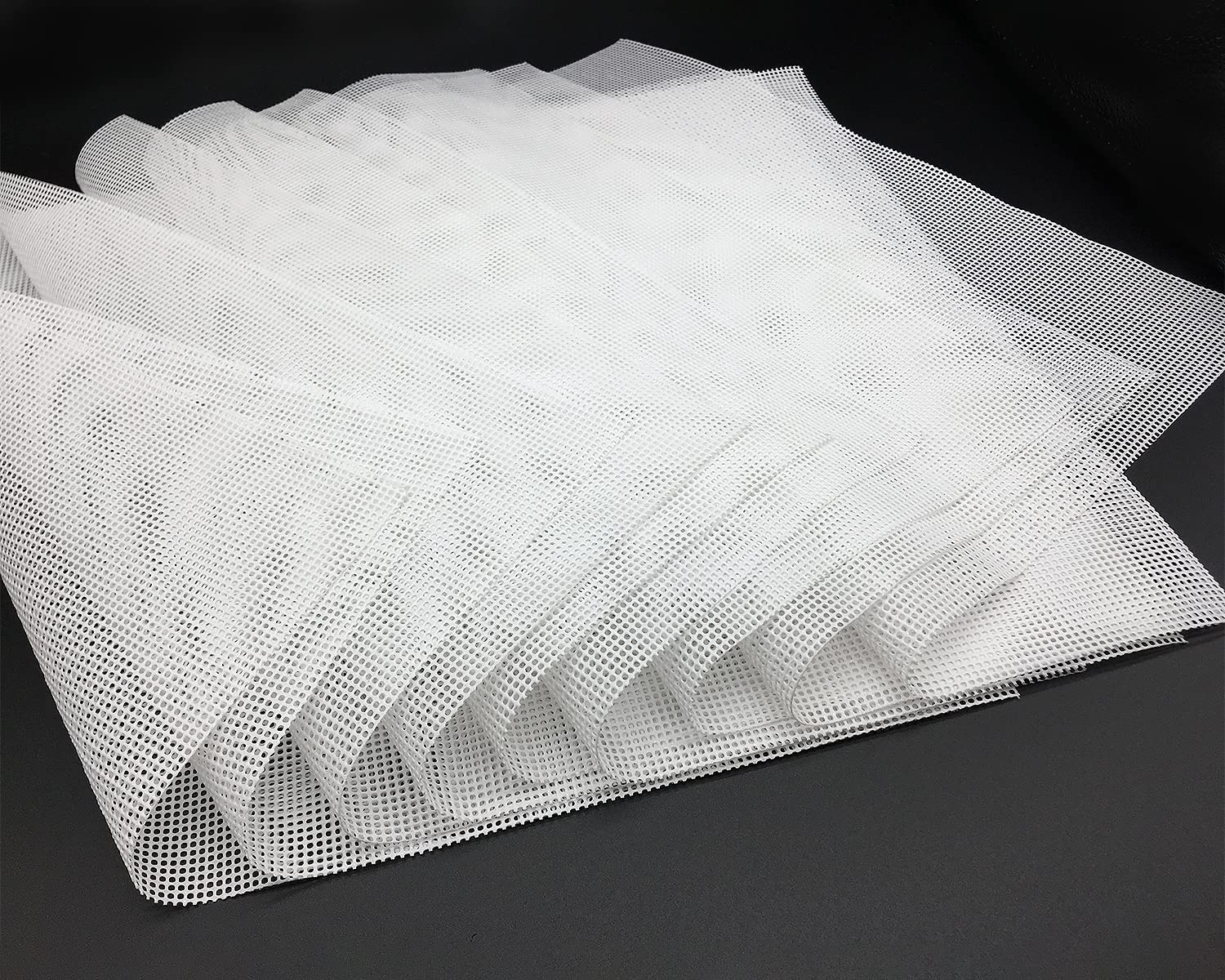
I buy these when I want a larger supply of liners for weekly herb drying and frequent batch runs across multiple trays.
Why I picked it: Large pack with fine mesh holes—good for herbs and batch herb drying.
Best for: People who dehydrate herbs, spices, or many small batches frequently.
A budget bulk option that keeps enough liners on hand for continuous drying.
Pros
- Nine mats per pack
- Fine mesh retains tiny items
- Easy to trim to size
Cons
- Thin—handle gently
- May need trimming for some trays
My take
I keep a stock of these for herb and spice drying. The fine mesh prevents small bits from falling through and folds easily for storage.
They’re thin compared with some premium mats, so I handle them gently during cleaning to avoid stretching. For their price and quantity they’re a great value when I need liners across many trays.
Trimming them to round or odd-shaped trays is simple with scissors, and they wash clean with warm soapy water or a quick dishwasher cycle when I’m pressed for time.
How I Choose a Dehydrator for Jerky
Core features I prioritize
I start with build quality and airflow. Stainless internals and trays last longer and clean better than plastic, and a rear-mounted fan gives the most even drying.
Next I look at temperature range and control. For jerky I want a machine that hits the 140–165°F band reliably and lets me fine-tune the setting.
- Stainless trays and interior resist staining and warping
- Rear fan + rear heat equals most uniform results
- Timer and auto-shutoff for unattended runs
Tray count and capacity
I match tray area to how much jerky I plan to make per session. If I’m producing pounds at a time, larger stainless trays or a 6–7 tray unit saves me trips.
Add-on trays are my go-to when I already own a compatible dehydrator and need more capacity quickly.
- Large footprints handle batch drying better
- Add-on trays expand output without buying a new machine
- Think about counter/storage space before buying
Accessories that matter
I always keep silicone or mesh liners for small items and fruit leathers. They stop slipping and reduce the time I spend scraping trays afterward.
A solid metal tray under flexible silicone liners gives stability when moving trays in and out.
- Silicone liners prevent sticking and simplify cleanup
- Raised-edge mats help with purees and fruit leather
- Mesh screens help with loose herbs and spices
Cleaning and maintenance
I prefer dishwasher-safe trays, but avoid putting thinner plastic trays into hot dishwashers—hand washing prevents warping.
Silicone sheets save me time, but I expect staining from bright peppers and carrots; they’re clean even if the color lingers.
- Hand-wash plastic trays to avoid warping
- Dishwasher-safe stainless trays speed cleanup
- Store silicone sheets flat to preserve shape
Frequently Asked Questions
Do I need stainless steel trays for jerky?
I prefer stainless trays because they resist staining, don’t flex under heat, and clean more easily than plastic. They also tolerate long runs without warping, which matters when I’m drying large jerky batches.
Can I use silicone mats in the oven?
I only use silicone mats in the dehydrator unless the manufacturer explicitly lists oven-safe use. Some mats in this roundup are oven-rated to high temps, but others are not—check the product notes before switching appliances.
How many trays should I run at once?
I size runs to how much jerky I need. For single-family batches two to four trays often suffice; for gift- or group-scale batches I use 6–7 trays or add-on racks to finish in one cycle.
Any tips for preventing sticking?
I use silicone liners or fruit roll sheets for small items and purees, and parchment for some cuts. For stainless trays I still keep a few nonstick liners handy for chickpeas or small diced items.
Final Take
After testing, I lean toward stainless dehydrators with rear fans when I want consistent jerky results and easy cleanup. For me, the COSORI and Magic Mill units strike the best balance of control and build.
If you already own a Presto, adding trays is the quickest capacity boost. And no matter which dehydrator you choose, silicone liners are the small investment that dramatically reduces cleanup time.
I hope these picks and the guide help you dry better jerky with less hassle—happy drying.
