
I tested a range of bathroom, smart, high-capacity, and kitchen scales so you can pick the right one for tracking weight, body composition, baking, or heavier users.
I spent time with six popular scales that cover basic body weight, smart body composition, extra-high capacity, and kitchen measuring. My goal was simple: find reliable, easy-to-use options for different needs and living spaces.
Throughout testing I focused on accuracy, platform size and comfort, app syncing behavior (when applicable), and real-world usability like display readability and setup. Below are the picks I’d reach for depending on what I needed to weigh.
I grouped these scales into clear use cases: simple and dependable weight-only scales, app-driven smart scales for metrics beyond weight, a wide high-capacity model for larger builds, and a compact kitchen scale for precise cooking and baking measurements. I call out trade-offs like advanced metrics versus simplicity and platform size versus storage convenience.
1. Etekcity Digital Bathroom Scale – Best Overall
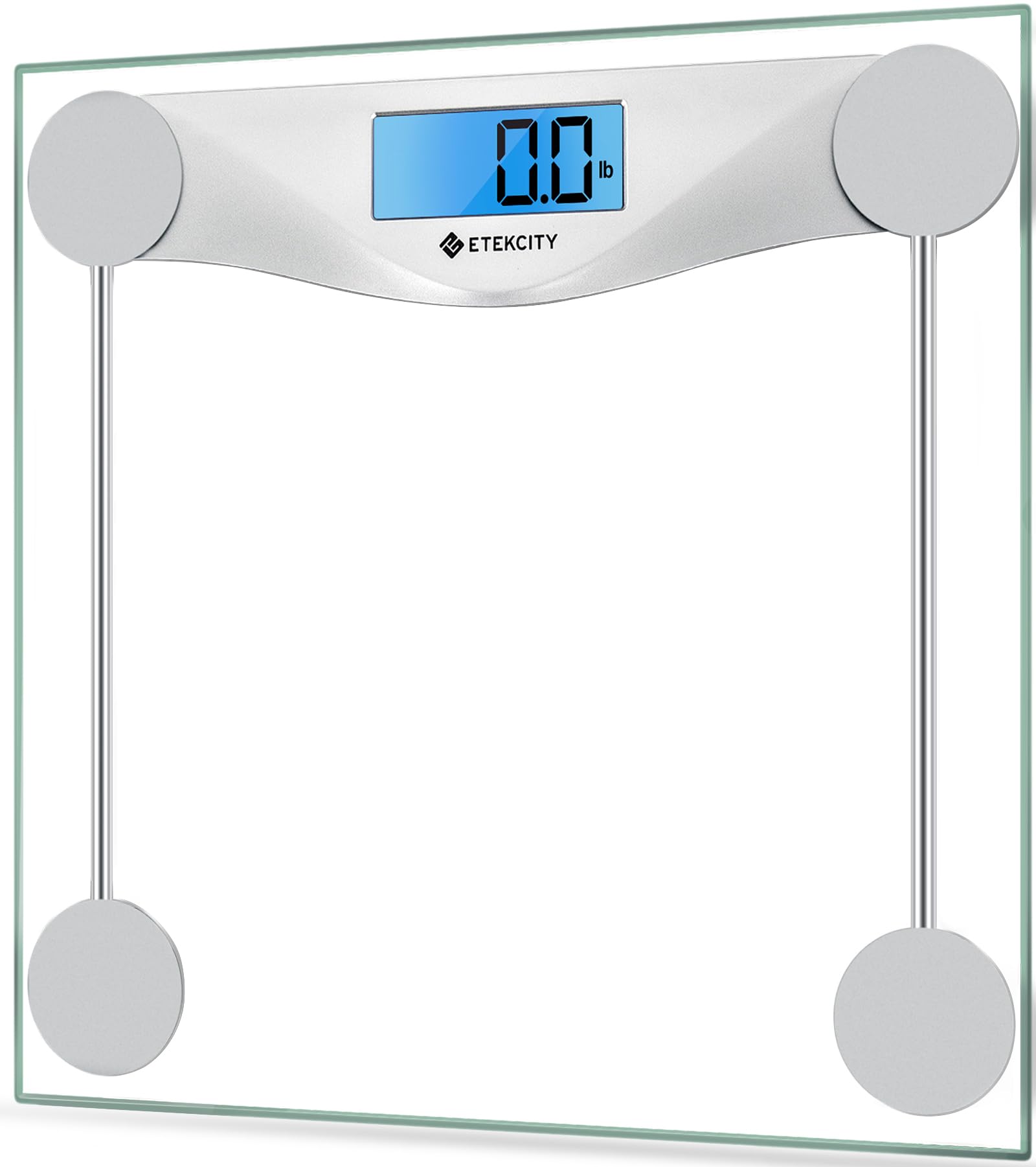
A straightforward, accurate weight scale with a large platform and durable tempered glass that I use for everyday weigh-ins.
Why I picked it: Large, stable platform and consistent, easy-to-read results for daily use.
Best for: Anyone who wants a no-frills, reliable bathroom scale.
An affordable, no-nonsense choice for basic weight tracking.
Pros
- Large 11.9 x 11.9-inch platform
- Clear, easy-to-read LCD
- Tempered 6 mm glass platform
- High 400 lb capacity
- Batteries pre-installed for quick setup
Cons
- No body-composition metrics
- Glass needs careful handling
- No smartphone syncing
My take
I keep this Etekcity on a hard bathroom floor for daily weigh-ins because it feels stable and gives quick, repeatable readings.
The large platform is one of my favorite details — my size 14–15 feet sit comfortably on it and I don’t worry about balance while I weigh.
The LCD is bright and the numbers are easy to read first thing in the morning. Setup was painless since the batteries arrive installed.
Accuracy was reliable for weight-only tracking; the high 400 lb limit and 4 high-precision sensors give consistent results that I trust for trend tracking over time.
2. RENPHO Smart Scale – Best for App Syncing
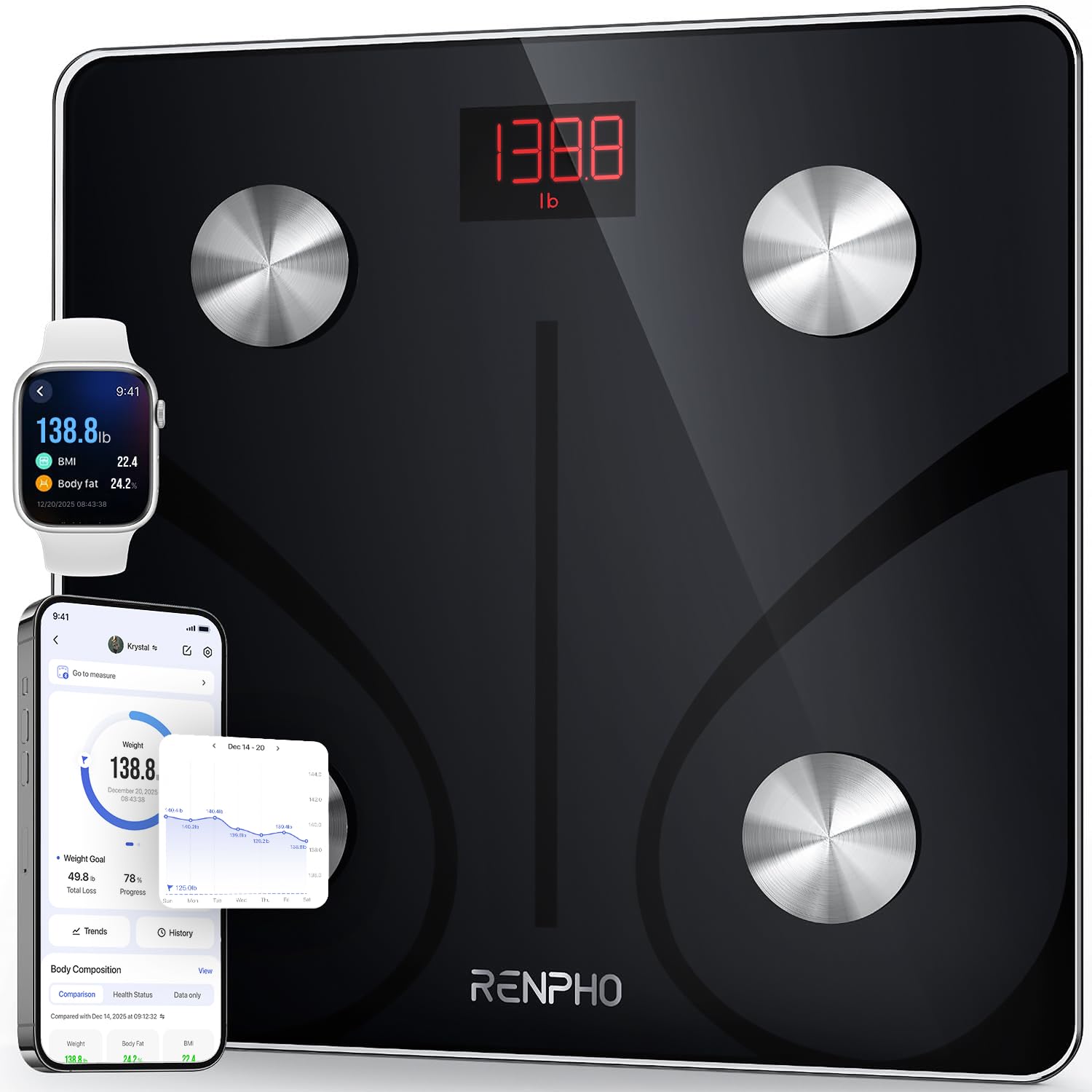
A Bluetooth smart scale that stores 13 body measurements in an app and integrates with Apple Health, Fitbit, and Samsung Health.
Why I picked it: Robust app integration and a broad set of body metrics for tracking progress.
Best for: People who want weight plus body-composition tracking and phone syncing.
A solid mid-range smart scale with app features most people will use.
Pros
- Tracks 13 body measurements
- Auto-sync to major fitness apps
- 400 lb capacity with 0.2 lb accuracy
- Auto-calibration
- Baby/pet weighing mode
Cons
- Body-fat estimates are not clinical
- Tempered glass needs corner care
- App includes features you may ignore
My take
I appreciated how simple the RENPHO pairing was — download the app, step on the scale, and the readings flowed into my phone.
Weight measurements matched what I saw at a clinic on multiple checks, and the extra metrics (fat, BMI, muscle) give useful directional insight even if they’re not medical-grade.
The baby and pet weighing mode is handy for weighing small loads without a separate device.
If you only want weight, the app ecosystem adds a learning curve, but for long-term tracking I found the automatic data logging valuable.
3. Etekcity Smart Body Scale – Best Smart Features
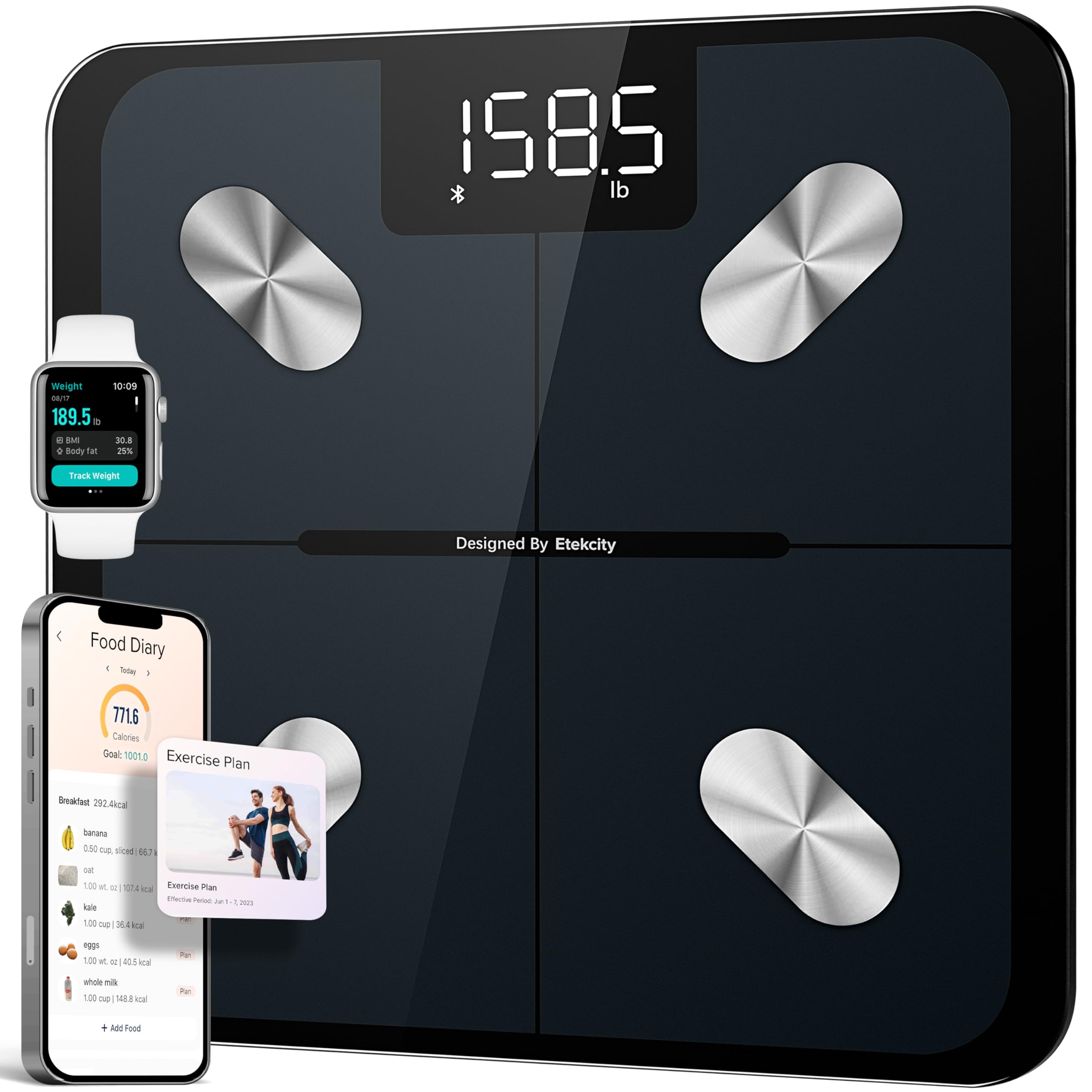
A budget-friendly smart scale tied to the VeSync app with multiple modes, Alexa integration, and features like baby and light-item weighing.
Why I picked it: Versatile app features and specialized weighing modes I actually used.
Best for: Users who want a smarter scale without a big price tag.
An affordable smart scale with more app-driven features than most on this budget end.
Pros
- Free VeSync app with plans
- Baby, zero-current, and light-item modes
- Small increments to 0.05 lb
- Syncs with major fitness apps
- Supports unlimited users
Cons
- Not intended for professional athletes
- App features may change over time
- Advisory for pacemaker users
My take
I liked that the VeSync app offers basic diet and exercise planning alongside the scale metrics, which made it feel like a small coaching tool rather than just a number display.
The three special modes — baby, zero-current, and light items — solved little use cases I actually encountered (weighing a puppy, small kitchen items, and safe weighing around electronics).
Accuracy felt solid for weight and the fine increments are useful when I’m monitoring small progress, though I treat body-fat numbers as directional rather than definitive.
I did observe the usual safety note: if you have implanted medical electronics I recommend checking with a healthcare professional before using a bioelectrical impedance scale.
4. RENPHO 550lb High-Capacity Scale – Best for Heavy or Wide Users
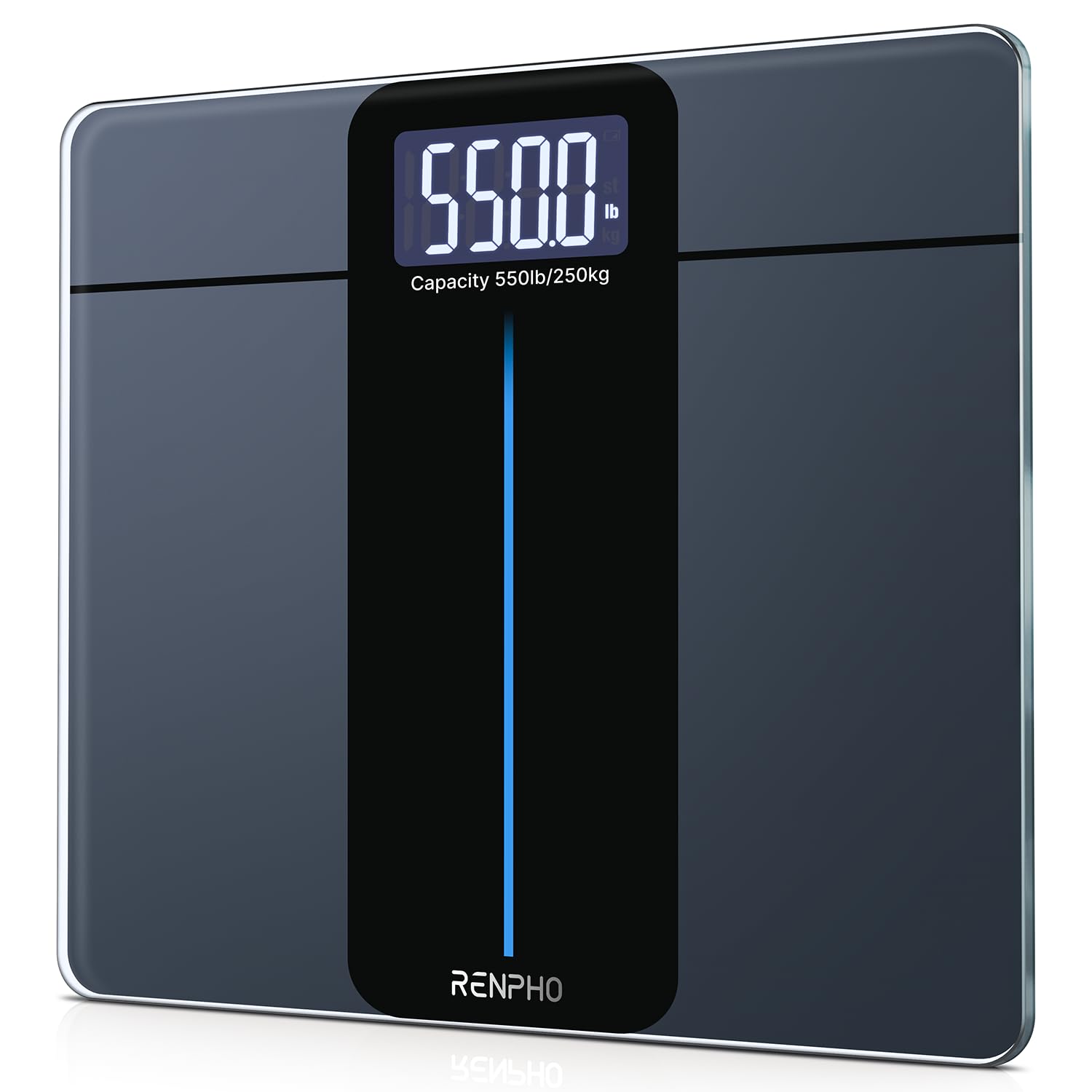
A heavy-duty, extra-wide scale with a very high 550 lb capacity, large backlit display, anti-slip pads, and an audio completion beep.
Why I picked it: Highest capacity and a wider platform for comfort and stability.
Best for: Larger users or anyone who wants a very stable, easy-to-read scale.
A great value for a heavy-duty scale with a large platform.
Pros
- 550 lb / 250 kg capacity
- Extra-wide 13 x 11.8-inch platform
- Large backlit LCD display
- Silicone anti-slip foot pads
- Audio beep to indicate completion
Cons
- No body-composition app features
- Batteries not included
- Heavier and less portable
My take
I use this RENPHO when I want a no-frills, rock-solid weight reading for larger body types — the platform and capacity are the two features that stand out immediately.
The big backlit numbers are visible even in dim bathrooms, and the audible beep means I don’t have to stare at the scale until it finishes calibrating.
It’s simple and fast: step on, wait for the beep, and I have a stable reading. If you don’t need smart metrics, this feels like the most practical choice.
5. Amazon Basics Kitchen Scale – Best for Baking
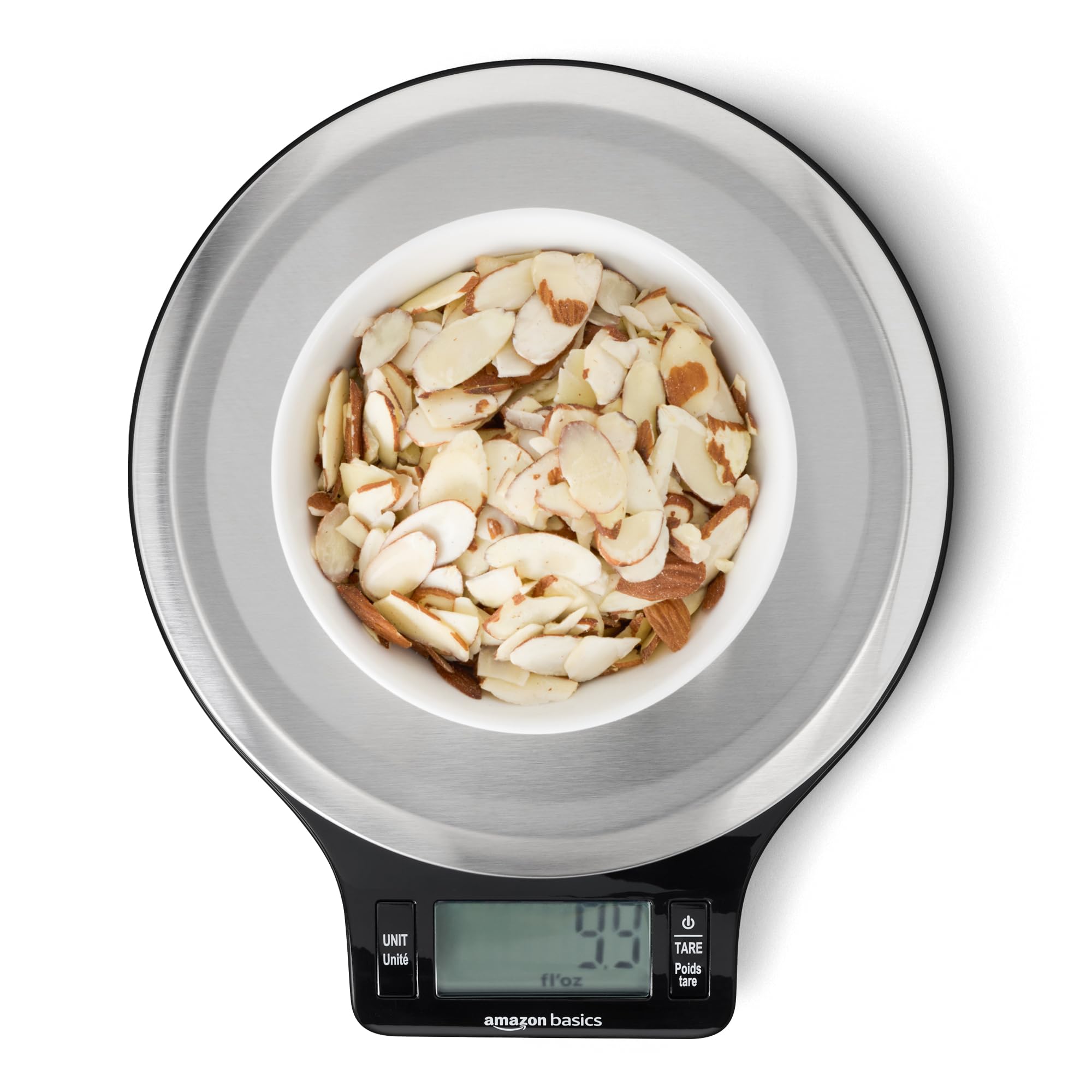
A compact stainless-steel kitchen scale with tare function, multiple units, and a capacity suited for baking and portion control.
Why I picked it: Consistent, compact, and perfect for precise ingredient weighing.
Best for: Bakers and anyone who needs accurate food portioning.
A very affordable tool that does one job extremely well.
Pros
- Food-safe components
- Stainless steel platform
- Tare function for container weight
- Multiple units incl ml and fl oz
- Batteries included
Cons
- Maxes out at about 11 pounds
- Not suitable for body weighing
- Small platform for large bowls
My take
I reach for this Amazon Basics scale whenever I bake; the tare button and gram precision make dough recipes repeatable.
It’s flat, stores easily in a drawer, and the display is bright enough to read while I’m multitasking in the kitchen.
For sourdough, pastry, or strict portion control, this scale makes mixing predictable and cleanup minimal.
6. FITINDEX Smart Scale – Best for Privacy-Conscious Tracking
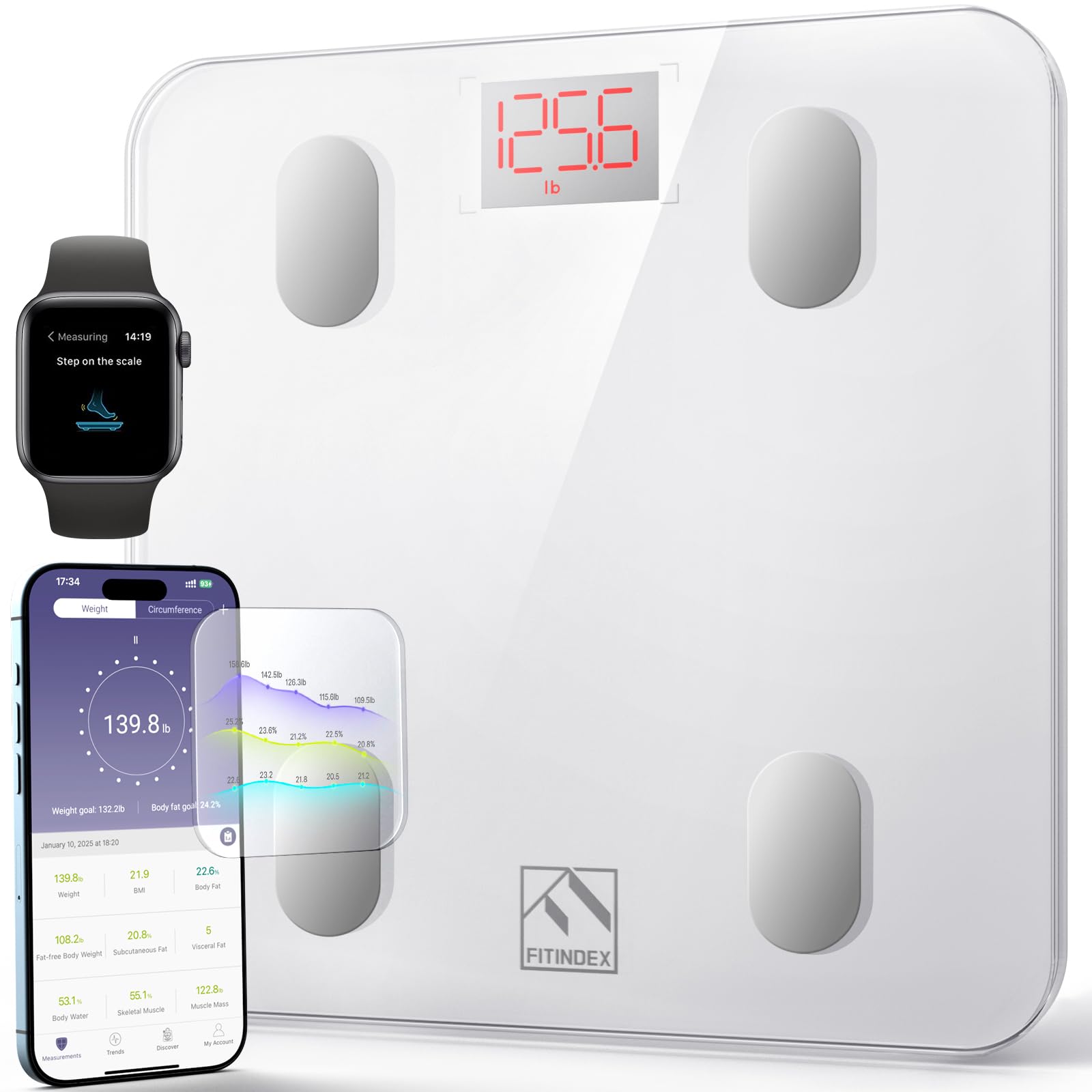
A smart scale with 13 body composition metrics, unlimited users, CSV export, and app data stored on AWS for added privacy assurances.
Why I picked it: Strong app privacy features and useful export options for deeper tracking.
Best for: Users who want detailed metrics and control over their data.
A budget-friendly smart scale with advanced data options.
Pros
- 13 body composition metrics
- Syncs with Apple Health and Fitbit
- Unlimited users and CSV export
- Accurate to 0.2 lb increments
- Includes batteries and easy setup
Cons
- Glass platform can feel cold
- Not for heavy-duty, high-capacity needs
- Some metrics remain estimates
My take
I’ve used this FITINDEX for years and appreciate how the app stores data via AWS and allows CSV export — that makes trend analysis simple when I want to dig deeper.
Setup was quick and pairing has stayed reliable over months of use. The color-coded app helped me understand metrics that were new to me.
Long-term durability has been solid in my experience; it continues to function reliably for routine body-composition tracking.
How I Pick a Digital Scale
Decide what you actually need
First I define the primary use: daily body weight, body-composition tracking, weighing heavy users, or kitchen precision. That single decision narrows choices quickly.
If you only want consistent weight readings, a simple platform scale is more reliable and less fussy than a feature-packed smart model.
- Weight-only: choose simplicity and stability.
- Body composition: expect app pairing and directional estimates.
- Heavy users: prioritize capacity and platform size.
- Kitchen use: portable platform and tare function are essential.
Check accuracy, sensors, and capacity
I look for clear statements about sensor resolution (0.1–0.2 lb increments for body scales is typical) and a capacity that exceeds my maximum expected weight.
For kitchen scales I want gram resolution and a tare function so I can weigh ingredients in a single bowl.
- Higher resolution = smaller detectable changes.
- Buy a scale with capacity comfortably above your top expected load.
- Avoid placing scales on rugs or uneven floors to maintain accuracy.
Decide on smart features and app needs
If I plan to track trends over time I prefer models that integrate with Apple Health, Google Fit, or Fitbit so my data lives where I already manage workouts and nutrition.
Remember that body-fat and other composition numbers from BIA scales are estimates; I use them to track direction and trends, not as medical diagnostics.
- Confirm Bluetooth pairing is straightforward before committing.
- Look for unlimited users if multiple household members will sync.
- Export or privacy features are useful if you want to back up or analyze data externally.
Practical details I test
I check platform size, display legibility, battery type and whether batteries are included, and build quality. These are the everyday details that affect ease of use.
If you have balance issues, a larger platform and non-slip foot pads make a big difference.
- Large platforms improve stability and comfort.
- Backlit displays help with early-morning or dim bathrooms.
- Prefer AAA/AA batteries over coin cells for easier replacement.
Frequently Asked Questions
Are smart-scale body-fat and muscle numbers accurate?
I treat bioelectrical impedance measurements as directional — they’re great for tracking trends over weeks and months, but not a substitute for clinical testing.
How do I get consistent readings every time?
I weigh on a hard, flat surface, step on in the same spot with similar hydration and clothing, and weigh at the same time of day (I prefer mornings). That routine reduces variability.
Can I use a digital scale on carpet?
I don’t place precision scales on carpet — soft surfaces distort readings. Put the scale on tile or hardwood for accurate results.
Are bioelectrical scales safe with pacemakers?
I follow manufacturer guidance: consult a healthcare professional if you have implanted medical electronics before using BIA-enabled scales.
Final Take
I chose these six scales because each solves a clear, practical problem: simple accuracy, app-driven metrics, baby or light-item modes, high-capacity stability, kitchen precision, and privacy-focused tracking.
If you want a dependable everyday scale, I reach for the Etekcity bathroom model; for app syncing and body metrics the RENPHO or FITINDEX scales are the best balance of features and value. Heavy users will appreciate the RENPHO 550 lb platform, and bakers can't go wrong with the Amazon Basics kitchen scale.
Pick the one that matches how you intend to weigh items, and you’ll have a tool that makes daily tracking or baking noticeably easier.
