
I tested six popular dishwashing gloves so you don’t have to. Here are the ones I reach for, whether I need heat protection, a big-hand fit, or a color-coded multipack.
I spend a lot of time at the sink and over the years I’ve collected more dish gloves than I’d like to admit. These six stood out in regular use.
My picks highlight different priorities—heat resistance, size, comfort lining, and value—so you can match the glove to the job.
Below I explain why I used each pair, what they’re best at, and the small trade-offs I ran into.
I grouped these gloves by what I used them for most: all-around protection, big-hand fit and heavy-duty work, color-coded multi-packs for switching tasks, extra comfort from lining, and wallet-friendly multi-packs.
1. Mamison Reusable Waterproof Rubber Gloves (2 Pairs) – Best Overall
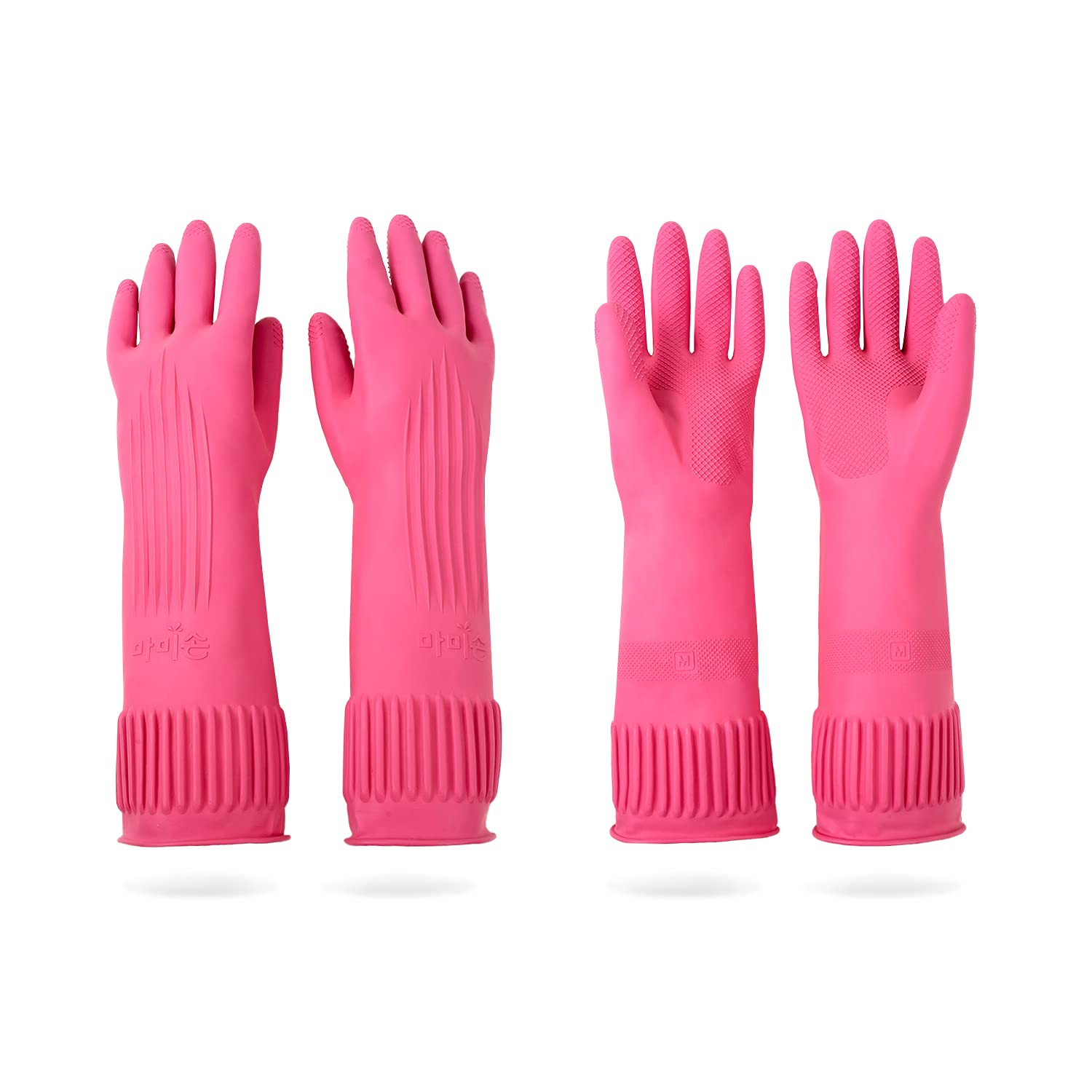
I found these to be my go-to for everyday dishwashing: soft latex rubber, long cuffs, and textured palms that keep slippery plates under control.
Why I picked it: Balanced protection, length, and grip for everyday use.
Best for: Regular dishwashing and general household cleaning.
Affordable, good value for two pairs.
Pros
- Soft, flexible latex material
- Long cuffs prevent water ingress
- Textured palms for better grip
- Comes as two pairs
Cons
- Not latex-free
- Fingers can feel roomy for some
- Occasional rubber scent until aired
My take
These Mamison gloves became my default for dishes because they strike the right balance between protection and feel. The soft latex lets me scrub and handle glassware without feeling clumsy, and the textured granules on the palms actually improve grip when things get soapy.
The 13.7-inch length and cuff design keep water from running down my arm, which means fewer wardrobe mishaps. I’m able to use hotter water than I used to without my hands feeling uncomfortably warm.
They arrived as two pairs so I could dedicate one pair to dishes and keep the other for tougher cleaning jobs. Fit varies a bit in the fingers, but overall they wear comfortably for everyday tasks.
2. Tusko Nitrile Rubber Cleaning Gloves (Extra Large) – Best for Big Hands & Heavy Use
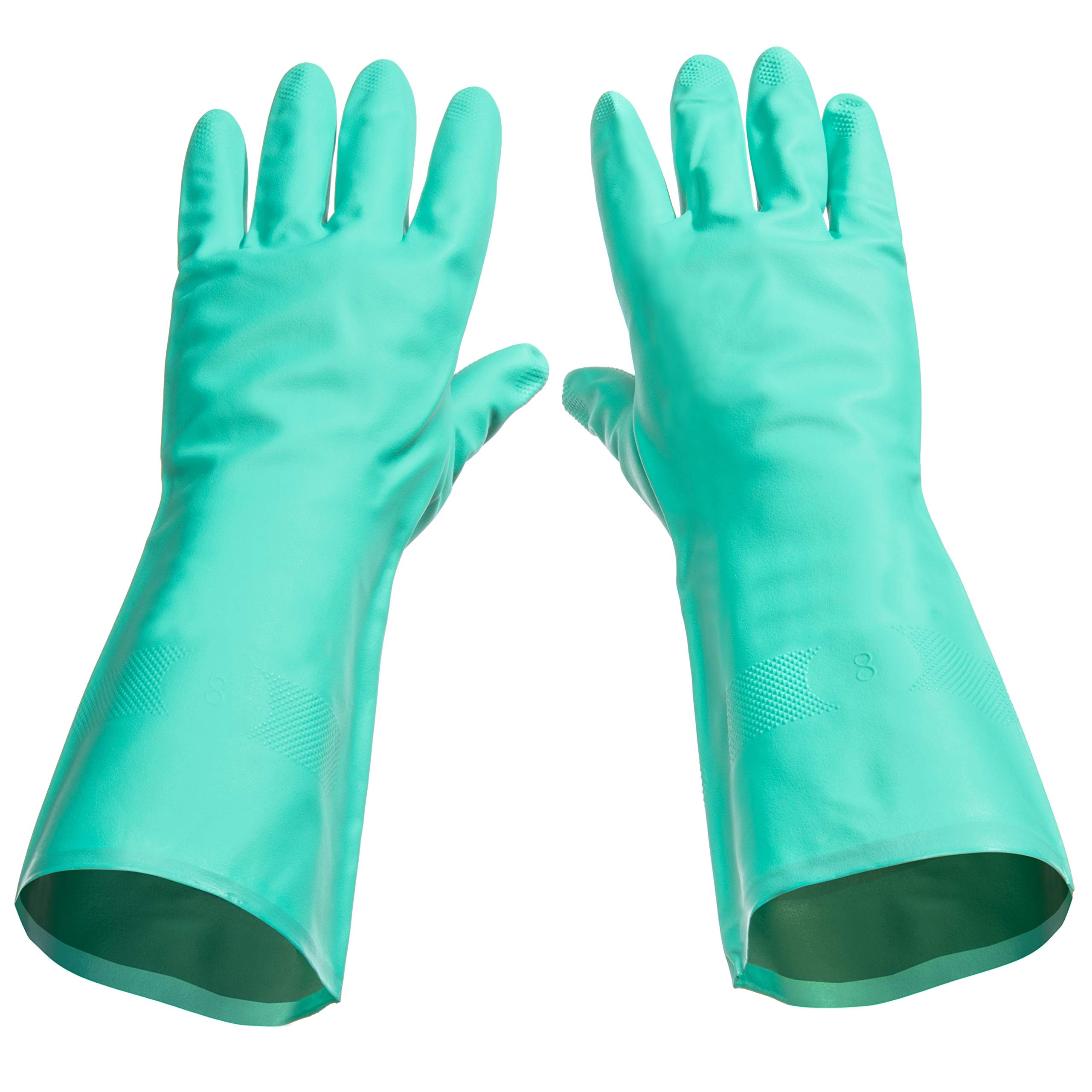
When I need durability, chemical resistance, and a true large fit, these thick nitrile gloves are what I reach for.
Why I picked it: Thick nitrile construction and true large sizing for heavy-duty work.
Best for: Users with larger hands or who need chemical and cut resistance.
Midrange — built for durability over disposability.
Pros
- Latex-free nitrile material
- Thick 15 mil construction
- Odor-resistant flock lining
- Good slip-resistant texture
Cons
- Feels stiff at first use
- Bulkier than thin gloves
My take
These Tusko nitrile gloves are my pick when a task calls for toughness. The material is thicker than typical household gloves, which gives me confidence handling harsher cleaners and tougher scrubbing.
I especially appreciate the larger sizes—finding a true XL fit isn’t always easy, and these actually fit without cutting off circulation. The odor-resistant lining keeps them feeling fresh across repeated uses.
They’re not as nimble as thin latex options, but the trade-off in durability and forearm protection is worth it for heavy-duty cleaning sessions.
3. Rubber Kitchen Dishwashing Gloves – 4 Pairs Colorful Reusable Gloves – Best Value Multi-Pack
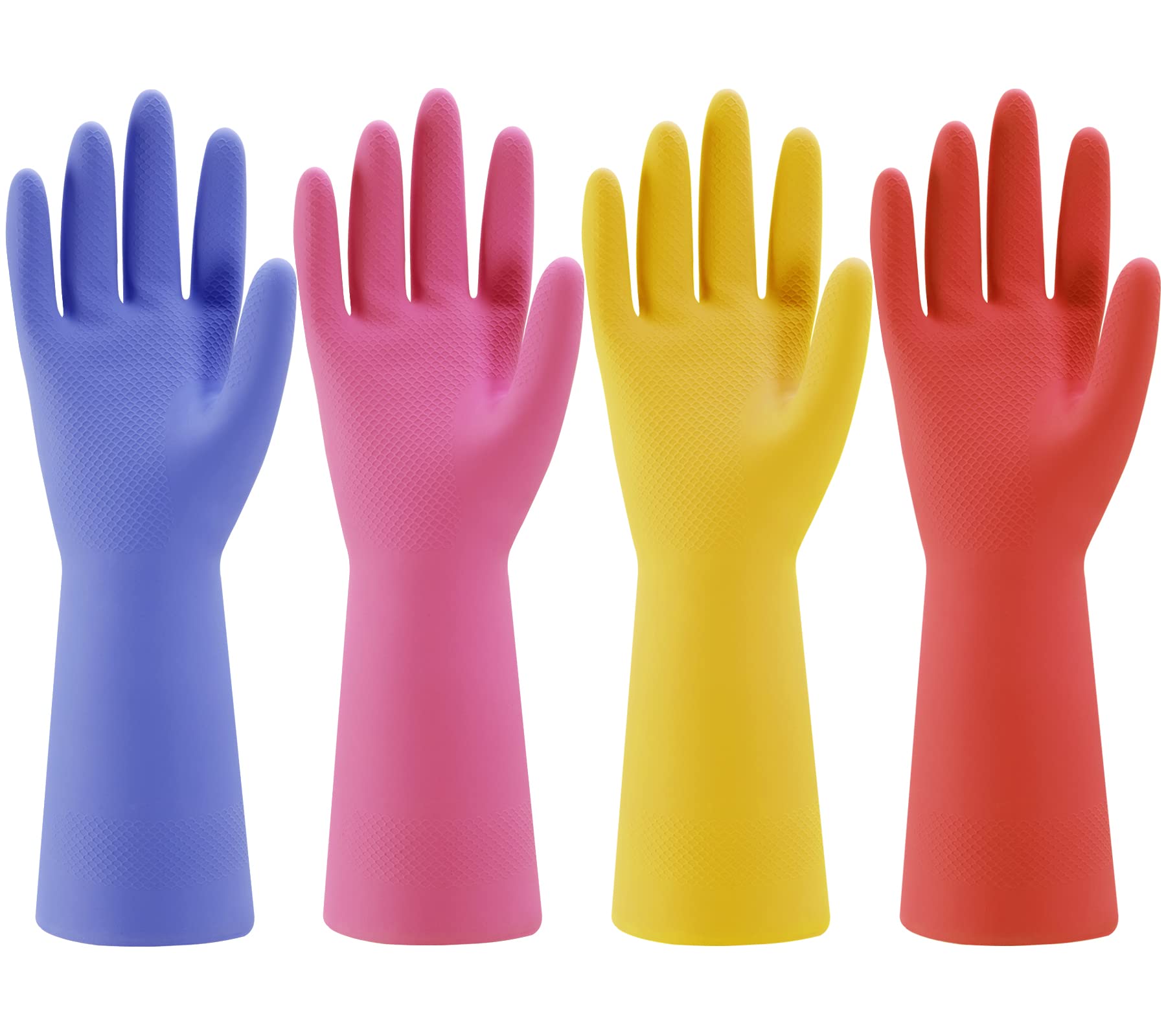
I keep a color-coded set handy: four durable pairs in different colors that let me assign gloves to specific chores.
Why I picked it: Four-color set for task separation and good all-around performance.
Best for: Households that want multiple pairs for different chores.
Budget-friendly multi-pack for rotating use.
Pros
- Includes four color-coded pairs
- Soft, skin-friendly natural rubber
- Textured palms and fingers
- Thin inner velvet lining
Cons
- Medium runs slightly small
- Initial rubbery odor possible
My take
I like having a color-coded set because it makes separating jobs easy—kitchen, bathroom, pet care, and messy DIY each get their own pair. The natural rubber is soft and gives good dexterity, so I can scrub and handle fragile items without fighting the material.
A thin velvet lining adds comfort and absorbs sweat during longer tasks. I did notice a faint rubber scent out of the package, but airing them for a day cleared that up.
They’re durable enough for routine use and the sizing is snug in medium, so I recommend sizing up if you prefer a looser fit.
4. HSL PVC Household Cleaning Gloves with Cotton Flock Lining (2 Pairs) – Best for Comfort
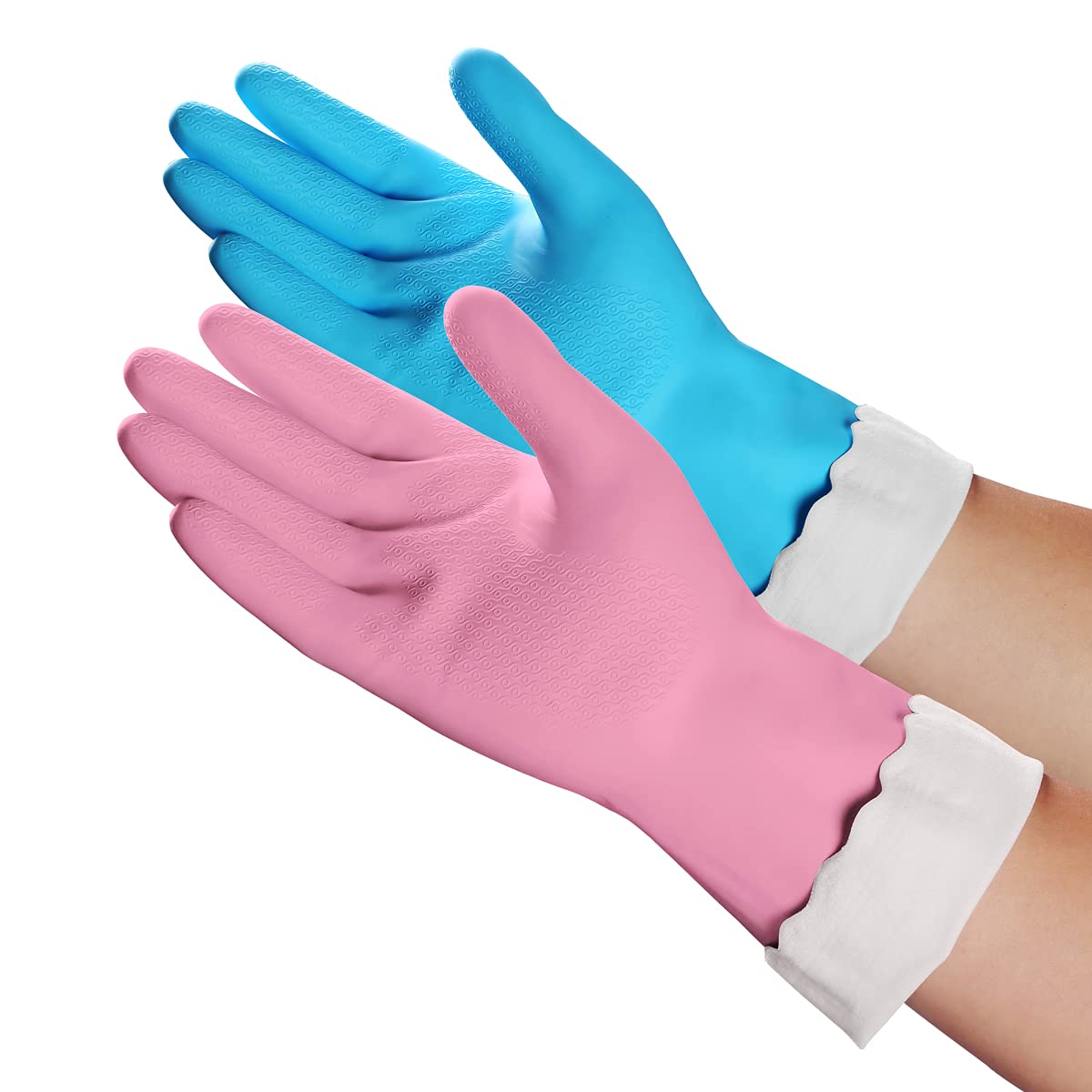
These PVC gloves impressed me with their soft cotton flock lining and easy-on, easy-off feel for light to medium chores.
Why I picked it: Comfortable cotton flock lining that stays in place.
Best for: People who want a comfortable, sweat-absorbing interior for regular tasks.
Good value for two comfortable pairs.
Pros
- Cotton flocked liner for comfort
- Latex-free PVC material
- Anti-slip grip design
- Two pairs included
Cons
- Not ideal for very heavy scrubbing
- PVC less robust than thick nitrile
My take
I reach for the HSL pair when comfort matters—the cotton flock lining is noticeably soft and stays put while I work. It soaks up sweat and keeps my hands warm during longer cleaning sessions.
The PVC shell is latex-free and does a solid job keeping water out; combined with the anti-slip texture, I felt secure handling wet dishes and wet surfaces.
These are everyday gloves that slip on easily and work best for light to medium household chores rather than industrial scrubbing.
5. Cleanbear Reusable Dish Washing Rubber Gloves (Set of 3) – Best Three-Pack
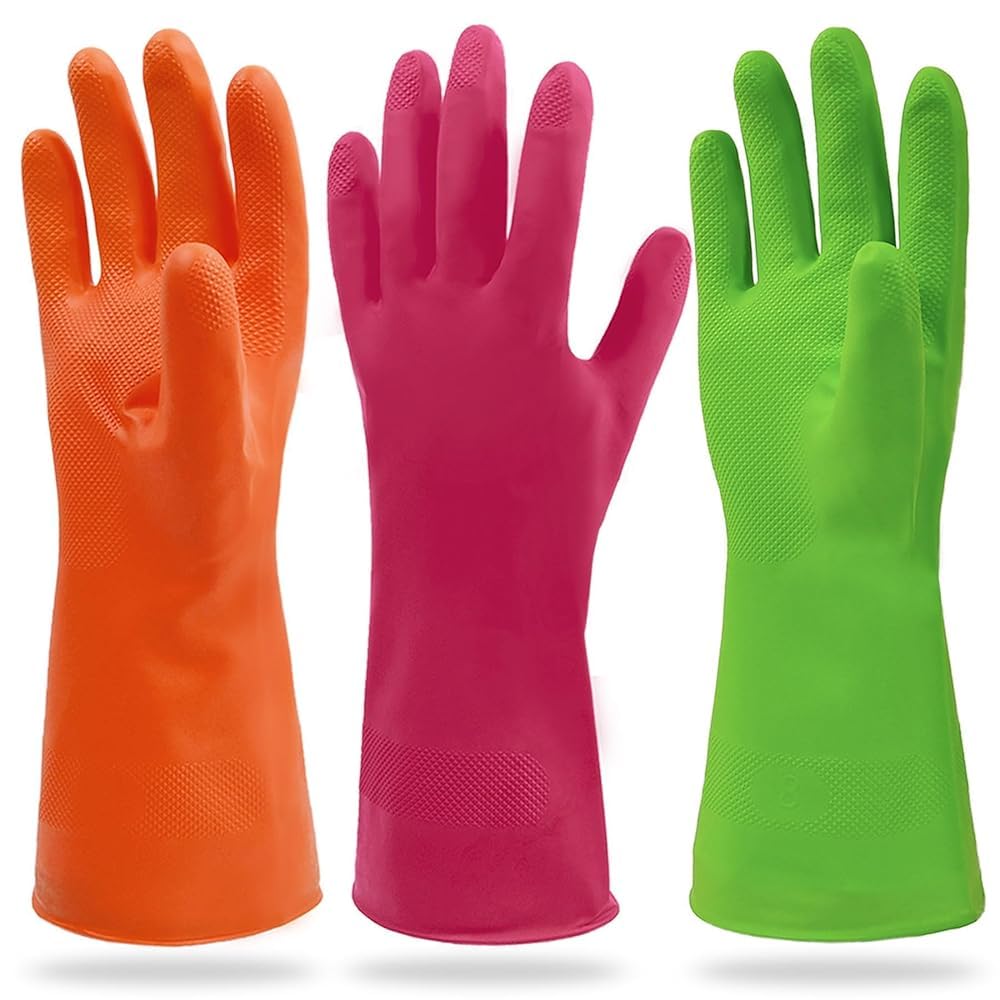
This three-pack gave me color options and thin, tactile gloves that are great when I need fingertip control.
Why I picked it: Three distinct pairs for task rotation and tactile feel.
Best for: Tasks requiring good feel—detailed cleaning and repeated changes.
Cost-effective three-pack for regular rotation.
Pros
- Three-pair set for rotation
- Latex-free, low-odor material
- Thin enough for fine tasks
- Easy to put on and off
Cons
- Less durable than heavy-duty options
- May develop holes over months
My take
I appreciated the Cleanbear set for jobs where fingertip sensitivity matters—they’re thin enough that I can feel what I’m doing without sacrificing basic protection from water and detergent.
The latex-free material didn’t have the offensive smells some gloves do, and the bright colors make it easy to assign gloves to different chores.
These aren’t indestructible; with daily dishwashing one pair lasted months before small holes appeared, but the three-pack setup made rotating and replacing them simple.
6. 2 Pairs Cotton-Lined Rubber Household Cleaning Gloves (Blue) – Best Heavy-Duty Pairs
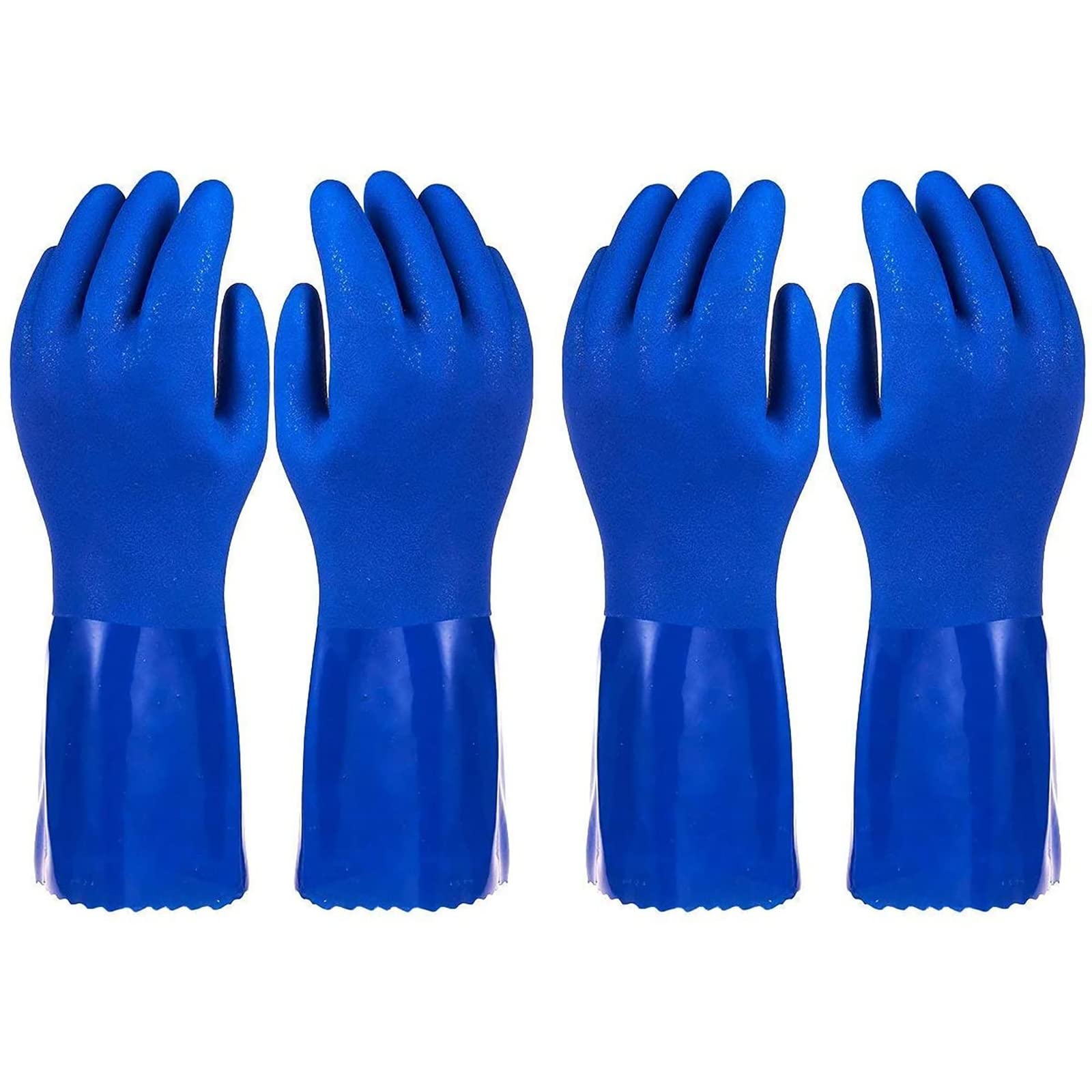
For tougher cleaning sessions I rely on these heavy-duty, cotton-lined gloves: thick rubber, strong grip, and comfortable lining for longer wear.
Why I picked it: Thicker rubber with a comfortable cotton liner for heavy tasks.
Best for: Heavy-duty dishwashing and multi-task cleaning sessions.
Premium-feel option aimed at longevity.
Pros
- Thick, durable rubber exterior
- Soft cotton lining for comfort
- Textured grip reduces slips
- Two pairs included
Cons
- Eventually the rubber can stiffen
- Interior can develop odor over time
My take
These blue cotton-lined gloves are my go-to when the job is tougher—hot water, greasy pans, or longer scrubbing sessions. The lining makes extended wear comfortable and the textured surface keeps a sure grip on slippery items.
They feel heavy-duty without being clumsy, and I liked that each set included two pairs so I could keep a spare ready.
Over long-term use I noticed the external rubber can stiffen and the interior lining can pick up odors, but overall they stand up better to hard use than thin single-pair options.
How I Choose Dishwashing Gloves
Material Matters
I pay attention to the shell material first. Natural latex is flexible and offers great dexterity, but it isn’t latex-free. Nitrile is my choice for chemical resistance and durability. PVC works well for basic water protection and is usually latex-free.
- Latex: flexible, good grip, may not suit latex-sensitive skin
- Nitrile: chemical and cut resistant, thicker and more durable
- PVC: affordable, latex-free, best for light tasks
Fit & Sizing
A glove that fits poorly ruins the chore. I try on gloves (or check size guides) to ensure finger dexterity and a comfortable cuff fit.
- If between sizes, size up for comfort and easier removal
- Look for true XL or XXL options if you have large hands
- Check palm width and length if exact fit matters
Lining & Comfort
I prioritize lined gloves for long sessions. Cotton or flocked linings reduce sweat and feel nicer against skin during extended use.
- Flocked or cotton linings absorb moisture
- Unlined gloves dry faster but may feel clammy for long wear
- Lining can extend comfort but may retain odors over time
Grip & Texture
A textured palm and finger area makes a real difference when handling soapy dishes. I avoid slick finishes for kitchen work.
- Granules and patterned palms improve traction
- Texture matters more than perceived thickness for slip prevention
- Textured fingertips help with small items and glassware
Length & Protection
Long cuffs protect forearms from splashes. I keep longer gloves for hot water and deep sinks, shorter ones for quick light tasks.
- Long cuffs reduce water entry into sleeves
- Shorter gloves are easier to store and quicker to don
- Pick cuff tightness that keeps water out but isn’t restrictive
Care & Longevity
I rinse gloves after use, let them air dry, and store them flat or hanging. That dramatically extends usable life.
For thin gloves I expect to replace them more often; thicker nitrile or heavy-duty rubber lasts longer under heavy use.
- Rinse inside and out after use
- Air dry fully before storing
- Rotate pairs to extend lifespan
Frequently Asked Questions
Can these gloves handle very hot water?
I used several of these pairs with very hot water; the thicker rubber and nitrile options handled heat better and kept my hands comfortable. Thin gloves may let heat through sooner, so I reserve them for milder temperatures.
Which gloves are best if I have larger hands?
I choose nitrile or brands that advertise true XL/XXL sizing. The Tusko nitrile pair gave me a true large fit with good dexterity and forearm protection.
How should I care for lined gloves to avoid odors?
I rinse the inside, turn them inside-out when possible, and air them fully before storing. Keeping a rotation of pairs helps prevent persistent odors.
Final Take
I’ve found there’s no single glove that’s perfect for everything, so I keep a few different styles on hand: a durable nitrile pair for heavy jobs, a soft latex pair for everyday dishes, and a color-coded multipack for rotating tasks.
Use the quick guide above to match material, fit, and lining to the work you do most, and you’ll spend less time replacing gloves and more time getting the job done comfortably.
