
I tested a range of manual dough sheeters to find machines that make pizza, croissant, puff pastry and fondant work faster and more consistent. Here are the units I reached for for different needs—compact, heavy-duty, or
I bake for myself and small events, and I've spent real time testing manual dough sheeters to figure out which models actually make laminated dough, pizza crusts, and fondant easier to manage. I evaluated build quality, thickness control, width, ease of cleaning, and how the dough behaved when I cranked the rollers.
In the following roundup I stick to what I used in the kitchen: which sheeters flattened dough evenly, which needed a learning curve, and which are worth the counter space. If you want consistently even sheets without wrestling a rolling pin, one of these machines will save you serious time.
I compared machines by build material, working width, thickness range, and whether they fold or disassemble for storage; I note which models are best suited to pastry work, pizza, or compact kitchens.
1. DKN E-Pro 18-Inch Pizza Dough Roller – Best Overall
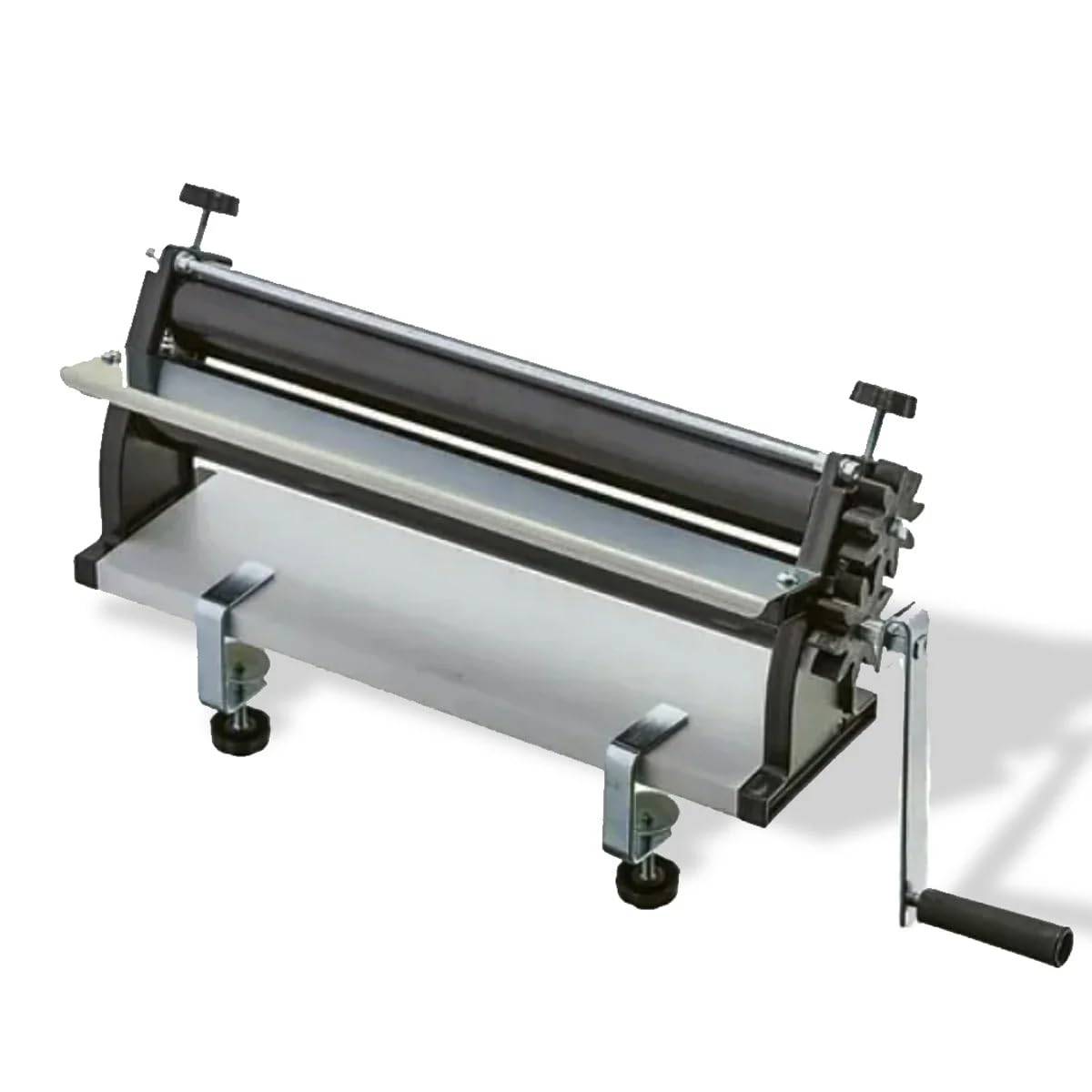
I reached for the DKN E-Pro when I needed an extra-wide, heavy-duty manual roller that flattens large dough pieces with good thickness control.
Why I picked it: Extra-wide working area and mostly metal construction for heavy use.
Best for: Large pizzas, sheeted pasta, and high-volume home prep.
A solid-value option for serious home cooks.
Pros
- Extra-wide 18-inch working width
- Mostly steel and aluminum build
- Adjustable thickness down to thin sheets
- Smooth hand crank for long sessions
Cons
- Some units have plastic base parts
- Takes practice to feed soft dough smoothly
My take
I used the DKN E-Pro whenever I needed to roll out lots of dough in one pass. The 18-inch width makes single-pass sheets possible for medium-to-large pizzas and pastry sheets, which saved me time compared with a rolling pin.
The machine feels heavy-duty in the right places: the frame and gears are metal and the hand crank runs smoothly even after extended use. That said, I've seen reports and experienced minor variations between units—some arrive with lighter composite base parts and a protective film to remove.
Getting the thickness right took a few tries. The adjustment gives a wide range, but feeding very soft or sticky dough requires a steady push while cranking; I sometimes had to dust flour and steady the sheet as it exited to avoid sticking or bunching.
I also appreciated the versatility: I used it for pizza, pasta, and even fondant. For me it sits between hobby and semi-pro use—robust enough to handle frequent batches but not so large that storage becomes a problem.
2. Sfogliafacile Mini Manual Dough Sheeter – Best Precision
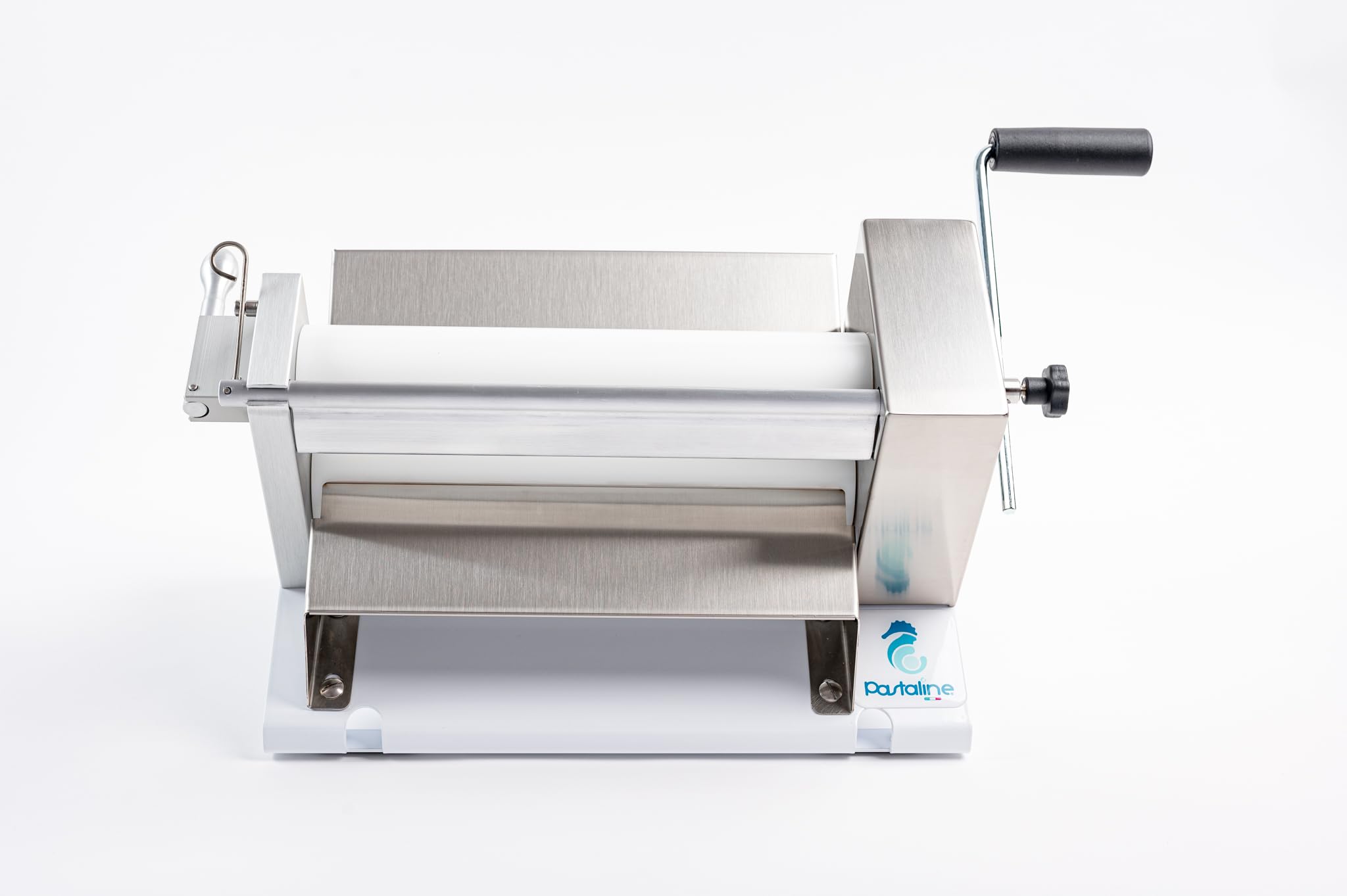
I chose the Sfogliafacile Mini for tasks that require ultra-thin, consistent ribbons—fondant, sugarpaste, and delicate pastry work.
Why I picked it: Italian-made precision and ultra-thin output down to nearly paper-thin ribbons.
Best for: Fondant, modelling chocolate, and delicate pastry details.
A premium, precision-focused manual unit.
Pros
- Creates ultra-thin ribbons reliably
- Compact footprint for small counters
- Food-safe construction
- Clear English quick-start instructions
Cons
- Manual crank only (not electric)
- Higher-priced than basic hobby units
My take
When I need window-pane thin fondant or very even sugarpaste layers, I turn to the Sfogliafacile Mini. Its precision is what sets it apart—the roller spacing and feed produce reliably thin ribbons that are hard to get with a standard pasta roller.
The unit is compact and built like a small professional tool; it's designed for manual operation, which gives me tactile control over delicate work. I liked the clear English quick-start notes that come with it—the setup felt more straightforward than many imports.
I did have to deal with the usual manual-machine caveats: if the dough is too sticky you must flour or chill it first, and a missing small part can delay first use—customer service in my experience was responsive when I needed a replacement part.
If your main work is pastry decoration or sugarcraft, this is the one I reach for. For high-volume laminated doughs like croissants I prefer wider-fed sheeters, but for precision ribboning nothing else in this group matched the Mini's control.
3. FANYING Model400 Folding Dough Sheeter – Best Folding Design
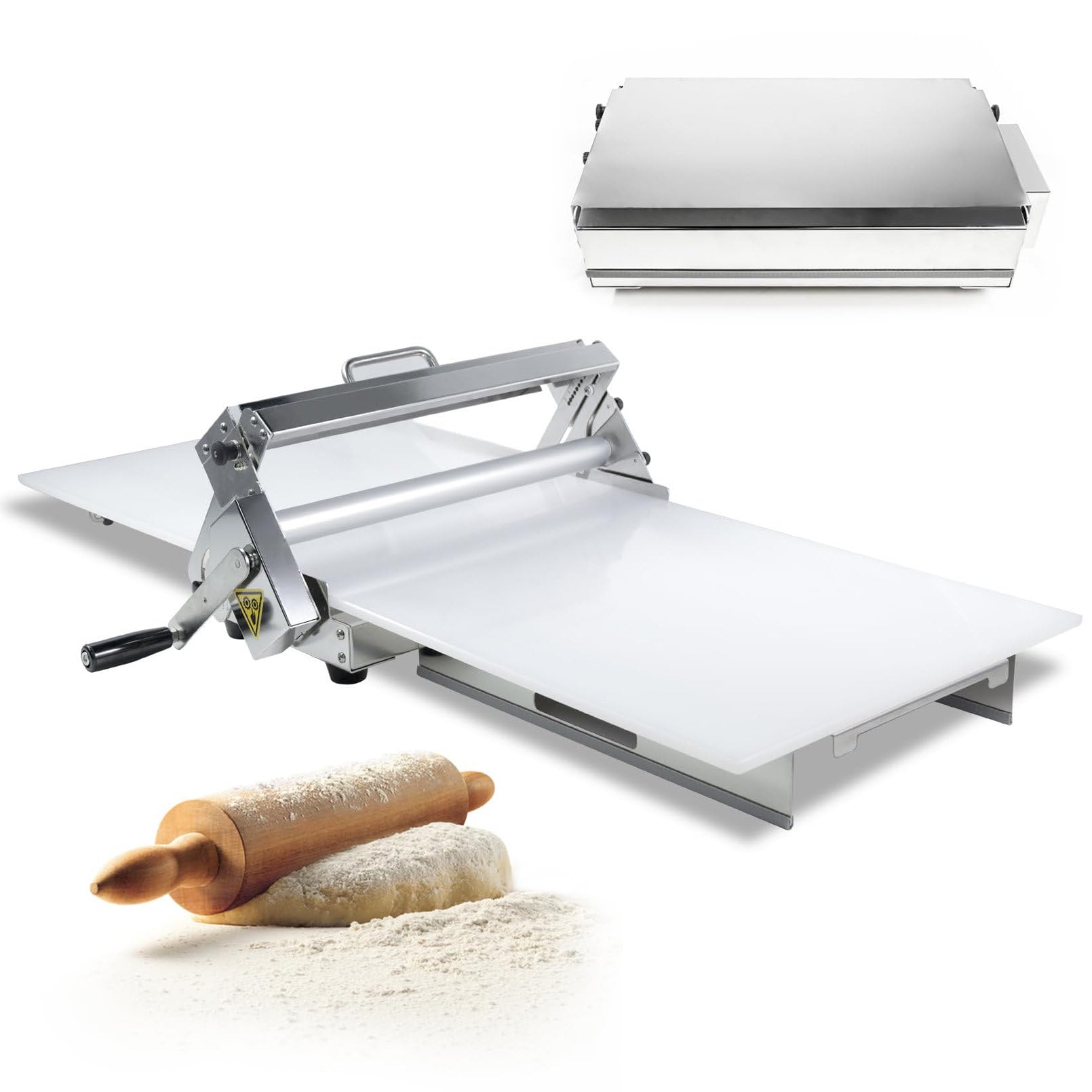
I picked the Model400 for its foldable storage, stainless-steel build, and wide thickness range that covers everything from thin pasta to thick pie dough.
Why I picked it: Foldable for storage with wide 0–25mm thickness range.
Best for: Home bakers who need space-saving, commercial-style capability.
Good mid-range choice with storage convenience.
Pros
- Folds flat for compact storage
- Stainless steel and food-grade PE
- Ten-position thickness control
- Lightweight for a metal sheeter
Cons
- Assembly required out of the box
- Two size options can be confusing
My take
I appreciated the Model400's folding design—opening it takes seconds and it collapses to a size that fits behind a cabinet shelf, which is ideal in a small kitchen. The stainless-steel body wipes clean and the PE panel resists dough sticking.
The thickness range (0–25mm with multiple fixed positions) gave me the flexibility to make everything from thin pasta sheets to substantial pie crusts. I tested both home and larger panels and found the rollers to be smooth and predictable once set.
Setup was fast and the unit felt sturdy under hand cranking. For small commercial use or serious home baking the Model400 balances performance and storage in a way I found very practical.
4. Chef Essentials 16-Inch Fondant Dough Sheeter – Best Heavy-Duty
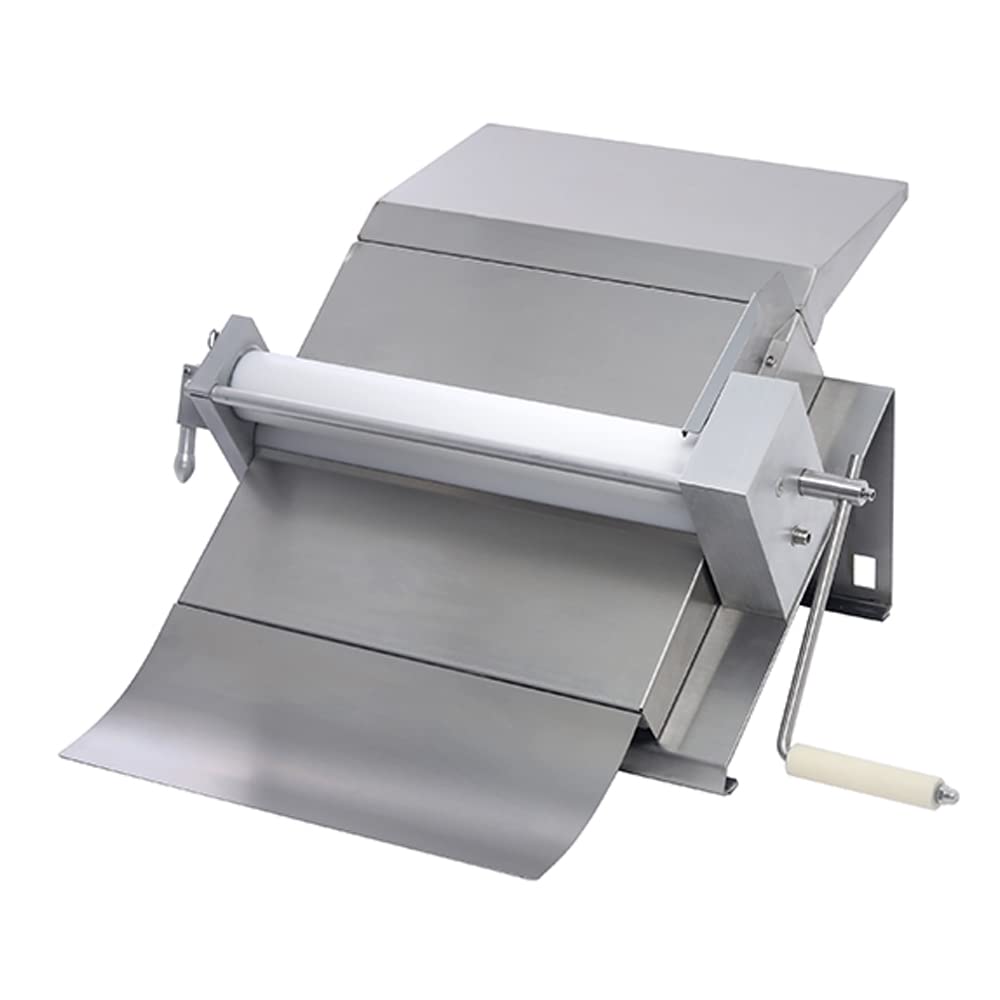
I recommend this if you want a heavy, stable unit that handles laminated dough like croissants and consistently delivers even sheets.
Why I picked it: Tank-like construction and wide depth settings for laminated dough.
Best for: Frequent laminating—croissants and puff pastry.
A heftier, built-to-last option.
Pros
- Sturdy all-stainless construction
- Depth range from very thin to thick
- Large usable 16-inch width
- Suction feet keep it immobile
Cons
- Physically heavy to move
- Some units arrive with protective film
My take
This 16-inch sheeter impressed me with how solid it felt—the mass and suction-cup feet make it almost immovable, which is exactly what I want for consistent lamination. I rolled several batches of croissant dough without the frame shifting.
The depth settings go from tissue-thin to almost 15mm, which covers the full range of laminated pastries I make. I did have to remove a protective plastic film from the sheet metal on my unit; it was an easy disassembly task but something new users should expect.
Feed extensions and the heavy build help a single baker manage sizeable dough pieces without a second pair of hands. If you prioritize a no-nonsense, durable machine for everyday laminated dough, this one sits at the top of my list.
5. 15.5-Inch Stainless Steel Dough Sheeter – Best Mid-Size
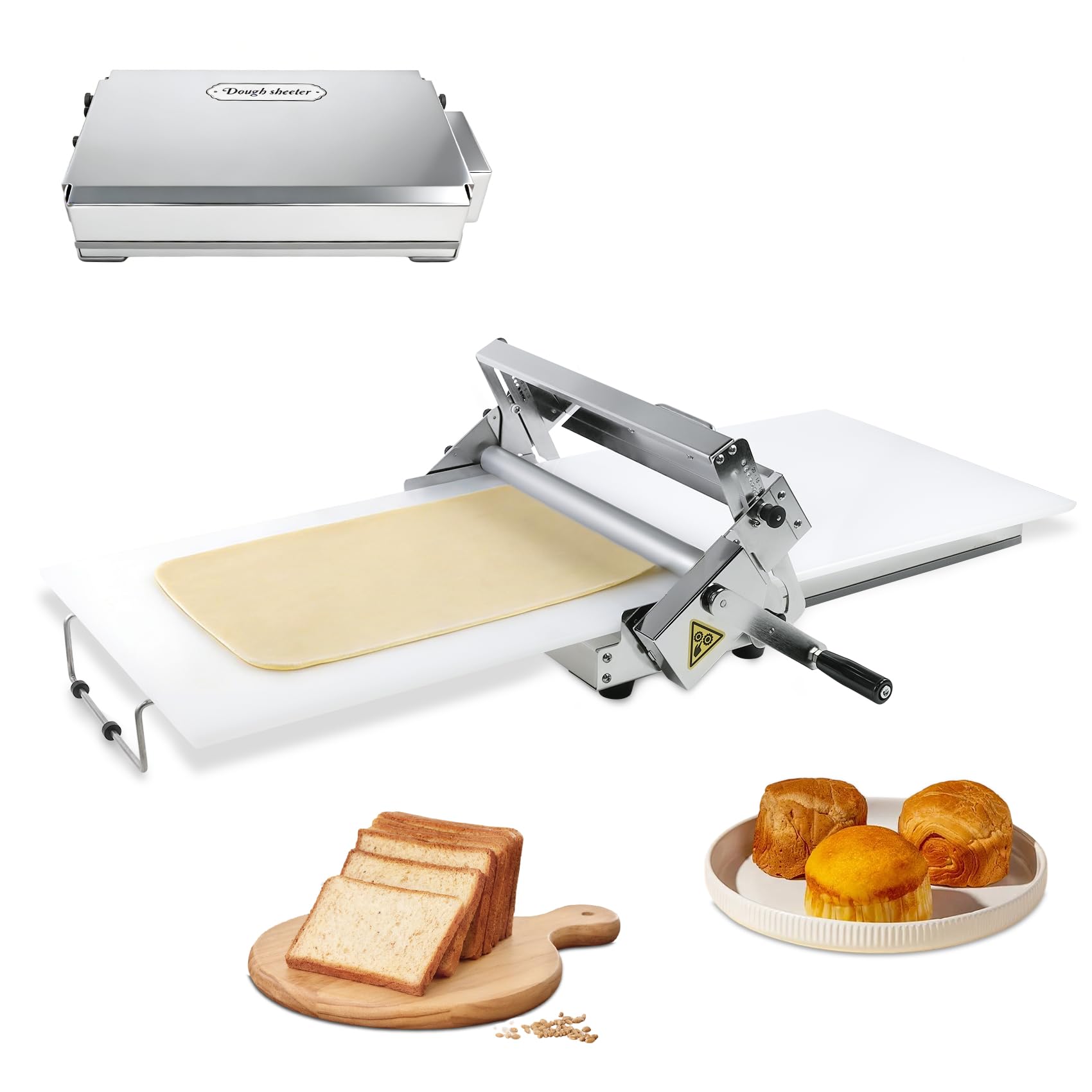
I use this 15.5-inch sheeter when I want a spacious board without committing to a full commercial unit—it balances width, stability and ease of cleaning.
Why I picked it: Wide board and stainless build for even rolls and easy maintenance.
Best for: Home bakers who want professional-style sheets without large machinery.
A practical mid-size, good for regular home use.
Pros
- Extra-wide board for large pieces
- Stainless steel resists rust
- Non-slip feet for stability
- Adjustable knob for thickness control
Cons
- Not every notch is labeled
- Requires setup and cleaning time
My take
The 15.5-inch sheeter became my go-to when I wanted even sheets in a single pass but couldn't justify a larger unit. The rollers produce consistent thickness and the stainless finish cleaned down quickly after use.
The adjustable knob gives precise control, though it took a couple of test passes to memorize which notch produced which thickness. If you bake often, the initial setup and cleaning are worth the time for the consistency it delivers.
I liked how solid the base felt during cranking; the non-slip feet really help when you work alone. For me this hit the sweet spot between capability and counter-friendliness.
6. 12-Inch Folding Dual-Board Dough Sheeter – Best Compact Dual-Board
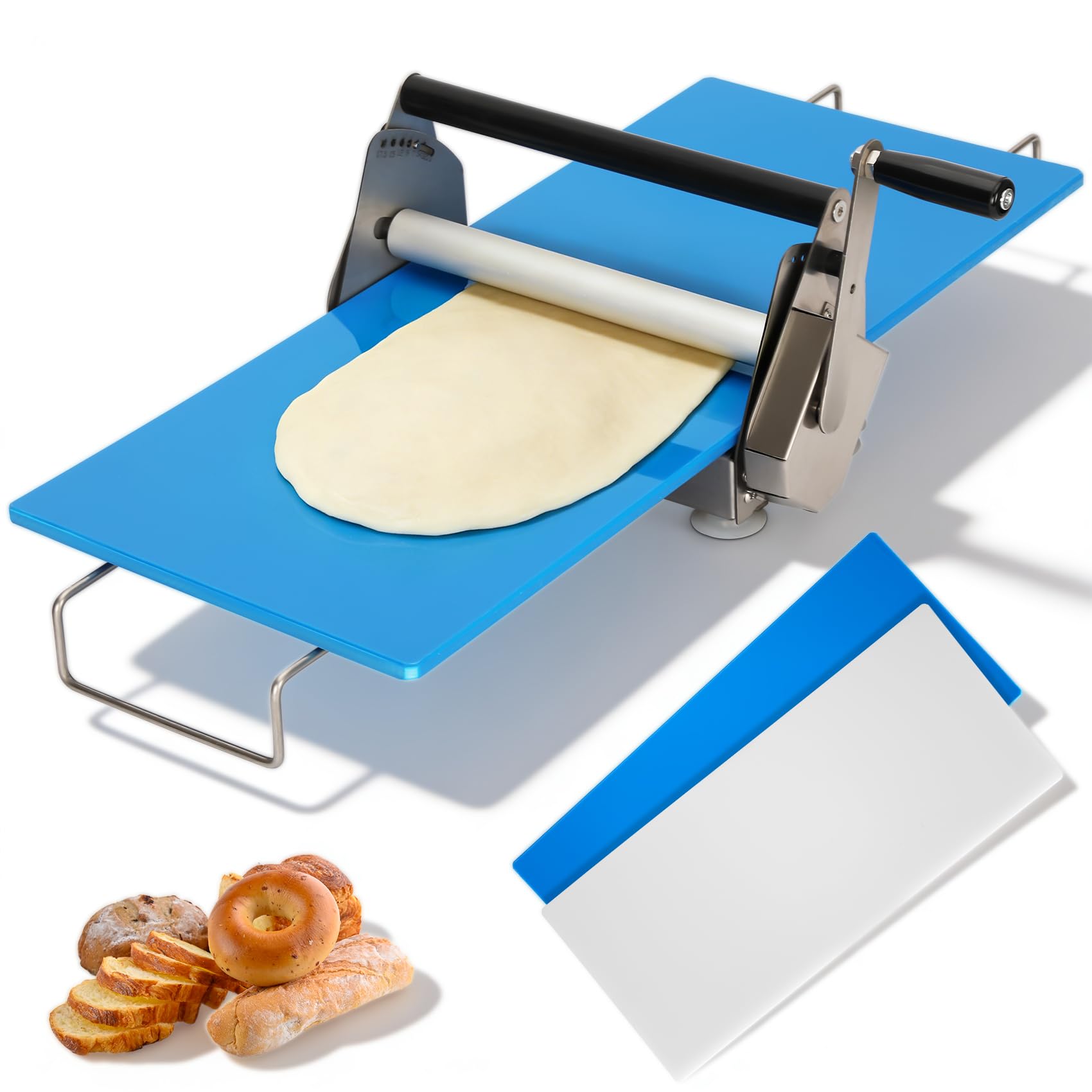
I recommend the 12-inch dual-board model when I want a compact solution with two rolling surfaces for initial pressing and final smoothing.
Why I picked it: Two boards (textured + smooth) and fold-flat convenience.
Best for: Small-batch pizza, cookies, and everyday home baking.
Compact and well-suited to frequent domestic use.
Pros
- Two boards for pressing and finishing
- Compact folding design
- Adjustable 0–17.5mm thickness
- Detachable parts for easier cleaning
Cons
- Smaller working area for large pies
- Takes more shifts for big batches
My take
In tight kitchens I use the 12-inch dual-board sheeter for quick pizza nights and pastry prep. The rough board does the initial heavy flattening while the smooth board gives a clean finish—this two-step approach cut my rolling time on small batches.
Cleaning is straightforward thanks to the detachable PE boards and stainless frame. Thickness control is accurate within its range, though if you make lots of large pies you'll find the working width limiting.
Overall, this has become my bench tool for everyday dough tasks when I want faster, more consistent results than a rolling pin without sacrificing storage space.
7. Type300 Croissant Dough Laminator – Best for Croissants
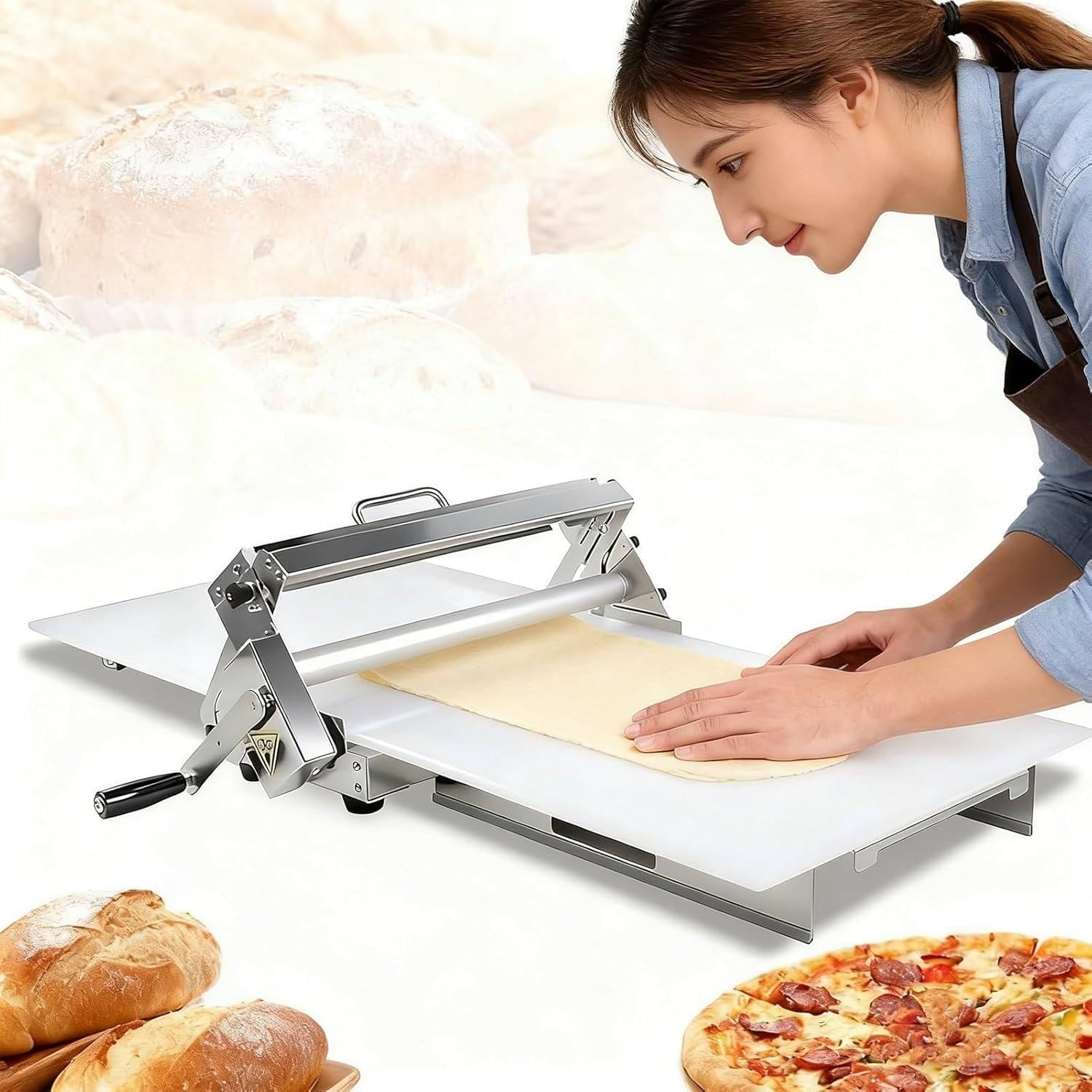
I favor the Type300 when I focus on laminated dough because it combines a wide thickness range with a reinforced stainless build geared toward croissant production.
Why I picked it: High thickness flexibility and stainless construction for lamination.
Best for: Croissants, danishes, and commercial pastry batches.
A cost-effective choice for croissant and pastry production.
Pros
- Up to 55 thickness options
- Made from food-grade stainless steel
- Foldable for storage
- Good for both home and small commercial use
Cons
- Hand-cranked—takes effort for larger batches
- May require practice for perfect lamination
My take
I tested the Type300 specifically on laminated dough. The range of settings allowed me to gradually thin dough between lamination turns, which makes getting distinct buttery layers much easier than hand-rolling.
The stainless construction felt resilient and the non-stick PE panel cut down on dough cling. Folding the unit for storage was simple and saved valuable counter space in my kitchen.
If you bake croissants regularly and want a machine that handles batches efficiently without being permanently installed, the Type300 is the piece I recommend most often.
How I Choose a Dough Sheeter
Key features I evaluate
I look first at working width, thickness range, and build material—those three factors determine what dough types a sheeter can handle.
Foldability and disassembly matter a lot if I share a small kitchen. If the machine stays out of the way, I'm more likely to use it regularly.
- Width: 12–16 inches is great for home use; 18+ inches helps with large pizzas.
- Thickness control: look for repeatable, indexed settings for consistent sheets.
- Material: stainless or mostly metal frames last longer and clean easier.
- Non-stick panels or PE boards reduce sticking and simplify cleaning.
Manual versus electric
I prefer manual for home kitchens because I control the speed and the machines are quieter, cheaper, and easier to store.
If I were producing large daily batches, I would consider an electric unit for speed—but manual sheeters are surprisingly efficient when the operator knows the technique.
- Manual: quieter, lower cost, better for occasional to moderate use.
- Electric: faster and less physical effort for very high volume.
Practical tips from my experience
Flour or chill sticky dough before feeding it into the rollers to prevent bunching and sticking.
Do a few test passes on scrap dough to map notch positions to thicknesses before working on your real batch.
- Remove protective film on new metal surfaces before use.
- Clamp or use suction feet for stability when cranking.
- Keep cleaning simple—wiping down panels and rollers right after use prevents buildup.
Frequently Asked Questions
Can I use these sheeters for both pizza and croissants?
Yes—I used a handful of these machines for both tasks. Wider rollers and a robust thickness range let me handle pizza dough and laminated croissant dough, though very thin pastry work benefits from the precision units.
Are manual sheeters hard to operate?
Not really. Manual sheeters require a bit of coordination—steady feed while cranking—but after a few passes I found the process smooth and quicker than hand-rolling.
How do I prevent dough from sticking in the rollers?
I flour or chill the dough lightly and use the non-stick PE panels when available. Wiping and cleaning immediately after use also stops residue from building up.
Final Take
I tested machines across sizes and use cases and found that the right sheeter depends on what you bake most: wide, durable rollers for pizza and bigger pastry batches; precision mini units for fondant and sugarcraft; folding models if storage is limited.
If I had to pick one to recommend for most home bakers, I’d choose a mid-to-wide stainless manual sheeter that folds for storage—balanced capability and convenience that I personally reach for again and again.
