
I tested a range of drum practice pads and kits to find the best balance of rebound, noise control, portability, and value. Here are the pads I reach for when I need focused practice—at home, on the road, or in a band‑te
I spend a lot of time working on rudiments, control, and endurance, so I picked pads that prioritise realistic rebound, low noise, and solid build quality. Some of these are single pads for focused technique work, while others are full kits or stand-mounted setups that I use for longer practice sessions.
My testing covered two-sided rubber surfaces, tunable heads, full mute kits for drum sets, and portable sets with stands and bags. I paid attention to how each pad felt under sticks, how much noise it produced in a small apartment, and whether the accessories actually made practice easier.
Below I explain what made each pad stand out and which situations I reach for them.
If I need the most realistic rebound I go for gum rubber pads; for apartment practice I favour dense or mute solutions; for beginners a kit with a stand and sticks gives the most immediate value.
1. Evans RealFeel 12″ Two‑Sided Practice Pad – Best Two‑Sided Pad
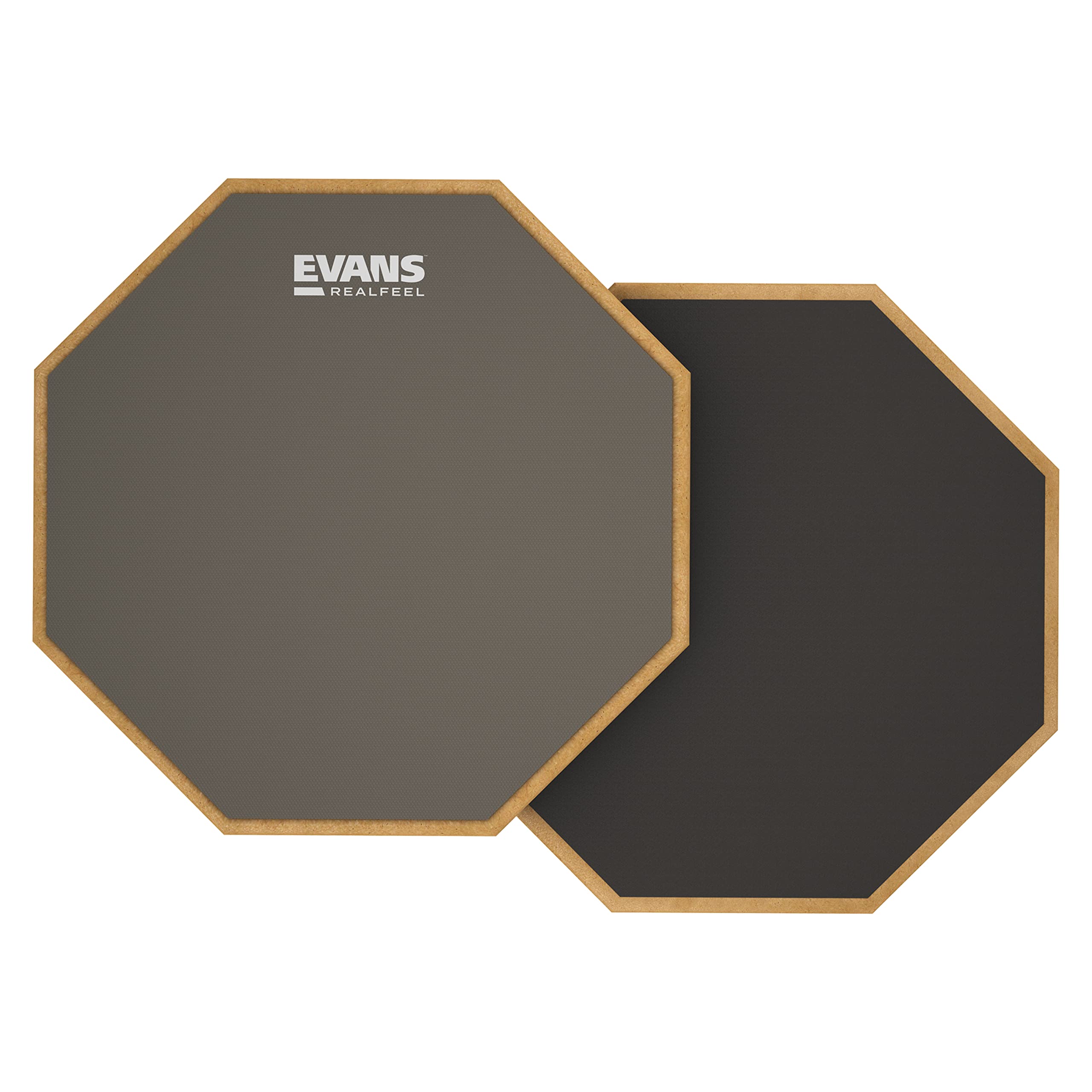
I use this two‑sided Evans pad when I want both realistic rebound and a harder workout surface without swapping gear.
Why I picked it: Two surfaces give me both snare‑like rebound and a tougher surface for endurance work.
Best for: Players who want a single pad that covers warmups and heavy practice.
Midrange cost for an industry standard practice pad.
Pros
- Realistic gum rubber rebound
- Harder reverse side for endurance
- Large 12-inch playing surface
- Durable, resists wear
Cons
- Not mountable on a standard stand
- A bit heavy to carry daily
My take
I find the Evans RealFeel two‑sided pad to be my go‑to when I want variety without changing gear. The gum rubber side gives a natural snare feel that’s excellent for building control, while the firmer recycled rubber side forces me to work on stick control and stamina.
The 12" surface is roomy—good for practicing rudiments and rolls—and the dark fabric finish holds up under repeated use. I use it on my lap, a table, or perched in a snare basket when I need to simulate different angles.
This pad is quiet enough for apartment practice but still provides the tactile feedback I need to correct technique. I’d recommend it to players who want one versatile pad that covers warmups and focused workouts.
2. Evans RealFeel 12″ Single‑Sided Practice Pad – Best Single‑Sided Classic
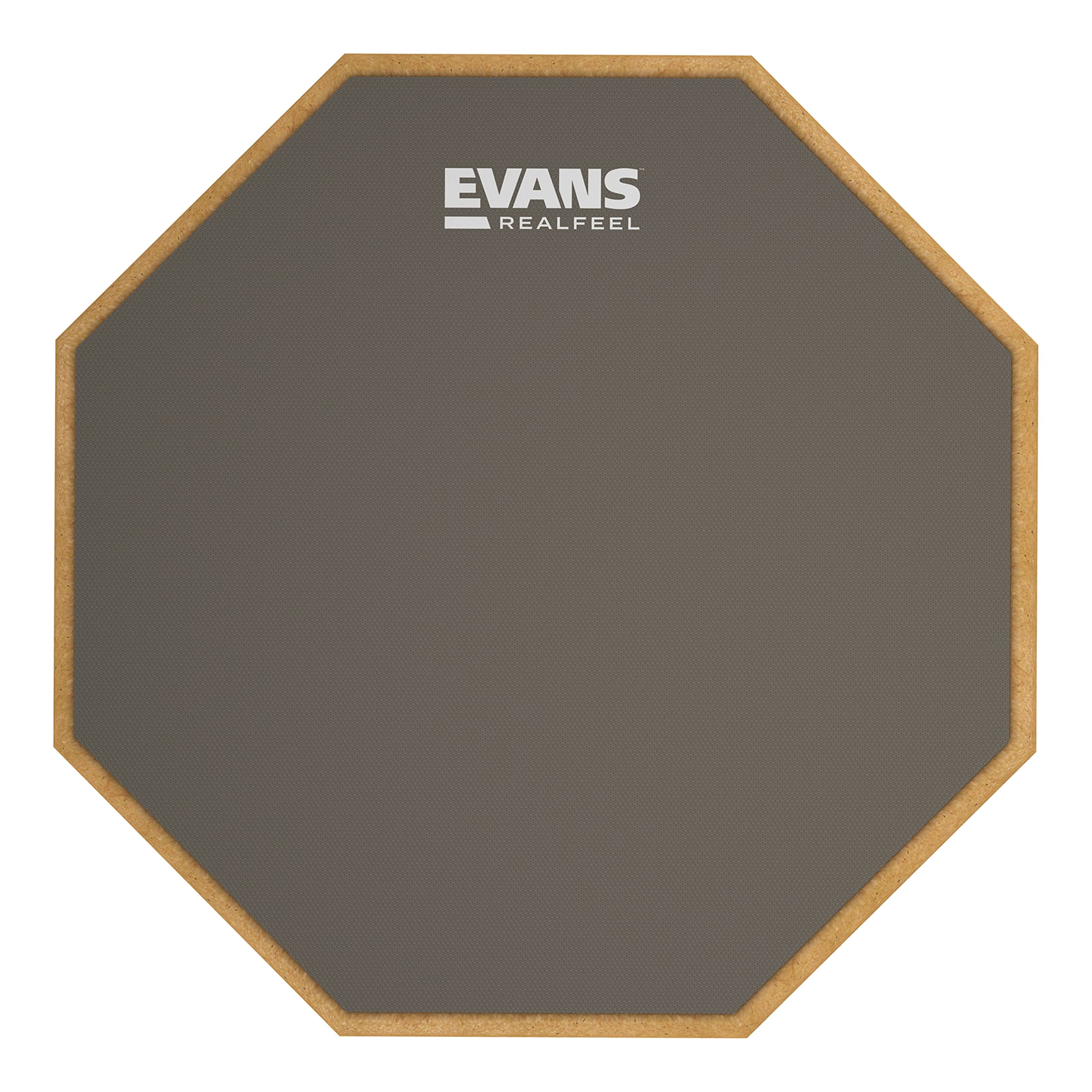
When I want a focused snare feel, this single-sided Evans pad gives consistent, realistic rebound every session.
Why I picked it: Consistent gum rubber surface ideal for precision and muscle memory work.
Best for: Drummers who focus on rudiments and accuracy.
A classic option at a reasonable price for the quality.
Pros
- Very natural stick rebound
- Large target area
- Simple, no‑fuss design
- Durable gum surface
Cons
- Single feel—no harder side option
- Not mountable in some stand setups
My take
I reach for the single‑sided RealFeel whenever I want repeatable rebound and a no‑distractions surface. The gum rubber provides the same feedback every time, which makes it easy to track technique gains.
It’s portable and works on carpet, tables, or inside a snare basket. For players who prioritise a true snare response, this pad delivers without gimmicks.
If you prefer switching between soft and firm surfaces, you’ll miss the two‑sided option, but for pure technique work this one keeps things simple and consistent.
3. SLINT 12″ Double‑Sided Practice Pad Set – Best Starter Kit
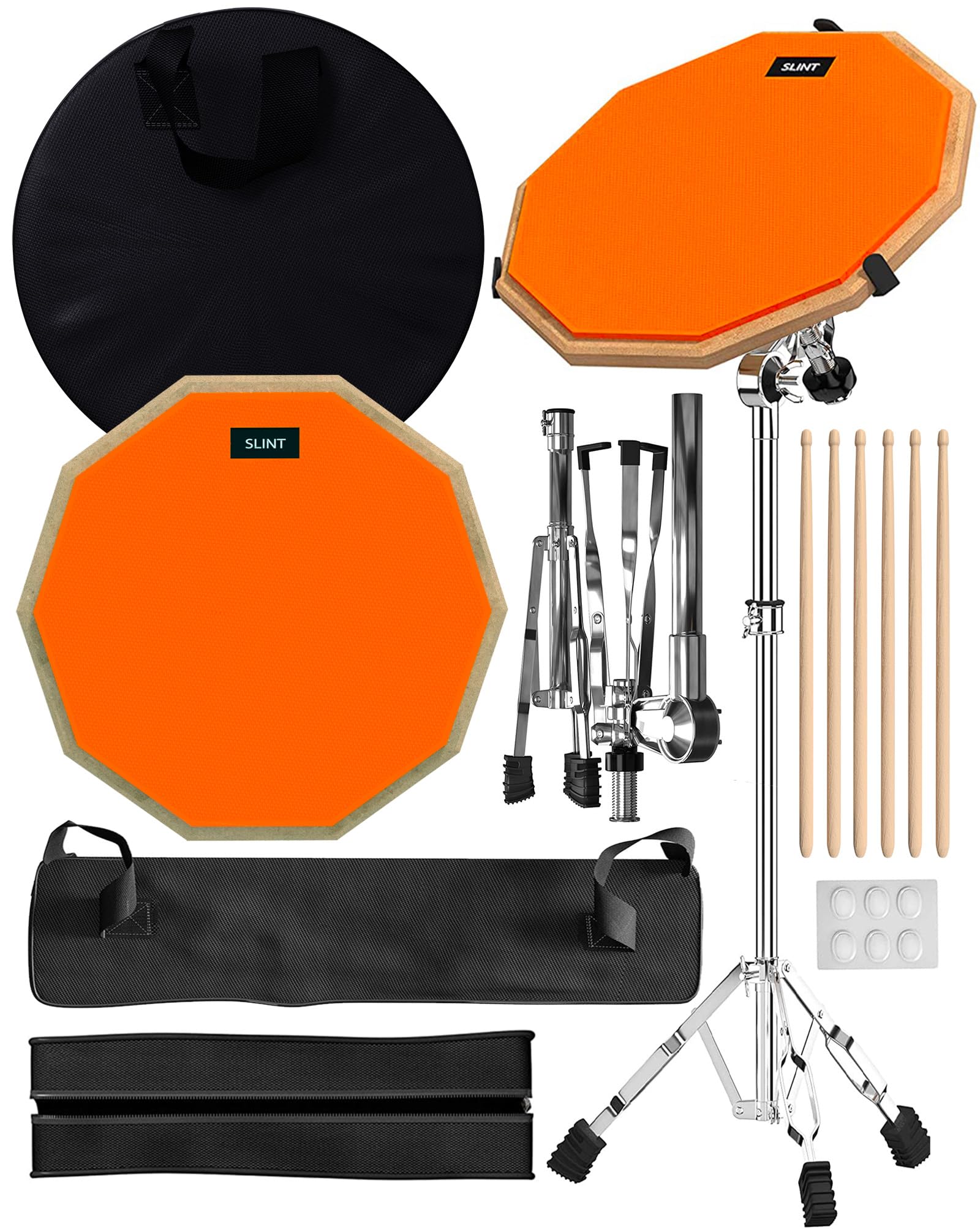
I use this Slint set when I need an all‑in‑one starter kit with a stand, sticks, and extras for practice anywhere.
Why I picked it: Comes with a stand, multiple sticks, fitted bags, and both rubber feels.
Best for: Beginners and kids who need a complete practice setup.
Good value for a full kit with accessories.
Pros
- Includes stand and cases
- Two playable surfaces
- Comes with sticks and gels
- Lifetime warranty promised
Cons
- Stand height best for seated playing
- Some sticks feel lightweight
My take
I appreciated how complete the Slint kit is straight out of the box. The double‑sided 12" pad gives me a realistic rubber side and a quieter side for muted practice, while the included stand adjusts to a comfortable playing angle.
The bag and fitted cases make moving between lessons or rooms much easier. I used the extra sticks and gels during a few sessions and found the setup very convenient for new players.
For the price and contents, this set is a practical choice for families or students who need a portable, ready‑to‑use practice solution.
4. Remo Tunable Practice Pad (8″) – Best Tunable Pad
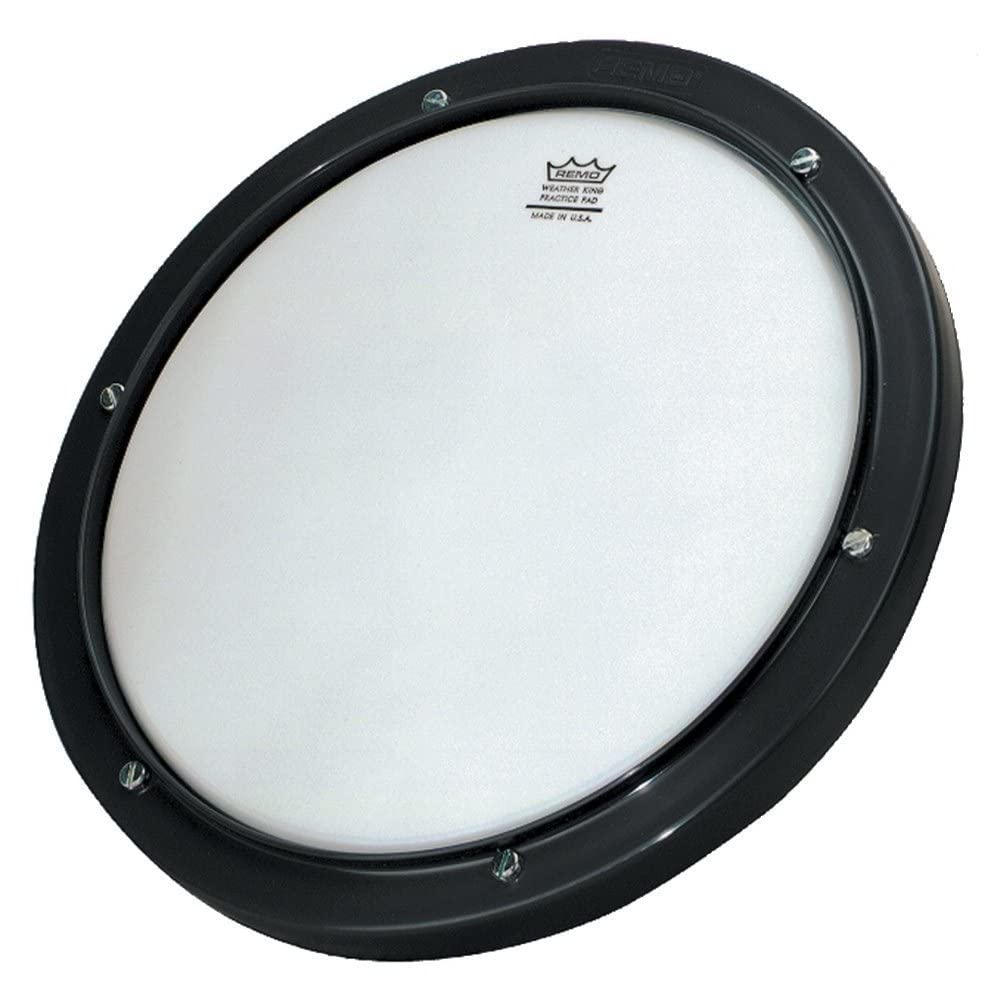
When I want the most drum‑like feel and the option to tweak tension, this Remo tunable pad is my pick.
Why I picked it: Tunable Ambassador coated head delivers authentic feel and adjustable bounce.
Best for: Drummers wanting a real drumhead response and the ability to tune feel.
A specialised, pro‑oriented option with tunable head benefits.
Pros
- Replaceable Ambassador coated head
- Tunable for bounce preference
- Mountable on a stand
- Protective non‑slip base
Cons
- Smaller 8" surface is very target‑focused
- A bit louder than dense rubber pads
My take
I pick the Remo tunable pad when I want a feel closest to an acoustic drum. The Ambassador coated head responds a lot like a real snare and I can change the tension to suit speed work or heavier practice.
Its threaded adapter works for mounting, though I noticed an unusual 1/4–20 threading pattern on some units that didn’t match all of my stands without an adapter. The padding on the bottom prevents slipping on a table, and the portability makes it easy to move to a rehearsal space.
If you want the most drum‑like rebound and like tweaking tension, this pad is a useful addition to a serious practice setup.
5. Donner 12″ Two‑Sided Practice Pad – Best Budget Pad
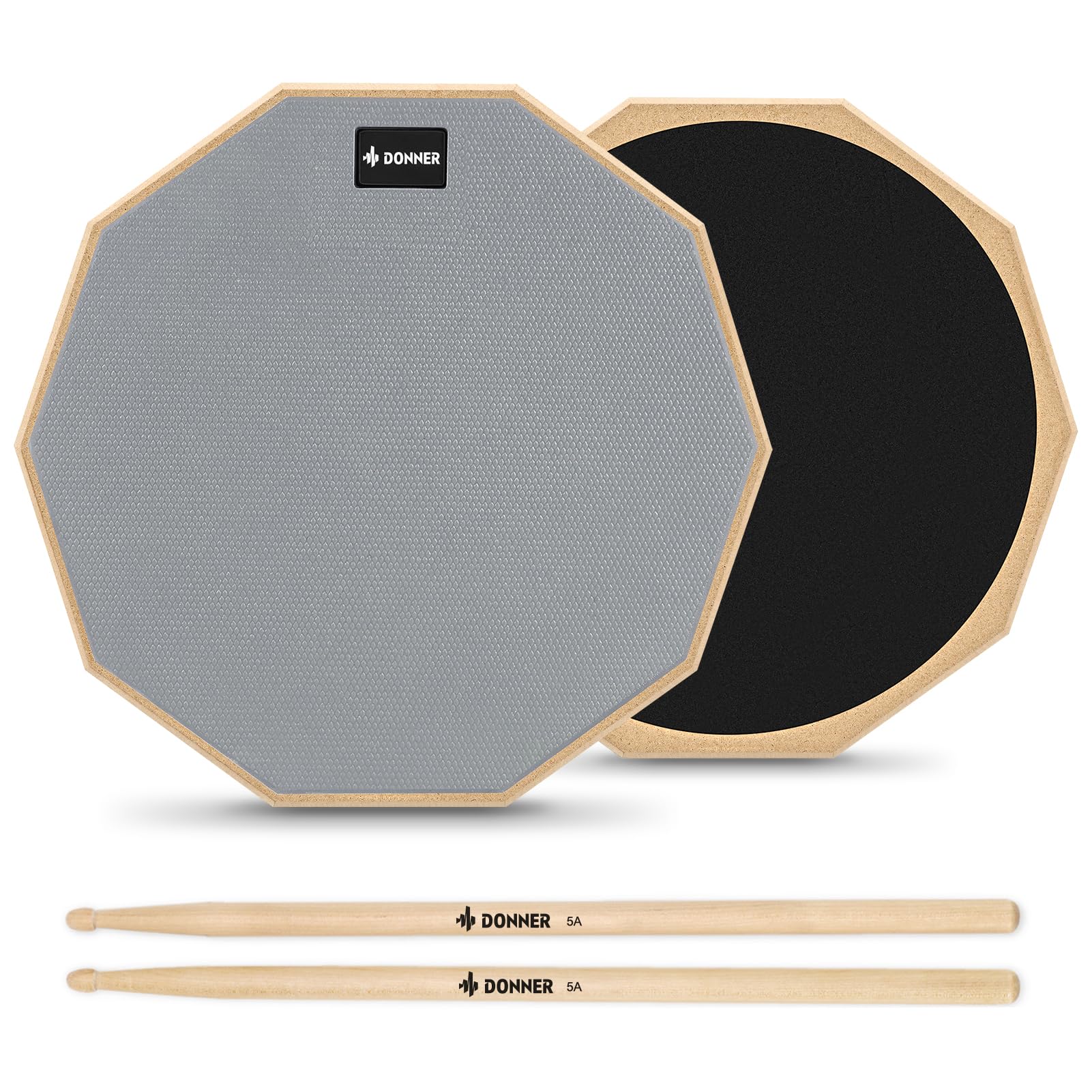
I reach for this Donner pad when I want solid performance on a budget—quiet, grippy, and includes a pair of sticks.
Why I picked it: High‑density rubber with EVA bottom keeps noise down and prevents slipping.
Best for: Beginners or players who want low cost and functional performance.
Very affordable option for everyday practice.
Pros
- Quiet, sound‑dampening design
- EVA non‑slip bottom
- Includes a pair of sticks
- 12-inch playable surface
Cons
- Sticks included are basic
- Not as durable as premium pads
My take
For the price, the Donner 12" pad gives me a useful, quiet surface for steady practice. The high‑density rubber surface feels good for rudiments, and the EVA polymer bottom helps both with sound control and grip.
I used this on a countertop and on my lap; both worked well and it stayed put during faster patterns. The included sticks are fine for practice, though I swap in higher‑grade sticks when I need more control.
This is a practical, low‑cost pad that gets the job done for beginners or as a spare in a gig bag.
6. Evans SoundOff Drum Mute 4‑Pack – Best Drum Mute Set
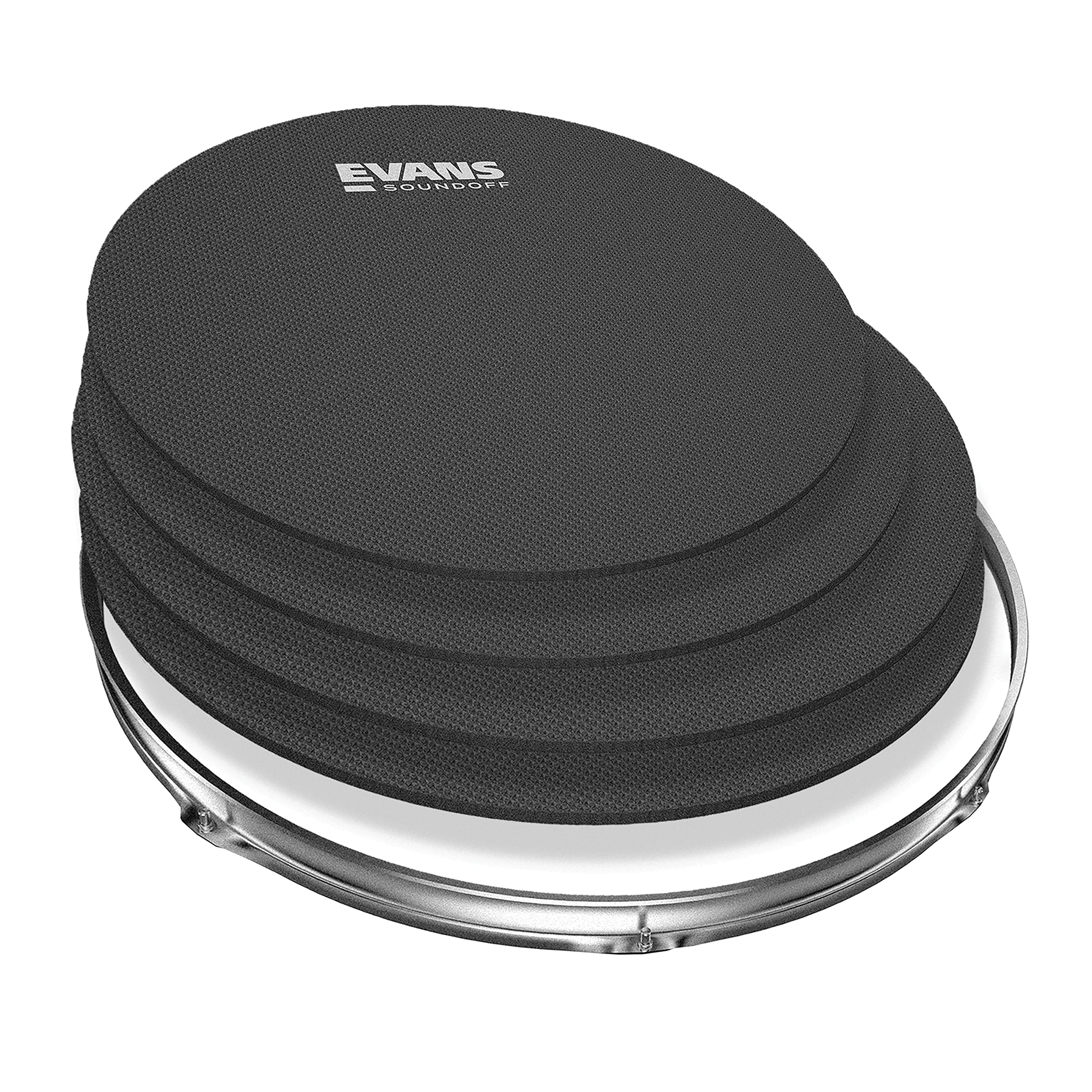
When I need to play my normal kit without disturbing the house, I put these Evans SoundOff pads on the heads and keep practicing.
Why I picked it: Allows practicing on a full kit with substantial volume reduction and decent rebound.
Best for: Drummers who want to practice on their acoustic kit late at night.
Good value for a full set of mutes that fit standard drum sizes.
Pros
- Significant volume reduction
- Maintains playable rebound
- Four sizes for common kits
- Durable rubber construction
Cons
- Alters natural head resonance
- Can slip on certain setups
My take
I put the SoundOff mutes on my toms and snare when I need to practice quietly. They cut volume dramatically—enough to keep the house calm—while still providing usable rebound for rolls and accents.
The set includes sizes to cover a typical 12–13–14–16 configuration which makes them convenient for most kits. They’re well built and compress under the stick for a realistic response.
If you want to preserve your full acoustic tone you won’t get it with mutes, but for late‑night practice these are the most practical solution I use.
7. GrowDaily 12″ Practice Pad with Sticks – Best Pack with Sticks
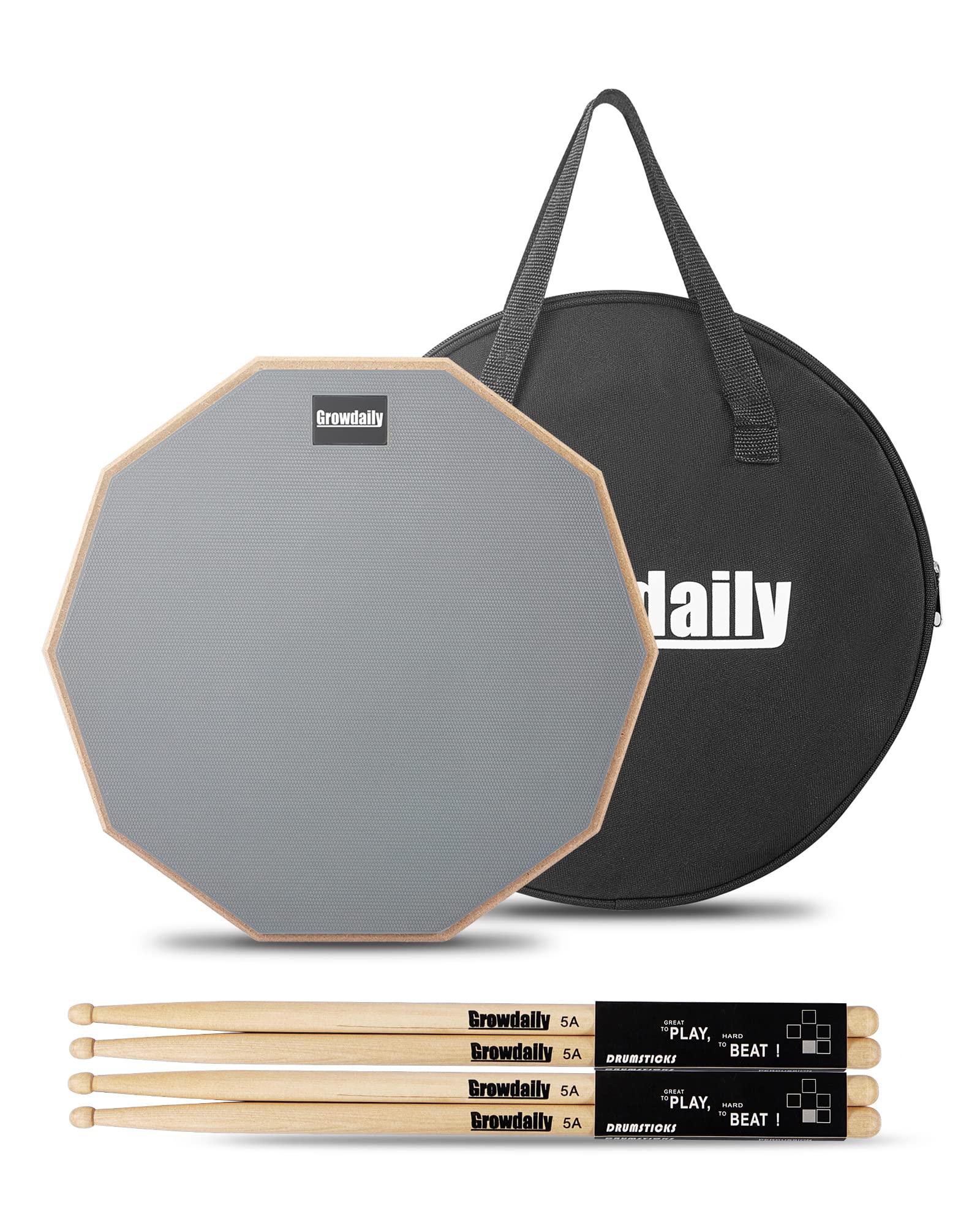
I keep this GrowDaily pad in a backpack for casual practice and travel; its two-sided rubber and included sticks make impromptu sessions easy.
Why I picked it: Comes with extra sticks, a storage pocket, and a quiet, resilient rubber surface.
Best for: Students and travelers who need a portable practice solution.
Budget‑friendly pack with useful extras.
Pros
- Includes two pairs of sticks
- High‑density rubber surface
- Carrying storage pocket
- Good portability
Cons
- Sticks are entry‑level
- Construction feels basic
My take
I use the GrowDaily pad when I need something lightweight to toss in a backpack. The 12" surface gives enough room for rudiments, and the dual sides offer both quiet and slightly bouncier options.
Having two pairs of sticks included is handy for quick sessions or handing one to a student. The storage pocket keeps everything together and makes practice between classes or rehearsals much simpler.
It’s an economical choice that holds up for casual and student use; I’d pair it with better sticks if I was practicing seriously for extended periods.
8. Donner 12″ Double‑Sided Pad with Stand & Backpack – Best Stand Kit
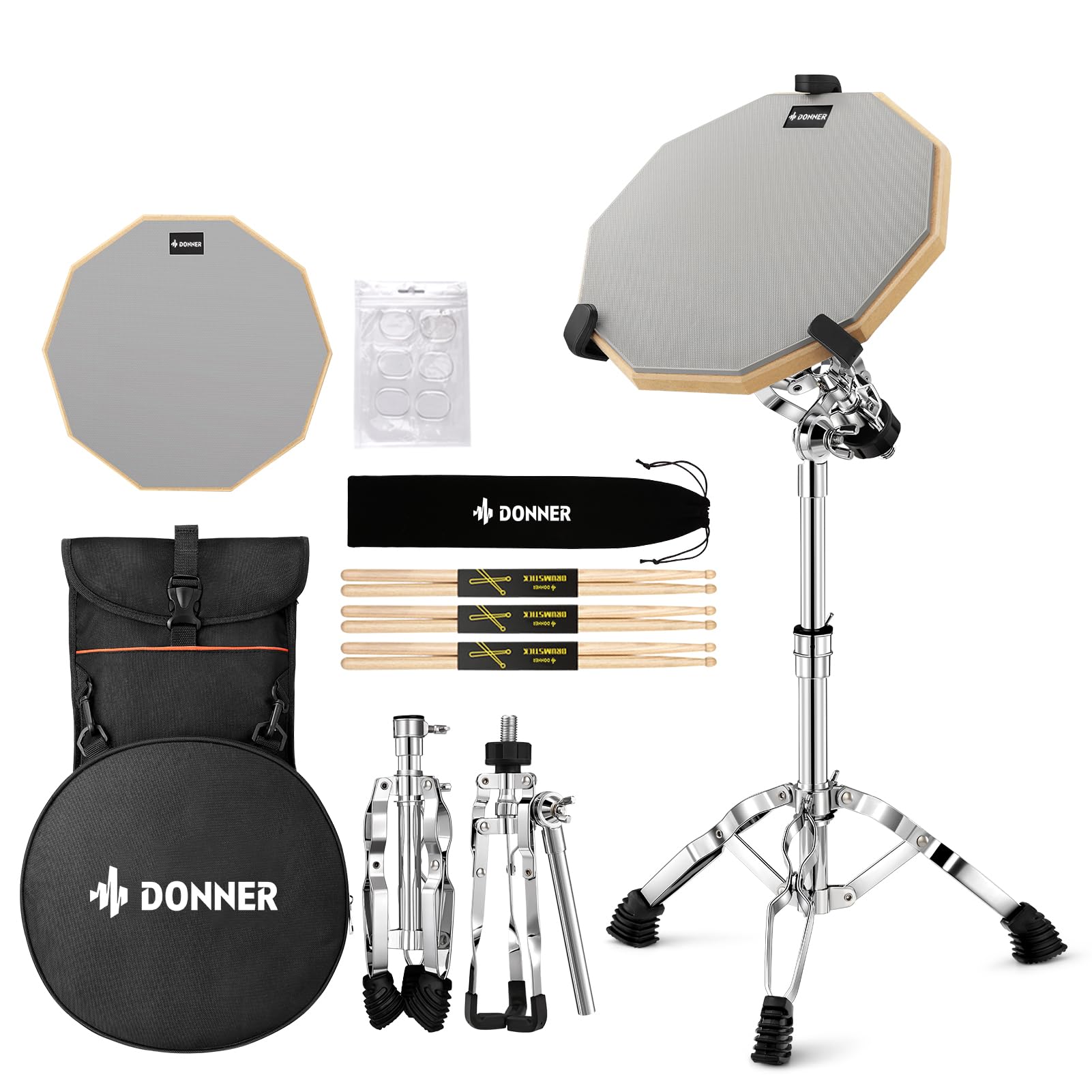
When I want a stand‑mounted practice setup that travels, this Donner kit with an adjustable stand and backpack is what I pack.
Why I picked it: Adjustable snare stand, backpack, extra sticks, and a double‑sided pad make it a complete portable rig.
Best for: Students who need a full, transportable practice station.
Good value for a full stand and carry kit.
Pros
- Adjustable, heavy‑duty stand
- Padded backpack included
- Three pairs of sticks
- Quiet double‑sided pad
Cons
- Stand only fits seated height ranges
- Some assembly required
My take
I take the Donner stand kit to lessons when I need a stable, adjustable practice setup. The double‑braced tripod is sturdy and the basket fits a wide range of pad diameters.
The included backpack is thoughtful—there’s room for the stand, sticks, gels, and the pad, which makes carrying everything far easier than loose components.
For students and players who travel between rooms, rehearsal spaces, or school, this kit gives the most complete, portable practice solution in the roundup.
How I Choose a Practice Pad
What I look for first
Rebound and feel come first. I choose a pad that gives stick feedback similar to the drums I play most so my technique transfers.
Noise control is next—if I’m practicing at home I prioritise dense rubber, mutes, or pads with EVA bottoms to keep volume down.
- Realistic rebound for muscle memory
- Low noise for apartment or late‑night practice
- Durability and a stable base
- Portability if I travel
Pad surfaces and rebound
Gum rubber replicates snare bounce well; firmer recycled rubber gives a tougher workout. A two‑sided pad gives both options in one unit.
Tunable heads (like Remo’s Ambassador) are the best choice when you want to dial in tension and feel close to an acoustic drumhead.
- Gum rubber = realistic snare feel
- Firmer rubber = endurance and control work
- Tunable head = adjustable bounce
Noise control and mutes
If volume is critical, I either use mute pads on my acoustic kit or a dense practice pad with an EVA bottom. Mutes reduce kit volume enough that I can practice at home comfortably.
Pads marketed with sound‑dampening bottoms or polymer mats are especially helpful on hard surfaces.
- Mutes for full kit quiet practice
- EVA polymer bottoms reduce skidding and noise
- Two‑sided pads can offer a quieter surface option
Mounting, size, and accessories
Decide whether you need a stand‑mountable pad. I prefer stand pads for long sessions and lap/table pads for quick work.
Kits that include stands, sticks, or bags are great for students and people who travel, while single premium pads work better for focused technique.
- 8"–10" = target practice, tight focus
- 12" = roomy surfaces for rolls and rudiments
- Stand compatibility matters—check threads/adapters
Frequently Asked Questions
Which pad feels closest to a real snare?
I find gum rubber pads and tunable Ambassador heads feel most like a snare. Evans RealFeel gives that classic gum rebound, while Remo’s tunable pad lets me adjust tension for the most drum‑like response.
What’s the quietest way to practice on a full drum kit?
I put mute pads across the heads—Evans SoundOff mutes reduce volume dramatically while keeping usable rebound. For absolute silence, electronic kits are the only option, but mutes are my practical choice for acoustic kits.
Do included sticks and bags matter?
Yes—kits with bags and spare sticks make life easier. I use included sticks for casual practice and swap to higher‑grade sticks for longer or more technical sessions.
Final Take
If I need one pad that does most things, the Evans RealFeel two‑sided unit is the most versatile on my shelf. For a full kit solution I use Evans SoundOff mutes, and when I need a portable stand and bag the Donner or Slint kits are what I pack.
Choose based on whether you prioritise realistic rebound, noise control, or portability—each pad above has a clear use case I regularly reach for.
Happy practicing—consistent, focused work on the right pad will pay off faster than switching gear constantly.
