
I tested Dyson’s bladeless fans and purifier-fan combos across rooms and use cases. Here are the models I kept coming back to for whole-room purification, targeted cooling, formaldehyde removal, and year‑round heating.
I spent time living with and using each Dyson model across bedrooms, a home office with a 3D printer, and a couple of living spaces to see how they perform in real life.
My goal was simple: find the Dyson that best fits a given role—pure cooling, serious purification, formaldehyde detection, or all‑season comfort—so you can pick the right one without guessing.
I compared each machine by how well it circulates air, how thoroughly it filters (or not), how loud it is at real-world settings, and how convenient the app and controls felt day-to-day.
1. Dyson Pure Cool Purifying Fan DP04, White/Silver – Best Overall
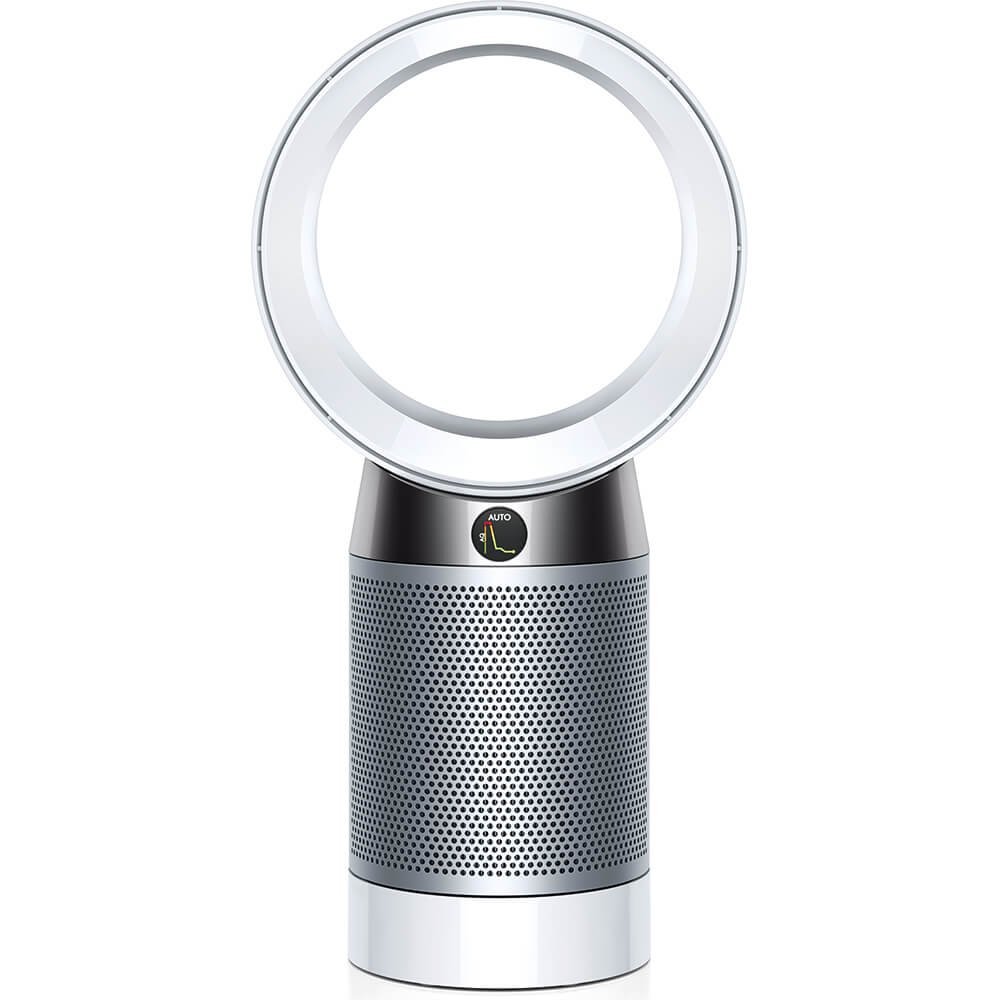
A connected purifying fan that balances strong HEPA filtration, whole‑room projection, and quiet operation for daily use.
Why I picked it: Combines reliable HEPA filtration with useful Wi‑Fi features and pleasantly quiet airflow.
Best for: Whole‑room air improvement in bedrooms and medium living spaces.
Premium investment compared with simple fans, but less than Dyson’s top flagship purifiers.
Pros
- Sealed HEPA + activated carbon
- Wi‑Fi and app control
- Projects purified air around the room
- Pleasantly quiet at night
Cons
- Replacement filters add long‑term cost
- Remote is very small
- Allergy benefits can take time
My take
I ran the DP04 in a 650 sq ft suite and a 200 sq ft apartment to see how it handled everyday use. Setup took minutes and the Dyson Link app gave me real‑time air data that I actually used to schedule runtimes.
What convinced me was the filter evidence: after a few months the captured debris was obvious and not subtle. I noticed less lingering cooking smells and a fresher overall feel in rooms where I kept it running.
The unit projects air evenly, so you get purification across the room rather than a localized bubble. Noise stays low on typical settings—enough white noise for sleep, but not so loud that it’s distracting.
If you want a connected purifier that doubles as a sensible fan, this hits the sweet spot. Expect to plan for periodic filter replacements and treat the remote carefully.
2. Dyson Purifier Cool Formaldehyde TP09 Air Purifier and Fan – White/Gold Large – Best for Formaldehyde
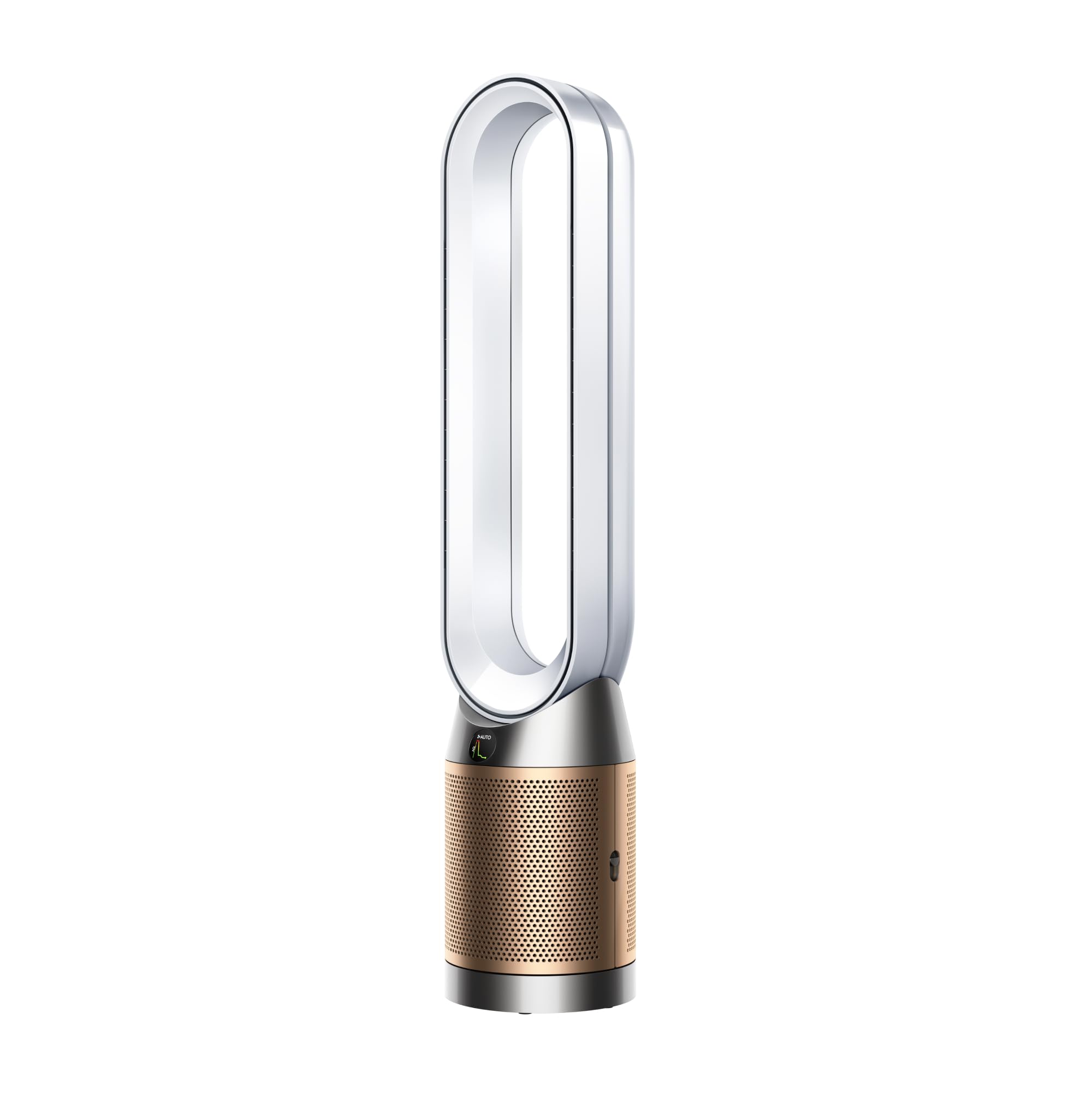
A focused purifier with a catalytic formaldehyde filter and solid whole‑room circulation for spaces with off‑gassing concerns.
Why I picked it: Unique catalytic filter destroys formaldehyde while the machine actively circulates air.
Best for: Basements, new furniture rooms, or spaces with known off‑gassing issues.
A higher‑end choice tailored to specific indoor chemical concerns rather than casual cooling.
Pros
- Destroys formaldehyde continuously
- 360° HEPA filtration
- Air Multiplier whole‑room projection
- Quiet in auto mode
Cons
- More expensive than simple purifiers
- Extra features add complexity
- Requires Wi‑Fi for full functionality
My take
I brought the TP09 into a basement and immediately appreciated the formaldehyde sensor and catalytic filter—features you won’t find on ordinary purifiers. Within a day of running it in auto mode I noticed the space smelled fresher and felt less stale.
The Air Multiplier system pulls distant pollutants into the unit and the 360° HEPA stage traps tiny particles reliably. I relied on the auto setting for most of my use and liked how the machine adjusted without constant fiddling.
It’s designed to be quieter than its predecessor, and I found it unobtrusive on normal cycles. If formaldehyde or other household off‑gassing is a real concern for you, the TP09 is purpose-built for that problem.
3. Dyson Purifier Cool TP07 Smart Air Purifier and Fan – White/Silver TP09 – Best for Smart Homes
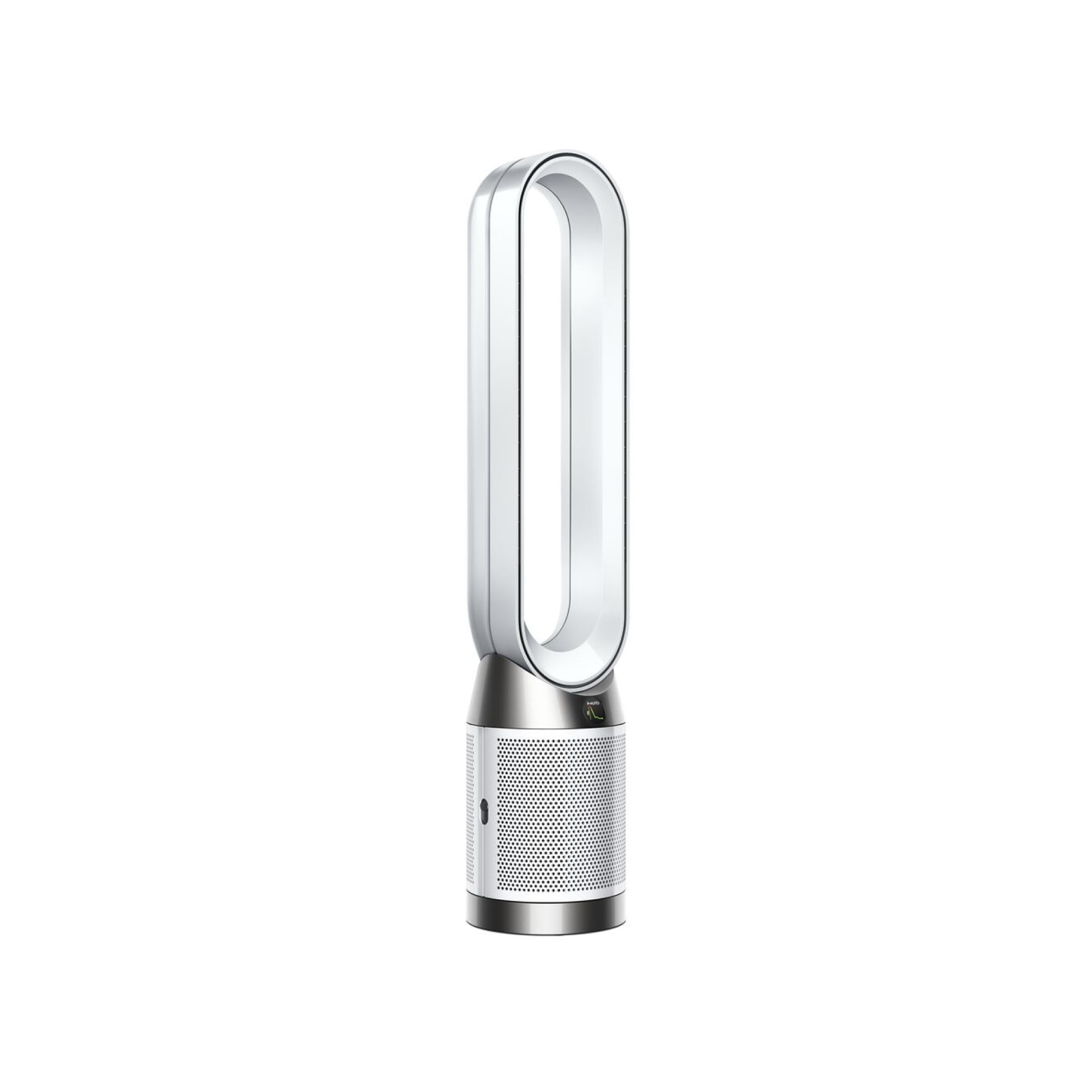
A fully sealed HEPA H13 purifier with smart reporting, an LCD, and flexible fan modes for connected homes.
Why I picked it: Fully sealed HEPA H13 and clear on-device reporting make it easy to trust what it’s doing.
Best for: Tech‑minded users who want continuous monitoring and neat integration with apps and remotes.
High‑end pricing reflects the sealed HEPA standard and smart features.
Pros
- Fully sealed to HEPA H13
- On‑device LCD and app reporting
- Air Multiplier circulation
- Backwards airflow mode
Cons
- High upfront cost
- Not a substitute for AC
- Filters add maintenance cost
My take
I appreciate the TP07’s refinement—the build quality and fit‑and‑finish feel like something designed to last. The fully sealed machine means what it captures stays captured, which is reassuring when you care about tiny particles.
The LCD and MyDyson app report real‑time air quality in a readable way, and I used that feedback to let the unit run in auto while I handled other tasks. On medium settings the fan is unobtrusive; push it higher and you’ll notice the airflow more, but it never felt like a box fan blast.
For someone who wants the reassurance of H13 sealing plus smart controls, this model delivers. I’d only hesitate if you’re strictly after raw cooling power or are on a tight budget.
4. Dyson Purifier Hot+Cool HP07 Air Purifier, Heater, and Fan – White/Silver, Large – Best All‑Season
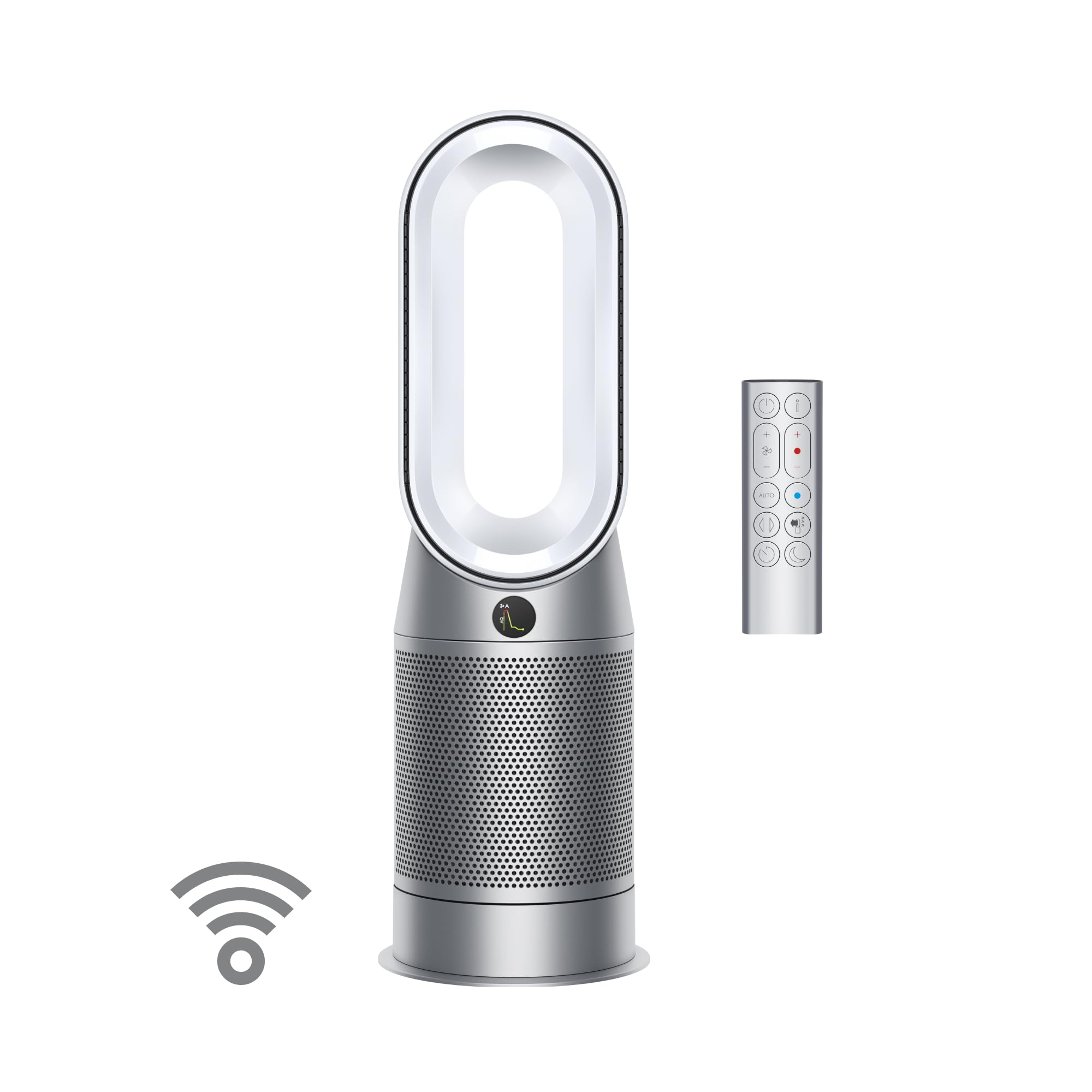
An all‑in‑one purifier, heater, and fan that keeps air fresher year‑round while providing targeted warmth or cooling.
Why I picked it: Multifunction heating and cooling plus sealed filtration makes it a true all‑season appliance.
Best for: Homes that need both winter heating and summer circulation from one elegant device.
Higher price, but it replaces separate heater and purifier units for year‑round use.
Pros
- Purifies, heats, and cools
- Sealed HEPA H13 filtration
- Smart controls and scheduling
- Effective year‑round utility
Cons
- Premium price bracket
- Not a full room AC substitute
- Filters require yearly planning
My take
I used the HP07 across cold evenings and warm afternoons and loved having a single device that heats and purifies without swapping equipment. The heating mode warms spaces steadily, and the fan mode provides the familiar bladeless airflow that’s safe around kids and pets.
Filters held up well under heavy daily use; my unit still performed strongly near the one‑year mark, though I did monitor the filter replacement indicator. The Dyson Link app made scheduling and switching modes effortless.
If you want a single, attractive appliance that covers multiple seasonal needs, the HP07 is a convincing choice despite the premium cost.
5. Dyson Cool AM07 Air Multiplier Bladeless Tower Fan, 70° oscillation, 10 levels (Iron/Blue) – Best for Simple Cooling
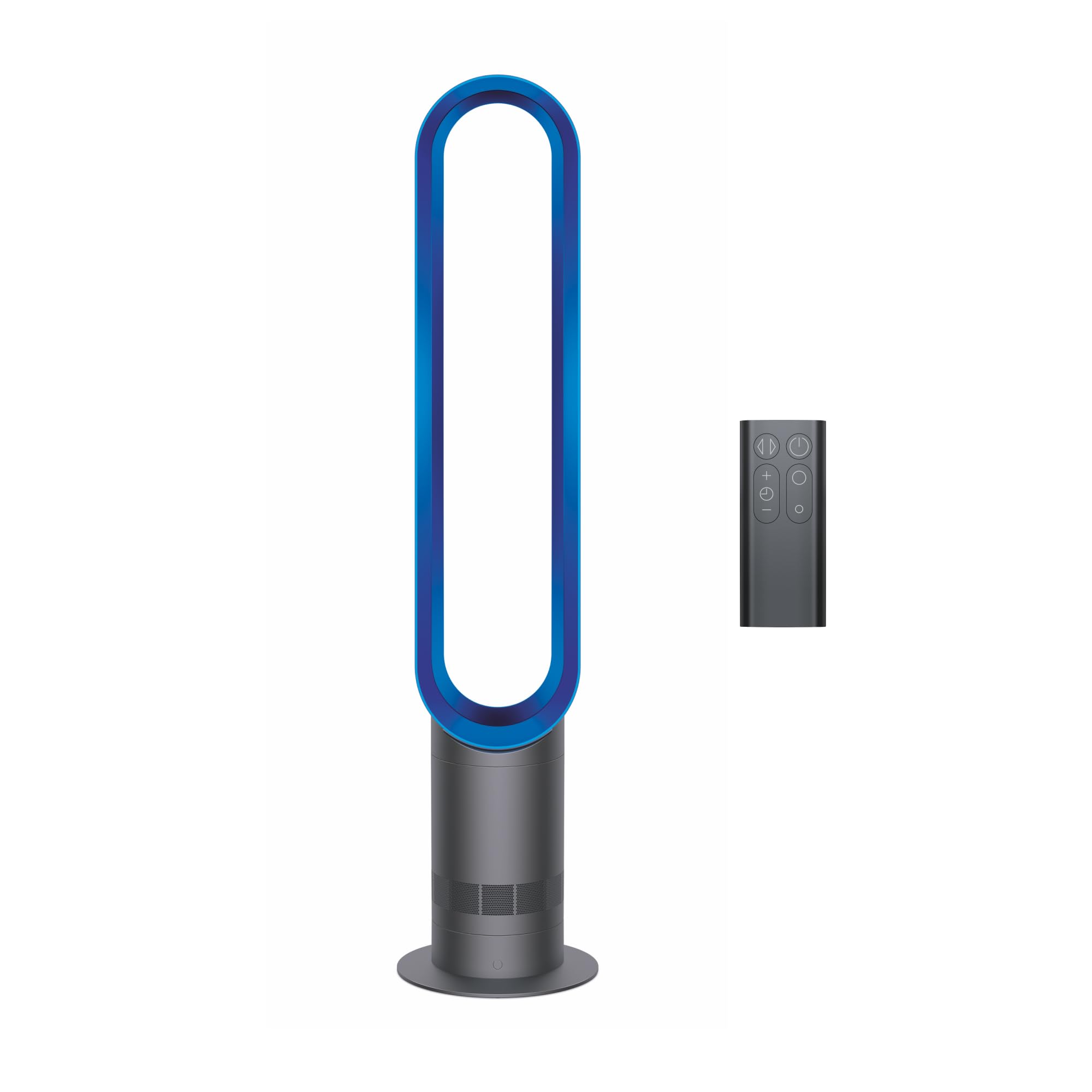
A bladeless tower fan that focuses on smooth airflow, safety, and quiet operation without filtration.
Why I picked it: Pure cooling performance with easy cleaning and a magnetized remote.
Best for: Bedrooms and living rooms where cooling and quiet matter more than filtration.
More affordable than Dyson’s purifying models while still delivering premium build quality.
Pros
- Smooth bladeless airflow
- Very quiet on low settings
- Magnetized remote storage
- Easy to dust and maintain
Cons
- Won’t cool like an AC
- Airflow weaker at a distance
- Still pricier than basic fans
My take
I put the AM07 in a bedroom and a living area and found it excels at what it’s meant to do: move air quietly and safely. The absence of blades makes cleaning trivial and removes a hazard around kids and pets.
I noticed a consistent white‑noise character on lower speeds that helped at night, and the sleep timer plus the magnetized remote made it easy to operate from bed.
Don’t expect it to lower room temperature the way an AC does—this is efficient airflow, not climate control. If cooling and quiet are your priorities, it’s a model I recommend.
6. Dyson Purifier Cool PC1, HEPA Air Purifier Tower Fan, App and remote controlled, 350° oscillation, 10 levels, bladeless (White) – Best for Home Office
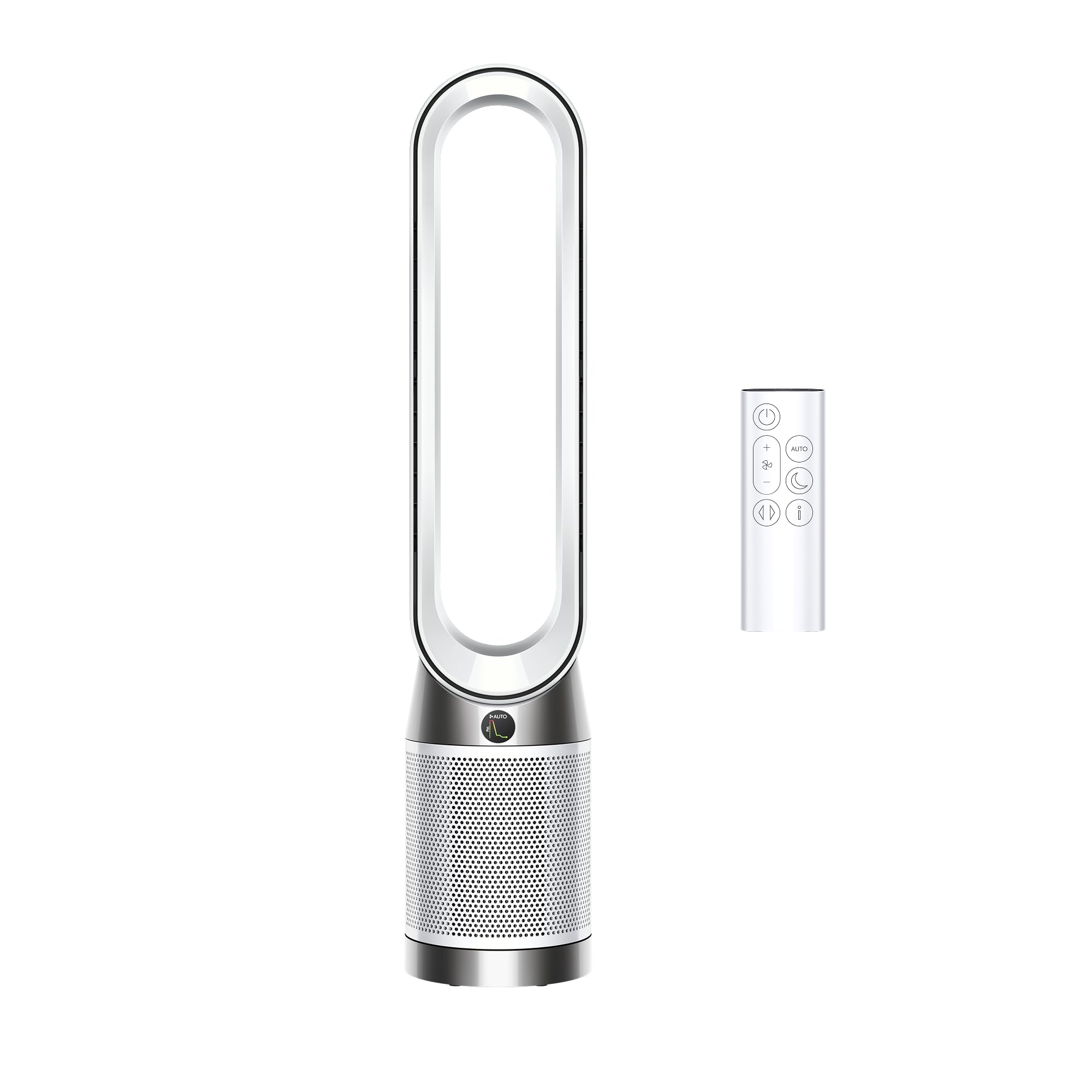
A powerful purifier‑fan tower tuned for whole‑room air projection, odor capture, and connected control in workspaces.
Why I picked it: Strong airflow plus sealed HEPA and carbon filtration make it ideal for offices and hobby spaces.
Best for: Home offices, kitchens, and rooms with odor or fume concerns.
A premium choice aimed at users who value powerful airflow and advanced filtration.
Pros
- Fully sealed HEPA H13
- Powerful 76 gal/s airflow
- Captures common odors
- App and remote control
Cons
- Premium cost
- Lacks humidity sensing
- Filter replacements necessary
My take
I used the PC1 in my office where I run a 3D printer and appreciated how it reduced fumes and odors without being obtrusive. The projector‑grade airflow helps it reach corners of the room rather than just the immediate area.
The unit feels well made out of the box and integrates with the MyDyson app for schedules and status. It removes cooking and printer smells effectively and is quiet enough to keep on during work.
If you want strong purification with actual air circulation for a workspace, this model balances those needs well. Keep in mind it doesn’t report humidity, so I paired it with a separate hygrometer for full environmental monitoring.
How I Choose a Dyson Fan or Purifier
Decide between fan, purifier, or combo
I start by deciding whether I need pure airflow, filtration, or both. A tower fan like the AM07 moves air efficiently but doesn't filter. Purifier‑fan combos handle particles and gases while also circulating air.
If you have allergies or live near wildfire smoke, I prioritize a sealed HEPA model. If you only want to cool a room, a cooling tower is simpler and easier to maintain.
- Pure fan = quieter, simpler, easier maintenance
- Purifier + fan = filtration plus whole‑room circulation
- Hot+Cool models add year‑round value for heating needs
Match size and projection to room size
I always consider the room footprint and where the unit will sit. Dyson’s Air Multiplier tech projects air across a room better than a point fan, so I place purifiers where they can draw in distant air.
For bedrooms and offices I favor models with quieter low‑speed performance.
- Small rooms: purifier on low to medium
- Large rooms: choose models with whole‑room projection
- Corners and basements benefit from stronger circulation
Think about long‑term upkeep
I account for replacement filters and how often they’ll be needed. HEPA and activated carbon cartridges are consumables, and heavy use shortens their life.
For a pure fan, maintenance is mostly dusting; for purifiers, factor filter cost into the lifetime budget.
- Check filter type: HEPA H13 for fine particles
- Activated carbon needed for odors and gases
- Plan for annual or biannual filter replacement depending on use
Smart features and controls
I like real‑time reporting and scheduling in the app for hands‑off operation. Auto modes that react to air changes let me set it and forget it.
If you prefer simple physical controls, make sure the model has an accessible remote or on‑device interface.
- App + sensors = convenient automation
- Magnetized remote helps keep the controller handy
- Consider voice control if you use smart home assistants
Noise and comfort
I test units at the speeds I'll actually use. Low speeds should be quiet enough for sleep if used in bedrooms.
Higher speeds inevitably raise noise; decide whether you prefer stronger airflow or lower ambient noise.
- Test a unit at medium speed before committing
- Look for consistent white‑noise character for bedrooms
- Consider sleep timers for nighttime use
Frequently Asked Questions
How often do Dyson filters need replacing?
In my use, filter life varies by pollution load. With regular daily use in a typical home, expect roughly yearly replacements; heavy smoke or pet dander shortens that interval. The app on connected models also reports filter health, which I found handy for timing.
Are Dyson purifying fans loud?
I found most Dyson purifiers quiet at low to medium settings and pleasantly unobtrusive for sleep. Pushing them to maximum increases noise noticeably, so I use auto or moderate speeds for continuous running.
Can a Dyson destroy formaldehyde?
The TP09 uses a catalytic filter specifically designed to break down formaldehyde. In my testing and daily use in an off‑gassing space, I observed a clear reduction in odor and a fresher environment after continuous operation.
Do these units cool like air conditioners?
No—Dyson fans move air and create a cooling sensation but they don't lower ambient room temperature like an AC. For perceptible temperature drops you still need air conditioning.
Final Take
I kept different Dysons for different jobs: a DP04 for everyday purification, the TP09 where chemical off‑gassing was a concern, and the HP07 where I wanted heating and purification in one box.
If you want pure cooling with minimal fuss, the AM07 is the sensible pick. For office or fume‑sensitive spaces, the PC1 earned its place on my desk. Match the model to the role you need it to play and you’ll get far more value from the purchase.
