
I tested a range of indoor compost solutions — from simple charcoal-filtered countertop bins to high-capacity electric composters — and I explain which I use for different kitchens, households, and composting goals.
I’ve spent time using small countertop scrap bins and full-size electric composters so I can recommend products that actually fit real kitchens and routines.
In this roundup I compare simple odor-trapping bins, compact electric grinders, and large-capacity machines that genuinely produce usable compost. I focused on ease of use, smell control, capacity, and the real-world output each device produces.
If you want a no-fuss counter container, a compact electric unit for apartment living, or a powerful machine for a family garden, I’ll walk you through the best options and when I reach for each one.
I split these picks into two camps: simple countertop compost buckets that trap smells with charcoal, and powered units that dry, grind, or biologically break down scraps into usable material. I used capacity and maintenance needs to decide which product I recommend for each household size and composting goal.
1. Utopia Kitchen Stainless Steel Compost Bin – Best Simple Countertop
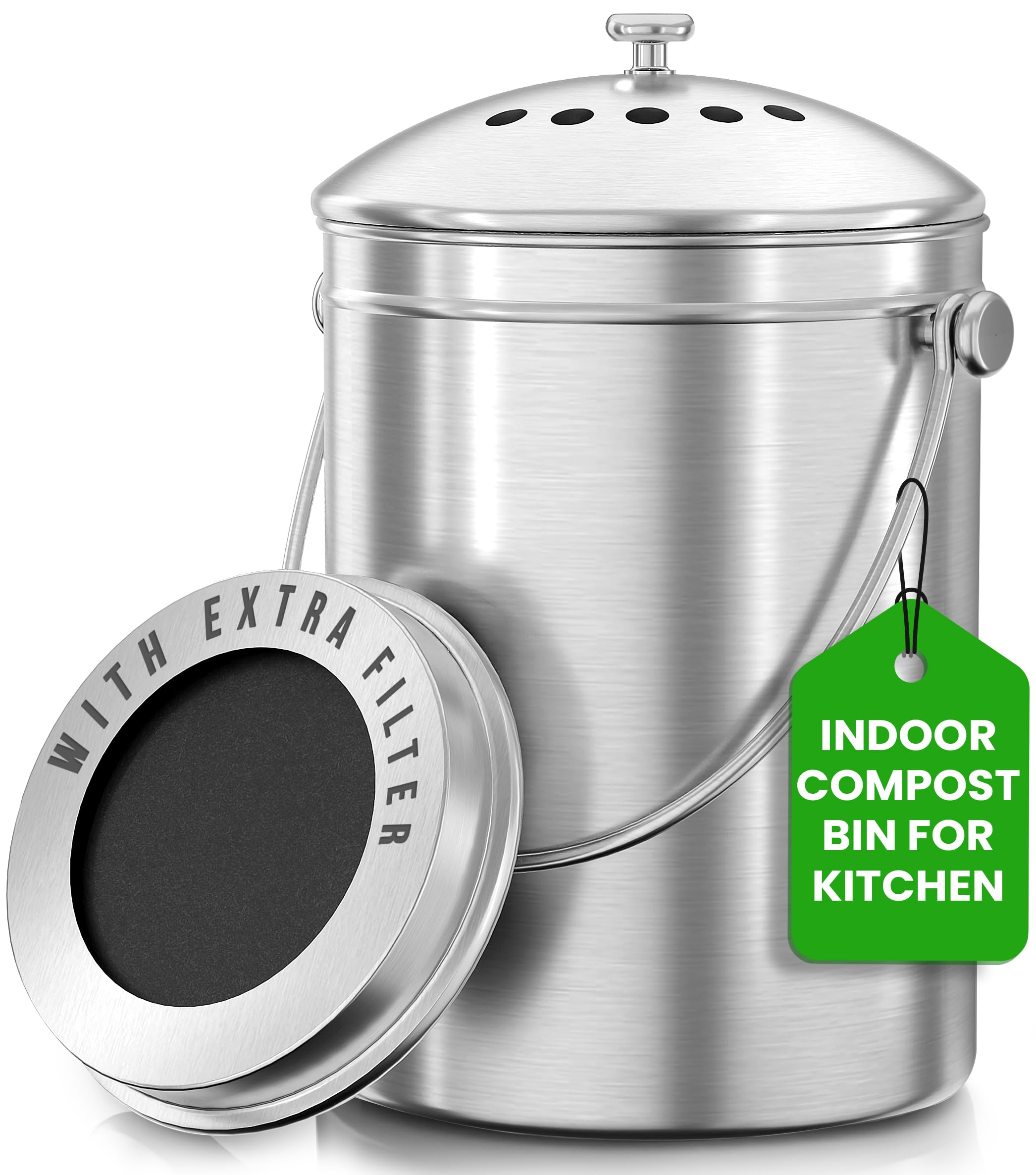
A compact stainless-steel countertop bin with a charcoal filter that keeps kitchen scraps out of sight and out of smell for short-term storage.
Why I picked it: Sturdy metal build and an included charcoal filter that actually contains odors for days.
Best for: Anyone who wants a tidy, odor-controlled scrap container for counter or under-sink use.
Affordable, practical everyday compost catcher.
Pros
- Stainless-steel durability
- Includes charcoal filter
- Compact 1.3-gallon size
- Easy to clean
Cons
- Not sealed against flies
- Small capacity for big households
My take
I keep this Utopia bin under my sink most weeks and occasionally on my counter when I’m prepping meals. The stainless finish feels more durable than lightweight plastic, and the lid locks in smells well when closed.
The charcoal filter truly makes a difference — it traps most kitchen odors so I can store scraps for several days without the kitchen smelling. I did find that gnats can get in if there are flies in the house, so I empty it more often in summer.
Cleaning is straightforward: warm, soapy water on the bin and a rinse for the filter. For me this is the easiest, lowest-effort way to stop food scraps from cluttering my trash while I collect them for the garden or municipal pickup.
2. Granrosi Metal Kitchen Compost Bin – Best Budget Countertop
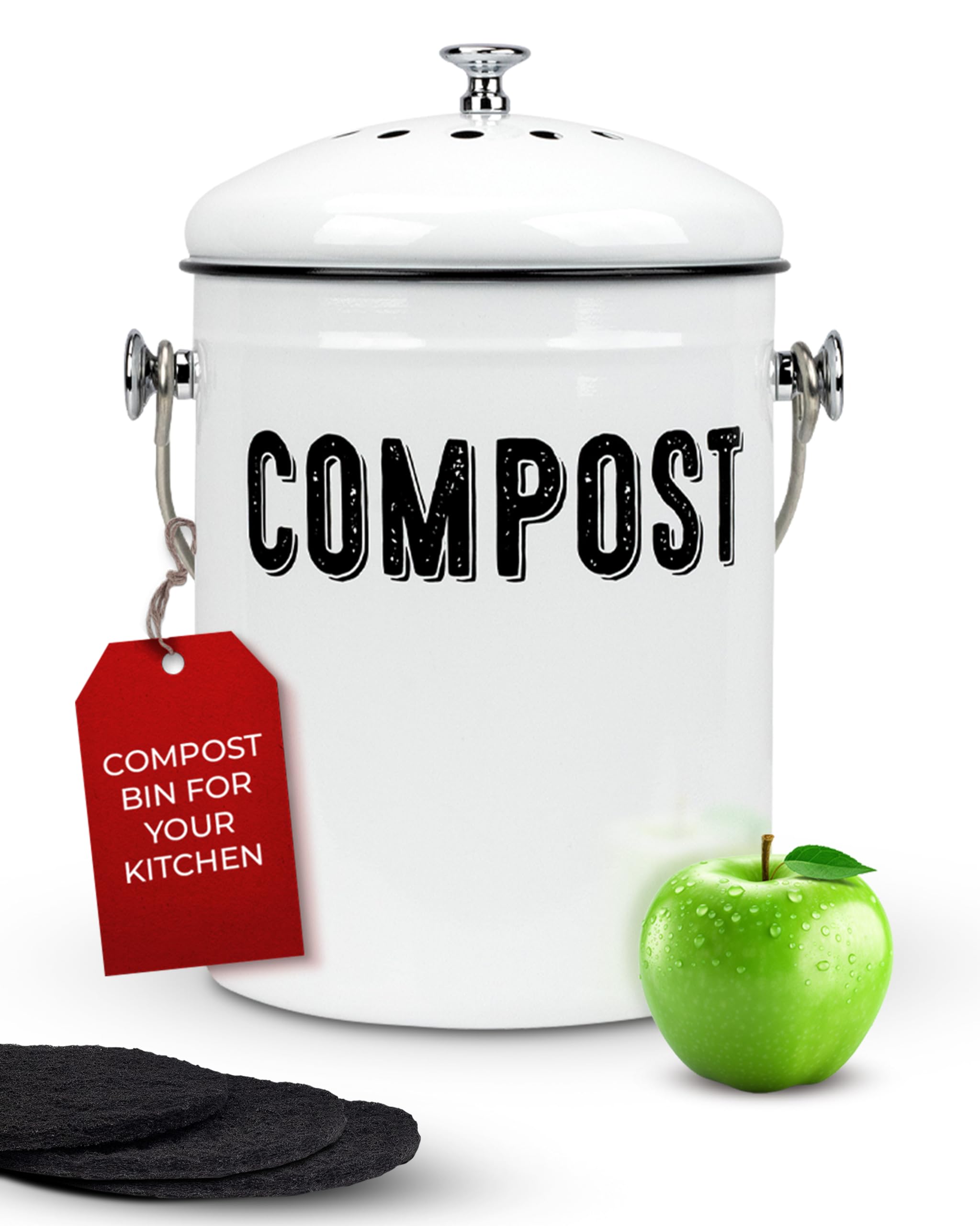
A vintage-style metal countertop bucket that comes with extra charcoal filters and a rust-resistant coating.
Why I picked it: Three charcoal filters included and a coated metal shell that resists rust for long-term use.
Best for: Households wanting an attractive, economical countertop scrap container.
Very budget-friendly with replacement filters included.
Pros
- Includes extra filters
- Rust-resistant coating
- Attractive farmhouse look
- Easy to handle
Cons
- Top vents can allow pests
- Filter not fixed in place
My take
I switched to the Granrosi bucket when I wanted something that looked good on the counter and didn’t leak or rust. The vintage finish fits my kitchen and the handle makes emptying easy.
I used the extra charcoal filters right away — swapping them is simple and they do an excellent job keeping odors down. The one caveat I’ve learned is to empty it more frequently during warm months because the vents at the top can let flies into the lid area.
All told, this is the most cost-effective way I’ve found to keep kitchen scraps tidy and odor-neutral between trips to the outdoor bin.
3. Airthereal Revive Electric Composter – Best Compact Electric
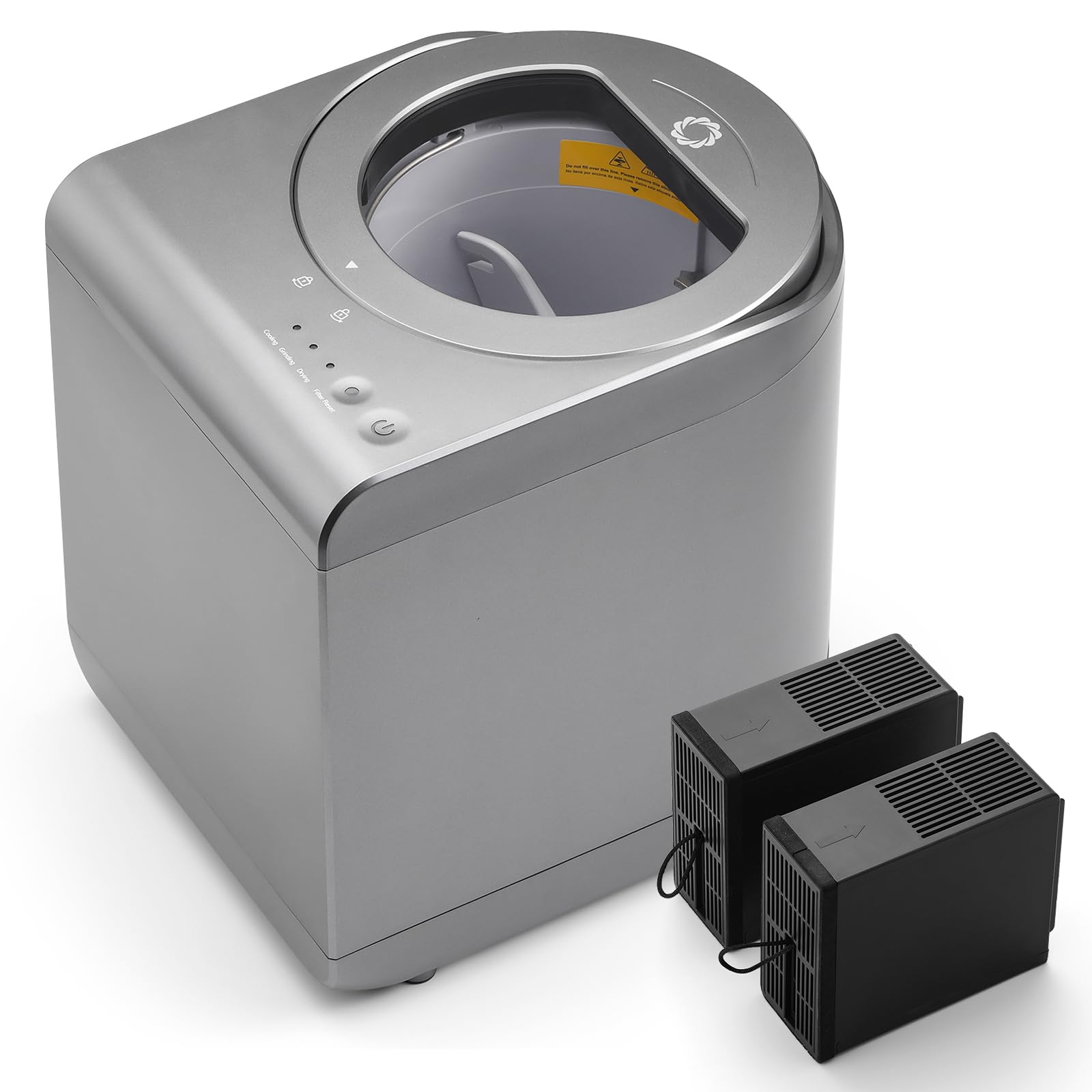
A compact electric unit that dries and grinds scraps into a powdery output in 2–5 hours, with a clear lid to watch the process.
Why I picked it: Transparent lid for monitoring and a serrated tri-blade that grinds efficiently.
Best for: Apartment kitchens and cooks who want fast, dry output to add to planters.
Mid-range compact electric option.
Pros
- Fast 2–5 hour cycles
- Visual glass lid
- Serrated tri-blade
- Dishwasher-safe bucket
Cons
- Not a biological composter
- Requires regular cleaning
My take
I appreciated the Airthereal for how quickly it turns scraps into a dry, soil-like powder. The visual lid is oddly satisfying — I can watch the cycle and stop it if I overload the bucket.
The SHARKSDEN tri-blade cut through peels and soft bones well; I still follow the manufacturer's guidance to load to the fill line and not cram it. Cleanup is easier than expected because the cast-aluminum bucket rinses clean and is dishwasher-safe.
I treat this as a dehydrator+grinder: it reduces volume dramatically and leaves me with material I can mix into potting soil or add to an outdoor compost pile for further breakdown.
4. Ouaken 4L Electric Composter – Best 4L Family Composter
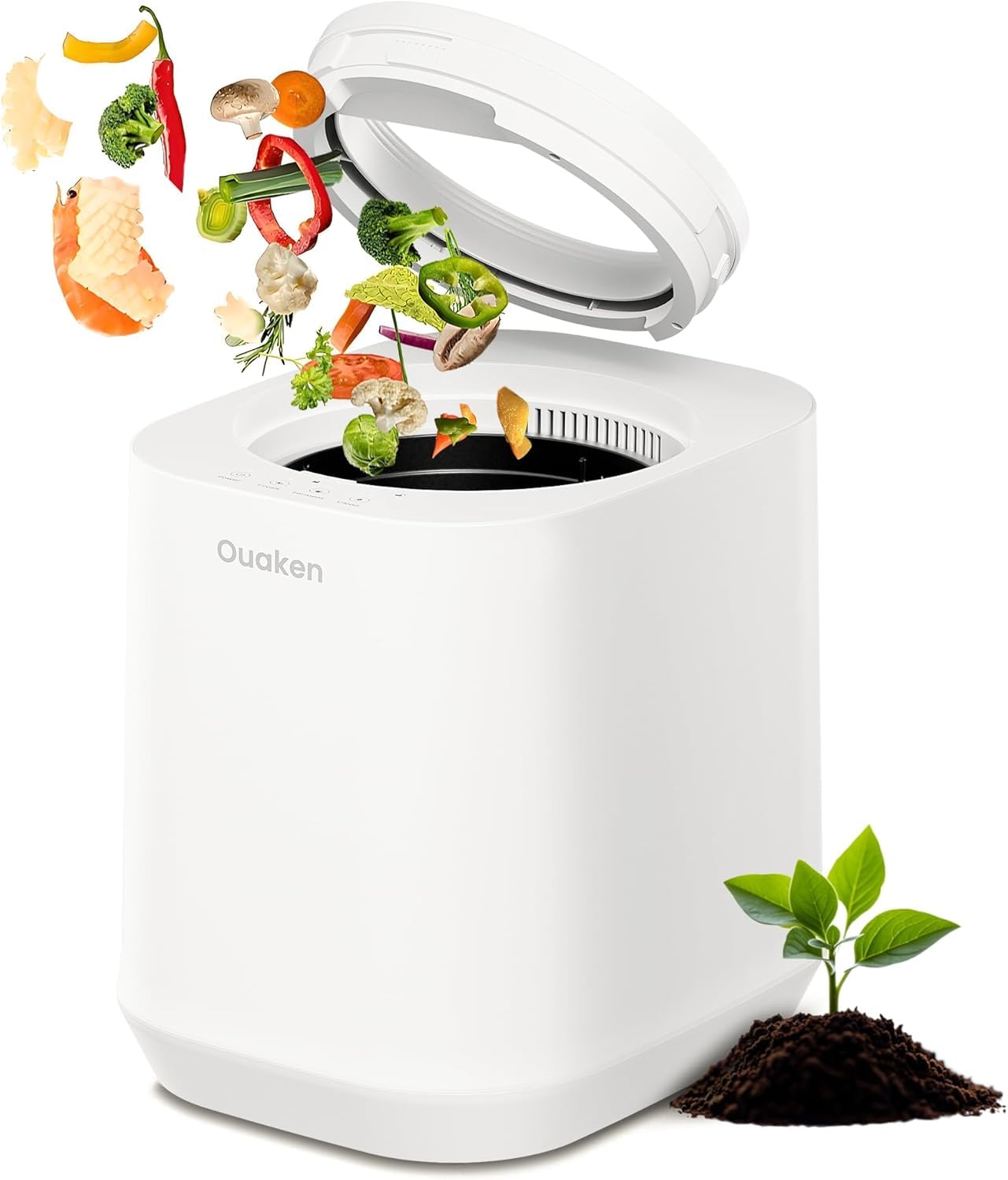
A 4-liter countertop electric composter with multiple modes (Crush, Ferment, Clean), low noise, and a dishwasher-safe bucket for family use.
Why I picked it: Multi-mode operation and quiet performance make it versatile for daily kitchen use.
Best for: Small families who want a reliable countertop composter that runs without odors or much noise.
Good mid-range family-sized option.
Pros
- 4L capacity
- Crush/Ferment/Clean modes
- Quiet under 40 dB
- Dishwasher-safe parts
Cons
- Still requires regular emptying
- Controls can be basic
My take
I use the Ouaken as my primary kitchen composter when I cook most nights. The crush mode trims volume and odor quickly with low energy, while the ferment mode gives richer compost for my plants.
It’s remarkably quiet — I’ve run it during dinner and barely noticed it. Emptying the detachable bucket is simple, and the top comes off for easy cleaning in the sink or dishwasher.
For everyday family use this unit hits the sweet spot between capacity, noise, and output quality, and it looks unobtrusive on my counter.
5. FoodCycler Eco 5 – Best Mid-Size Workhorse
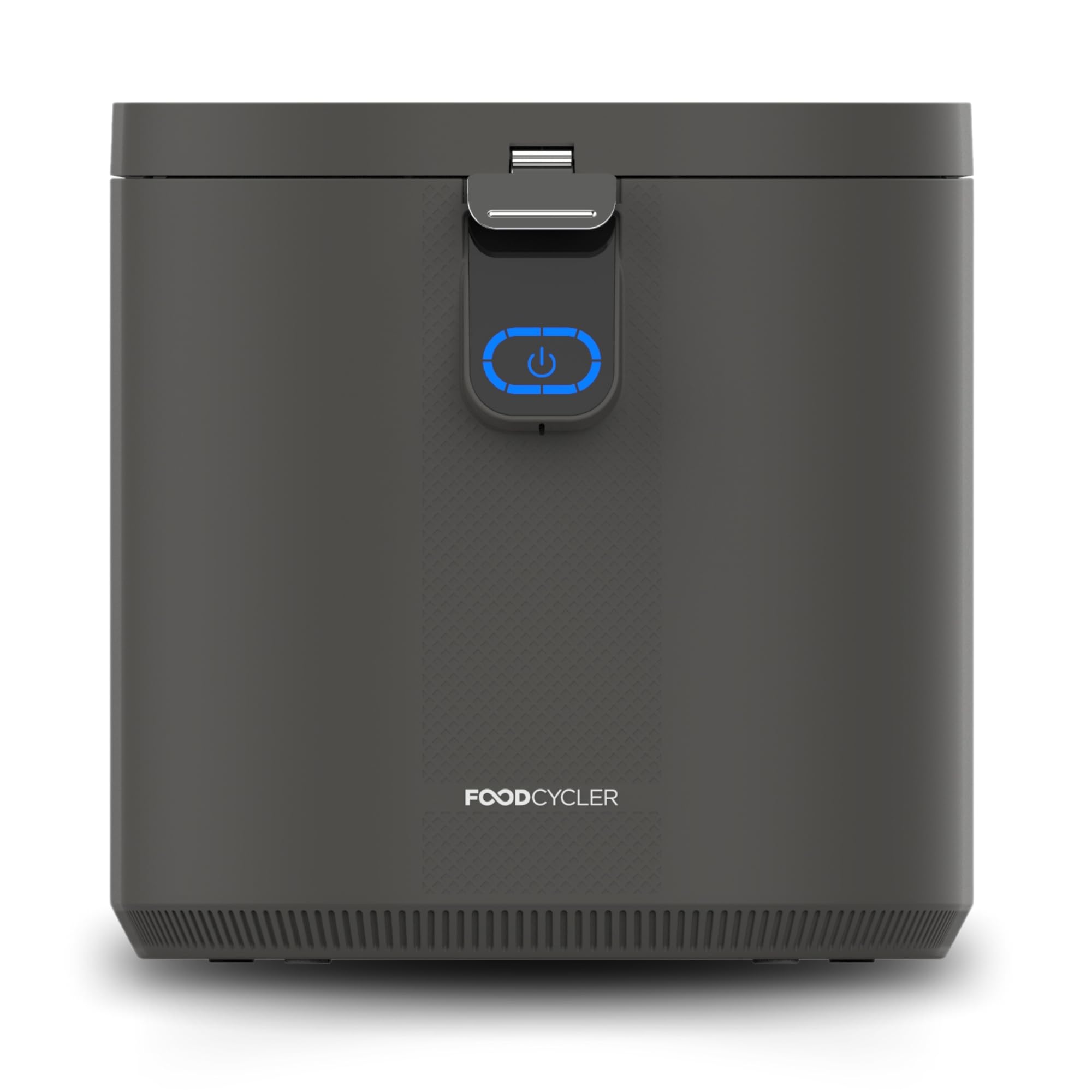
A 5-liter electric recycler with a patented grinding system that accepts tougher scraps and delivers near-90% volume reduction.
Why I picked it: Vortech grinding tears through pits and tougher scraps other units struggle with.
Best for: Busy households that need a large mid-size unit for frequent use.
Higher-end mid-size recycler with robust grinding tech.
Pros
- 5L largest mid-size bucket
- Vortech grinding system
- Quiet operation
- Refillable carbon filter
Cons
- Occasional smell if not emptied
- Takes counter space
My take
I started using the FoodCycler when I needed something that could handle everything from peels to small bones. Its grinding system is more aggressive than smaller electric models and reduces material to a mulch-like output in a few hours.
The unit is quiet and looks modern on the counter; the removable bucket is convenient to place near prep areas. I keep the carbon filter topped up so I rarely notice odors while it runs.
If you want something that feels like a workhorse without stepping up to a full-size composter, this is the model I reach for.
6. Reencle Prime Electric Composter – Best for Frequent Composting
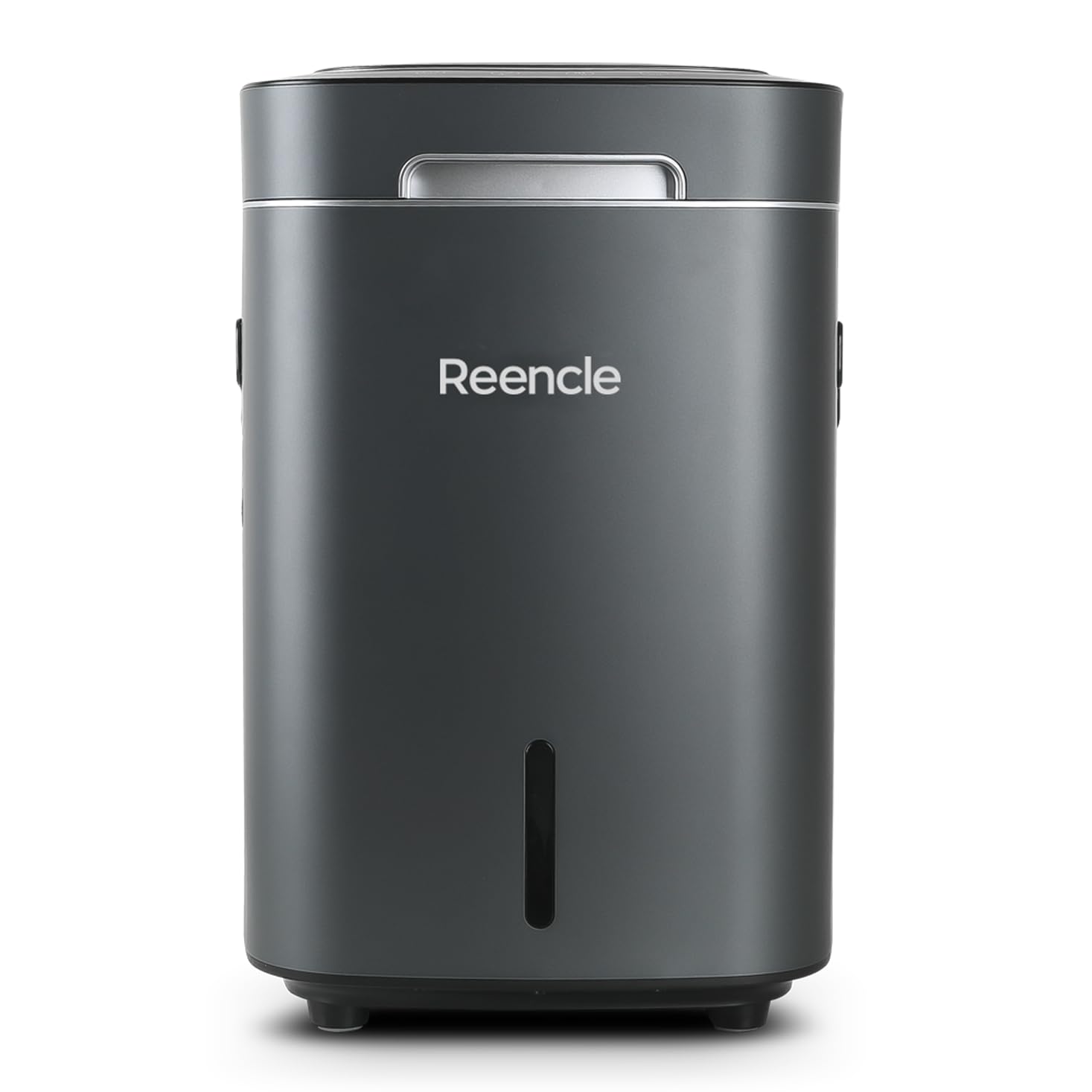
A larger-capacity composter that uses microbial technology to speed aerobic decomposition, handling over two pounds daily with a multi-layer filter and whisper-quiet operation.
Why I picked it: Patented microbe process and a multi-layer filter that keeps odors down during frequent use.
Best for: Households that compost daily and want minimal smell with higher throughput.
Premium option for regular, higher-volume composting.
Pros
- Handles up to 2.2 lbs daily
- Patented microbe technology
- Whisper-quiet operation
- Complete starter kit included
Cons
- Larger footprint
- Takes time to reach full volume
My take
I picked the Reencle for steady, daily composting because it feels built for repeat use. It uses microbes to accelerate decomposition, and in my experience the output is clean enough to use with indoor plants after minimal curing.
Noise is nearly nonexistent — it’s the quietest powered unit I tested. The included starter pack and shovel make it easy to begin right away, and the multi-layer filter prevents kitchen smells from escaping during operation.
Because it’s larger than countertop grinders, I keep it near a utility area, but if you need frequent, reliable composting this machine handles volume without the odor headaches I had with other machines.
7. PurifyLogix Activated Charcoal Filter Refill – Best Filter Refill
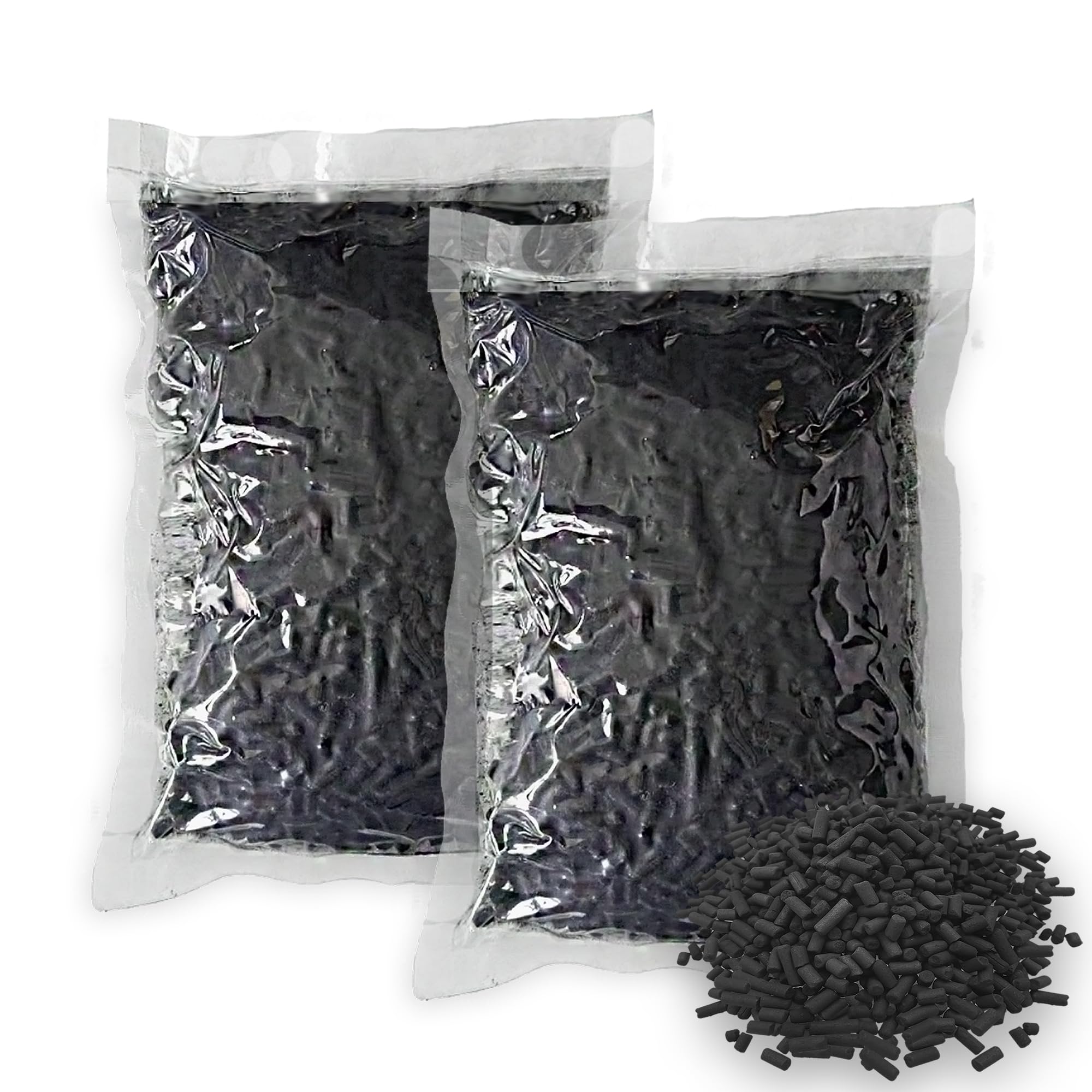
A two-pack of natural activated charcoal pellets designed to replace filters in FoodCycler-style units and other electric composters.
Why I picked it: Generous charcoal volume and compatibility with multiple composter brands.
Best for: Anyone needing affordable replacement carbon for odor control.
Inexpensive replacement filter option.
Pros
- Natural activated charcoal
- Compatible with many units
- Two refill packs included
- Simple to install
Cons
- May not last as long as OEM
- Needs drying before use
My take
I keep a couple of these charcoal refill packs on hand to refresh filters in my electric recycler. They’re straightforward to pour into the filter housing and start absorbing smells within hours.
I sometimes rinse and dry the pellets before use; that extra step removes dust and helps the charcoal sit neatly in the filter compartment. For the price and volume, these refills are a practical way to keep any composter odor-neutral.
8. GEME Smart 19L Electric Composter – Best High-Capacity Composter
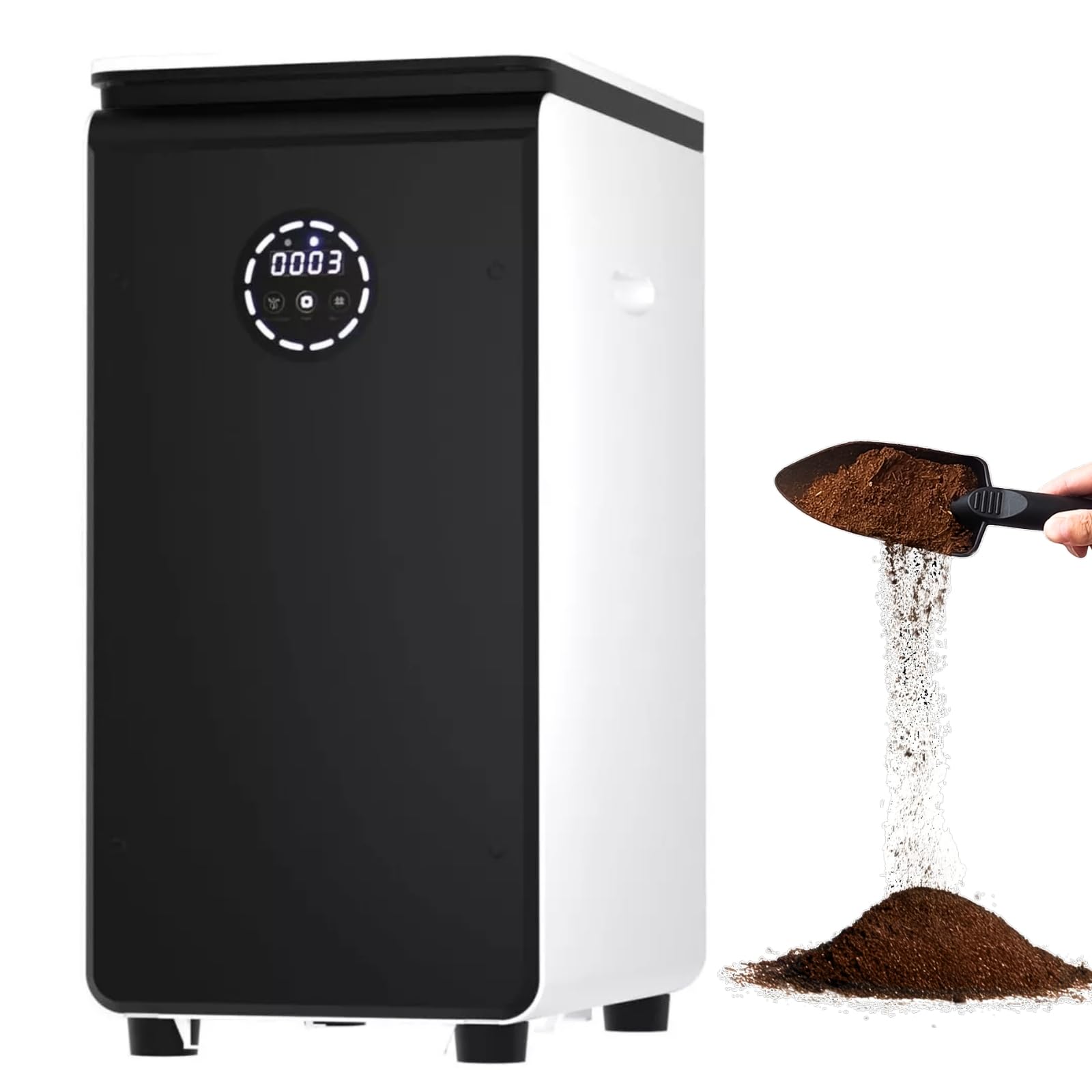
A large 19-liter unit that claims true microbial composting rather than simple dehydration, with a permanent built-in filter and the capacity to process heavy household waste.
Why I picked it: True biological breakdown and a permanent filter for low-maintenance, high-capacity use.
Best for: Large households or gardeners who want real compost from kitchen waste.
Top-tier, high-capacity investment.
Pros
- 19L very large capacity
- True microbial composting
- Permanent built-in filter
- High daily throughput
Cons
- High upfront cost
- Some reports of odor sensitivity
My take
I chose the GEME when I wanted a unit that produces authentic compost rather than a dehydrated product. The microbial degradation technology does produce a richer, nutrient-dense material — but I did find it benefits from a short outdoor curing period before use in edible beds.
The permanent built-in filter is convenient because I don’t have to buy replacements, but I did notice that in my setup the machine developed a faint musty aroma that was best managed by locating the unit in a garage or utility room.
For big households or anyone who wants to convert nearly all kitchen waste into real compost with minimal ongoing filter purchases, this machine delivers the highest capacity and a low-maintenance filter system.
How I Choose an Indoor Composter
Capacity and Household Size
I match composter size to how often I cook and how many people live in the home. Small 1–5L units work well for one or two people; 5–19L systems are better for families or heavy cooks.
If I need to compost daily, I opt for larger buckets or machines with higher throughput so I’m not emptying multiple times a day.
- 1–2 people: compact countertop units
- 3–4 people: 4–5L reliable mid-size models
- 5+ people or gardens: 14–19L high-capacity machines
Odor Control and Pest Resistance
I prioritize carbon filters and sealed lids for units that sit on the counter. Charcoal-filtered buckets excel at short-term storage.
For powered machines I look for multi-layer filtration and a design that vents treated air away from living spaces.
- Charcoal filters stop smells for days
- Watch for vent placements that allow flies in
- Permanent filters save on replacements
Type of Composting
I treat electric grinders and dehydrators as volume-reduction tools: they produce dry, mulch-like material you finish outdoors or mix into soil.
Microbial or biological composters produce more finished compost but need slightly more space and sometimes an extra curing step.
- Dehydration + grinding = quick volume reduction
- Microbial systems = richer, nutrient-dense output
- Decide whether you want immediate dry output or near-finished compost
Noise, Cleaning, and Maintenance
I test run units during normal kitchen activity; anything over conversational volume becomes annoying. Look for models under ~40 dB if noise matters.
Removable, dishwasher-safe buckets and accessible blades make my life easier when cleaning.
- Quiet units allow day/night operation
- Dishwasher-safe components speed cleanup
- Keep spare filters on hand for continuous use
Frequently Asked Questions
Can I put bones or pits in electric composters?
From my experience, heavy grinders like the FoodCycler Eco 5 will handle small bones and pits, while compact units and microbial machines are better for softer scraps. Always check the manufacturer’s guidance and avoid overloading the chamber.
Do electric composters stop odors completely?
I’ve found that carbon filters and sealed lids reduce most odors while machines run, but no system is perfect. Microbial units and larger machines with strong filtration are best at keeping smells minimal; emptying and occasional maintenance keeps odors in check.
How often should I empty my composter?
I empty small countertop bins every few days and mid- to large-capacity electric units every few cycles or when they reach the fill line. Frequent emptying prevents pests and keeps filters working efficiently.
Final Take
If you want the lowest-effort solution for short-term scrap storage, I use the Utopia or Granrosi bins around the sink.
For apartment life or counters where I want quick, dry output, the Airthereal or FoodCycler Eco 5 hit the right balance of size and performance.
When I need near-finished compost or high throughput for a garden, I choose Reencle or GEME for their larger capacities and biological processing capabilities.
