
I spent time slicing dozens of hard‑boiled eggs, strawberries and mushrooms to find slicers that deliver clean cuts, hold up to regular use, and are easy to clean.
I tested egg slicers to find tools that give consistent, clean slices without crushing the egg. I focused on slice consistency, build quality, ease of use and how easy they are to clean.
Across these four picks I balanced value, durability and versatility so you can pick the right slicer for weekly meal prep or heavier kitchen work.
I compared compact plastic models, midrange molded designs and heavy‑duty metal frames so you can choose by how often you slice and what else you want to cut.
1. OXO Good Grips Egg Slicer – Best Overall
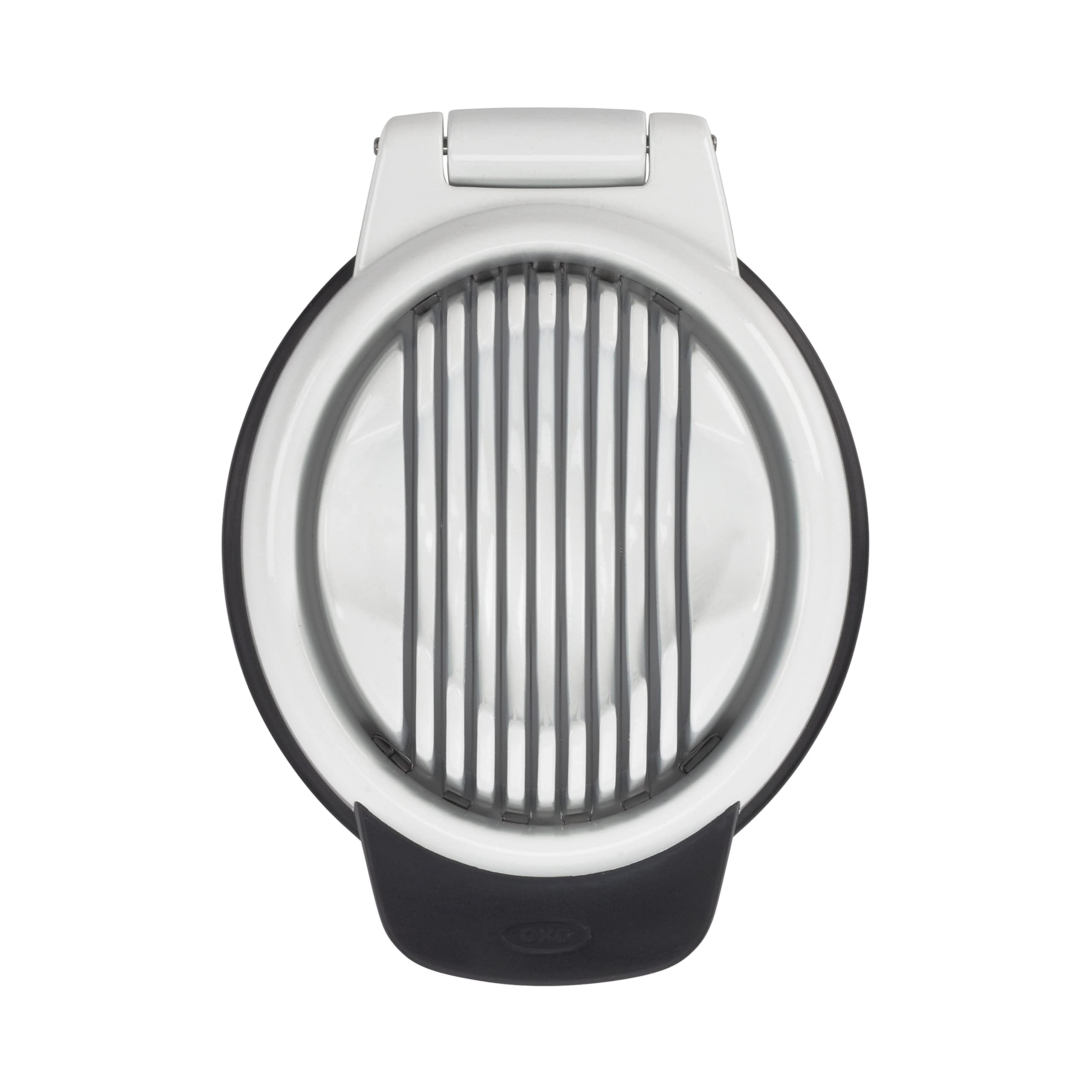
Reliable everyday slicer that makes tidy 5 mm slices, with a dual‑orientation cradle and a grippy base.
Why I picked it: Consistent 5 mm slices, dual‑orientation cradle, comfortable handle and non‑slip base.
Best for: Everyday meal prep, salads, sandwiches and garnishes.
A solid midrange choice that feels like a quality kitchen staple.
Pros
- Consistent 5 mm slices
- Dual‑orientation egg cradle
- Comfortable raised handle
- Non‑slip base for stability
- Top‑rack dishwasher safe
Cons
- Cutting wires can be fragile with rough cleaning
- Wires may fail under heavy or improper use
My take
I used the OXO Good Grips every week for eggs and light garnishes, and it consistently produced clean, uniform 5 mm slices. The option to lay the egg horizontally or vertically is genuinely useful: horizontal for neat rounds and vertical for oblong slices.
The raised handle feels comfortable and gives good leverage without pinching the egg. The non‑slip base kept the slicer steady over a bowl or plate, which made single‑handed slicing easier.
Although the listing says top‑rack dishwasher safe, I treat the wires gently during cleaning and usually hand‑wash to preserve them. In my experience that extra care extended the life of the cutter; rough scrubbing or aggressive dishwasher cycles can stress the wires.
2. BIBURY Egg Slicer – Best Budget
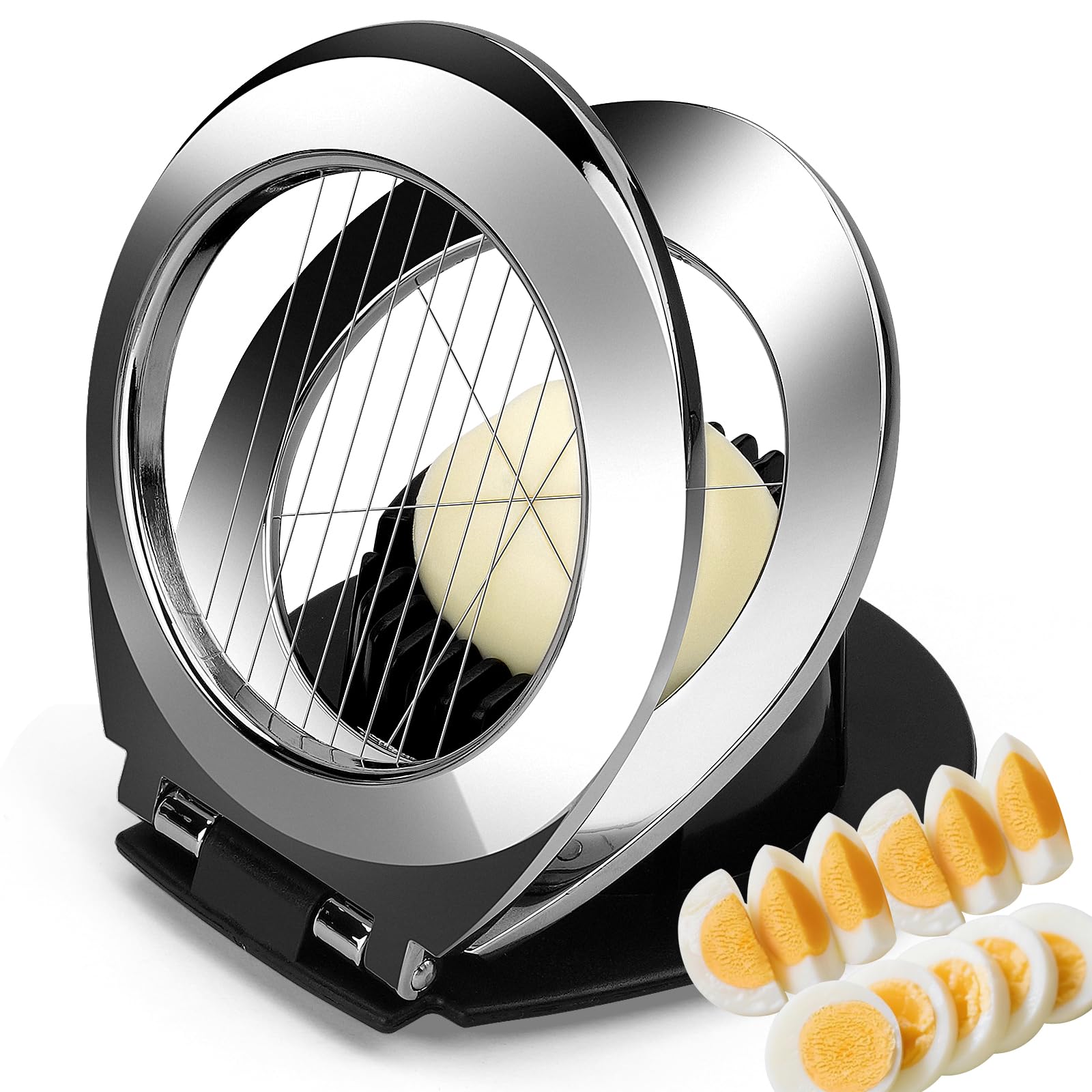
A compact metal‑framed slicer with three cutting styles for slices, wedges and dices—good value for light to moderate use.
Why I picked it: Chrome‑plated zinc frame, stainless wires and three slicing styles for versatility.
Best for: Budget shoppers who want multi‑function cutting for eggs and small fruit.
An inexpensive, value‑focused option that covers basic slicing needs.
Pros
- Chrome‑plated metal frame
- Three slicing styles
- Works on fruit and cheese
- Compact and easy to store
- Dishwasher safe
Cons
- Wires are not ultra heavy‑duty
- May struggle with very firm items
My take
I found the BIBURY slicer surprisingly capable for the price. The metal frame gives it a firmer feel than many plastic models, and the three cutting styles let me make slices, wedges or small dices without switching tools.
Versatility is the highlight: I used it on boiled eggs, soft strawberries and thin slices of cheese with good results. The stainless steel wires are fine for typical eggs and soft produce, but I avoid force when the item feels very firm—those wires will bend or break if pushed through a rock‑hard piece.
For quick egg salad prep I sometimes engage two sets of wires at once to speed things up. Overall this is a dependable budget pick if you use it sensibly.
3. Ortarco Egg Slicer – Best Compact
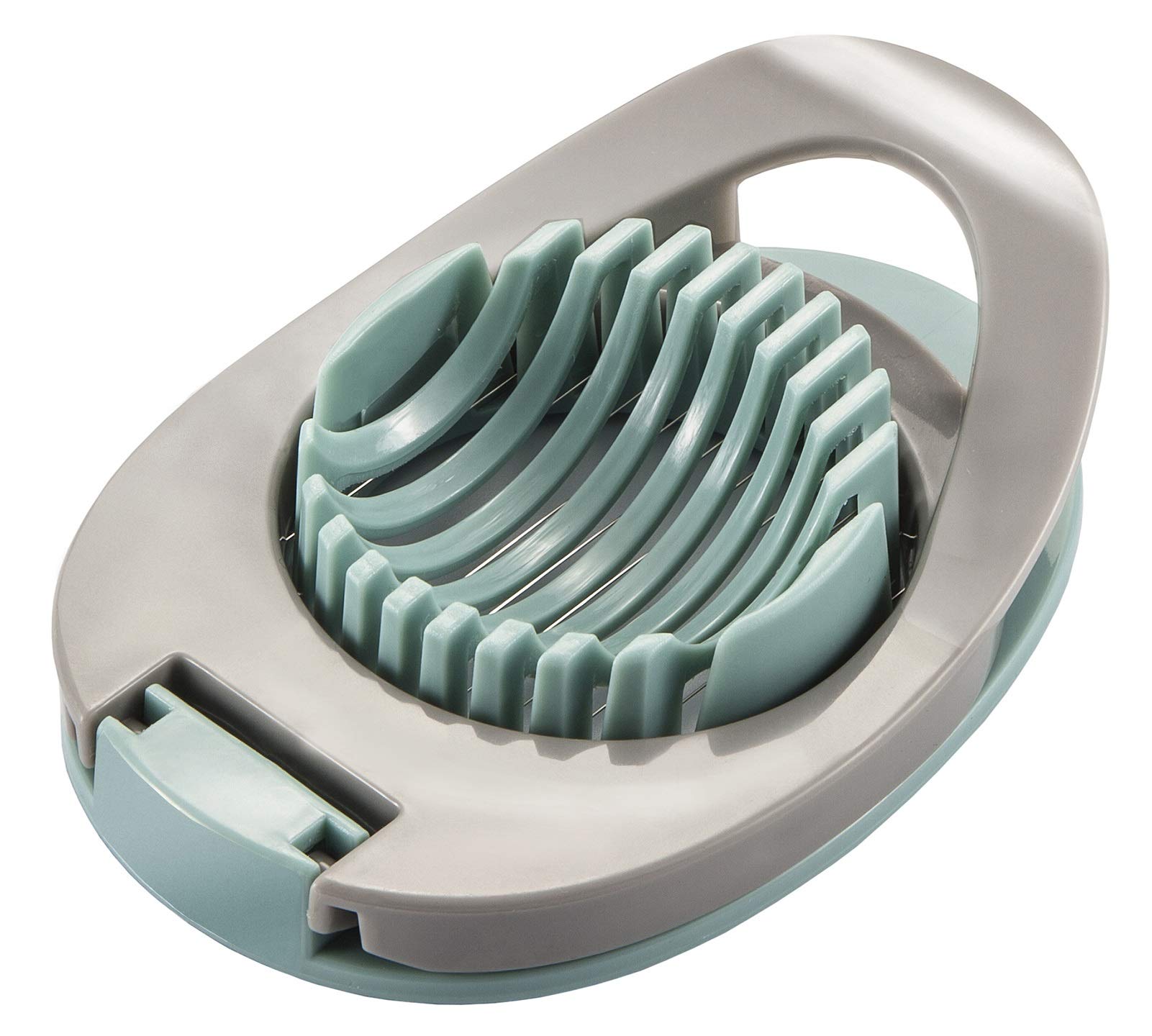
A small, lightweight plastic slicer that does the basics well—ideal for occasional use or tight kitchens.
Why I picked it: Compact footprint, simple operation and decent slicing for light tasks.
Best for: Small kitchens and occasional slicing of eggs and soft fruit.
Lowest‑cost option suited to light, occasional use.
Pros
- Compact and lightweight
- 5 mm slice consistency
- Easy opening and closing
- Dishwasher safe
Cons
- May not slice through the very bottom
- Wires can bend with firm fruit
My take
I kept the Ortarco on my prep shelf for quick jobs and it performs exactly as advertised for soft, standard‑sized hard‑boiled eggs. The raised handle makes operation easy and cleanup is straightforward.
I did notice the very bottom of some eggs needed a small roll to finish the cut, which is common on smaller, compact models. It also handled very ripe strawberries nicely, but I wouldn’t push it on anything too firm—the wires will bend if overstressed.
For the price and size, it’s a handy tool when you don’t need the extra heft of a metal frame.
4. Westmark Egg Slicer – Best Heavy‑Duty
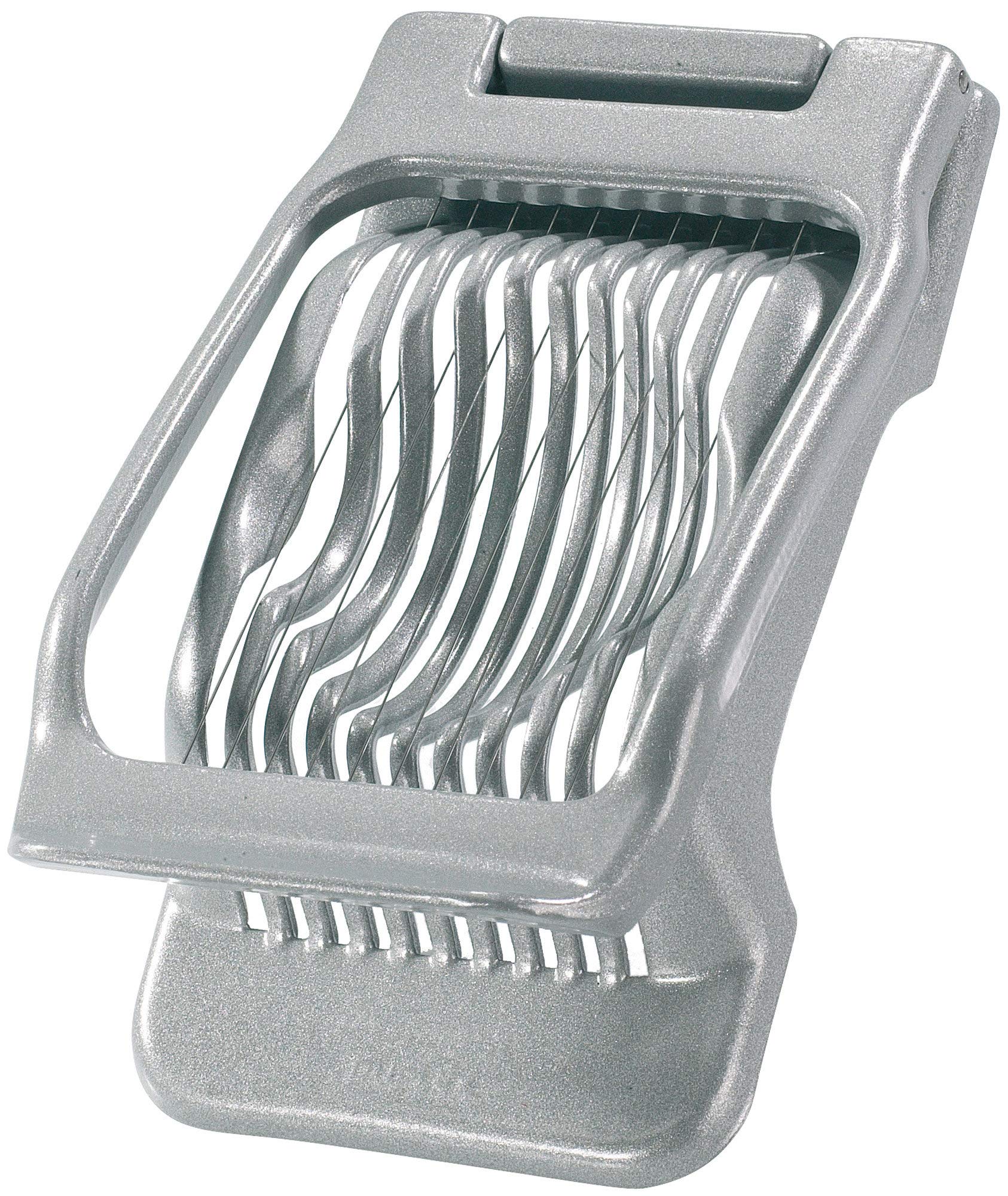
A robust cast‑aluminum frame with high‑quality stainless wires built for frequent use and heavier produce like mushrooms.
Why I picked it: Cast aluminum construction and strong wires make it the most durable option here.
Best for: Frequent slicers and cooks who also slice mushrooms and other produce often.
A more expensive, built‑to‑last pick for heavier kitchen use.
Pros
- Cast aluminum frame
- High‑quality stainless wires
- Ergonomic handle
- Excellent for mushrooms and frequent use
- Dishwasher safe
Cons
- Heavier and larger than plastic models
- Wires could detach if overstressed
My take
I chose the Westmark when I wanted a slicer that could handle more than just occasional eggs. The cast aluminum frame feels solid in hand and gives confidence when I run it through batches of mushrooms and eggs.
In my kitchen it turned mushroom prep into a pleasant, speedy task; the slicer cuts cleanly without squashing. The ergonomics of the handle make repeated use comfortable, which matters when you’re prepping larger quantities.
I still treat the wires with care—no slicing of extremely hard items or aggressive twisting—and I’ve had reliable performance. If you want a tool that will tolerate heavier use, this is the one I reach for.
How I choose an egg slicer
Materials and build
I look first at the frame material and the cutting wires. Cast aluminum or metal frames feel sturdier and resist flexing, while plastic bodies keep the tool lightweight and compact.
Stainless steel cutting wires are standard. Thinner wires give cleaner cuts but can be more fragile; thicker wires are more durable but require more care with very firm items.
- Prefer metal frame for frequent use
- Choose stainless wires for corrosion resistance
- Expect plastic models to be lighter and more affordable
Slice style and versatility
Decide whether you want only round slices or multiple styles. Some cutters offer wedges and dicing, which is handy for salads and garnishes.
I test with eggs, strawberries and mushrooms to see how the slicer performs on common kitchen tasks.
- Dual‑orientation cradles add flexibility
- Multiple blade sets expand uses beyond eggs
- Avoid using wire slicers on very firm or frozen items
Cleaning and maintenance
Many listings say dishwasher safe, but I generally hand‑wash to preserve wire tension and longevity. Use a soft brush and gentle soap to clean between wires.
Store the slicer someplace where the wires won’t be bent by other utensils.
- Hand‑wash to extend wire life
- Use a brush for stuck bits, not metal scrubbing
- Store flat to prevent wire bending
Durability tips
I avoid forcing the wires through very hard or undercooked eggs and never use the slicer for tough, fibrous produce. A gentle, steady press preserves the wires.
If you plan to slice large volumes or firmer items like mushrooms regularly, I recommend a metal‑framed model.
- Don’t force the tool through very hard items
- Consider a heavy‑duty frame for frequent use
- Replace the slicer if wires lose tension or break
Frequently Asked Questions
Can I put my egg slicer in the dishwasher?
Some models are listed as dishwasher safe, but I hand‑wash the wire area to avoid stressing the wires. If you do use a dishwasher, place the slicer on the top rack and avoid high‑heat cycles.
What else can an egg slicer cut?
I use slicers for soft fruit (strawberries, kiwi), thin cheese slices and mushrooms. Avoid very firm or frozen foods—wires will bend or break with excessive force.
How do I prevent the cutting wires from breaking?
I prevent wire damage by avoiding force on hard items, cleaning gently with a brush and soap, and storing the slicer where the wires won’t be bent by other utensils.
Final Take
I kept the OXO as my go‑to for everyday slicing; it balances performance and ease of use. If I need a budget option, I reach for the BIBURY, and for occasional use in a small kitchen the Ortarco fits the bill.
When I want a tool that can handle heavier, frequent prep—especially mushrooms—I use the Westmark. Match the slicer to how often you’ll use it and what you want to slice, and you’ll get clean, consistent results.
