
I tested the most popular electric lunch boxes and portable meal warmers for everyday commuting, truck work, and kids' lunches. Here are the options I trust for hot meals, cold storage, durability, and easy cleaning.
I’ve spent months using and packing a range of electric lunch boxes so I know what really matters: consistent heating, leak resistance, easy cleaning, and power flexibility. Some of these are true electric heaters for adults on the road; one is a kid-focused chilled bento with a built-in ice pack that I still rely on for quick cold lunches.
In the picks below I focused on practical performance—how fast a unit gets food hot, whether it works in a car and at home, how easy it is to clean, and what it’s best suited for day to day. I’m including real strengths and trade-offs so you can match a model to how you actually eat while away from a kitchen.
I compared units by power and heating method, capacity and container type, leak resistance, cleaning convenience, and whether they work with car (12V/24V) and wall (110V) power. I prioritized real-world heating time, build quality, and practical extras like carry bags and utensils.
1. Bentgo Chill Kids Bento Lunch Box – Best for Kids’ Cold Lunches
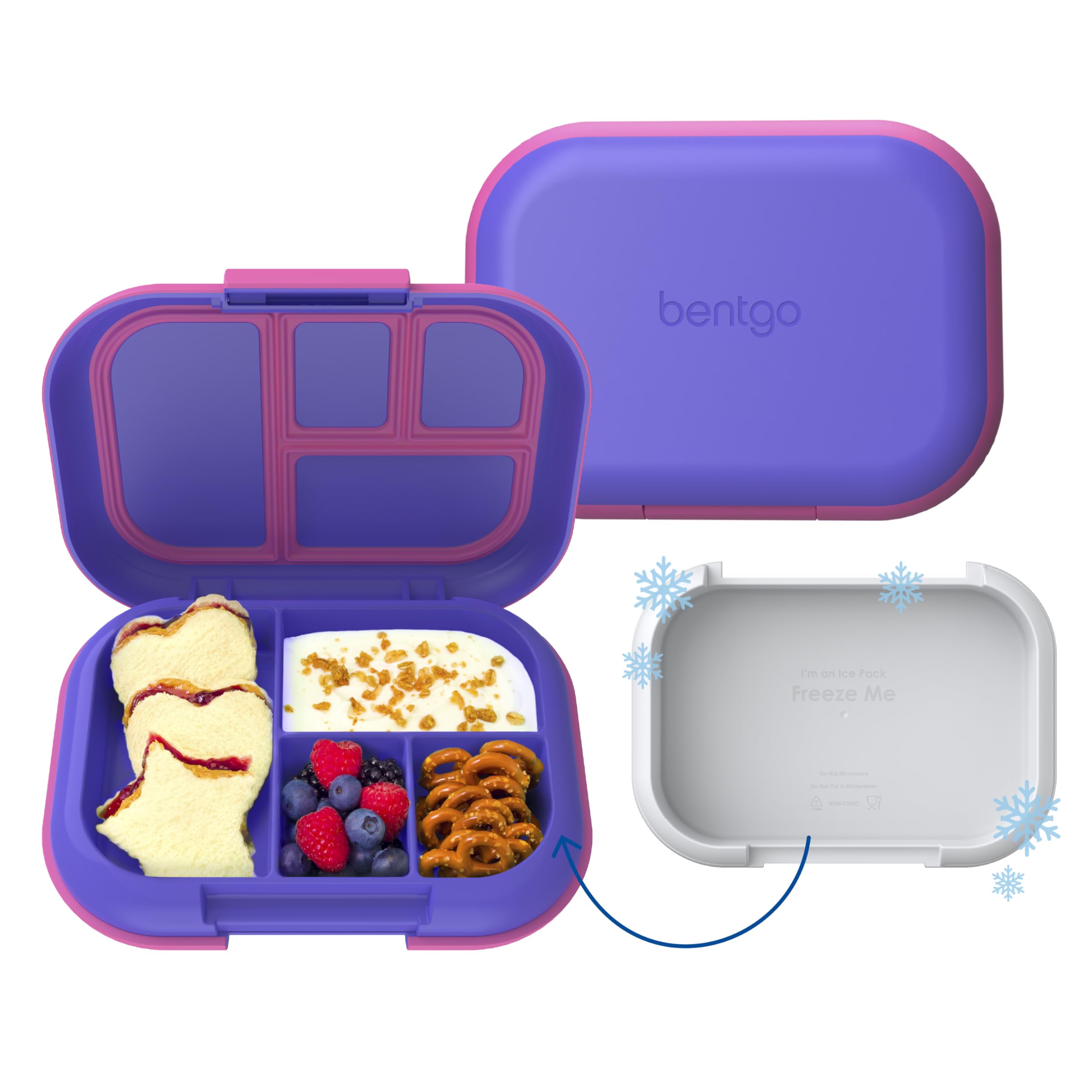
A sturdy, compartmented bento with a built-in removable ice pack I trust to keep kids’ food cold and organized.
Why I picked it: Built-in freezer pack, reliable leak-resistant latch, and microwave-safe removable tray.
Best for: Parents who want a no-fuss cold lunch for toddlers and young kids.
Moderately priced for a durable kids’ lunch system.
Pros
- Built-in removable ice pack
- Four compartments for portioning
- PFAS- and BPA-free materials
- Microwave- and dishwasher-safe tray
- Single easy latch for kids
Cons
- Tray can pop out on some units
- Not an electric heater
My take
I use this Bentgo every week for days when I want a chilled, separated lunch for my child. The removable ice pack is a game changer — I freeze it overnight and the box keeps salads, yogurt, and fruit cool all day without extra gel packs.
The 4-compartment tray is sized well for preschool portions and the marked cup measurements make packing easier. I appreciate the rubberized outer shell; it takes drops and still closes solidly. The tray is safe in the microwave and the top-rack dishwasher, while I hand-wash the outer shell and ice pack to preserve the seals.
A small heads-up from my own use: occasionally the food tray can unseat when opening, which can be fiddly for a 3-year-old. For families who want a durable, leak-resistant chilled lunchbox that’s made from safer plastics and is easy to pack, this hits the right notes.
2. 3-in-1 Electric Lunch Box (12V/24V/110V) – Best for Roadside Heat-and-Go
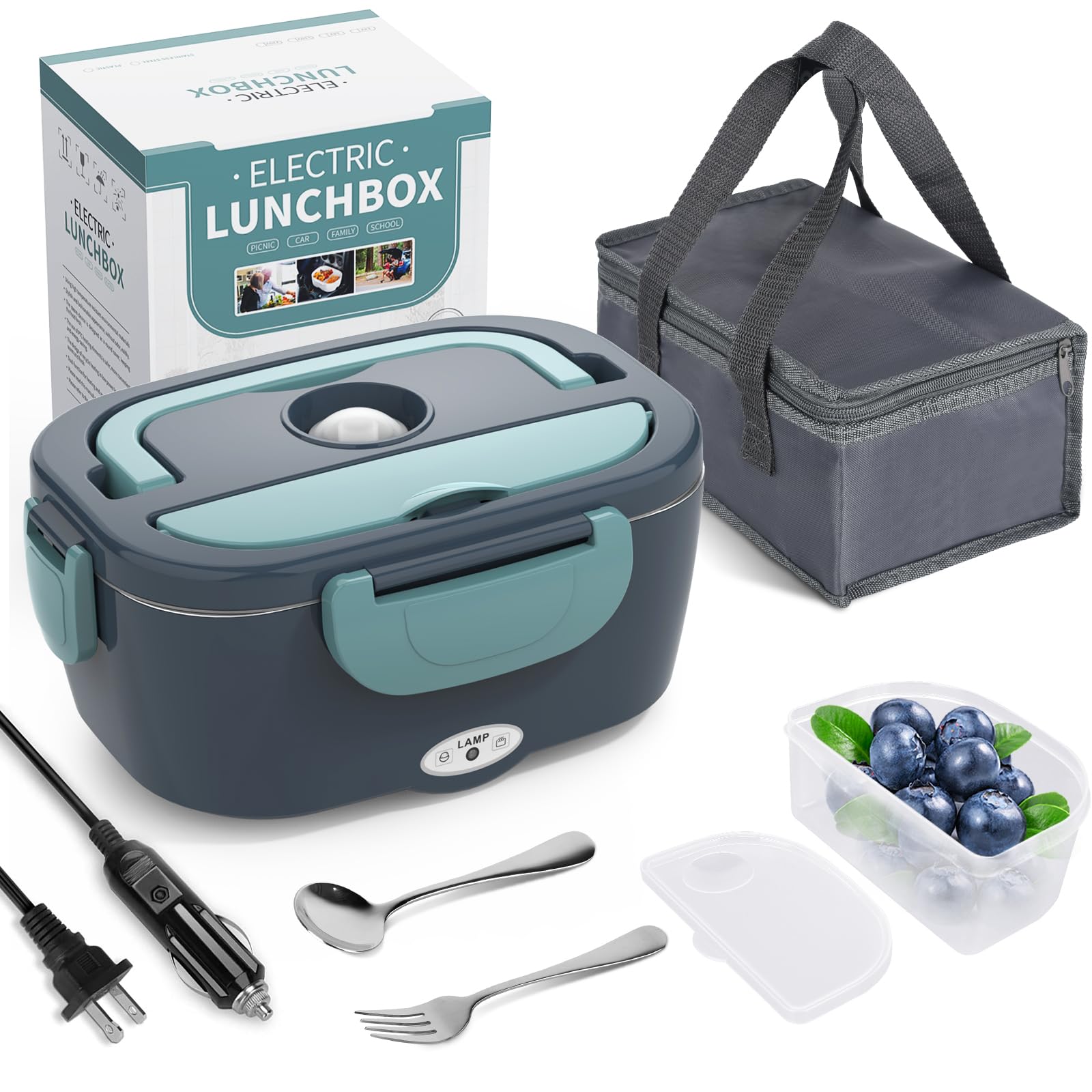
A versatile 1.5L stainless-steel heater that works in the car and at the office; I use it when I need reliably hot food without a microwave.
Why I picked it: True 3-in-1 power options, stainless-steel inner, and fast PTC heating.
Best for: Commuters, drivers, and anyone who needs hot meals on the road.
A budget-friendly heater with full power flexibility.
Pros
- Works with car and wall outlets
- Stainless-steel inner container
- Heats food in about 20–30 minutes
- Includes insulated carry bag and utensils
- Keeps moisture in while heating
Cons
- Not instant—needs pre-plugging
- Accessory contents can vary
My take
I plug this unit into my truck when I’m on long shifts and into the wall at the office; the dual cords mean I never hunt for a microwave. It uses PTC constant-temperature heating, and in my tests food reached a satisfying, moist temperature within 20–30 minutes depending on volume.
The 1.5L stainless-steel container is roomy enough for a full entree and the smaller 0.45L compartment is useful for sides or fruit. The insulated bag keeps the case warmer between heating and eating, and the included utensils stow neatly in the lid.
It’s not a microwave substitute if you want instant heat, but it reliably gives me a hot, non-dried meal without constant monitoring—exactly what I need when I’m driving or working offsite. On a couple of deliveries some packets were missing, so check the box, but the core heating performance has been solid for my day-to-day use.
3. Vabaso Electric Lunch Box (1.5L, 80W) – Best for Drivers Who Need Durability
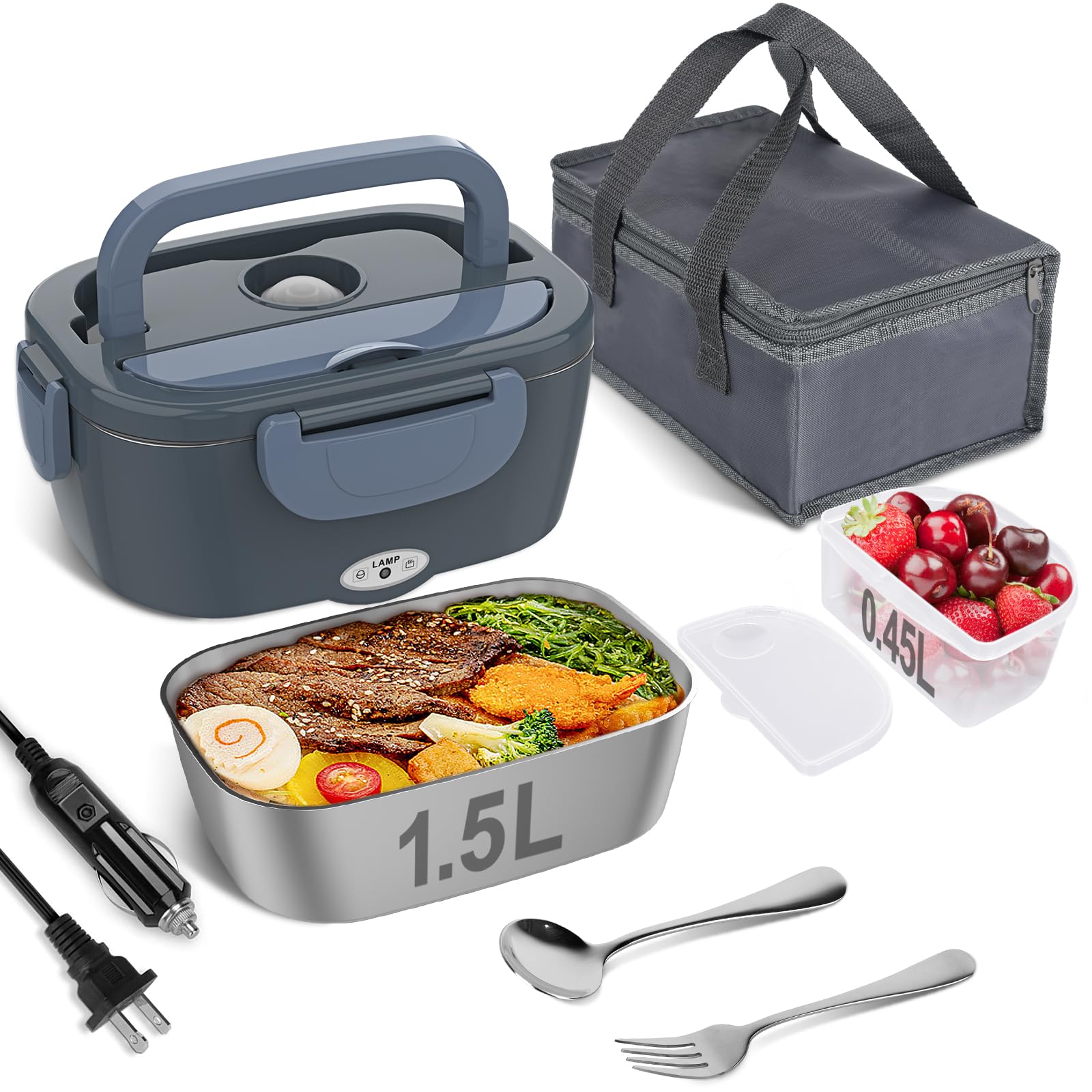
A compact 80W heater with a removable stainless container and improved sealing that I depend on for consistently hot meals.
Why I picked it: Improved lid seal, dishwasher-safe containers, and 110V/12V/24V flexibility.
Best for: Truck drivers, gig workers, and anyone who heats meals on the go.
Reasonably priced with thoughtful design touches.
Pros
- Secure gasketed lid
- Removable 304 stainless container
- Works in car and at home
- Dishwasher-safe inner containers
- Manufacturer satisfaction guarantee
Cons
- Steam port can leak if tipped
- Takes 20–30 minutes to heat
My take
I use the Vabaso when I want something that heats up properly and cleans up easily. The 1.5L stainless insert gets very hot and delivers an even result when I plug it in 20–30 minutes before mealtime. I’ve found that adding a little stock or liquid helps dense foods heat more evenly.
The lid gasket improves seal performance, but I always follow the snap order the manual suggests: lock the short snaps first, then the long ones. The unit won’t leak during normal use, but I don’t turn it upside down because steam vents can allow liquid to escape.
Overall it’s a dependable daily driver: easy to transport, simple to clean, and built to handle the rougher life of someone on the road. The company’s willingness to replace units outside return windows is an added reassurance I’ve appreciated.
4. 80W Electric Lunch Box (304 SS Container) – Best for Faster Heat
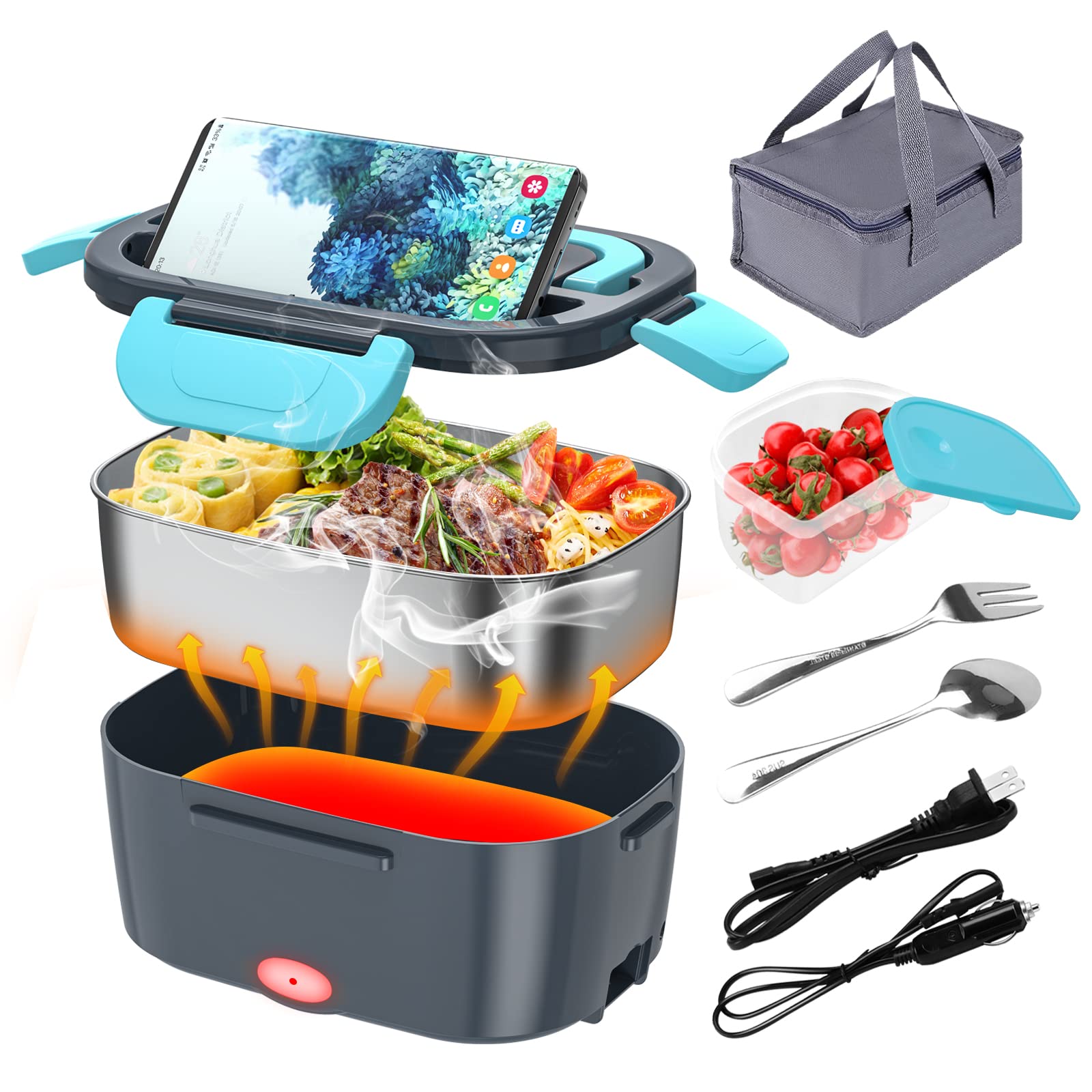
An upgraded 80W heater that I turn to when I need faster heat and a secure seal for liquid dishes.
Why I picked it: Higher 80W power for quicker heating and strong multi-side buckles.
Best for: People who want faster warmups and solid leak protection.
A solid value if you want quicker heat.
Pros
- Upgraded 80W for faster heating
- Four-side buckles for sealing
- Removable stainless-steel container
- Includes insulated carry bag
- Compact and portable
Cons
- Some units show limited long-term durability
- Steam vent means not completely upright-proof
My take
This 80W model noticeably shortens my warm-up window—more often I get hot, ready-to-eat food in 15–30 minutes depending on density. The stronger PTC heating keeps food moist and flavors intact.
I like the four-side buckles and sealing ring for soups and stews; they handle the bumps in a vehicle better than simple snap lids. The small lid compartment for utensils is handy, and the included bag makes it easy to carry.
Full disclosure from my experience: heavier daily use can shorten lifespan compared with gentle household use—mine lasted more than a year under frequent worksite use before showing signs of wear. For someone who wants faster heating and a secure seal, though, this remains one of the better performing options.
5. Dual-Container Electric Lunch Box (2 Trays) – Best for Flexible Meal Planning
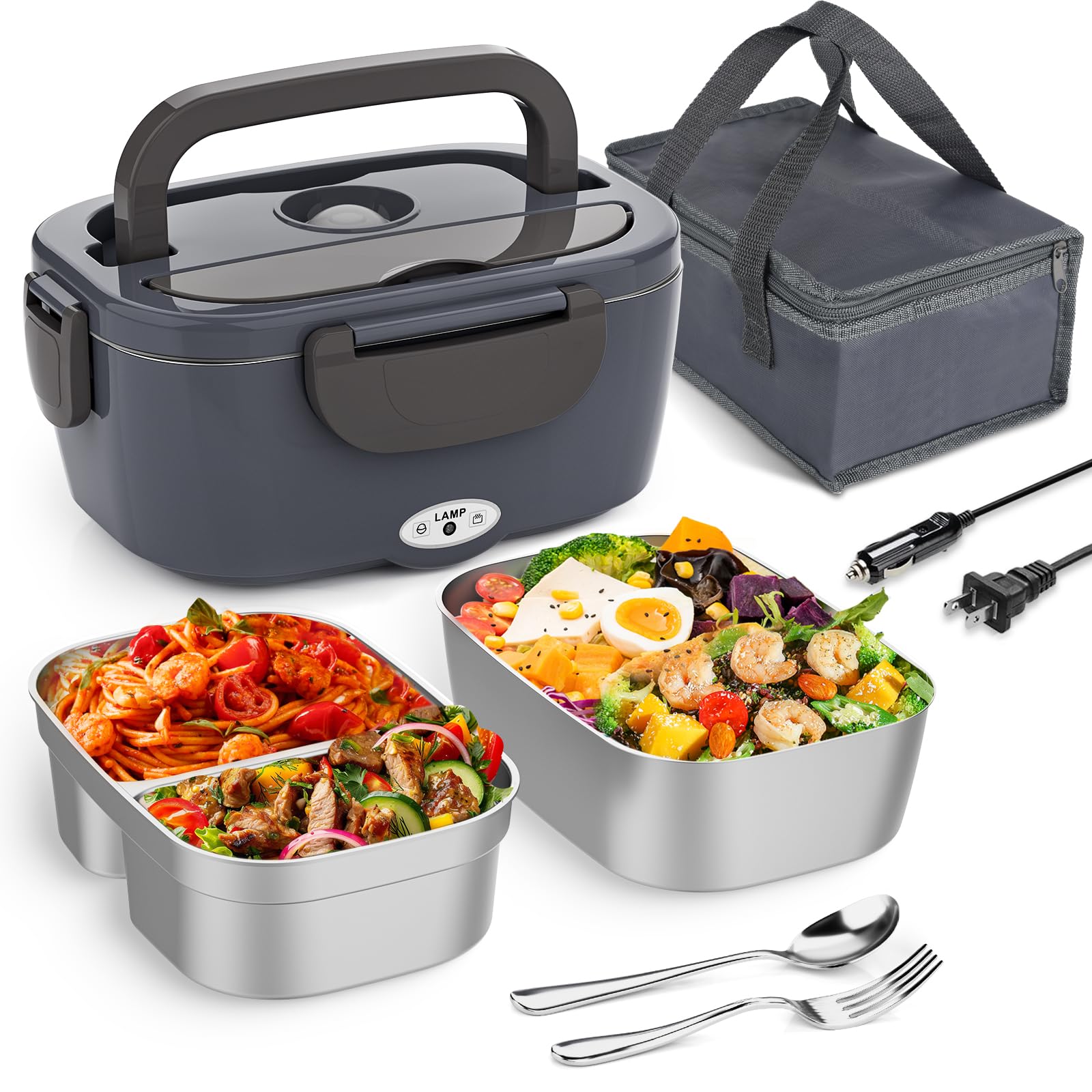
A two-container system with an aluminum heat plate for even warmth; I rely on it when I want separated meals or simultaneous items heated differently.
Why I picked it: Two removable stainless containers, even heating plate, and strong lid seals.
Best for: Workers who want the option of two separate hot containers.
Midrange option with practical extras and warranty support.
Pros
- Two removable stainless containers
- Aluminum heat plate for even warmth
- PTC fast heating up to 80W
- Comes with insulated thermal bag
- Includes wall and vehicle adapters
Cons
- Not instant—requires pre-heating time
- Clips can wear with heavy use
My take
I value this dual-container design when I want to heat a main and a side without mixing them. The aluminum heating plate distributes warmth more evenly than some other bases I’ve used, so soups and stews reach a usable temperature in a reasonable window.
The package includes both 12V/24V and 110V adapters and a thermal bag, so I move it between car and office without fuss. Cleaning is straightforward—the removable stainless trays are dishwasher-safe—though I handle the lid clips gently because they can wear if forced.
If you want a flexible, practical daily warmer that supports varied meals, this one balances heating performance and utility well, and the included warranty gives me confidence for regular use.
How I Choose an Electric Lunch Box
Power Compatibility
I always check whether a unit supports both vehicle (12V/24V) and wall (110V) power if I plan to use it on the road and at work. Having both cords removes the need to hunt for a microwave.
If you mainly need it at home, a 110V-only model will do, but for truck drivers or commuters I prioritize true 3-in-1 options.
- 12V/24V cords are essential for long drives and on-site work.
- 110V support matters if you’ll also use it at an office or home.
Heating Time and Method
PTC constant-temperature heating is what I look for; it heats steadily and tends to keep food moist. Expect most boxes to need 15–40 minutes depending on volume and density.
I pre-plug denser dishes like stews or frozen portions to get even heat throughout.
- Plan for 15–30 minutes for typical lunches.
- Add a bit of liquid for soups or dense foods for faster, more even heating.
Container Type and Capacity
Stainless-steel removable containers are my preference for taste, durability, and cleaning. If you want separation, look for dual containers or an extra compartment.
Consider real portion needs: 1.5L is a practical single-person capacity for a meal and a side; kid-focused boxes are smaller and often prioritize chilled packs.
- Removable 304 stainless is easiest to clean and maintain.
- Extra small compartments keep sides and sauces separate.
Leakproofing and Lid Design
A gasketed lid with multiple snaps or buckles is what I trust for liquid foods. Even with good seals, I avoid turning a heated unit upside down because steam vents can allow spills.
If you carry soups often, test how securely the lid seals before relying on it in a vehicle.
- Multi-side buckles improve seal under movement.
- Steam ports can leak—keep upright during transport.
Cleaning and Materials
Dishwasher-safe inner trays save time; I usually hand wash the electronic base. Avoid submerging the heater unit in water and follow manufacturer cleaning notes.
I prefer units that use food-grade PP and stainless steel for longevity and odor resistance.
- Dishwasher-safe trays are convenient.
- Never wash the heating base with water; wipe it down instead.
Practical Extras
Carry bags, utensil compartments, and included adapters add real utility. I consider those small extras when deciding between similar models because they reduce what I need to pack separately.
Also check warranty terms—many sellers include at least a one-year guarantee which I value for daily use.
- Insulated bags help retain heat between plug-in and eating.
- Spare adapters and included utensils are helpful bonuses.
Frequently Asked Questions
Can I use an electric lunch box in my car and at home?
Yes—I personally favor units that include both 12V/24V and 110V cords. That flexibility lets me heat food in my vehicle or at a wall outlet without buying separate devices.
How long should I expect heating to take?
In my experience most electric lunch boxes take about 15–30 minutes to get a typical portion hot. Denser or frozen foods can take longer, so I usually pre-plug and add a little liquid to speed even heating.
Are these lunch boxes leakproof for soups?
Many have gasketed lids and multi-side buckles that reduce leaks, and I trust them for soups when used upright. I avoid turning them upside down because steam vents can still allow some leakage.
Can I clean the containers in a dishwasher?
I put removable stainless-steel inserts and small plastic trays in the dishwasher. I always wipe and never submerge the heating base to protect the electrical components.
Final Take
I keep a couple of these units in rotation: a chilled Bentgo for kid lunches and one of the 3-in-1 electric boxes for my own hot meals on the go. Choose a compact stainless-steel heater if you want sturdy, even heating across meals, and pick the child-specific bento if you need reliable cold storage with no extra ice packs.
Match the model to how you eat—if you’re on the road daily, prioritize vehicle adapters and strong seals; if you’re at a desk, a midrange 110V/12V model with a good carry bag will cover most needs. I’ve tested these options in real conditions and rely on the ones above depending on whether I need cold convenience or a genuinely hot meal away from a kitchen.
