
I tested durable classroom electrics, lightning-fast artist models, and compact manual sharpeners to find dependable options for every pencil type and use.
I spent time with a range of sharpeners — from heavy-duty classroom electrics to precision metal hand-helds — to find tools that actually make pencil work easier. I focused on speed, point consistency, how the sharpeners handle colored and jumbo pencils, and day-to-day reliability.
Below are the sharpeners I keep recommending when I need durability for a classroom, fine points for artwork, or a compact option to toss in a pencil case.
I compared each model for build quality, the range of pencil diameters it accepts, sharpening speed and control, ease of cleaning the shavings, and any safety or anti-overheat features that matter in heavy-use settings.
1. X-ACTO School Pro Classroom Electric Pencil Sharpener, Blue, 1 Count – Best for Classrooms
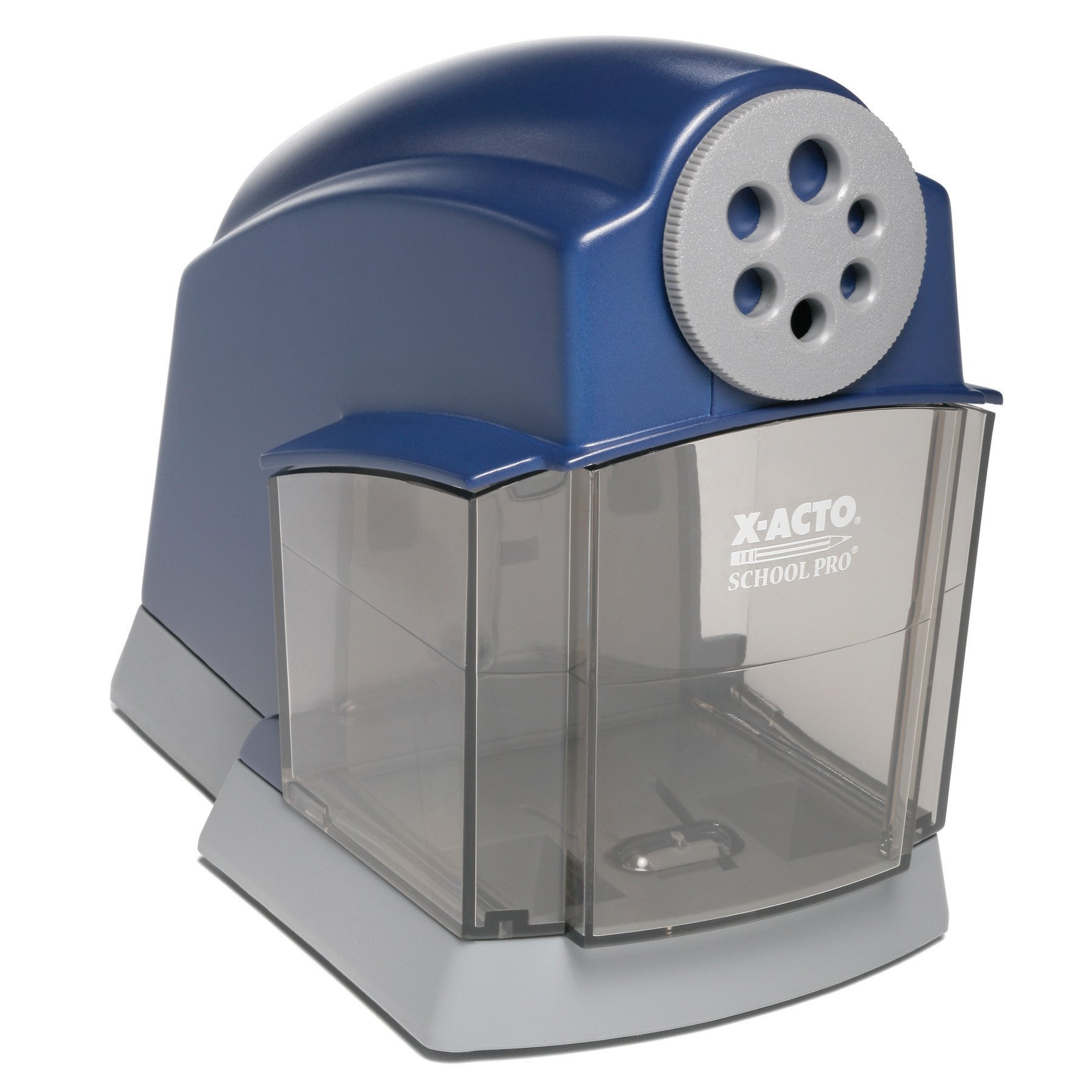
A classroom-grade electric that handles frequent use, offers safety features, and gives a consistent rounded point.
Why I picked it: Classroom-ready motor, Safe Start, six size compatibility, and auto-reset protection.
Best for: Teachers, homeschool rooms, and busy homework stations.
Classroom-grade durability at a practical price point.
Pros
- Handles heavy, repeated use
- Quiet but powerful motor
- Auto-stop for consistent points
- Accepts six pencil sizes
- Large shavings receptacle
Cons
- Larger footprint than compact sharpeners
- Less portable than hand-helds
My take
I rely on this X-ACTO when I need a sharpener that won't complain under constant use. The flyaway helical cutter delivers a safe, rounded point that works well across graphite and colored pencils without constantly oversharpening.
The motor is surprisingly quiet for its power, and the Auto-Reset feature has kept the unit working through long sharpening sessions instead of overheating. Safe Start prevents operation when the shavings receptacle is removed, which matters in busy classrooms.
I appreciate that it accommodates six pencil sizes and that the receptacle holds a lot of shavings, so I don’t have to empty it every few minutes during transitions.
2. AFMAT Electric Pencil Sharpener, Auto Stop, Super Sharp & Fast, Electric Pencil Sharpener Plug in for 6-12mm No.2/Colored Pencils/Office/Home PS94 Green – Best for Artists
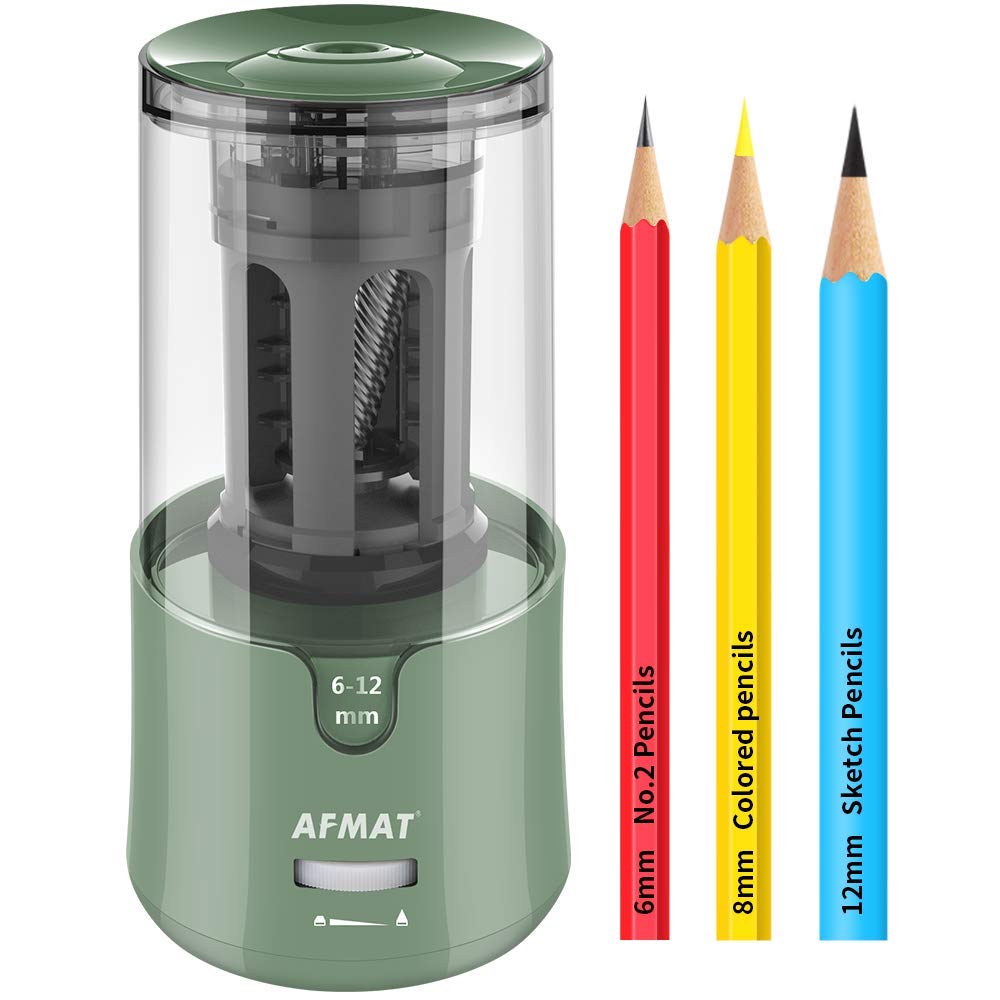
Fast, powerful, and versatile — sharpens standard to jumbo pencils with two point settings and a replaceable helical blade.
Why I picked it: Very fast sharpening, two sharpness settings, handles 6–12mm pencils and has a replaceable blade.
Best for: Artists who need quick, precise points and classrooms wanting fast throughput.
Midrange, artist-focused value with replaceable parts.
Pros
- Sharpening in 3–5 seconds
- Two sharpness settings
- Accepts 6–12mm pencils
- Replaceable helical blade
- Large, easy-clean shavings box
Cons
- Not recommended for soft-core pencils
- Requires AC adapter for power
My take
This AFMAT is one of the quickest sharpeners I’ve used — new pencils are ready in about five seconds and used pencils even faster. That speed matters when I’m prepping dozens of pencils for a drawing session.
I value the two sharpness settings: I use the blunt setting for classroom or kid use and the sharp setting when I need hairline detail for colored-pencil work. The heavy-duty helical blade feels robust and can be replaced, which extends the unit’s life.
The vertical, compact design fits neatly on my desk, and the top-open lid plus large shavings box makes cleaning simple. The adapter supports a wide voltage range, so I’ve used it in multiple locations without fuss.
3. Bostitch Office Pencil Sharpener, Manual, Twist-n-Sharp with Shavings Tray, Kids, Boys, Girls, Colored Pencils, 3-Pack, Lime Green, Blue and Red Vibrant Colors – Best Portable Manual
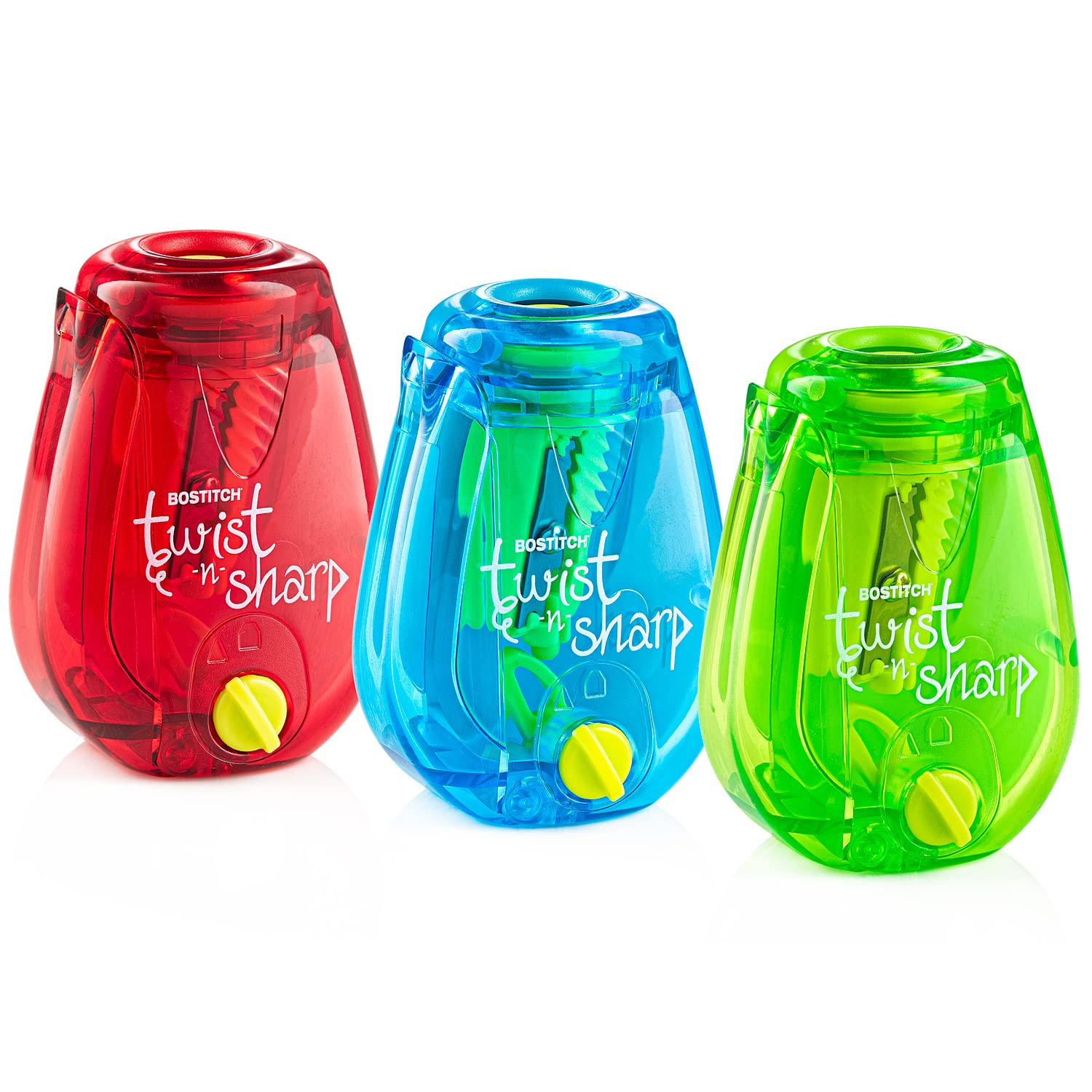
A handy three-pack of ratchet-style manual sharpeners with adjustable point settings and Tip Saver technology.
Why I picked it: Ratchet mechanism, adjustable point dial, Tip Saver technology, and three portable colors.
Best for: Students, kids, and on-the-go pencil kits.
Budget-friendly multi-pack great for backpacks.
Pros
- Tip Saver prevents over-sharpening
- Adjustable sharp or blunt point
- Attached shavings drawer
- Comfortable grip
Cons
- Small shavings capacity
- Plastic construction
My take
I like these Bostitch compact sharpeners when I want a reliable handheld option that won’t over-sharpen. The ratchet-style mechanism makes sharpening effortless and the center dial lets me choose a sharp point for detail or a blunt tip for shading.
The attached shavings drawer is simple to empty and the translucent body lets me know when it’s time to clean. Bright colors make them easy to spot in a pencil case or classroom stash.
They aren’t built for heavy workshop use, but for everyday carry, kid use, and colored-pencil work they’re excellent value.
4. Multi-Talented Pencil – STABILO Woody 3-in-1 – Sharpener – Best for Thick Art Pencils
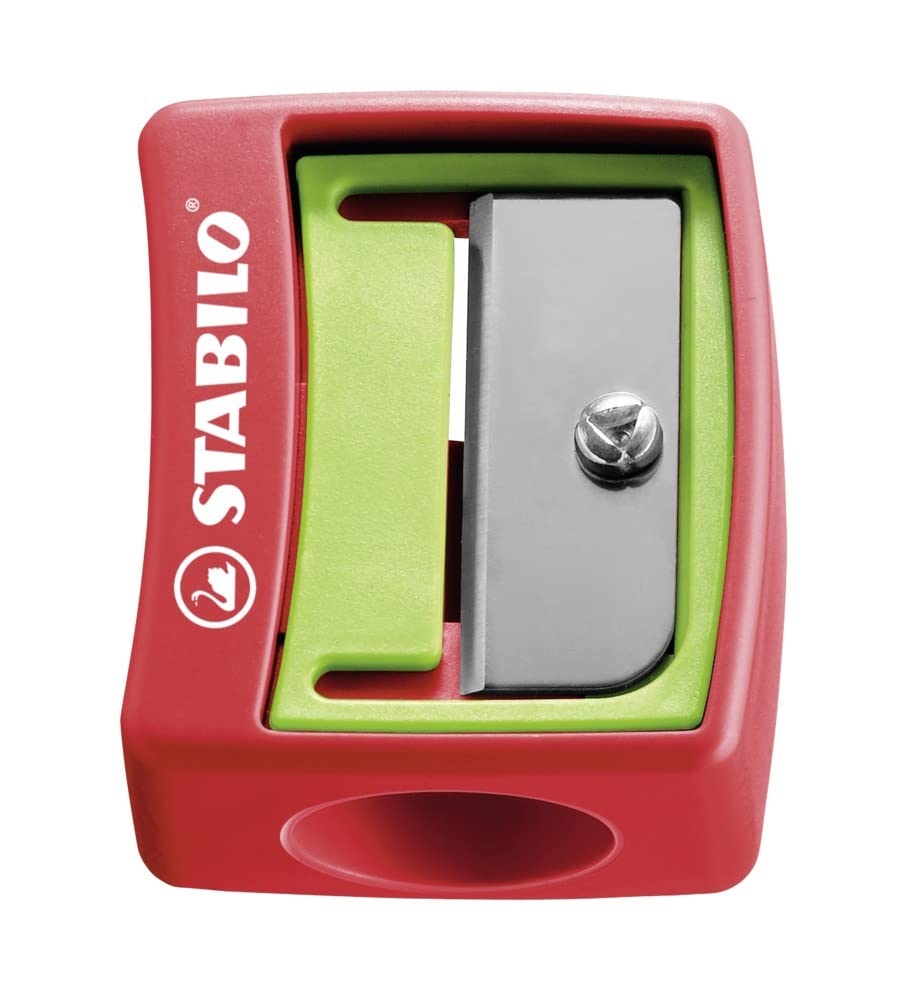
A compact, specialty sharpener built to handle wide-diameter art pencils like the STABILO Woody.
Why I picked it: Designed for fat pencils, with a stainless steel blade and child-safe design.
Best for: Artists using Woody-style or jumbo art pencils.
Low-cost specialty sharpener for large-diameter pencils.
Pros
- Accommodates fat pencils
- Stainless steel cutting edge
- Compact and portable
- Child-safe design
Cons
- Limited usefulness for standard pencils
- Basic, single-purpose design
My take
When I work with thick Woody or jumbo pencils, this STABILO sharpener is the only compact tool that consistently produces a clean edge. The steel blade slices through larger cores without mangling the wood.
It’s simple and small, which makes it easy to toss in a art bag while still giving a reliable, safe cut for kids and adults alike.
If you primarily use standard pencils, this won’t replace a multi-hole sharpener, but for fat art pencils it’s purpose-built and effective.
5. Faber-Castell Grip Trio Pencil Sharpener: Silver – Best All-in-One Manual
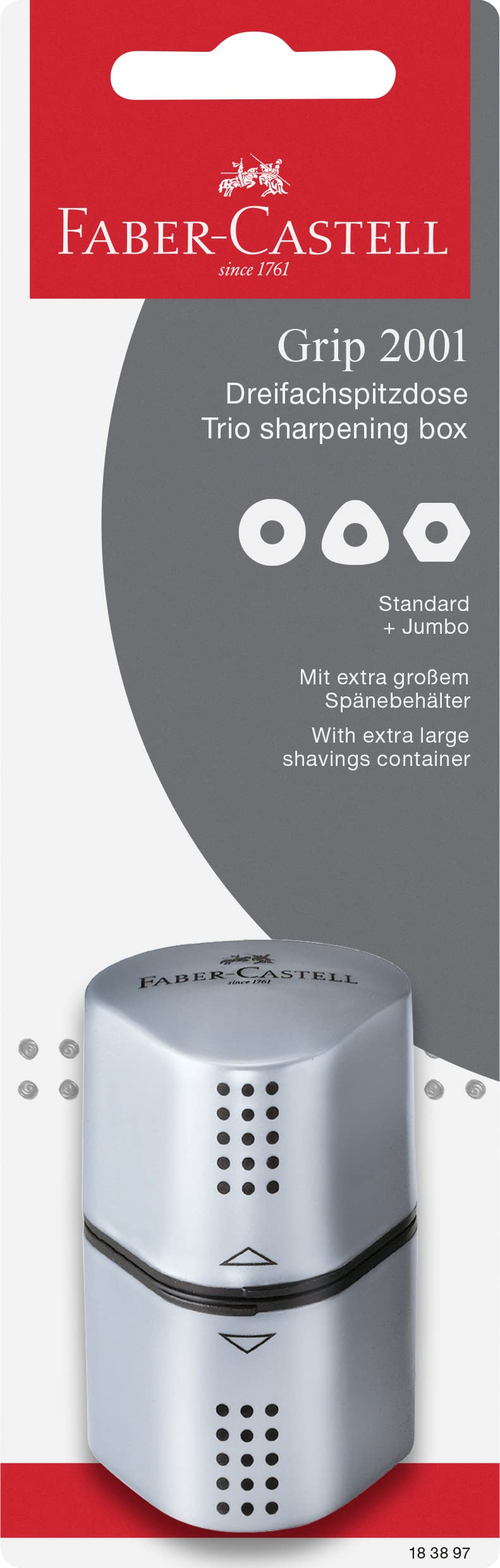
A versatile three-hole manual sharpener with an ergonomic triangular shape and extra-sharp steel blades for artists.
Why I picked it: Three hole sizes, ergonomic triangular grip, and clean steel blades for a precise point.
Best for: Artists and sketchers who want one handheld sharpener for many pencil types.
Affordable artist-grade manual choice.
Pros
- Three-size sharpening holes
- Ergonomic triangular design
- Extra-sharp steel blades
- Large shavings box
Cons
- Plastic hinge could feel fragile
- A bit stiff to open at first
My take
I carry the Grip Trio when I want a single, reliable handheld sharpener that tackles standard, jumbo, and colored pencils. The three holes remove the need to swap sharpeners mid-session.
The blades produce a clean point with minimal rotations, which preserves expensive pencils. The triangular shape sits well in my hand for quick touch-ups.
The shavings box keeps my workspace tidy and the unit’s compact size fits easily into my kit. I only worry a little about the plastic hinge over very long-term heavy use.
6. STAEDTLER Metal Double-Hole Pencil Sharpener – Precision 23° & 30° Angles for Standard & Colored Pencils – 3-Point Blade Design for Sharp Lines 1 – Best Precision Metal Sharpener
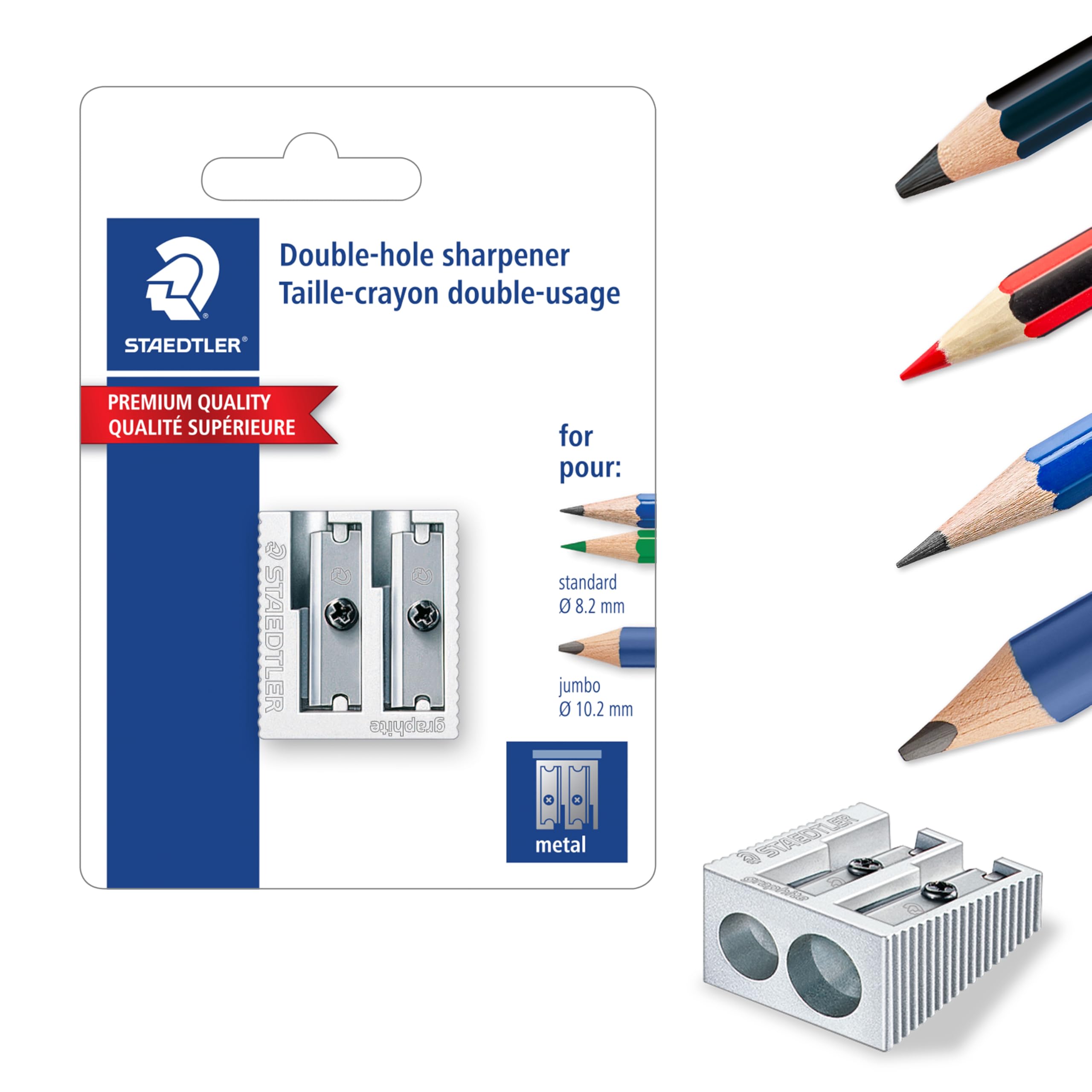
A solid metal dual-hole sharpener engineered for precision with 23° and 30° angles and a three-point blade mount.
Why I picked it: Dual angles for precise lines and a durable metal build.
Best for: Artists and technical users who need consistent, sharp points.
Inexpensive, long-lasting metal precision tool.
Pros
- 23° and 30° angle options
- Durable metal housing
- Three-point blade mounting
- Groove for lead removal
Cons
- No built-in shavings container
- Heavier than plastic sharpeners
My take
This Staedtler metal sharpener is my go-to when I want precise control over point angle. The choice between 23° and 30° gives me a fine, sketching-ready tip or a slightly blunter point for shading.
The metal body feels sturdy in hand and the blades are secured at three points, so I get consistently clean cuts without jagged edges. The groove for removing broken lead is a thoughtful touch.
It’s a compact, workhorse piece — perfect for a pencil case when I need reliable precision rather than an electric workhorse.
How I Choose a Pencil Sharpener
Key factors I consider
Pencil diameter and core type: I match the sharpener to the pencils I use most — standard graphite, jumbo, or soft-core colored pencils require different tooling.
Blade system and sharpness: Helical blades in electric models give consistent points and handle heavy use; steel blades in hand-helds give control and easy maintenance.
Power and speed: For high-volume use I prioritize motor power and heat-management features, while for studio work I value adjustable sharpness settings for fine detail.
- Check compatibility with pencil diameters (e.g., 6–12mm for jumbo pencils).
- Prefer auto-stop or tip-saver features to avoid over-sharpening.
- Choose replaceable blades or metal construction for longevity.
- Consider shavings capacity and how easy it is to clean.
- Balance portability versus duty cycle — electrics for heavy use, manuals for travel and precision.
Frequently Asked Questions
Can electric sharpeners handle colored pencils without breaking cores?
I’ve found many electric sharpeners manage colored pencils well if the manufacturer specifies compatibility. The AFMAT handles a wide range of pencil diameters but warns against soft-core pencils; the X‑ACTO SchoolPro has a helical system that produced clean points across many colored brands in my tests.
How do I avoid frequent lead breakage?
I avoid breakage by matching the tool to the pencil type, using a sharpness setting (if available) that isn’t overly fine for soft cores, and choosing sharpeners with helical or well-mounted blades. Manual metal sharpeners with precise angles also reduce lead stress.
Are manual sharpeners still worth using over electrics?
Absolutely. I keep manual sharpeners for portability, fine control, and situations where I want a very specific angle or to conserve batteries and power. Metal dual-angle sharpeners and multi-hole artist options remain indispensable in my kit.
Final Take
I kept electrics for speed and heavy-duty use, and manual sharpeners for precision and portability. Each of the sharpeners above earned a spot because it solved a real, repeatable problem in my workflow.
If you need a single recommendation for classrooms, I use the X‑ACTO School Pro. For artists who need speed and versatility, the AFMAT is the one I turn to. For compact, everyday carry and specialty pencils, the manual options cover all the bases.
