
I tested a range of electric pianos — from ultra-portable 32-key boards to full 88-key weighted instruments — and picked the best options for practice, lessons, and small performances.
I spent hands-on time with each keyboard in this roundup, focusing on playability, sound, teaching features, and what you actually use when learning or rehearsing at home.
Whether I needed a grab-and-go practice instrument, a full-sized weighted keyboard, or a feature-packed starter bundle, these picks covered the bases without wasting space on gimmicks.
Across these picks I prioritized real-world usability: helpful learning aids, reliable power/connectivity, and a convincing piano sound for the instrument's intended audience.
1. Alesis Melody 32 – Electric Keyboard Digital Piano with 32 Keys, Speakers, 300 Sounds, 300 Rhythms, 40 Songs, USB-MIDI Connectivity and Piano Lessons – Best Ultra-Portable
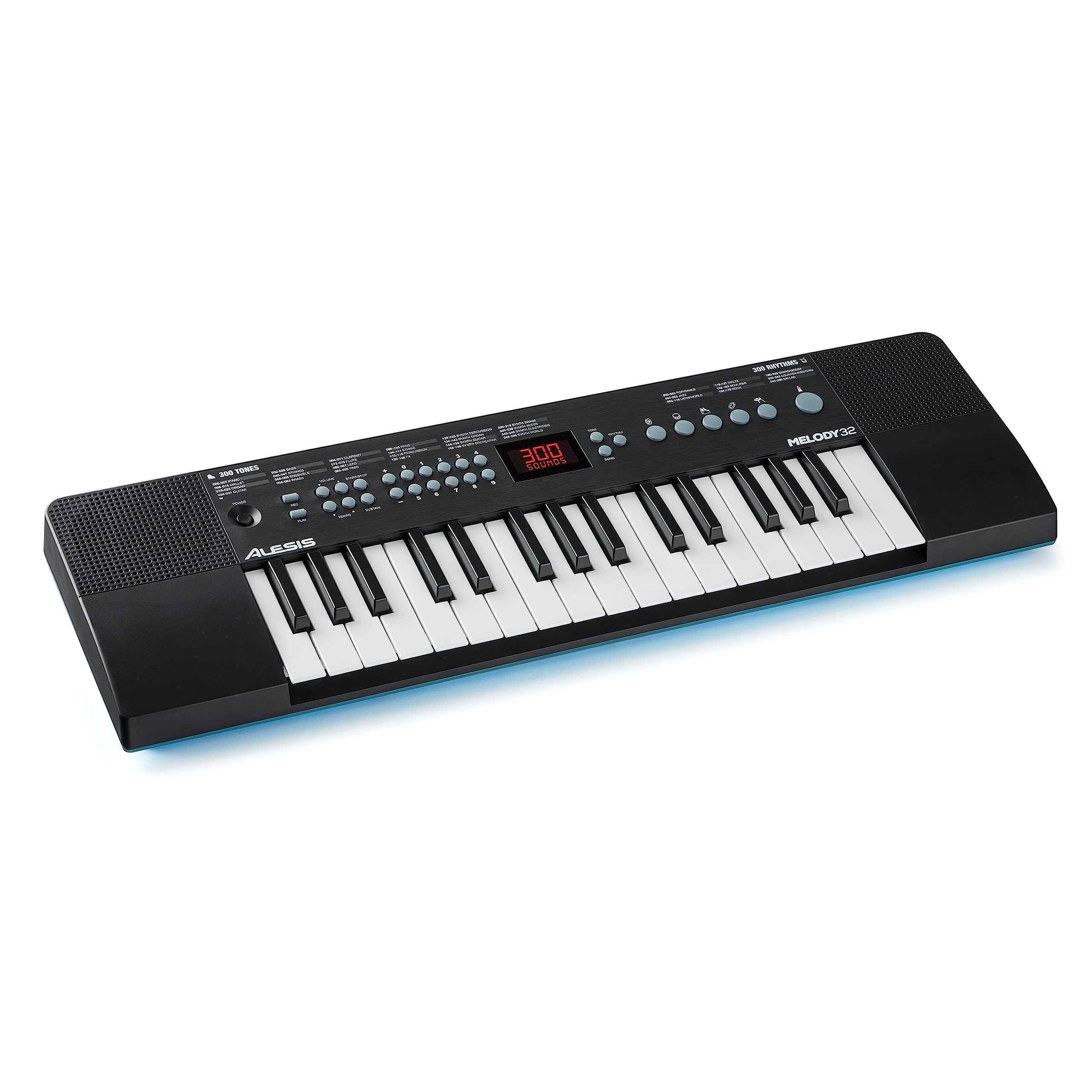
My go-to when portability is the priority: compact, battery-friendly, and loaded with teaching content and voices.
Why I picked it: Tiny footprint, USB or battery power, and built-in lessons make it ideal for practice anywhere.
Best for: Backpack-friendly practice, travel, and very young beginners who need a simple, feature-rich starter.
Very affordable entry-level option.
Pros
- Ultra-portable, USB or battery power
- 300 instrument voices and 300 rhythms
- Built-in speakers and headphone output
- Includes interactive lesson subscriptions
Cons
- Only 32 mini keys
- Not suitable for very young children under 12
My take
I reached for the Alesis Melody 32 when I needed something truly portable that still feels like a proper keyboard. The mini piano-style keys surprised me with a fairly natural action considering the compact size, and being able to run it from USB or AA batteries made it useful for quick practice sessions away from a desk.
Sound-wise the internal speakers deliver more room-filling sound than I expected for such a small board, and the headphone jack is excellent for late-night practice. The 300 voices and rhythms keep practice interesting, and the included Skoove and Melodics trial lessons are actually useful tools I used to structure short daily sessions.
If you want a convincing piano touch or full range for serious repertoire, this isn't it — but for travel, lessons, or a first-keyboard for a casual player, it gives a lot of capability in a tiny package.
2. Best Choice Products 61-Key Beginners Complete Electronic Keyboard Piano Set w/Lighted Keys, LCD Screen, Headphones, Stand, Bench, Teaching Modes, Note Stickers, Built-In Speakers – White – Best 61-Key Value Pack
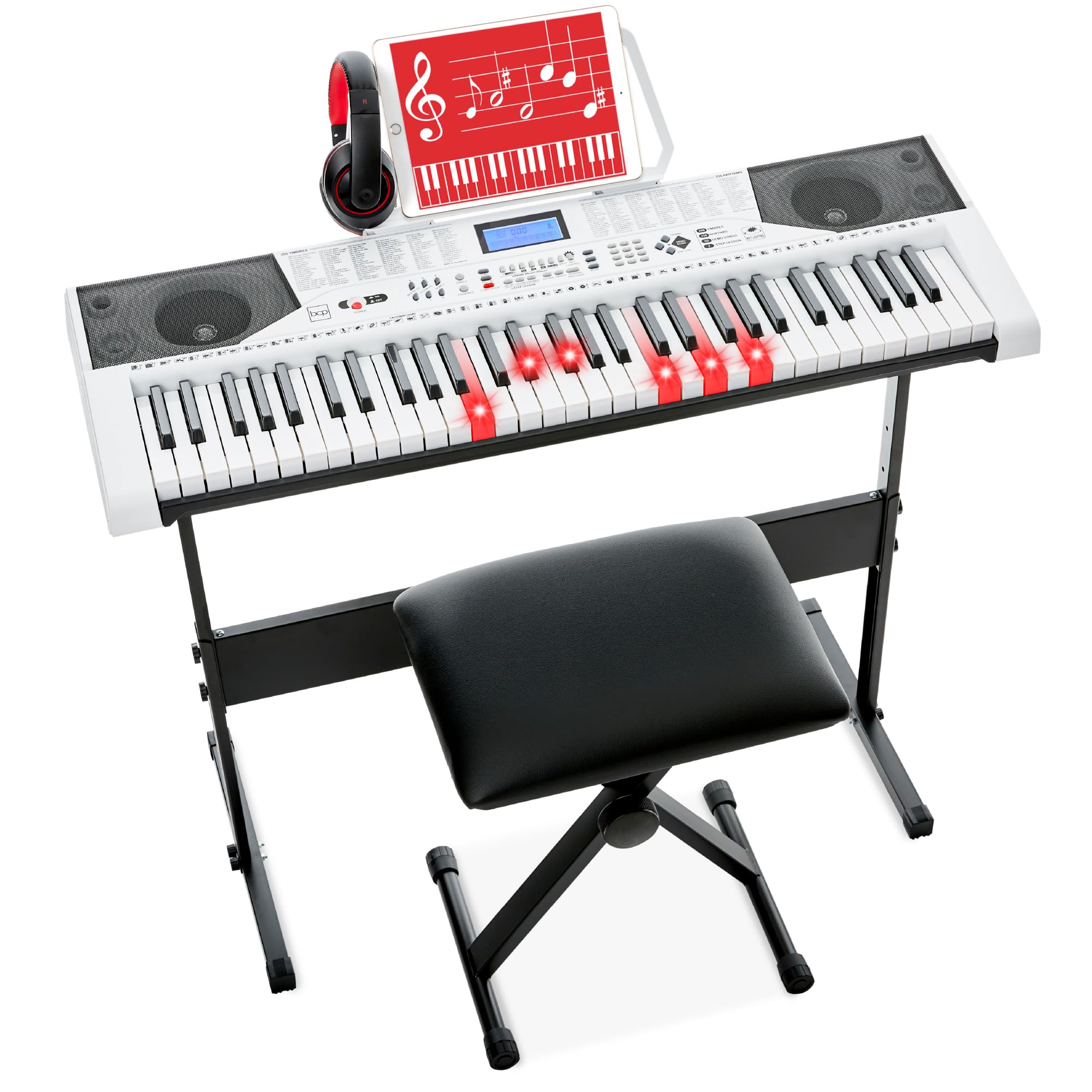
A full 61-key starter bundle that arrives ready to play with a stand, bench, and built-in teaching features.
Why I picked it: Complete package with lighted keys, teaching modes, and accessories for immediate practice.
Best for: Families and absolute beginners who want a ready-to-use keyboard setup.
Budget-friendly bundle with extras included.
Pros
- 61 standard-size keys
- Lighted-key teaching modes
- Includes stand, bench, and headphones
- USB port and LCD display
Cons
- Basic key action
- Accessories are entry-level quality
My take
I liked how this Best Choice Products kit arrived as a true starter setup — the stand and padded stool mean I could set it up for a lesson immediately, and the included headphones let me practice without disturbing others.
The light-up key teaching mode and note stickers made early learning sessions much faster; I saw how useful the visual prompts are for absolute beginners. Sonically, the internal speakers are clearer and louder than I expected for the class, which helps for family practice or small group play.
This isn't a performance instrument, but for the price and the convenience of a bundled kit, it’s a smart, low-friction way to begin playing and keep momentum while learning.
3. Hamzer 61 Key Digital Keyboard Piano with Stand & Bench, Beginner Electric Piano Keyboard Kit with Speakers, Headphones, Microphone, Keynote Stickers – Best Beginner Kit
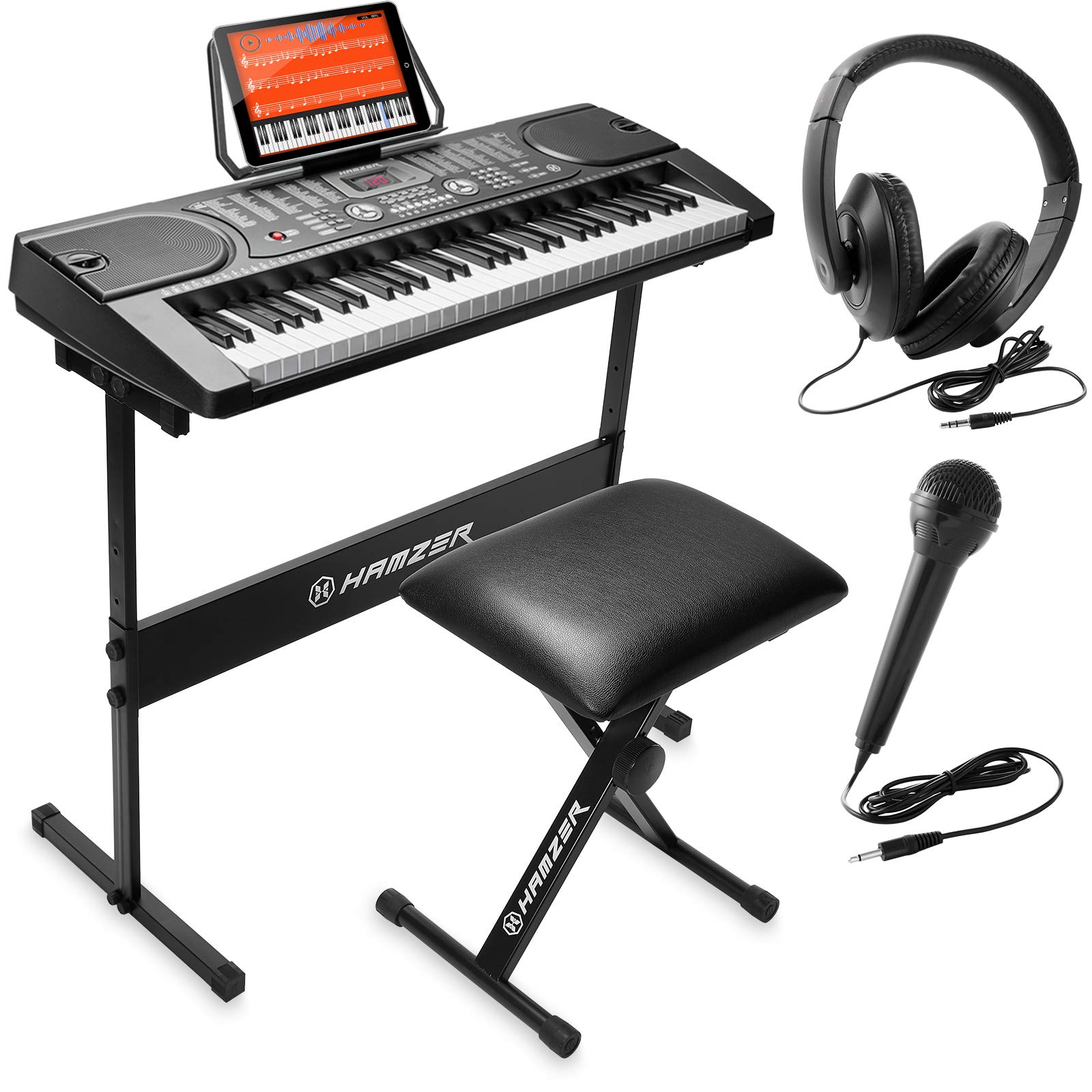
A beginner-focused 61-key kit that emphasizes learning tools, recording, and practice with useful accessories.
Why I picked it: Learning-focused feature set with record/playback and labeled key stickers.
Best for: Kids and adult beginners who benefit from visual learning aids and play-along tools.
Good mid-range starter kit.
Pros
- 61 keys with labeled stickers
- Record & playback function
- Includes mic, headphones, stand, bench
- Multiple rhythms and timbres
Cons
- Entry-level action and feel
- Not for advanced players
My take
I appreciated the Hamzer kit for how classroom-friendly it feels; the transparent key stickers and the teaching functions make practice sessions more productive and less frustrating for new players.
Recording and playback are simple but useful — I recorded short exercises and used them to check timing and phrasing. The included microphone and headphones are convenience bonuses that let students experiment with singing and basic production.
The sound and key action are appropriate for beginners. If you're planning to progress to intermediate pieces or need a refined touch, you’ll eventually want to upgrade, but this kit gets the job done for starting out.
4. Best Choice Products 61-Key Electronic Keyboard Piano Portable Electric Keyboard Complete Beginner Set w/LED Screen, Stand, Bench, Headphones – Black 61-Key Black – Best Bundle for Kids
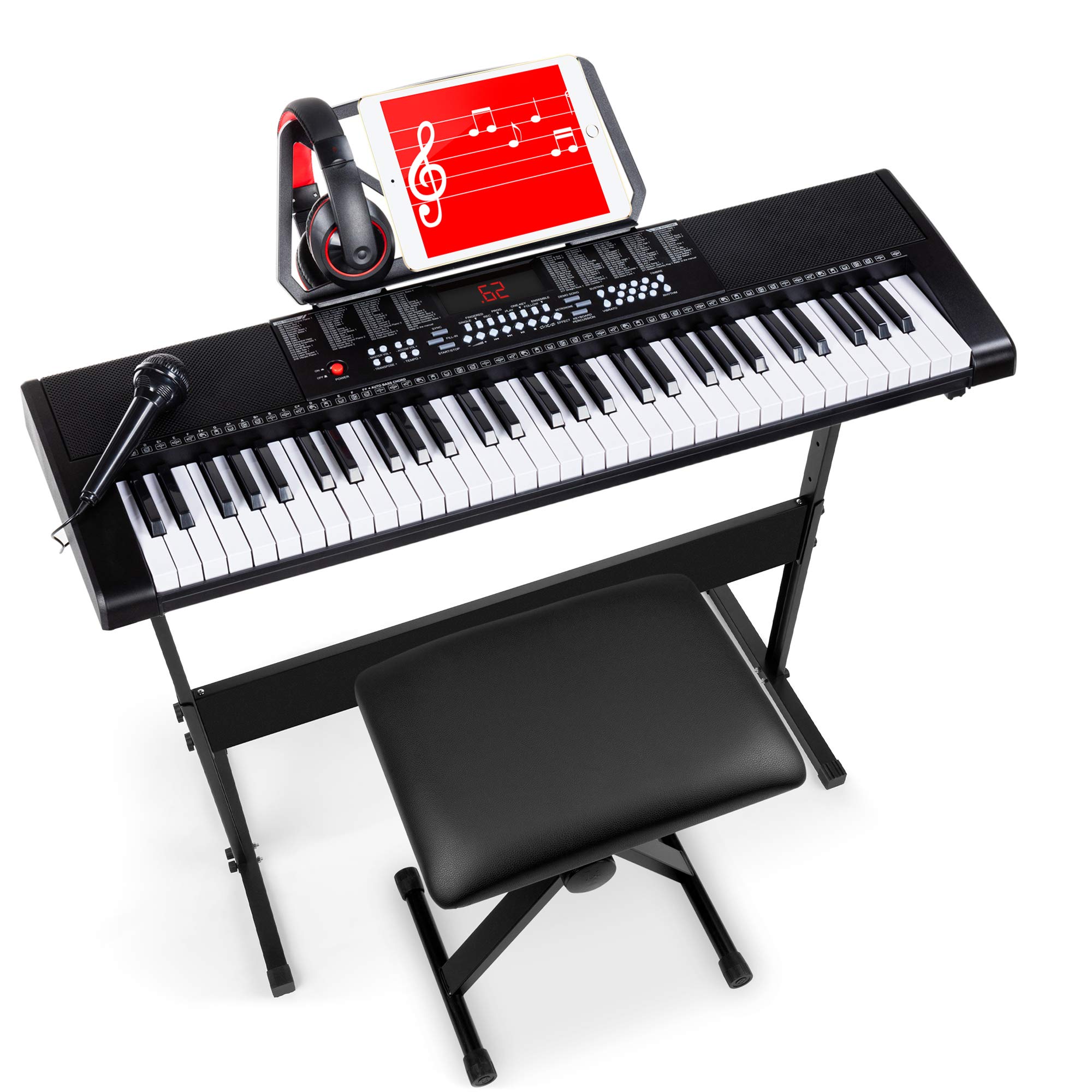
Another full 61-key bundle that leans into teaching modes and a strong accessory package for younger players.
Why I picked it: Three-step teaching modes and a solid accessory bundle make practice easy and fun.
Best for: Children and families who want a feature-filled, ready-to-use keyboard for lessons.
Attractive value for a full accessory set.
Pros
- Intelligent teaching modes
- 255 timbres and rhythms
- Comes with mic and stand
- LED screen and recorder
Cons
- Plastic build feels lightweight
- Mic has no stand
My take
I found this Best Choice Products model great for younger players who respond well to guided, interactive practice. The One-Key, Follow, and Ensemble modes helped break songs into manageable steps during short practice windows.
The included stool, stand, and headphones reduce setup friction — I could position it in a living room and have a child comfortably practicing within minutes. The variety of timbres and rhythms keeps sessions engaging, and the LED screen provides clear feedback while navigating functions.
It’s not a professional instrument, but for sparking interest and keeping practice enjoyable, this bundle succeeds at delivering everything a beginner family needs.
5. Yamaha PSRE373 61-Key Touch Sensitive Portable Keyboard (Power Adapter Sold Separately) – Best for Learning & Home Recording
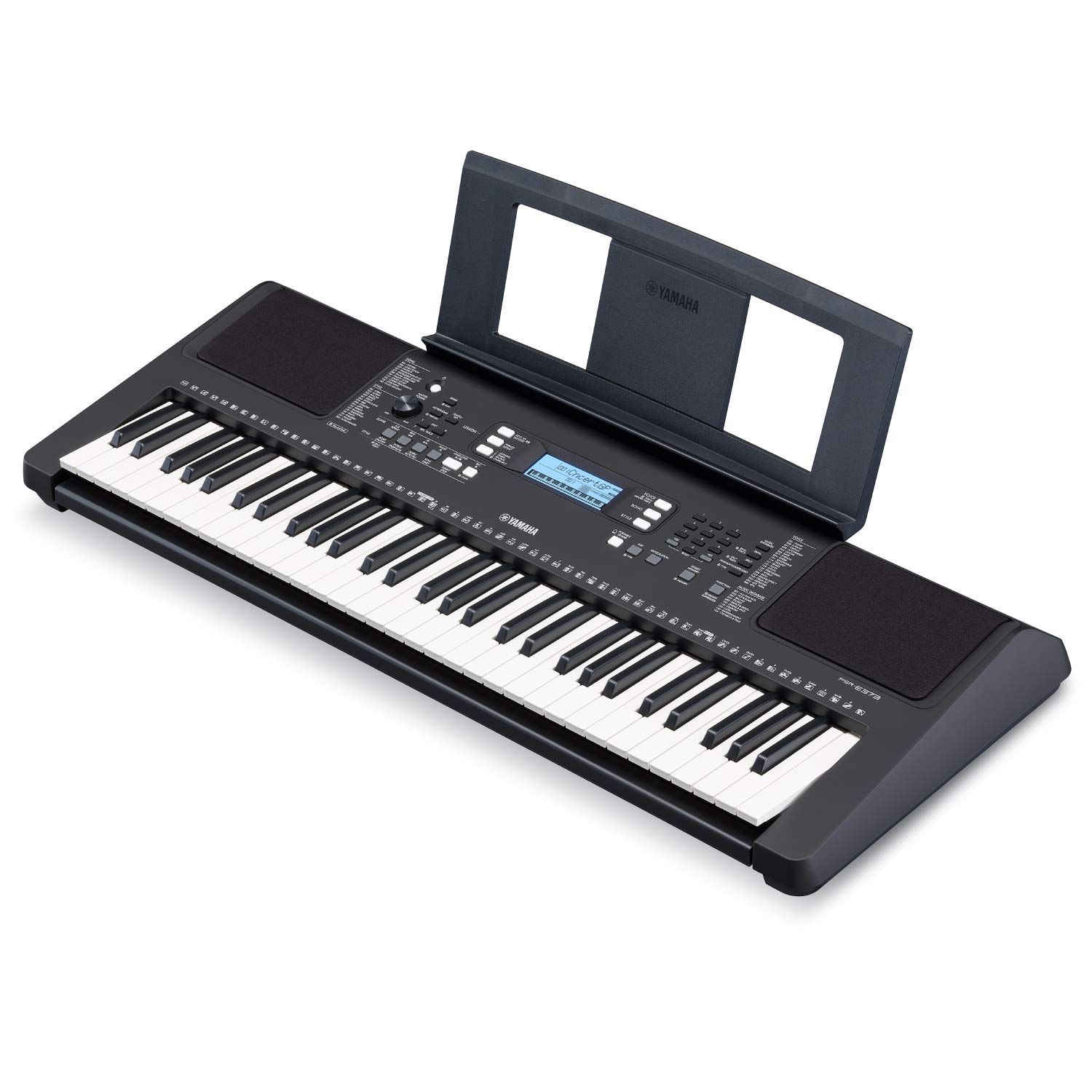
A step up in sound and features: touch-sensitive keys, extensive voices, and USB-to-host for recording.
Why I picked it: Touch sensitivity, hundreds of voices, and USB audio/MIDI make it versatile for learning and composition.
Best for: Students and hobbyists ready to record, compose, or practice with more realistic piano tones.
Solid mid-tier option with advanced features.
Pros
- Touch-sensitive keys
- Over 600 voices
- USB to HOST for MIDI/audio
- Smart Chord simplifies accompaniment
Cons
- Power adapter sold separately
- Not weighted keys
My take
I turned to the Yamaha PSR-E373 when I wanted better piano realism and the flexibility to record directly to a computer. The Grand Piano voice is detailed and expressive for a 61-key instrument, and touch sensitivity translates dynamics more naturally than entry-level non-sensitive boards.
USB-to-host is a major convenience — I easily routed MIDI and audio into my DAW with a single cable for quick sketches and practice recordings. The Smart Chord feature also accelerated accompaniment work when I was sketching song ideas with minimal fingerings.
If a fully weighted keybed is essential, this won't replace a digital piano, but for players who want superior sounds, lesson tools, and home-recording capability in a portable package, it’s a very capable choice.
6. Donner DEP-20 Beginner Digital Piano 88 Key Full Size Weighted Keyboard, Portable Electric Piano with Sustain Pedal, Power Supply DEP-20 Weighted Digital Piano – Best 88-Key Weighted
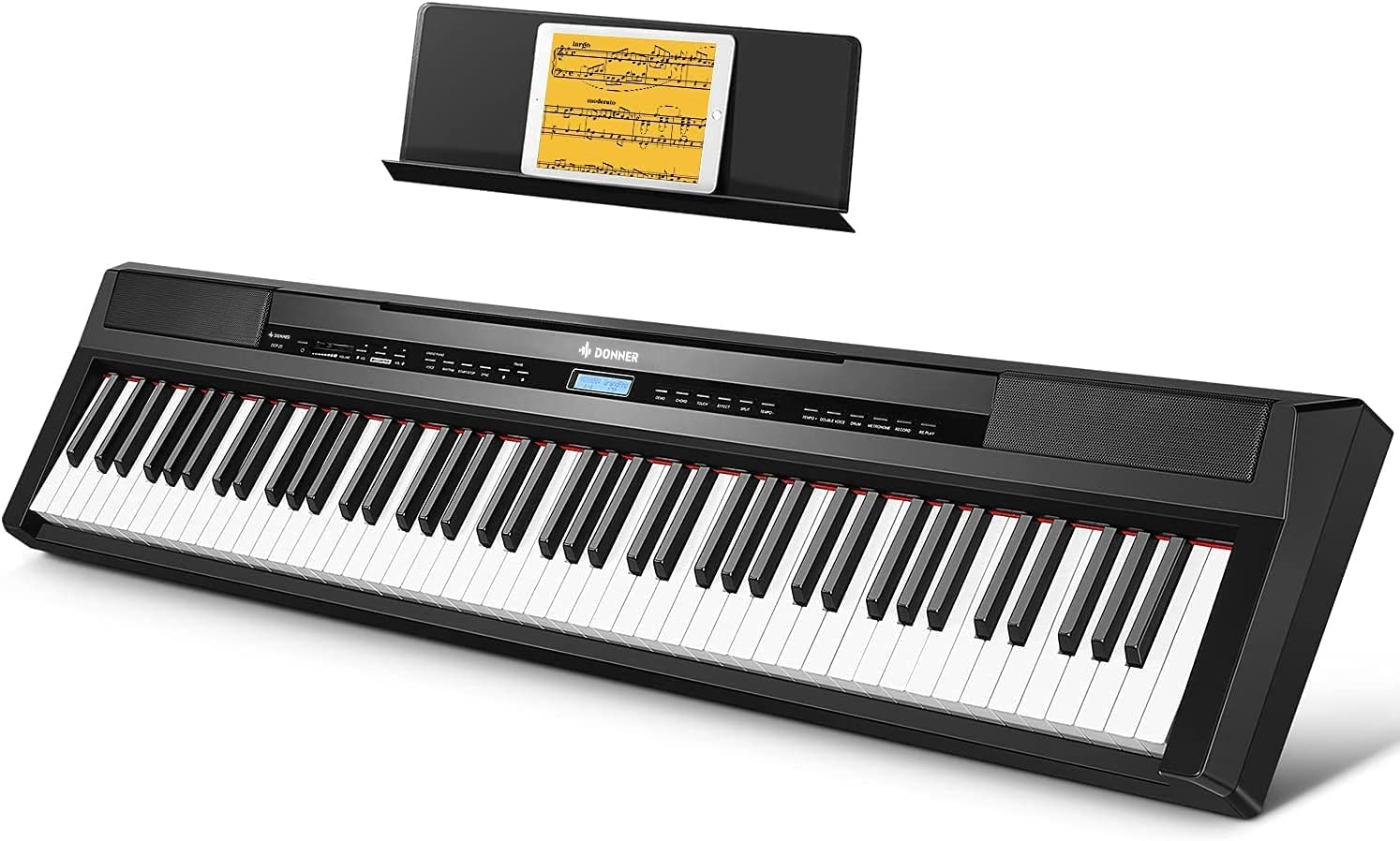
My pick when authentic piano touch matters: full 88 weighted keys, dual-tone modes, and substantial polyphony.
Why I picked it: Graded hammer-action 88 keys and 128-note polyphony give a realistic practice experience.
Best for: Learners progressing toward acoustic piano technique and home players who value realistic touch.
Competitively priced for a weighted 88-key instrument.
Pros
- 88 full-sized hammer-action keys
- 128-note polyphony
- Dual-tone mode and 25W amps
- Backlit LCD and recording/MIDI
Cons
- Bulky compared to lightweight boards
- Navigating many tones can be slow
My take
I picked up the Donner DEP-20 when I wanted a true piano-feel instrument without moving to a heavy digital console. The graded hammer-action keys are convincing, and the adjustable touch response let me dial in the feel that matched my playing style.
Sonically it surprised me for the segment: the built-in amplifiers and polyphony handled dense passages without obvious note dropouts, and the dual-tone mode opened creative layering possibilities I actually used while arranging simple pieces.
There are a couple practical drawbacks — it’s thicker and heavier than compact keyboards, and scrolling through the long list of tones can be tedious — but if core piano technique and a realistic weighted action are your priorities, this model delivers.
How I Choose Electric Pianos
Number of keys: 32, 61, or 88?
I match key count to musical goals: 32-key models are perfect for portability and very basic learning; 61-key boards give more range for pop and practice; 88-key instruments are essential when I work on classical repertoire or want realistic technique transfer to an acoustic piano.
- 32 keys — travel and very young beginners
- 61 keys — balanced for pop, practice, and lessons
- 88 keys — best for serious study and classical pieces
Weighted keys and touch sensitivity
I prioritize weighted keys when tone control and finger technique matter. Touch-sensitive (non-weighted) keyboards are fine for songwriting and casual practice, but hammer-action 88-keys are the closest to an acoustic experience.
- Weighted/hammer-action — realistic resistance and dynamics
- Touch-sensitive only — better dynamics than fixed-action mini keys
- Mini keys — compact but limited for advanced technique
Sound engine and polyphony
I look for convincing piano voices and sufficient polyphony. When I layer sounds or use sustained chords, 64+ notes of polyphony reduces dropped notes and smearing.
- High-quality piano samples improve realism
- 128+ polyphony helps for layered sounds and sustain
- Brand sound engines can vary — test critical voices
Connectivity and extras
USB-to-host, headphone outputs, recording functions, and bundled lesson tools increase long-term usability. I find boards that include stands, benches, and headphones reduce friction to practice.
- USB audio/MIDI for recording and software integration
- Headphone jack for private practice
- Bundled stands and benches speed setup for beginners
Frequently Asked Questions
Do I need 88 keys to learn piano properly?
For basic learning and popular songs, 61 keys work fine. I recommend 88 keys if you plan to study classical repertoire or want a touch that closely matches an acoustic piano.
Are built-in lessons useful for progress?
Yes — I use built-in teaching modes and lighted keys to structure short, consistent practice sessions that sustain motivation and build muscle memory.
Should I worry about included accessories like stands and benches?
I welcome bundled stands and benches because they remove setup barriers. Accessories in bundles are often entry-level, but they get you playing immediately and are easy to upgrade later.
Final Take
I chose these electric pianos to cover the practical needs I encounter most: portability, teachability, realistic touch, and recording capability.
If I need to practice on the go I reach for the Alesis Melody 32; when realistic touch matters I go to an 88-key Donner. The other picks are reliable middle options depending on whether I want a full bundle, teaching aids, or recording features.
Pick the instrument that matches how you intend to play, and you’ll practice more — which is the single best investment you can make.
