
I tested classroom-grade pencil sharpeners, compact office units, heavy-duty models for artists, and pro knife and tool sharpeners. Here are the ones I keep coming back to and why.
I put a range of electric sharpeners through daily use so I could recommend the right tool for different tasks: classroom chaos, home offices, colored-pencil artwork, kitchen knives, and workshop blades.
Across these picks I focused on build quality, cutter type, safety features, and how each unit treated different pencil cores or blade steels. Below I explain which models worked best for the jobs I give them and why.
I organized these choices by use case — heavy classroom use, compact office needs, artists and large pencils, and professional knife and tool sharpening — so you can match a sharpener to how you actually work.
1. X-ACTO SchoolPro Classroom Electric Sharpener – Best for Classrooms
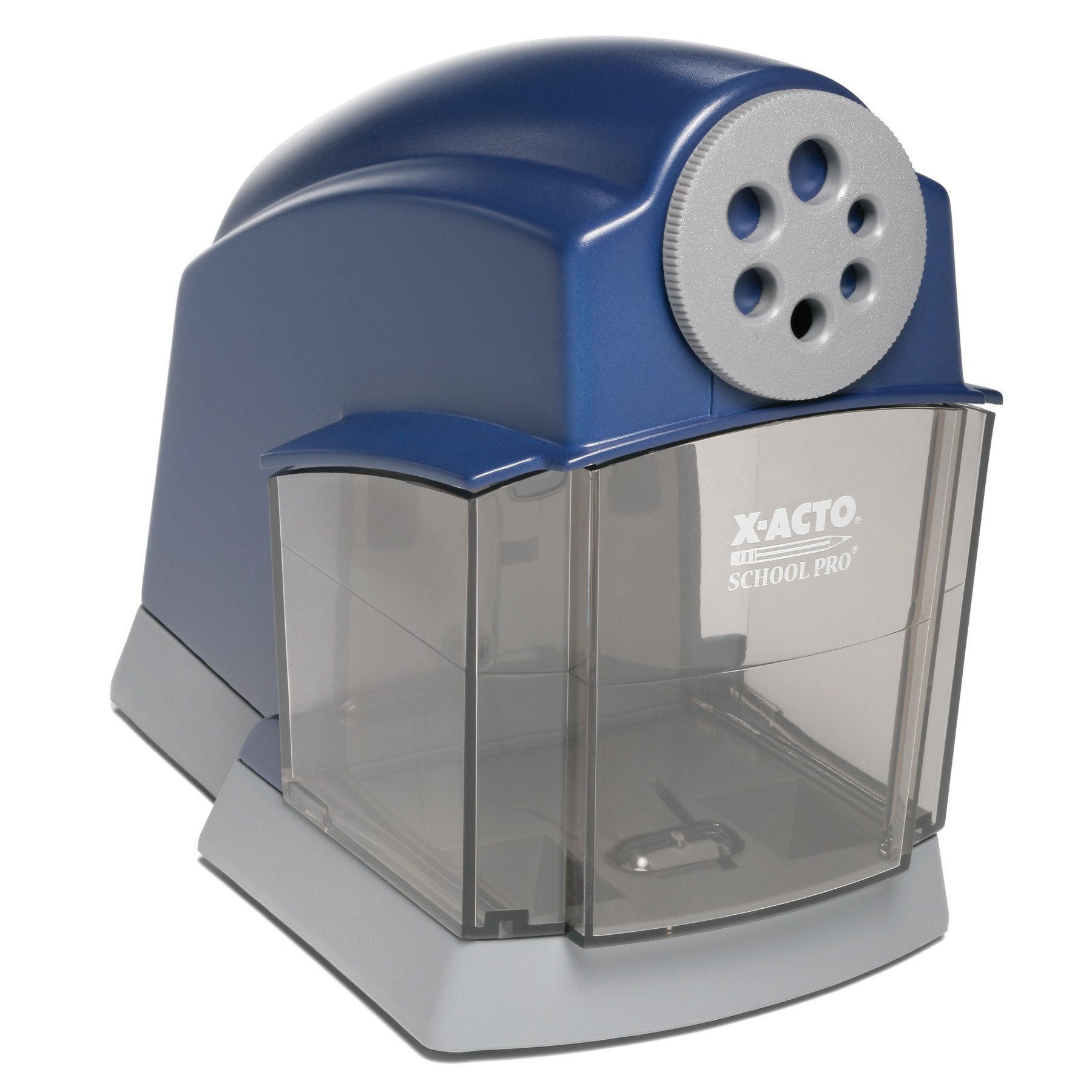
A rugged classroom workhorse that gives safe, rounded points and handles multiple pencil sizes.
Why I picked it: Rugged construction, auto-stop safety, and accommodation for six pencil sizes.
Best for: Schools, homeschool spaces, and heavy daily sharpening
An affordable heavy-duty option built for high use.
Pros
- Handles six pencil sizes
- Auto-stop prevents over-sharpening
- SafeStart prevents operation without receptacle
- Quiet, powerful motor
- Rugged classroom construction
Cons
- Requires outlet power
- Bulkier than desktop models
My take
I used this X-ACTO in a heavy-use setting and appreciated how consistently it produced a safe, rounded point without chewing up pencils. The flyaway helical cutter and Auto-Reset work together so I could hand it to students without worrying about overheating.
It swallows a range of pencils — everything from standard No. 2s to many colored pencils — and the SafeStart sensor makes emptying the shavings less risky. For classroom traffic this model felt like it was built to keep running.
If you need a sharpener that tolerates repeated daily use and keeps pencils usable, this is the one I reach for first.
2. Bostitch Office Electric Sharpener – Best Compact Office
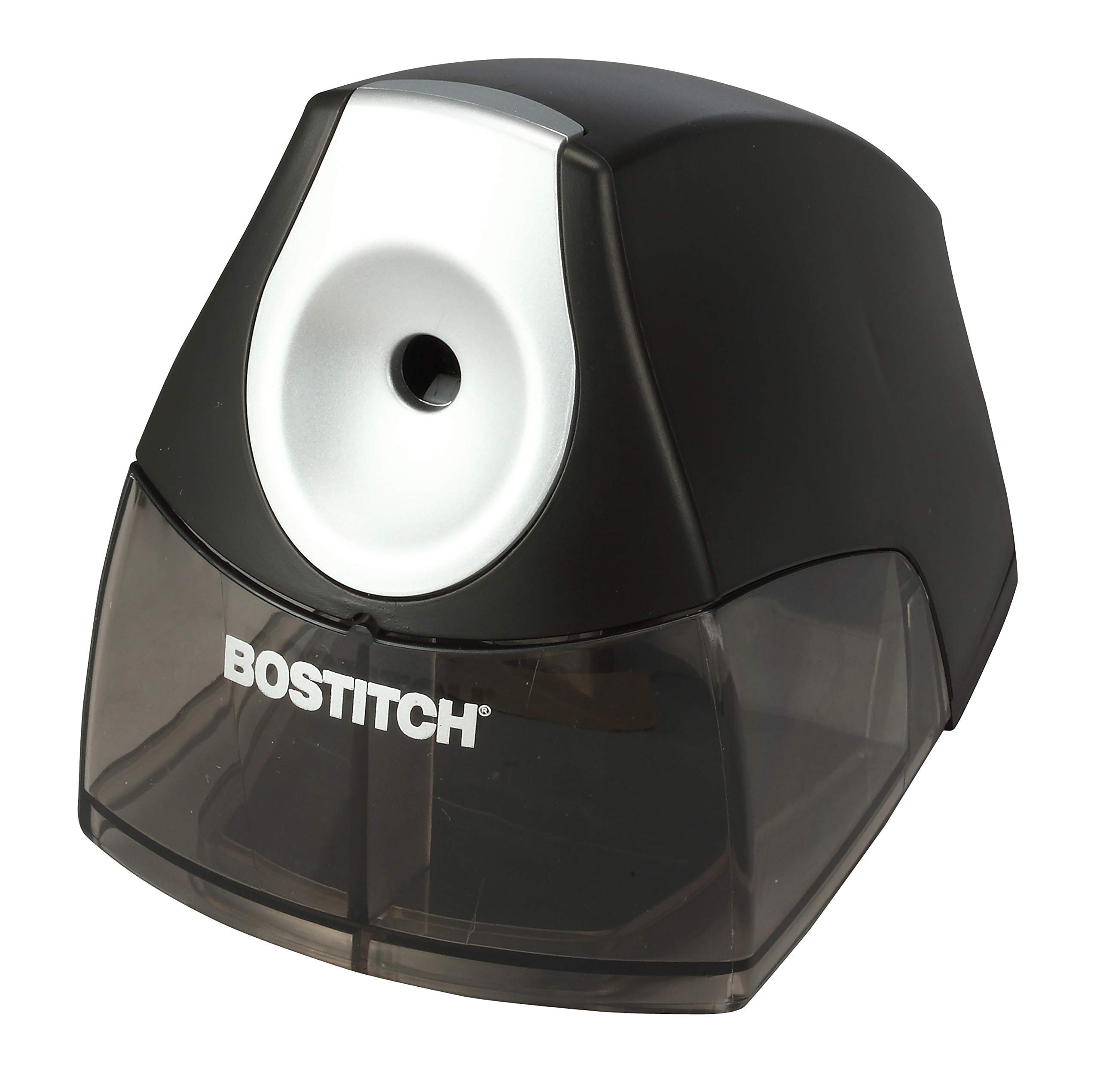
A space-saving sharpener with a powerful stall-free motor and a generous shavings tray.
Why I picked it: Compact footprint without sacrificing motor power and cutter life.
Best for: Home offices, small desks, and families who want convenience
A budget-friendly compact choice that still performs well.
Pros
- Powerful stall-free motor
- Hardened helical cutter lasts longer
- Large shavings tray
- Space-saving design
- Safety switch when tray removed
Cons
- Plug-powered only
- Can jam if pencils are forced
My take
I keep the Bostitch on my home desk because it delivers quick, clean points while taking up very little space. The hardened helical cutter feels durable and the large shavings tray means fewer interruptions.
Colored pencils sharpened nicely for my kids’ art sessions, though I learned to hold the pencil firmly to prevent spinning. It isn’t battery-powered, so you’ll need an outlet, but for a compact office unit it strikes a solid balance between power and size.
Treat it gently — like any small motorized sharpener — and it will do the everyday work without fuss.
3. AFMAT Heavy Duty Electric Sharpener – Best Heavy-Duty
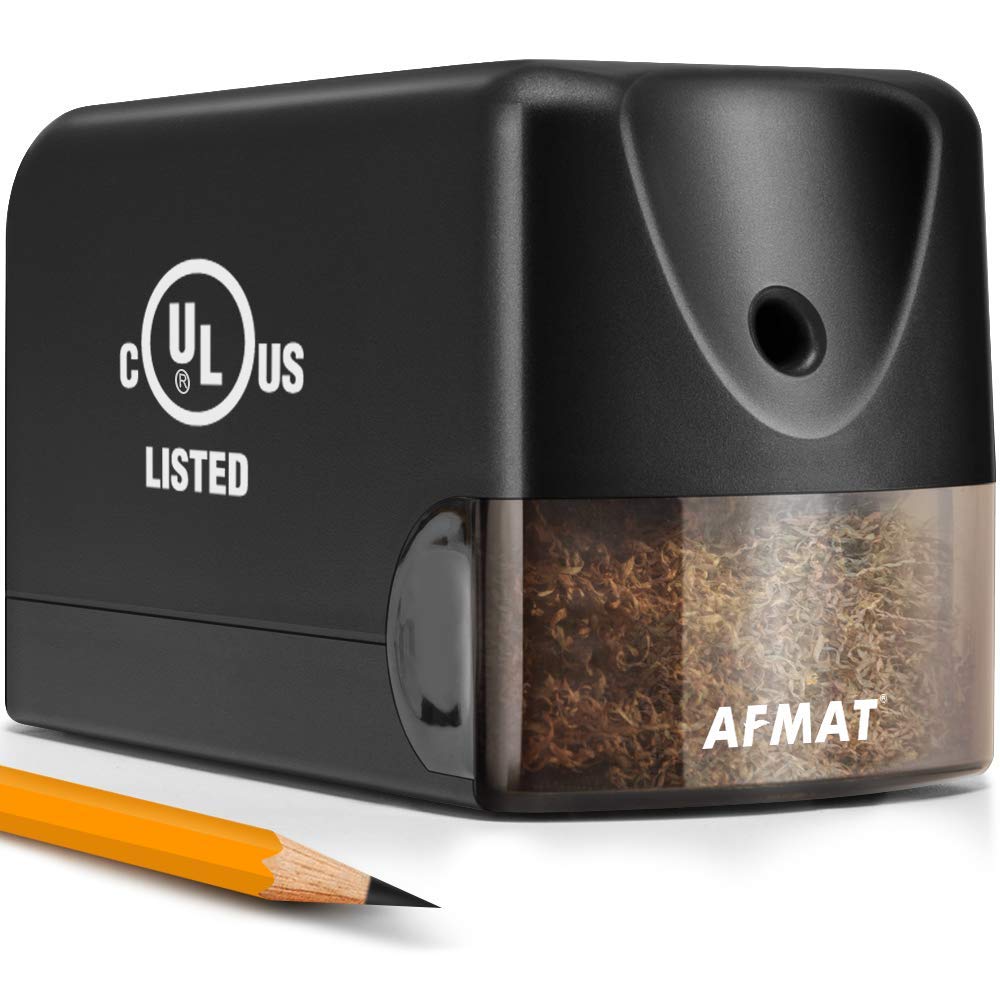
UL-listed, built for thousands of sharpenings, and designed to handle classroom and high-frequency use.
Why I picked it: Durable motor and helical blade rated for heavy, repeated sharpening.
Best for: Teachers, classrooms, and anyone who sharpens pencils nonstop
A midrange rugged option made for longevity.
Pros
- UL listed for safety
- Handles high-volume sharpening
- Works on colored and graphite pencils
- Non-skid feet for stability
- Compact but solid build
Cons
- Not recommended for soft-core pencils
- Can hum if over-pressed
My take
I relied on this AFMAT in a classroom-style routine and it held up. It starts automatically and produces consistent, centered points quickly — the motor is noticeably stronger than basic desktop units.
After extended use I appreciated the stability from the rubber feet and the safety cutout when the shavings box is removed. It handled a wide variety of pencils without frequent jams, as long as I didn’t push too hard.
If you need something that survives heavy daily sharpening, this model showed the kind of durability I look for.
4. AFMAT Auto-Stop Electric Sharpener (Large Pencils) – Best for Artists
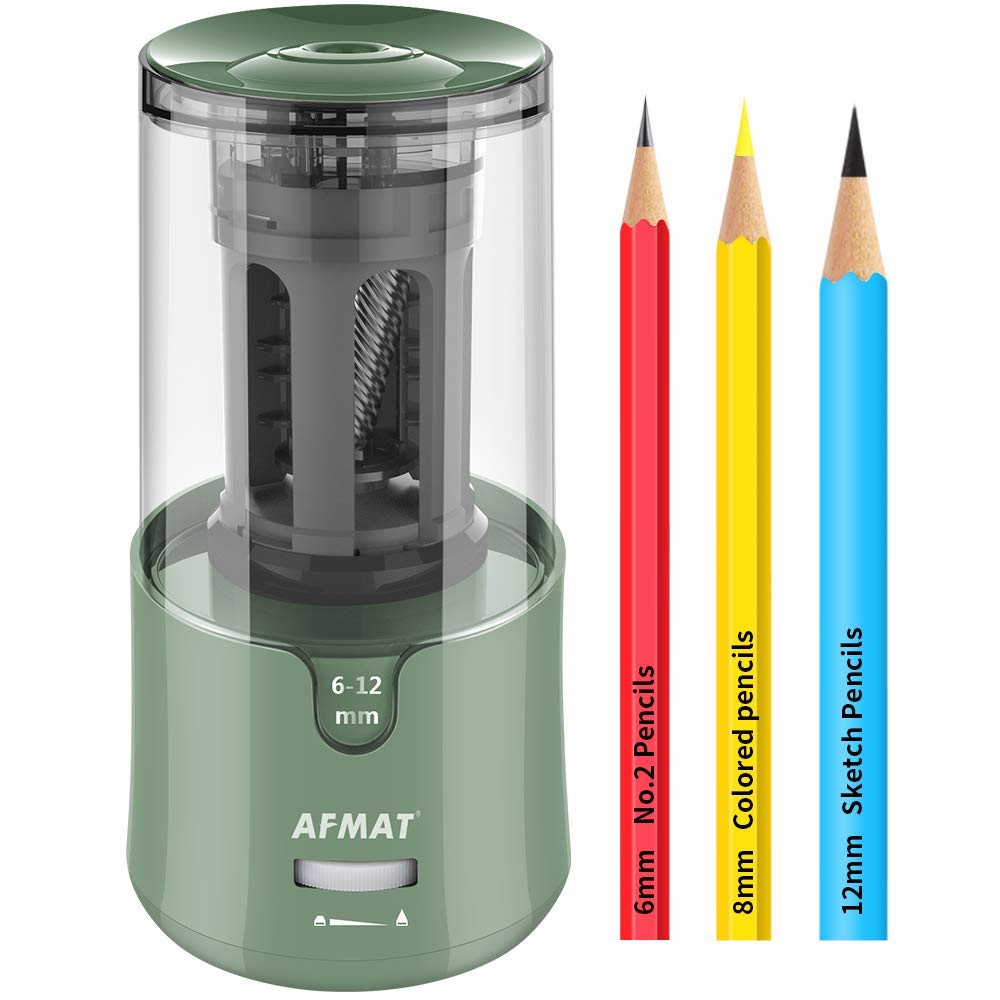
Very fast sharpening, auto-stop, and two sharpness settings make it ideal for colored-pencil artists and large-diameter pencils.
Why I picked it: Speed, adjustable sharpness, and support for 6–12mm pencil diameters.
Best for: Artists using Prismacolor and large colored pencils
A smart value for specialized art and large pencil needs.
Pros
- Extremely fast sharpening
- Two sharpness settings
- Handles large 6–12mm pencils
- Auto-stop to prevent over-sharpening
- Replaceable helical blade
Cons
- Not for soft-core pencils
- Plug-in power only
My take
I bought this AFMAT to save time when preparing dozens of colored pencils and it was a game changer. The motor sharpens quickly and the dual sharpness settings let me choose a blunt tip for kids or a needle point for artwork.
Prismacolor and other hard-core colored pencils came through without the breakage I used to get with handheld sharpeners. The large shavings box and top lid make cleaning straightforward, and the replaceable blade is a nice long-term feature.
For anyone working with large or artist-grade pencils, this is one of the fastest and most reliable options I’ve used.
5. Chef’sChoice 15XV Knife Sharpener – Best for Knife Enthusiasts
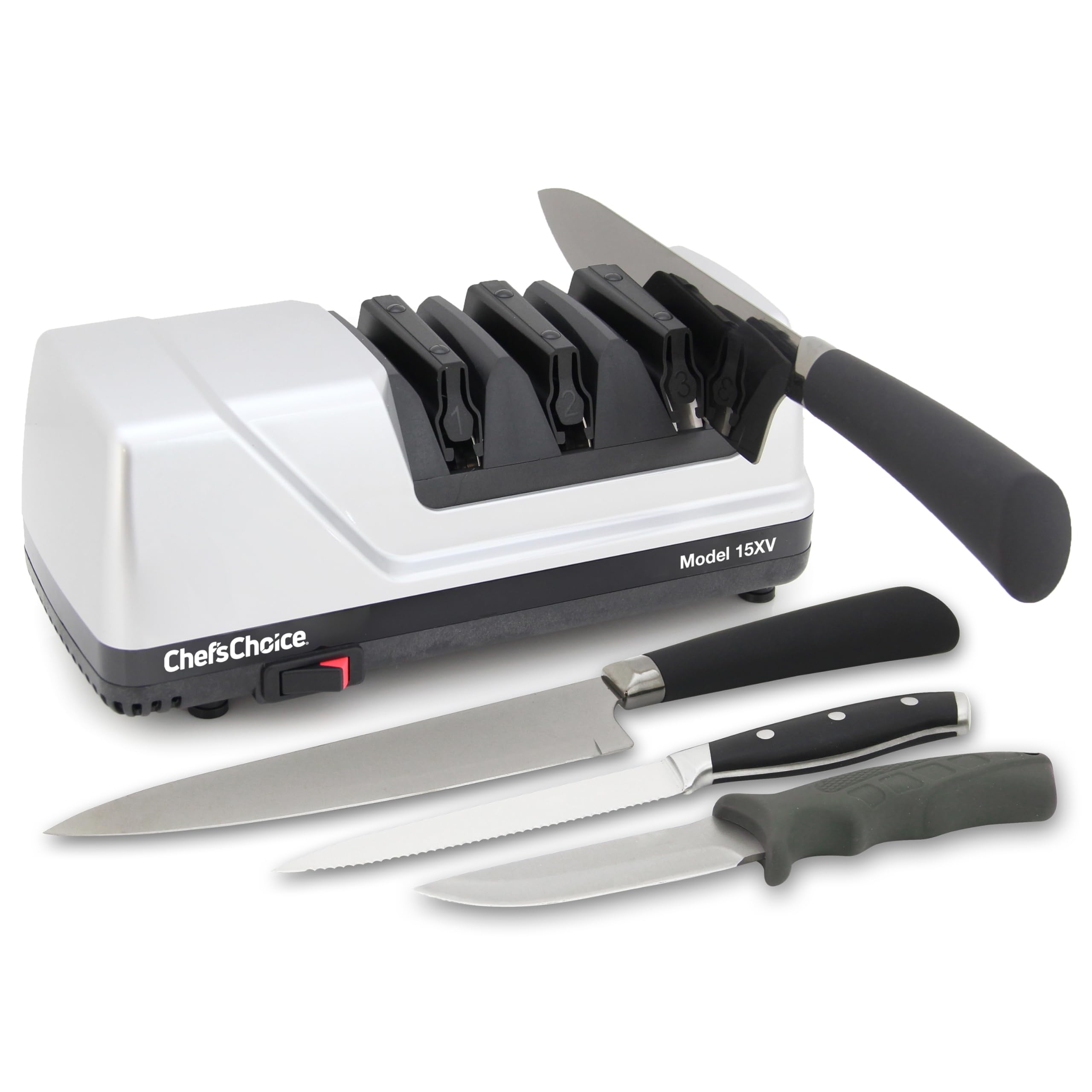
A three-stage diamond sharpener that converts and polishes blades to a fine 15-degree edge.
Why I picked it: Patented diamond abrasives and precision guides deliver razor-sharp kitchen edges.
Best for: Home cooks who want professional 15-degree edges
A higher-end investment for restoring and refining knife edges.
Pros
- 100% diamond abrasives
- Three-stage sharpening system
- Converts to 15-degree edge
- Polishing stropping stage
- Easy to use
Cons
- Narrow angle may need more frequent touch-ups
- Not ideal for very soft steels
My take
I use the Chef'sChoice when I want a razor-clean kitchen edge without fuss. The three stages walk the blade from reshaping to a polished finish quickly, and the angle guides remove any guesswork.
A first-time sharpening takes a little longer, but resharpening afterward is fast. My knives sliced vegetables and meats noticeably better after using this unit — the difference is dramatic if you haven’t had a true 15-degree edge in a while.
If you own quality knives and want consistent, professional edges without learning complex techniques, this is the tool I rely on.
6. Work Sharp MK2 Professional Sharpener – Best for Tools & Versatility
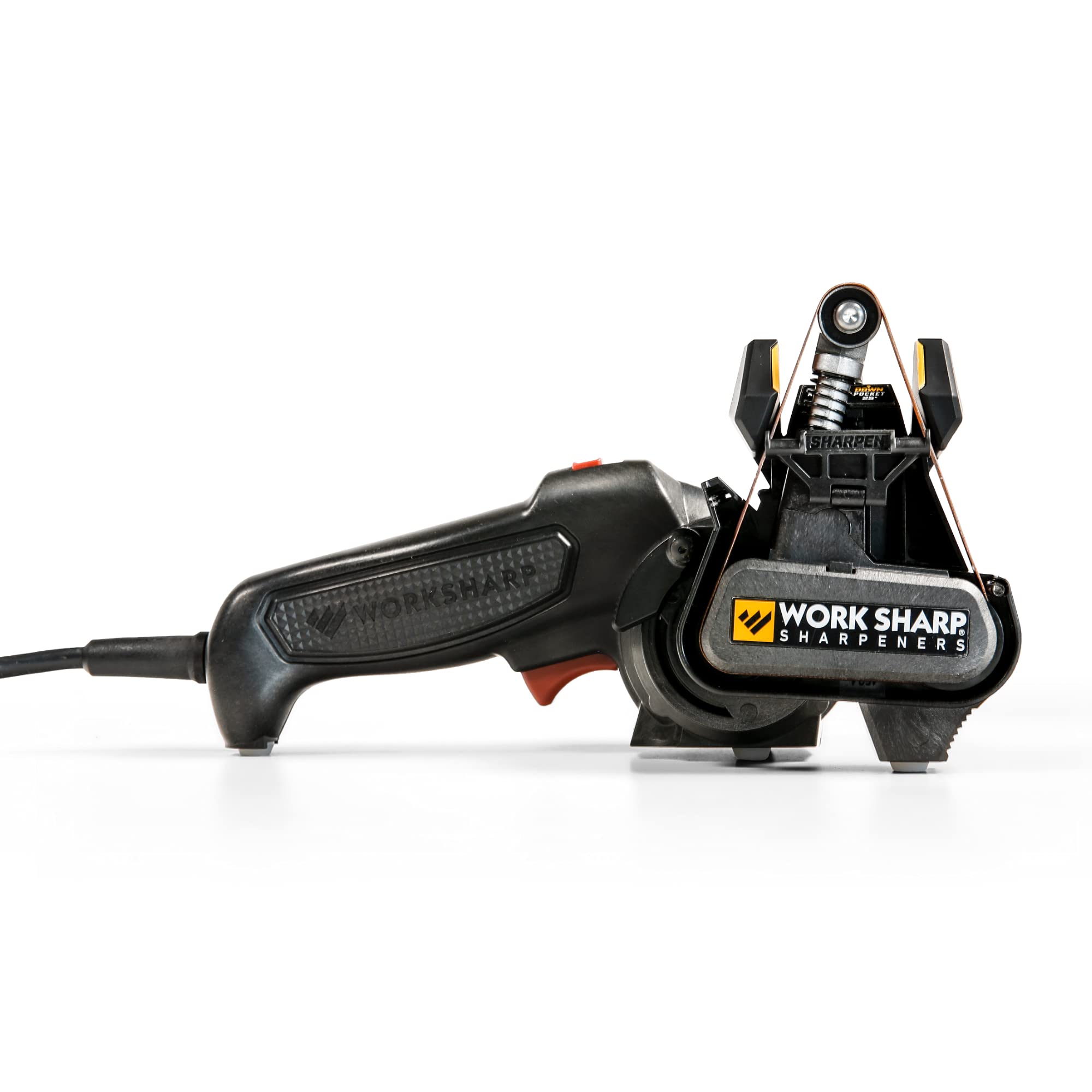
A flexible belt system that handles knives, axes, mower blades, and other workshop tools with two-speed control.
Why I picked it: Versatile belt system and adjustable speed let me tackle knives and heavy tools alike.
Best for: Workshops, outdoorsmen, and hobbyists who sharpen varied tools
Priced for pros and serious hobbyists seeking versatility.
Pros
- Flexible belts conform to any edge
- Two-speed motor for control
- Great for tools and knives
- Edge guide supports tip-to-tip sharpening
- Backed by a multi-year warranty
Cons
- Belts wear and need replacement
- Larger footprint than compact units
My take
I turn to the Work Sharp MK2 when a knife or tool needs more than a tabletop touch-up. The belts flex to the edge and make it simple to reprofile lawnmower blades, axes, and pocket knives with repeatable results.
The two-speed motor gives me the control I want when working hard steels, and the included guides remove the guesswork from maintaining a consistent angle. I do keep spare belts on hand because belt life depends on steel hardness and frequency of use.
For anyone who wants a single machine that can service kitchen knives and workshop tools, this unit is the most flexible option I've used.
7. X-ACTO XLR Electric Pencil Sharpener – Best Home & Office
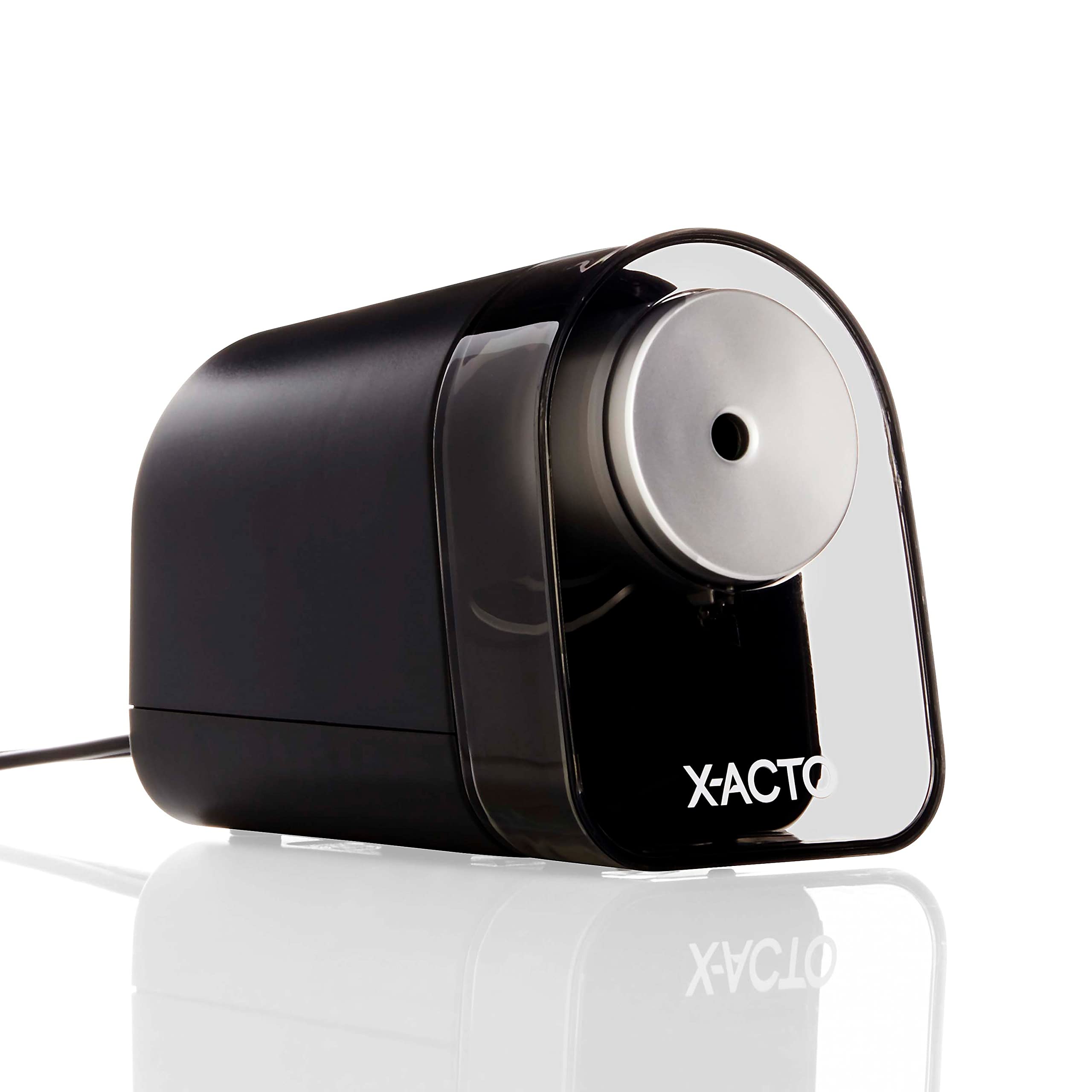
A compact, reliable home/office sharpener with PencilSaver technology and an efficient helical cutter.
Why I picked it: Affordable, precise, and designed to avoid oversharpening for everyday use.
Best for: Home desks, small offices, and hobbyists
An affordable and reliable daily driver.
Pros
- PencilSaver prevents oversharpening
- Helical cutter for precise points
- Quiet motor
- Auto-reset protects motor
- Compact, attractive design
Cons
- Rated for moderate use
- Not intended for heavy classroom traffic
My take
The X-ACTO XLR is the unit I keep at my home workbench. It sharpens a variety of pencils quickly and its PencilSaver feature means fewer wasted cores and longer pencil life.
I ran through dozens of colored pencils and standard graphite pencils with steady results; the cutter stays centered and the motor is pleasantly quiet. For everyday household or small-office use this model is dependable and easy to maintain.
If you need something for light to moderate daily sharpening, this strikes the best balance of precision and value in my experience.
How I choose an electric sharpener
Type and intended use
I always start by matching the sharpener to what I sharpen most. Pencil sharpeners and knife/tool sharpeners are different animals — choose one designed for the material you use regularly.
For classrooms and heavy pencil use I look for helical blades, safety cutoffs, and a durable motor. For artists I prioritize models that accept larger diameters and offer adjustable sharpness. For knives and tools a belt or staged diamond system is essential.
- Pencil sharpeners: helical or hardened cutters and safety switches
- Artists: models that accept 6–12mm pencils and offer adjustable tips
- Knives/tools: diamond abrasives or flexible belts and angle guides
Power, durability, and safety
I check whether the unit is corded or battery-powered based on where I’ll use it. Corded models usually provide more consistent power and longevity; battery options offer portability.
Safety features like a shavings-tray cutout and SafeStart are non-negotiable in settings with kids or heavy traffic.
- Corded vs battery: corded for regular heavy use, battery for portability
- Safety cutoffs prevent operation when the shavings tray is removed
- Auto-stop and auto-reset protect motor and pencils
Maintenance and consumables
I consider blade and belt replacement when evaluating long-term cost. Helical cutters and diamond abrasives last a long time, but belts and replaceable blades should be easy to source.
A large shavings receptacle saves time for busy environments, and units with easy-access trays make cleaning painless.
- Check availability of replacement blades or belts
- Prefer large, easy-to-empty shavings trays
- Non-skid feet or suction help stabilize during use
Special notes for colored pencils and soft cores
I avoid using high-speed heavy-duty sharpeners on very soft-core pencils; some models explicitly warn against soft cores and may jam them.
For artist-grade colored pencils I prefer units with two sharpness settings or gentler helical cutters to avoid frequent breakage.
- Soft-core pencils may require a gentler sharpening approach
- Use slower or adjustable-speed sharpeners for fragile cores
- Artists benefit from replaceable blades and fine-point settings
Frequently Asked Questions
Can electric sharpeners handle colored pencils?
Yes — but I choose models that explicitly support colored or large-diameter pencils. Artist-focused sharpeners with adjustable sharpness settings or larger openings handle colored pencils best. I avoid using heavy-duty, high-torque units on very soft cores to reduce breakage.
How do I prevent jams?
I prevent jams by avoiding excessive pressure when inserting pencils, using the correct pencil diameter for the sharpener, and emptying the shavings box regularly. If a jam happens, unplug the unit and clear the blockage carefully according to the manual.
Are knife and tool sharpeners easy to use?
For full-size knife and tool machines, I find guides and preset angles make the process straightforward. The Work Sharp MK2 uses flexible belts and guides that remove much of the guesswork, and the Chef'sChoice stages simplify kitchen-knife sharpening into repeatable passes.
How often do I need replacement blades or belts?
That varies with frequency of use and the hardness of the materials you sharpen. In my experience, belts wear faster on very hard steels, so I keep spare belts on hand for workshop use. Helical cutters and diamond abrasives typically last much longer.
Final Take
I picked these sharpeners to match different real-world needs: classrooms, compact offices, artists, kitchens, and shops. Each model earned a spot because it solved a practical problem I encounter often.
Match the unit to what you sharpen most — durability and the right cutter type matter more than bells and whistles. When you do that, you’ll get sharper pencils and blades with less fuss.
