
I tested a range of entertainment centers — from no-tools, tall consoles to heavy-duty industrial units — and picked the ones that delivered on stability, storage, and features.
I spent time assembling and living with several TV stands so I could recommend options that actually work. I focused on build quality, storage, TV fit, and any smart features that make daily life easier.
In this roundup you’ll find compact, tech-forward, and heavy-duty choices; I’ll tell you where each one shines and what to watch for when you set it up.
I compared these units by how easy they were to assemble, how much weight and width they handled, their storage options, and any extras like built-in outlets or LED lighting.
1. Convenience Concepts Designs2Go No Tools Highboy TV Stand – Best for Tool-Free Assembly
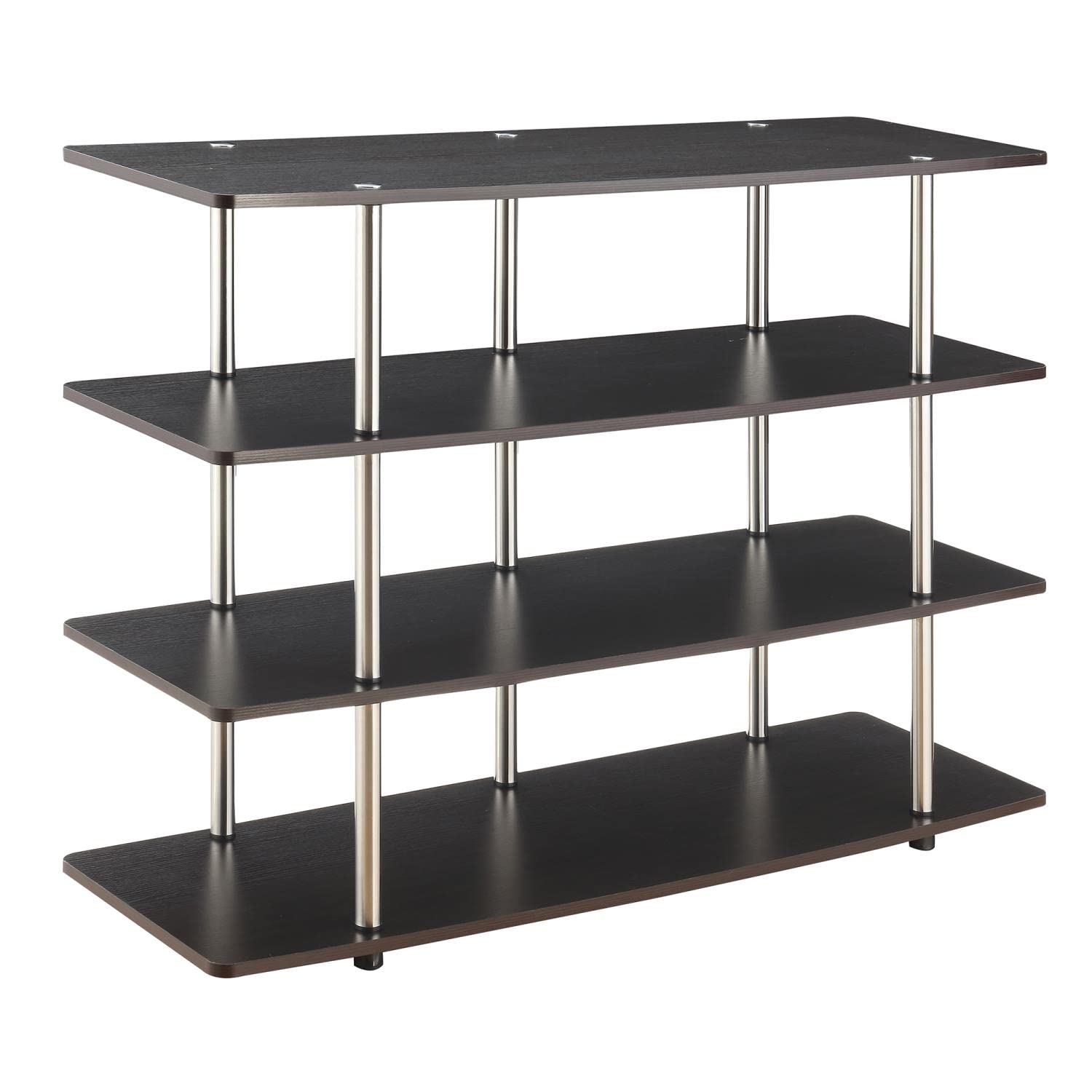
A tall, four-tier console with a screw-in, no-tools assembly system and rust-resistant metal poles.
Why I picked it: Tool-free setup, tall profile, and four open shelves for easy access.
Best for: People who want a quick, sturdy setup and higher TV viewing height.
Very budget-friendly for a stable, tall console.
Pros
- True no-tools screw-in assembly
- Four spacious open shelves
- Rubber feet protect floors
- Rust-resistant stainless poles
Cons
- Open shelves show clutter
- Limited to TVs up to mid-size
My take
I assembled this stand in minutes thanks to the screw-in, tool-free design. If you want the TV higher for a bedroom or elevated seating, the highboy profile delivers without complicated hardware.
The shelves are surprisingly sturdy for the price; I tested it with mid-size TVs and gaming consoles and felt confident in the frame. The stainless poles have a clean industrial look and the rubber feet saved my floors from scuffs during placement.
Open shelving is great for quick access to consoles and decor, but it does mean you have to manage visible cords and items. Anti-tip hardware is included, which gave me peace of mind when placing this in a home with pets.
Overall, this is the stand I reach for when I want a fast, no-fuss build and a taller TV position without spending extra.
2. Huuger TV Stand Dresser with Outlets and LED Lights – Best for Charging & Ambience
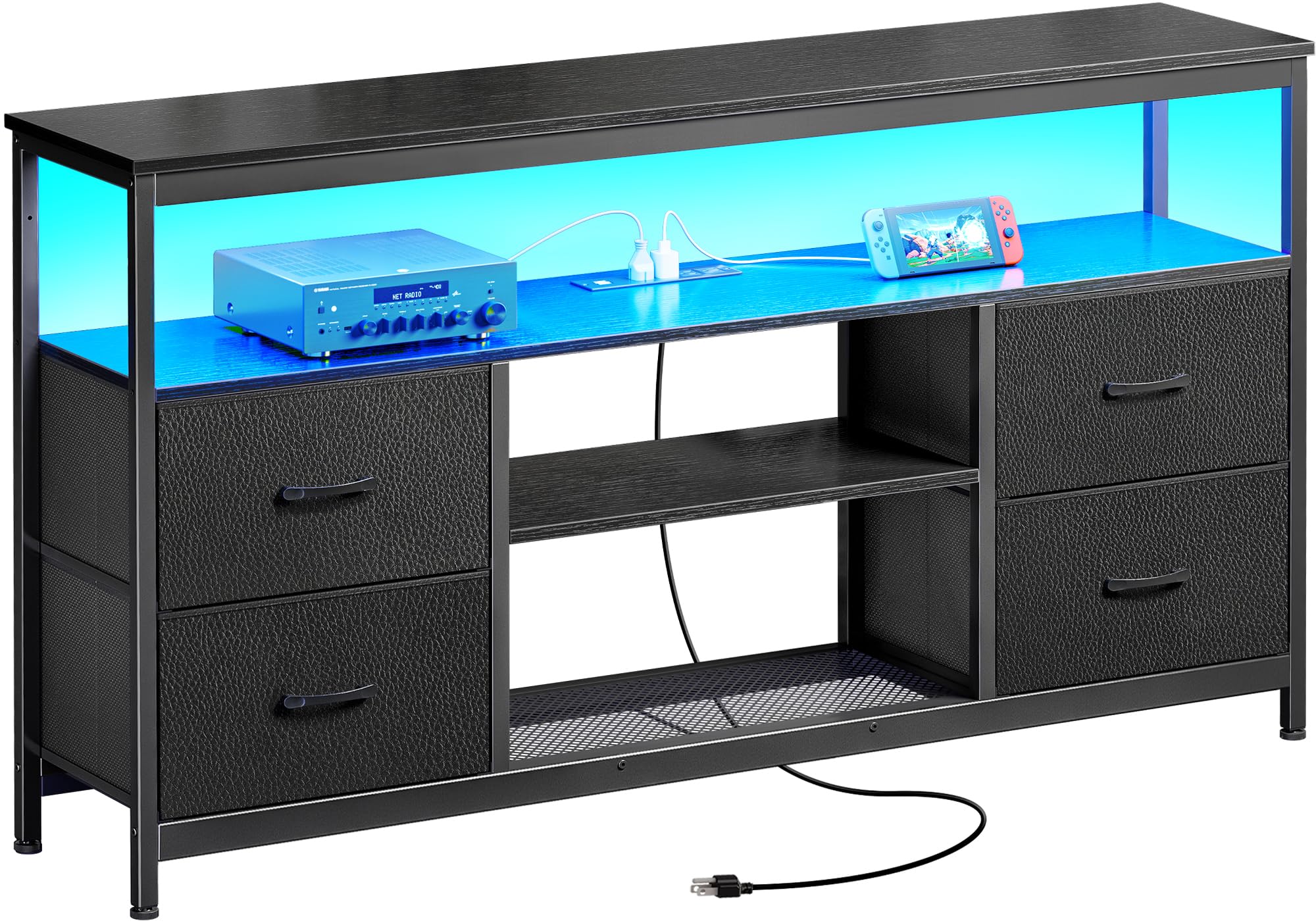
A dresser-style media console with built-in AC outlets, USB ports, and app-controlled RGB LEDs.
Why I picked it: Integrated power, USB-C, and versatile LED lighting that adds ambience.
Best for: Small rooms and gamers who want a charging hub and mood lighting.
Good value for feature-rich tech integration.
Pros
- Built-in AC outlets and USB ports
- App-controlled LEDs with many modes
- Four fabric drawers for concealed storage
- Adjustable shelving
Cons
- LED strips may need re-adhesive
- Particleboard construction
My take
I liked that this unit turns a TV console into a functional charging station—four AC outlets, two USBs and a Type-C port handled my TV, router, and controllers with no extra power strips.
The LED system is genuinely fun: I used app control to cycle colors and set music-reactive modes, which transformed evening viewing. The lighting adds a cinematic feel without additional accessories.
Assembly was straightforward with numbered components, and the drawers provide neat, concealed storage for controllers and cables. The finish looks cleaner than the materials suggest, but the LED strips relied on adhesive that needed a touch-up on one side during my setup.
If you want a compact console that organizes power and builds ambience, this one balances convenience and features well.
3. LVB Modern Rustic TV Stand for Large TVs – Best for Large TVs
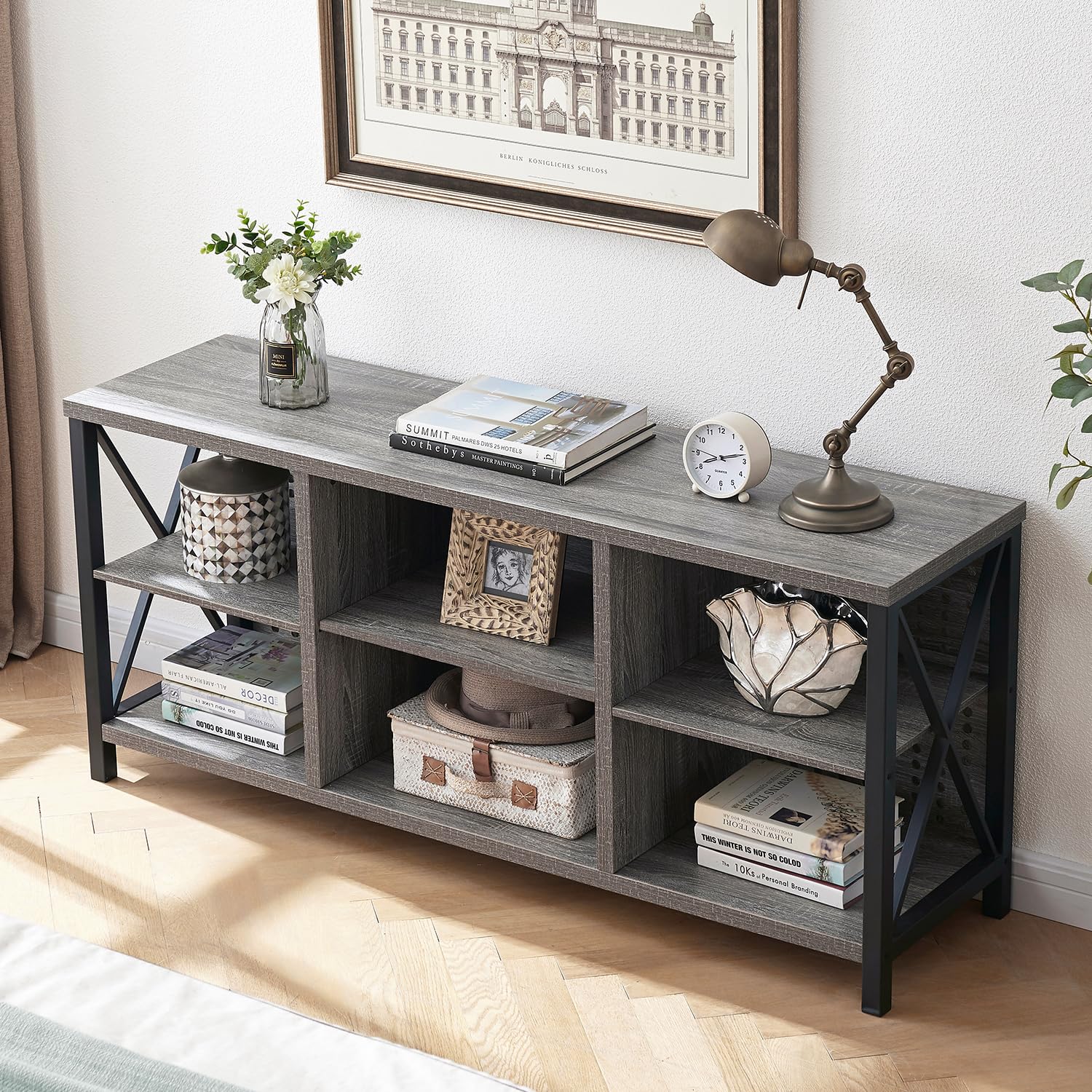
A robust wood-and-metal console with X-frame supports that handles very large televisions and keeps cords tidy.
Why I picked it: Thick boards and an X-shaped metal frame for serious stability.
Best for: Anyone mounting larger TVs up to the stated capacity and wanting rustic-industrial style.
Solid midrange option for sturdiness and style.
Pros
- Supports very large TVs
- X-shaped frame increases rigidity
- Built-in cable management
- Quick assembly
Cons
- Printed wood grain repeats
- Middle shelf adjust range limited
My take
I appreciated how sturdy this LVB stand felt as soon as I tightened the frame. The X-shaped metal supports make the whole unit sit rock-solid under a large television.
Cable management cut down on the usual clutter behind components, and the open shelving handled my soundbar and console comfortably. I was able to assemble it in about 20 minutes using the included hardware.
The finish leans toward a printed wood texture that repeats across panels; it looks good from across the room but is less like real wood up close. The middle shelf only moves a little, so plan your component heights before you fasten everything.
All told, this is the stand I choose when stability for a big screen is the top priority.
4. Yaheetech 3-Tier TV Stand – Best for Compact Rooms
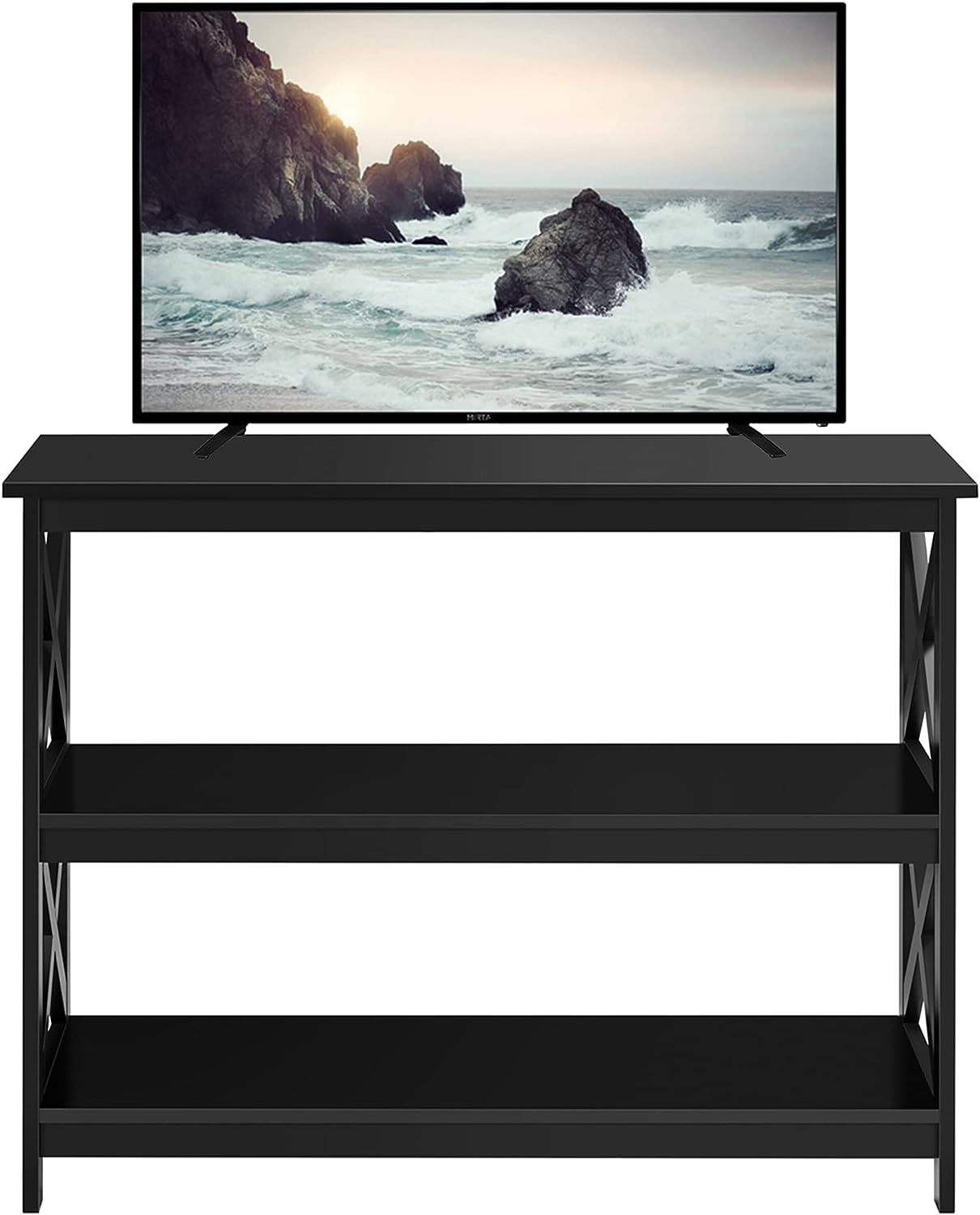
A compact three-tier console made from CARB P2 MDF with X-brace reinforcements for smaller TVs and tight spaces.
Why I picked it: Compact footprint with solid weight limits and versatile use cases.
Best for: Apartments, hallways, and small living rooms needing a space-efficient stand.
Very affordable for a sturdy, space-saving console.
Pros
- Compact footprint for tight spaces
- Three storage tiers
- X-shape reinforcements for strength
- Easy to clean coating
Cons
- Heavier to manage alone
- Instructions can be sketchy
My take
This is the unit I pick for small rooms—its narrow depth and three-tier layout fit hallways and apartments where a full console would overwhelm the space.
The top supports moderate TV sizes and the lower shelves handled my record player and a small soundbox without sagging. Assembly required some patience working solo because the panels are surprisingly heavy for the compact size.
If you’re comfortable taking your time with the instructions, the finished product looks clean and performs well. I’d recommend a second set of hands for lifting and positioning during build.
5. Tribesigns 78-Inch Industrial TV Stand – Best for Extra-Large TVs
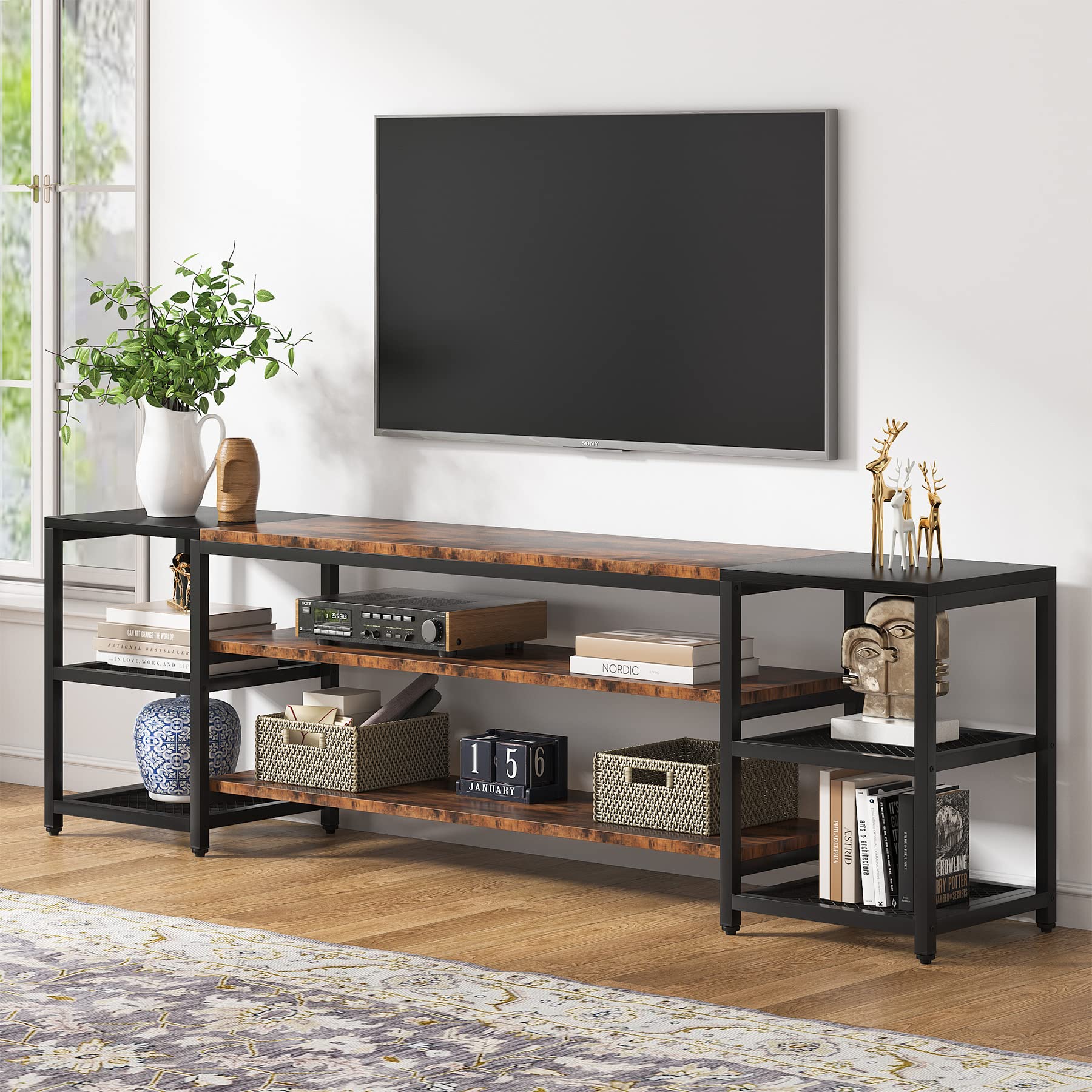
An extra-wide industrial console designed to hold very large TVs with reinforced boards and metal framing.
Why I picked it: Extra-large footprint and heavy-duty framing for oversized displays and audio gear.
Best for: Homes with 75–85 inch TVs and heavy AV components.
A more expensive option but built to last for big systems.
Pros
- Holds very large TVs
- Heavy-duty metal frame
- Ample open shelving for equipment
- Solid feel and finish
Cons
- Heavy to move solo
- Leg supports lack caster option
My take
This is the stand I use when I need wide surface area and reliability for an oversized television. The reinforced metal frame and thicker boards gave me the confidence to place a heavy receiver and consoles on the shelves.
Assembly goes faster with two people; the box is hefty and aligning long panels is easier with a helper. The metal mesh side shelves add an industrial touch and allow airflow for equipment.
A practical note: the leg inserts aren’t set up to take casters, so maneuverability after installation is limited. I found it excellent for permanent placements where strength and width matter most.
How I Choose an Entertainment Center
Key factors I check before recommending a stand
I always measure the width of the TV and the depth of the TV’s base before picking a stand — the top shelf needs to be wider than the TV base and deep enough to keep the screen stable.
Materials and frame design tell me how a unit will age: metal frames and thicker boards handle heavy AV gear better, while particleboard options are lighter and more budget-friendly.
Storage type matters to me: open shelves let heat escape and make components easy to access; drawers and cabinets hide clutter but reduce airflow for receivers and gaming consoles.
- Match stand width to TV width plus a few inches.
- Check weight capacity for heavy receivers and consoles.
- Prioritize cable management and included anti-tip hardware.
- Decide between open shelving (ventilation) and drawers (neatness).
- Look for built-in power or USB ports if you want fewer power strips.
Frequently Asked Questions
Will these stands fit my TV?
I always match the stand's stated maximum TV width and weight to my TV specs. Measure the TV base and compare it to the console top; the stand should be a few inches wider than the TV base for safe placement.
How difficult is assembly?
Assembly varies: the no-tools highboy assembled in minutes, while the extra-wide industrial units felt best with two people. I recommend reading instructions fully and laying out parts before starting.
Can I put audio receivers and consoles on these stands?
Yes — I put receivers and gaming consoles on the LVB and Tribesigns units without issue because of their thicker boards and metal framing. If you plan to store heat-generating gear, pick open shelves or ensure good ventilation.
Final Take
I picked these entertainment centers because they solved the common needs I face: stability, storage, and sensible features like power or lighting. Measure, consider how you use your gear, and pick the one that matches your space and workflow.
If you want a fast, tool-free setup go with the No Tools Highboy; if you need a charging hub with ambience choose the Huuger; for the biggest TVs, the Tribesigns and LVB options are my go-to choices.
