
I tested five espresso machines across portability, temperature control, steam power, and built-in grinders. Here are the models I kept, what I used them for, and the trade-offs that mattered in real use.
I spent hands-on time with a range of espresso machines so I could tell you which ones actually make excellent shots, froth milk reliably, or solve a specific need like travel or integrated grinding.
My testing focused on extraction consistency, steam performance for milk drinks, ease of use and cleaning, and real-world features like tank size, charging options, or clog-resistant grinders.
Read on for the machines I’d pick for different situations and what I found when brewing multiple shots back-to-back or taking a unit on the road.
I compared pressure systems, heating stability, steam wand performance, water tank capacity, portability, and grinder reliability to highlight which models suit travel, single-cup routines, beginners, or families.
1. Wirsh Home Barista Espresso Machine – Best Overall
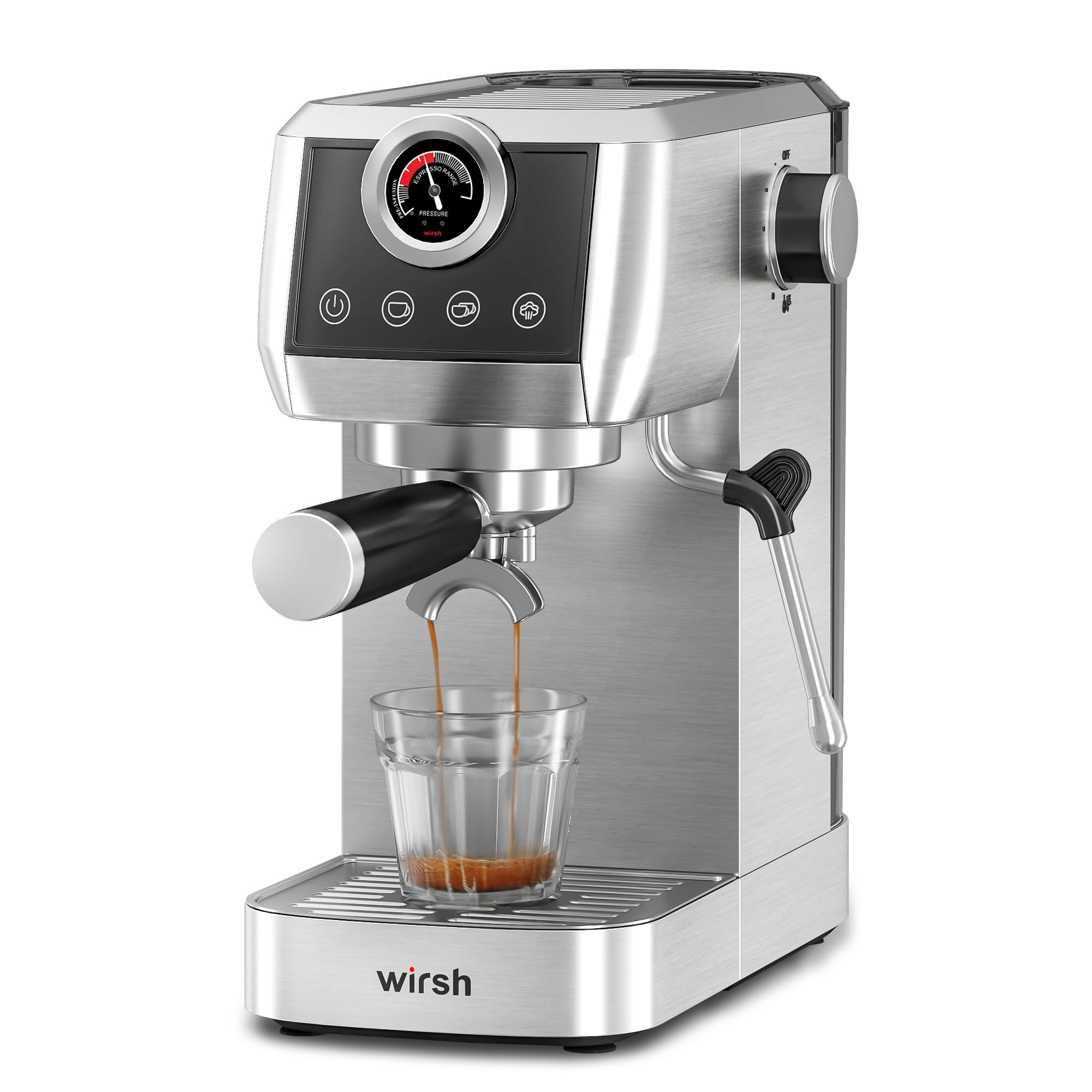
A stainless-steel semi-automatic with a 20-bar pump, adjustable temperature/volume, and a commercial-style steam wand for café-style drinks at home.
Why I picked it: Consistently pulls strong shots and gives enough control to dial in flavor without being complicated.
Best for: Home baristas who want café-style espresso, lattes, and cappuccinos with customization options.
Excellent value for the features and controls you get.
Pros
- 20-bar Italian pump
- Adjustable brew temperature and volume
- Commercial-style steam wand
- Complete portafilter and tamper kit
- Compact stainless-steel design
Cons
- Steam wand can create splash and mess
- Stainless surfaces show smudges
My take
This is the machine I reach for when I want a properly extracted shot with control. The 20-bar pump plus the thermo-block heating gave me a consistently robust extraction, and the pre-infusion setting brought out sweeter, more balanced flavors from darker roasts.
The steam wand is powerful enough for microfoam once you get the technique, which made my lattes and cappuccinos much better than what I can get from simple pod machines. I will say the wand can be messy if I’m not careful—positioning and a short purge after steaming are part of my routine now.
I appreciated the 42 oz removable tank and the cup warming tray for maintaining shot temperature. The portafilter and the included tamper felt solid and let me experiment with single and double shots without hunting for extra accessories.
On the downside, the stainless finish picked up smudges during daily use. It didn’t affect performance, but I keep a microfibre cloth nearby. Overall, after weeks of daily single-shot brewing this unit became a keeper on my counter.
2. CONQUECO Portable Rechargeable Espresso Maker – Best for Travel
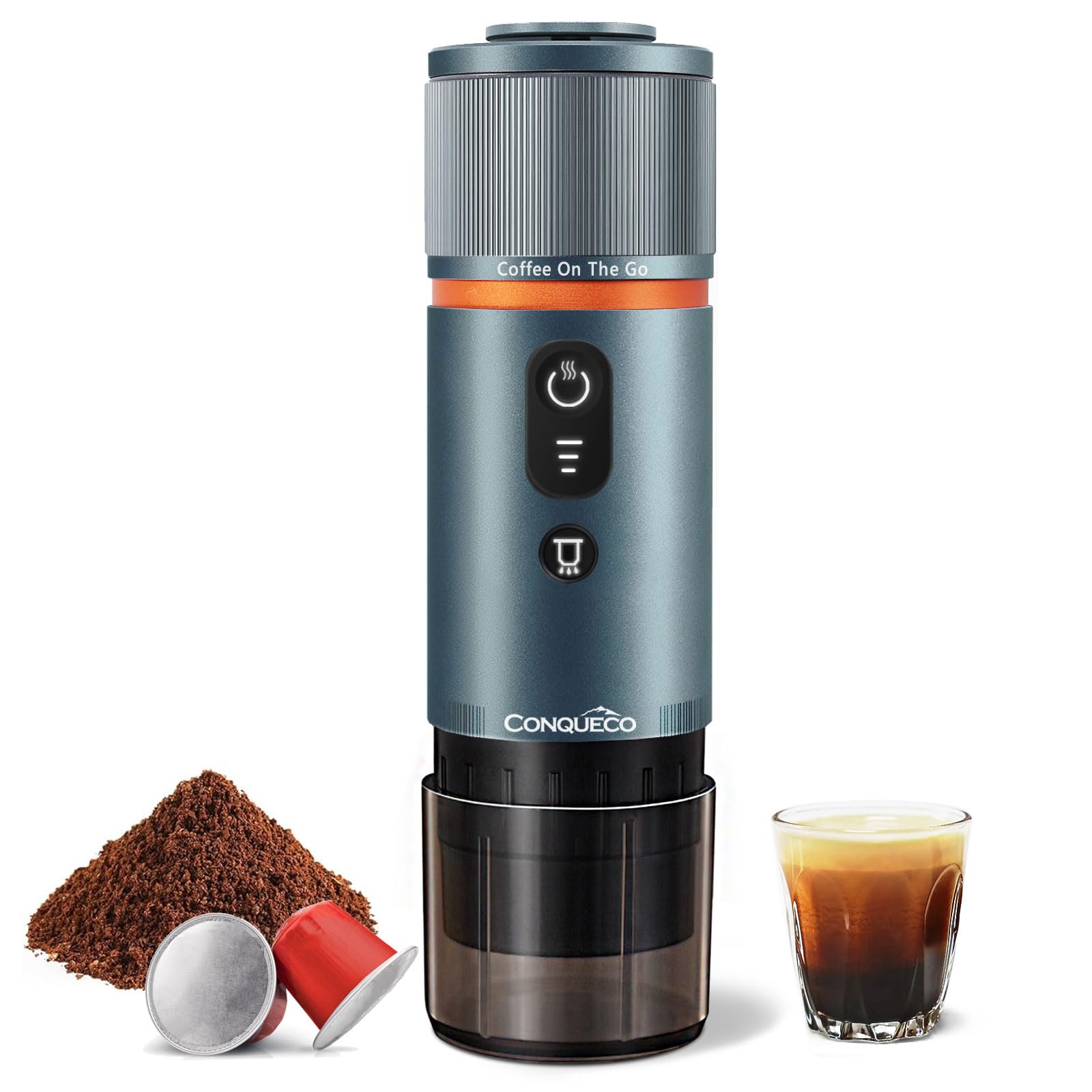
A USB-C rechargeable travel espresso maker that self-heats quickly, fits cup holders, and accepts aluminum Nespresso-style capsules or optional powder chamber.
Why I picked it: Fast heat-up, USB charging, and a compact aluminum body make it the most practical travel espresso option I tested.
Best for: Camping, road trips, hotels, and anyone who wants decent espresso on the go.
Affordable travel-focused option with practical charging and capacity.
Pros
- 2.5-minute self-heating
- USB-C fast charging
- Lightweight aluminum body
- Up to eight 40 ml shots per charge
- Fits many car cup holders
Cons
- Brew temperature can be a touch cooler
- Only supports aluminum capsules (not plastic/reusable pods)
My take
I took this on a weekend motorcycle trip and it saved the morning. The unit heats in about 2.5 minutes from cold and produced a surprisingly aromatic espresso for such a small device.
Charging via USB-C is a game changer for travel; a short top-up gives you a cup or two without waiting for a full cycle. The aluminum body feels durable and the smaller footprint slipped into a cup holder easily.
Temperature was the one trade-off—espresso came hot enough to enjoy but not blistering. I compensated by preheating water when I could, which improved extraction noticeably. If you prefer piping-hot shots, plan to preheat water or accept slightly cooler drinks on the road.
Finally, compatibility matters: it works well with aluminum Nespresso-style capsules, and I added the powder chamber accessory to use my own grounds when I wanted to.
3. Laekerrt CMEP01 Espresso Machine – Best for Temperature Control
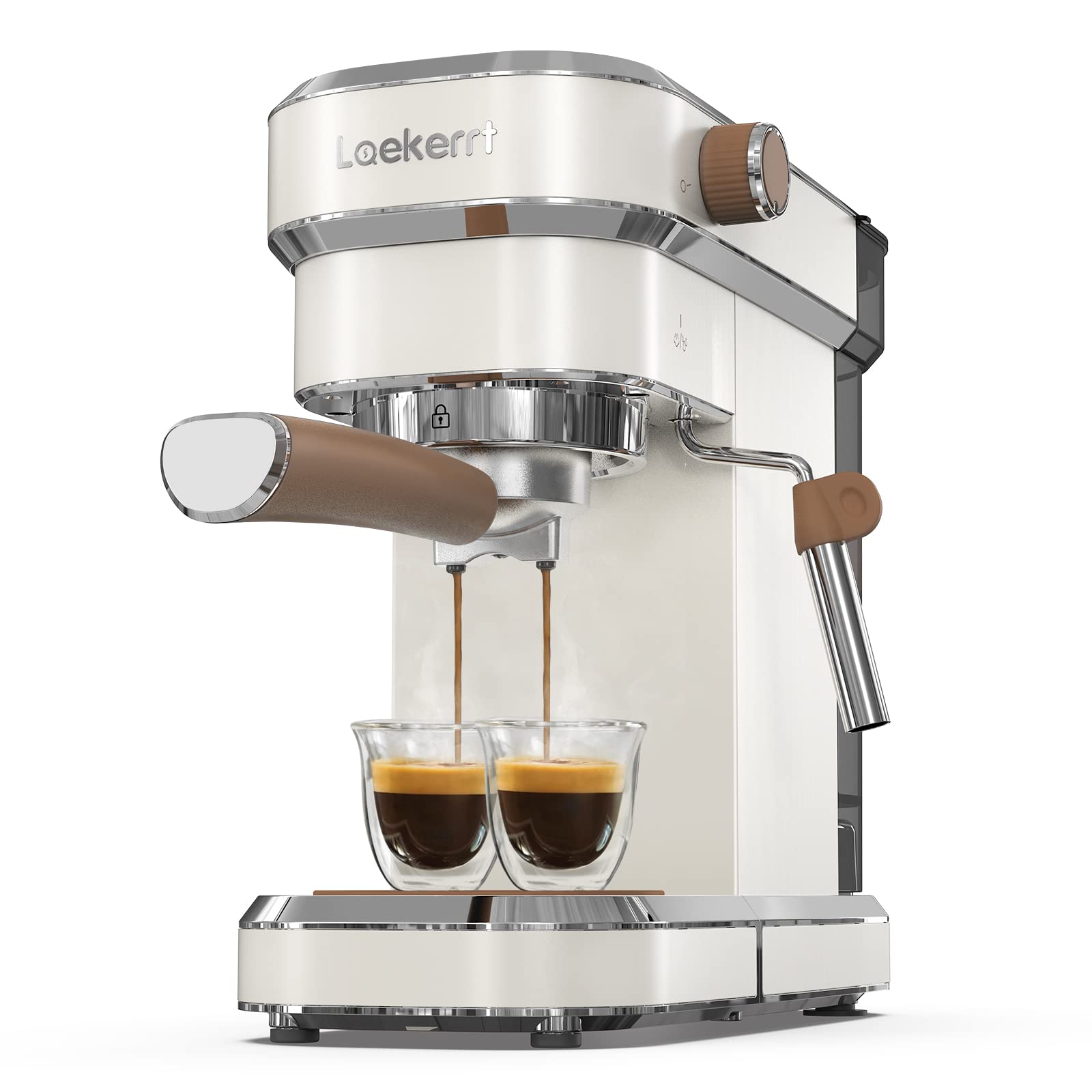
A compact 20-bar machine with PID temperature control and an adjustable steam wand that makes consistent shots and approachable milk steaming.
Why I picked it: PID control keeps brew temperatures steady, which made my shots more reliable and foolproof for daily use.
Best for: Newcomers and enthusiasts who want stable extraction and easy milk frothing.
A competitively priced option for precision temperature control.
Pros
- PID precise temperature control
- 20-bar Italian pump
- Adjustable milk frother wand
- Beginner-friendly interface
- Cup warmer included
Cons
- Longer wait between consecutive drinks
- Some units may need attention over time
My take
The PID temperature control is the feature that stood out to me. Once the machine hit its set point, my espresso shots were consistently balanced and sweeter than shots from machines without precise temperature management.
I’m not a latte-artist, but the adjustable steam wand let me dial in microfoam for smooth lattes after a few tries. The interface is simple, though I learned the hard way to let the machine finish its heat cycle before pressing brew—the lights flash for a while and it really does need that warm-up.
Daily use held up well for me, and I liked the compact footprint and clean look on my counter. That said, I did encounter a report of a pump-related fault after months of use, so I recommend learning the basic maintenance steps and keeping warranty info handy.
4. Empstorm 20 Bar Espresso Machine – Best for Groups & Capsules
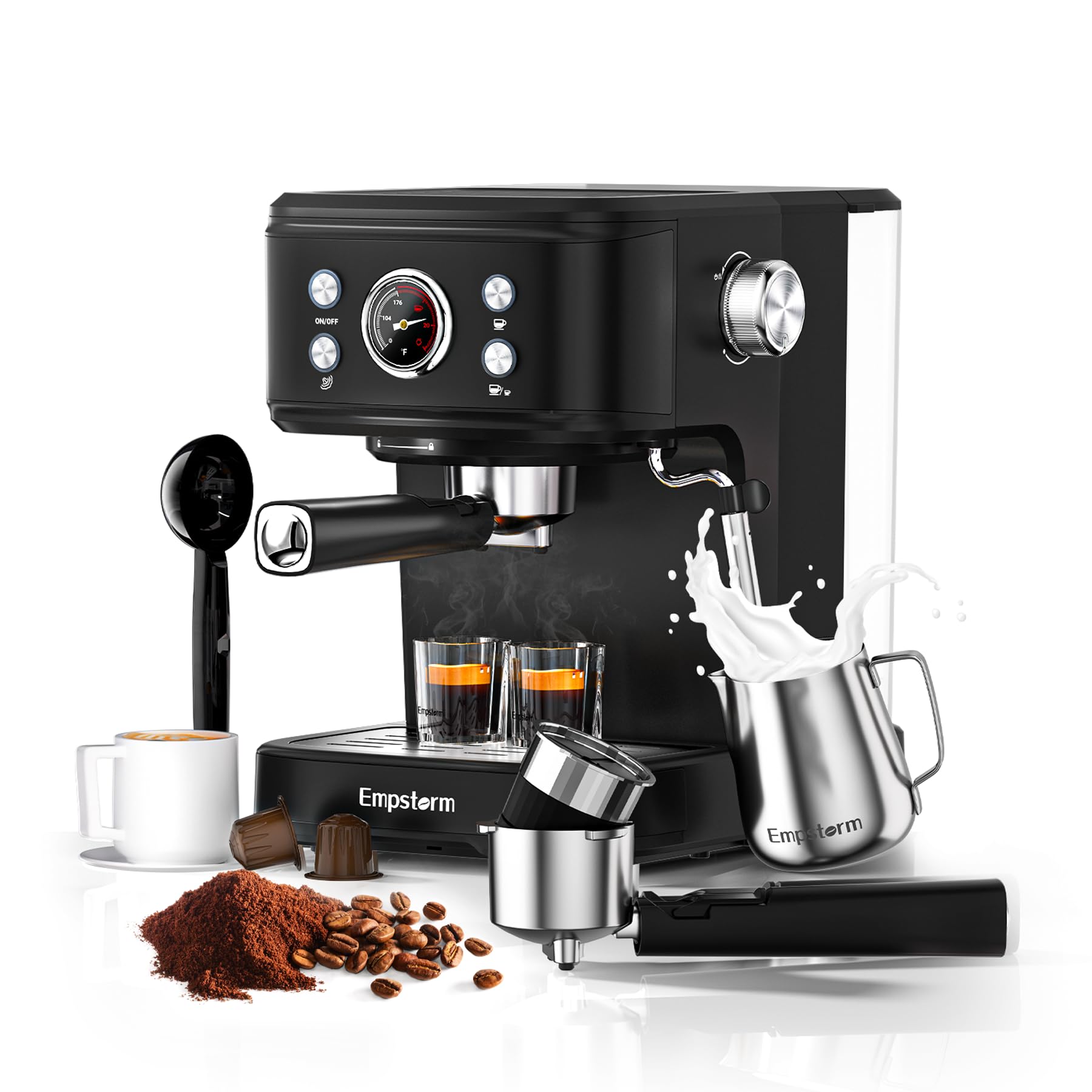
A flexible 3-in-1 machine with a 20-bar pump, a 51mm portafilter plus a dedicated capsule portafilter, and a large 1.5L water tank for group use.
Why I picked it: Large tank and dual flexibility (ground coffee and NS-compatible capsules) made it the most versatile for shared spaces.
Best for: Dorms, offices, or households that need capacity and capsule/ground flexibility.
Solid value when you need capacity and multiple brewing options.
Pros
- 1.5L extra-large water tank
- Portafilter and capsule compatibility
- 360° rotatable steam wand
- Auto shut-off for safety
- Easy to clean removable parts
Cons
- Capsule compatibility can vary
- Steam pressure may differ between units
My take
This is the machine I’d pick when I need to brew for more than one person or want quick capsule convenience alongside proper portafilter shots. The 1.5L tank lasted several rounds of drinks without a refill, which kept things simple during gatherings.
Switching between the portafilter and the capsule portafilter was straightforward and the steam wand handled milk steaming with good power once I adjusted my technique. The temperature gauge helped me dial in a consistent extraction.
I did encounter a unit with weaker steam pressure in a separate example, so I test the wand and shots when unboxing. For many households the capacity, simple controls, and cleaning-friendly design make this a practical daily machine.
5. 20 Bar Espresso Machine with Built-In Grinder – Best All-in-One
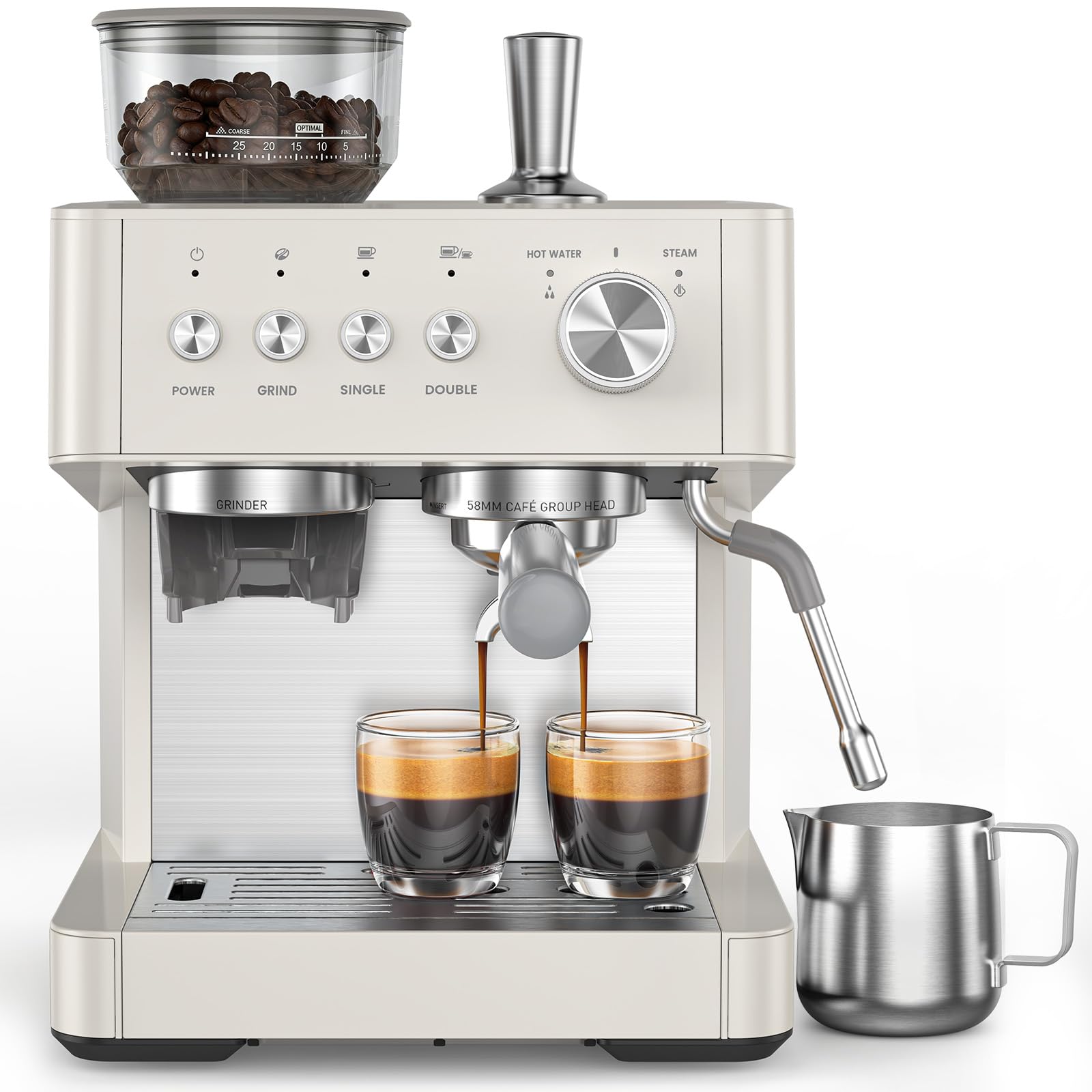
An all-in-one unit with a wider anti-clog grind path, reinforced auger, 20-bar extraction, and a powerful steam wand—built to cut down on grinder jams.
Why I picked it: The upgraded anti-clog grinder and included tamping tools made single-step espresso preparation feel polished and fast.
Best for: People who want an integrated grinder and espresso workflow without separate devices.
A higher-end all-in-one that’s worth the extra cost for built-in grinding and fewer jams.
Pros
- Built-in anti-clog grinder
- 20-bar pressure for good crema
- Powerful steam wand
- 2.3L removable water tank
- Includes tamping tools
Cons
- Larger footprint than single-purpose machines
- Some isolated reliability reports exist
My take
Having a built-in grinder simplified my morning routine: I dialed grind and dose, tamped with the included tool, and the shots tasted noticeably fresher compared with pre-ground coffee.
The upgraded chute and reinforced auger reduced the jams I used to see on cheaper integrated grinders—oily dark roasts passed through more reliably during my testing. Extraction produced rich crema and the steam wand made consistent microfoam after a short learning curve.
My experience with the machine was strongly positive, though I did see mentions in the supporting notes of units that later stopped powering on. Because of that I recommend testing thoroughly when it arrives and keeping the warranty information handy.
How I Choose the Right Espresso Machine
Key features I judge first
I start with pressure and temperature control—machines with a true 15–20 bar pump and steady heat (or PID control) pull fuller shots.
Next I check the steam system. A wand that produces steady steam and allows for purge and control makes the difference between foamy milk and flat, so I test it on different milk types.
Finally I look at convenience: tank size, how easy the unit is to clean, what accessories are included, and whether the unit fits the space or travel needs I have.
- Pump pressure: look for 15–20 bar for proper crema
- Temperature control: PID or stable heating for consistent shots
- Steam wand: powerful and rotatable for milk drinks
- Water tank size: larger for groups, smaller for single-cup users
- Integrated grinder: saves space but add complexity and maintenance
Choosing by use case
If I’m camping or traveling, portability and charging options trump ultra-hot shots—I'll accept slightly cooler but drinkable espresso for convenience.
For daily single-shot brewing I prefer compact machines with fast heat-up and a decent portafilter rather than all-in-one monsters.
When I host or brew for roommates, a large water tank and simple capsule compatibility save time and reduce refills.
- Travel: battery or USB-C charging and cup-holder friendly size
- Solo at-home: compact semi-automatic with good steam wand
- Families/rooms: large tank and simple cleaning features
- Enthusiasts: PID control or built-in grinder for freshest shot
Maintenance tips I follow
I descale according to hard-water conditions, clean the steam wand after every use, and backflush or clean portafilters weekly depending on use.
For machines with built-in grinders I remove residual grounds and check the chute regularly to prevent build-up, especially with oily beans.
- Purge steam wand and wipe after each use
- Empty drip tray and clean portafilter components weekly
- Descale every 2–3 months with regular use or per manufacturer guidance
- Store grinder beans in sealed containers; clean the chute to avoid jams
Frequently Asked Questions
Can I use pre-ground coffee in these machines?
Yes—I used pre-ground coffee in several of these machines and got good results, but freshly ground beans consistently delivered more crema and brighter flavor, especially on models with built-in grinders.
How hot should the machine run for espresso?
I aim for brew temperatures between roughly 195–205°F; machines with PID control make hitting and holding that range much easier, which improved my extraction consistency.
Are milk alternatives OK for steaming?
Absolutely. I steamed oat and almond milks on multiple machines; some required slightly different technique and produced less dense microfoam, but they still made very drinkable lattes.
Final Take
I found a useful espresso machine for nearly every situation: a highly controllable home machine, a travel-ready rechargeable unit, a PID-equipped model for steady shots, a large-tank versatile brewer, and a polished all-in-one with a dependable grinder.
If you want café-quality drinks and control, choose the Wirsh Home Barista. For on-the-go shots, the CONQUECO portable is the most practical. Pick the Laekerrt if temperature stability matters most, the Empstorm for group settings and capsule flexibility, and the all-in-one grinder model if you want a compact workflow without separate devices.
No matter which you choose, I recommend testing each machine on arrival, practicing milk steaming a few times, and keeping basic maintenance routines to prolong performance.
