
I tested a range of fabric gazebos — from compact pop-ups to commercial canopies — to find the most durable, easy-to-use, and weather-ready options for backyard use, camping, and events.
I spent time setting up and living with several fabric gazebos so I could compare how they perform in real conditions: sun, light rain, wind, and everyday use.
In this roundup I focus on what mattered most to me: ease of setup, material quality, ventilation/drainage, insect protection, and how well each model held up when anchored.
If you want a quick pop-up for weekend use, a roomy event canopy, or a replacement top that fits your existing frame, I explain which gazebo worked best for which situation.
I prioritized instant setup and reliable sun/rain protection for smaller pop-ups, and structural strength and weatherproofing for larger commercial-style canopies.
1. COOS BAY 11×11 Pop Up Gazebo – Best Budget Pop-Up
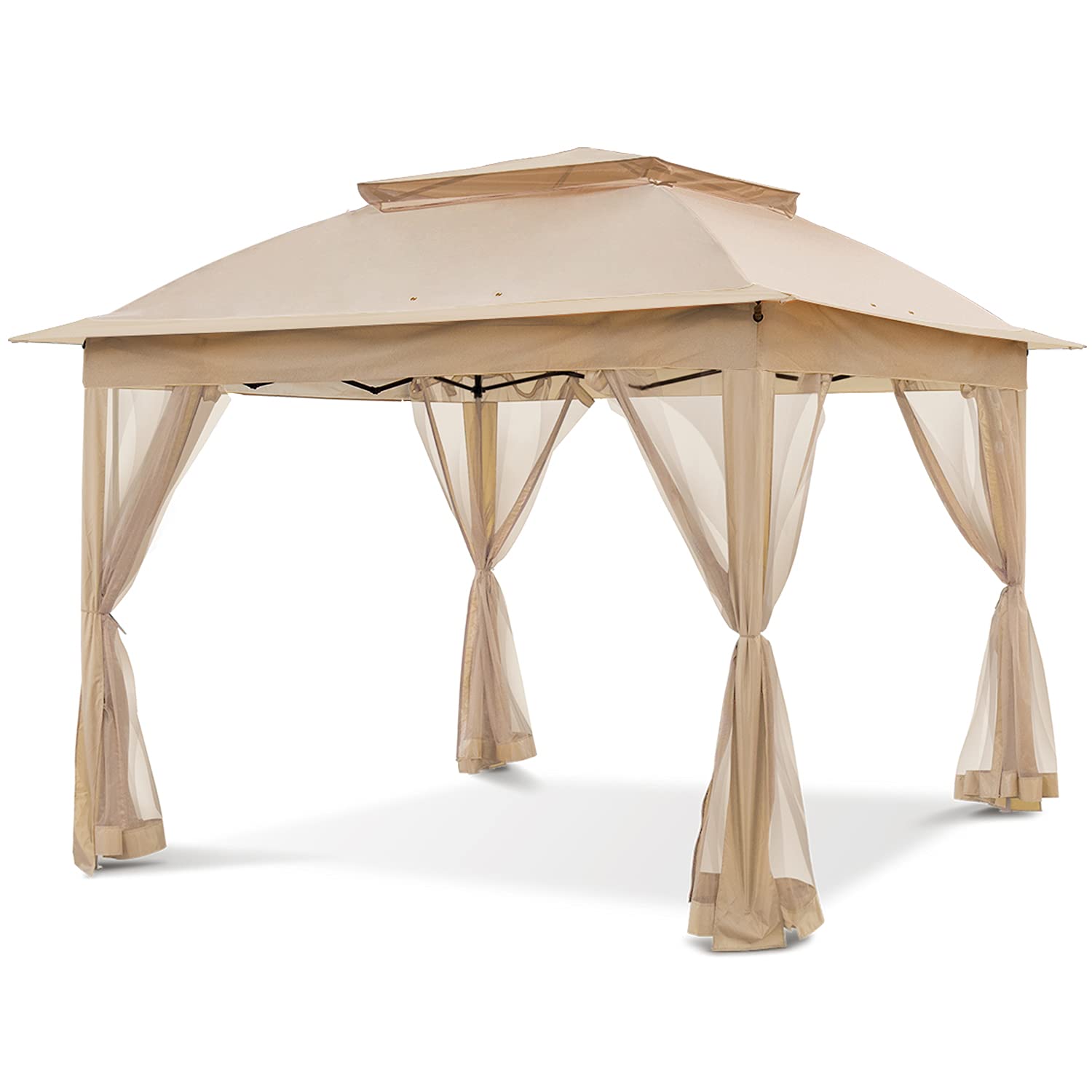
An affordable, roomy pop-up with full mesh walls and UPF 50+ sun protection; great for shade and keeping bugs out during short-term backyard use.
Why I picked it: Large 11×11 footprint, easy pop-up design, and full zippered mesh at an accessible price.
Best for: Backyard gatherings, picnics, and situations where bug protection matters more than permanent weatherproofing.
Very affordable option for casual, seasonal use.
Pros
- Quick pop-up setup
- Full zippered mesh walls
- Large 121 sq ft coverage
- UPF 50+ sun protection
- Includes carry bag
Cons
- Water-resistant, not fully waterproof
- Frame can feel less solid in high winds
- Fabric may degrade with prolonged sun exposure
My take
I liked this canopy because it pops open quickly and gives a very generous 11×11 shaded area — I fit a large patio table and still had space. The zippered mesh walls make a big difference for keeping bugs out while keeping visibility and airflow.
The fabric blocks UV well and sheds light rain thanks to its water-resistant coating, but I treated it as a short-term shelter rather than a permanent roof. When heavy storms rolled through I noticed water pooling behavior and I took it down rather than leaving it up.
Setup and takedown are simple and the included carry bag makes transport easy. My main caveat from real use: the frame is lightweight steel and needs solid anchoring; in very windy conditions it won’t replace a heavy permanent structure, and I saw signs in long-term notes that repeated sun exposure can make the fabric brittle over seasons.
2. APEX GARDEN Replacement Canopy Top – Best Replacement Top
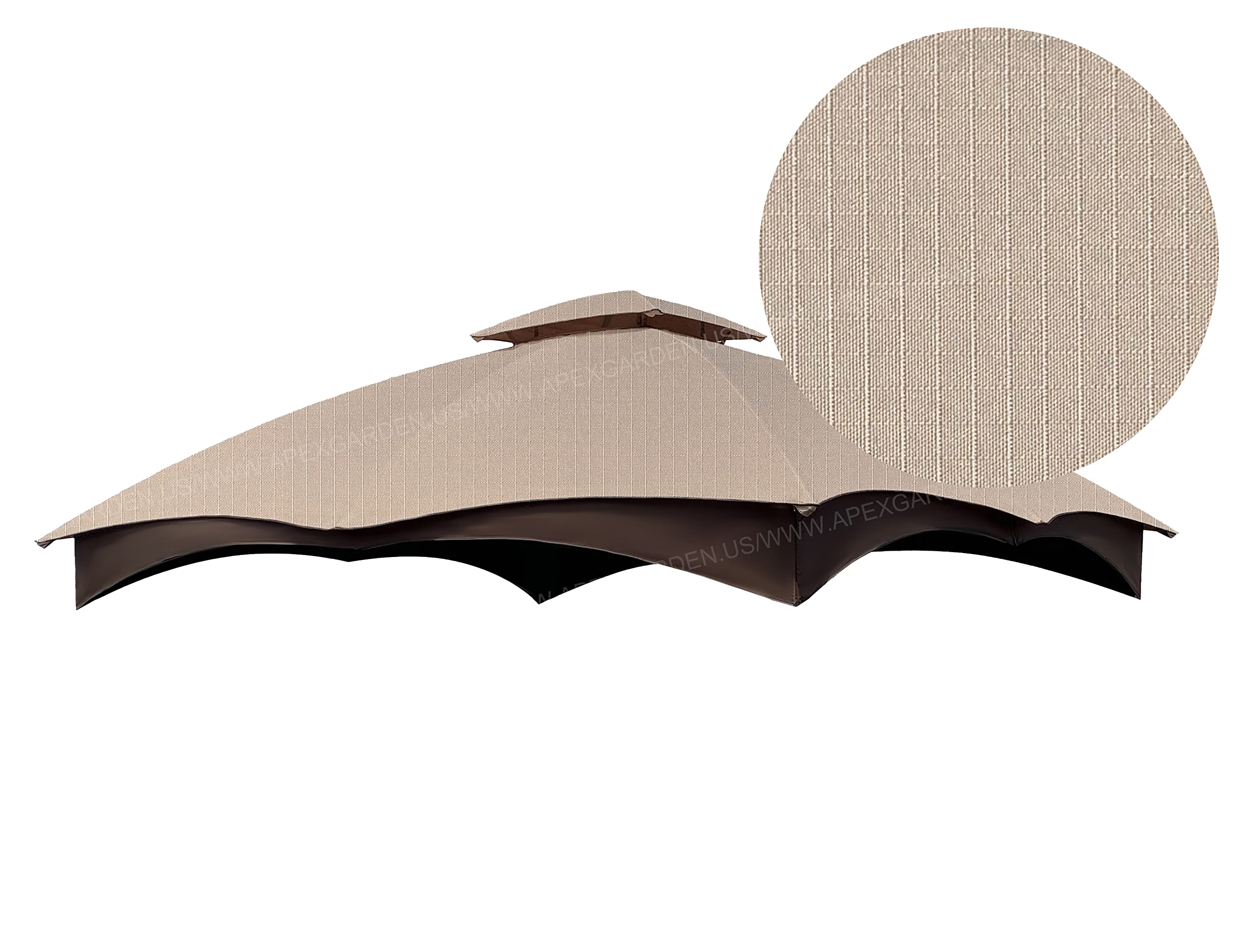
A ripstop replacement canopy made to OEM specs for specific Lowe’s allen + roth gazebo models — stronger fabric and a close original fit.
Why I picked it: Ripstop material, CPAI-84 fire standard, and OEM sizing for older Lowe’s frames.
Best for: Owners of the 2012–2016 Lowes allen + roth 12×10 gazebo looking for a long-lasting replacement top.
Midrange replacement option with upgraded ripstop fabric.
Pros
- Ripstop fabric resists spreading tears
- CPAI-84 flame-retardant material
- OEM sizing for a precise fit
- Improved, easier-to-use hooks
Cons
- Fits only specific Lowe’s gazebo models
- Water-repellent, not fully waterproof
My take
I used this canopy to replace a tired top on an allen + roth frame and the fit was very close to the original — that precise sizing matters when you’re reusing the frame hardware.
The ripstop weave and fire-retardant CPAI-84 material feel noticeably tougher than basic tops, and installation was straightforward with a ladder and one helper. The updated hangar hooks are a welcome improvement over tiny plastic hooks.
Be sure you have the exact gazebo model numbers before ordering; this top is made to fit a narrow set of Lowe’s frames only. Also, expect water-repellent behavior rather than complete waterproofing — I still used additional anchoring and drainage planning during heavy rain.
3. VEVOR 12×12 Pop-Up Gazebo Tent – Best for Camping & Privacy
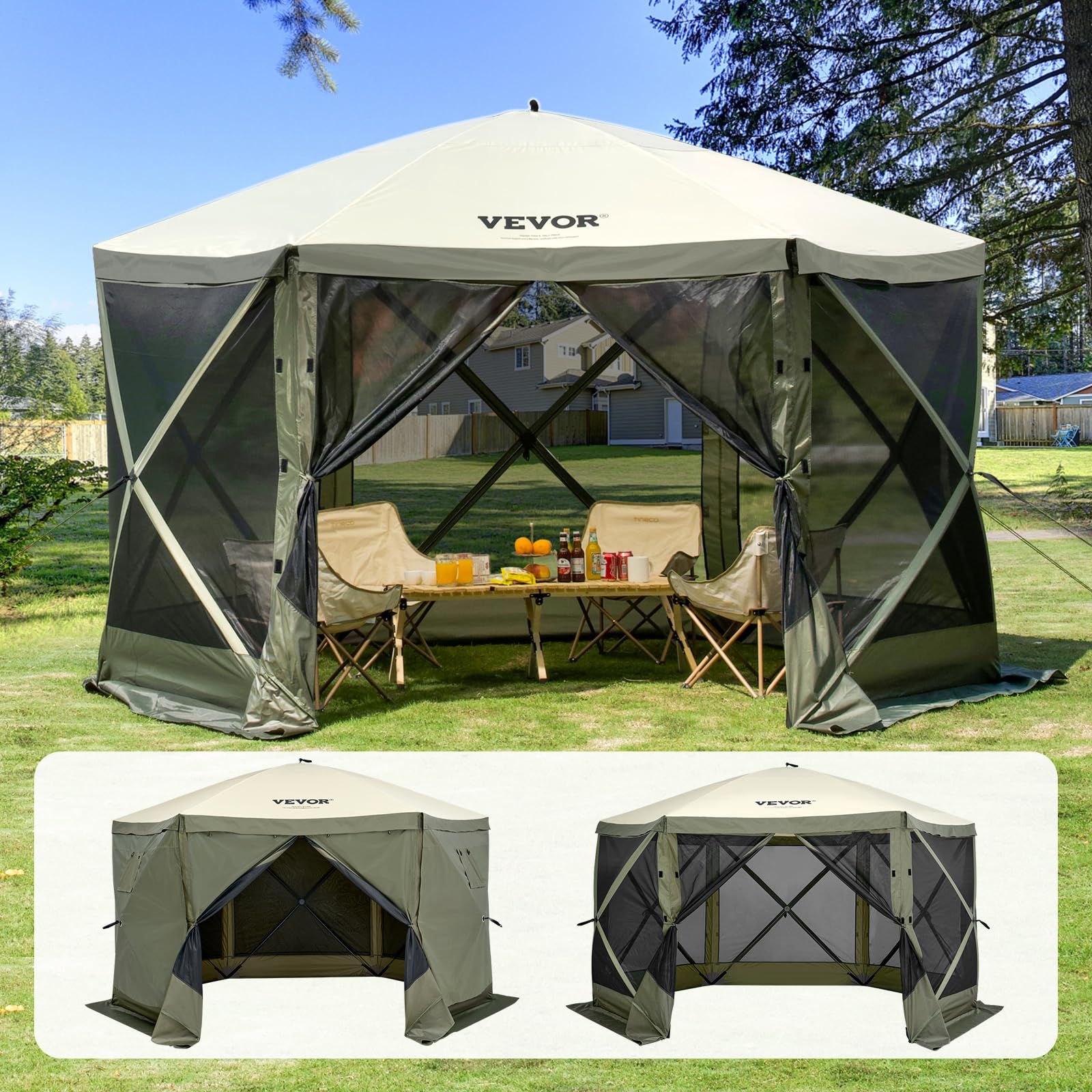
A versatile 12×12 pop-up with removable panels and windows that give privacy and weather protection, while remaining easy to stake down for camping or backyard use.
Why I picked it: Fiberglass poles, removable cloth panels, and solid staking system for sandy or grassy sites.
Best for: Camping, beach days, and backyard events where privacy and wind resistance matter.
A midpriced pop-up that balances features and portability.
Pros
- Removable wind panels for privacy
- UPF50+ sun protection
- Good set of stakes and ropes
- Two mesh windows for ventilation
Cons
- Velcro panel attachments can catch screens
- A learning curve for solo setup
- Not for heavy storms
My take
I appreciated how the VEVOR tent expands into a roomy 12×12 shelter and how the removable side panels let me switch between screened airflow and private shade quickly.
The fiberglass poles and included luminous stakes held well even in breezy beach conditions; I found the stake system superior to typical flimsy options. Two people make setup easier, but a determined solo user can manage after a practice run.
A small warning from hands-on use: the Velcro attachment layout is effective but the rough Velcro edges can sometimes snag the mesh if panels flap in wind. I removed panels or re-oriented Velcro on windy days to avoid abrasion. I also avoid leaving this up in heavy rain or storms — it’s a great shelter for fair-weather camping and events.
4. ABCCANOPY 10×12 Patio Gazebo – Best Sturdy Patio Gazebo
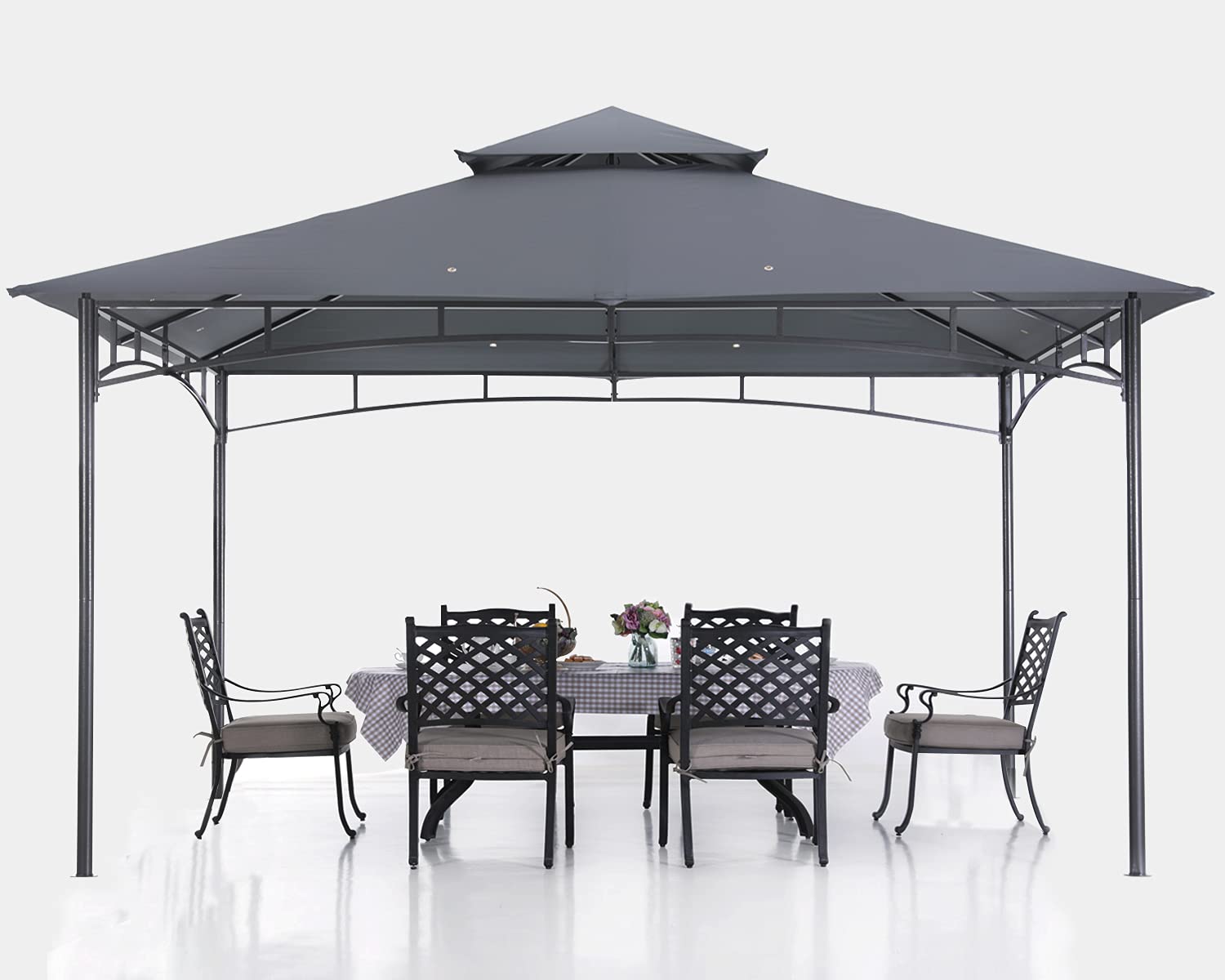
A heavy-gauge steel 10×12 gazebo with a vented double roof and Rip-Lock fabric that gives a stable, roomy patio cover when anchored properly.
Why I picked it: Thick steel frame, vented top for airflow, and Rip-Lock fabric for water shedding.
Best for: Permanent-ish patio or deck installations where a more robust frame is desired.
Good value for a heavier, longer-lasting frame.
Pros
- Heavy-gauge steel frame
- Vented two-tier roof
- Rip-Lock canopy fabric
- Spacious 120 sq ft coverage
Cons
- Assembly usually needs two people
- Some long-term rust concerns reported
- Warranty support can be inconsistent
My take
I installed this on a deck and immediately noticed the frame feels more substantial than typical tent-style canopies. The two-tier roof and drainage holes reduced pooling and made the shaded area much more comfortable.
Assembly is manageable with a partner; a single person will struggle with alignment. Once anchored this structure feels solid — I’ve used it for grilling and entertaining without issue.
My long-term use notes: the fabric and frame perform well under light-to-moderate conditions, but if you plan to leave a gazebo outside year-round in coastal or high-humidity areas I’d watch for surface rust and check warranty steps early if corrosion appears.
5. COBIZI 13×26 Pop Up Canopy – Best for Large Events
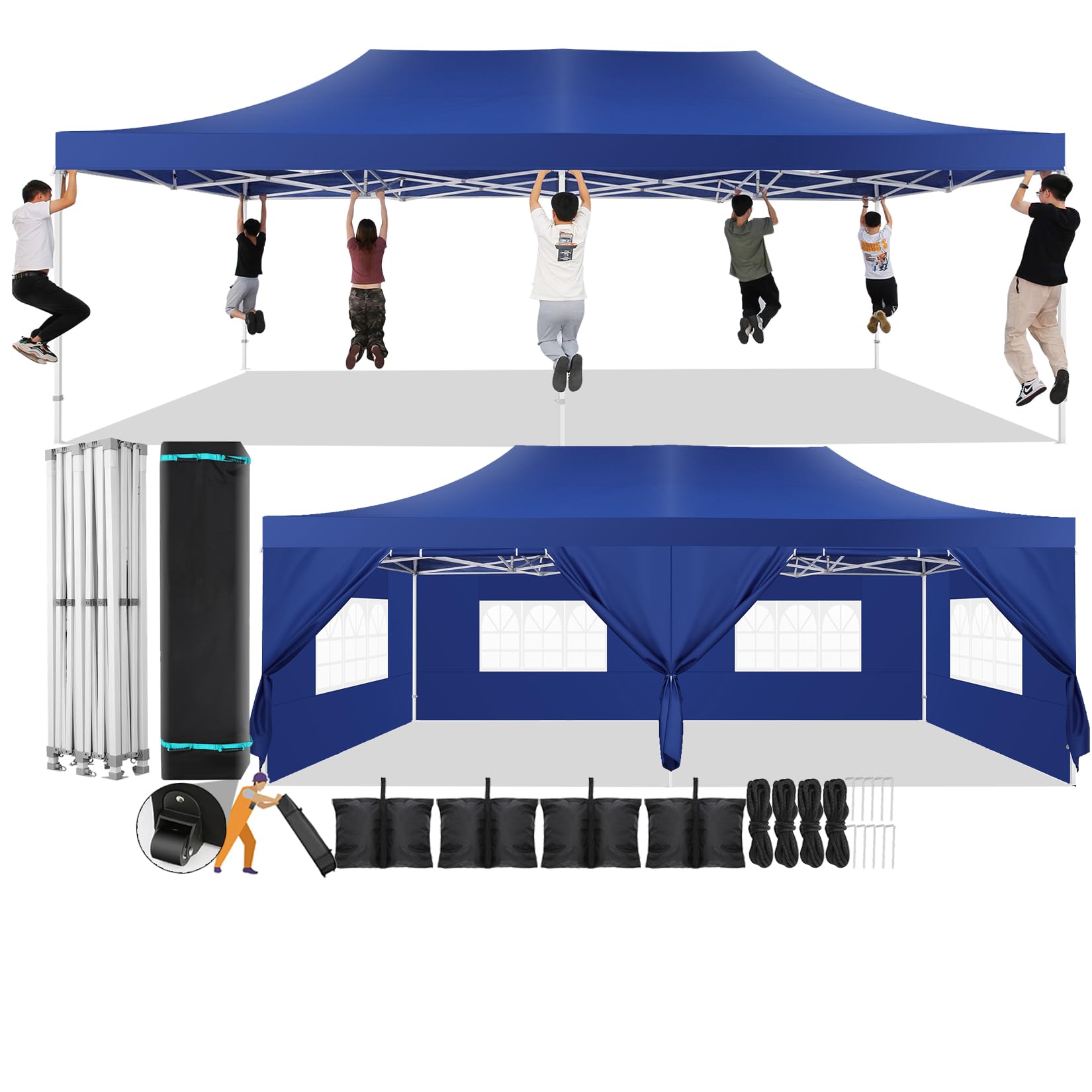
A commercial-style 13×26 popup with an alloy truss frame, multiple sidewalls, and a wheeled bag — built to handle large crowds and event logistics.
Why I picked it: Built-in heavy truss frame, multiple removable sidewalls, and full waterproof 550D PU fabric.
Best for: Weddings, festivals, vendor booths, and any large outdoor event requiring a reliable, heavy-duty canopy.
Higher-end commercial option for frequent event use.
Pros
- Heavy-duty alloy steel truss frame
- 550D PU waterproof canopy
- Six removable sidewalls
- Wheeled roller bag for transport
Cons
- Large and needs several people to move
- Some panel fit and finishing issues reported
- Anchoring essential in windy conditions
My take
When I needed a shelter for a weekend market, the COBIZI canopy stood out: its reinforced truss frame feels engineered for repeated use and the two height settings helped me match ceiling clearance at different venues.
The 550D PU fabric and heat-sealed seams gave me real confidence in wet weather — I treated this as a true waterproof commercial tent rather than a water-resistant pop-up.
It’s big and heavy: expect to use at least two people to assemble and weight it down properly. I also paid attention to panel alignment during setup since a few seams needed a careful fit to avoid rain gaps. Overall, this is the one I reached for when I had a long event schedule and needed durability.
6. COOSHADE 11×11 Pop Up Gazebo – Best Quick-Setup Gazebo
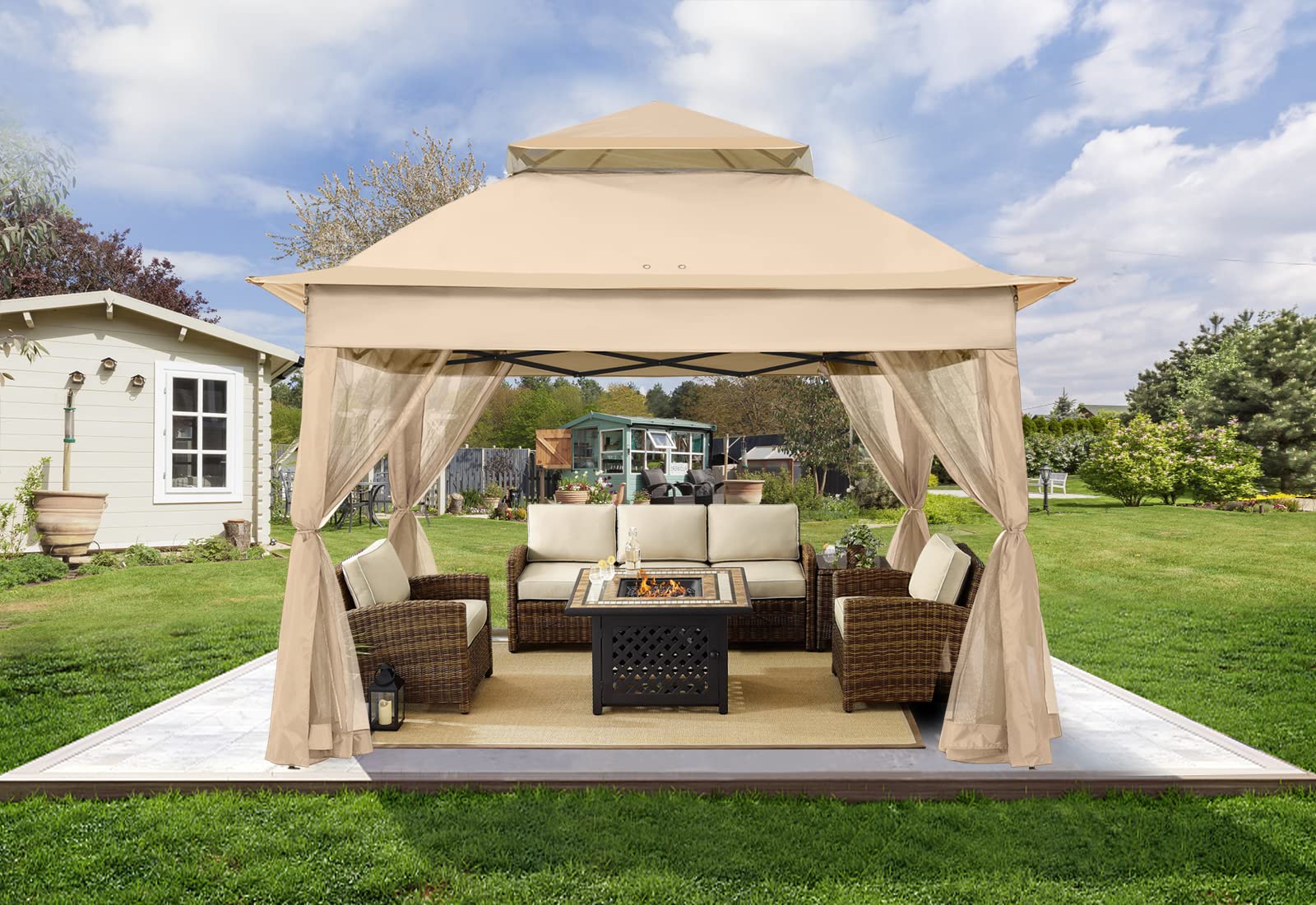
A true one-piece frame pop-up that opens fast, offers extended eaves for more shade, and includes mesh netting — good for quick backyard coverage.
Why I picked it: Fully assembled one-piece frame that opens instantly and added eaves for extra shade.
Best for: Quick backyard shade, parties, and situations where fast single-day setup matters.
Competitive midprice for an instant set-up model.
Pros
- One-piece instant pop-up frame
- Extra extended eaves for shade
- Drain holes reduce pooling
- Includes full mesh walls
Cons
- Not designed as permanent structure
- Can flip in extreme winds if not secured
- Mesh lacks secure side attachment
My take
I love how fast this pop-up unfolds — the one-piece frame is genuinely easy to open and the extended eaves give a little extra covered area compared with typical tops.
The drain holes and two-tier roof helped prevent heavy pooling during summer thunderstorms I experienced, and the mesh walls made sitting under the canopy much more comfortable on buggy evenings.
For long-term outdoor placement I treated it as seasonal: extra anchoring and regular inspection are necessary. In a couple of high-wind incidents I took it down rather than risk damage, and I found the mesh could use a more secure tie-down to stop it drifting inside the shelter in gusts.
How I Choose a Fabric Gazebo
Size and coverage
I start by matching the gazebo footprint to how I plan to use it: dining sets, lounging, or events need larger footprints and headroom.
Remember that manufacturers list footprint differently — check whether coverage numbers refer to roof size or usable floor area.
- Measure the furniture or activity area before picking a size.
- Allow extra clearance for sidewalls, doors, and traffic flow.
Weather resistance and fabric
I look for UPF ratings if sun protection is a primary goal and note whether the top is water-resistant or fully waterproof.
Ripstop and higher-denier fabrics last longer in sun and abrasion, but no fabric is indestructible against prolonged UV without periodic replacement.
- UPF 50+ is ideal for strong sun protection.
- Water-resistant tops shed light rain; PU-coated or heat-sealed seams are required for true waterproofing.
Frame strength and anchors
Frame material and tube diameter determine how much load and wind the gazebo can tolerate. I prefer thicker, powder-coated steel or alloy truss frames for longer-term use.
Anchoring matters more than any single claim: stakes, sandbags, and guy lines dramatically improve wind performance.
- Choose powder-coated steel or alloy truss for frequent use.
- Plan for ground stakes, ropes, or deck screws depending on your installation surface.
Mesh vs solid walls
I pick full mesh when bug protection and airflow are priorities, and solid or removable panels when privacy or rain protection is needed.
Check attachment systems — Velcro is common but can abrade mesh over time; consider how panels connect and overlap for rain protection.
- Mesh = best for bugs and ventilation.
- Solid panels = better privacy and weather blocking.
Maintenance and replacement parts
I treat fabric tops as consumables: UV exposure, heat, and flapping in wind wear them out eventually. I plan where and how I’ll store the canopy when not in use.
Replacement tops and manufacturer support can extend the life of a good frame, so I check compatibility before buying.
- Store dry and out of direct sun to extend fabric life.
- Ask whether replacement tops are available for your model.
Frequently Asked Questions
Is a fabric gazebo waterproof?
Most pop-up gazebos are water-resistant; only canopies with PU coatings and heat-sealed seams advertise full waterproofing. I keep lightweight pop-ups for shade and short rains and use PU-coated commercial tops when I need true waterproof protection.
Can I leave a fabric gazebo up year-round?
I don’t recommend leaving a fabric gazebo up year-round, especially in storms or heavy sun. I take mine down for winter or severe weather and store it dry to prevent UV degradation and fabric brittleness.
How do I anchor a gazebo to a deck or patio?
I anchor to hard surfaces with deck screws through base plates or use heavy sandbags and ratchet straps. For lawns and sand I use long ground stakes and guy lines; proper anchoring is the single best way to improve wind resistance.
How can I tell if a replacement top fits my frame?
I verify the exact model numbers and frame dimensions listed by the manufacturer. Some aftermarket tops are OEM-spec and will note compatible model numbers — match those precisely before buying.
What maintenance keeps a gazebo lasting longer?
I hose off dirt, let the fabric dry fully before storage, and inspect grommets, seams, and frame connections each season. Replacing a faded or brittle top early prevents sudden failures in storms.
Final Take
I chose compact pop-ups like the COOS BAY and COOSHADE when I needed fast shade and insect protection for short-term use, and I reached for VEVOR when I wanted privacy and a camping-ready build.
For dedicated patio coverage I preferred the ABCCANOPY’s heavier frame, while COBIZI is the canopy I use for large events because of its waterproof fabric and reinforced truss structure.
If you own a compatible frame, the APEX replacement top is a smart way to extend a good frame’s life. Whatever your use case, plan for anchoring and storage to protect your gazebo and get the most seasons from it.
