
I tested six narrow farmhouse-style console tables to find sturdy, space-saving pieces that bring farmhouse character to an entryway without overwhelming it.
I spent time assembling and living with six narrow farmhouse and industrial-style console tables to see which deliver real value in tight entryways.
My testing focused on stability, usable surface area, storage options, and how each table handled day-to-day life—plants, keys, baskets, and the occasional pile of mail.
Below I walk through the standout options and explain which table worked best for different spaces and needs.
I compared these tables head-to-head for build quality, usable storage, footprint, and how straightforward they were to assemble. Some favor looks and slimness, others prioritize shelves and a drawer for real storage.
1. VASAGLE Console Table, 2-Tier – Best Overall
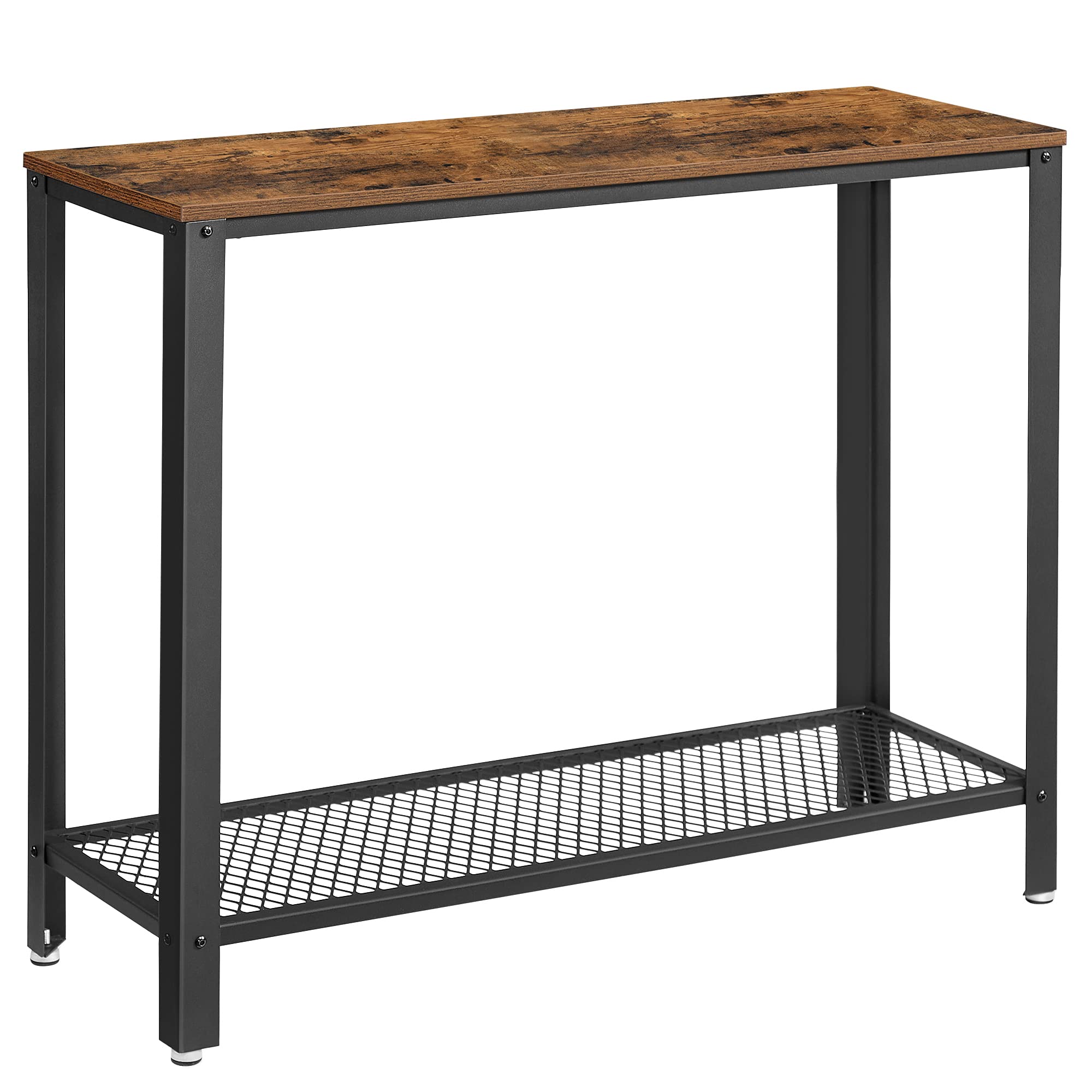
A narrow industrial console with a rusty-brown top, black steel frame, and a mesh lower shelf—solid, space-saving, and versatile.
Why I picked it: Sturdy steel frame, adjustable feet, and an industrial look that fits many farmhouse entries.
Best for: Narrow hallways, plant displays, behind-sofa styling, or a slim entry surface.
Great value for the materials and construction offered.
Pros
- 1.7" steel legs for solid support
- Mesh lower shelf adds usable display space
- Adjustable feet eliminate wobble
- Easy, labeled assembly
Cons
- Particleboard top instead of solid wood
- Box damage can occur in transit
My take
I liked how this table pairs a rustic brown surface with a black steel frame for that farmhouse-meets-industrial vibe.
Assembly was quick thanks to labeled parts and clear instructions; I had it together far faster than many consoles I’ve built.
The 1.7" leg tubes feel noticeably more robust than the thinner tubing I often see, and each shelf handled everyday décor with no sway.
I used this as a plant table and appreciated the mesh lower shelf for baskets and ventilation, and the adjustable feet kept everything level on an uneven floor—very practical in a real entryway setup.
2. Yaheetech X-Design Console Table – Best Budget
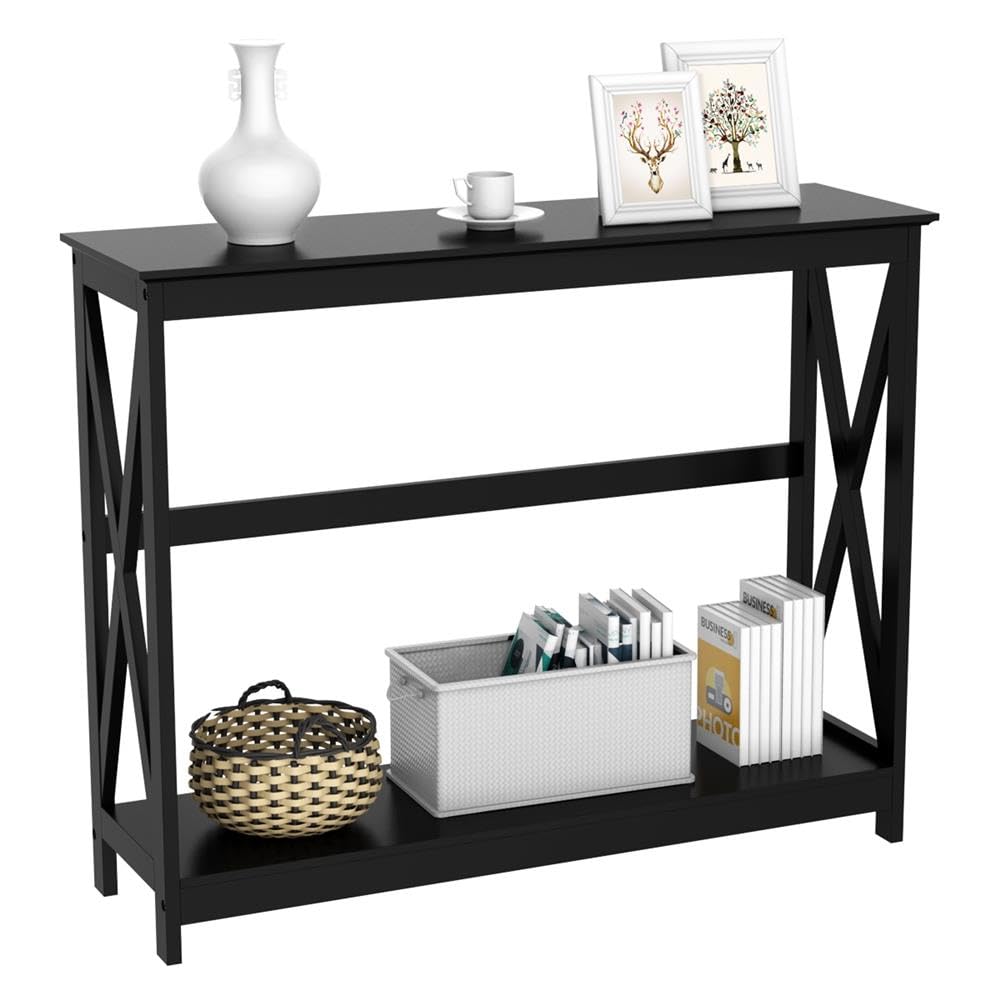
A clean, painted MDF console with X-braced sides and solid wood legs—simple, elegant, and easy to keep tidy.
Why I picked it: Classic silhouette with solid wood legs and good weight capacity for its size.
Best for: Small apartments, behind a sofa, or as a compact TV surface.
Budget-friendly without looking cheap.
Pros
- Solid wood legs improve stability
- Smooth painted surface resists spills
- Generous top and shelf depth
- Timeless, clean-lined design
Cons
- Requires about 40 minutes to assemble
- Painted MDF rather than solid wood
My take
I found the Yaheetech X-design table strikes a nice balance between minimalism and usable surface area—40" long and slim enough for tight spots.
The X-braced sides add real rigidity; once tightened it felt steady beneath a TV and a few decor pieces.
The painted MDF top is easy to wipe clean, which saved me time maintaining my entry vignette.
Plan on spending a bit of time with the hardware—assembly took me roughly forty minutes but the result looked cleaner than the price suggested.
3. VASAGLE Tempered Glass Console Table – Best for Minimalist Look
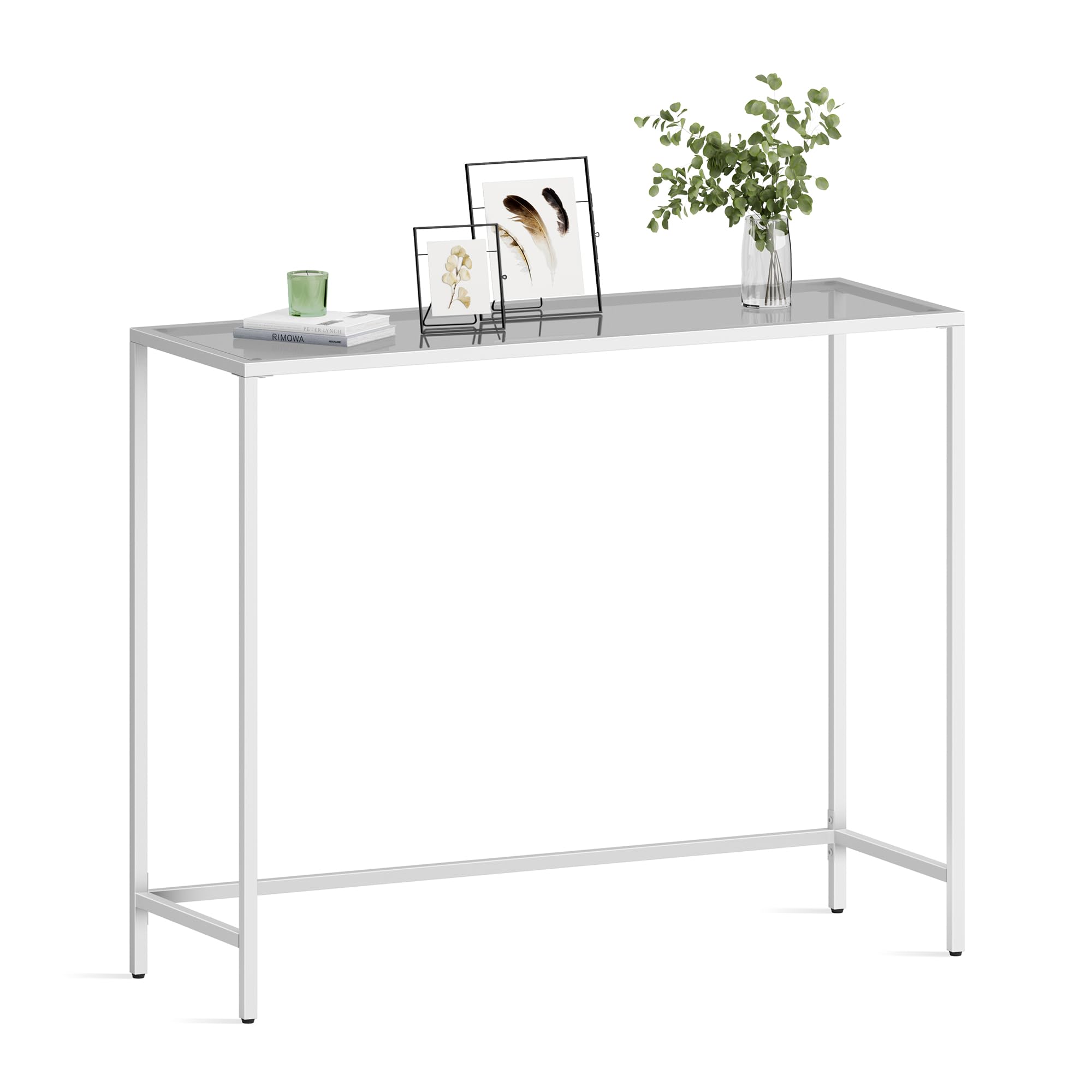
A slim console that pairs pearl-white steel with a tempered glass top for a bright, airy footprint.
Why I picked it: Tempered glass top and slim frame brighten tight spaces while staying practical.
Best for: Open foyers, modern farmhouse entries, or behind sofas where visual lightness matters.
A mid-range option for a glass-top look.
Pros
- 5 mm tempered glass top looks sleek
- Slim profile opens visual space
- Adjustable feet for level placement
- Includes anti-tip strap
Cons
- Glass shows fingerprints and needs frequent cleaning
- Not ideal for very heavy use
My take
I bought this when I wanted a console that felt like it took up no space; the tempered glass top delivers that airy look.
Assembly was straightforward with numbered parts, and the adjustable feet made it easy to stabilize on my uneven entry floor.
The glass did arrive with a slight haze from packaging, so I wiped it down a few times to get it crystal clear.
I also used one as a DJ board and found the surface supports midweight gear fine, but I wouldn’t rely on it for consistently heavy loads.
4. VASAGLE Industrial 3-Tier Console Table – Best with Extra Storage
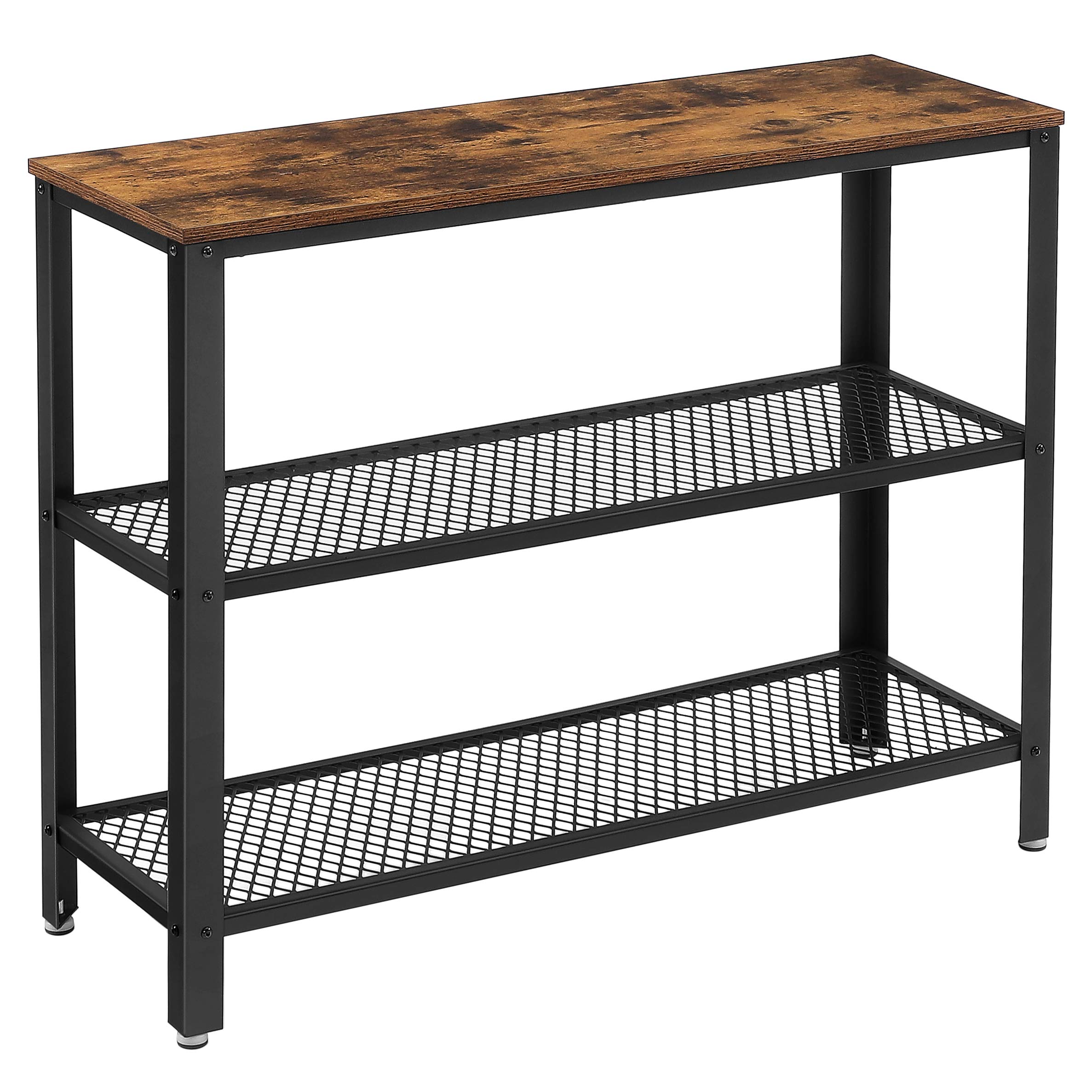
A rustic-top console with two mesh shelves for added storage—three usable levels in a narrow footprint.
Why I picked it: Two mesh shelves expand storage without making the table feel bulky.
Best for: Corridors, mudrooms, or anyone who needs shelf storage in a tight space.
A practical choice if storage matters more than a pure decorative piece.
Pros
- Three tiers for real storage
- Sturdy steel and particleboard mix
- Easy to assemble in minutes
- Mesh shelving helps airflow
Cons
- One foot may require extra fitting
- Instructions sometimes sparse
My take
I appreciated how quickly this 3-tier console came together—the parts are few and well‑fitted so it took only about half an hour.
The mesh shelves hold baskets, board games, and shoes without feeling heavy, and each shelf supports a solid load.
If I could change one thing, it would be the fit of one foot on my unit; I had to re-drill when the foot wouldn't thread cleanly.
Otherwise, this is the kind of narrow, functional console I reach for when I need both surface styling and real storage.
5. Yaheetech Console Table with Drawer – Best for Storage
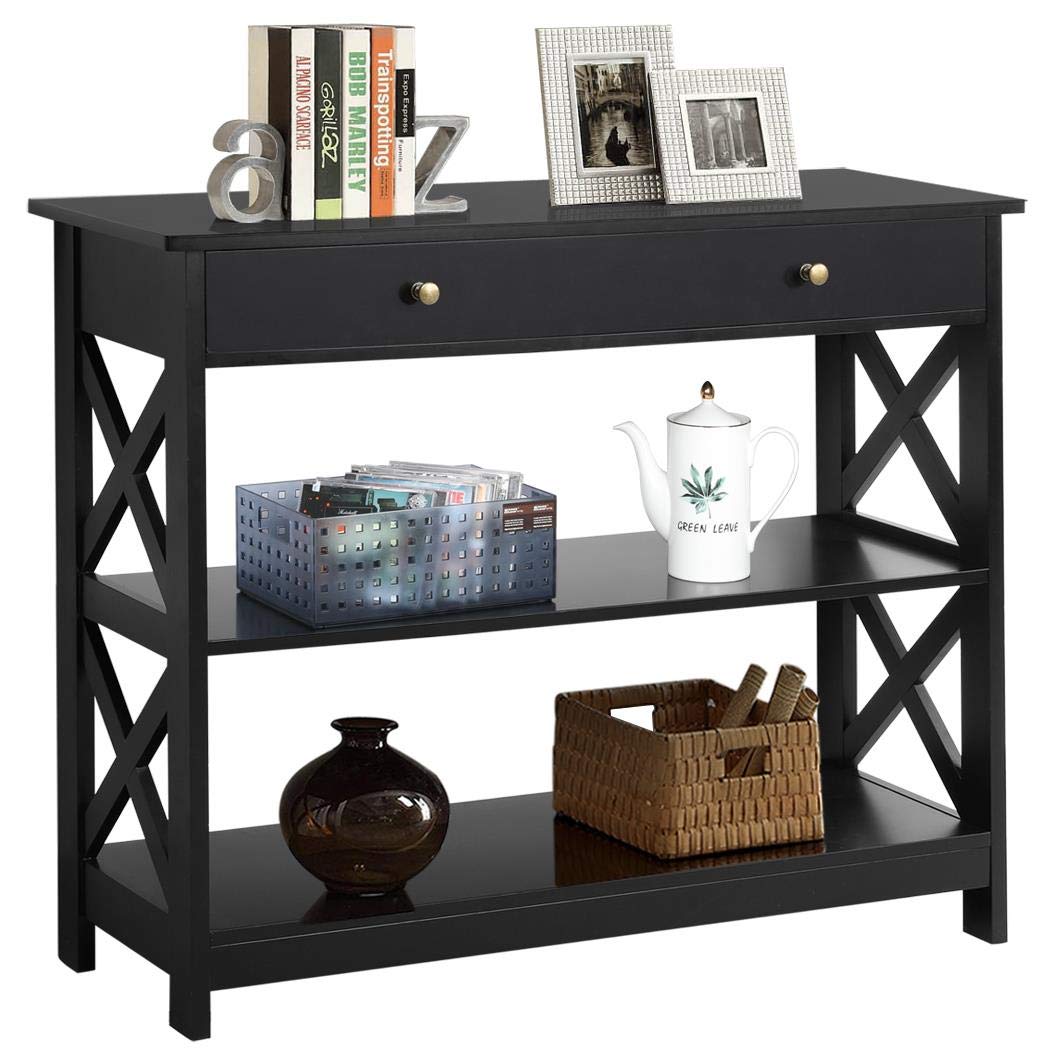
A three-tier console with a built-in drawer and cross-side frame—designed to hide clutter while offering display space.
Why I picked it: The integrated drawer solves the 'where do I put small stuff' problem for entryways.
Best for: Entryways that need discreet storage for keys, mail, and small essentials.
A practical mid-tier pick for storage-first needs.
Pros
- Built-in drawer for hidden storage
- Three tiers maximize vertical storage
- No visible assembly holes
- Sturdy once assembled
Cons
- Longer assembly time (expect hours)
- Heavy to move when packed or assembled
My take
I chose this table when I needed a slim console that actually hid stuff; the drawer surprised me with how much it holds.
Assembly took longer than the simpler two-tier tables—plan for a couple of hours if you're doing it solo—but the parts were well labeled and the finished piece felt solid.
Once in place it didn’t wobble and the cross-side frame contributes to a balanced silhouette that reads higher-end in my space.
If you want storage without a bulky footprint, this one solved that problem for me.
6. Yaheetech 3-Tier Console Table – Best for Versatility
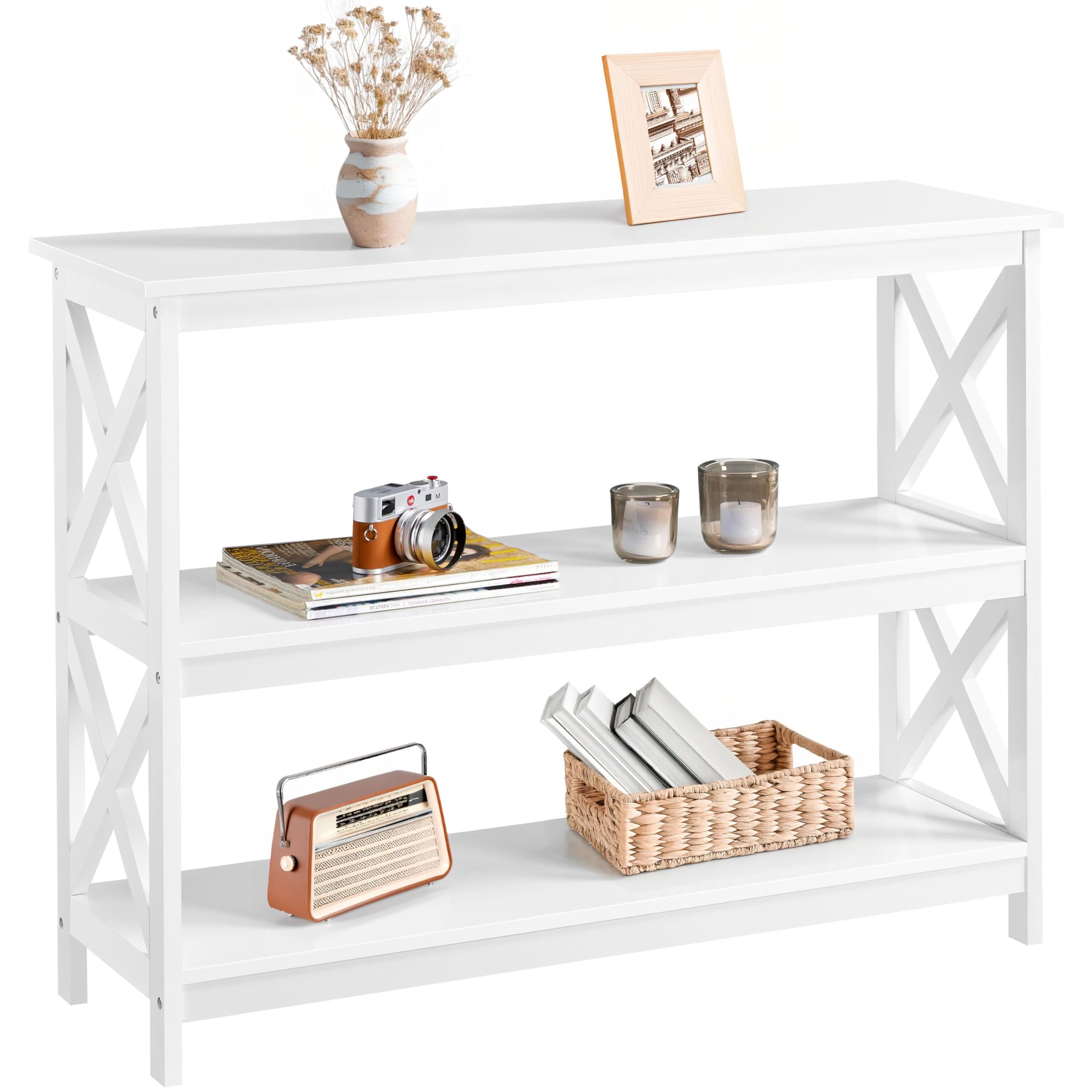
A versatile white three-tier console with X-brace support—works as a console, TV stand, or hallway shelf.
Why I picked it: Flexible three-tier layout and wide shelving make it useful in many rooms.
Best for: Multi-use spaces where a console doubles as a TV stand or storage shelf.
A good-value versatile option.
Pros
- Three roomy shelves for display or storage
- Double X-side braces for stability
- Easy-to-clean coated surface
- Relatively quick assembly
Cons
- Assembly time varies by kit
- Moderate overall weight capacity
My take
I put this table in a nook behind my desk and it fit perfectly—wide shelves let me style with photos and practical items.
Assembly was straightforward; with a drill it came together faster than the heavier, drawer-equipped units.
It felt sturdy for normal household items and the coated surface was simple to wipe free of dust or fingerprints.
Because the shelves are broad I’ve used this as a TV stand, entry console, and seasonal display table across different rooms.
How I Picked and What I Recommend
Measure Your Space First
I always measure the hallway width and the clear walking path before buying a console. A slim depth keeps the entry functional.
Think about how deep drawers or lower shelves will affect traffic flow; I prefer consoles under 12" deep for tight corridors.
- Measure width, depth, and clearance before ordering
- Allow at least 30–36" of walking clearance near entry doors
- Check shelf and drawer interior dimensions for real storage needs
Materials and Durability
I weigh steel frames and tempered glass as durable and visually lightweight; painted MDF is attractive but less rugged than solid wood.
Adjustable feet are a must in older homes with uneven floors—I’ve avoided wobble on multiple consoles thanks to them.
- Steel frames + thicker leg tubing improve long-term stability
- Tempered glass tops look light but may need frequent cleaning
- Painted MDF is low maintenance but can dent or chip under rough use
Storage vs. Style
If I need hidden storage, a drawer changes how I live with a console; if styling matters more, glass or narrow tops open visual space.
Mesh or open shelves add airflow and are perfect for baskets; solid shelves are better for heavy items.
- Choose drawers for keys and small items
- Pick open shelves for baskets and shoes
- Consider shelf weight limits for heavier displays
Assembly and Delivery
I factor in assembly time—simple two-piece designs often take under an hour, while drawer units can take multiple hours.
Inspect packaging at delivery; a beaten box can mean cosmetic damage, so I open shipments carefully before accepting.
- Reserve an afternoon for complex assemblies
- Keep the included hardware organized and follow labeled steps
- Have a second pair of hands for heavy or wide tops
Frequently Asked Questions
What height should an entry console be?
I aim for consoles around standard table height so they’re comfortable for keys and mail; most in this roundup sit near typical console heights and work well behind sofas or in hallways.
Can these narrow tables hold a TV?
I used a few as TV stands for smaller rooms; check the width and the tabletop weight capacity—some are fine for lighter TVs, others are better for décor and small electronics.
How difficult is assembly?
Assembly ranges from quick and simple to a couple of hours for drawer units. I recommend a drill for speed and laying out parts before starting.
Final Take
After testing these six consoles, I picked favorites based on what I’d actually live with: slim profiles for tight spaces, drawers when I needed hidden storage, and steel or glass when I wanted a lighter visual footprint.
Use my picks to match your priorities—storage, minimalism, or value—and measure carefully so the console fits your entry and daily routine.
