
I tested six rose-friendly fertilizers so you can pick the right feed for your roses—fast-acting, bloom boosters, pest control, and low-maintenance options.
I grow roses across different beds and containers, and I've used each of the products below on my plants. I wrote this guide to help you choose a fertilizer that matches your goals—bigger bushes, nonstop blooms, fewer pests, or less frequent feeding. My recommendations focus on what actually worked in my garden and why.
If you want instant green-up and frequent feeding, I reach for water-soluble Miracle-Gro or Jack's 20-20-20. When pest and disease control is the priority, I rely on BioAdvanced's all-in-one concentrate. For long stretches without maintenance, Osmocote's smart-release beads are my go-to. And when I need more blooms, Miracle-Gro Bloom Booster is my secret weapon.
1. Miracle-Gro Water Soluble All Purpose Plant Food (5 lb.) – Best Overall
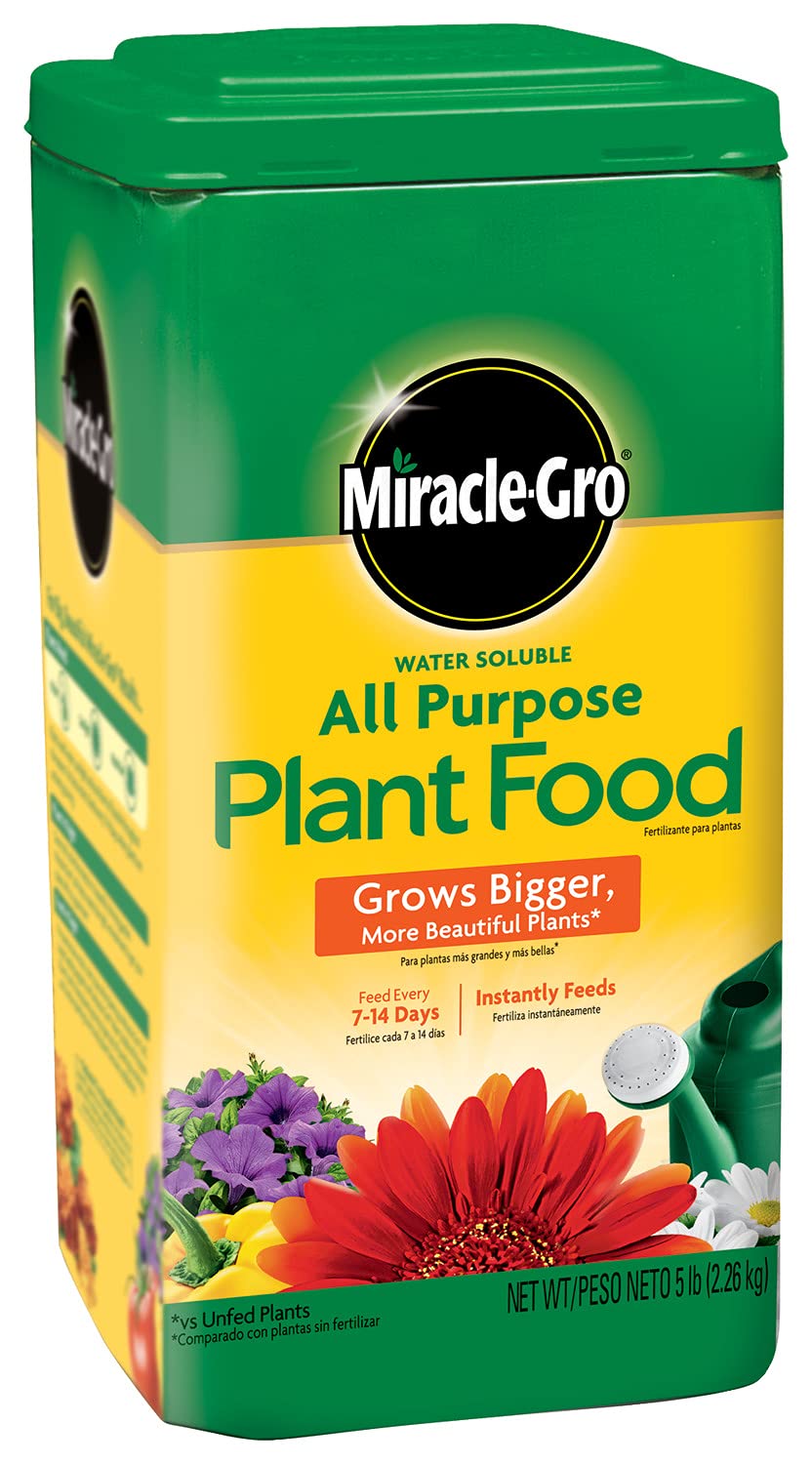
A go-to, fast-acting water-soluble feed that I use across roses, containers, and beds for steady growth.
Why I picked it: Reliable, broad coverage and immediacy for mixed beds.
Best for: Everyday feeding of roses, mixed flower beds, and container roses.
Good value for frequent applications and large coverage.
Pros
- Fast-acting root feeding
- Works on all plant types
- Large coverage per container
Cons
- Requires frequent reapplication
- Synthetic formula
My take
I keep a 5 lb. container of this in my shed because it feeds roses quickly and predictably. The 24-8-16 NPK pushes leafy growth and helps my new canes thicken up in spring.
My routine is to mix per label directions and soak the soil at the base; my roses respond within a week with noticeable vigor. It’s the product I use when I want fast results across a mixed bed of shrubs and ornamentals.
Be mindful of the recommended rates — I space applications to avoid overfeeding, and I use the garden feeder when I’m treating many plants at once.
2. Miracle-Gro Watering Can Singles All Purpose Plant Food (24 Packets) – Best for Convenience
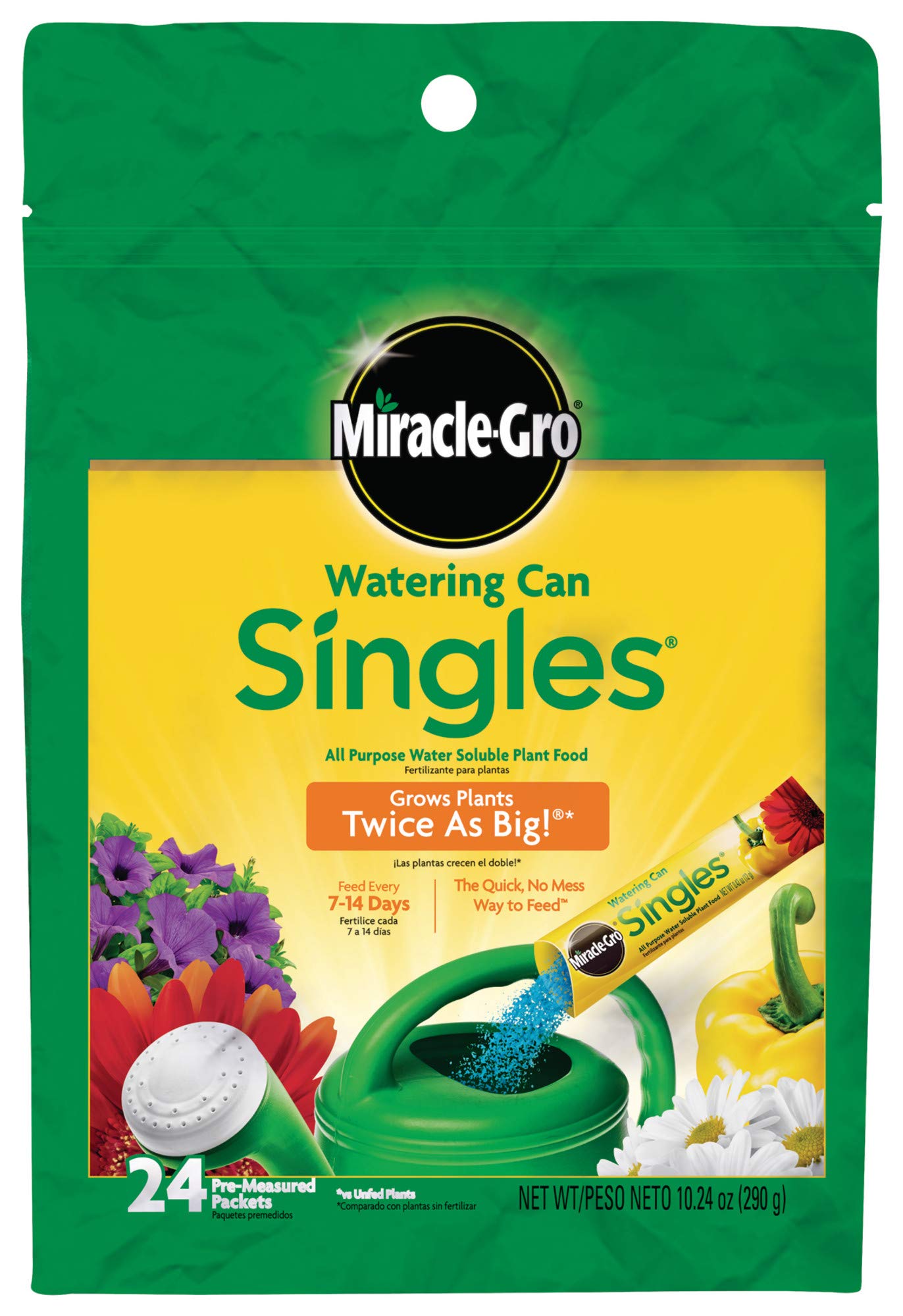
Pre-measured packets I carry to the greenhouse for no-mess, accurate feedings of roses and potted plants.
Why I picked it: Perfectly portioned, zero measuring, easy on the go.
Best for: Busy gardeners and anyone who waters on the run.
Affordable for small gardens and occasional feeding.
Pros
- No measuring required
- Minimal mess
- Ideal for containers
Cons
- Not cost-effective for large gardens
- Requires frequent application
My take
I use the single packets for my patio roses and office plants; tear, pour into a watering can, and I'm done. That simplicity makes it my choice when I don't want to fuss with scoops.
Each packet mixes cleanly and gives predictable results when used every 7–14 days. For potted roses the convenience outweighs the higher per-use cost.
3. BioAdvanced All-In-One Rose and Flower Care Fertilizer (64 oz Concentrate) – Best for Pest & Disease Control
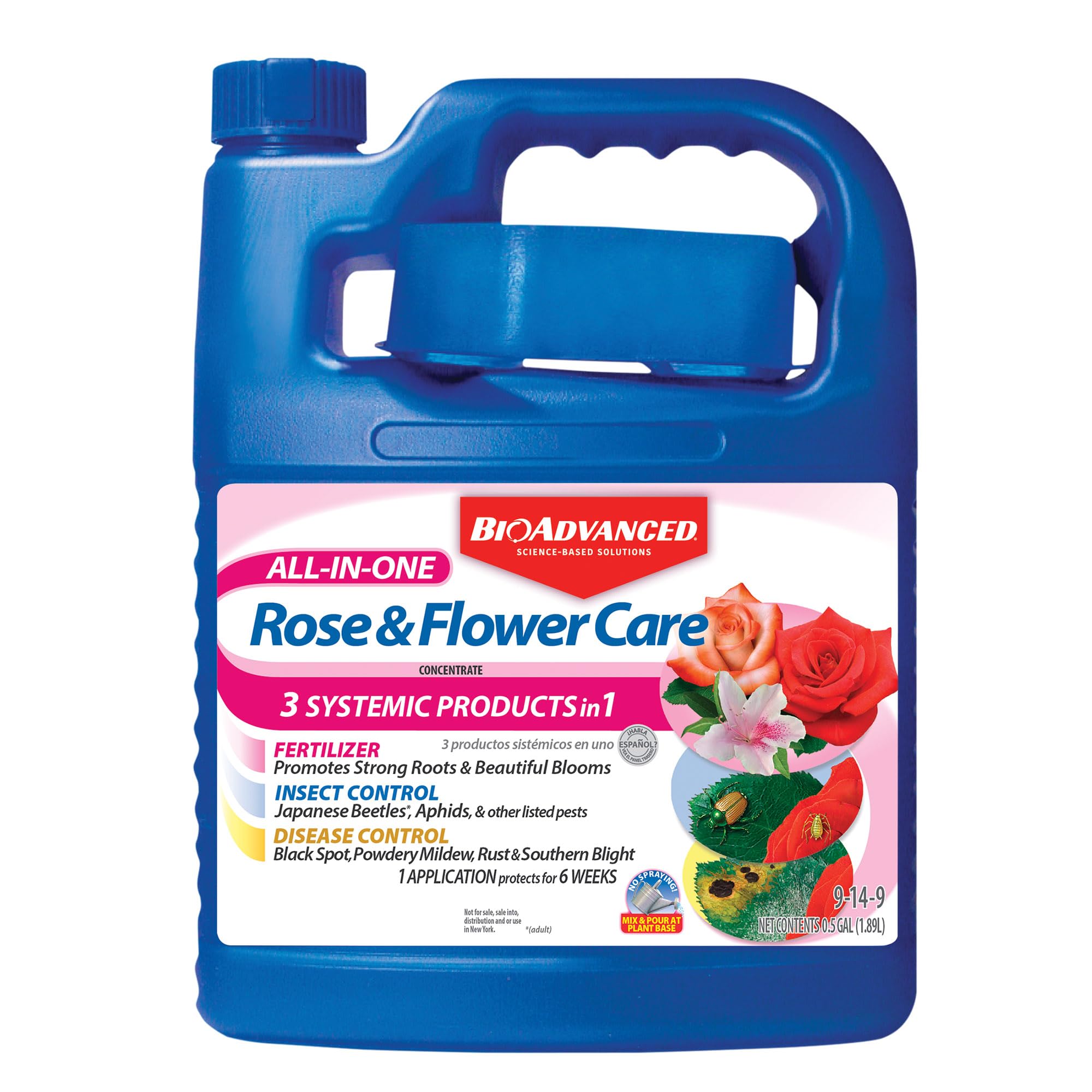
A concentrated 3-in-1 I use when I need feeding plus systemic insect and disease control for roses.
Why I picked it: Combines fertilizer with insecticide and fungicide protection.
Best for: Roses struggling with aphids, black spot, or powdery mildew.
A more capable option when pests and disease are problems.
Pros
- Fights listed pests and diseases
- Systemic, long-lasting protection
- Targets multiple rose issues
Cons
- Not suitable in some states
- Stronger chemistry—use carefully
My take
When my roses were battling black spot and heavy aphid pressure, I turned to this concentrate. The 3-in-1 action gave both nutrient support and targeted control in one application, and I noticed fewer pests and better-looking foliage in a couple of weeks.
I apply at the base of the plant as directed and avoid wetting leaves. The rainproof protection holds up well once it dries, which matters during an unpredictable spring.
This is the product I reach for when integrated control is more important than strictly organic approaches.
4. Jack’s Classic 20-20-20 All Purpose Water-Soluble Fertilizer (1.5 lb.) – Best for Balanced Feeding
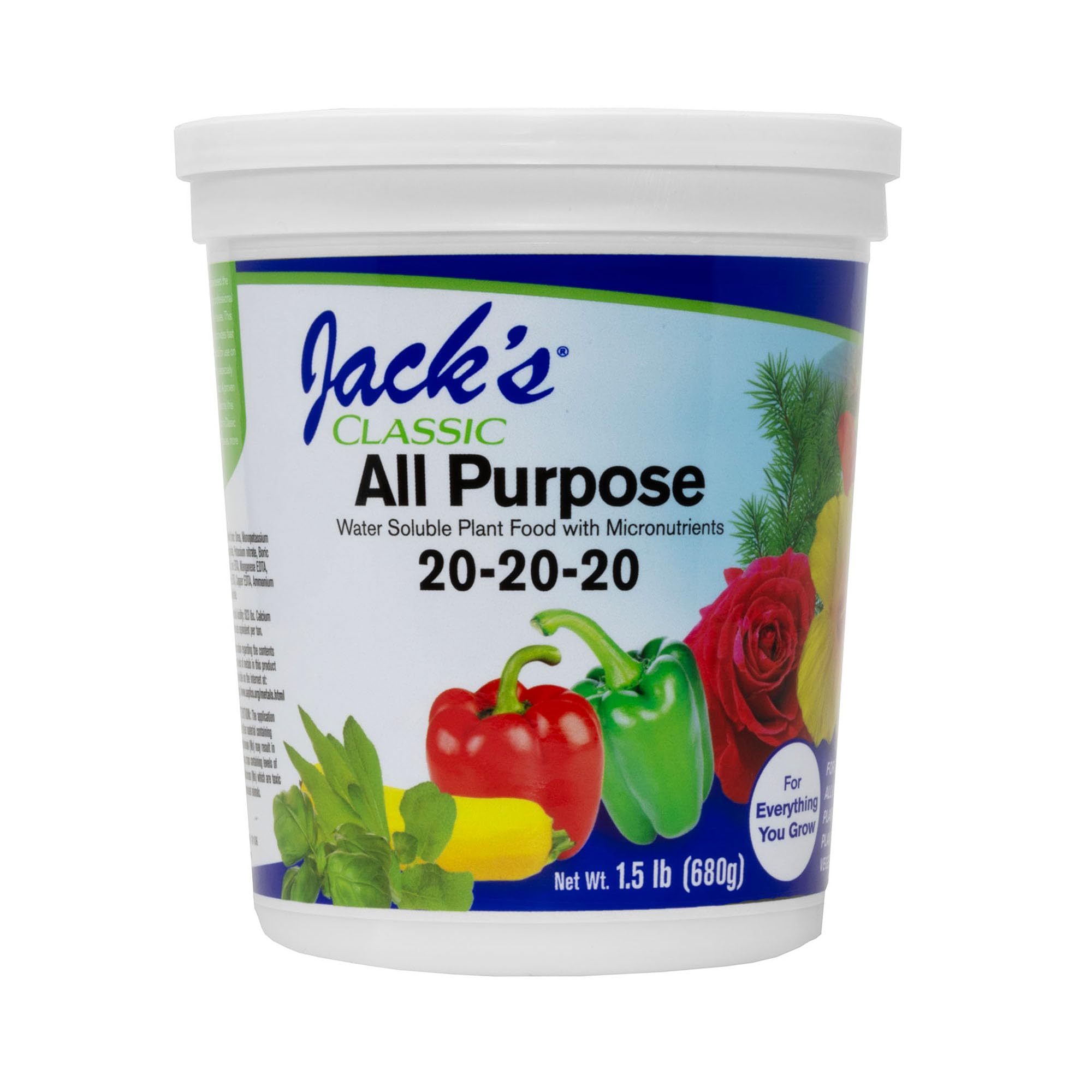
A balanced, professional-style 20-20-20 formula I use for steady maintenance and quick green-up.
Why I picked it: Even N-P-K with chelated micronutrients for reliable growth.
Best for: Foliar feeding, root feed, and continuous feed systems.
A mid-range, versatile choice for serious gardeners.
Pros
- Balanced NPK for overall growth
- Includes chelated micronutrients
- Works foliar or root
Cons
- Requires mixing
- Can be overused if not monitored
My take
I use Jack's when I want uniform growth and strong leaf development across a bed of roses. The 20-20-20 balance is especially helpful in spring to green up young canes without pushing an out-of-balance bloom-only response.
The ability to feed foliar or root-side gives me flexibility; I switch to foliar feeding when I need rapid correction of chlorosis or nutrient deficiency signs.
Mixing is straightforward and the included spoon helps keep doses consistent so I don't overdo it.
5. Miracle-Gro Water Soluble Bloom Booster Flower Food (4 lb.) – Best for Blooms
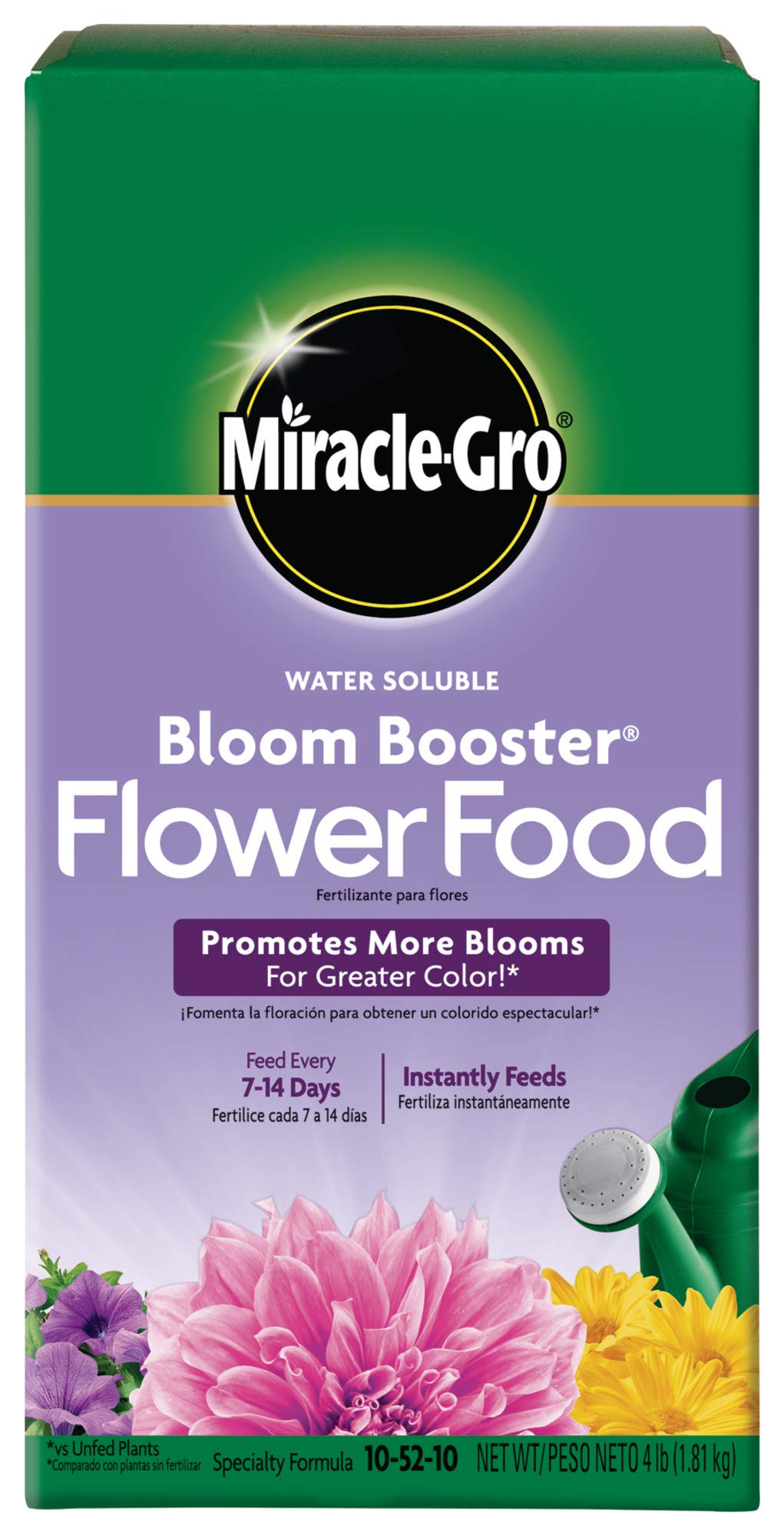
A high-phosphorus bloom booster I pull out when I want heavier, richer flowering on my roses.
Why I picked it: High phosphorus specifically drives more and larger blooms.
Best for: Boosting flower set and color in roses and annuals.
Great value when blooms are your primary goal.
Pros
- High phosphorus for bigger blooms
- Dissolves instantly
- Safe when used as directed
Cons
- Not for foliage-only needs
- Frequent feed schedule
My take
When I want my roses to show heavier bloom production, I switch to the 10-52-10 formula. The phosphorus boost encourages more flowers and richer color, which makes a visible difference during peak season.
I limit use to the flowering period and always apply at label strength or lighter—my experience shows roses reward careful application with fuller displays.
This is my go-to when I plan a garden tour or want peak performance from my containers.
6. Osmocote Smart-Release Plant Food Plus (8 lb.) – Best Low-Maintenance
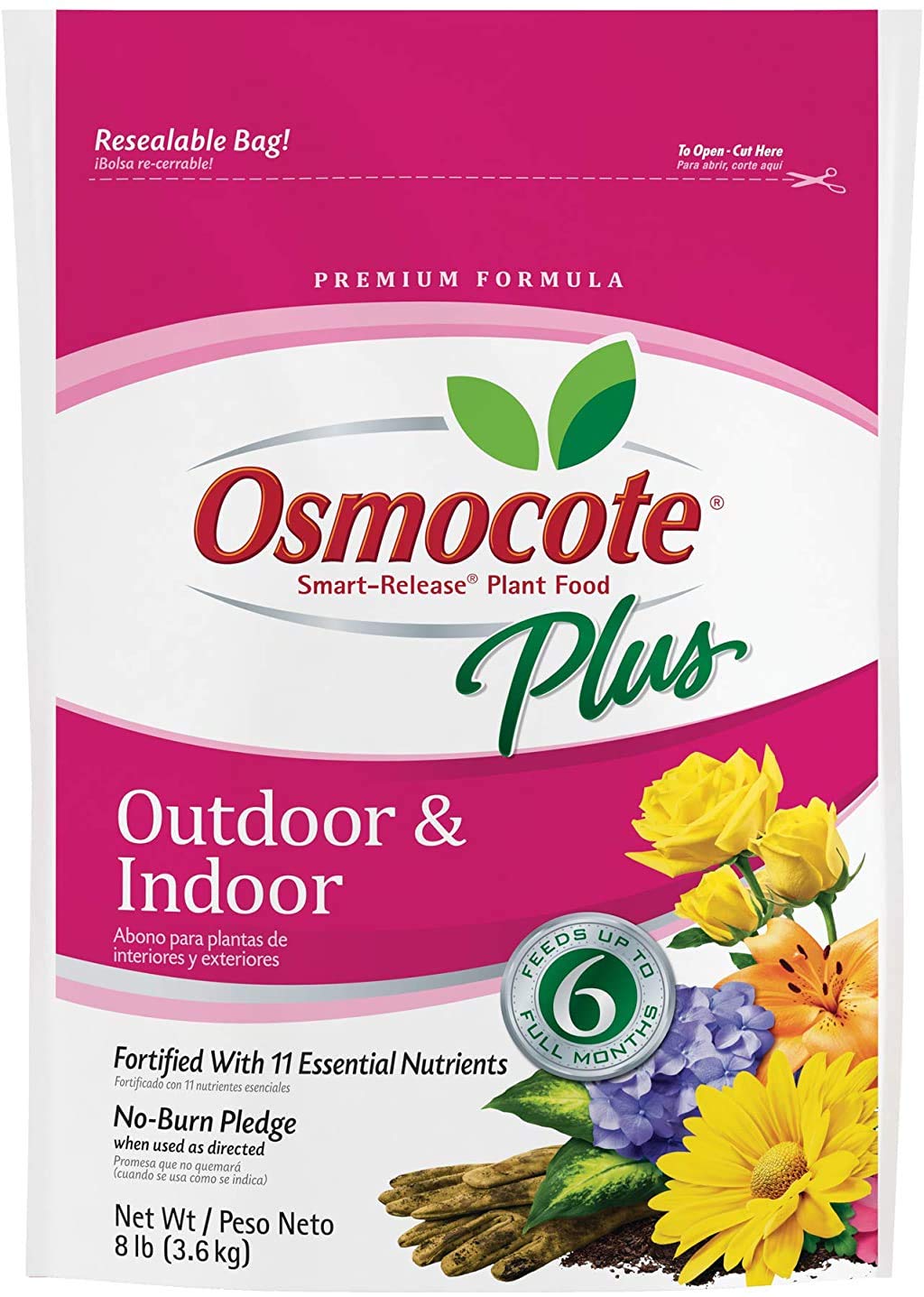
A slow-release granular feed that I use for hands-off, long-term nutrition for in-ground roses and containers.
Why I picked it: Controlled-release beads feed for months with minimal work.
Best for: Raised beds, established roses, and gardeners who want low maintenance.
Higher upfront cost but saves time over months.
Pros
- Feeds up to six months
- 11 essential nutrients included
- Less frequent applications
Cons
- Higher upfront cost
- Slower to change plant response
My take
I use Osmocote in spring when I prefer to set and forget my rose beds. The resin coating paces nutrient release so I don't have to feed every few weeks.
For containers I usually mix the recommended scoop into the potting mix; for in-ground roses I broadcast and lightly mix into the topsoil. The sustained feeding keeps blooms and foliage steady through the season.
If you want consistent nutrition without weekly mixing, this product is the easiest route.
How I Choose Fertilizer for My Roses
Match fertilizer to your priority
I decide based on what my roses need most: rapid growth, nonstop blooms, pest control, or low maintenance. Each product category serves a clear purpose in my garden.
For quick green-up and general growth I use balanced or all-purpose soluble feeds. For heavy flowering I switch to a high-phosphorus bloom booster. For pest and disease pressure I choose a combined insecticide/fungicide concentrate. For months-long feeding without fuss I pick a smart-release granule.
- Water-soluble: fast results, repeat every 1–2 weeks
- High-phosphorus bloom boosters: use during peak flowering only
- Systemic 3-in-1 products: choose when pests or diseases are active
- Smart-release granules: apply every 4–6 months for steady nutrition
NPK basics for roses
I look at NPK to set expectations: higher nitrogen fuels foliage, phosphorus supports blooms and root development, and potassium aids overall plant health. Balanced formulas are my default; bloom boosters are seasonal.
If you're unsure, a balanced feed or slow-release option is a safe starting point while you observe your soil and plants.
- N (nitrogen): leaf and cane growth
- P (phosphorus): flower set and root strength
- K (potassium): overall vigor and stress tolerance
Application tips I follow
I always apply fertilizer to moist soil and avoid wetting leaves unless the product permits foliar feeding. Read label rates and err on the lighter side the first time on new plantings.
Rotate products seasonally—feed for growth in spring, switch to bloom formulas in summer, and back off in late fall to prepare plants for dormancy.
- Feed moist soil, not dry roots
- Avoid leaf spray unless labeled for foliar use
- Reduce feeding heading into dormancy
Frequently Asked Questions
How often should I fertilize roses?
I fertilize water-soluble formulas every 7–14 days during the growing season. Slow-release products I apply twice a year, typically in spring and midseason.
Can I use a general-purpose fertilizer on roses?
Yes. I use all-purpose fertilizers for steady growth, then add a bloom booster when I want heavier flowering. Balanced formulas like 20-20-20 work well for maintenance.
When should I use a product with disease and pest control?
I reach for a 3-in-1 concentrate when I see active pests or fungal issues. It combines nutrition with systemic protection, which helps restore vigor quickly.
Are slow-release fertilizers better for beginners?
In my experience, yes. Slow-release options reduce the chance of overfeeding and cut down on application frequency, which is helpful when you're still learning timing and rates.
Final Take
I tailored these picks to common rose goals: quick growth, bigger blooms, pest control, and low-maintenance feeding. Consider what matters most in your garden and choose the product that matches that need.
Whichever option you select, follow label directions, watch how your roses respond, and adjust timing or formula as seasons change.
