
I tested handheld shakers, battery spreaders, mini broadcast units, and tow-behind models so you can pick the right spreader for your lawn size and tasks.
I’ve used dozens of spreaders over the years, from simple hand shakers to heavy tow-behind units. This roundup reflects hands-on time with each model and comparisons based on accuracy, capacity, ease of use, and durability.
If you want an easy way to get seed, fertilizer, or ice melt down without wasting product or time, I’ll walk you through the best spreaders I keep reaching for and why each one earns a spot on my shed shelf.
I compared these spreaders primarily on coverage per fill, how evenly they distribute different granular materials, ergonomic comfort, and ease of setup and cleanup. I prioritized accuracy for small areas and capacity for large lawns.
1. Scotts Whirl Hand-Powered Spreader – Best Hand-Powered for Tiny Yards
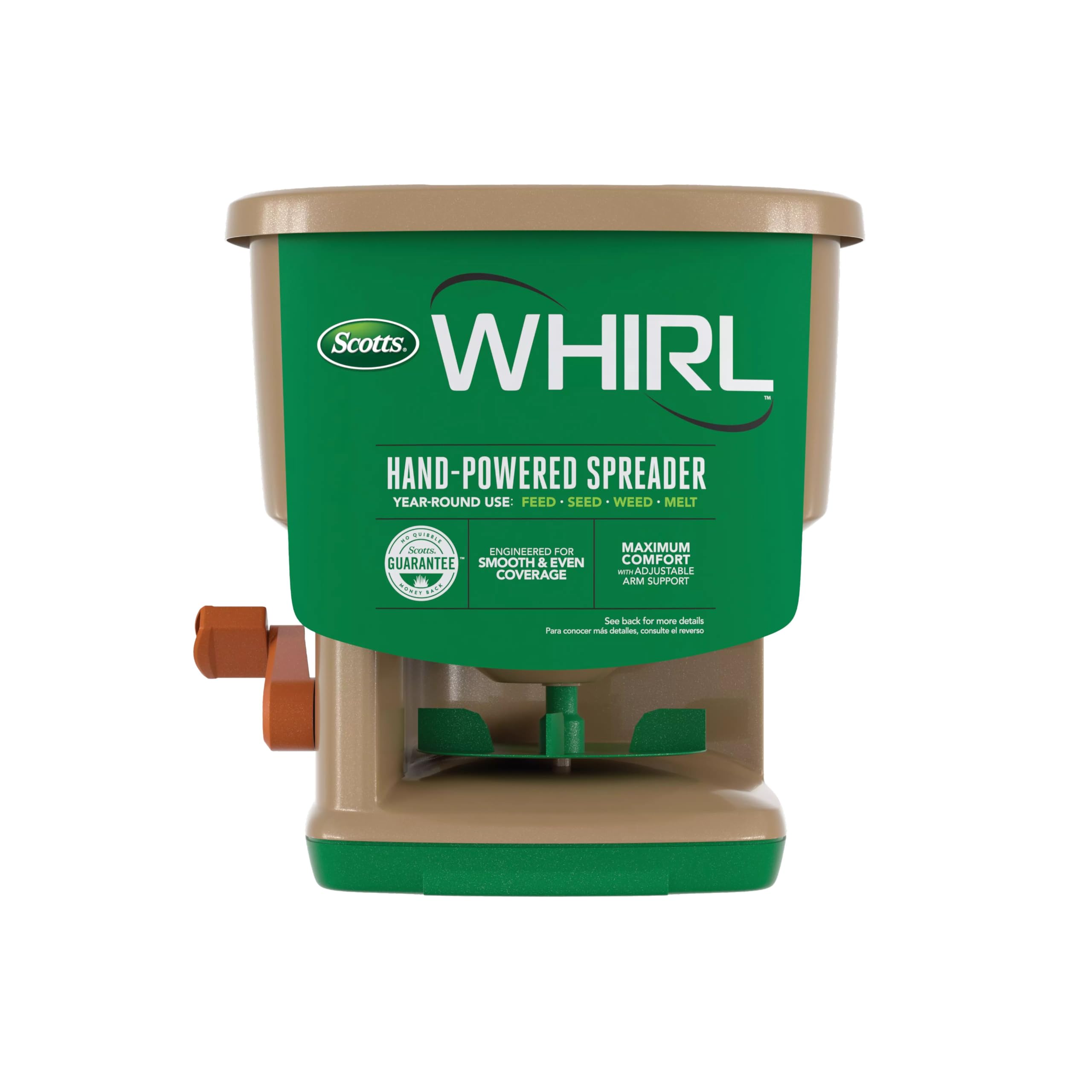
A lightweight handheld crank spreader that delivers even coverage for small lawns and targeted jobs.
Why I picked it: Simple, fast setup and smooth distribution for pockets of seed or fertilizer.
Best for: Small yards, spot seeding, sidewalks and tight spaces.
An affordable, no-frills option for portable spreading.
Pros
- Lightweight and easy to maneuver
- Adjustable arm support for comfort
- Even coverage for small areas
Cons
- Plastic construction may limit long-term durability
- Can jam with mixed-size ice melt
- Not ambidextrous — right-hand spinning preferred
My take
I reach for the Whirl when I have a small patch to seed or a sidewalk to salt. It arrives assembled and feels intuitive: hold the handle, spin the wheel, and the product fans out evenly.
The adjustable arm support makes repetitive use comfortable, and I can cover a modest yard without constant refills. If I’m using large, irregular crystals like some ice melts, I will sometimes need to clear a jam by reversing the wheel briefly.
This is not a heavy-duty tool, but for simple seasonal tasks it’s compact, light, and does exactly what I need.
2. Scotts EdgeGuard Mini Broadcast Spreader – Best Mini Broadcast for Precision
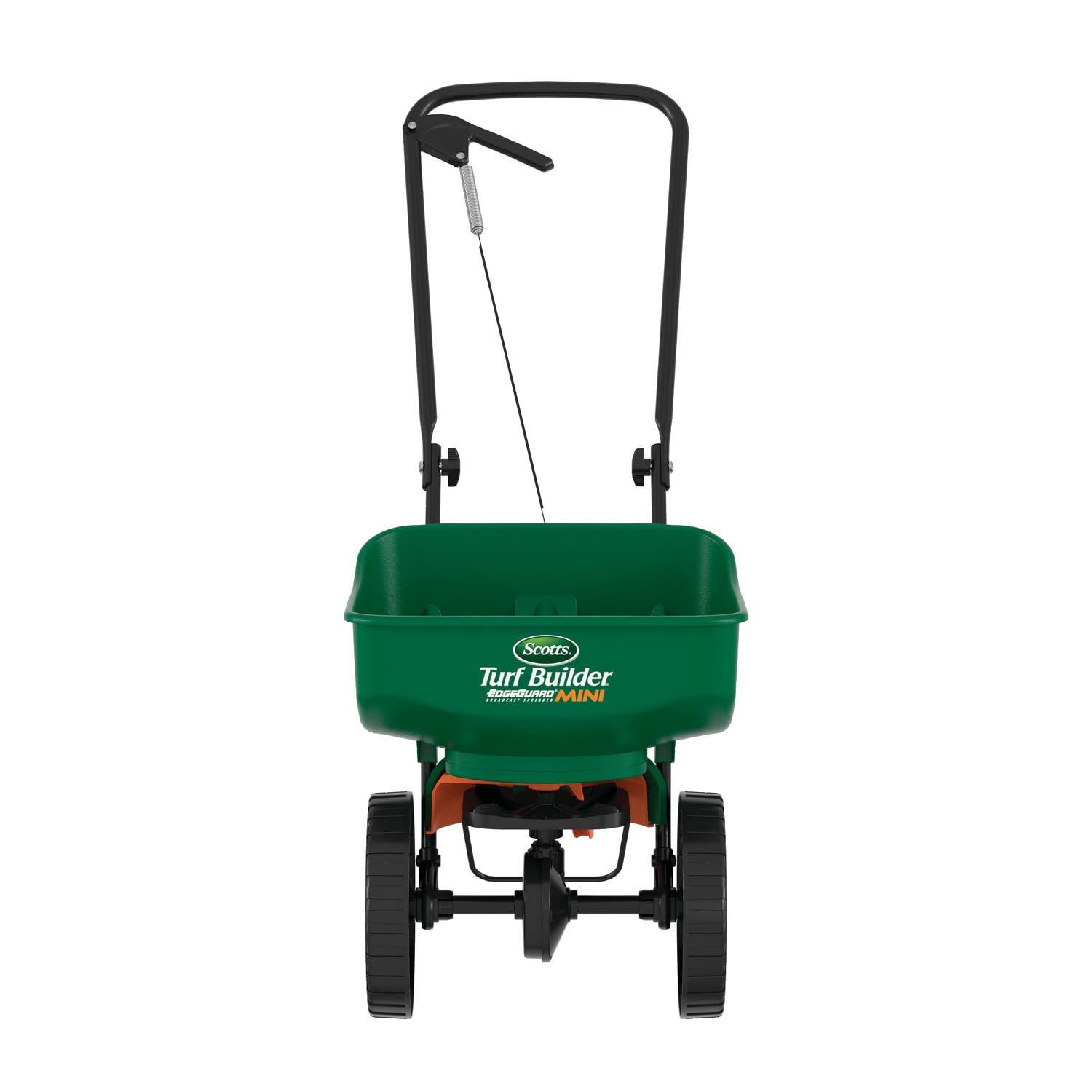
A compact broadcast spreader with EdgeGuard to keep product off sidewalks and landscaping.
Why I picked it: EdgeGuard control and a reliable hopper/agitator design for consistent coverage.
Best for: Small-to-medium lawns where edging and neat lines matter.
A mid-range choice with useful anti-overlap technology.
Pros
- EdgeGuard prevents overspray on hard surfaces
- Pre-calibrated and easy to use
- Fold-down handle for compact storage
Cons
- Lightweight construction on the smaller side
- Large spray pattern requires steady pace
- Not optimal for very large properties
My take
When I need clean lines along driveways and beds, the EdgeGuard Mini is my go-to. Engaging EdgeGuard properly cuts off the right-side spread so I don’t waste product on pavement.
Assembly is quick — raise the handle and tighten — and the curved hopper plus dual-blade agitator keep flow steady. I can load enough product to do several passes on a typical suburban lawn without refilling.
It’s easy to push and comfortable for shorter users, and the wide, even pattern makes coverage faster than hand-shaking or tiny shakers.
3. Scotts Wizz Battery Handheld Spreader – Best Battery-Powered Handheld
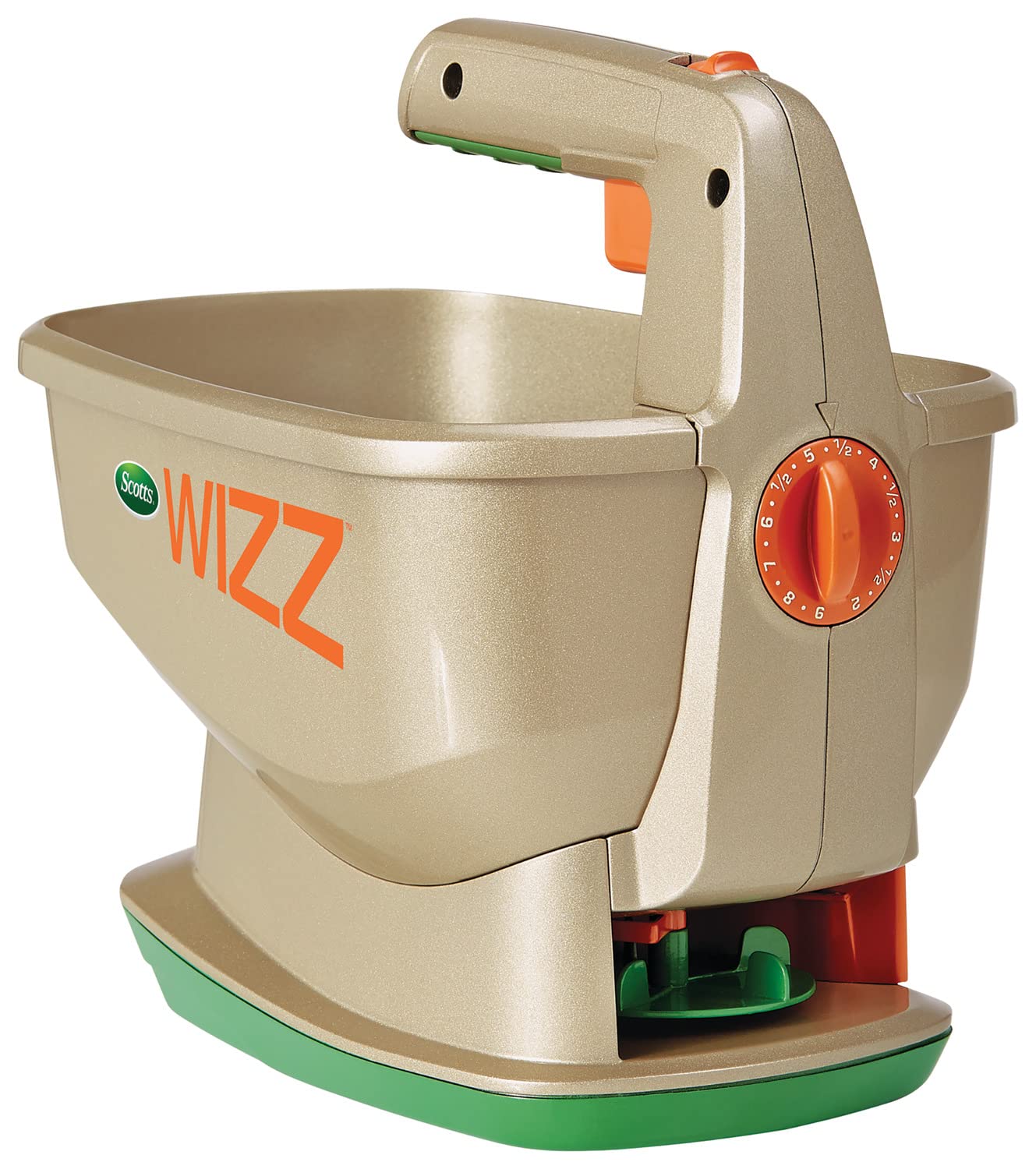
A battery-powered handheld with multiple settings and EdgeGuard control for precise application.
Why I picked it: Battery drive and many settings let me dial in an accurate spread rate.
Best for: Homeowners who want motorized convenience for small-to-medium lawns.
A practical step up from manual models for convenience.
Pros
- Battery-powered for less manual effort
- 23 spreader settings for precision
- EdgeGuard for controlled broadcasts
Cons
- Hopper can clog with fine granules
- Requires AA batteries to operate
- Packaging and missing manuals occasionally reported
My take
The Wizz gives me the broadcast of a push spreader without walking behind a cart. The motor smooths output and the 23 settings let me match the product label almost exactly.
I appreciate the EdgeGuard for walking next to sidewalks and beds. In practice I’ve had to clear the hopper a couple of times when fine potash granules worked their way into the rotor area, but a quick clean fixes it.
Overall it saves effort and gives a broad, controllable throw that makes treating mid-size yards a lot faster.
4. Gardena Hand-Held Spreader M – Best Ergonomic Hand Crank
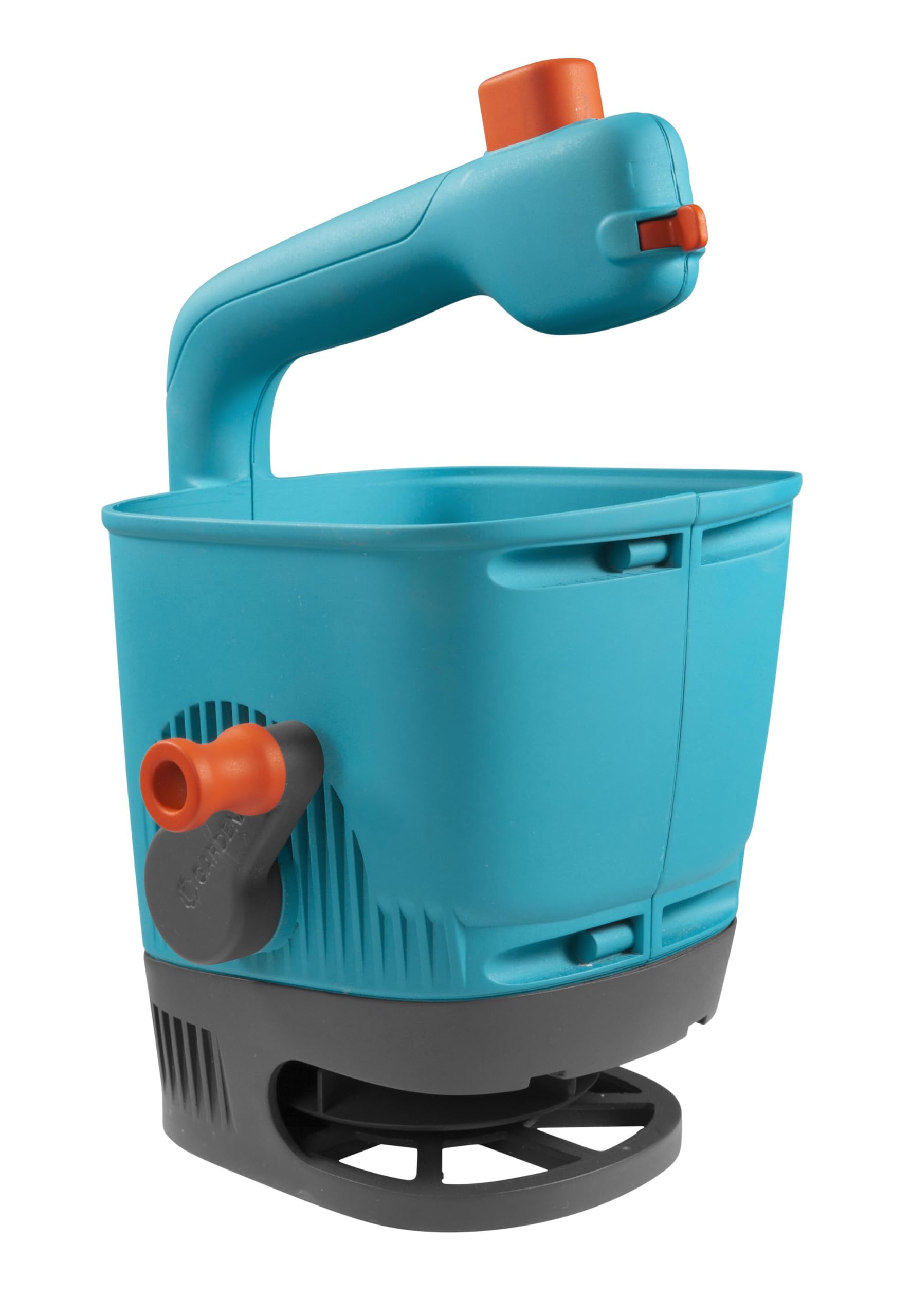
A compact, ergonomic crank spreader with four dosing levels and a thumb release for fingertip control.
Why I picked it: Ergonomic crank action and precise quantity settings for measured spreading.
Best for: Precision work on small lawns, spot fertilizing, and salting steps.
A slightly more premium handheld focused on control.
Pros
- Ergonomic handle and intuitive crank
- Four quantity settings for accurate dosing
- Freely rotating disc for even distribution
Cons
- Small filling volume for larger jobs
- Not suited to very coarse material
- Size may surprise users expecting larger hoppers
My take
I like the Gardena for tidy, accurate spreading. The thumb pushbutton to open and close the feed is simple and lets me apply product exactly where I want it.
The crank-driven disc gives a very consistent output when compared to some rotary shakers, and the four-level setting helps when I switch between seed, salt, and fertilizer.
It’s compact and well-built; if I’m treating a small lawn or targeted patches, it’s faster and cleaner than throwing product by hand.
5. Agri-Fab 130 lb Tow-Behind Broadcast Spreader – Best Tow-Behind for Large Yards
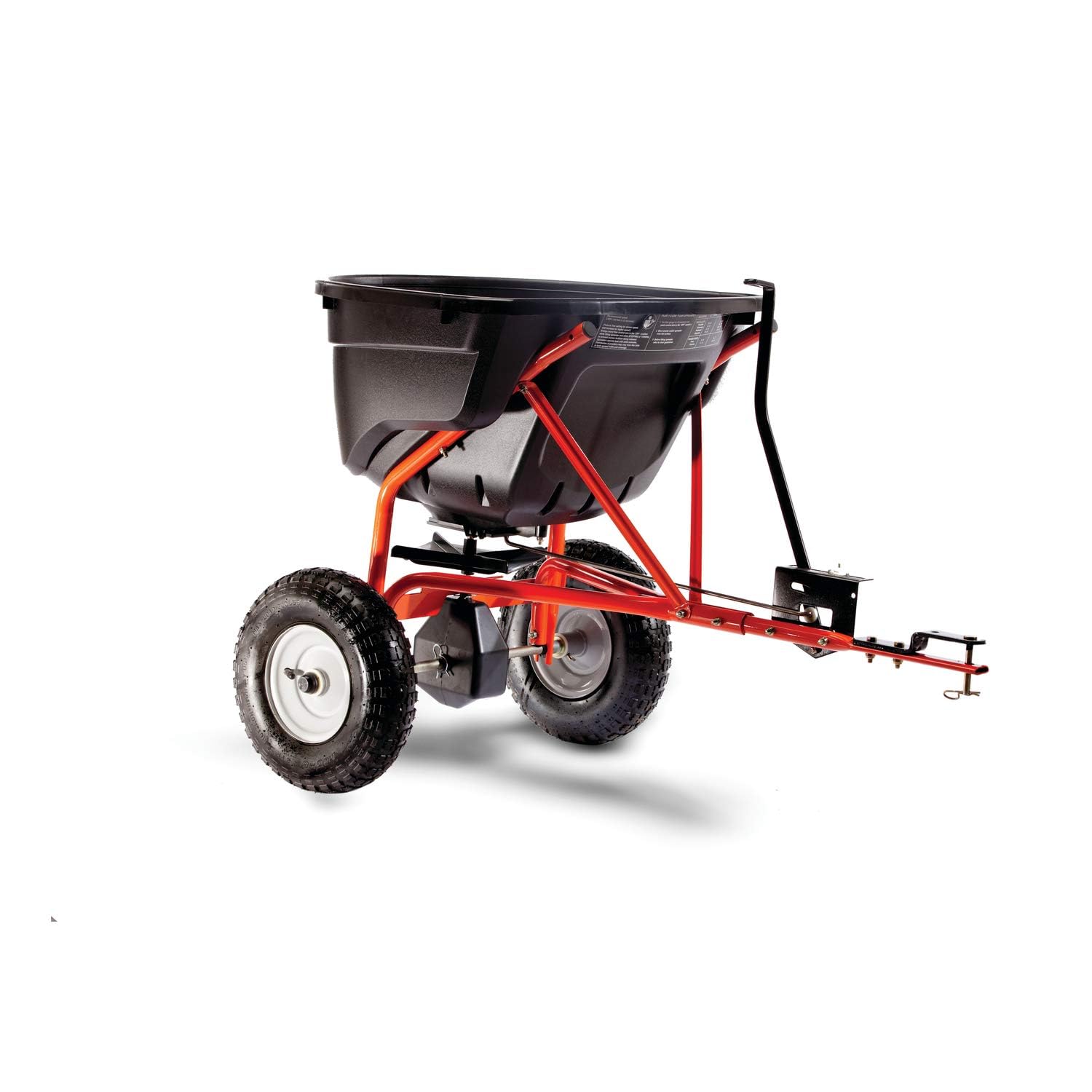
A heavy-capacity tow-behind spreader that covers large areas from a tractor or riding mower.
Why I picked it: High hopper capacity and wide spread for efficient coverage of large properties.
Best for: Large lawns, acreage, and users who already own a tractor or mower.
A more expensive, workhorse option for big yards.
Pros
- Massive hopper reduces refills
- Universal hitch fits many tractors
- Enclosed gearbox and sturdy frame
Cons
- Assembly can be fiddly and time-consuming
- Hopper may not empty completely in some hitch positions
- Tires and large parts require occasional maintenance
My take
When I need to treat acreage or half-acre lawns, the Agri-Fab tow-behind is the tool I use. The large hopper holds a lot of product so I’m not stopping every few minutes.
I mount it to my rider and adjust the flow from the seat; the steel tubing and enclosed gearbox feel built for seasons of use. Assembly took patience — I recommend following the parts count and sequence closely.
If you have varied terrain, take time to set hitch height so material reaches the dispensing slot and the spreader plate spins reliably.
6. Chapin 64 oz Hand Shaker Spreader – Best Simple Shaker
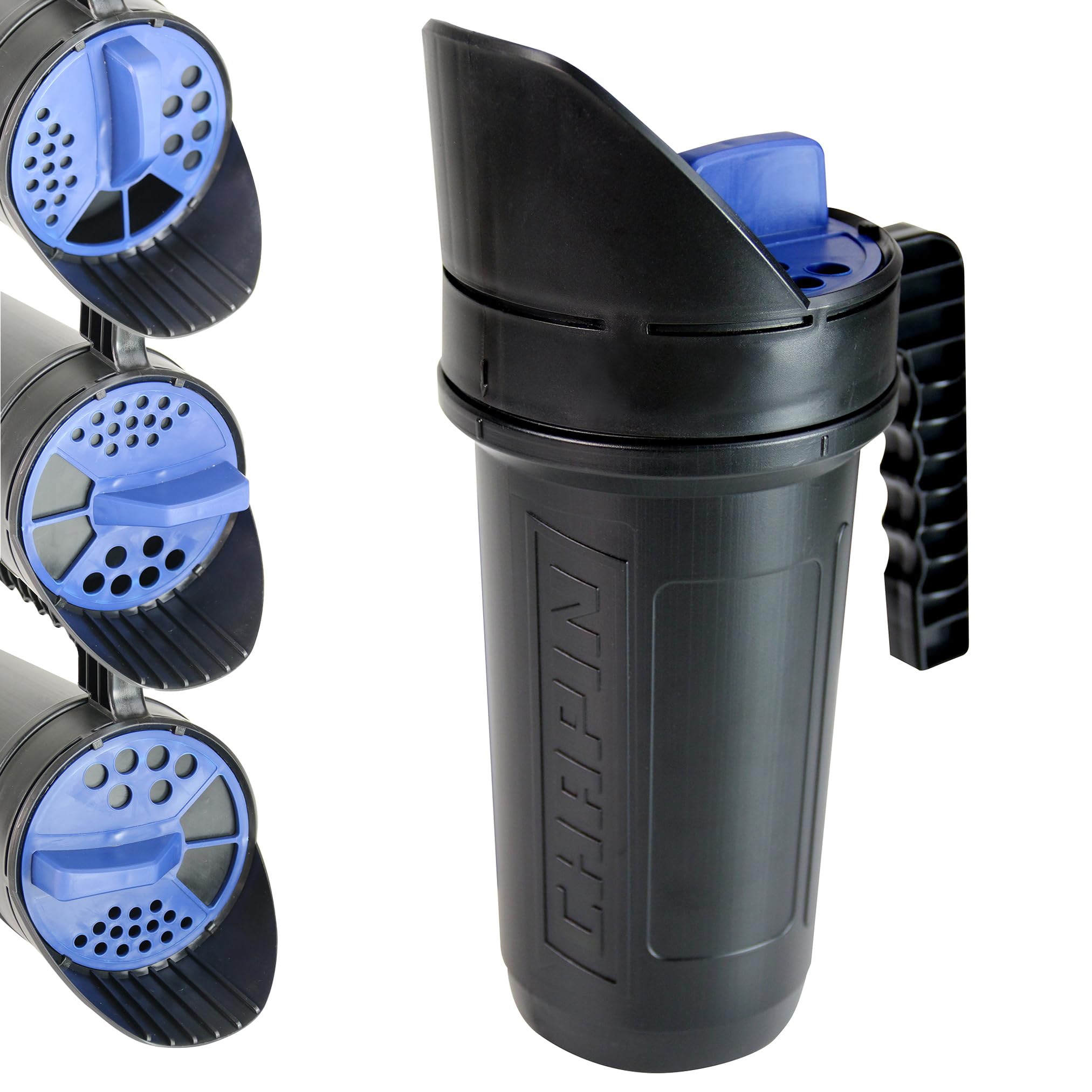
An easy, high-capacity shaker with three lid openings and a comfortable grip for quick jobs.
Why I picked it: Simple, versatile, and portable for small tasks where a full spreader is overkill.
Best for: Walkways, steps, small patches of lawn, and tight garden beds.
A very affordable, low-tech solution that’s highly portable.
Pros
- Large 64-ounce capacity
- Three lid openings for material sizes
- Comfortable grip, glove-friendly
Cons
- Feels a bit flimsy when fully loaded
- Not ideal for continuous large-area use
My take
The Chapin shaker is the most convenient tool for quick winter salting or seeding a small bare spot. I fill it, twist to the right opening, and shake — it’s that straightforward.
The wide mouth and screw top make refills painless, and the three opening sizes mean I can flip between fine seed and coarse ice melt without swapping containers.
It’s not a heavy-duty machine, but it’s exactly what I want for one-off tasks and tight spaces where a push spreader won’t reach.
7. Stalwart Salt and Seed Shaker – Best Budget Shaker
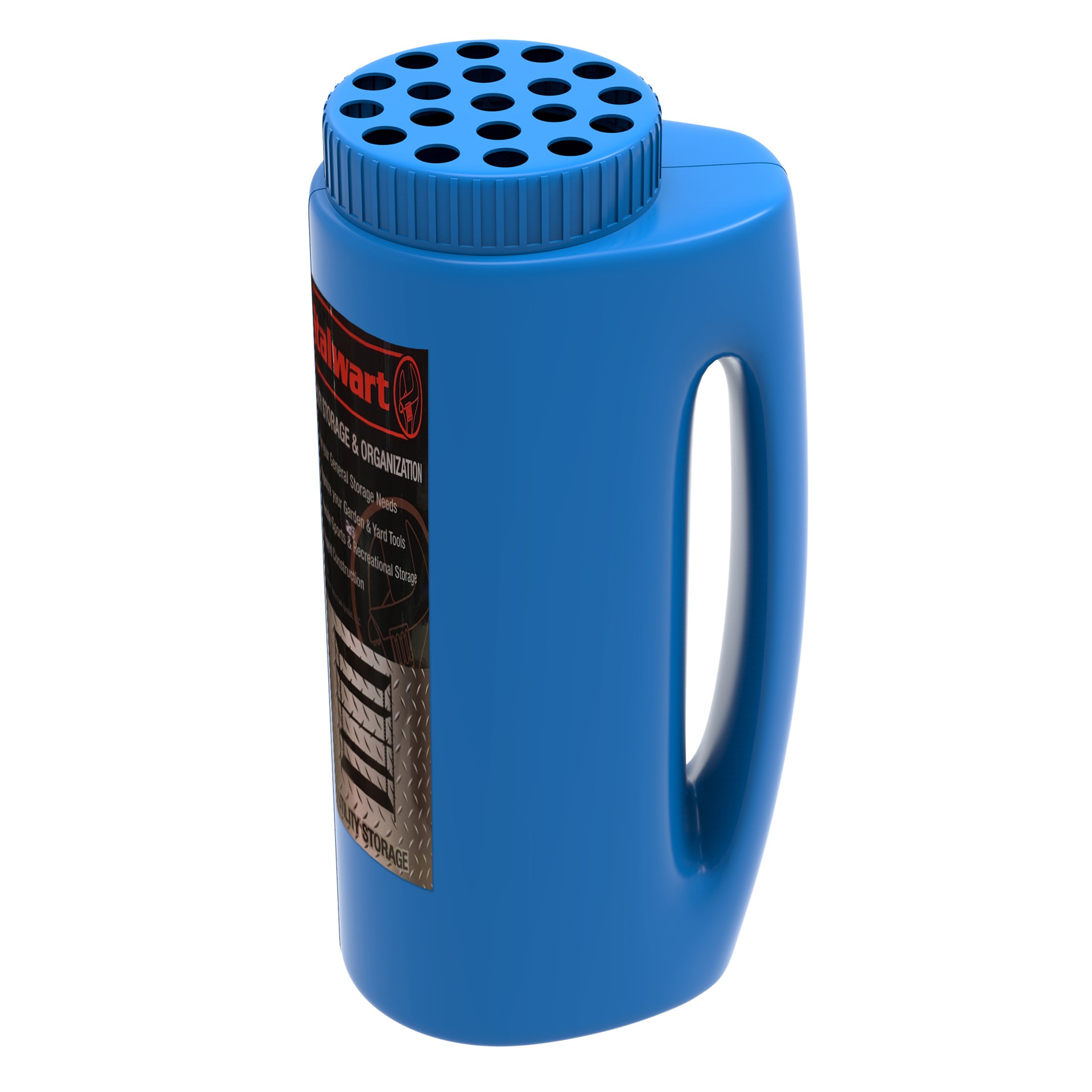
A no-frills, economical shaker that gets the job done for seasonal salting and spot seeding.
Why I picked it: Low cost, simple design, and a comfortable handle make it a practical spare in the garage.
Best for: Budget-minded users and occasional spreading tasks.
An inexpensive option that covers basic needs well.
Pros
- Very affordable and functional
- Comfortable, roomy handle
- Easy to fill and clean
Cons
- Lid lacks a secure shut-off mechanism
- Build quality is basic compared to premium models
My take
I keep a Stalwart shaker in the car for winter and small yard jobs. It’s light, easy to wield, and perfect for tossing a measured amount of ice melt on steps.
The twist-off lid fills easily and the shaker disperses granules fairly evenly. It won’t replace a broadcast spreader for lawns, but it’s a great, low-cost tool for small tasks.
Note that the cap doesn’t have an adjustable slide for fully closing the holes, so I store it upright to avoid spills.
8. Gardena Kleinstreuer S Hand Spreader – Best Small-Scale Precision Spreader
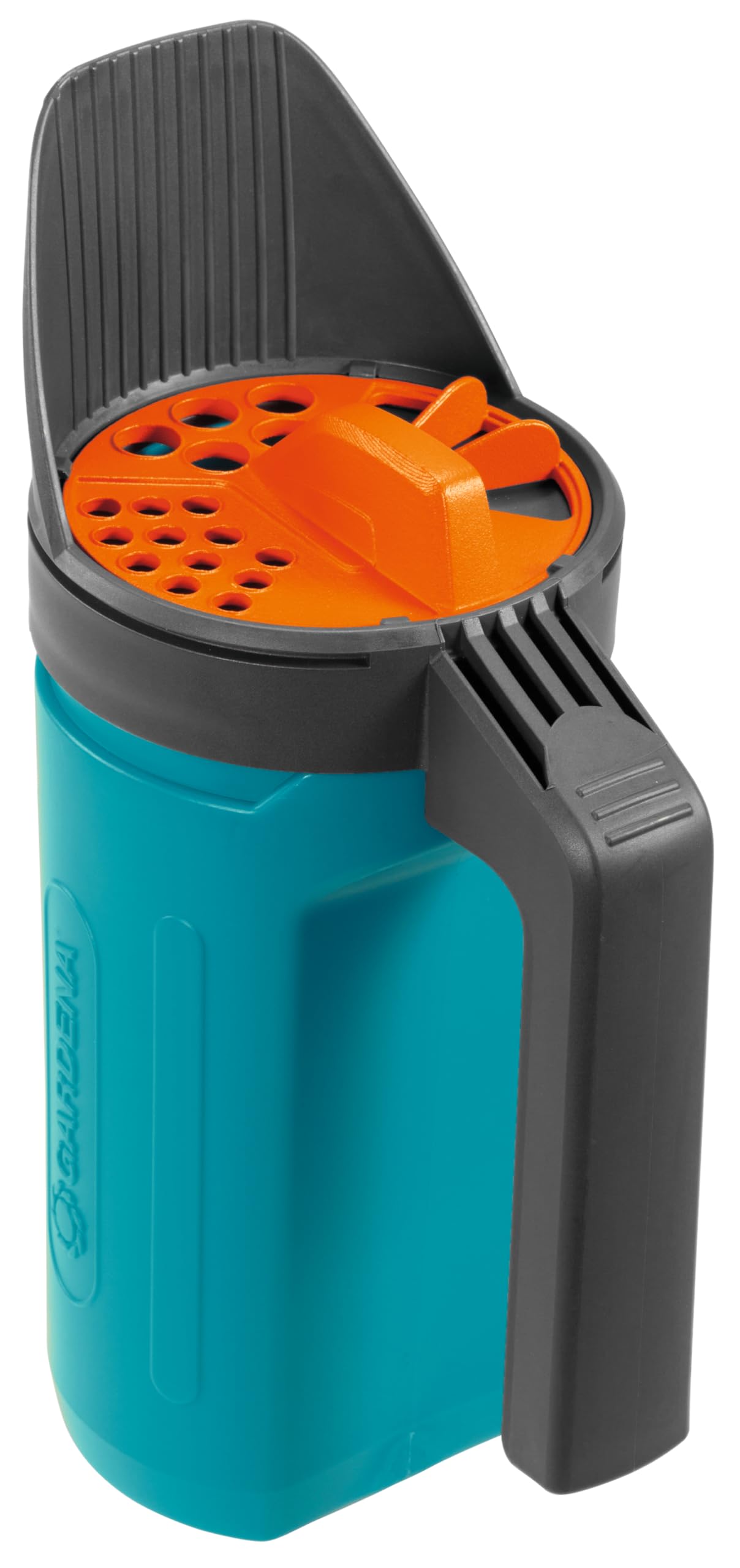
A compact precision spreader with a unique dosing system and ergonomic handling for fine work.
Why I picked it: Three dosing points and light weight let me place tiny amounts exactly where needed.
Best for: Very small lawns, planters, and targeted fertilizing or winter grit work.
A premium small-item alternative for precision dosing.
Pros
- Three setting dosing system
- Very lightweight and ergonomic
- Long warranty indicates build confidence
Cons
- Small capacity limits large-area use
- Higher cost per volume than basic shakers
My take
The Kleinstreuer S is my choice when I need millimeter-level control — think narrow paths, container gardens, or spot treatment in turf.
The oversized adjustment dial and three distinct openings make it easy to switch between sand, salt, and fine seed without guesswork. It’s comfortable in the hand and impressively well balanced.
If I’m treating a large lawn I reach for a bigger hopper, but for precision tasks this model makes the job quick and clean.
How I Choose a Spreader
Match spreader type to yard size
I pick a tow-behind for acreage, a mini broadcast for small-to-medium lawns, and a shaker or handheld for spot jobs.
If I’m treating just a few patches or steps, a shaker saves time and storage space.
- Under 1,000 sq ft: handheld crank or shaker
- 1,000–5,000 sq ft: mini broadcast or battery handheld
- Over 5,000 sq ft: tow-behind or large wheeled spreader
Think about material compatibility
I always check whether the spreader handles fine powders, pelletized fertilizer, or jagged ice melt.
Some motors and agitators clog with very fine potash; I choose a design with an agitator or simple openings for those products.
- Fine seed/pre-emergent: choose adjustable small openings
- Coarse salt/ice melt: prefer wide openings or robust rotor
- Mixed-size crystals: expect occasional clearing or hand-shaking
Prioritize control and ergonomics
I value EdgeGuard or directional control when working next to sidewalks and beds.
Ergonomic handles, adjustable arms, and reduced manual effort matter on longer jobs.
- EdgeGuard keeps product off hardscape
- Battery drive reduces wrist fatigue
- Cranks and thumb releases improve precision
Maintenance and storage
I rinse out spreaders after using corrosive products and dry metal parts to avoid rust.
Small parts like agitators and lids should be easy to remove for cleaning; that’s something I test before committing.
- Rinse and dry hopper after use
- Lubricate moving metal parts to extend life
- Store upright to avoid cap spills
Frequently Asked Questions
Which spreader type gives the most even coverage?
From my testing, a broadcast spreader with a reliable agitator gives the most even throw across a lawn. For small precision work, a Gardena-style crank or a battery handheld with many settings is better.
Can I use the same spreader for seed and ice melt?
I’ll use the same spreader if it has adjustable openings and is easy to clean. After using ice melt or salt, I always wash and dry parts before switching to seed or fertilizer.
How often should I calibrate my spreader?
I check calibration every season and whenever I change product types. A quick test pass on a driveway shows me if my chosen setting is applying the right amount.
Are battery handheld spreaders worth it?
Yes — I find battery units worthwhile when I want less manual effort and a broader throw without buying a wheeled cart for mid-size lawns.
Final Take
I keep a mix of tools: a shaker for quick jobs, a handheld for precise areas, a mini broadcast for weekly lawn work, and a tow-behind for large properties.
Pick the model that fits how much area you treat and how much precision you need. With the right spreader, I spend less time refilling and more time enjoying the yard.
