
I tried five popular flatware organizers across bamboo and plastic styles. Here are the ones I reached for again and why each makes a different kind of drawer neater.
I spent time fitting each organizer into real kitchen drawers, loading them with everyday utensils, and using them through normal meal prep and cleanup.
My picks cover bamboo and plastic, expandable and compact designs, and systems that handle large tools as well as basic cutlery.
In my experience, bamboo trays feel more upscale and rigid, while plastic expandables win for lightweight adjustability and easy washing.
1. Pipishell Bamboo Expandable Cutlery Tray – Best Overall
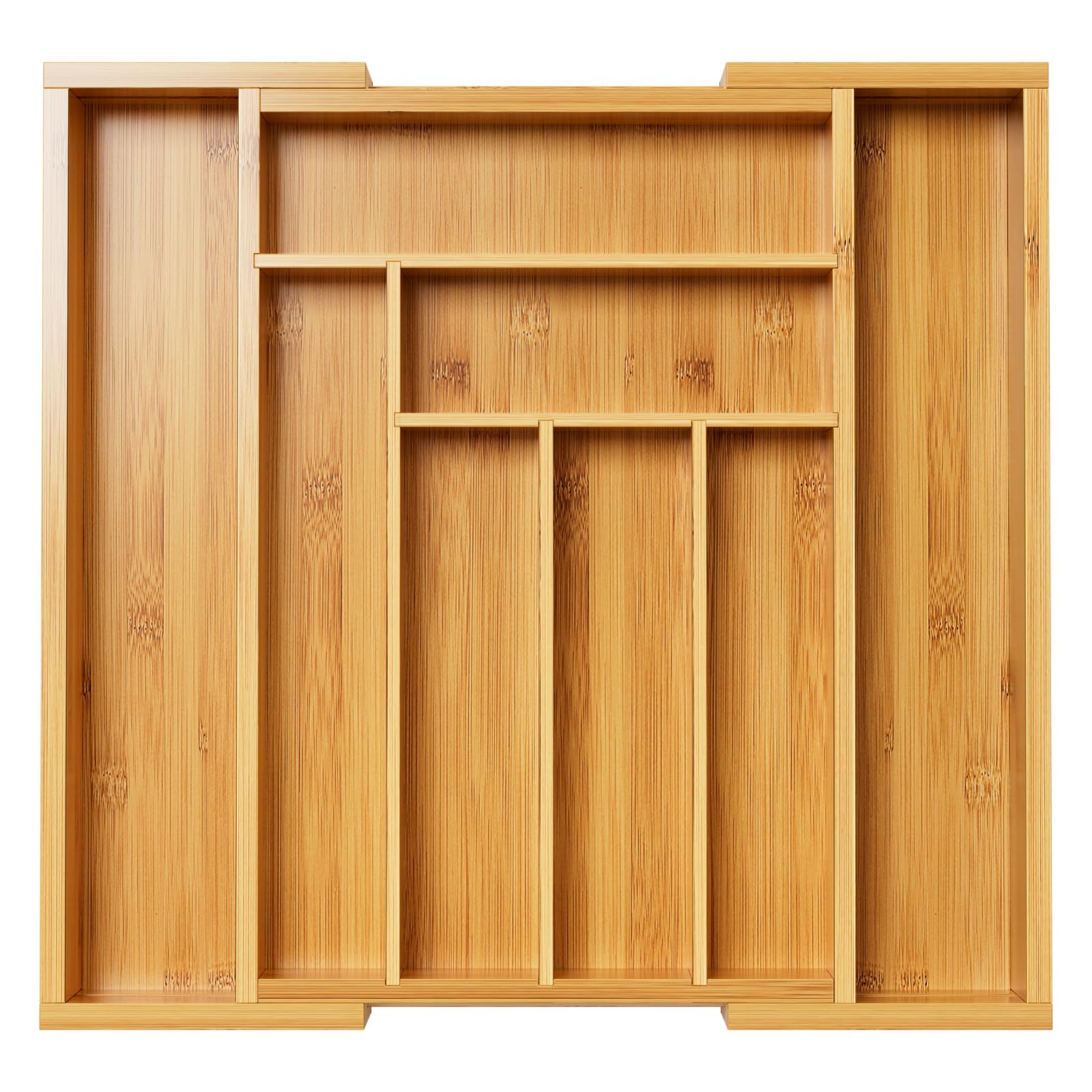
I chose this as my everyday go-to because it balances an attractive bamboo finish with a smooth expandable mechanism and multiple compartments.
Why I picked it: Solid bamboo build, smooth expansion, roomy 6–8 compartments.
Best for: Large drawers and anyone who wants a natural-wood look.
Well balanced for quality and value.
Pros
- Sturdy premium bamboo
- Smooth expandable width
- Roomy, versatile compartments
- Easy to wipe clean
- Attractive natural finish
Cons
- Not dishwasher-safe
- Needs airing before use
My take
This bamboo organizer is the one I reach for when I want a drawer that looks finished. The wood feels solid underhand and the finish is smooth without rough edges.
I expand and contract it regularly—it slides from about ten to mid‑teens inches and stays put once adjusted. The 6–8 compartment layout swallowed forks, spoons, knives and a few extras without crowding.
Cleaning is simple with a damp cloth, and the natural color lifts the look of my drawer. I did let mine air for a day before first use, which helped the scent dissipate.
2. Lifewit Expandable Plastic Silverware Organizer – Best Budget
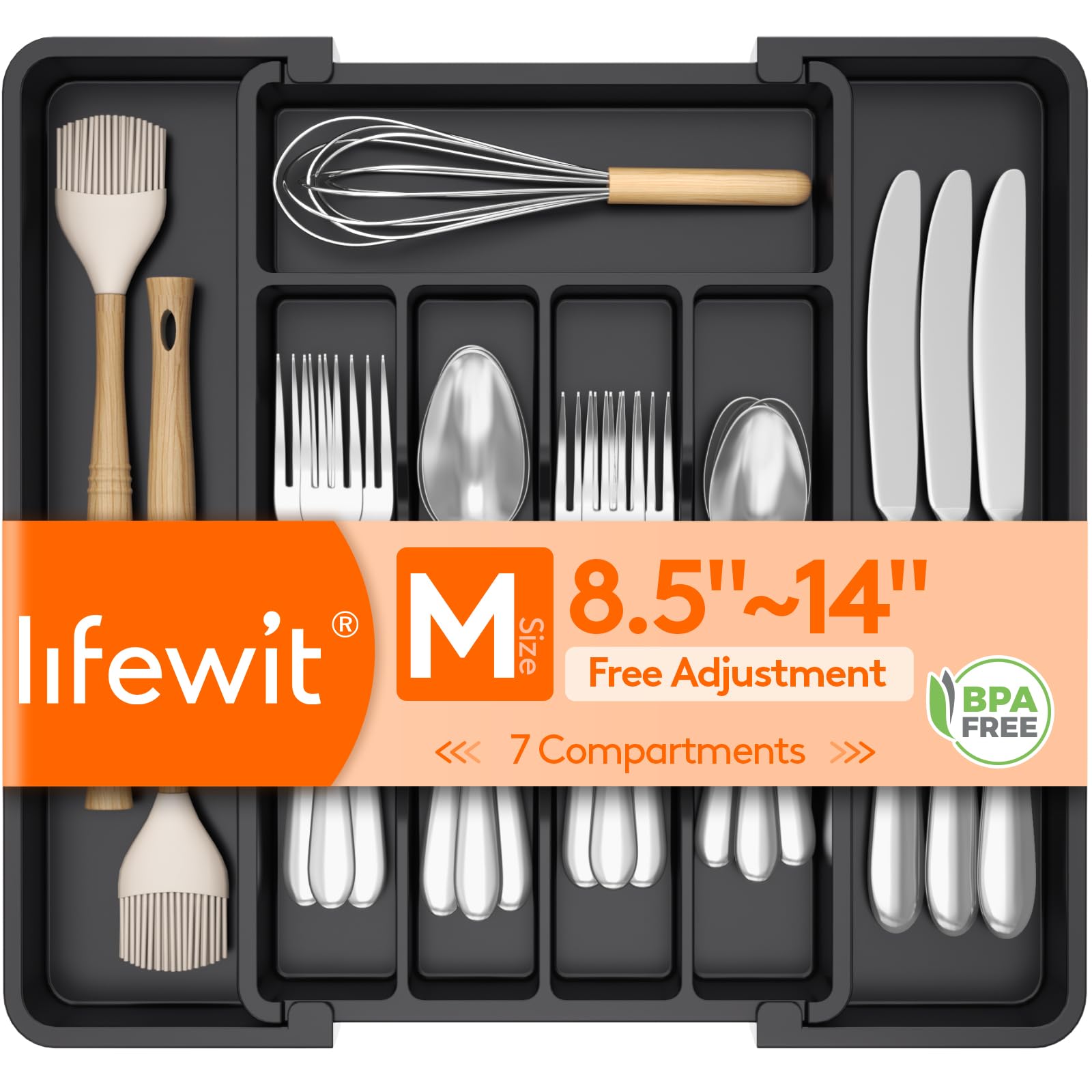
I kept a Lifewit plastic tray in a busy drawer where durability and a low price mattered more than looks—and it performed reliably.
Why I picked it: Lightweight, BPA-free PP, 7 compartments, very adjustable.
Best for: Standard drawers and tight budgets.
Budget-friendly and practical.
Pros
- Adjustable width
- Seven compartments
- BPA-free PP material
- Easy to clean
- Lightweight and practical
Cons
- Not for oversized utensils
- Feels plasticky to some
My take
I like this Lifewit tray for everyday utility. It expands from a narrow to a wider footprint and the buckle/groove system keeps the partitions aligned.
Seven compartments are enough to separate forks, spoons, knives and a few small gadgets. I did measure my drawer first since very large knives and serving tools won’t fit well here.
It wipes clean fast and hasn’t warped in my sink-side drawer. For me, it’s the go-to when I want a fuss-free, low-cost organizer.
3. madesmart Mini Silverware Tray – Best for Small Drawers
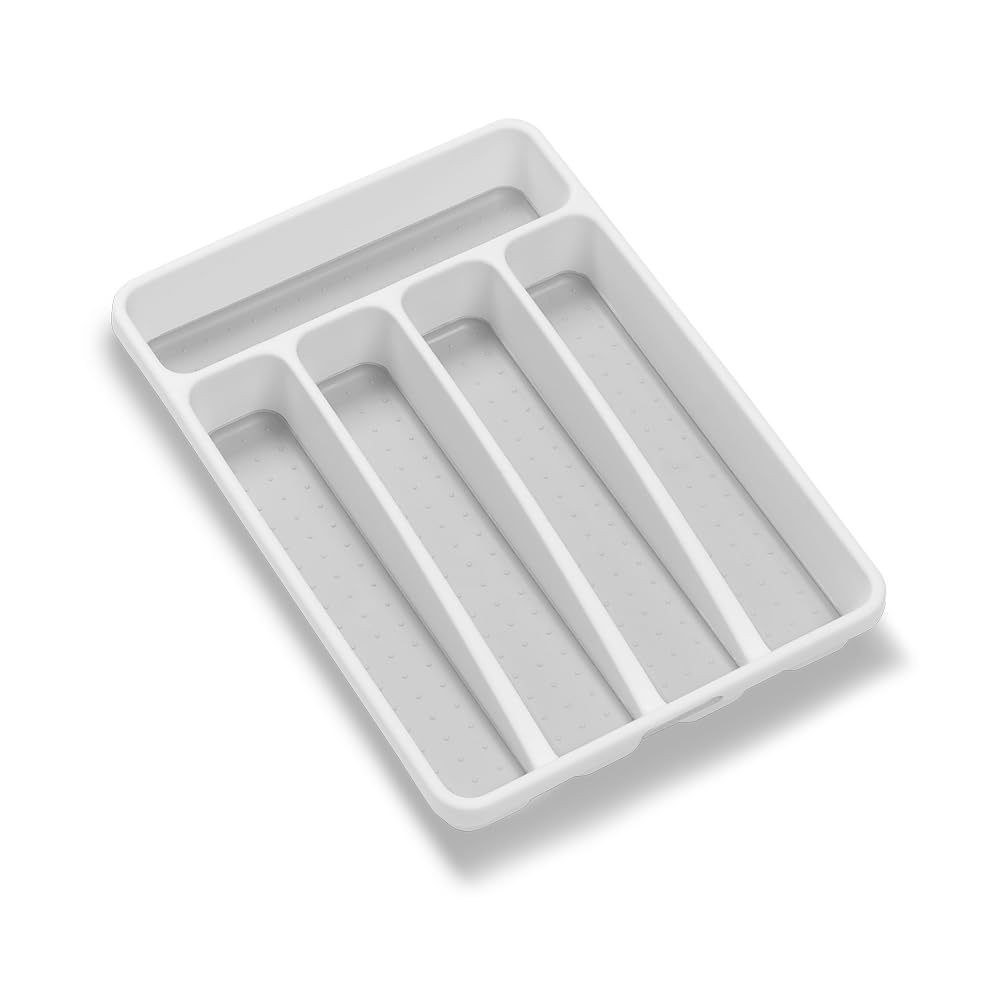
I use this compact tray in apartments and tighter drawers; it’s small but smartly arranged and won’t wander thanks to a non‑slip base.
Why I picked it: Compact footprint, soft-grip lining, nonslip feet.
Best for: Small drawers and apartment kitchens.
Affordable compact option.
Pros
- Non-slip rubber feet
- Soft-grip interior lining
- Rounded corners for easy cleaning
- Compact but roomy
Cons
- Only five compartments
- Can shift slightly over time
My take
This little tray was perfect for my narrow drawer where a larger organizer would overwhelm the space. The five compartments make it quick to sort everyday utensils.
The soft-grip lining and rubber feet really cut down on sliding when I open and close the drawer. I also appreciated the branded icons that make placement intuitive.
Cleaning is straightforward and the molded plastic holds up to regular use in a small household.
4. BAMEOS Bamboo Expandable Drawer Organizer – Best for Custom Layouts
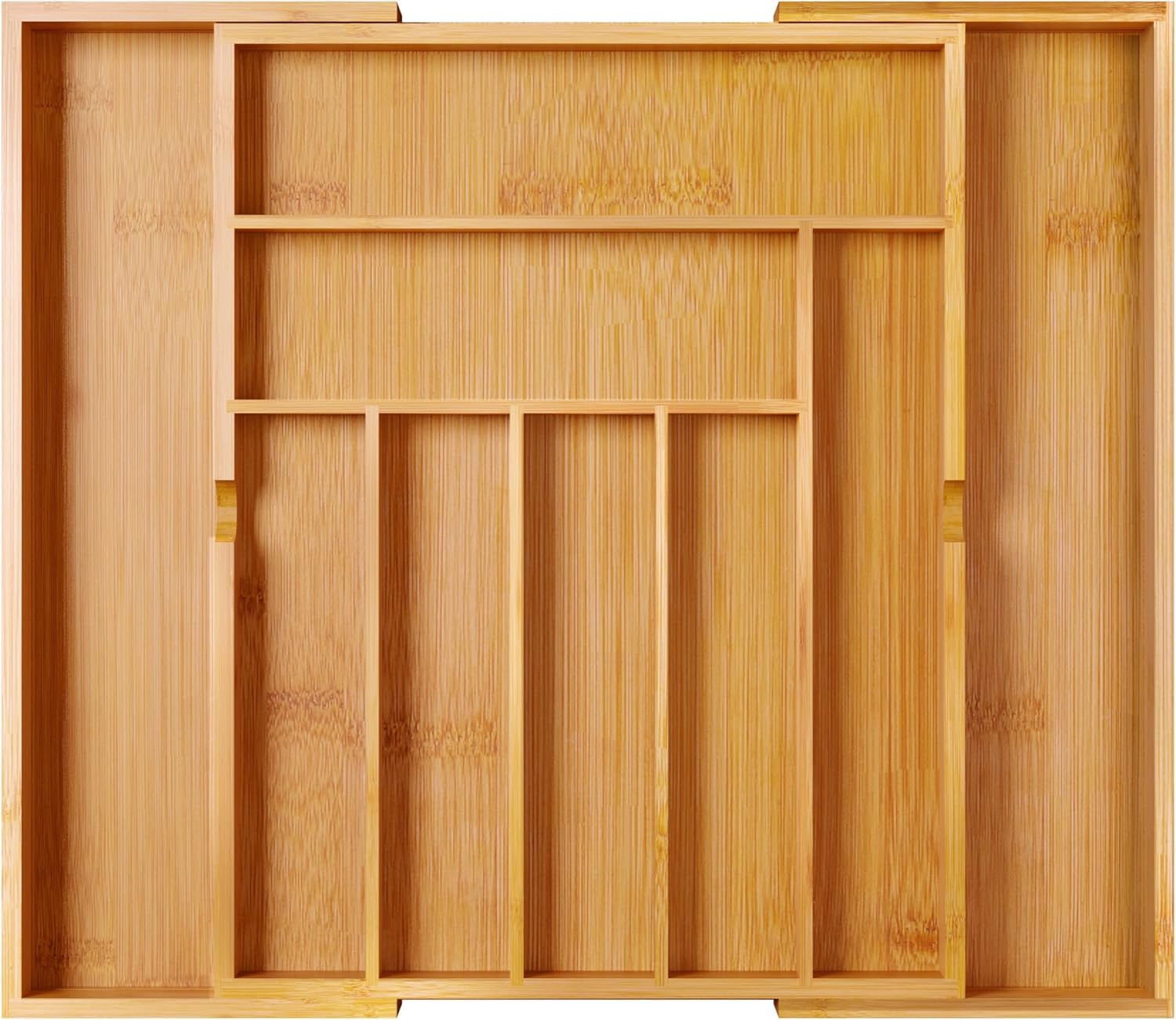
I picked this when I wanted a bamboo option with removable dividers and deeper slots for odd-shaped utensils and serving tools.
Why I picked it: Deep removable dividers, multiple compartment layouts, bamboo construction.
Best for: Users who want flexible compartments and deeper storage.
Midrange eco-friendly option.
Pros
- Deep compartments
- Removable dividers
- Attractive bamboo
- Expandable for different drawers
Cons
- May leave gap toward drawer front
- Not dishwasher-safe
My take
I appreciated the deep sections on this bamboo tray—tongs, can openers and larger serving spoons settled in without toppling over.
The removable dividers let me create a layout that fits my two sets of flatware plus a few kitchen gadgets. The bamboo finish has a solid feel and looks more upscale than plastic.
One practical note: in a very shallow drawer it can leave a bit of unused space near the front, so I tucked small bins there to make full use of the area.
5. Lifewit Large Utensil Drawer Organizer – Best for Large Utensils
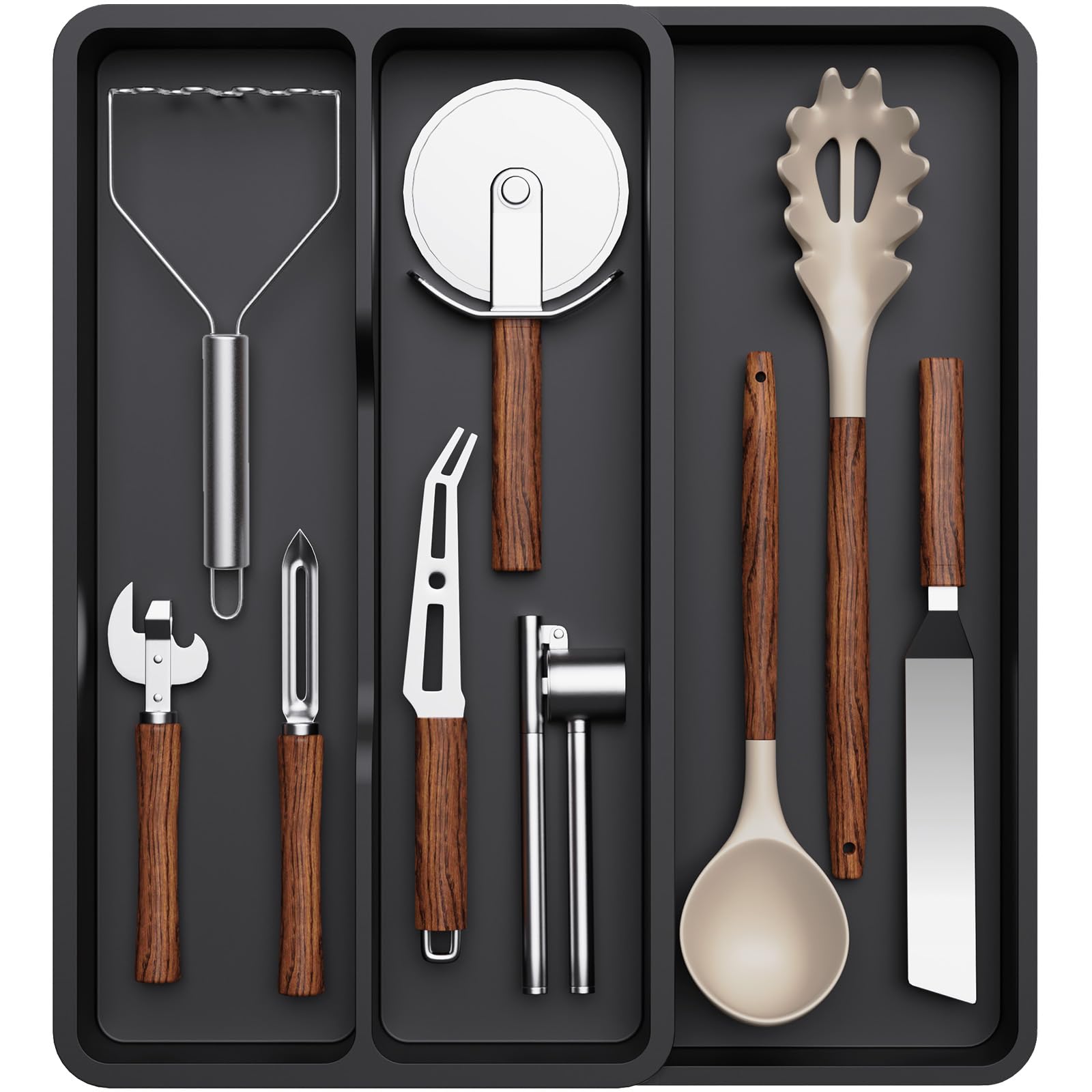
I keep this Lifewit in the drawer that holds spatulas and ladles—its wider compartments handle bulky tools better than a standard silverware tray.
Why I picked it: Wider compartments for spatulas and ladles, expandable design.
Best for: Spatulas, ladles, tongs and larger utensils.
Reasonably priced for heavy-duty storage.
Pros
- Spacious for large tools
- Expandable to fit drawers
- Durable BPA-free plastic
- Easy to clean
Cons
- Not very deep for tall tools
- Expansion sections may shift
My take
This organizer is the one I reach for when forks and spoons alone won’t cut it. The broader slots fit spatulas, whisks, and tongs with room to spare.
The plastic feels sturdy and the tray wipes down quickly after messy meal prep. I did notice the expanding parts sometimes need readjusting, but that’s a minor nuisance for the extra capacity it provides.
Overall, it turned a crowded utensil drawer into a functional work zone.
How I Choose Flatware Organizers
Material and Finish
I look at materials first. Bamboo offers a sturdier, more finished look and handles weight well, while polypropylene plastic is lighter, often washable, and usually cheaper.
- Bamboo: durable, upscale look, wipe-only cleaning.
- Plastic: lightweight, often dishwasher-safe, budget-friendly.
Size, Expansion and Fit
I measure the drawer before buying. Expandable trays are great for unpredictable widths, but I still check depth and maximum expansion so tools don’t stick out.
- Measure drawer width and depth before ordering.
- Expandable trays fit multiple drawers but check max/min range.
- Compact trays work better in small or shallow drawers.
Compartment Layout
I choose the compartment count based on what I store. Five compartments work for standard cutlery sets, while larger utensils need fewer, wider slots.
- Many small compartments = good for forks and spoons.
- Fewer wide compartments = good for spatulas and tongs.
- Removable dividers let you customize layout as needs change.
Maintenance and Stability
I prefer organizers with non‑slip feet or a textured base so nothing slides around. Consider cleaning needs: bamboo wants wiping and airing, plastic tolerates more aggressive washing.
- Non-slip bases prevent movement when opening drawers.
- Wipe bamboo clean; avoid soaking.
- Plastic can usually be rinsed or wiped quickly.
Frequently Asked Questions
Will an expandable organizer fit my drawer?
I always measure my drawer width and compare it to the product's min/max expansion. Expandable organizers work well if your drawer dimension falls within that range.
Are bamboo organizers dishwasher-safe?
I do not put bamboo trays in the dishwasher. I wipe them with a damp cloth and let them air to preserve the finish and prevent warping.
Which organizer works best for large spatulas and tongs?
I use trays with wider, deeper compartments for spatulas and tongs. Models billed for 'large utensils' or those with fewer, broader slots handle bulky tools best.
Final Take
I found that the right organizer depends on your drawer size and what you store most. Bamboo options give a tidy, polished look while plastic trays win on adjustability and washability.
My top pick balances appearance and utility, but I keep a more compact tray for smaller drawers and a wide-slot organizer for larger cooking tools.
Measure first, pick the layout that matches your utensils, and you’ll get a drawer that actually makes cooking easier.
