
I tested a range of flatware organizers — bamboo expandables, plastic retractables, countertop crocks, and a roomy plastic tray — and I share which ones worked best for different kitchens and needs.
I spent time fitting organizers into real drawers and setting them up on counters so I could see how they behave in everyday use.
In this guide I focus on what mattered to me: fit, material, durability, how easy each option was to clean, and whether utensils stayed put when I opened or closed drawers.
Below are the four organizers I used most, with quick picks for who each one suits and practical notes from hands-on use.
I compared expandability, material (bamboo vs. plastic), drawer fit, and countertop convenience. Bamboo feels premium and hides wear; plastic pieces are lighter and often more budget-friendly. Countertop crocks give instant access but cost counter space; trays maximize drawer storage and organization.
1. Pipishell Bamboo Expandable Silverware Organizer – Best Bamboo Organizer
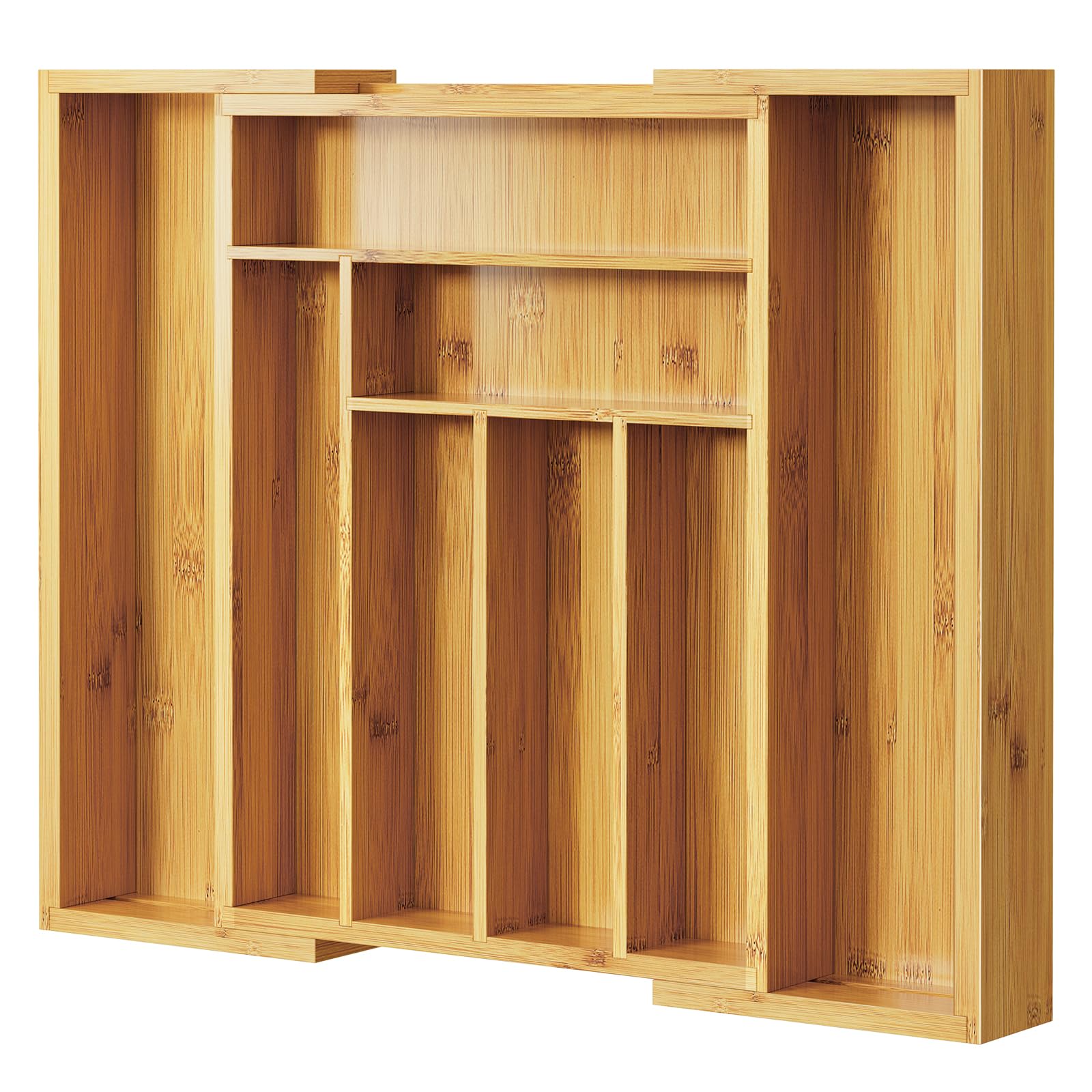
A sturdy bamboo expandable tray that looks like furniture in your drawer and adjusts to a wide range of widths.
Why I picked it: I wanted a natural-looking, durable tray that expands to fit wide drawers while keeping utensils from shifting.
Best for: Kitchens where appearance matters and you want a long-lasting drawer organizer.
Midrange, natural-material choice that feels like an upgrade.
Pros
- Attractive premium bamboo finish
- Expands to fit wider drawers
- 6–8 roomy compartments
- Keeps utensils from sliding
- Easy to wipe clean
Cons
- Needs airing for best scent
- Bulkier than thin plastic trays
My take
The bamboo construction is the first thing I noticed — it immediately elevated my drawer visually compared with plain plastic. The finish is smooth and feels solid when I slide it in and out.
Expansion is simple and reliable; I adjusted it across a couple of different drawers and the sliding mechanism moved smoothly without gaps. The compartments are roomy enough to hold forks, spoons, knives, and extras without crowding.
Because it’s bamboo I followed the recommendation to air it for a few days before full use. Once settled, cleaning is easy — a damp cloth does the job — and the tray stayed looking new after several weeks of use.
I also put it to work outside the kitchen for a utility drawer and it handled office supplies and tools just as well. If I want a single organizer that looks intentional and lasts, this is the one I reach for.
2. Lifewit Expandable Silverware Organizer – Best Budget Expandable
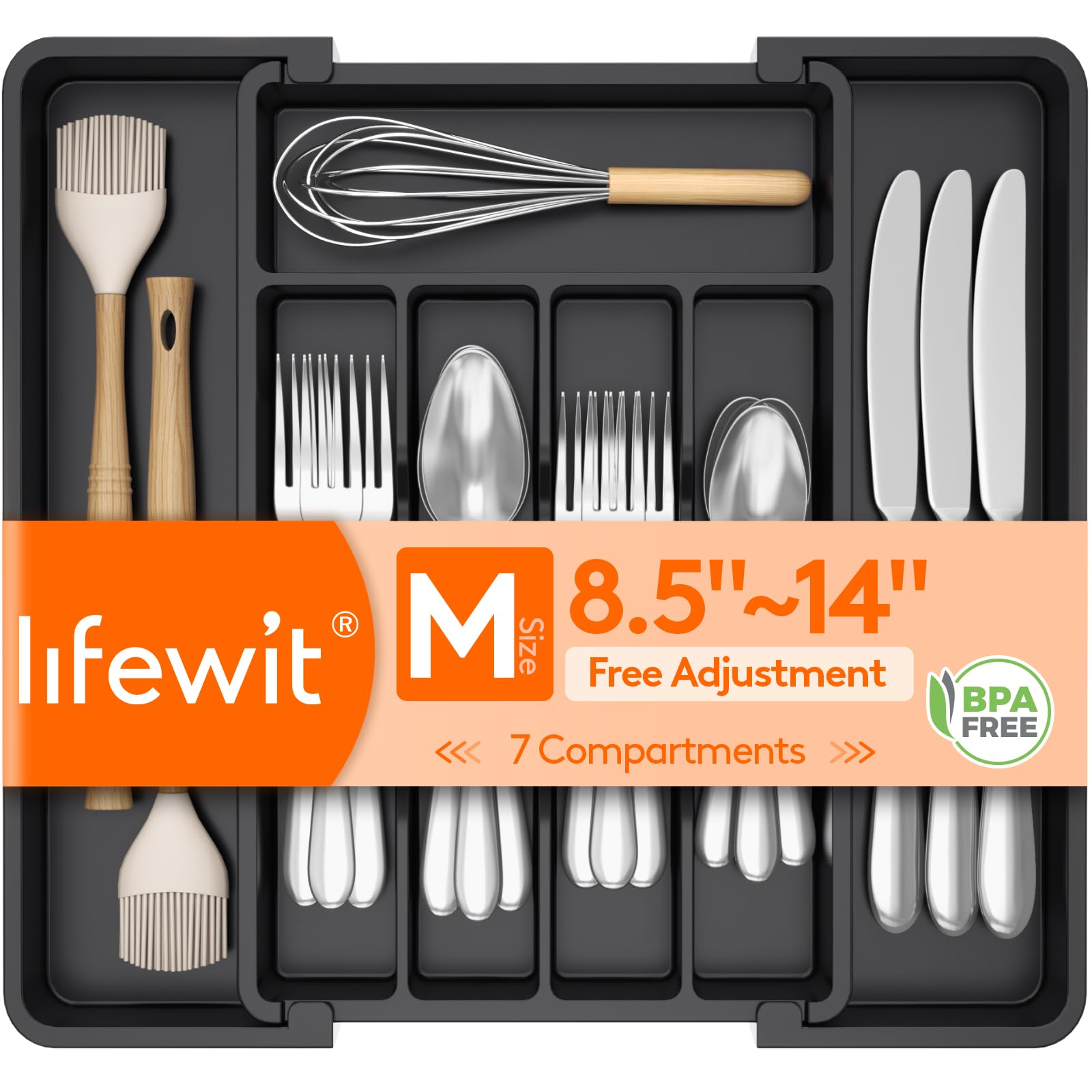
A compact, budget-friendly plastic organizer with a retractable design and seven compartments for straightforward sorting.
Why I picked it: I needed a low-cost, adjustable tray that would fit tricky drawer widths and withstand daily kitchen use.
Best for: Standard drawers and anyone who wants a washable, no-fuss organizer on a budget.
Budget-friendly plastic option with solid build for the price.
Pros
- Adjustable to many drawer widths
- Seven useful compartments
- BPA-free plastic construction
- Removable panels for cleaning
- Groove design for easy access
Cons
- Not ideal for oversized knives
- Basic plastic look
My take
This organizer is the practical choice when you want flexibility without fuss. It compresses and expands cleanly, and the buckle/groove system kept partitions from shifting while I rearranged utensils.
I tested it in a couple of drawer depths and appreciated that you can remove side panels when you need a little extra room. The PP plastic feels sturdy for daily use and washes quickly when I rinse it by hand.
One limitation I ran into is that very wide or heavy knives don’t sit neatly in the allotted slots. For standard forks, spoons, and butter knives it’s excellent, but I moved my oversized chef knives elsewhere.
Overall this is the organizer I use where durability and ease of cleaning matter more than looks.
3. Cooler Kitchen Jumbo Rotating Utensil Holder – Best Countertop Crock
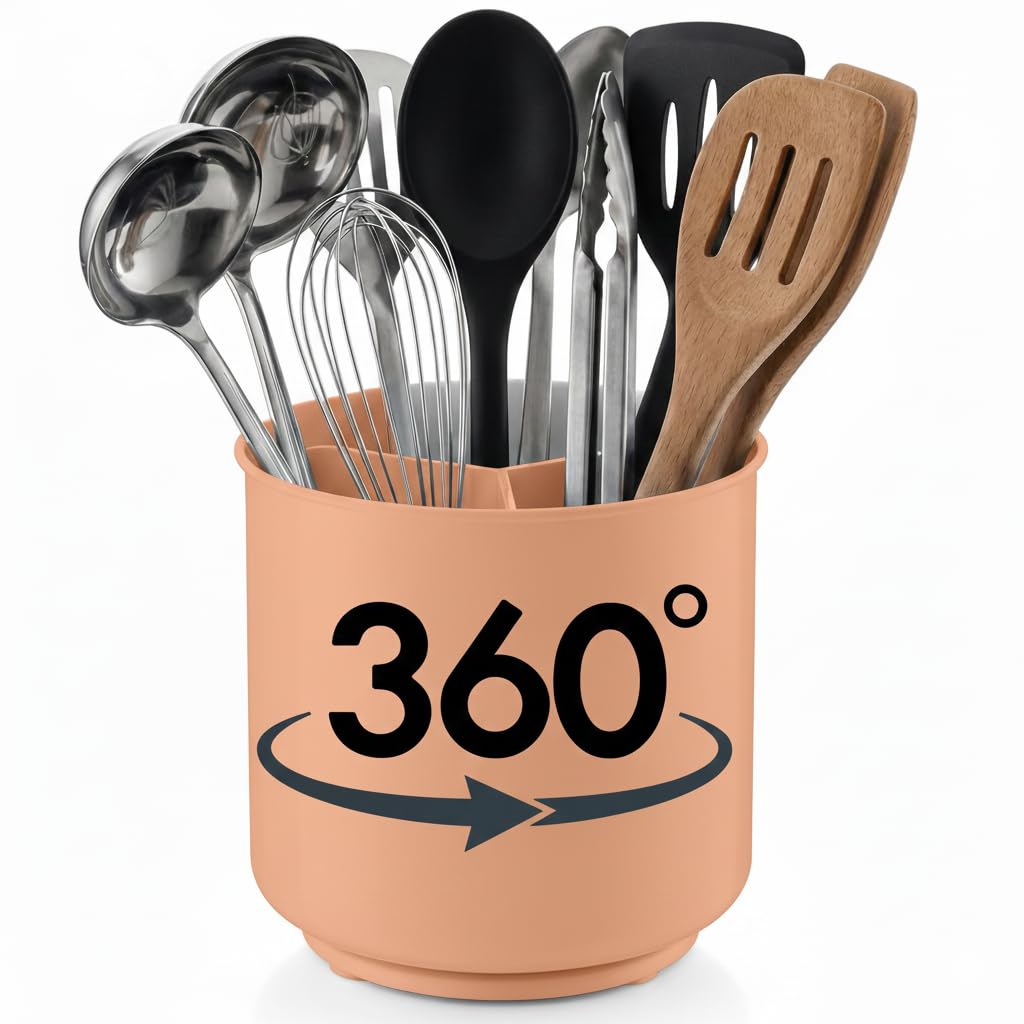
A large, weighted rotating crock that holds many utensils upright on the counter and spins so I can reach tools quickly.
Why I picked it: I wanted a no-tip, high-capacity countertop solution that frees drawer space and makes tools instantly accessible.
Best for: Busy cooks who keep most tools on the counter and need quick access.
Midrange countertop option that trades drawer space for easy access.
Pros
- Generous 7-inch diameter
- Weighted no-tip base
- 360° rotating convenience
- Removable insert for cleaning
- Holds many large utensils
Cons
- Occupies significant counter space
- May be bulky for tiny kitchens
My take
I swapped my old tall crock for this wide, low-profile rotating holder and found it made grabbing the right tool faster. The 7-inch diameter easily handled spatulas, whisks, ladles, and more without crowding.
Stability is excellent — the weighted base and rubber feet stop tipping and sliding even when I grab heavy tools. The rotating base genuinely speeds things up when I’m juggling pans and need a specific spoon.
Disassembly for cleaning is straightforward: the divider and gripped insert lift out and go in the dishwasher. Because it’s plastic, it won’t rust and it wipes clean without special care.
If you have counter room and like tools visible and ready, this is the most convenient option I use.
4. madesmart Classic Large Silverware Tray – Best Large Tray
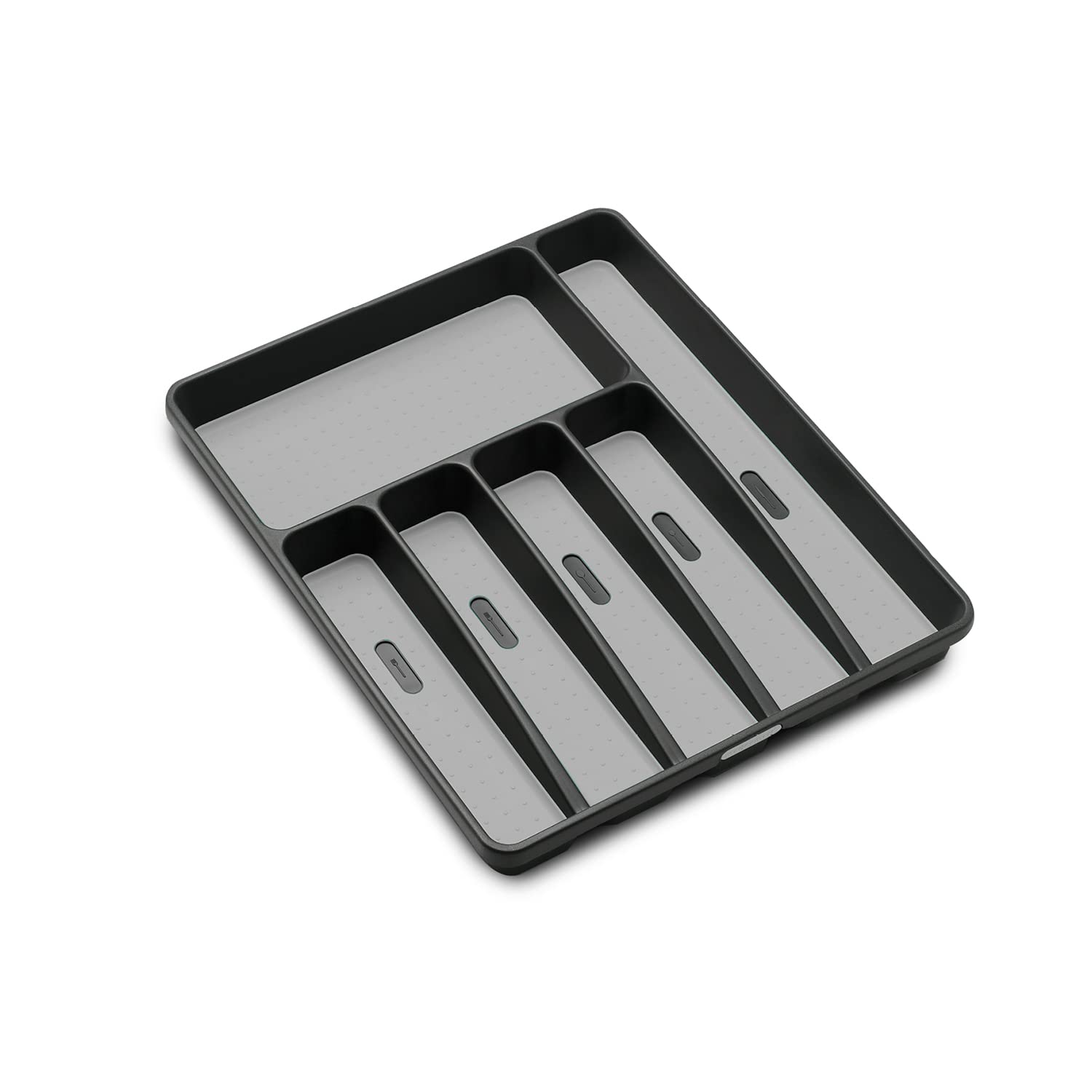
A wide, six-compartment plastic tray with soft-grip lining and non-slip feet designed to hold a full flatware service plus extras.
Why I picked it: I needed a roomy tray that stays put in a larger drawer and offers channels for long utensils.
Best for: Larger drawers where you want a stable, high-capacity organizer.
A practical, higher-capacity plastic tray that's worth it for bigger drawers.
Pros
- Six generous compartments
- Soft-grip lining keeps pieces in place
- Non-slip rubber feet
- Long channel for lengthy utensils
Cons
- Large — measure your drawer first
- Takes more drawer depth
My take
This tray is the one I reach for when I need capacity. It handled a full service and extra tools comfortably, and the long channel was perfect for spatulas and serving forks.
The soft-grip lining and rubber feet prevented sliding inside the drawer, so utensils stayed organized rather than shifting every time the drawer opened.
Cleaning is simple thanks to the rounded corners and durable plastic. I appreciated the sturdiness — it didn’t flex under the weight of heavier utensils.
My main tip is to measure first: it’s wide and designed for larger drawers, but when it fits it provides the most usable space of the group I tested.
How I Choose Flatware Storage
Material and durability
I weigh material choices by where the organizer will live. Bamboo looks premium and resists scratches in my experience, while plastic is lightweight and easy to sanitize.
If longevity and appearance matter, I lean toward bamboo; for utility and low maintenance I choose BPA-free plastic.
- Bamboo: attractive, durable, may need airing before first use
- Plastic: washable, budget-friendly, available in more adjustable designs
- Look for non-slip feet or soft-grip lining to prevent shifting
Drawer vs. Countertop
I decide based on how often I cook and how much counter space I have. Drawers keep counters clear and hide clutter; countertop crocks give immediate access.
A rotating countertop holder works well in my busiest cooking zone, while expandable trays tidy multiple drawers.
- Drawer trays maximize hidden storage and keep counters clean
- Countertop crocks free drawers and make tools instantly accessible
- Measure drawer width and depth before buying expandables or large trays
Sizing and fit
I always measure both internal drawer width and usable depth. Expandable trays list their minimum and maximum widths; compare those against your drawer to avoid surprises.
Also consider utensil length—if you keep long spatulas, pick a tray with a long channel or a countertop crock with deep walls.
- Measure drawer interior, not just cabinet opening
- Account for drawer liners and rails when calculating width
- Consider removable partitions for flexible layouts
Cleaning and maintenance
I prefer organizers that wipe clean or are dishwasher-safe for inserts. Bamboo needs gentler care—wipe rather than soak.
Removable inserts and dishwasher-safe parts save time on heavier cleaning days.
- Plastic parts often go in dishwasher; bamboo should be hand-wiped
- Removable inserts speed up deep cleaning
- Air new natural-material organizers if they have an initial scent
Frequently Asked Questions
Will an expandable organizer fit my drawer?
Measure the interior width of your drawer and compare it to the organizer’s minimum and maximum widths. I always measure front-to-back and side-to-side; expandables are forgiving, but rails and liners can reduce usable space.
Can bamboo organizers be cleaned safely?
I clean bamboo trays with a damp cloth and mild soap; I avoid soaking them. After initial unboxing I air mine to reduce any natural scent, then keep them dry between uses.
Are countertop holders stable with heavy utensils?
Choose a model with a weighted base and rubber feet. The rotating crock I used stayed stable even with heavy spatulas and ladles because of its no-tip construction and gripped insert.
Final Take
I found each organizer has a place depending on your priorities: choose bamboo for looks and longevity, plastic expandables for budget and flexibility, countertop crocks for instant access, and large trays when drawer capacity is the goal.
Start by measuring and deciding whether you want tools hidden or within arm’s reach. Once I matched that to material and size, I quickly narrowed the right pick for my kitchen.
If you want a single recommendation: pick the style that fits your daily routine — the right organizer will make everyday tasks noticeably smoother.
