
I tested fold-down, cabinet, and ladder-style floating desks so you can pick a compact, sturdy workspace that fits your room and installation skills.
I’ve installed and used every style of floating desk on this list—from simple drop-leaf tables to cabinet-style fold-ups—so I know which designs actually work in tight layouts.
This roundup focuses on real-world concerns that matter to me: weight capacity, how tricky mounting is, how much usable surface you get, and whether the piece looks finished in a living space.
If you want a minimalist laptop station, a durable workstation, or a multi-shelf folding cabinet, I’ll walk you through the best options and where each one makes the most sense.
I prioritized desks that save floor space and hold useful weight, but I also called out installation difficulty and hardware quality—those factors make or break a wall desk in daily use.
1. SoBuy Wall Mounted Folding Table – Best Overall
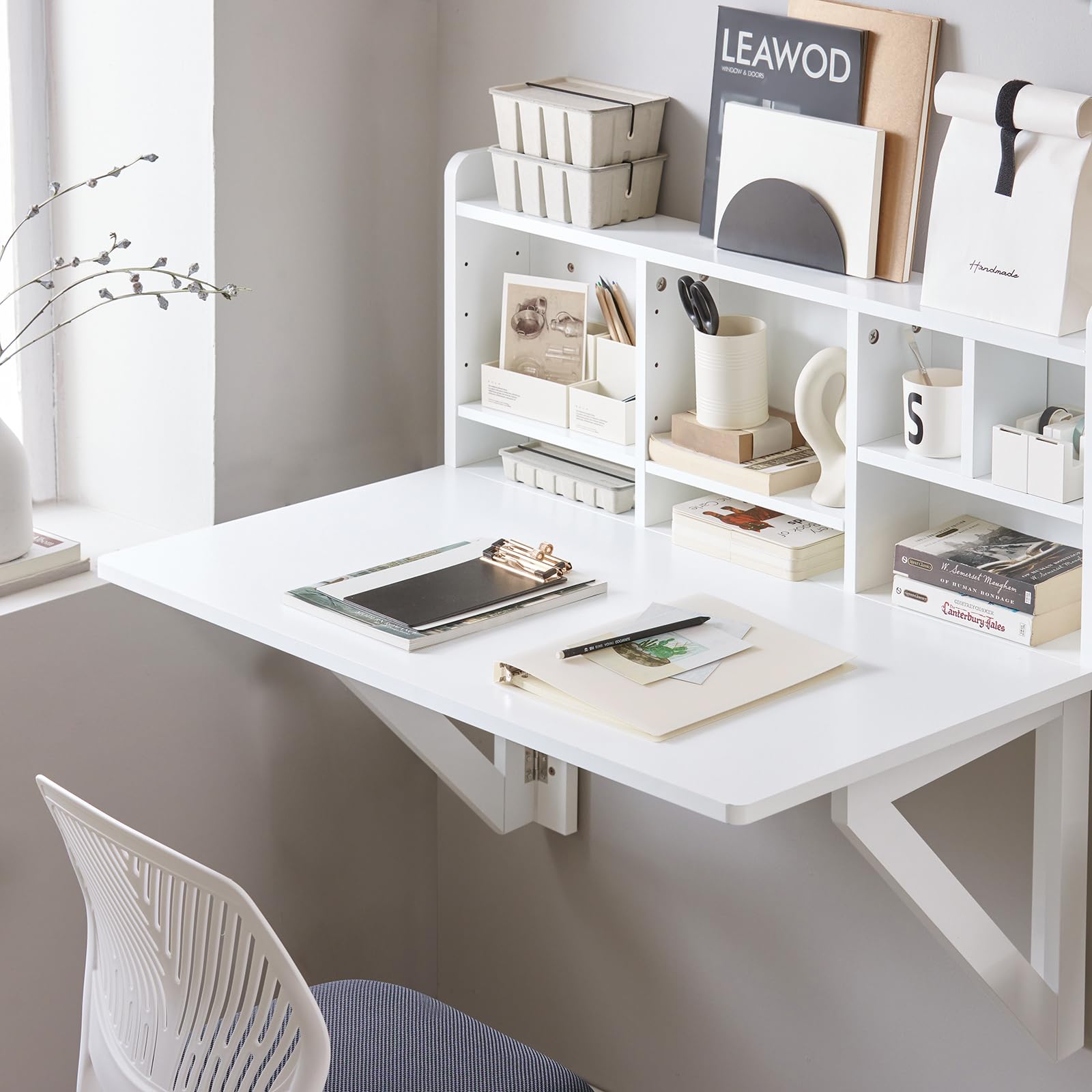
A versatile fold-down workstation with an adjustable shelf and a wipe-clean MDF surface that works well for kids’ rooms and compact home offices.
Why I picked it: Solid balance of functionality, easy cleaning, and an adjustable shelf for everyday use.
Best for: Small bedrooms, kids’ homework stations, and compact home offices.
Affordable, good value for a multifunctional wall-mounted desk.
Pros
- Folds flat when not in use
- Adjustable shelf for small storage
- Wipe-clean MDF surface
Cons
- Included anchors feel underbuilt
- Mounting template can be unreliable
My take
I like this as my go-to compact desk because it folds cleanly against the wall and the adjustable shelf adds real utility for storage or display.
Installation took longer than the paper template suggested; I found the provided anchors and screws inadequate for heavy use, so I relied on sturdier hardware and stud mounting.
Once secured, the tabletop feels stable for laptops, homework, and light craft work, and the smooth MDF surface wipes spotless after kids’ projects.
2. Techni Mobili Floating Desktop with Drawers – Best with Built-In Storage
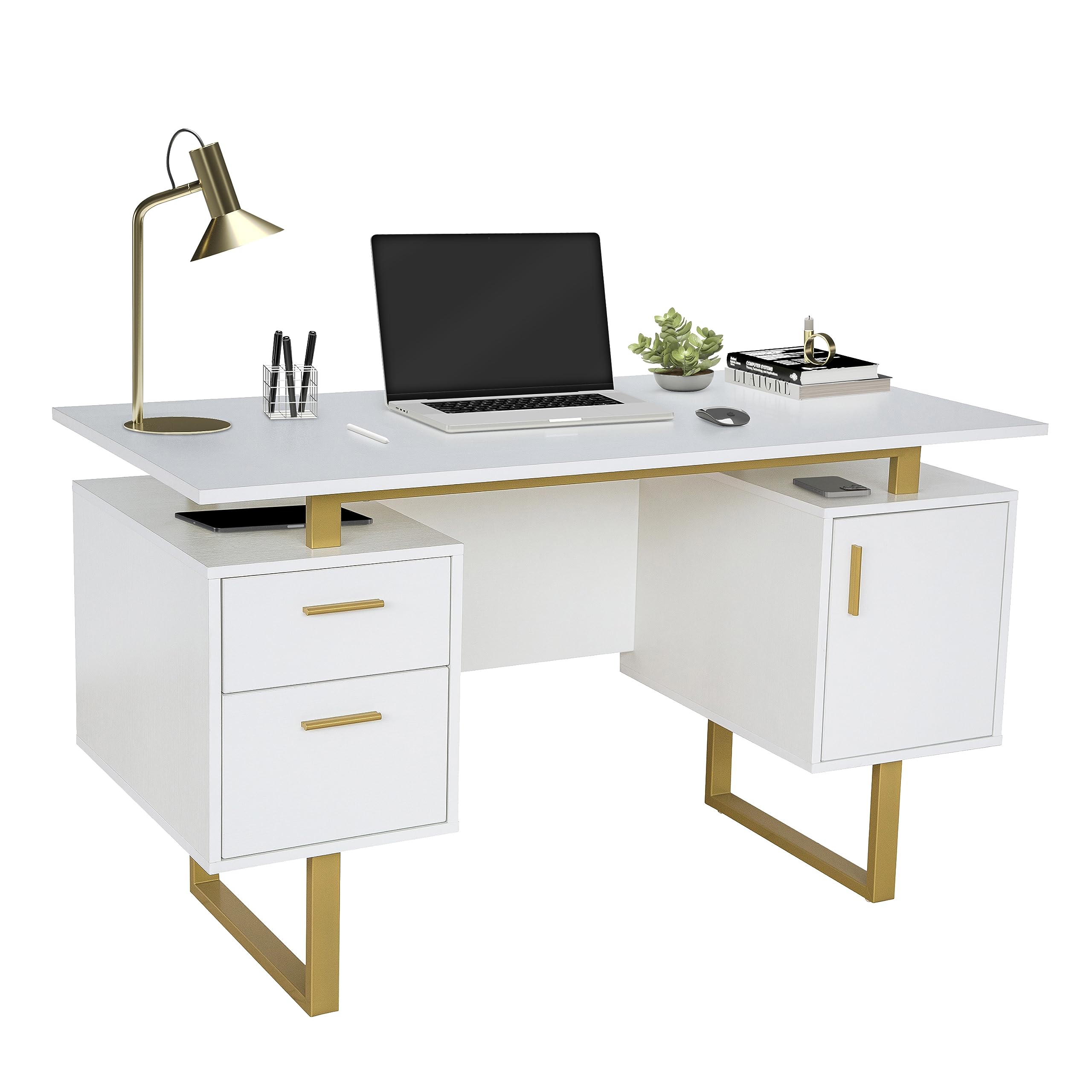
A large floating work surface with drawers and a cabinet, offering a polished look and roomy desktop for a full monitor setup.
Why I picked it: Large, elegant surface plus drawer and cabinet storage for a tidy workspace.
Best for: Home office users who want a floating desk with organized storage.
A step up in cost for a roomy, storage-focused floating desk.
Pros
- Generous desktop area
- Two drawers plus cabinet
- Sturdy metal legs with elegant look
Cons
- Assembly is time-consuming
- Drawers are shallow
My take
This desk gives me a lot of usable surface—big enough for a monitor, keyboard, and paperwork—without feeling bulky thanks to the floating top.
Putting it together is a multi-step job that rewards patience; the instructions are clear but expect several hours and a helper for best results.
The storage cabinet holds bulkier items well, though the drawers aren’t deep enough for hanging files or large supplies.
3. Need Wall Mounted Folding Desk – Best Heavy-Duty Fold-Down
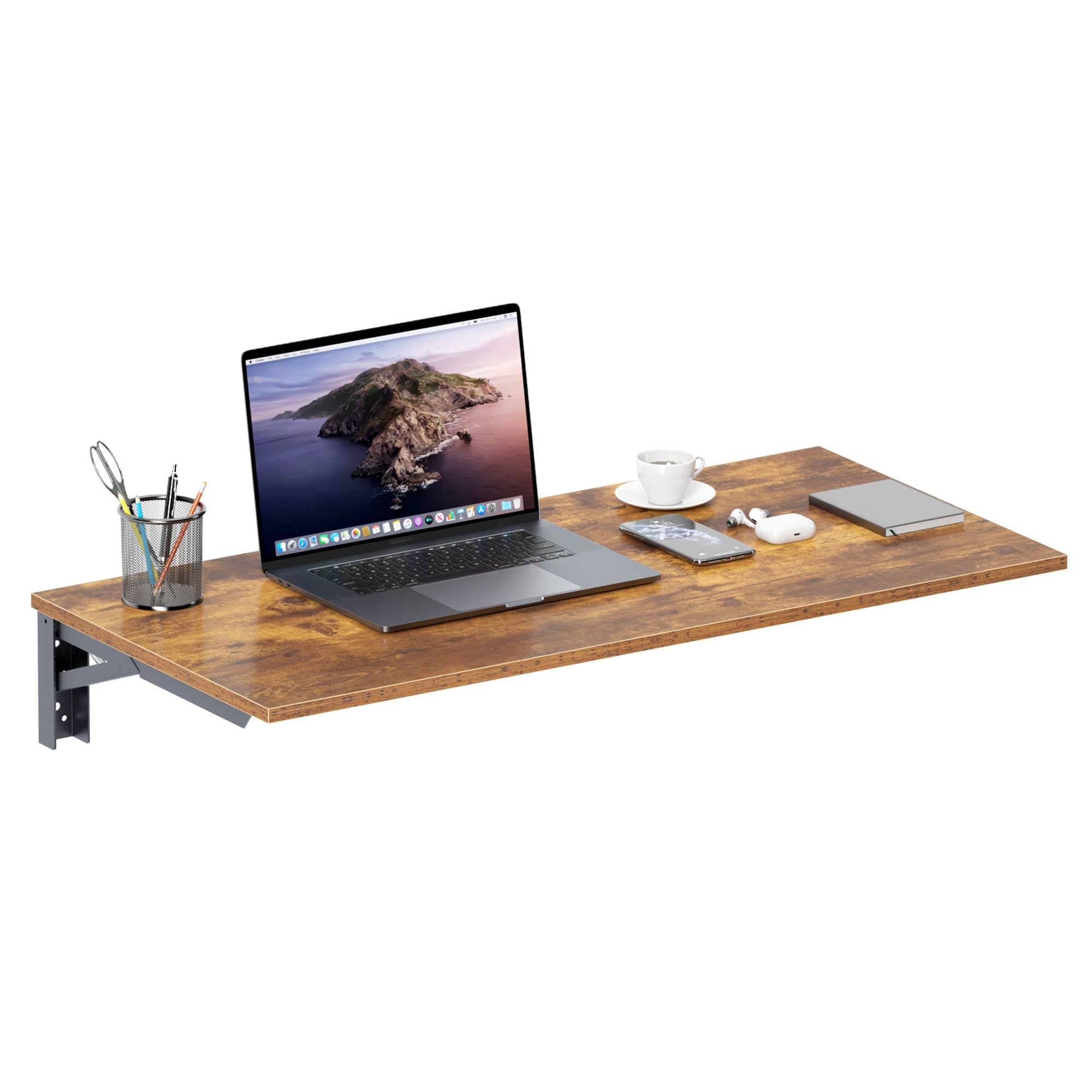
A rugged fold-down table with 14-gauge steel brackets and a thick top designed to handle heavier loads than most drop-leaf desks.
Why I picked it: Exceptionally strong brackets and thick tabletop for heavier tasks.
Best for: Laundry rooms, workshops, or anyone needing a stiff, heavy-duty folding surface.
Moderately priced for a reinforced, load-bearing fold-down table.
Pros
- 14-gauge steel brackets
- 1-inch thick tabletop
- Rated for high load capacity
Cons
- Hardware supplied can be weak
- Installation may require two people
My take
I picked this when I wanted a fold-down desk that doesn’t flex; the heavy-gauge steel brackets and thick top actually deliver a reassuringly solid feel.
Mounting is the trickiest part: the included screws aren’t reliable for studs in every wall, so I used my own heavy screws and toggle bolts to get the security I wanted.
Once up, it folds smoothly and holds far more weight than a basic drop-leaf—great for folding laundry, meal prep, or a sturdy laptop station.
4. Nathan James Theo Ladder Desk – Best Ladder-Style
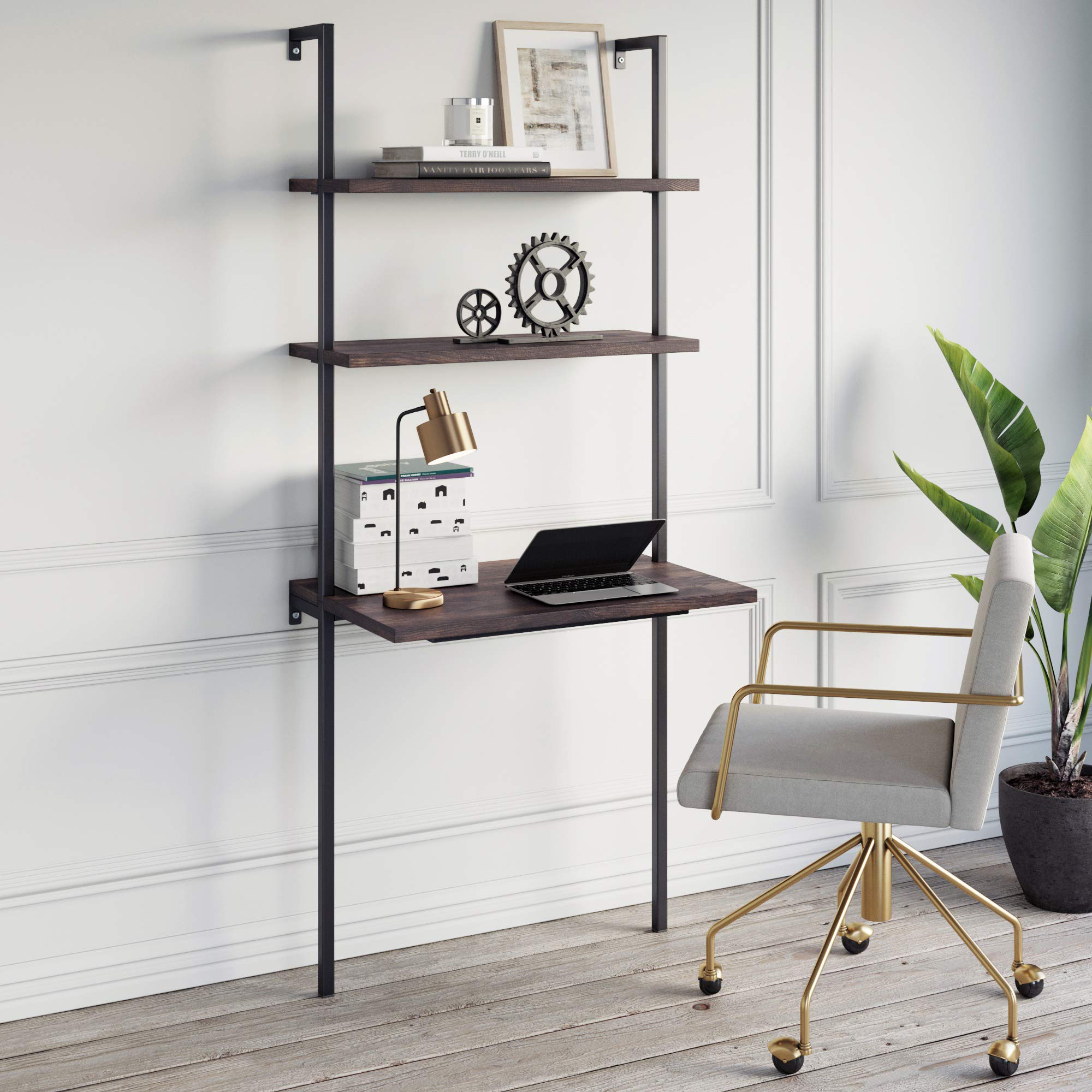
A compact ladder-style wall desk with two fixed shelves that blends storage and surface in a lightweight, design-forward package.
Why I picked it: Stylish ladder design with built-in shelving for a compact workspace.
Best for: Studio apartments, guest rooms, and narrow corners needing a neat surface plus shelves.
Mid-range option for design-conscious small spaces.
Pros
- Attractive ladder aesthetic
- Two fixed shelves included
- Quick assembly
Cons
- Top mounting holes are awkward
- Occasional shipping damage
My take
I use this in a studio corner where a full desk would overwhelm the space—the ladder shelves keep essentials close while the table surface remains uncluttered.
Assembly is straightforward, but I recommend getting help for the wall mounting step; those upper screw angles can be awkward without a second pair of hands.
When mounted properly it’s surprisingly sturdy and looks higher end than the price suggests, though I did see some units arrive with cosmetic damage.
5. Tangkula Wall Mounted Fold-Down Desk with Drawer – Best Compact Cabinet
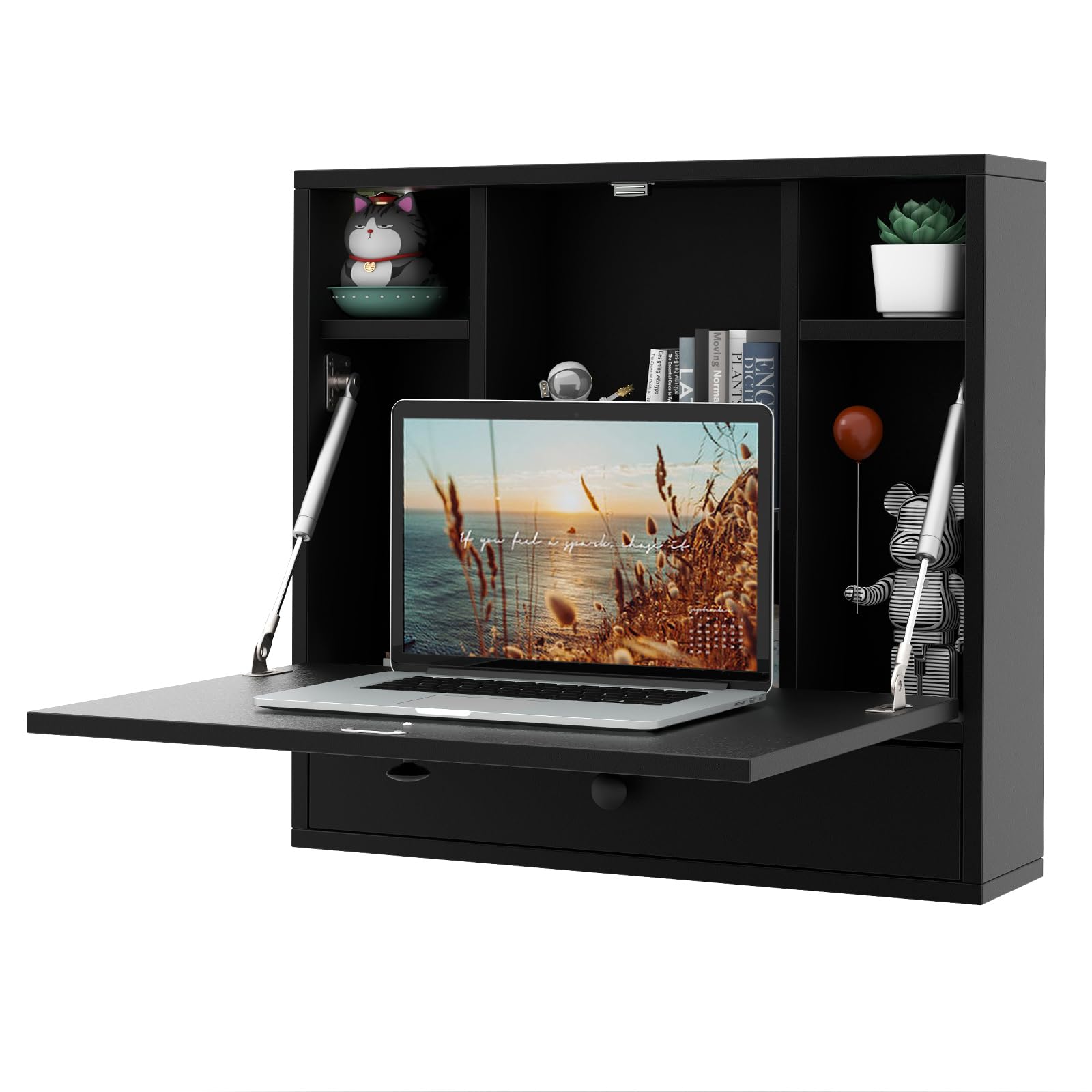
A fold-up cabinet desk with hydraulic support, multiple small shelves, and a drawer—ideal when you want to hide your workspace between uses.
Why I picked it: Convertible cabinet design hides clutter and opens into a functional work surface.
Best for: People who want a vanity-style desk or hidden laptop station.
Budget-friendly option with many storage cubbies.
Pros
- Hydraulic rod for smooth opening
- Multiple internal shelves
- Conceals clutter when closed
Cons
- Small drawer lacks smooth glides
- Assembly parts can be confusing
My take
I appreciate how this cabinet turns into a usable desk and then disappears when closed—perfect for a guest room or a small apartment.
The hydraulic support makes the front panel feel safer to operate than basic hinges, but the small bottom drawer is more decorative than useful because it lacks solid glides.
Label the parts before you start and have a helper for the hanging step; once mounted, the unit performs well for light laptop work and makeup stations.
6. Tangkula Foldable Wall Mounted Desk – Best Convertible Cabinet
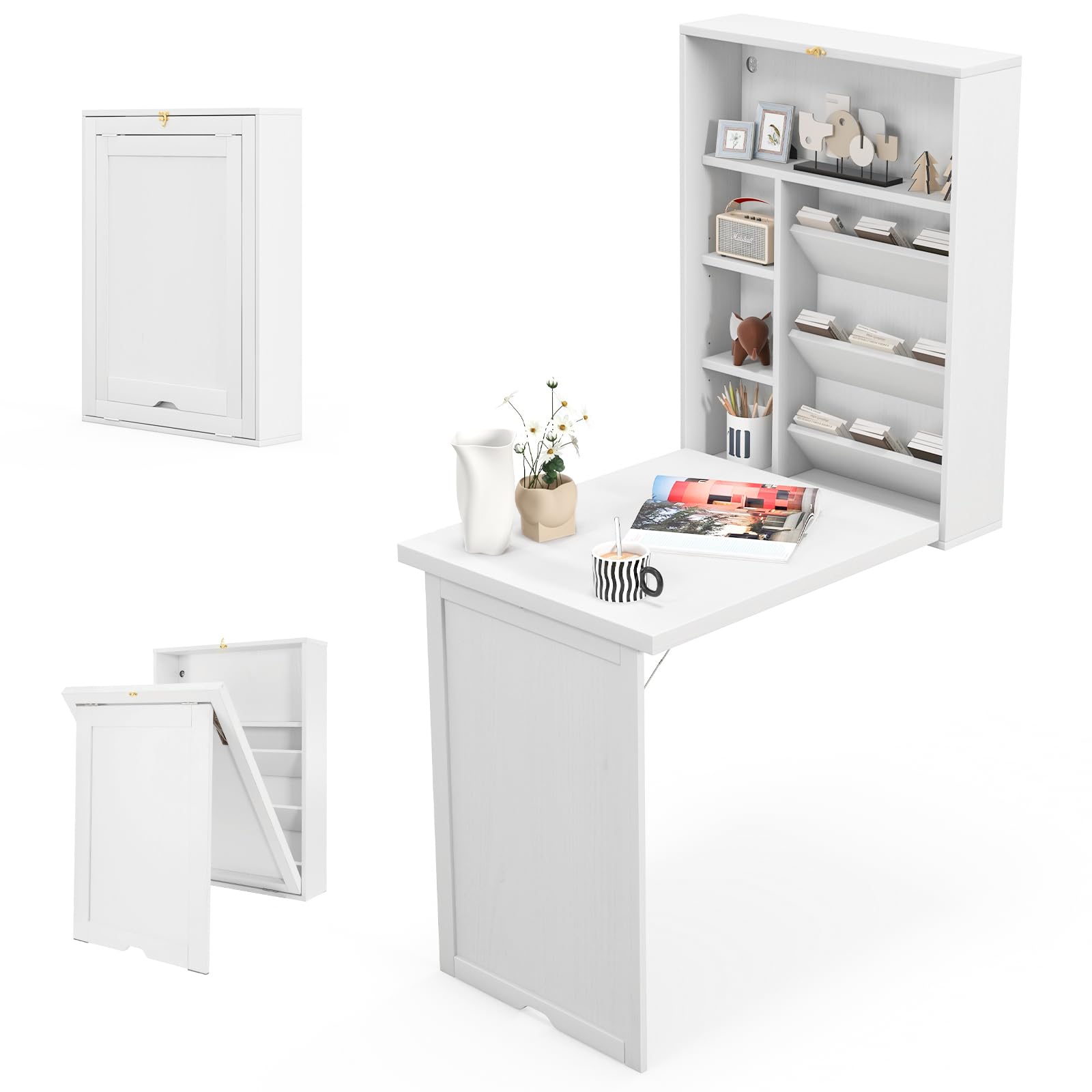
A convertible fold-out cabinet with a roomy tabletop and upper compartments that closes into a tidy cabinet—great for hiding a workspace quickly.
Why I picked it: Generous interior storage plus a fold-up design keeps work hidden at the end of the day.
Best for: Shared rooms and remote workers who need to clear their workspace daily.
Solid mid-priced cabinet-desk combo with lots of storage.
Pros
- Roomy tabletop when open
- Upper compartments for organization
- Pre-labeled parts for assembly
Cons
- Many pieces; assembly required
- Replacement hardware sometimes needed
My take
I like using this when I want to close my office away at the end of the day; the cabinet hides my laptop and paperwork neatly.
Assembly requires patience—there are many pieces—but the pre-labeled hardware helps and the company was responsive when I needed a replacement part.
Mounting is easiest with two people; once secured the desk is stable and comfortable for daily remote work.
7. MM MELISEN Solid Wood Floating Desk – Best Solid Wood Option
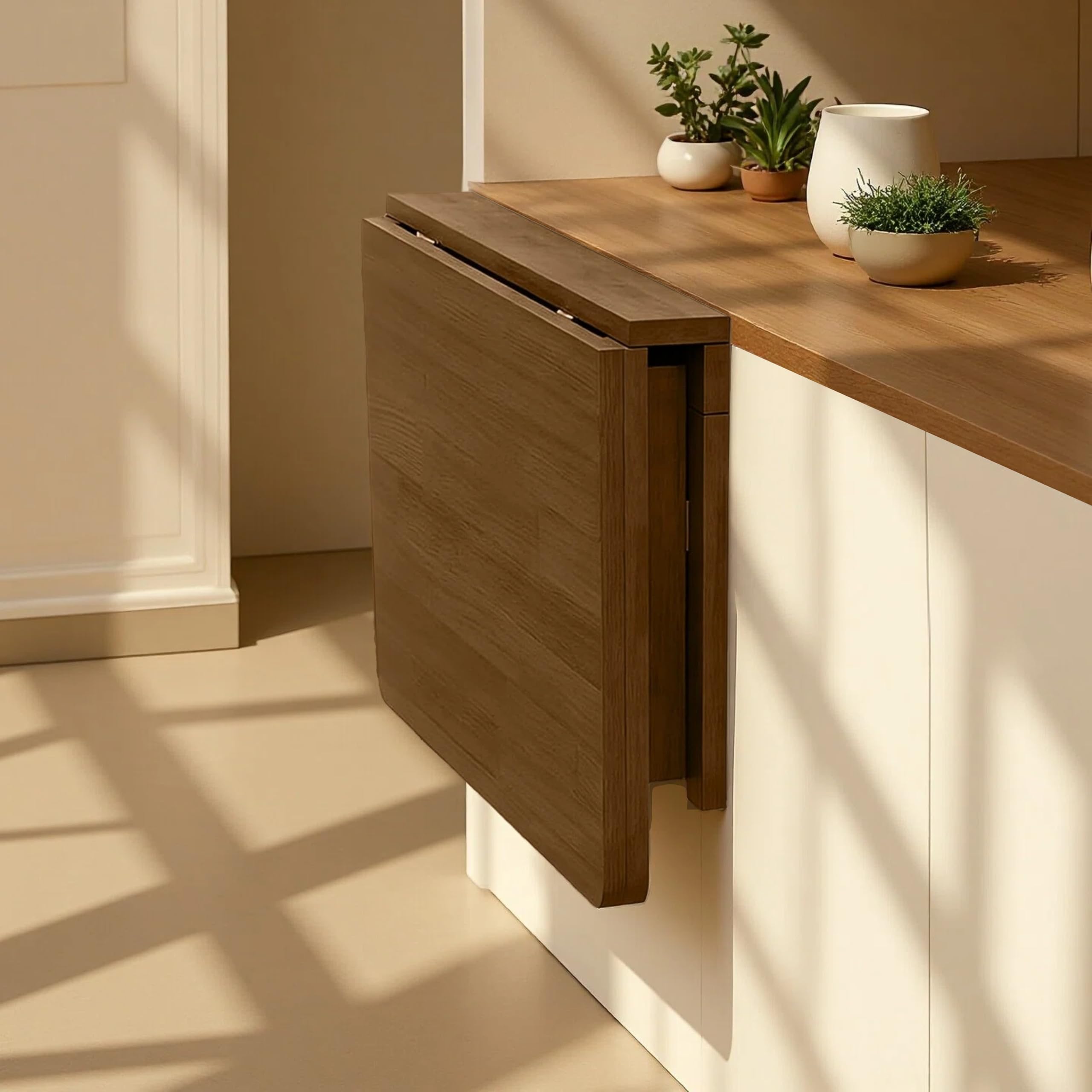
A solid wood drop-leaf desk in walnut finish that reads as higher-end and provides a lightweight yet attractive workspace when mounted correctly.
Why I picked it: Solid wood top and warm finish bring durability and style to small spaces.
Best for: Kitchens, craft areas, and anyone wanting a nicer-looking fold-down wood surface.
A bit pricier for solid wood but worth it for the finish.
Pros
- Solid wood construction
- Warm walnut finish
- Compact 3.1-inch folded profile
Cons
- Wood can dent under pressure
- Mounting runners can split
My take
I chose this when I wanted a nicer aesthetic—solid wood and a warm walnut finish make it look intentional in my kitchen instead of purely utilitarian.
It’s lighter than a DIY solid-wood table but still holds a good amount of weight when screwed into studs; I recommend very careful pilot drilling so the support runners don’t split.
If you want a clean, attractive fold-down table and can manage stud mounting, this one gives a better look than particle-board alternatives.
8. Tangkula Wall Mounted Foldable Table – Best Value Foldable Laundry Table
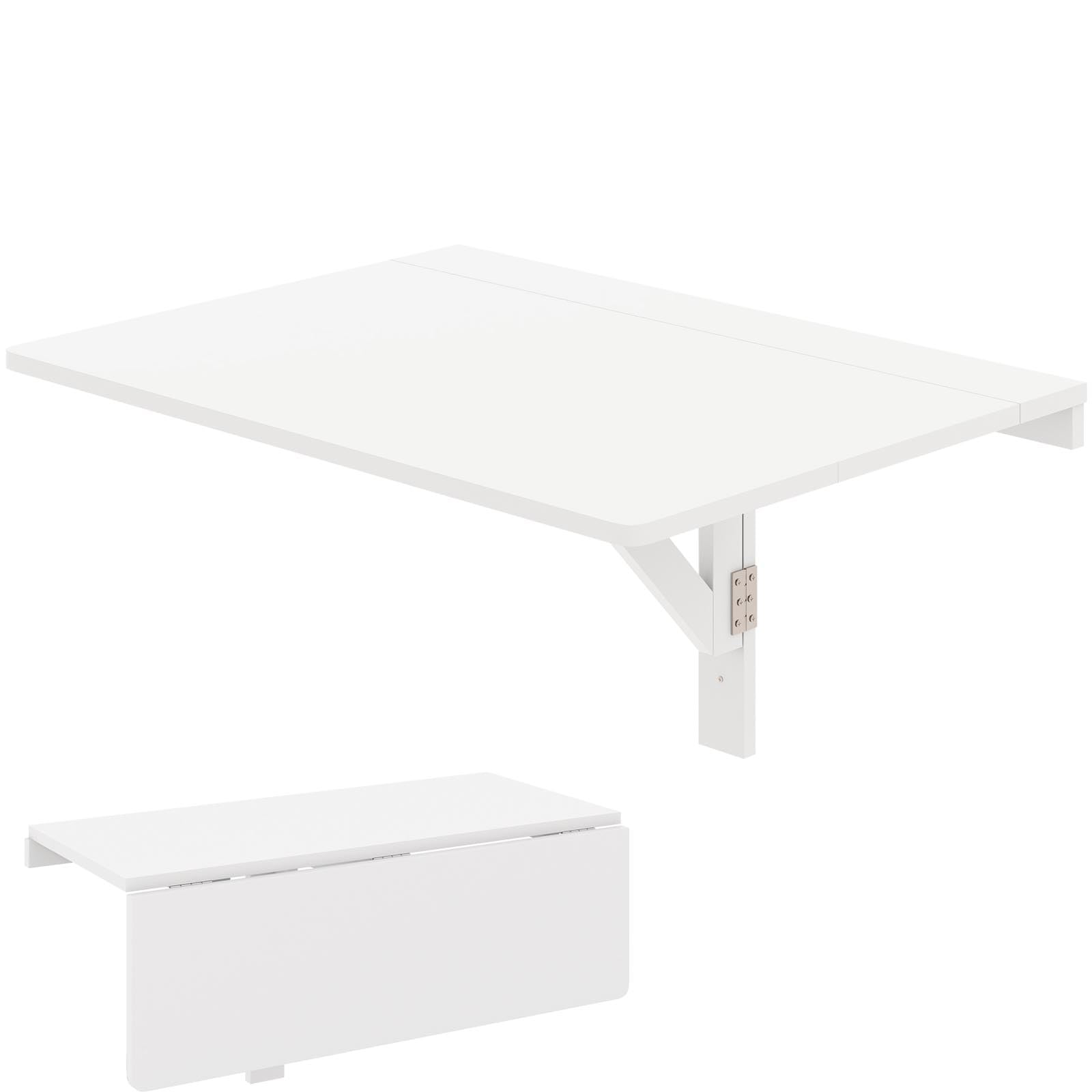
A budget-friendly dual-fold table that adapts to partial or full use—handy in laundry rooms and kitchens where flexible surface area is useful.
Why I picked it: Dual-fold design gives flexible surface area for the lowest price point.
Best for: Laundry rooms, kitchens, and budget-conscious small-space setups.
Very affordable with solid basics if you upgrade anchors.
Pros
- Two-way folding for flexible use
- Quick assembly
- Rounded safety edges
Cons
- Included anchors are flimsy
- Can be slightly wobbly without good anchors
My take
I used this in a small laundry nook and the two-way folding is brilliant—one board down for a small task, both boards down for full folding and sorting.
Mounting with the supplied anchors left me nervous, so I located studs and used stronger screws; with that upgrade the table feels dependable for light household work.
For the price it gives excellent utility, though anyone planning heavy use should invest in better mounting hardware.
How I Choose a Floating Desk
Key things I check before I recommend a wall desk
I always start with weight capacity and how the desk mounts. A desk that folds flat but is hung on flimsy anchors isn’t useful for daily work.
Next I look at usable surface area and storage. Some fold-down cabinets hide everything, while drop-leaf tables give a quick surface but little organization.
Material and finish matter to me. Solid wood reads better and wears differently than MDF or particle board, though those surfaces clean easily and cost less.
- Mounting: Always plan to anchor into studs or upgrade anchors.
- Weight: Check stated load and prefer thicker tops for heavier use.
- Function: Decide between a simple shelf, cabinet fold-up, or full tabletop.
- Size: Measure clearance for chairs and legs before buying.
- Style: Match finish to room—walnut for warmth, white for minimalism.
Installation tips I use
I rarely trust the tiny drywall anchors included with many wall desks. If studs aren’t available, I buy toggle bolts or heavier anchors at the hardware store.
I recommend pre-drilling pilot holes and having a helper hold the unit level while fastening the top screws.
When instructions are vague, mark every part on a table and follow assembly diagrams step by step to avoid backtracking.
- Bring a stud finder, level, and long screws.
- Get a helper for larger desks or awkward screw angles.
- Test the mechanism open/close before loading with heavy items.
Frequently Asked Questions
Do wall-mounted fold-down desks need to be mounted into studs?
In my experience, stud mounting gives the most reliable strength—especially for heavier tops. If studs don’t line up, I use heavy-duty toggle bolts or longer wood screws from the hardware store.
Can I put a monitor or desktop PC on a floating desk?
I’m comfortable putting a monitor and peripherals on many of these desks, but I avoid full desktop towers unless the product explicitly lists a high load capacity and I can secure it to studs.
How difficult is installation?
It depends. Simple drop-leaf tables can be a one-person install, while cabinet-style desks and larger floating tops are usually a two-person job. Read the parts labels and allow an hour or more for mounting.
Final Take
I’ve recommended options here to fit different needs—compact drop-leafs for tiny spaces, solid wood for a more finished look, and heavy-duty folding tables when strength matters.
If you’ll use the desk daily, invest time in proper mounting and upgraded anchors; that step makes the biggest difference in longevity and confidence.
Pick the style that matches how you’ll work: hide-it-away cabinets for shared rooms, large floating desktops for home offices, and simple fold-down tables for utility spaces.
