
I tested compact chest and upright freezers that fit garages, basements, and small kitchens. Here are the units I relied on for quiet operation, usable capacity, and easy maintenance.
I spent time with several compact freezers to find units that actually work in garages and tight spaces. My priorities were reliable cold, sensible capacity, and low noise so the unit can live near a doorway, workbench, or laundry area without becoming a nuisance.
This roundup focuses on small chest and upright freezers that I would put in a garage—models that balance energy use, usable layout, and straightforward maintenance. I describe where each one fits best and why I kept using it after the initial setup.
If I need maximum usable depth and the lowest cost per cubic foot, I reach for a chest freezer. If I want easy visibility and less bending, I prefer uprights with baskets and balanced hinges. Noise, drain location, and whether controls are front or rear make the practical difference when the unit sits in a garage.
1. Midea MRU03M2ABB Upright Freezer — 3.0 Cu Ft (Black) – Best Overall Upright
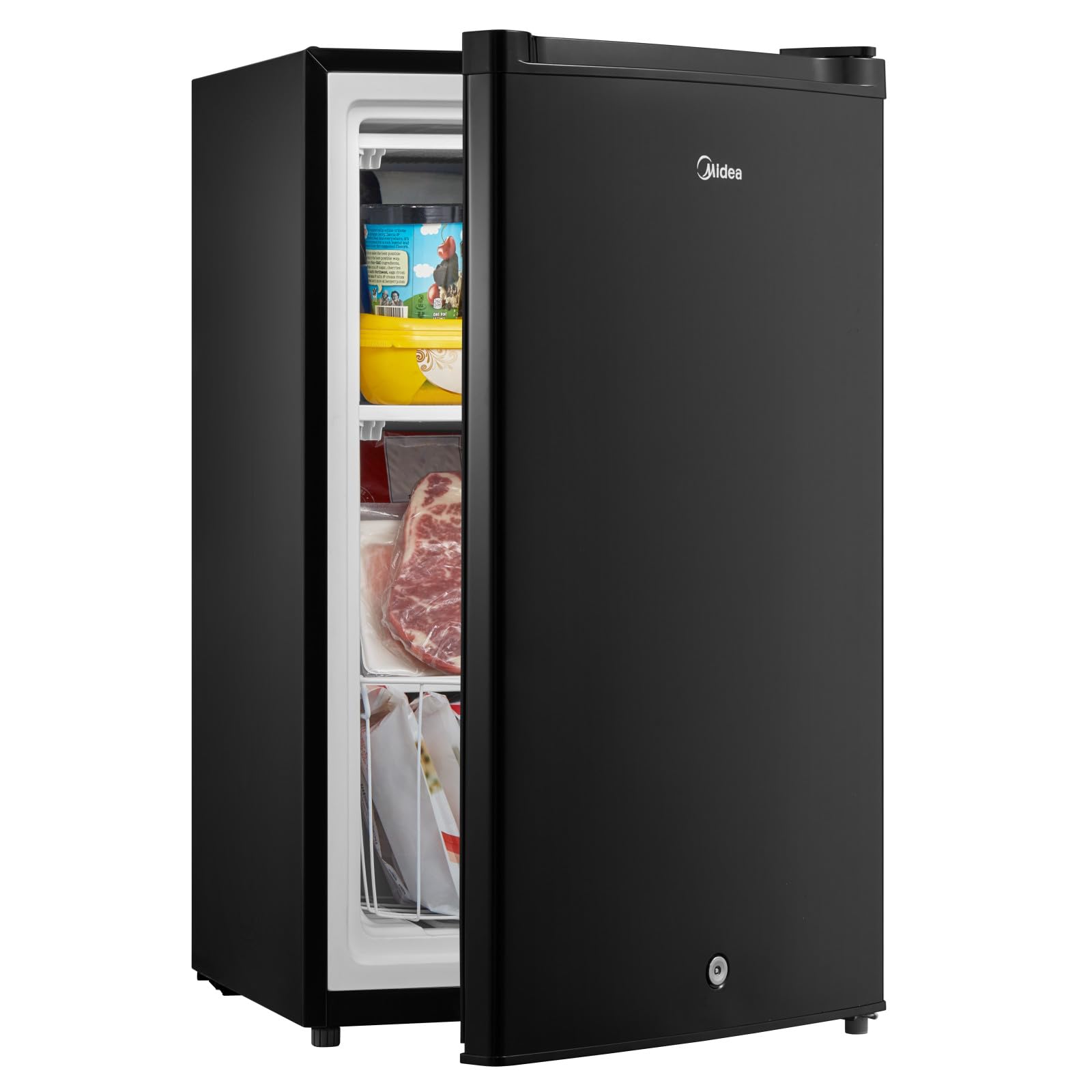
I used the Midea 3.0 cu ft upright as a compact deep-freeze companion for kitchen overflow and a small garage corner.
Why I picked it: Compact upright with reversible door and very quiet operation.
Best for: Kitchen overflow, apartments, and small garage corners.
Solid value for a reliable mini upright freezer.
Pros
- Compact 3.0 cubic feet
- Reversible door hinge
- Adjustable legs for uneven floors
- Quiet 42 dB operation
- Durable wire basket
Cons
- Temperature control at the rear
- Requires manual defrost
- Not a large deep-freeze capacity
My take
I placed the Midea where I needed extra frozen storage without sacrificing floor space. The adjustable legs and reversible hinge made installation painless on my uneven garage floor and allowed the door to open the way I needed.
It offers a usable interior with sturdy shelves and a wire basket that handles heavier items. The external mechanical thermostat ranges down into deep-freeze territory, and the R600A compressor runs efficiently—I've watched it keep a steady cold while drawing modest energy.
Noise stayed low enough that I forgot the unit was nearby until I opened the door. Expect to manually defrost a couple times a year if you keep it well loaded, but I found that layout and quiet operation made routine use simple and dependable.
2. Koolatron Deep Freezer — 3.5 Cu Ft Chest Freezer (White) – Best Chest Freezer
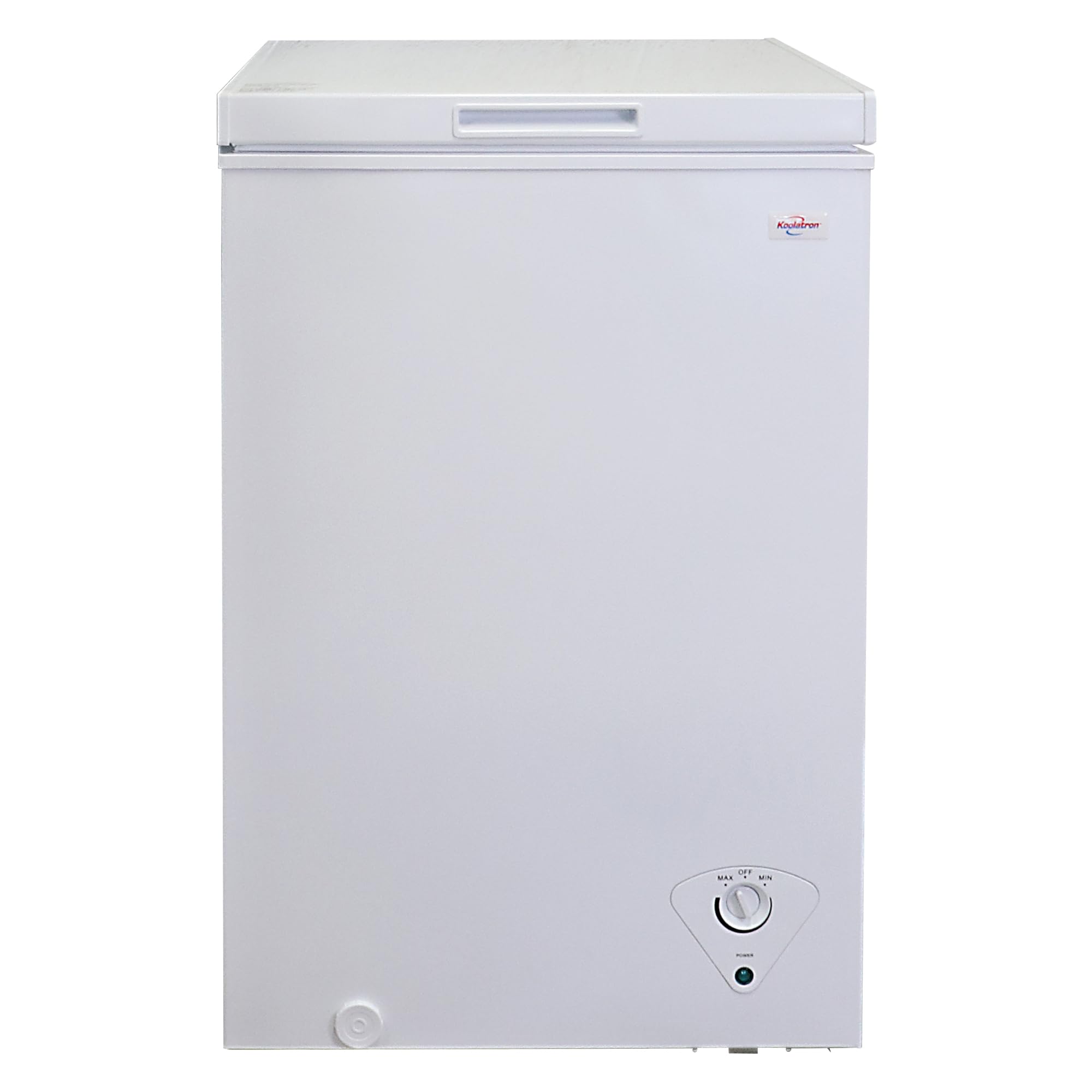
I relied on the Koolatron 3.5 cu ft chest when I wanted counter-height storage that doubles as extra workspace in a tight garage.
Why I picked it: Counter-height chest with front drain and stay-open lid.
Best for: Basements, garages, and families who buy in bulk.
Good midrange chest that maximizes storage per footprint.
Pros
- 3.5 cubic foot capacity
- Front-mounted drain for easy defrost
- Removable corrosion-resistant basket
- Stay-open lid for hands-free loading
- Quiet compressor cooling
Cons
- Lower space harder to reach
- Manual defrost upkeep
- Heavier to move when full
My take
I put the Koolatron under a garage countertop and used the top as a staging area; that counter-height design is a practical touch. The magnetic seal is strong and the lid’s rear hinges prevent it from hitting the wall when opened.
Defrosting is straightforward thanks to the front drain plug, and the removable hanging basket keeps small items handy. Temperature control is external and lets me dial in anything from chill to hard freeze, and the compressor cooled down quickly after setup.
The unit is solid and quiet in daily use. I noticed the bottom of the chest takes planning for access—shorter reachers will want to use the basket to keep frequently used items up top.
3. Igloo 3.5 Cu Ft Upright Deep Freezer Chest — White – Best Upright for Garage Access
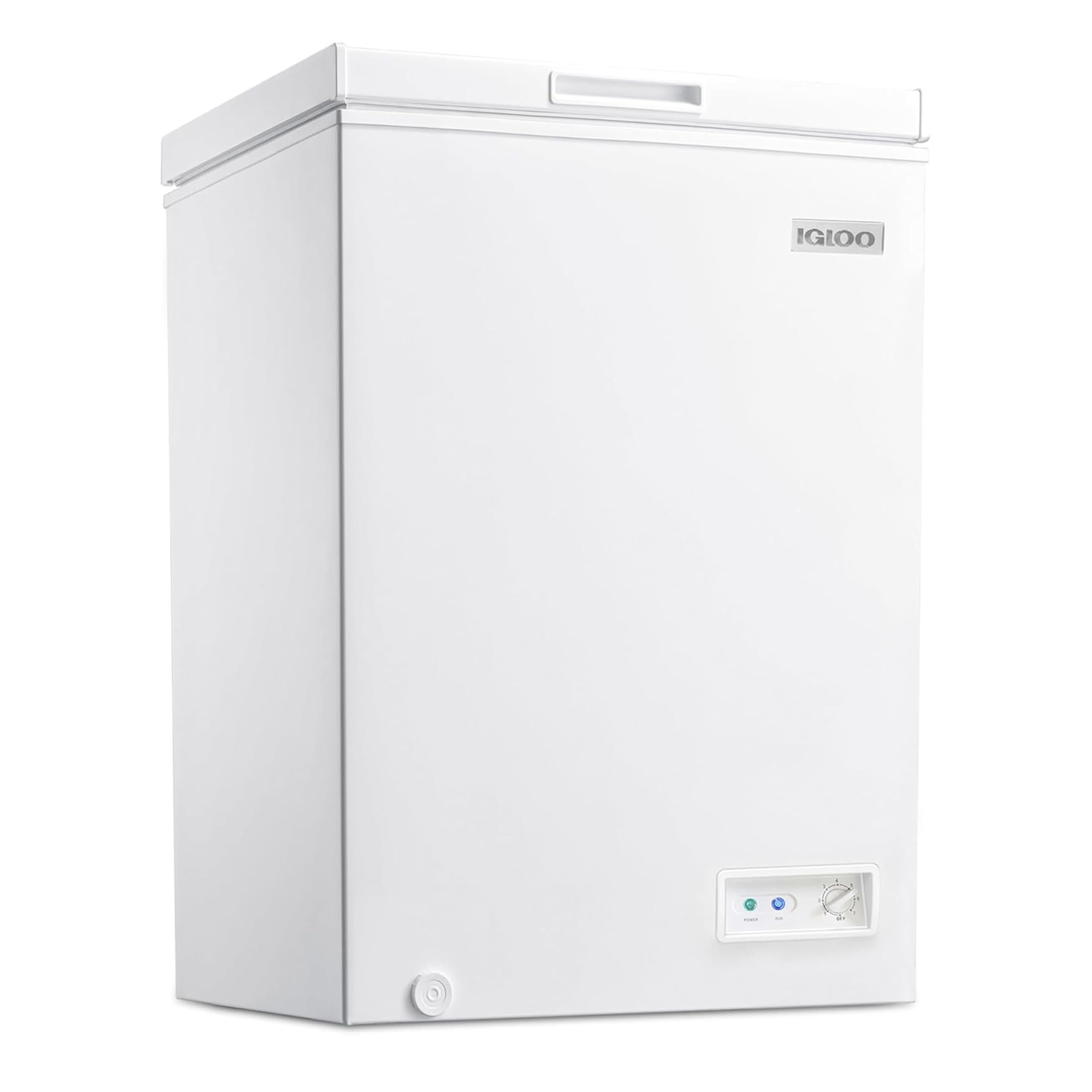
I chose the Igloo 3.5 cu ft when I wanted an upright layout that prevents digging and offers quick access in a garage setup.
Why I picked it: Upright chest with LED light and balanced hinge for easy loading.
Best for: Garages and basements where visibility and access matter.
Energy-efficient upright with handy access features.
Pros
- 3.5 cubic feet in upright format
- Quick-freezing D-type refrigeration tube
- Interior LED lighting
- Balanced hinge holds lid open
- Front rollers and drain plug
Cons
- Smaller items can hide at bottom
- You still need manual defrosting
- Footprint larger than smallest minis
My take
The upright layout keeps items visible and avoids that chest-freezer digging session. LED lighting and a removable wire basket made organization simple when I stored a mix of meats, ice cream, and frozen vegetables.
I saw fast pull-down performance thanks to the D-type refrigeration tube and good sealing around the gasket. The balanced hinge that holds the lid between 45° and 90° is useful when I needed both hands free to load groceries.
Moving and defrosting are easy because of the front rollers and drain plug. The unit is quietly efficient and feels built for regular garage duty without demanding special care beyond the usual manual defrost schedule.
4. Mini Freezer 1.2 Cu Ft — Small Upright Freezer (Red) – Best Compact Option
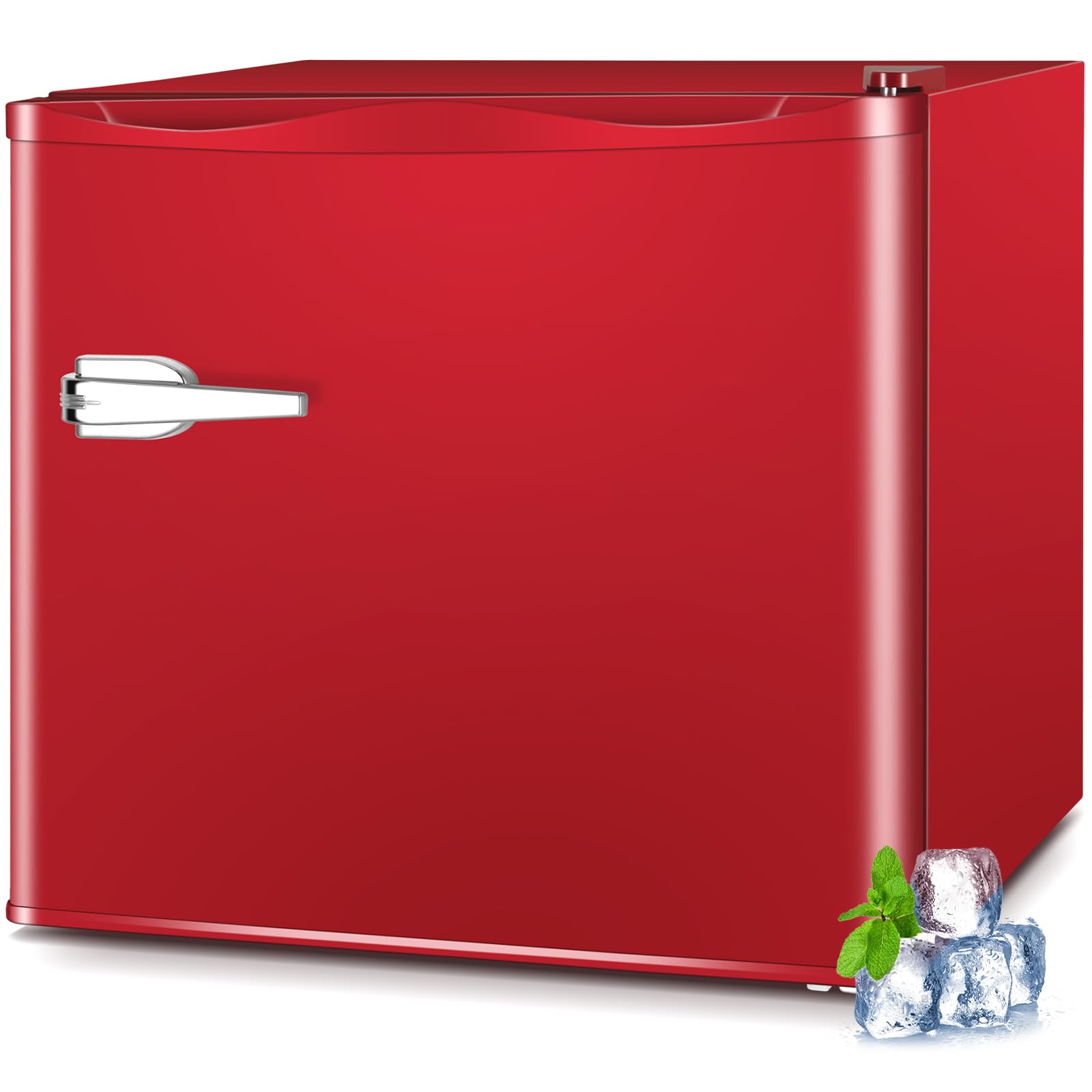
I kept this 1.2 cu ft upright in a bedroom and used it for ice packs and small daily frozen items where footprint mattered most.
Why I picked it: Tiny footprint with seven temperature settings and adjustable shelves.
Best for: Single-person spaces, bedrooms, and medical ice pack storage.
Budget-friendly, ultra-compact freezing solution.
Pros
- Very small footprint
- Seven-grade temperature control
- Low noise (around 40 dB)
- Adjustable shelves and feet
- Efficient for short-term storage
Cons
- Limited capacity for larger families
- Frosts up quickly
- Front can slide when leaned on
My take
I installed this little upright next to a bedside table for ready access to ice packs and small frozen items. It’s surprisingly quiet and well insulated for such a compact unit.
The seven-grade thermostat gives me fine control over coldness and the adjustable shelves make the most of the interior. Because it’s so small it does develop frost faster than larger units, so I schedule a quick defrost a few times a year.
If you need a tiny, energy-sipping freezer close to hand, this one delivers. Don’t expect to store bulk meat or large flat items, but for daily convenience it’s a strong pick.
5. BANGSON Chest Freezer — 3.5 Cu Ft with Removable Basket (White) – Best Quiet Chest
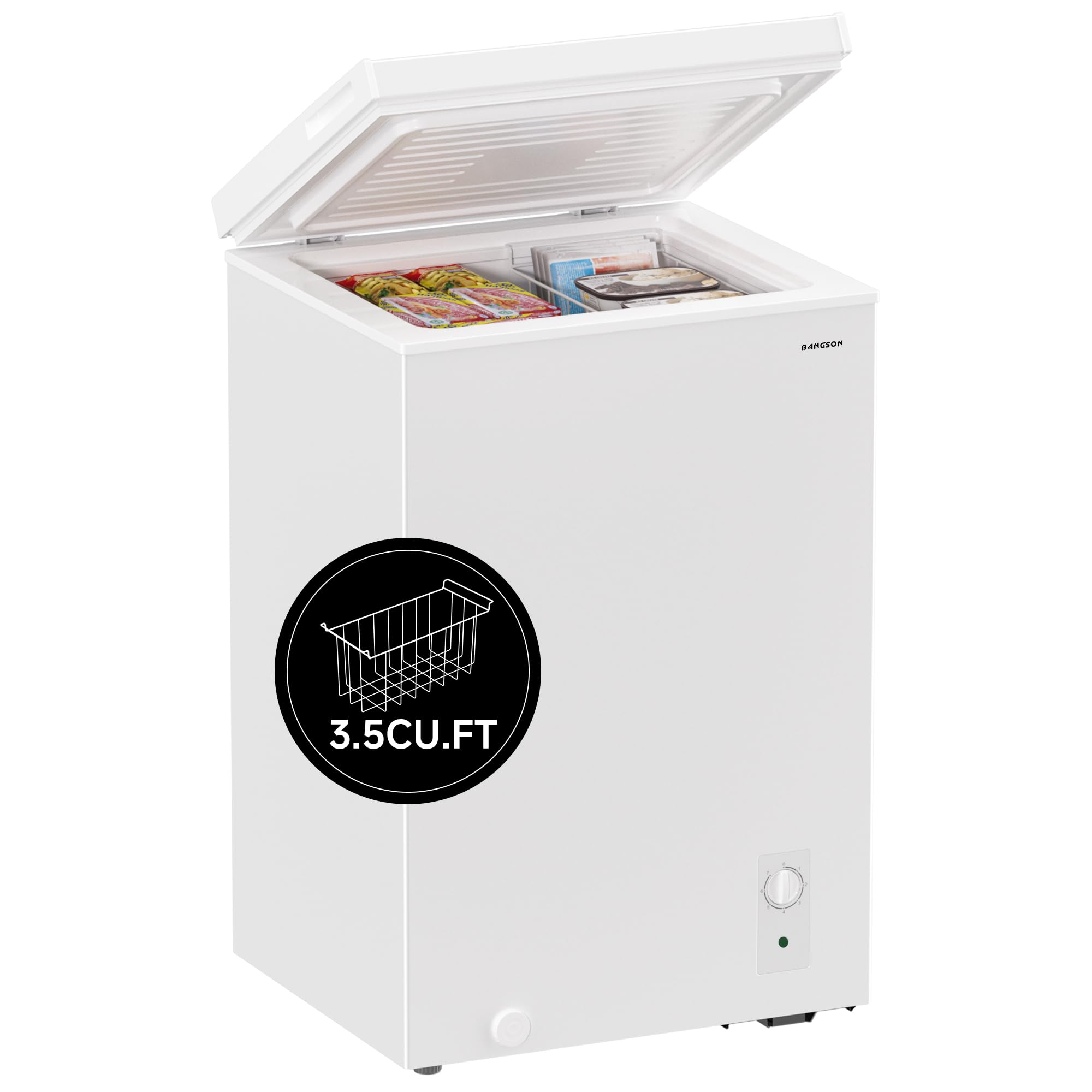
I used the Bangson 3.5 cu ft chest when silent operation and a solid internal layout were my priorities for garage storage.
Why I picked it: Spacious interior, whisper-quiet compressor, and strong door seal.
Best for: Garage storage, meat bulk storage, and quiet environments.
Well-packed chest with a focus on quiet operation.
Pros
- Large interior for its footprint
- Seven temperature settings
- Removable wire basket
- Almost silent compressor
- Removable door seal for cleaning
Cons
- Relatively heavy on delivery
- Energy efficiency not fully specified
- Needs vertical rest after shipping
My take
The Bangson arrived very well packed and the seal impressed me—the cold stayed put when I opened and closed it repeatedly. I used it in the garage to store meats and frozen meals and appreciated how much fit into the footprint.
The seven-setting thermostat gives me control from chill to deep freeze and the removable basket helps keep frequently used items accessible. It’s one of the quietest chest compressors I’ve used, which makes it easy to place near living spaces.
Because the unit is fairly heavy, I recommend having help on delivery and letting it sit upright for the recommended time before plugging it in. Once running, it’s a dependable workhorse for overflow storage.
6. 3.2 Cu Ft Mini Fridge with Freezer — Upright Single Door (Silver) – Best Mini Fridge with Freezer
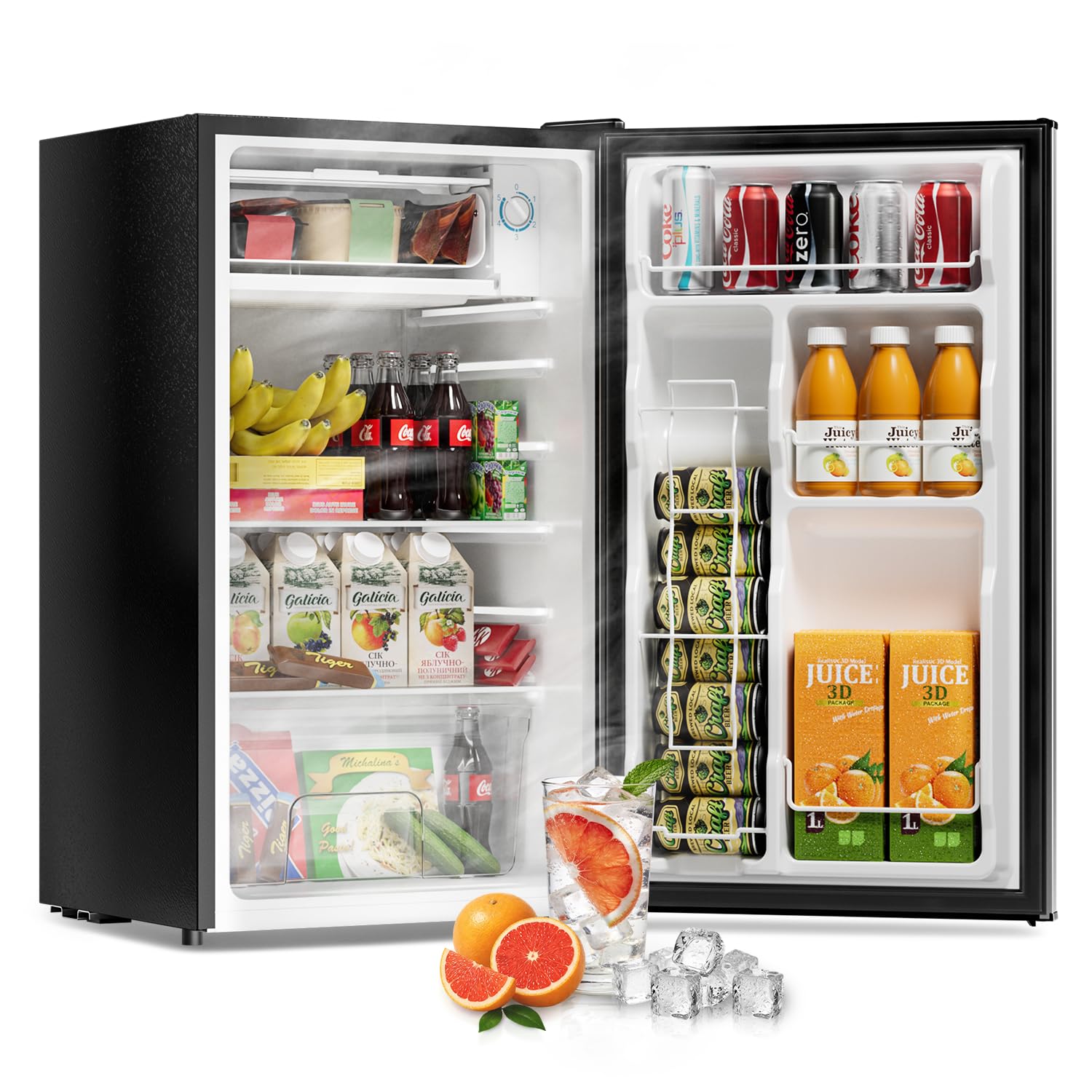
I used the Frostorm 3.2 cu ft mini fridge when I wanted a combined fridge/freezer that fits under a bench and functions as a beer fridge or dorm unit.
Why I picked it: Mini fridge with a dedicated upright freezer compartment and reversible door.
Best for: Under-bench beer storage, dorm rooms, and compact apartments.
Value-focused mini fridge with usable freezer space.
Pros
- 3.2 cu ft total capacity
- 0.35 cu ft dedicated freezer compartment
- Reversible door for layout flexibility
- ETL certified for safety
- Energy-efficient daily use
Cons
- Freezer compartment is small
- Manual defrost required
- Not for large frozen loads
My take
I slid this mini fridge under my garage workbench and used the small upright freezer section for ice and frozen treats—it holds a 12-pack comfortably and keeps beverages cold.
The reversible door made placement easy and the simple 1–5 mechanical thermostat is uncomplicated to use; I leave it at the manufacturer-recommended middle setting for balanced performance.
It’s compact and relatively quiet, with ETL certification adding peace of mind. Expect the freezer compartment to be for short-term frozen storage rather than bulk meats, but for a dorm or garage beer fridge it’s a great fit.
How I Choose a Garage-Ready Freezer
Chest vs Upright: What I Consider
I pick a chest freezer when I want more usable volume and lower energy per cubic foot. I prefer uprights when I value visibility, less bending, and quicker access to smaller items.
For garage placement I weigh how often I’ll need lower-bay access—if I plan to use baskets and keep frequent items up top, chests are fine. If I need to grab single items quickly, an upright saves time.
- Chest freezers: better volume, slightly colder retention, need bending
- Upright freezers: easier access, shelves and baskets prevent lost items
Temperature Control and Freezing Range
I always check the thermostat range—units that reach well below freezing are better for long-term meat storage. External dials or clear settings make adjustments simpler when the unit sits in a garage.
If you need very low temperatures for long-term storage, choose models that explicitly list sub-zero ranges and compressors rated for hard freeze.
- Look for a control that’s easy to reach from placement
- Confirm minimum temperature suits your intended frozen items
Maintenance, Defrosting, and Drain Location
Manual-defrost units still perform very well, but I plan a simple defrost schedule. Front-mounted drains and removable baskets save time during defrost and cleaning.
If you hate digging through a deep chest, select a model with a removable basket or an upright format to keep frequently used items accessible.
- Front drain speeds defrosting and cleanup
- Removable baskets keep small items reachable
- Expect manual defrost in most compact models
Noise and Energy Use
I measure noise by placement. If the freezer will sit near a living area or entry, I choose models marketed as low-dB or whisper-quiet. For a detached garage, noise matters less but still affects placement decisions.
Energy consumption varies; I prefer compressors with modern refrigerants and compact insulation to achieve a balance between performance and running cost.
- Pick low-dB models for near-living placement
- Check compressor type and energy specs for efficiency
Frequently Asked Questions
Can I put these freezers in an uninsulated garage?
I place chest and upright units in garages, but I watch ambient temperature ranges. If your garage experiences extreme heat or cold, choose a model specified as garage-ready or keep the unit in a more temperature-stable location to avoid stress on the compressor.
How often do I need to defrost a manual unit?
I typically defrost small freezers every few months, depending on how often I open the door and how humid the space is. Heavy use or frequent opening will increase frost buildup and shorten the interval between defrosts.
Which is easier to organize: chest or upright?
I find uprights easier to keep organized at eye level with baskets and shelves. Chests give more raw space but require planning—using baskets and labeling helps avoid the digging problem.
Final Take
I chose these freezers because each solved a real storage problem in my garage or small space setup. Whether I needed a quiet chest for bulk meat, an upright that keeps things visible, or a tiny bedside freezer, I kept returning to the practical features listed here.
If you want my short advice: pick the format that matches how you reach for your frozen food—chest for bulk, upright for access—and prioritize drain location and noise level for garage placement.
