
I tested six 2-way hose splitters so you can pick the right mix of flow, durability, and easy valve control for your yard.
I spend a lot of time managing hoses, timers, and sprinklers around my property, so a reliable splitter is one of my most-used tools. I tested a range of 2-way splitters from inexpensive brass options to heavy stainless units to see how they performed under real use.
In my testing I focused on build quality, how easily the valves operate (especially with stiff hands), leakage at threaded connections, and how much water each branch actually delivers. Those factors made the difference between a splitter I left permanently on the bib and one I returned to the toolbox.
Below I walk through the six splitters I tried, tell you what each one is best for, and share the practical takeaways that mattered to me while installing and using them.
I found a clear split between budget brass splitters that are fine for light watering and full-flow metal models (stainless or precision-machined brass) that deliver noticeably better volume and long-term reliability.
1. Morvat Brass 2-Way Hose Splitter – Best Budget
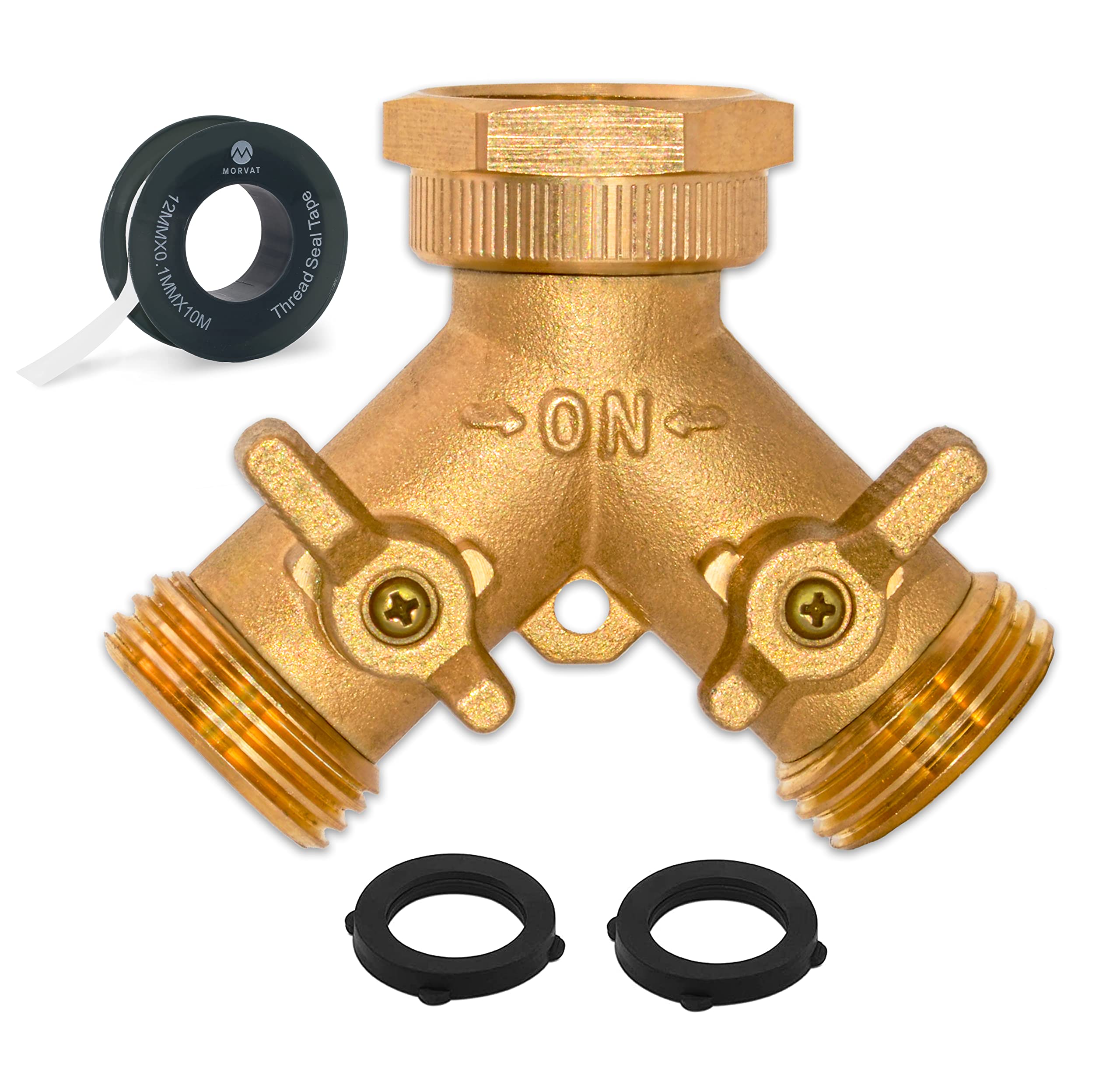
I picked this as the low-cost brass option—solid feel but mixed usability depending on the unit.
Why I picked it: I chose it for the all-metal build and dual shutoffs at an entry-level price.
Best for: Light gardening and running two low-demand lines simultaneously.
Affordable, entry-level choice.
Pros
- I like the all-metal construction
- I appreciate the 360° swivel connection
- I liked the included washers and Teflon tape
Cons
- Valves can be extremely stiff to operate
- Smaller internal bore limits full water flow
- I observed occasional leaks on some units
My take
Out of the box this splitter feels heavy and well made, and I liked that it’s constructed mostly from brass. The rotatable hex top makes hand-threading simple and the package includes extra washers and tape, which I used during installation.
In everyday use I found two consistent trade-offs: the internal passage is noticeably narrower than other models I tried, so I did not get full-flow volume through the outlets; and several units I handled had very stiff shutoff taps that required real effort to turn. Once freed up they worked fine, but I had to use pliers on one occasion.
Given those quirks, I keep this on fixtures where I only need to run a soaker hose or misting line rather than a high-volume sprayer. If you want the cheapest brass splitter that holds up for light tasks, this will work—just expect some units to need a little break-in and occasional tightening.
2. RAINPOINT 2-Way Metal Hose Splitter – Best for Heavy Flow
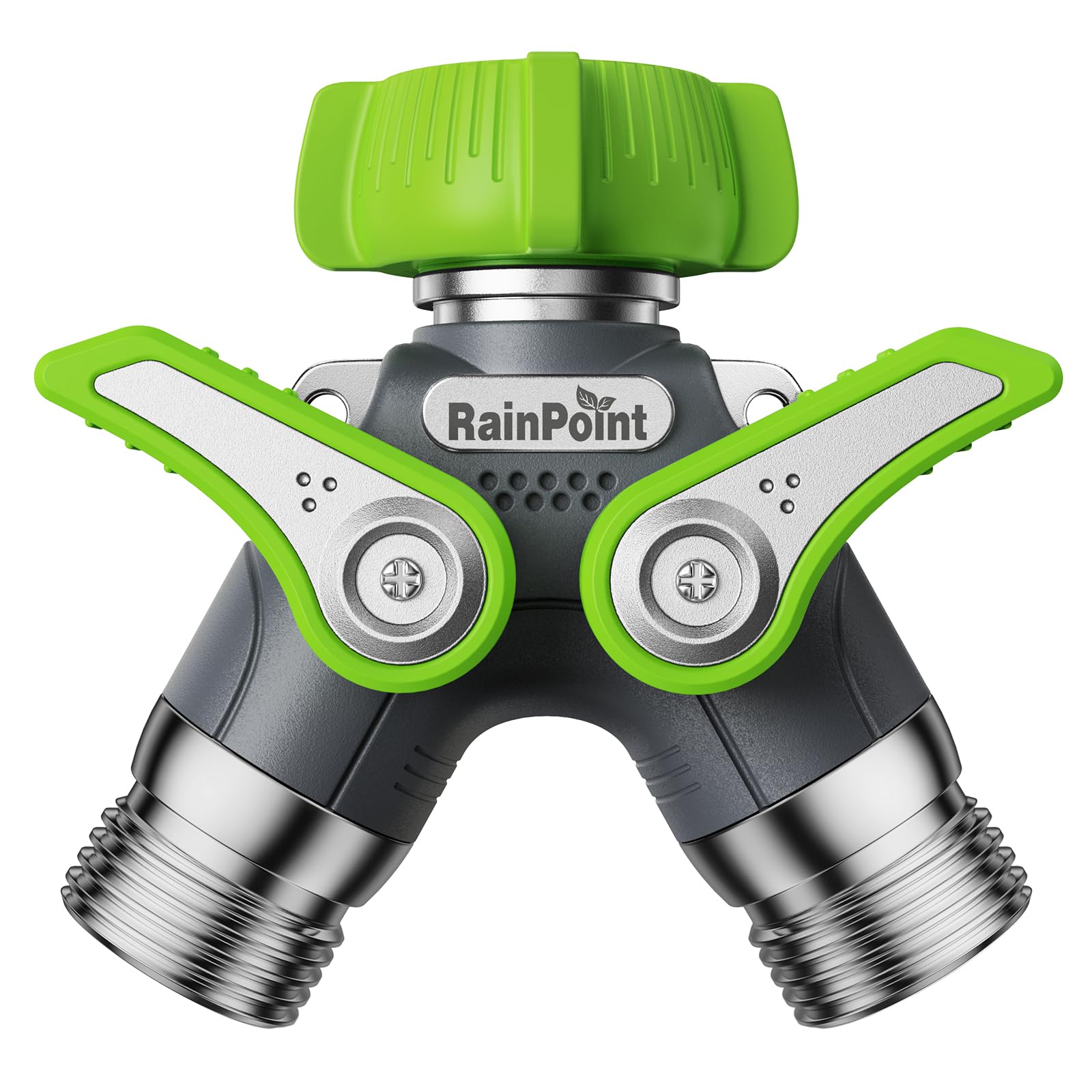
I relied on this splitter when I needed high flow and smooth, glove-friendly valve operation.
Why I picked it: I picked it for full-port ball valves and long ergonomic handles that keep flow high.
Best for: High-demand watering, washing cars, or feeding two heavy-use lines.
Mid-priced — built for heavier workloads.
Pros
- I value the full-port ball valves for max flow
- I like the long, ergonomic handles
- I saw no leaks at threaded connections
Cons
- Heavier weight may stress unsupported faucets
- Takes up more space on crowded bibs
My take
This splitter is the most solid all-metal unit I used. The body feels dense and the TPR-coated surface resists wear from handling and weather. Installing it was straightforward and the precision threads sealed cleanly with the included washers.
The long 1.9" handles made a real difference for me—I could operate the valves easily even when wearing gloves, and the stainless ball mechanism opened smoothly every time. I tested flow through both outlets and the full-port design kept pressure and volume high compared with cheaper splitters.
If I need a dependable splitter for frequent heavy use—feeding sprinklers while washing the car, for example—this is the model I reach for. It’s pricier than the low-end brass options, but I consider it a practical investment when flow and trouble-free operation matter.
3. Solid Brass 2-Way Hose Splitter – Best Value
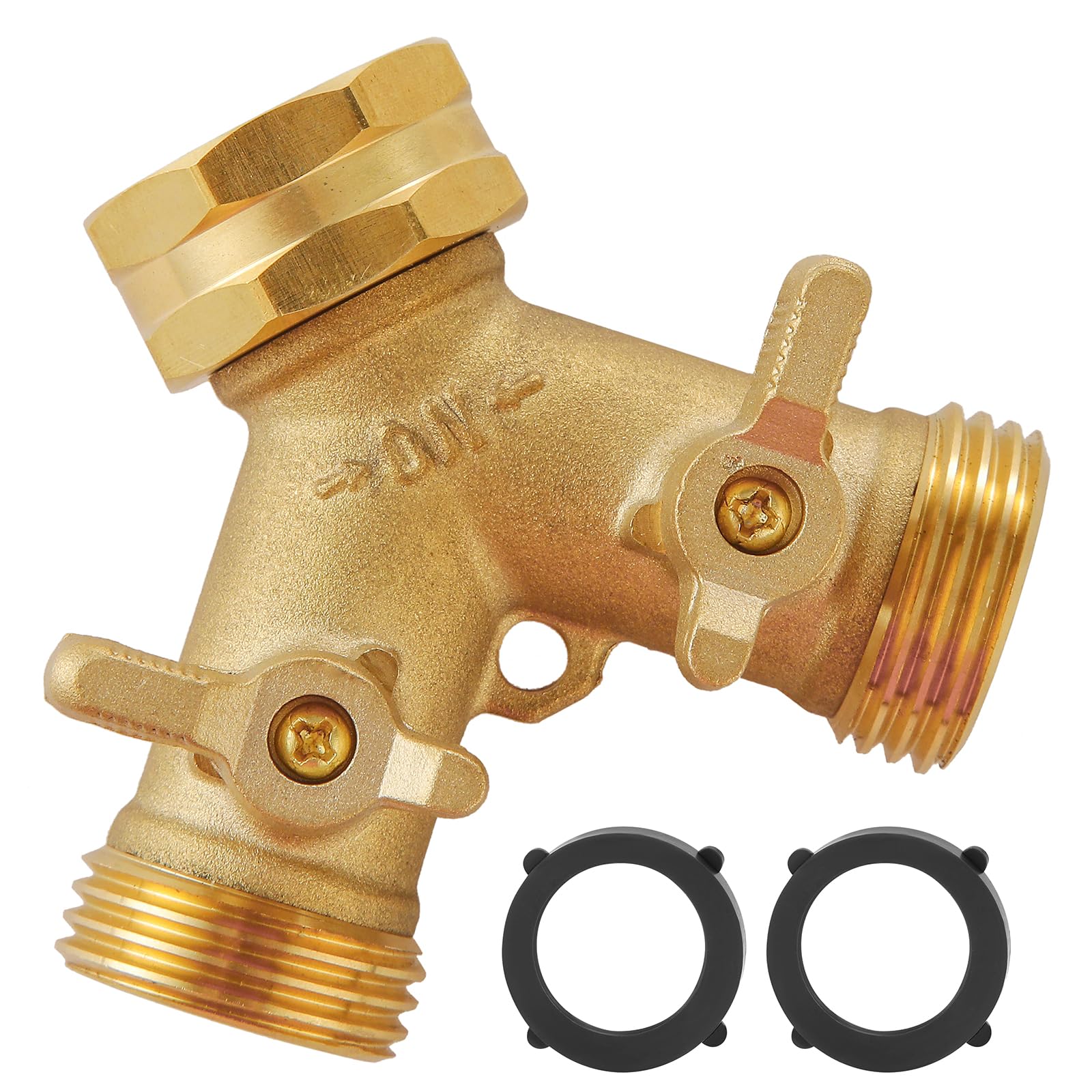
I found a dependable, no-frills brass splitter that balances quality and price for everyday yard use.
Why I picked it: I went with it for straightforward brass construction and smooth valves at a sensible price.
Best for: General backyard tasks like watering beds and running a soaker line plus a hand hose.
Budget-friendly with solid performance.
Pros
- I appreciated the smooth, extended handles
- I liked the watertight machined fittings
- I used the extra rubber washers included
Cons
- Initial tightness on valves—short break-in needed
- Not ideal if you need full commercial flow
My take
This splitter gave me the best balance of cost and everyday utility. It threaded on easily, and once tightened the unit sealed without leakage in my testing. The extended handles made opening and closing easier than tiny knobs.
Flow through each branch was typical for a brass splitter of this size—good for hoses, sprinklers, and moderate-pressure accessories. I liked that the box included spare washers, which I used when swapping hoses between tasks.
For my general backyard work this is the unit I keep on a frequently used bib: reliable, simple to operate, and a good value when you don’t need industrial-level flow.
4. Brass Y-Valve Hose Splitter with Long Handles – Best for Sturdy Handles
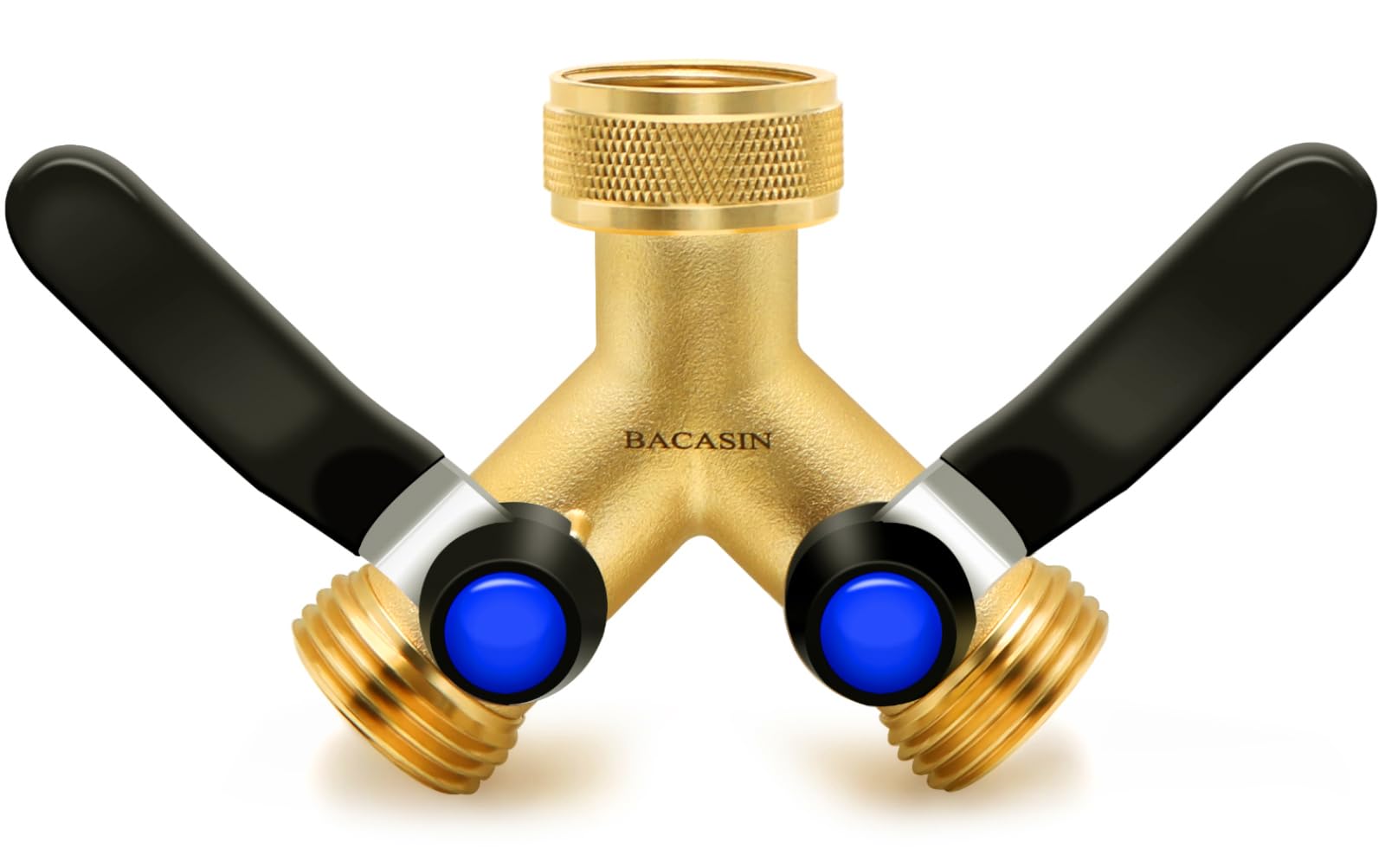
I appreciated the long stainless extension handles and robust brass build for frequent toggling.
Why I picked it: I chose it because the long 304 handles make valve control effortless.
Best for: Users who toggle valves often and want corrosion-resistant handles.
Premium-feeling, mid-to-higher priced option.
Pros
- I like the long 304 stainless handles
- I found it leak-free after installation
- I liked the easy hand-tighten octagon top
Cons
- I found it physically larger than expected
- Higher cost than basic plastic alternatives
My take
What stood out to me immediately were the long stainless extension handles—they make quick on/off control comfortable and precise. I could operate the valves effortlessly, which was a big plus when I had multiple hoses attached.
The brass body and solid threading tightened neatly to my faucet with no dripping. I’ve left this on a bib for weeks with no signs of corrosion and smooth valve action. The unit is a touch larger than some splitters, so allow clearance around the faucet if your spigot area is crowded.
Overall I use this when I want a durable, easy-to-grab splitter that won’t corrode on exposed faucets. It’s not the cheapest option, but the build quality and handle design make it one I trust for regular seasonal use.
5. Dalmbox Brass 2-Way Hose Splitter – Best Simple Setup
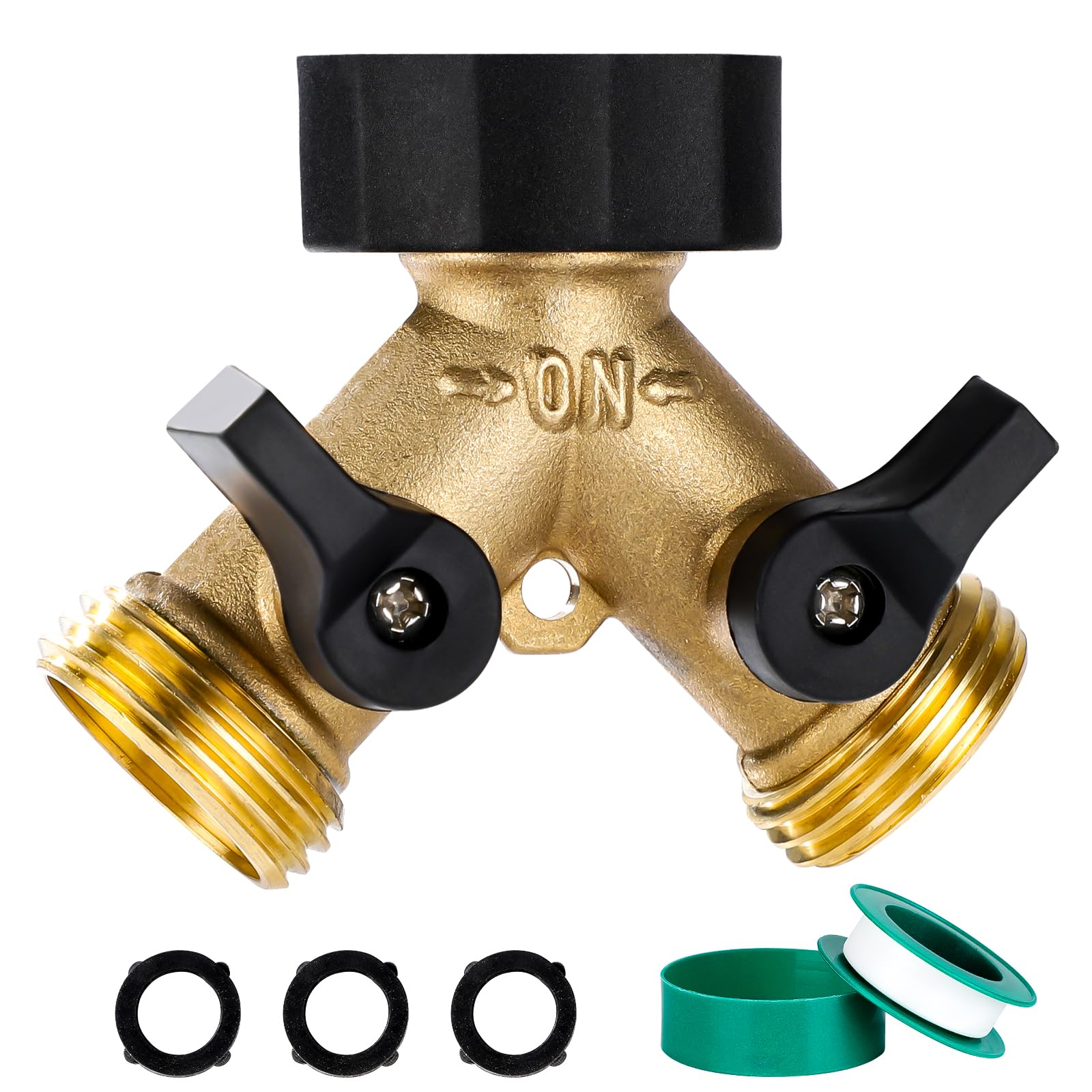
I relied on this basic brass splitter when I wanted a straightforward, leak-free install with extras included.
Why I picked it: I grabbed it for the simple dual-valve function and the helpful extras in the box.
Best for: Households that need an inexpensive, dependable splitter for timers and soaker hoses.
Very affordable and practical.
Pros
- I liked the leak-proof design out of the box
- I appreciated the included washers and tape
- I found valve control effective once installed
Cons
- Valves can feel a bit stiff at times
- Outlets sit close together on some faucets
My take
This is the straightforward splitter I put on a secondary bib where I wanted everything to stay connected and accessible. Installation was painless and the extra washers and Teflon tape were exactly what I needed for a clean seal.
Once installed I ran a timer on one line and a hand hose on the other; both lines turned fully off and on without dripping. The knobs were a touch stiff occasionally, but not enough to interfere with regular use.
For simple setups—pool top-offs, pet waterers, or running multiple lightweight lines—this is the easiest, most economical option I reached for in repeat installations.
6. 304 Stainless Steel 2-Way Hose Splitter – Best Premium
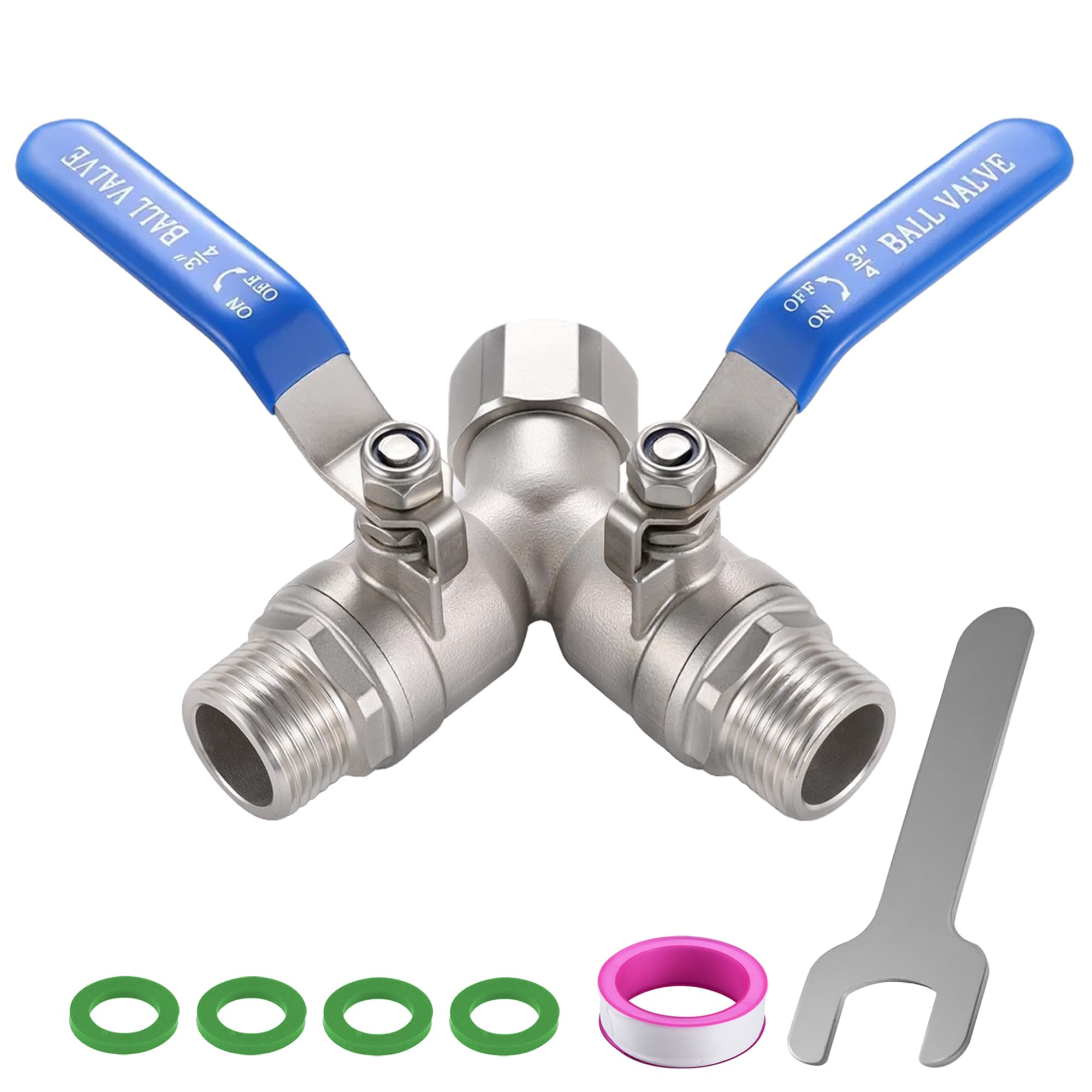
I used this when I wanted long-term durability and the highest flow without compromise.
Why I picked it: I picked it for full-channel flow and rugged 304 stainless construction.
Best for: Heavy-duty properties, farms, or anyone who wants a lifetime-grade splitter.
Premium-priced but built for longevity.
Pros
- I value the full-channel design for maximum flow
- I trust the 304 stainless body for long life
- I appreciated the large, easy-to-use handles
Cons
- Higher upfront cost than brass alternatives
- Heavier weight requires careful faucet support
My take
This stainless splitter is the most overbuilt unit I tested. The full-channel ball valve and larger outlet diameters deliver noticeably more water than the smaller-bore brass splitters, which I could immediately feel when running a pressure washer on one branch while watering with the other.
The 304 stainless body and large handles make operation effortless, even if you have limited hand strength. I also liked that the threads were accurately machined and that the package included useful extras like additional gaskets and a small wrench for tightening.
Because this model costs more, I reserve it for my most-used outdoor bibs and for applications where I need maximum flow and absolute reliability. For those uses I consider it worth the premium.
How I Choose a Hose Splitter
Material and Durability
I prioritize corrosion resistance and strength because splitters live outdoors. Brass gives good value and corrosion resistance; 304 stainless steel gives the best long-term durability in harsh weather.
If I need something that will remain on a frequently used faucet for years, I usually opt for stainless or precision-machined brass.
- Brass: good balance of cost and durability for most yards
- Stainless steel: best for heavy-duty, long-term use
- Avoid plastic bodies for high-pressure or full-time outdoor exposure
Valve Type and Flow
I check whether the splitter uses full-port ball valves or smaller bore valves. Full-port designs keep flow and pressure high; narrow internal passages reduce volume noticeably.
I also try the valves by hand—longer or ergonomic handles make a big difference if I’m wearing gloves or have stiff hands.
- Full-port ball valves: best flow, smoother operation
- Long handles: easier to operate, especially with gloves
- Watch for small internal diameters that restrict flow
Leaks, Threads, and Installation
I examine thread finish and included washers. A precision thread and good rubber washers reliably stop drip issues. Teflon tape is a useful addition when threads look older or rough.
When installing, I hand-tighten and then snug with a wrench if necessary. I also support the faucet if the splitter is heavy so it doesn’t stress the spigot.
- Look for machined threads and included replacement washers
- Use Teflon tape on older or worn spigots
- Support heavy splitters to avoid stressing the faucet
What I Recommend Based on Use
For light gardening and multiple low-flow lines, a budget brass splitter gives the best value. For frequent heavy use or to feed a pressure washer, I go with full-port brass or stainless.
If you plan to toggle the valves often, pick a model with long ergonomic handles to save your hands.
- Light-duty: inexpensive brass splitter
- Frequent heavy-duty use: full-port brass or 304 stainless steel
- Lots of toggling: choose long, ergonomic handles
Frequently Asked Questions
Will a splitter reduce my water pressure?
I’ve seen pressure loss when internal passages are small. Full-port or larger-bore splitters preserve pressure; low-cost units with narrow internal bores will feel weaker when two outlets run at once.
How do I stop a splitter from leaking?
I hand-tighten the splitter, use the included rubber washers, and wrap older threads with Teflon tape. If a unit still leaks, I re-seat washers or swap them with the spares that often come in the box.
Which material lasts longest outdoors?
In my experience 304 stainless steel lasts longest in harsh weather, followed by quality brass. Plastic is lighter and cheaper but can crack or degrade faster in full sun and cold.
Final Take
After trying every model, I keep a premium stainless splitter on my busiest bibs and a couple of brass options for secondary uses. That mix gives me the best combination of flow and value.
Pick the splitter that matches your workload: inexpensive brass for light tasks, precision brass or stainless for high flow and long-term reliability. I’ve found that small upfront differences in build and valve design make a big practical difference over seasons of use.
