
I tested popular plant labels and markers across trays, pots, and garden beds. These picks balance durability, writeability, and value so you can keep your garden organized.
I spend a lot of time labeling seedlings, pots, and perennial beds, so I look for plant markers that are waterproof, durable, and easy to read. Over several seasons I used these kits in cell trays, indoor seed starts, and outdoor pots to see which held up to water, sun, and handling.
Below are my favorites organized by use case — from the simplest value stakes for seed trays to thicker T‑style tags for longer plant names and weather resistance.
I compared each option based on material (PVC thickness and flex), tag shape (pointed stake vs T‑type), included pens (tip size and ink type), writeability (matte vs slick surface), and real-world durability in watering and sunlight.
1. KINGLAKE 4 Inch Plastic Plant Labels (100 pack) – Best Overall
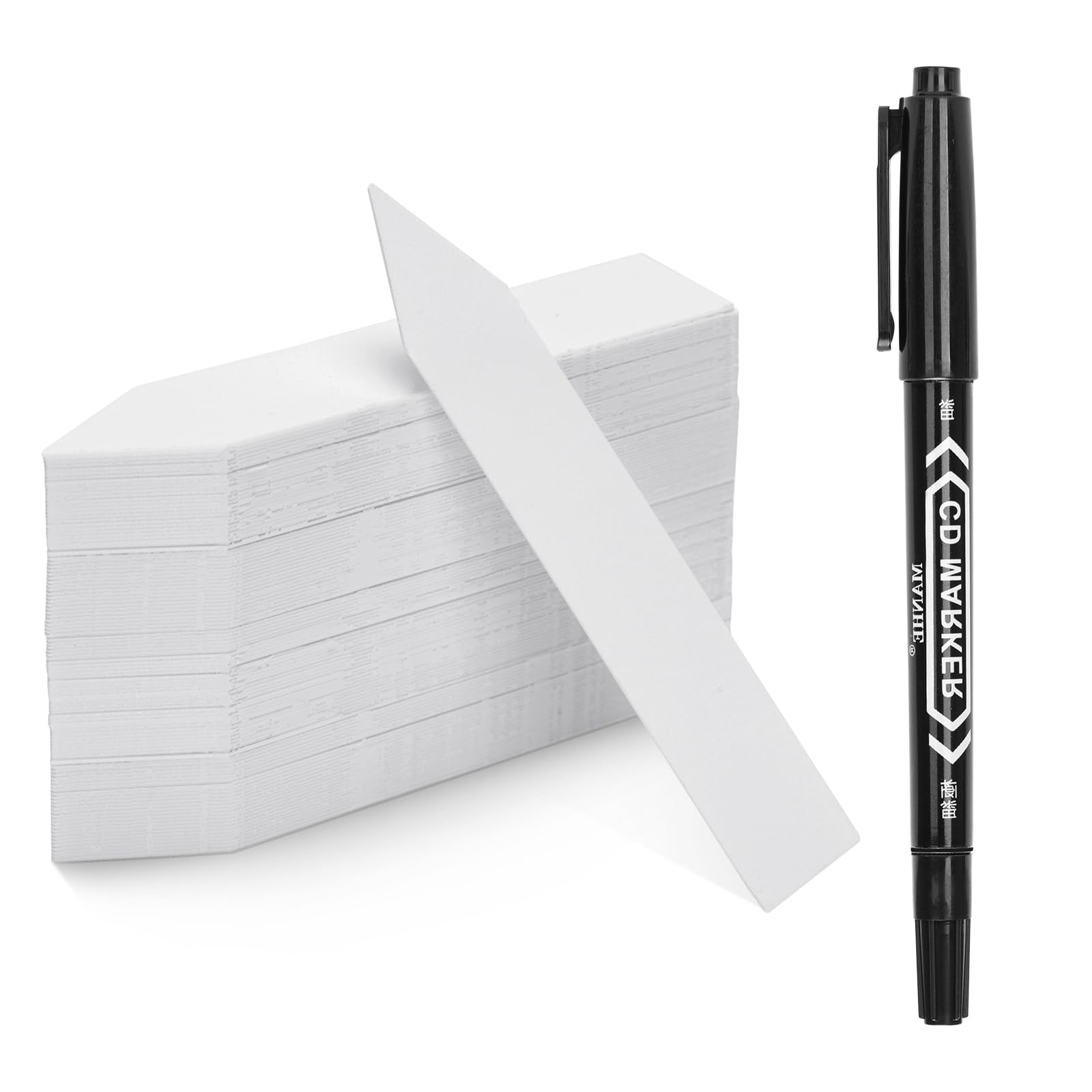
A solid all‑around pack of white PVC stakes I rely on for seed trays and pots.
Why I picked it: Straightforward, sturdy stakes with a dual‑tip marker included.
Best for: Seedlings, cell trays, small pots, and quick labeling jobs.
Good value for a starter pack.
Pros
- Simple pointed stakes
- Matte surface writes well
- Marker included
- Sturdy PVC, reusable
Cons
- Smaller writing area
- Labels can need relabeling after transplant
My take
I use these KINGLAKE stakes for my seed tray and small pot work because the pointed end slides into potting mix easily and the matte sides accept Sharpie and the included pen without smudging.
The PVC feels sturdy and didn’t crack when I pushed tags into soil. The dual‑tip marker in the box gives a fine and medium option, which is handy when I switch between long names and quick shorthand.
In heavy handling — for example when I transplant seedlings — I sometimes rewrite the label, but for the life of a start in a tray they hold up well to watering and light cleaning for reuse.
2. 300‑Pack 4 Inch Plastic Plant Labels with Pen – Best Value
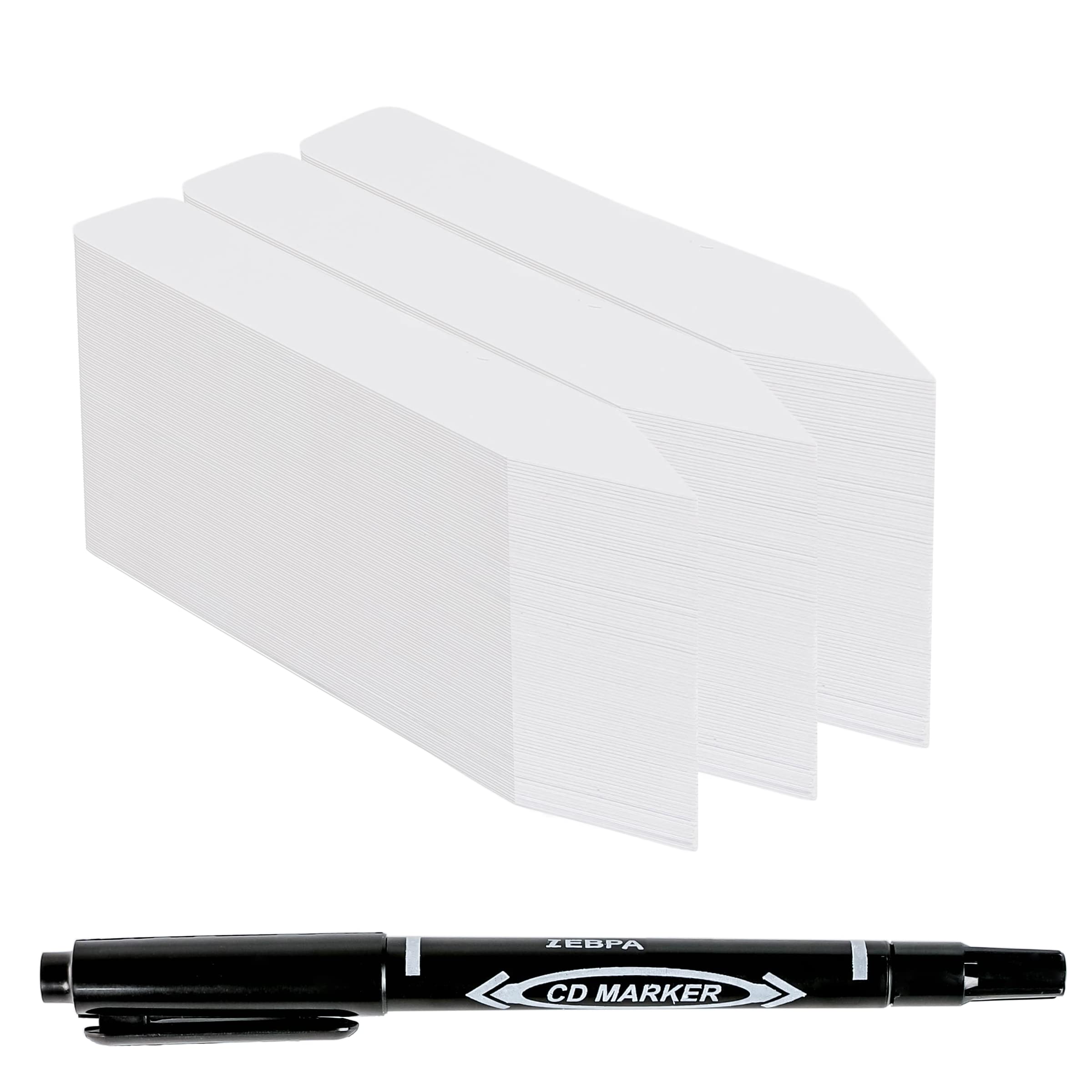
A huge quantity pack that kept me stocked all season and then some.
Why I picked it: Massive count with a bonus permanent pen — ideal for big projects.
Best for: Large gardens, community plots, greenhouses, and heavy planting seasons.
Best per‑label value for large gardens.
Pros
- Large quantity
- Includes permanent pen
- Waterproof PVC
- Matte easy‑write surface
Cons
- Basic stake shape
- Can be excessive for small gardens
My take
When I needed labels for dozens of beds and pots, this 300‑pack kept me from running out midseason. The tags are made from standard PVC that resists water and won’t rot like wood.
The included permanent pen handled rain and bright sun better than some other bonus pens I’ve tried; ink stayed legible after repeated watering. The tags are inexpensive and replaceable, which makes them great for projects where I expect to relabel later.
3. T‑Type 4 Inch Plant Labels (200 pack) – Best for Pots & Trays
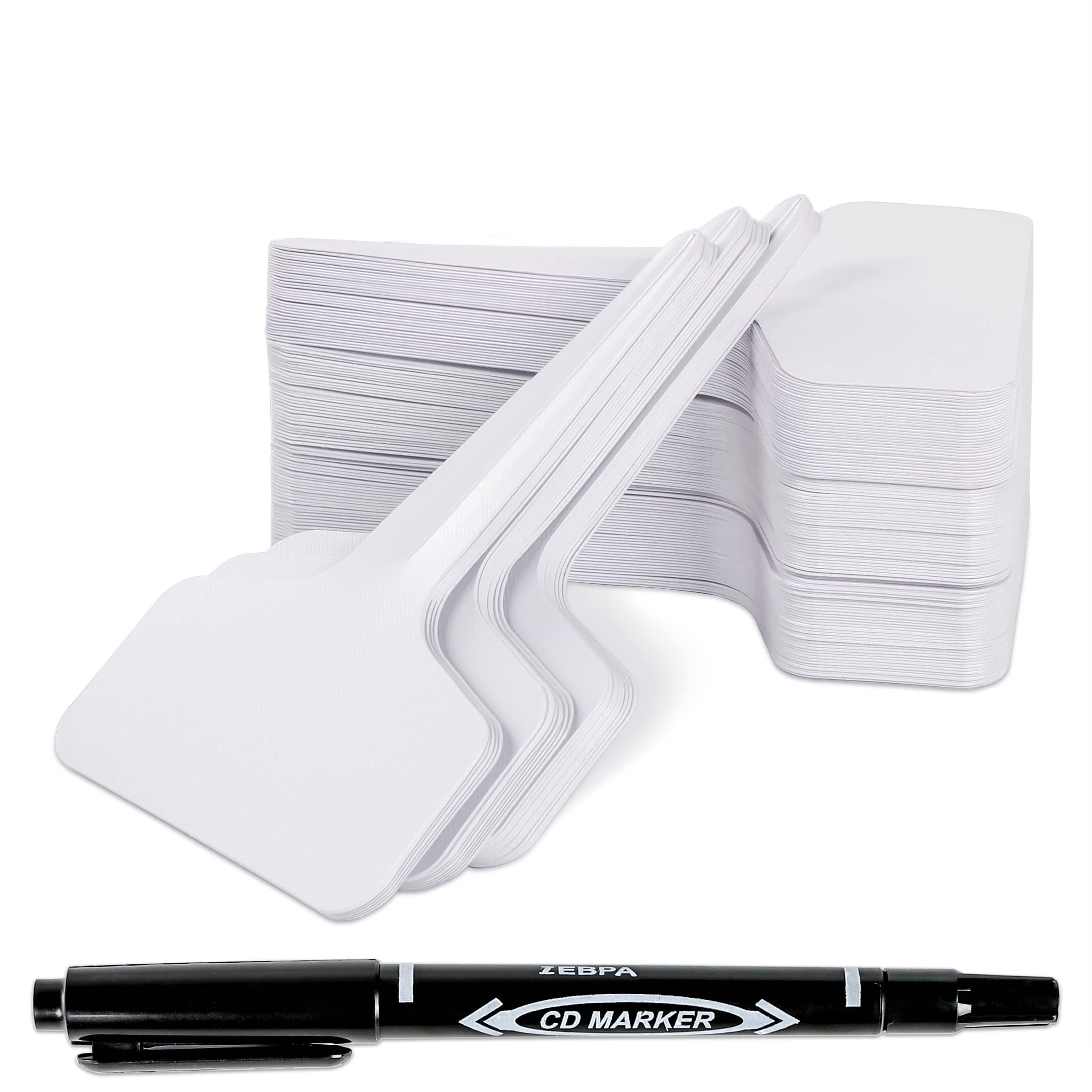
T‑shaped tags that give more writing space and sit neatly in pots and trays.
Why I picked it: T‑style head for more text and easy insertion into soft potting mix.
Best for: Indoor starts, cell trays, small pots, and labeled rows of seedlings.
Good midpack option with more writing space.
Pros
- T‑shaped head for longer names
- Comes with pen
- Waterproof material
- Smooth edges
Cons
- Not stiff enough for compacted garden beds
- Ghosting when reusing
My take
I appreciate the extra space the T‑head gives me — I can write cultivar names or short notes without cramping the letters. They sit well in cell trays and pots and don’t interfere with covers or shelf storage.
Because these are thinner and a bit flexible, I found them best for containers and trays rather than stabbing into heavy outdoor beds. I also noticed that when I tried to erase and rewrite, some ghosting remained, so I reserve them for labels I don’t expect to rewrite often.
4. Whaline Black T‑Type Plant Labels (100 pack) – Best for Aesthetic
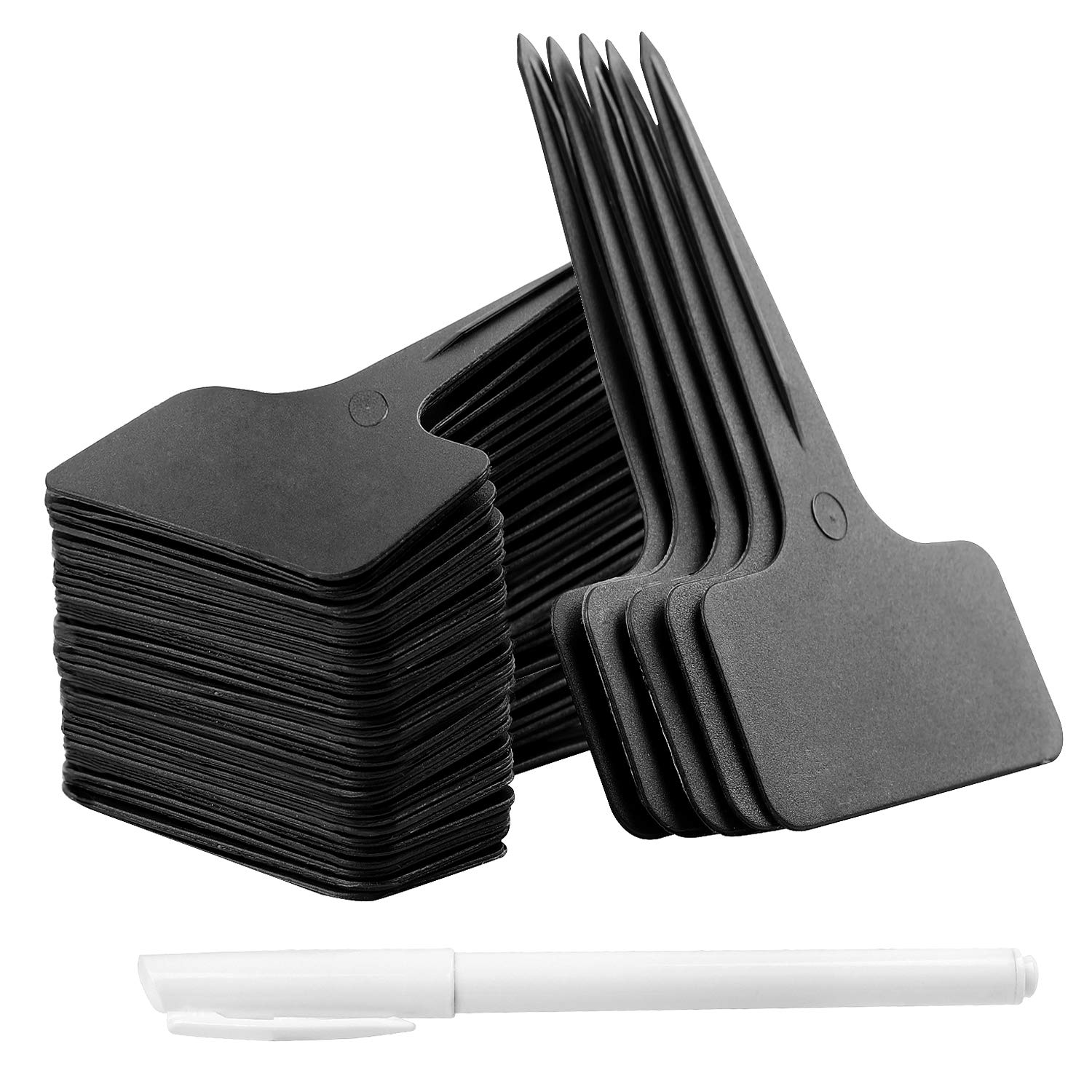
Black T‑tags that blend with soil and foliage while offering a clean look.
Why I picked it: Black tags hide better in beds and pots; T‑shape offers room to write.
Best for: Potted displays, ornamental beds, and gardeners who prefer a subtle look.
Aesthetic upgrade without sacrificing durability.
Pros
- Discreet black color
- T‑shape with good writing area
- Flexible and durable
- Includes white marker
Cons
- White writing can fade outdoors
- Included pen tip is thick
My take
I use the black Whaline tags when I don’t want white stakes standing out in a container or perennial bed; they visually disappear among stems and mulch.
The tags flex without breaking and handle winter shoves and foot traffic better than thin wood stakes. The included white marker is useful, but I found a finer white oil‑based pen makes longer plant names much easier to read.
5. Mr. Pen Oil‑Based Fine Point Markers (4 pack) – Best Marker
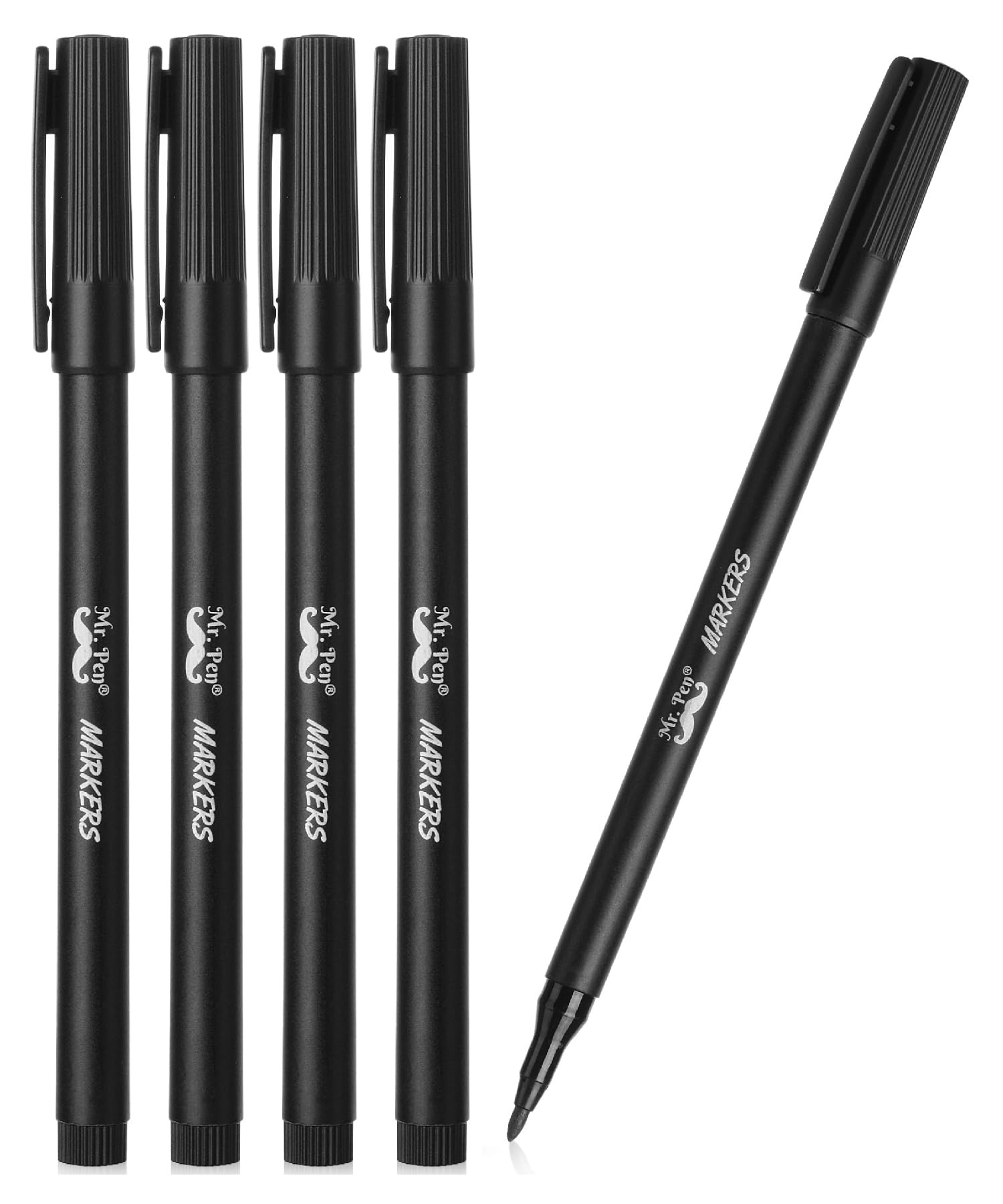
My go‑to fine‑point oil‑based markers for writing on plastic tags and many surfaces.
Why I picked it: Fine nib and oil‑based ink that dries quickly and resists fading.
Best for: Writing crisp names on small tags and multi‑surface projects.
Affordable marker pack to complement basic tag sets.
Pros
- Fine point for small text
- Oil‑based, quick dry ink
- Works on many surfaces
- More lightfast than Sharpies
Cons
- Limited to four pens
- Cap care needed to avoid drying
My take
I switched to these markers when I wanted neater, longer plant names on narrow tags. The fine round nib lets me write legibly on small label heads where a thicker tipped pen would blur.
The oil‑based ink dried fast on plastic and withstood several weeks in a sunny window better than my regular Sharpies. I also used them on ceramic and wooden plant signs with good results.
6. Homenote 4 Inch Plastic Plant Labels (200 pack) – Best Thick & Durable
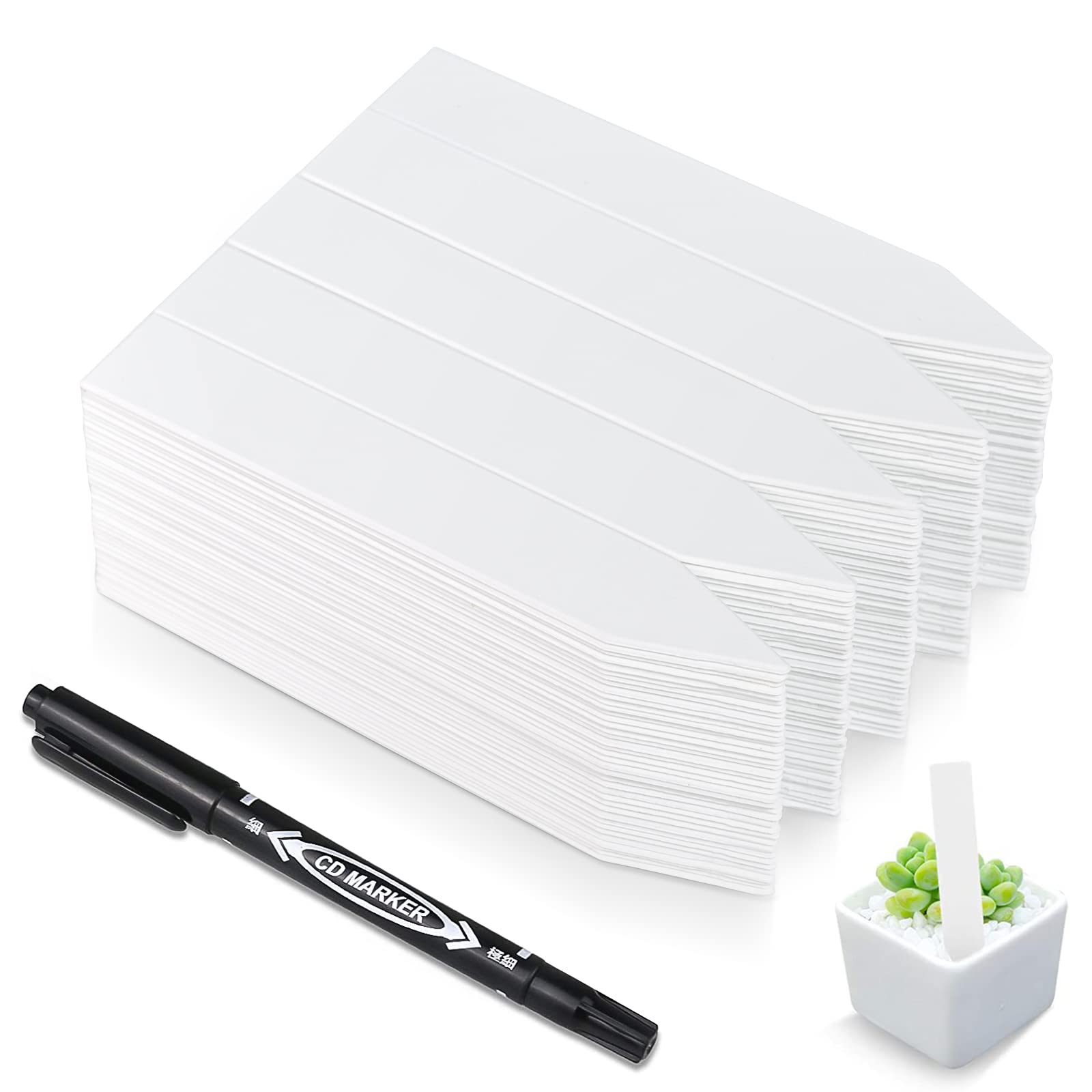
Thicker, tougher tags that feel less flimsy in hand and last through seasons.
Why I picked it: Thickened PVC that resists bending and sunlight softening.
Best for: Gardeners who want reusable, heavy‑duty plastic labels.
Midrange pack with emphasis on durability.
Pros
- Thicker plastic
- Included thin‑tip marker
- Water resistant
- Reusable with care
Cons
- Some tags are slightly under 4 inches
- Bulk pack may be overkill for small gardens
My take
These Homenote tags feel noticeably thicker than the cheapest stakes. I didn’t worry about them bending when I pushed them into pots or when they got jostled during watering.
The thin‑tip marker made my labels legible right away and the ink held up to rain. A few tags were slightly shorter than expected, but that didn’t affect their performance in pots and trays.
How I Choose Garden Markers
Material & Durability
I prioritize PVC tags because they won’t rot like wood or rust like metal. Thickness matters — thicker plastic resists bending and lasts multiple seasons.
If you plan to reuse labels, look for a matte surface that accepts ink without smudging and that can be cleaned gently.
- Thick PVC for longevity
- Matte finish for easy writing
- Avoid very thin, flimsy stakes for outdoor beds
Shape & Size
Pointed stakes are great for seed trays and small pots because they insert easily. T‑type tags give more writing space and sit flush in containers.
Match the tag height to your use: low tags for trays and taller or T‑heads for visible bed markers.
- Pointed stakes = seed trays, small pots
- T‑type = longer names, pots, and displays
- Consider visibility in mulched beds
Ink & Markers
I prefer oil‑based or permanent markers with a fine tip for neat, long‑lasting labels. Some bonus pens in packs are fine, but pairing labels with a quality marker improves durability.
If you plan to reuse tags, test an erasing method first — some markers ghost and make rewrites hard to read.
- Fine nib for small text
- Oil‑based ink resists sunlight fade and water
- Test erasability if you intend to relabel
How Many to Buy
Buy by project size: a small gardener can stick with 100 packs, while large gardens and greenhouses benefit from 200–300 packs to avoid running out midseason.
Keep a few spare markers on hand; I always have an extra set in the shed.
- Stock more tags than you think you need
- Match pack size to planting schedule
- Spare pens prevent midseason headaches
Frequently Asked Questions
What marker should I use for plastic plant labels?
I use oil‑based, fine‑point markers for the cleanest, most weather‑resistant writing. They dry quickly and resist fading from sunlight better than regular permanent markers.
Can I reuse plastic plant labels?
Yes — many PVC labels are reusable. I clean them with alcohol or household cleaner, but some inks leave a ghosted shadow, so I reserve reusing for tags that had short labels or use tape as a removable writing surface.
Which shape is best for seed trays versus garden beds?
Pointed stakes are best for seed trays and small pots because they insert easily and don’t interfere with covers. T‑type tags are better for pots and display beds where you need extra writing space and visibility.
Final Take
I keep a mix of these labels and pens on hand: pointed stakes for starts and trays, T‑type tags for pots and displays, and a set of fine oil‑based markers for neat, lasting text.
Pick the pack size and shape that match how you garden, and you’ll spend less time guessing what’s in each pot and more time growing.
