
I tested four popular privacy screens on fences, decks, and balconies. These are the options I keep coming back to for long runs, heavy-duty coverage, wind resistance, and balcony shading.
I installed and lived with multiple privacy screens across my yard, deck, and a small apartment balcony so I could judge how each one performs in real conditions. I focused on build quality, how well each product actually blocks sightlines, how they handle wind and sun, and how straightforward they are to mount.
I looked at fabric weight, grommet quality, and practical installation details. For long fence runs I prioritized heavy grommets and denser weave; for balconies I prioritized UV protection and a tidy, easy-to-fit panel.
1. Sunnyglade Privacy Screen (6 x 50 ft) – Best for Long Runs
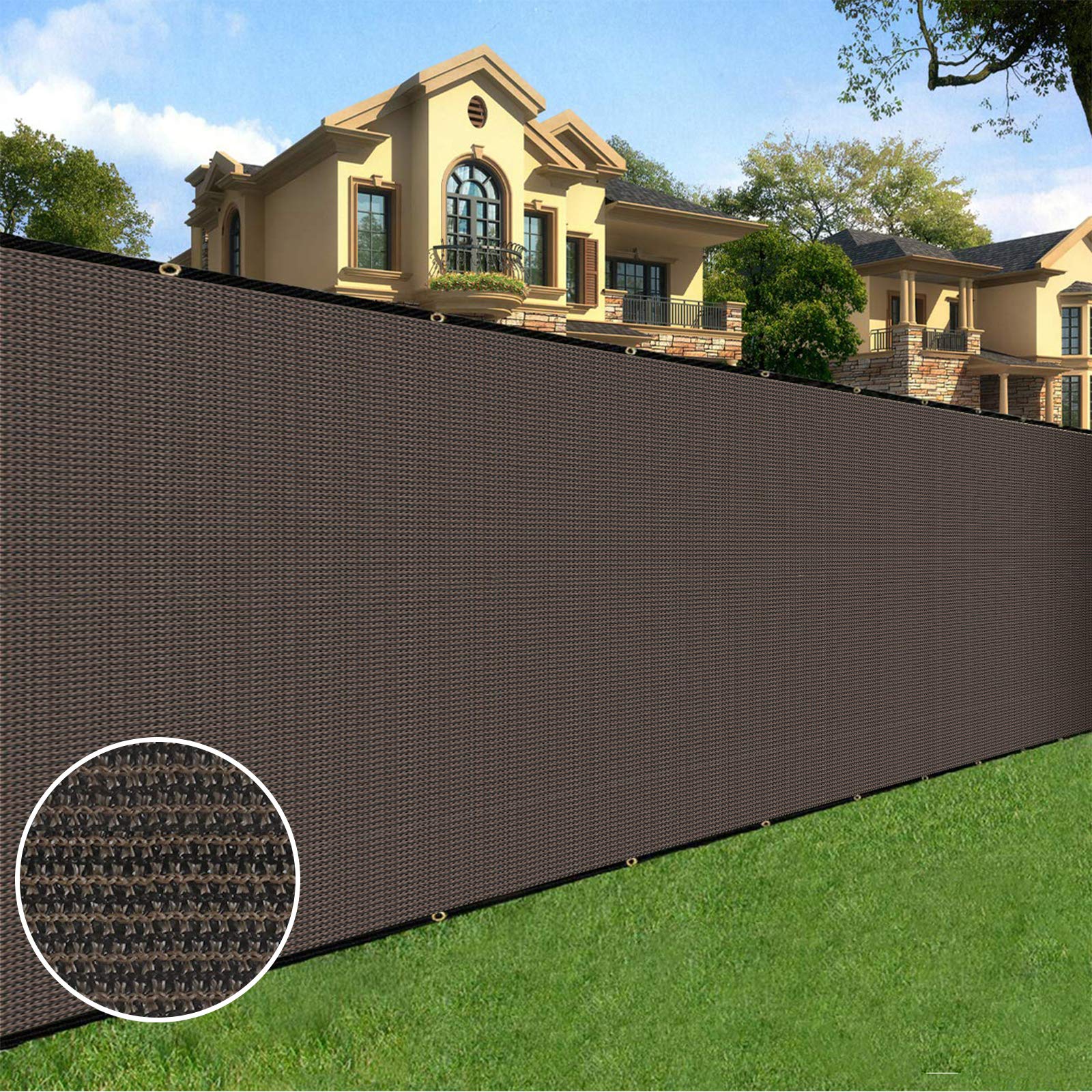
A full-length HDPE screen that balances economy with reinforced edges and lots of attachment points.
Why I picked it: Dense grommets, reinforced binding, and extra attachment straps make it work for long fence runs.
Best for: Screening long chain-link or wooden fences where you need continuous coverage.
An economical choice for large areas.
Pros
- Lots of grommets and straps
- Porous weave lets air and water pass
- Reinforced edge binding
- Good aesthetic color
Cons
- Zip ties can fail in extreme conditions
- May need additional fastening on wood
My take
I installed this Sunnyglade on a 50-foot run of chain-link and immediately appreciated the denser grommet layout and the heavy 1.3" edge binding — it stayed flat and close to the fence once I tightened the straps. The HDPE fabric gave me the privacy I wanted while still letting wind and rain through so plants on the other side didn’t suffocate.
Installation was straightforward with zip ties, and the package’s extra straps made it easy to handle the long length without it sagging. After a few months of sun and rain exposure the color still looked vibrant and I didn’t see fraying along the hems.
One practical point from my time with it: zip ties weathered faster than the fabric in my area, so I swapped to a corded rope and a couple of screwed washers where the fence was wooden. I also avoided overtightening the grommets — one pulled when I cinched it too hard — but otherwise the reinforced edges held up well.
2. ColourTree Commercial-Grade Privacy Screen (6 x 25 ft) – Best Commercial-Grade Option
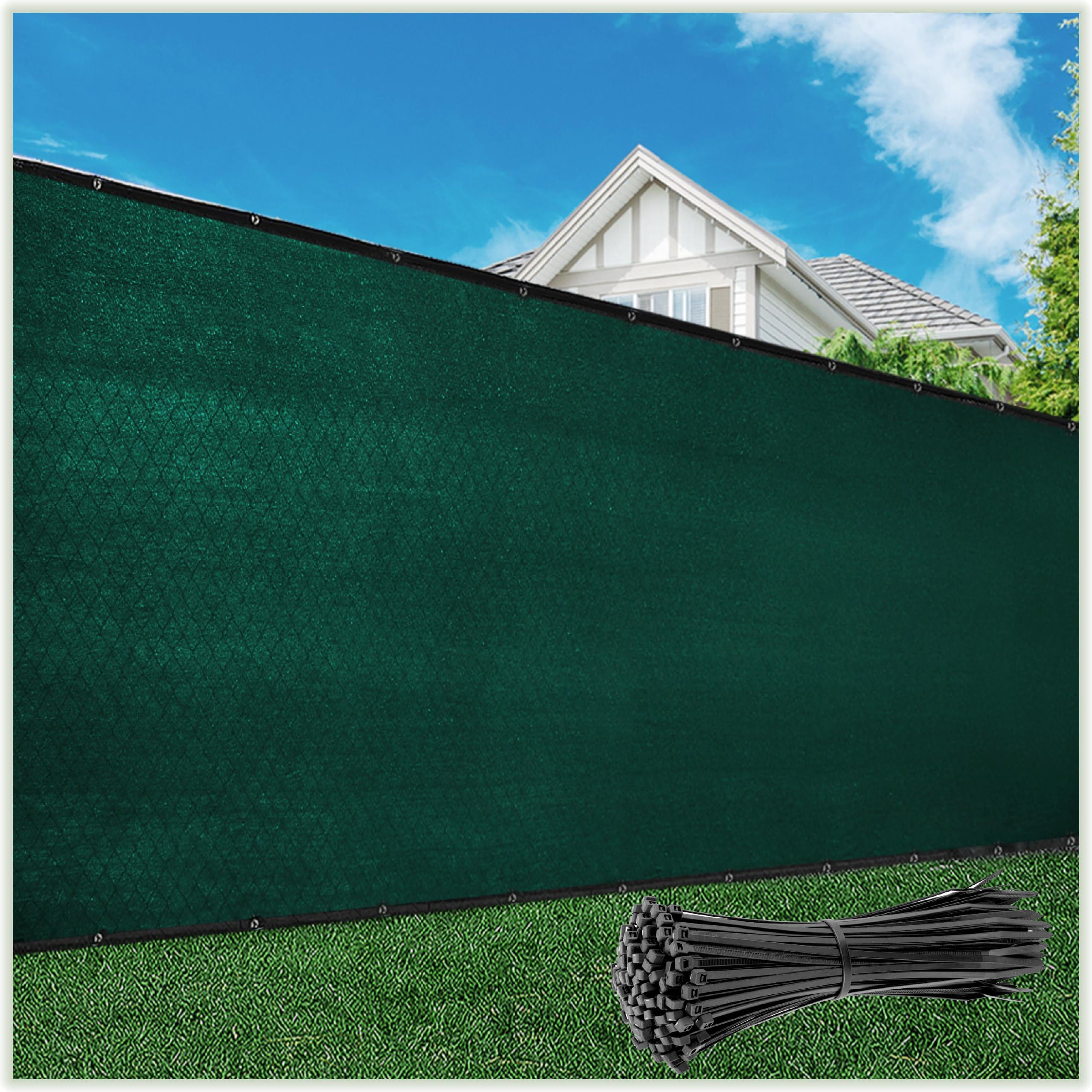
A heavier 170 GSM mesh that’s aimed at near-total visual screening and long-term outdoor use.
Why I picked it: Thicker fabric and rust-proof grommets give it a sturdier, more permanent feel.
Best for: Sections where near-complete sight blocking and durability matter most.
A mid-range, heavier-duty option.
Pros
- 170 GSM heavy fabric
- Blocks about 90% of views
- Rust-proof grommets every foot
- Double-stitched edges
Cons
- Not fully opaque — silhouettes visible
- Heavier to handle solo
My take
This ColourTree panel felt noticeably thicker in my hands compared with lighter screens. I mounted a 25-foot length across a front-yard fence and the weave blocked most sightlines — I still saw silhouettes at close range, but it provided the kind of privacy I wanted from the street.
The unit’s double-layer stitching and the rust-proof grommets placed roughly every foot made it simple to get an even, tight installation. Because the fabric is heavier, I asked a friend to help me tension it, but once up it held steady even on windy days.
If you want near-complete visual screening without moving to a solid fence, this is the model I reach for. I also liked knowing the manufacturer offers a product-support window if I needed help down the line.
3. Windscreen4less Privacy Fence Screen (6 x 50 ft) – Best for Durability
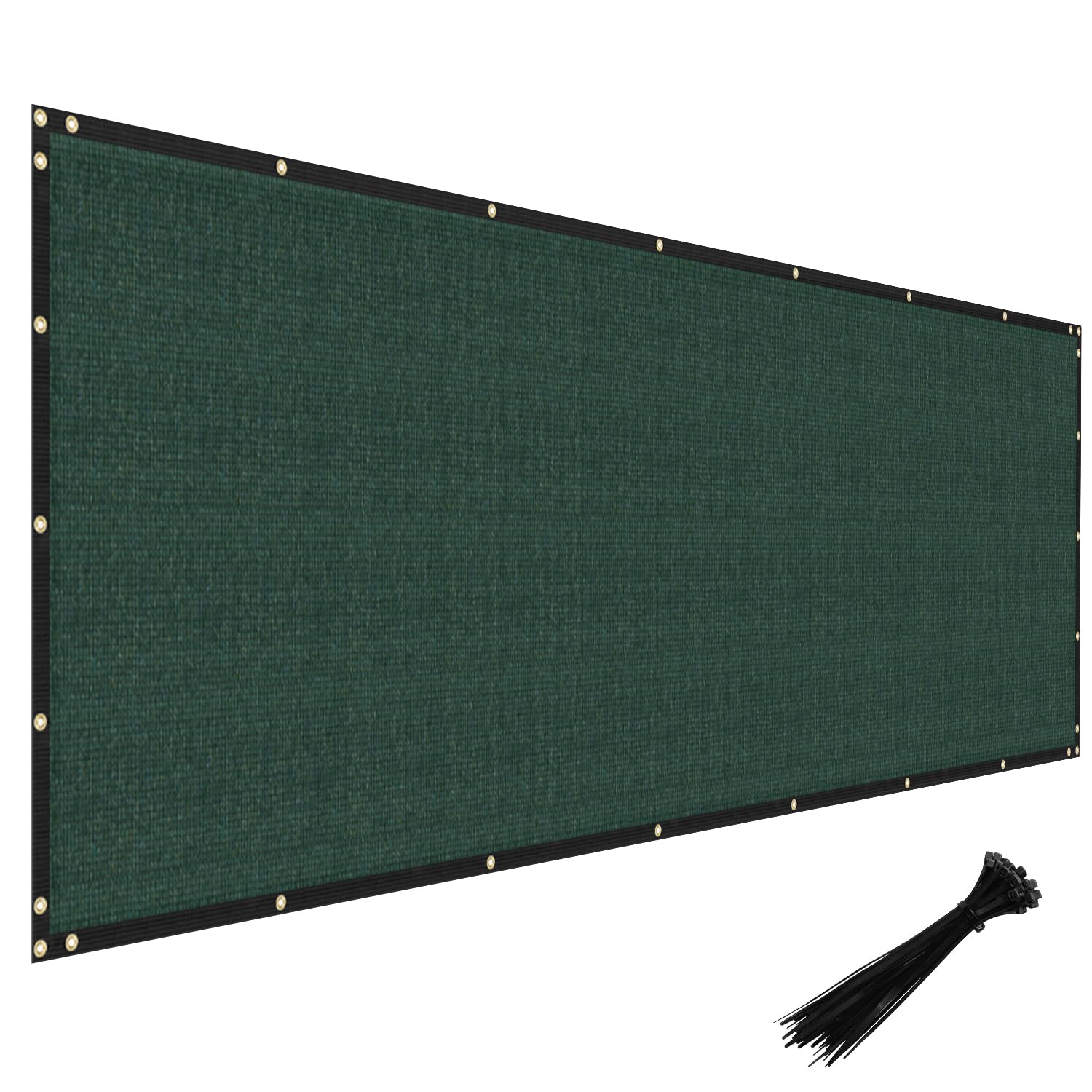
A classic heavy-duty HDPE windscreen that I’ve seen last through many seasons with minimal wear.
Why I picked it: Proven long-term endurance and reinforced brass grommets for harsh weather.
Best for: Exposed yards and coastal or windy areas where durability matters.
Competitively priced for a heavy, long-lasting screen.
Pros
- 90% visibility blocking
- Reinforced brass grommets
- Breathable polyethylene weave
- Includes zip ties
Cons
- Can be stiff to handle at full length
- Sizing can need slight adjustment
My take
I’ve used this Windscreen4less across a backyard boundary that gets strong seasonal winds, and it’s one of the toughest panels I’ve worked with. The polyethylene weave is tight and flat, and the reinforced brass grommets make it straightforward to fasten so it resists flapping.
Over multiple seasons the screen held color and structure where lesser materials might have frayed. It’s breathable enough that plants behind it continued to get air and rain, but the screen still provided about 90% visual blockage — good for keeping prying eyes and passerby silhouettes out of view.
My only caution is to measure and plan for any small size variance before installation; a snug, properly tensioned fit is what keeps this one performing for years.
4. SUNNY GUARD Balcony Privacy Screen (3 x 16 ft) – Best for Balconies & Decks
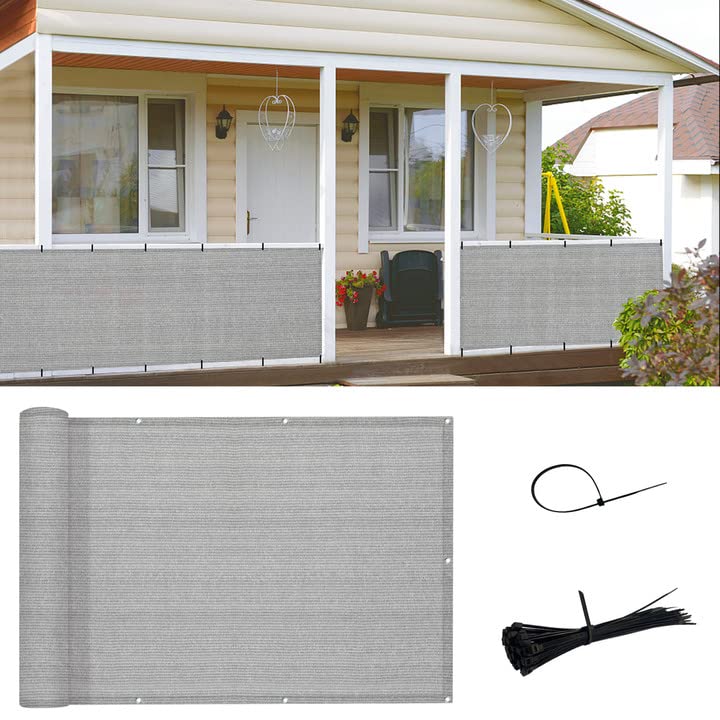
A compact HDPE panel designed for balconies and decks that prioritizes UV protection and airflow.
Why I picked it: High UV protection and neat hardware make it ideal for apartment railings and patios.
Best for: Balconies, decks, and short railings where UV blocking and tidy looks matter.
Affordable and well-suited to small outdoor spaces.
Pros
- 95% UV protection
- Aviation-aluminum buttonholes
- Allows airflow while screening
- Custom sizes available
Cons
- May require overlap for odd rail lengths
- Comes with limited fastening hardware
My take
I put this SUNNY GUARD panel on a second-floor balcony to cut morning glare and get a little privacy. The fabric blocks a surprising amount of sun while still letting a soft, filtered light through — perfect for coffee on a hot morning.
The buttonholes use aviation-grade aluminum, so they stayed rust-free in my coastal test. Installation was easy with the included quick zippers, though I recommend measuring carefully because the manufacturer warns of small length and height tolerances.
For small outdoor spaces this is the one I choose when UV protection and a tidy finish are priorities; I paired it with a few extra washers where the railing was wooden to make the attachment cleaner and more secure.
How I Choose Garden Privacy Screens
What I look for in the material
I prioritize high-density polyethylene (HDPE) with a tight weave because it balances opacity with breathability. Thicker fabric (measured by GSM) feels more durable and blocks more sightlines without creating a wind sail that rips.
I also check edge finishing and grommet materials — aviation-grade aluminum or brass grommets and reinforced hems make a huge difference in longevity.
- Higher GSM = more opacity and durability
- Look for reinforced hems and every-foot grommets
- Pick rust-proof grommets for coastal or wet climates
Installation tips I use
Measure twice and plan for a little overlap or trimming. Tension is critical: a tightly installed screen beats an oversized loose one for appearance and wind resilience.
On chain-link fences I’m fine with zip ties; on wood I prefer screws, washers, or cord to avoid ties being cut or weathering quickly.
- Measure fence length and height before ordering
- Tension the panel to prevent sagging and noise
- Use washers or cord on wood railings instead of only zip ties
Maintenance and longevity
I hose screens periodically to keep them free of pollen and dust. Replace cheap zip ties seasonally in harsh climates and inspect grommets after the first winter to catch any stress points.
If you expect extreme winds, add extra attachment points and avoid pulling grommets overly tight — that’s what causes tearing.
- Hose down yearly to remove dirt and salt
- Inspect and replace fasteners each season
- Avoid over-tightening at grommets to prevent tears
Frequently Asked Questions
Are privacy screens waterproof?
I treat them as water-resistant, not fully waterproof. The HDPE weave lets rain pass through so it won’t pool, but it does block sun and reduce wind — perfect for privacy without trapping moisture.
Can I mount a screen on a wooden fence?
Yes — I mount the same screens on wood and chain-link. For wood I use washers and screws or corded rope instead of relying solely on zip ties to avoid breakdown or cutting on the neighbor side.
How long do these screens last outdoors?
In my experience, a good HDPE panel with reinforced hems and brass or aluminum grommets will last multiple seasons. Expect life to vary with sun exposure, wind, and local weather — heavier panels and rust-proof hardware last longest.
Final Take
I set out to find options that work in different real-world spots — long fence runs, exposed yards, and small balconies — and each of the four panels above has a clear role in my yard. If I need continuous coverage for many feet, I go with Sunnyglade or Windscreen4less; for near-total visual screening with a more substantial fabric I choose ColourTree; and for balcony shade and UV protection I use SUNNY GUARD.
Measure carefully, pick the right fastening method for your fence type, and add extra attachment points in windy places. Do that and these screens will give you privacy, shade, and a neater-looking outdoor space for seasons to come.
