
I tested six gardening gloves across tasks from light weeding to thorny rose pruning and kid-friendly digging. These are the pairs I rely on for grip, protection, and value.
I spend a lot of time in the garden and around thorny hedges, so I’ve tried dozens of gloves. This roundup focuses on the pairs I reach for most—options that balance grip, protection, comfort, and washability.
Below I explain when each pair shines and the trade-offs I learned while using them. If you want one glove for everyday tasks or something heavy-duty for roses and brambles, there’s a clear pick here.
I tested breathable knit-and-latex styles alongside full-grain cowhide gauntlets and kid-sized gloves so you can compare breathability vs. puncture resistance, single pairs vs. multi-packs, and which designs wash and hold up over time.
1. COOLJOB 2 Pairs Gardening Gloves for Women, Rubber Coated, Medium – Best for Everyday Garden Work

A lightweight, breathable knitted glove with foamed latex palms that I use for planting, weeding, and general yard work.
Why I picked it: Comfortable knit back, grippy latex palm, and machine-washable two-pack.
Best for: Weeding, planting, light digging, fruit and vegetable picking.
Affordable value two-pack for routine tasks.
Pros
- Breathable knit back
- Non-slip foamed latex palm
- Thickened fingertip protection
- Machine washable
Cons
- Not thorn-proof
- Medium size only
My take
I keep a pair of these on hand for everyday garden chores. The knitted back keeps my hands cool while the foamed latex palm gives a confident non-slip grip when I’m pulling weeds or handling small tools.
The thickened fingertips make a noticeable difference when I’m digging or moving mulch; they reduce wear and protect my nails. When they get muddy I hose them off or toss them on a gentle machine cycle and they come out clean.
If you need leather-level thorn protection, these aren’t the answer—don’t push roses and brambles with them. For most beds, pots, and harvest work they’re the easiest, most comfortable gloves I reach for.
2. Vgo 2-Pairs Kids Garden Gloves, Bamboo Fibre, XXXS (Age 3–5) – Best for Toddlers
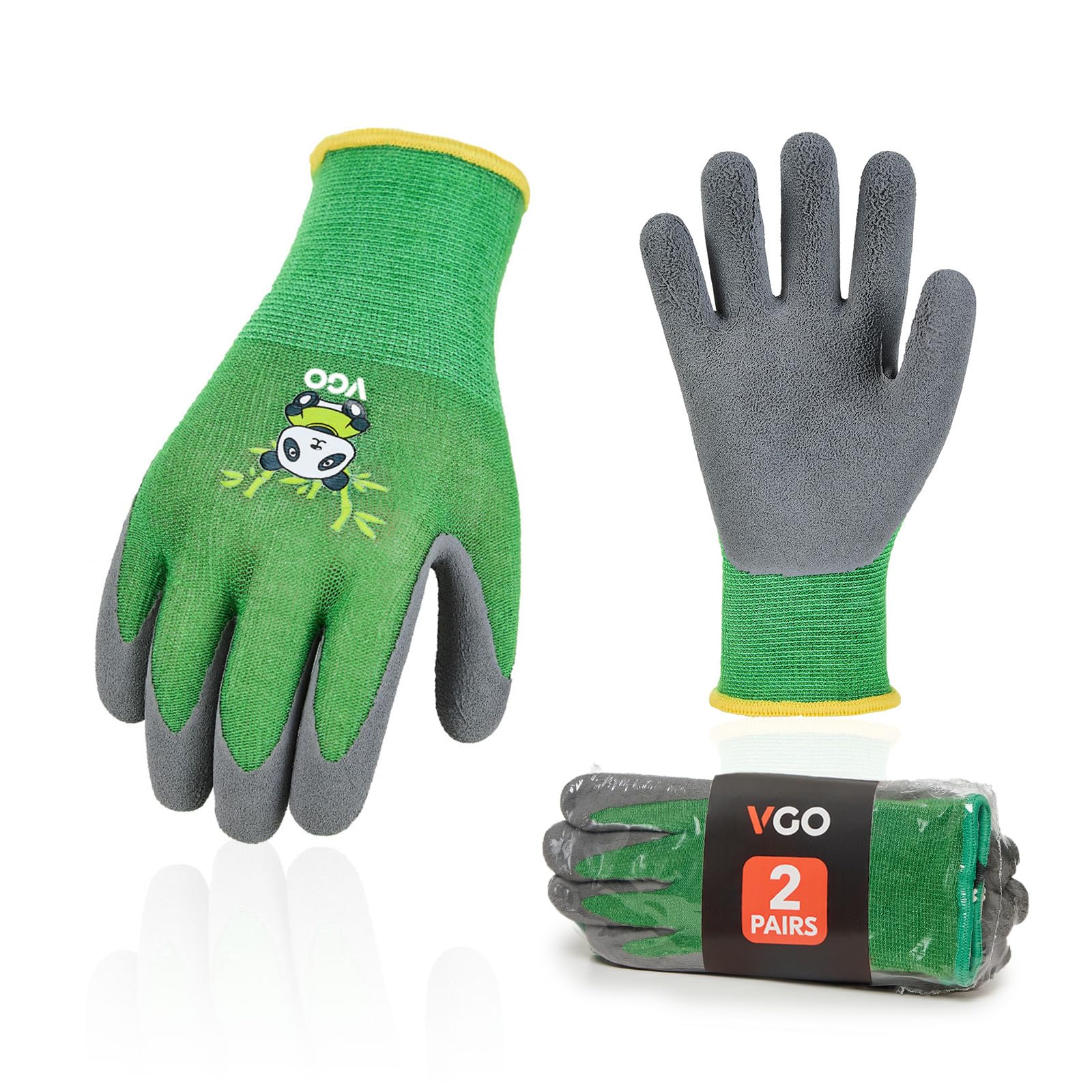
Soft bamboo-fiber liners with a latex-coated palm that fit small hands and make digging and picking much safer for little helpers.
Why I picked it: Bamboo-fiber liner for comfort and a rubber palm for secure grip on tools and shells.
Best for: Young children doing light-duty gardening and outdoor play.
Good single-pair value for toddler-sized tasks.
Pros
- Soft bamboo fiber liner
- Secure rubber palm grip
- Knit wrist keeps debris out
- Machine washable
Cons
- Not puncture-proof
- Fingers can be a bit baggy
My take
I gave these to the little ones in my family for digging, shellfishing, and patio play. The bamboo-fiber liner feels like a second skin and wicks sweat, so kids don’t complain about sweaty hands.
The rubberized palm gives them real purchase on small tools and rocks; it made picking up slippery items much easier for my six-year-old. They wash quickly and dry without losing shape.
Keep expectations realistic: these are for light-duty fun and safety, not for heavy bramble clearing or sharp debris. For everyday kid tasks they’re exactly what I want them to be.
3. Long Gardening-Gloves Thorn Proof Rose Pruning Gauntlet, 100% Cowhide Leather, Large – Best for Heavy Thorn Protection
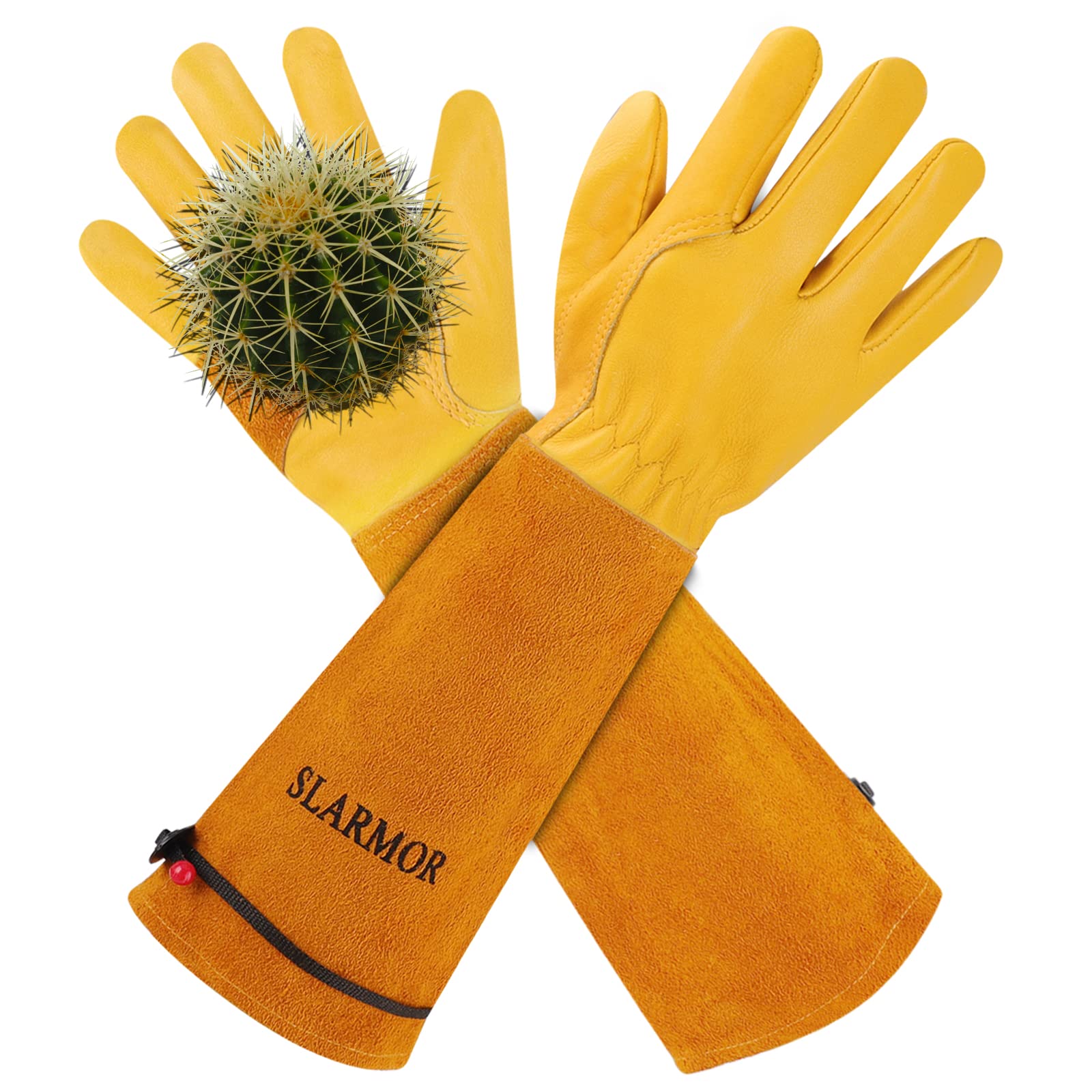
Elbow-length, full-grain cowhide gauntlets built for pruning roses, blackberries, cactus, and other prickly plants.
Why I picked it: Full-grain cowhide and extended gauntlet for forearm protection with real dexterity.
Best for: Rose pruning, blackberry and cactus work, heavy brush clearing.
Heavier-duty option built for long-term protection.
Pros
- Full-grain cowhide
- Elbow-length gauntlet
- Excellent thorn resistance
- Flexible for fine tasks
Cons
- Hand area a bit slender
- Not absolutely impervious to all thorns
My take
When I’m tackling rose bushes or clearing prickly vines, these are the gloves I reach for. The cowhide is thick enough to stop thorns cold while still being pliable enough to use pruning shears and tie plants.
I’ve used them on dense mesquite and prickly pear without getting pierced, and the extended cuff saved my forearms from countless scratches. The stitching and thumb design keep the gloves feeling natural rather than clunky.
A fair warning from my time using them: they’re very protective but not literally bulletproof—extremely large, force-driven thorns can sometimes press into the leather. For most gardeners these are the right balance of protection and dexterity.
4. Acdyion Thorn Proof Gardening Gloves, Long Cowhide Leather Gauntlets, Yellow Large – Best Gauntlet for Full Arm Coverage
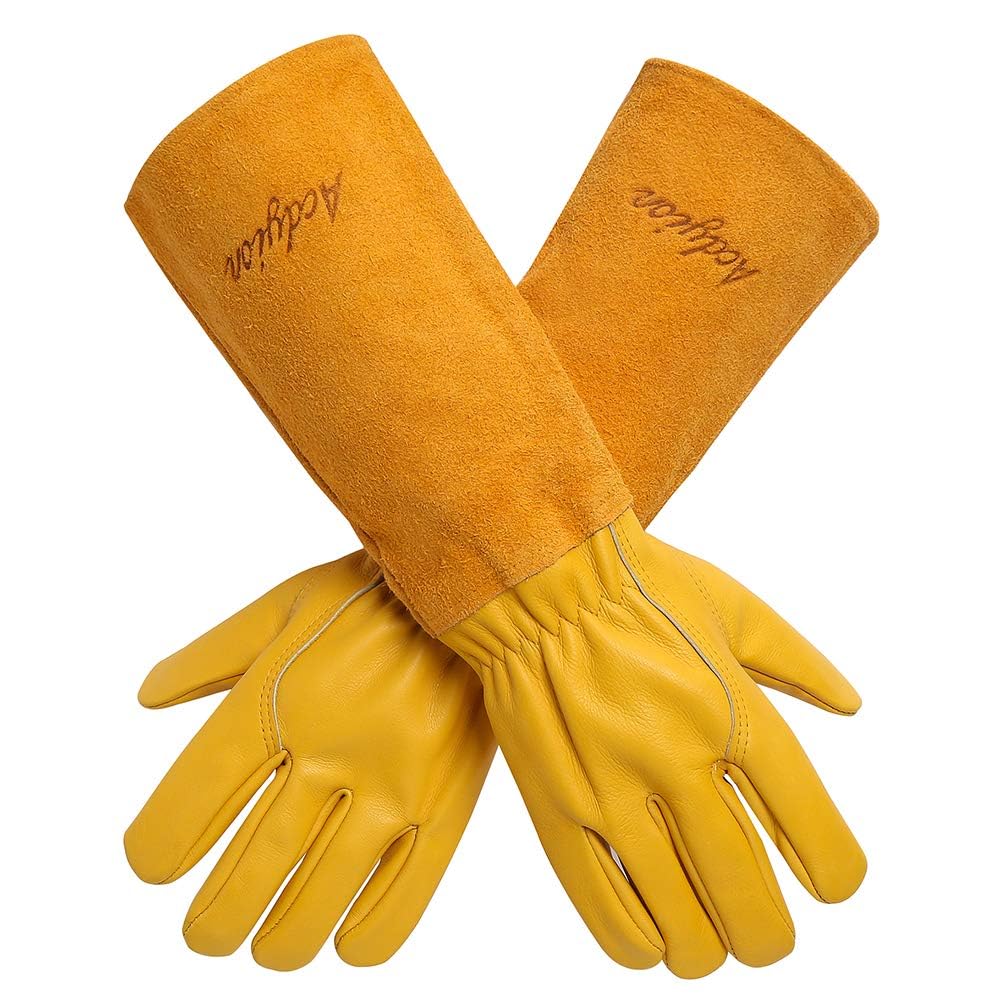
Thickened cowhide gauntlets with reinforced palms and an extended cuff that I use for thorny tasks and barn work.
Why I picked it: Reinforced patches, long gauntlet, and ergonomic thumb for secure grip and arm protection.
Best for: Pruning, heavy landscaping, barn chores, handling thorny brush.
Premium, durable gauntlet for intensive work.
Pros
- Reinforced palms and fingertips
- Ergonomic thumb design
- Breathable supple leather
- Long forearm protection
Cons
- Some thorns can pinch through
- May need a second layer for extreme brambles
My take
I used these for several heavy clearing sessions and they performed well. The reinforced palm and fingertip patches give confidence when grabbing cut branches and working close to thorns.
The gauntlet length is long enough to protect shirtsleeves and forearms, and the leather breathes better than I expected during extended sessions in warm weather.
On a couple of very thorny encounters I felt a pinch through the leather—rare, but it taught me to double up gloves for the most brutal brambles. For most pruning and barn jobs these are an excellent, long-lasting option.
5. COOLJOB Gardening Gloves for Men, 6 Pairs Breathable Rubber Coated, Large – Best Value Men’s Pack
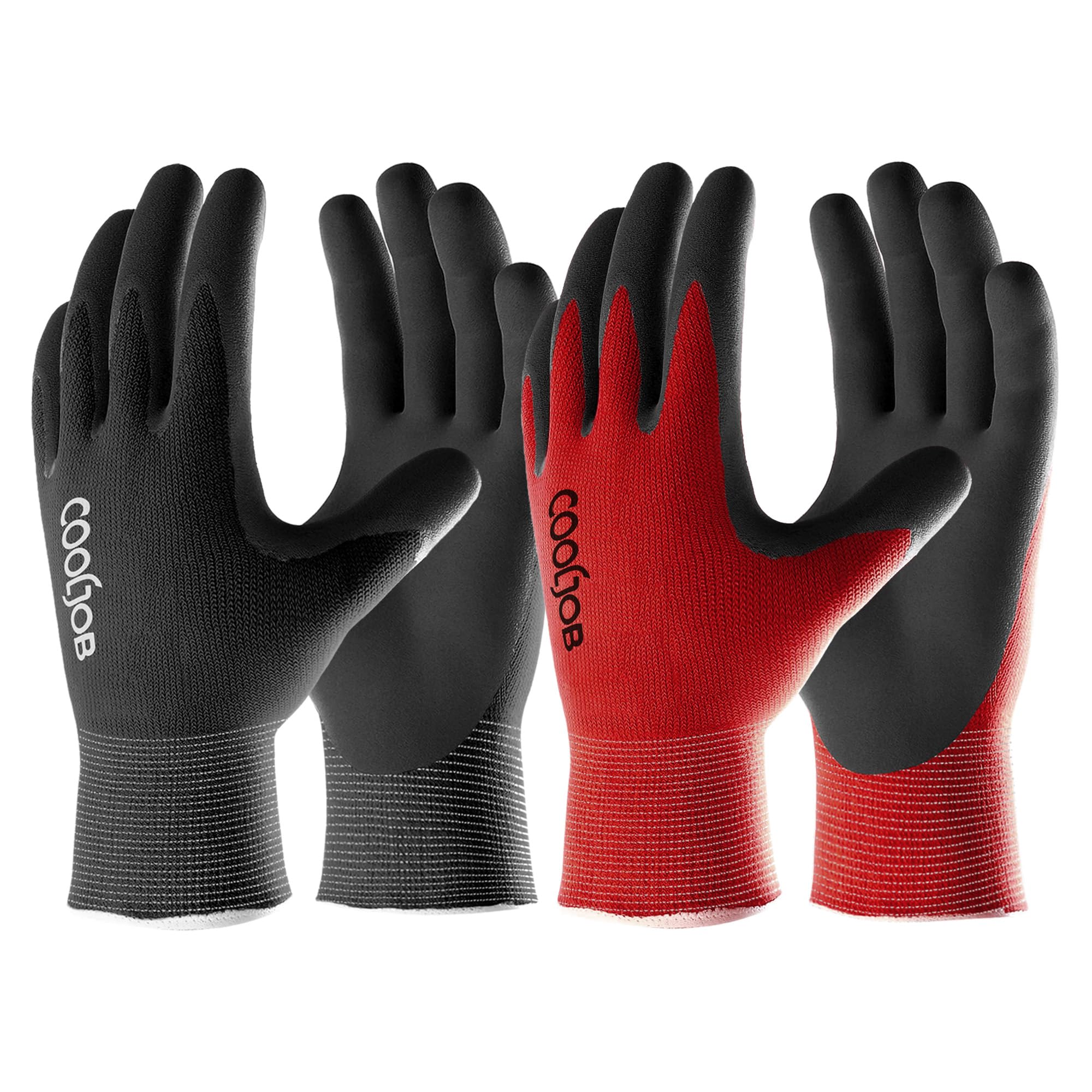
A six-pair pack of breathable polyester gloves with durable rubber palms that I use for heavy rotation work and muddy jobs.
Why I picked it: Six pairs for kits and heavy rotation; black palms hide dirt and hold up.
Best for: Landscaping, repetitive yard work, and situations where multiple spares are useful.
Budget-friendly multi-pack for frequent use.
Pros
- Six pairs included
- Durable rubber palm
- Breathable polyester back
- Black hides dirt
Cons
- Cuff can roll when pulled on
- Wrist elastic feels weak
My take
I bought this pack to outfit my toolbox and rotate through during long yard days. Having multiple pairs on hand means I can swap out wet or filthy gloves without pause.
The rubber-coated palms provide a secure grip even when handling wet plant pots or tools, and the breathable back keeps hands relatively cool. They’re thicker than similar budget gloves I’ve used.
They fit a little loose on my hands and the cuff sometimes rolls when I’m pulling them on, but for the quantity and durability you get, they’re hard to beat as a workhorse option.
6. COOLJOB 3 Pairs Kids Gardening Gloves, Grippy Rubber Coated, Small (3 Pairs) – Best for Multiple Kids or Backup Pairs
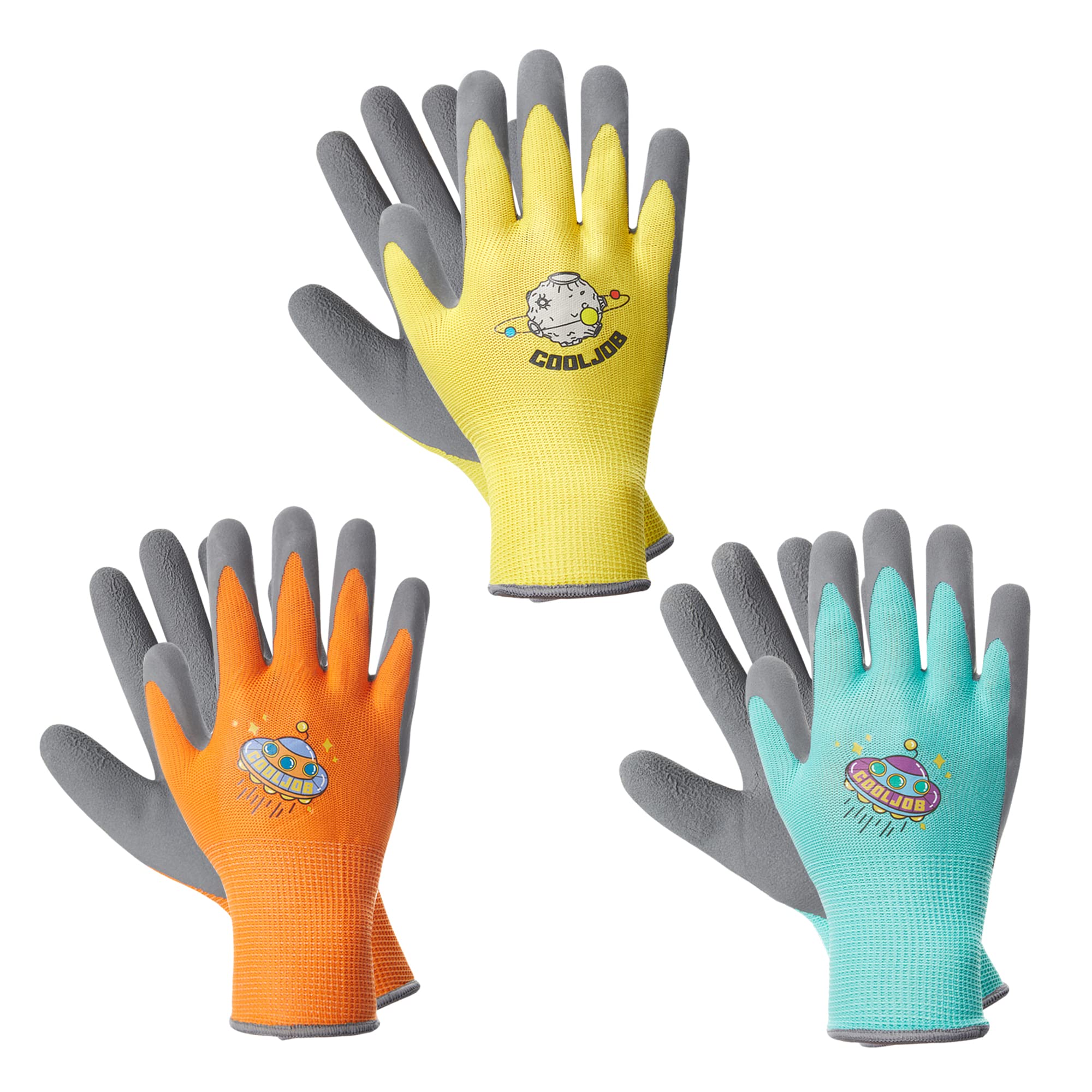
Three colorful pairs sized for little hands; I use these when I want backups and bright, kid-friendly protection.
Why I picked it: Three pairs of fun designs with good grip and elastic wrists for quick on/off.
Best for: Multiple children, school projects, or keeping extra pairs handy.
Great value when you need several kid-sized pairs.
Pros
- Three pairs in one pack
- Bright, kid-friendly designs
- Good rubberized grip
- Elastic wrist for snug fit
Cons
- Fingertips can be long on toddlers
- Rubber may crack with heavy use
My take
I keep a set of these for grandkids and neighborhood helpers. They’re cheerful, easy to slip on, and the latex palm gives enough grip for digging, picking, and handling small tools.
They wash well and my six-year-old’s pair stayed serviceable through months of outdoor play. They also fit surprisingly well on my very small hands when I needed extra protection for a quick job.
Durability is good for normal kid use, though the rubber can begin to show wear after heavy, daily work. For the quantity and convenience, they’re my go-to when I need multiple child-sized pairs.
How I Choose Gardening Gloves
Fit and Sizing
I always try gloves on before committing. A snug fit on the fingers keeps dexterity for tying knots, pruning, and handling small tools.
When I buy for kids I size down carefully; kids’ gloves should allow finger movement without being so loose they slip off.
- Snug fingertips improve tool control
- Gauntlets should extend past sleeves for arm protection
- If three sizes are borderline, choose the smaller for dexterity
Material and Protection
I match material to the task: knitted-and-latex gloves for breathability and grip, cowhide gauntlets for thorn and puncture resistance.
Leather buys protection but sacrifices some cooling; knit back gloves are best for long, sweaty afternoons.
- Foamed latex = good wet/dry grip
- Full-grain cowhide = superior thorn resistance
- Bamboo liners = soft, breathable comfort for kids
Grip and Dexterity
I favor textured palms for slippery pots and wet stems. If a glove is too thick I lose fingertip feel; for pruning and seed work I prioritize dexterity.
Reinforced fingertips extend life where gloves wear first.
- Textured palms help lift pots and tools
- Reinforcement at fingertips prevents early wear
- Ergonomic thumbs reduce fatigue with secateurs
Care and Lifespan
I wash knit-and-latex gloves gently and air-dry them. Leather needs spot-cleaning and conditioning if you want it to last several seasons.
Multi-packs are my strategy when I need quick swaps during long jobs.
- Machine-wash on gentle for knit/latex gloves
- Air dry—don’t expose leather to heat
- Rotate pairs to lengthen usable life
Special-Purpose Choices
For roses and cactus I always use a leather gauntlet. For everyday planting or harvesting I prefer breathable, coated knits.
For kids, choose breathable, washable gloves with good grip and an elastic wrist to keep muck out.
- Use gauntlets for thorny work
- Choose breathable knits for long weeding sessions
- Buy multiple kid pairs for school or groups
Frequently Asked Questions
Which glove style should I use for roses?
I use full-grain cowhide gauntlets for roses. They protect my hands and forearms while still letting me operate pruners and tie branches. For very brutal brambles I sometimes double-layer for extra safety.
How do I wash gardening gloves?
For knitted and latex-coated gloves I run a gentle machine cycle or hand-wash and air-dry. For leather gauntlets I spot-clean and let them air dry; leather conditioner keeps them supple.
Are kid-sized gloves worth buying?
Absolutely. Properly sized kid gloves improve grip and protect small hands. I keep extra pairs because they get dirty or wet quickly.
Do rubber-coated gloves stop thorns?
Rubber-coated gloves protect against scrapes and wetness, but they aren’t as puncture-resistant as thick leather. I reserve rubber-coated gloves for everyday tasks and leather for thorny work.
Final Take
I keep multiple glove styles in my shed: breathable knit-and-latex pairs for everyday tasks, leather gauntlets for thorny jobs, and several kid-sized pairs for helpers.
Choose gloves that match the work you do most often—comfort and grip go a long way for long garden sessions, and gauntlets are worth it for thorny projects.
If you want a single recommendation: get one breathable pair for daily chores and one leather gauntlet for roses and heavy brush. Those two cover most days in my garden.
